Artistic Director: Role, Career Path, and Skills
06/30/2026
Design
Discover what it takes to become a successful Artistic Director and learn how visionary creative leadership drives artistic excellence, audience growth, and long-term organizational impact.
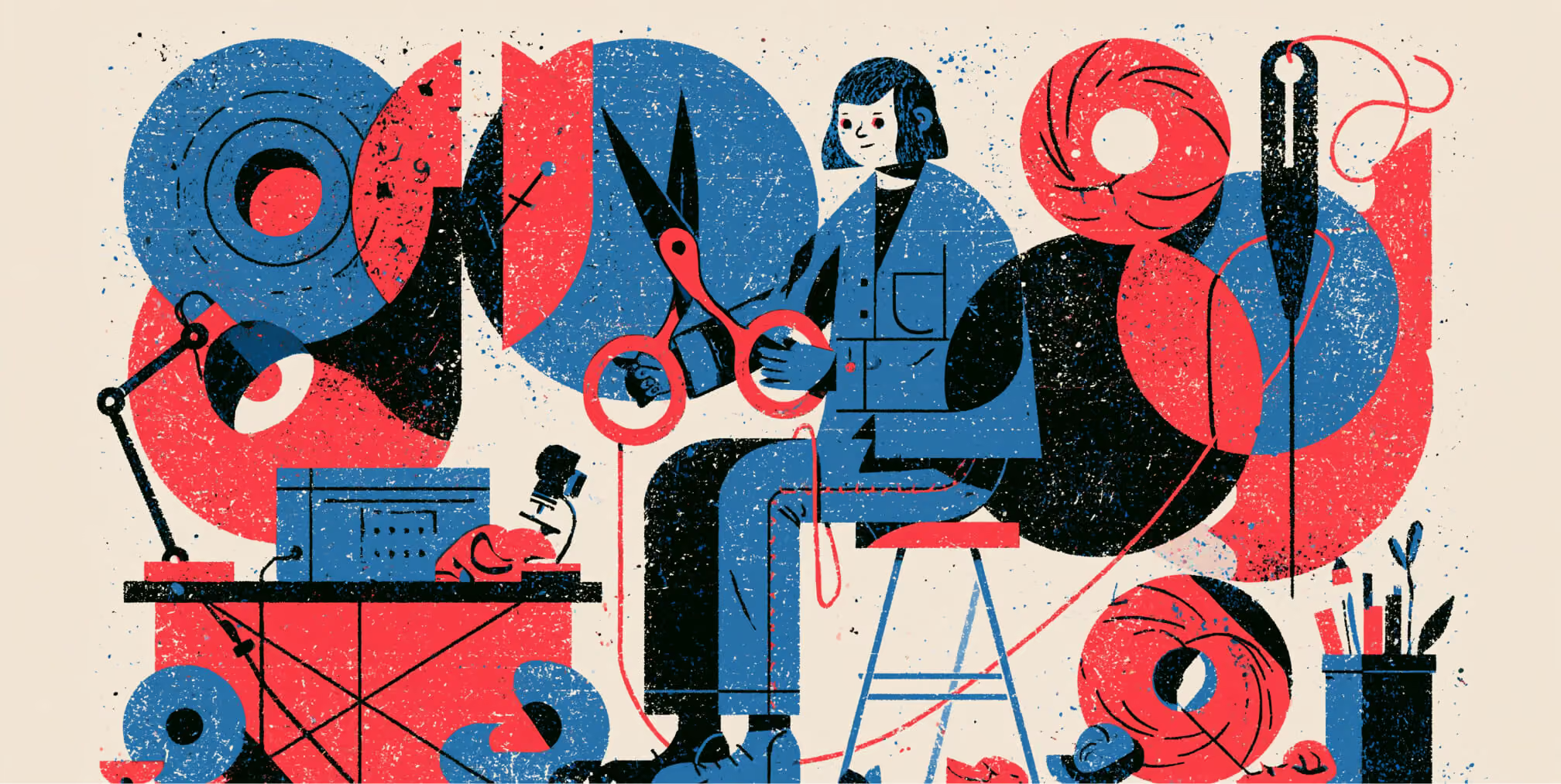
An artistic director is the creative force behind a performing arts organization, shaping its vision, programming, and overall artistic identity. Far more than a title, the role combines season planning, creative collaboration, casting, and public representation with the strategic responsibility of helping the organization grow sustainably. From theatres and ballet companies to opera houses and arts centers, artistic directors balance creative ambition with audience engagement, financial realities, and long-term institutional direction.
.png)


The Role of an Artistic Director



Key Takeaways
- An Artistic Director (AD) is the primary creative leader of a performing arts organization, responsible for shaping the artistic vision and aesthetic standards that define the company’s work
- The role blends creative leadership—programming, casting, working with directors, choreographers, and designers—with executive-level responsibilities often shared with a managing director or CEO
- Typical pathways include starting as actors, directors, choreographers, designers, or producers, then building a portfolio while gradually assuming organizational leadership and programming duties
- Essential skills include communication, fundraising awareness, collaboration, strategic planning, and maintaining a coherent artistic vision under real-world budget and audience pressures
- This article covers daily work life, qualifications, how the role differs from creative director or managing director, and practical steps to pursue this artistic career
What Does an Artistic Director Do?
Artistic directors serve as senior creative leaders responsible for the overall artistic direction and programming of organizations such as repertory theatres, ballet companies, opera houses, and multidisciplinary arts centers. They curate and select the repertoire, conceptualize themes, and ensure the overall quality and coherence of productions, collaborating closely with directors, choreographers, designers, and performers.
- Season curation: Artistic directors choose plays, ballets, operas, or film projects for each year—typically 6 to 10 productions in a theatre company—setting themes that reflect the organization’s mission and respond to current cultural conversations
- Creative collaboration: They work with stage directors, conductors, choreographers, and designers to ensure every production aligns with the long term vision and brand of the institution
- Casting and commissioning: Involvement includes casting key roles, commissioning new work from playwrights or composers, and reviving classics with distinctive interpretive angles
- Audience development: They influence marketing by shaping how the season is framed to audiences, supporting education and outreach programs, and acting as a public spokesperson—they must be comfortable representing their organization to various stakeholders, including the media and board of directors
- Business partnership: Artistic directors often engage in vital administrative and financial responsibilities, working alongside executive and managing directors to secure funding, develop budgets, and cultivate relationships with potential donors and sponsors
The role of an Artistic Director involves balancing artistic risk with audience engagement when planning the season’s repertoire.
Free Brand Health Audit
Make sure your brand is built to sell
Search has changed. Your customers aren't just Googling anymore. They're asking ChatGPT, Perplexity, Gemini and other AI platforms what to buy, who to trust and which brands they should consider.
If your brand isn't showing up clearly in those answers, you're already losing opportunities. Our free Brand Health Audit shows you where your brand stands across traditional search, AI search and brand positioning.

Sample brand audit
Live preview
Traditional search
72
AI search (GEO)
34
Brand positioning
58
Artistic Director vs Managing Director vs Creative Director




Titles vary across theatre, film, TV, fashion, and corporate environments. Understanding these distinctions matters for anyone considering an artistic career in leadership.
- Artistic director: The guardian of the institution’s long-term artistic vision and repertoire choices, typically hired by and accountable to a board of directors, focusing on programming that sustains the organization’s legacy
- Managing director: Oversees finances, operations, HR, facilities, and business strategy—serving as the artistic director’s primary partner in running the organization; in larger organizations, the Artistic Director typically works in a “Co-CEO” model with this business leader
- Creative director: More common in advertising, branding, and commercial media, focusing on campaign concepts, visual identity, and client-facing creative work in entertainment or film rather than curating multi-year artistic programming
- Real-world examples: A regional theatre like Steppenwolf pairs an artistic director with an executive director; a fashion house or ad agency instead has a creative director in charge of brand imagery and campaigns
- Small company realities: In small companies or start-ups, one person may wear multiple hats as both artistic director and managing director, making time management and prioritization critical challenges
People in the Field
Artistic directors emerge from diverse creative pedigrees—directing, choreography, playwriting, acting, design, producing, or music direction. Artistic Directors often have background experience as directors, producers, or performers and may hold advanced degrees in relevant fields.
- Education pathways: To become an Artistic Director, one typically needs to earn a bachelor’s degree in theatre, film studies, fine arts, or a similar area—such as a Bachelor of Fine Arts or Master of Fine Arts in a related field—though significant professional experience can sometimes substitute for formal credentials
- Career trajectories: Common paths include assistant director → resident director → associate artistic director → artistic director at a small company → move to a larger institution; artistic directors are usually current or former directors, producers, conductors, music directors, bandleaders, or choreographers
- Network building: Many build strong networks through festivals, international collaborations, and industry showcases—these relationships with writers, performers, and other artists shape their programming choices
- Diverse leadership: Prominent examples across theatre, dance, and opera demonstrate varied leadership styles, from Oskar Eustis championing new American plays at Public Theater to Crystal Pite blending choreography with theatrical direction
Professional Skills and Competencies
Effective artistic directors possess a unique blend of visionary creativity, executive leadership, and strategic management skills. The role requires a deep understanding of art forms, strategic planning ability, and the skill to inspire creative teams while managing budgets and stakeholders.
- Artistic vision and curation: The capacity to recognize strong material, build coherent seasons, and take calculated risks on new work while retaining core audiences—reading up to 200 new plays per season is common in many theatres
- Leadership and communication: Artistic directors need excellent public speaking, communication, and delegation skills to effectively lead and represent their organizations—clearly articulating creative goals to teams, running meetings, and presenting ideas to boards and producers
- Collaboration and delegation: Trusting directors, choreographers, designers, and creative teams to execute details while maintaining final responsibility for alignment with the company’s values
- Negotiation and compromise: Artistic directors must possess negotiation skills and the ability to compromise, as they often need to advocate for their vision while balancing the interests of various stakeholders
- Organizational abilities: Multitasking without losing focus is a crucial skill for artistic directors, given the varied nature of their responsibilities—overseeing multiple productions at different stages while planning future seasons
Want to learn more about brand platforms, Brand Strategy and Brand Identity? Keep reading!
If you need help with your companies brand strategy and identity, contact us for a free custom quote.
Work Life and Daily Responsibilities

Work life varies greatly between small community-based organizations and large, internationally recognized institutions.
- Rehearsal periods: A typical day includes attending rehearsals, giving notes to directors and actors, meeting with designers, and resolving creative issues that arise during production
- Administrative tasks: Regular meetings with the managing director, department heads, and board committees to review budgets, marketing plans, education programs, and strategic initiatives; board relations require consistent attention
- External obligations: Attending opening nights, donor cultivation events for fundraising, press interviews, and industry gatherings such as national theatre conferences or dance festivals
- Small organization workload: The artistic director might also direct multiple shows, teach workshops, manage community partnerships, and assist with day-to-day operations—job descriptions often expand in resource-limited environments
- Lifestyle considerations: Long and irregular hours (often 50-70 hours weekly), evening and weekend commitments, travel for co-productions, and emotional investment in managing staff and emerging artists through high-pressure creative processes
How to Become an Artistic Director
Here’s a practical roadmap for students, emerging artists, and mid-career professionals aspiring to artistic leadership.
- Education and training: Pursue theatre, dance, music, film, or visual arts studies; taking courses in directing, dramaturgy, arts management, and leadership builds a broad foundation—a fine arts degree provides essential grounding
- Hands-on experience: Work as an assistant director, choreographer, stage manager, dramaturg, or producer to understand how every department functions in mounting productions
- Build your portfolio: Develop a body of work demonstrating a distinct artistic voice—a series of productions with clear thematic through-lines or innovative staging approaches; focus on projects that showcase your concept development
- Networking and mentorship: Networking within the arts community is crucial for aspiring artistic directors, as mentorship and connections can open doors to opportunities; serve on reading committees or programming panels; cultivate relationships with playwrights, composers, and talent
- Stepping-stone roles: Positions like associate artistic director, resident director, literary manager, or head of programming are common routes to top artistic director positions—check job postings at arts organizations regularly
Are You Suited to Be an Artistic Director?
This self-assessment helps you reflect on whether your temperament, values, and skills align with artistic leadership.
- Passion for culture: You need a deep, sustained passion for the arts and a strong drive to shape culture rather than just individual projects
- Resilience: Successful candidates handle public scrutiny well, remain comfortable making high-stakes decisions, and manage criticism of programming choices with grace
- Big-picture and detail-oriented: Those who thrive enjoy both multi-season planning and detail work—script selection, casting decisions, staging notes in the group rehearsal process
- Collaboration and mentorship: If you value diverse perspectives, enjoy developing talent, and find satisfaction in building creative teams, this position may suit your life goals
Why Choose a Career as an Artistic Director?

This pivotal figure position offers unique rewards alongside significant challenges.
- Creative impact: The ability to bring bold stories to life, champion new voices, and reinterpret classics for contemporary audiences across theatre, dance, or an opera company
- Cultural influence: Programming that addresses timely issues, fosters inclusion, and creates space for dialogue—your ideas shape community conversations across the country
- Leadership satisfaction: Mentoring emerging artists, building collaborative teams, and leaving a legacy through long-term repertory and institutional change; artistic directors are responsible for developing a recognizable artistic identity or brand for their organization
- Honest challenges: Funding uncertainties, audience pressures, and public accountability exist—but many artistic directors find these pressures energizing and purposeful, fueling their creativity and planning
FAQ
Is an artistic director always separate from the managing director?
In many mid-size and large arts organizations, the roles are separate—artistic director for creative leadership, managing director for finances and operations. However, in small companies they are often combined into a single executive role. This structure appears in roughly 60% of mid-to-large organizations, according to industry data.
Do you need a Master of Fine Arts to become an artistic director?
An MFA or similar advanced degree can be helpful for building skills and networks, but extensive professional experience, a strong body of work, and proven leadership skills often matter more than formal credentials. Industry analyses suggest about 60% of top artistic directors hold MFAs, though many successful leaders built careers through ensemble work and professional practice.
How long does it typically take to reach an artistic director position?
Realistically, expect 10-20 years of professional experience. Common steps include 3-5 years in assistant roles, directing or choreographing multiple productions, then taking on programming or associate artistic responsibilities before ascending to full artistic director positions at increasingly prominent institutions.
What is the difference between an artistic director and a creative director in film or TV?
An artistic director in live performance usually oversees institutional programming and long-term creative vision. A creative director in film, TV, or branded content focuses on the creative concept and look of specific projects or campaigns—typically client-facing work with defined budgets and timelines rather than season planning.
Can artistic directors work as freelancers or only in permanent posts?
While many hold permanent positions at theatres, festivals, or companies, others work as freelance artistic leaders for specific projects, seasons, or festivals. Some combine this with directing, choreographing, or teaching work—about 20-30% of the industry operates in this hybrid model.

Quincy Samycia
As entrepreneurs, they’ve built and scaled their own ventures from zero to millions. They’ve been in the trenches, navigating the chaos of high-growth phases, making the hard calls, and learning firsthand what actually moves the needle. That’s what makes us different—we don’t just “consult,” we know what it takes because we’ve done it ourselves.
Want to learn more about brand platform?
If you need help with your companies brand strategy and identity, contact us for a free custom quote.
We do great work. And get great results.
+2.3xIncrease in revenue YoY
+126%Increase in repurchase rate YoY




+93%Revenue growth in first 90 days
+144% Increase in attributed revenue




+91%Increase in conversion rate
+46%Increase in AOV




+200%Increase in conversion rate
+688%Increase in attributed revenue