Automation for Busy Shopify Owners: Save 10 Hours a Week With These Workflows
12/23/2025
E-Commerce
This guide reveals the exact Shopify automation workflows high-performing founders use to reclaim time, streamline operations, and scale without burnout or headcount.

Every Shopify owner knows the feeling, you log in to handle one small task, and suddenly an hour has disappeared. Orders need sorting. Inventory needs updating. Emails need sending. Customers need responses. It never ends.



Why Automation Is the Secret Weapon of High-Performing Shopify Stores

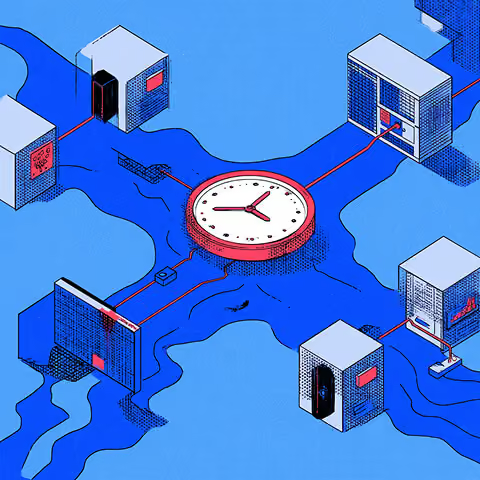
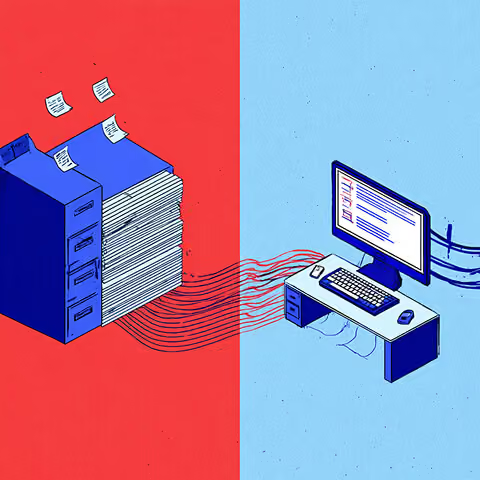
The truth is, most Shopify brands waste hours every week on tasks that should be automated. With the rise of Shopify Flow, native integrations, and no-code tools like Zapier, automation has become one of the most powerful growth levers for busy founders.
Done well, automation reduces errors, improves customer experience, and gives you back precious time without hiring extra staff.
This guide shows how to save at least 10 hours per week using workflows any Shopify store can set up.
The New Automation Landscape for Shopify in 2026
Shopify now supports automation at every level, from storefront logic to operational workflows. But each tool solves different problems.
Shopify Flow as the Native Automation Engine
Flow lets you automate admin tasks inside Shopify, such as order tagging, fraud checks, customer segmentation, fulfillment routing, or inventory actions. Because Flow is built into Shopify, it has privileged access to your data and triggers instantly.
When to Use Zapier for Multi-App Orchestration
Flow rules excel within Shopify, but Zapier shines when you need to connect external systems. Tasks like sending order details to a CRM, generating invoices, triggering Slack alerts, or syncing with Airtable are easier in Zapier.
Native Shopify Triggers You’re Probably Underusing
Shopify now includes a growing library of built-in triggers:
- order created
- product out of stock
- customer first purchase
- subscription renewal failed
- refund issued
These let you create automatic responses without third-party tools.
Free Brand Health Audit
Make sure your brand is built to sell
Search has changed. Your customers aren't just Googling anymore. They're asking ChatGPT, Perplexity, Gemini and other AI platforms what to buy, who to trust and which brands they should consider.
If your brand isn't showing up clearly in those answers, you're already losing opportunities. Our free Brand Health Audit shows you where your brand stands across traditional search, AI search and brand positioning.

Sample brand audit
Live preview
Traditional search
72
AI search (GEO)
34
Brand positioning
58
The Workflows That Save Shopify Owners the Most Time

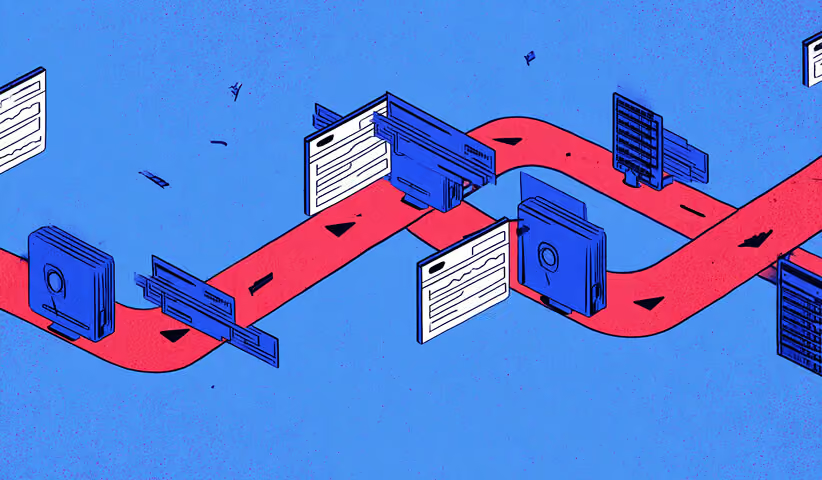


Automation is not about replacing your team, it’s about removing the repetitive tasks that slow them down.
Order Management Automations
Many brands still process orders manually. Flow can automatically sort, tag, and route orders to the right fulfillment team. High-risk orders can be flagged instantly. B2B orders can trigger unique workflows without someone intervening.
Customer Support & Communication Automations
Tools like Gorgias and Klaviyo allow you to trigger personalized messages based on customer behavior. Late shipments, backorders, and subscription renewals can all trigger proactive communication, reducing support tickets before they ever appear.
Inventory & Supplier Automations
Instead of manually emailing suppliers when stock runs low, you can set up an automation that notifies them at thresholds. This keeps stock in sync and avoids lost sales.
Marketing & Retention Automations
By connecting Shopify to Klaviyo or Attentive, you can trigger:
- welcome flows
- post-purchase messages
- replenishment reminders
- win-back journeys
Marketing doesn’t have to be manual, your flows can nurture customers automatically.
How Shopify Flow, Zapier, and Native Logic Work Together
No automation tool works perfectly in isolation. The magic happens when they’re combined.
Building Triggers That Mirror Your Business Logic
For example:
Shopify Flow handles the internal tagging.
Zapier picks up the tag and sends data to an external spreadsheet.
Klaviyo uses the tag to trigger a personalized journey.
Each tool handles the part it’s best at.
When to Use Flow vs. Zapier vs. Native Integrations
Flow = internal Shopify logic
Zapier = connection beyond Shopify
Native integrations = lightweight, immediate actions
How to Keep Your Automations Clean & Error-Free
The biggest mistake brands make is leaving old automations running. Every quarter, audit your flows to ensure they still match your business logic.
Want to learn more about Website Design, Development and E-commerce? Keep reading!
If you need help with your company’s website and development, contact us for a free custom quote.
Real Examples of Automations That Save 10+ Hours per Week

Example 1: Automated Fulfillment Routing
Flow tags orders based on SKU or order amount and routes them directly to the correct warehouse. No more manual sorting.
Example 2: Customer Tagging + Segmentation Sync
High-value customers are tagged in Shopify.
Zapier syncs these tags with your CRM.
Klaviyo launches a VIP journey instantly.
Example 3: Inventory Alerts to Suppliers
When stock hits a threshold, Flow sends supplier alerts automatically. Brands avoid manual checks, and prevent stockouts.
Example 4: Abandoned Issue Prevention in Support
If an order is late, Shopify triggers an automated apology email, reducing tickets in Gorgias and improving customer experience.
How to Identify Which Parts of Your Business Should Be Automated
Mapping Repeated Tasks
Any task you do more than twice a week should be considered for automation.
Spotting Delays & Human Bottlenecks
Late shipping updates, slow refunds, or missed restocks signal opportunities for automation.
Assessing the ROI of an Automation
If a workflow saves even 10 minutes per day, that’s over 60 hours a year, time better spent on product, marketing, or strategy.
The Automation Stack for Growing Shopify Brands
Flow (Native)
Best for internal Shopify events, tagging, and fulfillment logic.
Zapier (Cross-App)
Perfect for multi-app workflows that involve CRMs, spreadsheets, or messaging tools.
Klaviyo, Gorgias, Loop, ShipStation, and Others
These platforms extend automation into email, support, returns, and logistics.
FAQs About Automation for Shopify Owners
1. What tasks should Shopify store owners automate first?
The best starting point is any workflow that repeats daily, order tagging, customer notifications, inventory alerts, and basic fulfillment rules. These processes take the most time and are the easiest to automate with Shopify Flow or native triggers.
2. Does automation reduce customer support workload?
Yes. Proactive automations, such as sending late-shipment updates or backorder notifications, dramatically reduce the number of inbound tickets. Many brands see a 20–40% drop in support volume once these flows are implemented.
3. Can automation help prevent operational mistakes?
Absolutely. Automations ensure that orders are routed correctly, risk checks are consistent, and inventory rules fire at the right time. This consistency removes the human errors that often slow Shopify stores down.
4. Is Zapier still necessary if I’m using Shopify Flow?
In most cases, yes. Flow excels at internal Shopify tasks, while Zapier makes it easy to connect Shopify to CRMs, spreadsheets, support tools, or project management platforms. Together, they create a complete automation stack.
5. How does automation support stronger brand experience?
Automated workflows keep your communication timely and consistent, reinforcing your brand’s reliability. When emails, updates, and follow-ups feel seamless, customers perceive your brand as more polished and trustworthy, something we explore more deeply in our branding and UX-focused content.
6. Can automation improve my overall marketing performance?
Definitely. Automated segmentation, personalized flows, and behavior-based triggers help turn traffic into conversions more efficiently. They also work perfectly alongside broader marketing strategies like SEO, email storytelling, and conversion-focused design, all topics covered in our other marketing and growth articles.
Automation Lets You Scale Without Burning Out
Automation isn’t about removing the human touch, it’s about removing the repetitive work that keeps you from growing. By using Shopify Flow, Zapier, and native triggers, you create a system that works around the clock, reduces manual errors, and strengthens your customer experience.
If you want help building a high-impact automation roadmap for your Shopify store, The Branded Agency can build workflows tailored to your products, processes, and growth goals. To get started, simply contact us, and we’ll help you save time while scaling smarter.

Quincy Samycia
As entrepreneurs, they’ve built and scaled their own ventures from zero to millions. They’ve been in the trenches, navigating the chaos of high-growth phases, making the hard calls, and learning firsthand what actually moves the needle. That’s what makes us different—we don’t just “consult,” we know what it takes because we’ve done it ourselves.
Want to learn more about brand platform?
If you need help with your companies brand strategy and identity, contact us for a free custom quote.
We do great work. And get great results.
+2.3xIncrease in revenue YoY
+126%Increase in repurchase rate YoY



+93%Revenue growth in first 90 days
+144% Increase in attributed revenue




+91%Increase in conversion rate
+46%Increase in AOV




+200%Increase in conversion rate
+688%Increase in attributed revenue