Best Packaging Design Companies for Brands in 2026
09/11/2026
Print & Packaging
A comparison of the top packaging design companies for 2026 — specialties, sustainability focus, manufacturing depth, and how to choose the right partner for your brand.

The packaging design agencies that consistently deliver results share three traits: creative vision grounded in category knowledge, manufacturing expertise that keeps concepts producible, and sustainability thinking built into the brief from day one. For brand managers evaluating top packaging firms in 2026, the shortlist below covers the full range, from global multidisciplinary powerhouses to boutique specialists, so you can match the right partner to your brand's actual needs.
.png)


The Top Packaging Design Companies Compared: Pentagram Through B&B Studio



Packaging design fees vary widely depending on the scope, from basic graphic work on existing stock containers to full custom tooling and structural engineering projects. That spread alone tells you why choosing the right agency matters before a single brief is written.
| Agency | Best For | Specialties | Sustainability Focus | Technical/Manufacturing Depth |
|---|---|---|---|---|
| Pentagram | Iconic, high-impact packaging with global reach | Multidisciplinary design, visual branding, identity systems | Integrated where brand strategy demands it | Strong through multidisciplinary team structure |
| Backbone Branding | CPG brands needing cohesive brand and packaging integration | Consumer goods, category-specific packaging, brand systems | Category-informed material choices | Deep understanding of scalable CPG production |
| Sweety & Co. | Lifestyle and artisanal product segments | Consumer-centric design, brand storytelling, vibrant aesthetics | Considered material choices for artisan markets | Boutique production coordination |
| Pearlfisher | Premium brands prioritizing sustainability without sacrificing aesthetics | Strategic packaging, environmental innovation, premium identity | Award-winning sustainability credentials | Strong structural and material expertise |
| B&B Studio | Brands needing seamless design-to-production transition | Full-service packaging, quality systems, manufacturing network | Sustainability embedded in process | Extensive manufacturing network experience |
| Spazio Di Paolo | Cutting-edge aesthetic with manufacturing feasibility | Structural and graphic integration, manufacturability assessment | Early-stage sustainability review | Integrated structural and graphic design |
| Summer Owl Studio | Niche and premium bespoke packaging | Custom structural packaging, collaborative brand process | Considered for premium and niche markets | Highly tailored structural solutions |
| Mousegraphics | Brands needing adaptable solutions across retail environments | Mass-market and artisan packaging, diverse category portfolio | Varies by category and client brief | Proven across multiple production contexts |
| Superside | Fast turnaround and digital asset integration | Digital-first design, rapid concepting, scalable workflows | Digital efficiency reduces material waste cycles | Technology-driven production coordination |
| Stranger & Stranger | Alcohol and beverage brands focused on shelf impact | Spirits and beverage packaging, bold creative, retail presence | Material choices aligned with premium beverage standards | Strong retail and production relationships |
Pentagram
Few packaging design agencies operate at Pentagram's scale and pedigree. As a globally recognized multidisciplinary firm, Pentagram brings together partners who specialize across identity, environmental design, and packaging, which means a brand brief gets genuine cross-discipline thinking rather than a single designer's instinct. Their portfolio spans consumer goods, publishing, and cultural institutions, and their packaging work tends to set category benchmarks rather than follow them. For brands launching at national or international scale where the packaging must carry the full weight of brand identity, Pentagram is the reference point.
Backbone Branding
Backbone Branding's strength is category specificity. They focus on consumer packaged goods and understand that packaging for a dairy brand operates under completely different shelf dynamics than packaging for a personal care line. Their integrated approach connects brand strategy directly to packaging execution, so the visual system and the structural choices reinforce each other. Brands that have outgrown a logo-only rebrand and need their packaging to do real commercial work will find Backbone Branding's process well-suited to that challenge.
Sweety & Co.
Sweety & Co. excels at translating brand stories into packaging that feels tactile and emotionally resonant. Their work gravitates toward lifestyle, food, and artisanal categories where the consumer's relationship with the product is personal. The designs tend to be expressive and warm rather than clinical, which makes them a strong fit for brands that want packaging to communicate character and provenance. If your product competes in a crowded specialty retail environment where shelf presence depends on personality, Sweety & Co. is worth a close look.
Pearlfisher
Pearlfisher has built a genuine reputation in sustainable packaging design, not as a marketing claim but as a demonstrated practice backed by industry awards and environmental credentials. They treat recyclability, lightweighting, and mono-material construction as design brief fundamentals, not options to consider after the concept is locked. For premium brands that need to satisfy both aesthetic ambition and sustainability commitments, Pearlfisher's track record in that specific intersection is hard to match.
B&B Studio
B&B Studio's differentiator is the depth of their manufacturing network and quality systems. They move packaging from concept to production with fewer handoffs and less friction than agencies that treat manufacturing as someone else's problem. Their process includes rigorous quality controls that keep defect rates low and timelines predictable. Brands that have experienced the pain of a beautiful design that couldn't be produced on budget will appreciate how B&B Studio structures the design-to-shelf journey.
Free Brand Health Audit
Make sure your brand is built to sell
Search has changed. Your customers aren't just Googling anymore. They're asking ChatGPT, Perplexity, Gemini and other AI platforms what to buy, who to trust and which brands they should consider.
If your brand isn't showing up clearly in those answers, you're already losing opportunities. Our free Brand Health Audit shows you where your brand stands across traditional search, AI search and brand positioning.

Sample brand audit
Live preview
Traditional search
72
AI search (GEO)
34
Brand positioning
58
Spazio Di Paolo Through Stranger & Stranger: The Rest of the Shortlist



Spazio Di Paolo
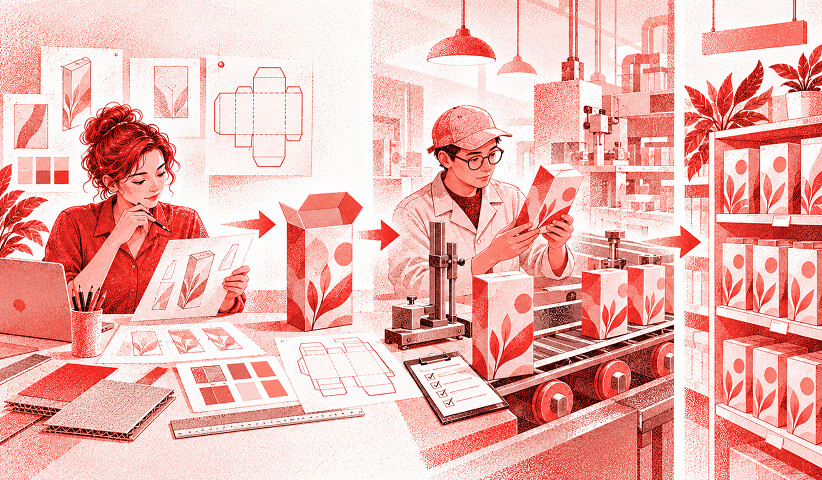
Spazio Di Paolo integrates structural and graphic design from the first sketch, which means manufacturability gets assessed early rather than discovered late. That approach prevents the costly redesign cycles that happen when a visually striking concept turns out to be structurally impractical or prohibitively expensive to tool. For brands pursuing genuinely original packaging forms rather than adapting stock containers, Spazio Di Paolo's early-stage feasibility thinking is a meaningful advantage.
Summer Owl Studio
Summer Owl Studio operates as a boutique, which means the collaboration is close and the process is genuinely tailored rather than templated. Their custom structural packaging work suits premium and niche products where the unboxing experience is part of the brand promise. The tradeoff is capacity: they are not the right partner for a mass-market launch requiring rapid scale, but for a brand where the packaging is a premium touchpoint, their attention to detail is exactly what the brief demands.
Mousegraphics
Mousegraphics brings versatility across categories, with a portfolio that spans mass-market retail and artisan products. That range is genuinely useful for brand managers who need an agency that can adapt its visual language to different retail environments without losing coherence. Their track record across diverse product types means they carry category knowledge that reduces the learning curve on a new brief.
Superside
Superside operates differently from the traditional agency model. Their technology-driven workflows deliver rapid packaging concepts and digital asset integration at a pace that conventional studios rarely match. For brands that need to test multiple packaging directions quickly, or that are managing high-volume creative output across digital and physical channels simultaneously, Superside's model is built for that workload. The tradeoff is depth of structural expertise, which makes them better suited to graphic-led packaging work than complex custom tooling projects.
Stranger & Stranger
Stranger & Stranger specializes in spirits and beverage packaging with a creative confidence that is immediately recognizable on shelf. Their work in the alcohol category has a distinctive boldness that translates directly into retail presence. If your brand competes in a beverage or spirits category where the bottle or label is the primary brand expression, their category depth and creative track record make them a natural first call.
Want packaging that connects to your whole brand system? Keep reading!
If you need packaging design tied to brand strategy and performance marketing, contact us for a free custom quote.
How to Choose the Right Packaging Design Company, and Why It Matters More in 2026
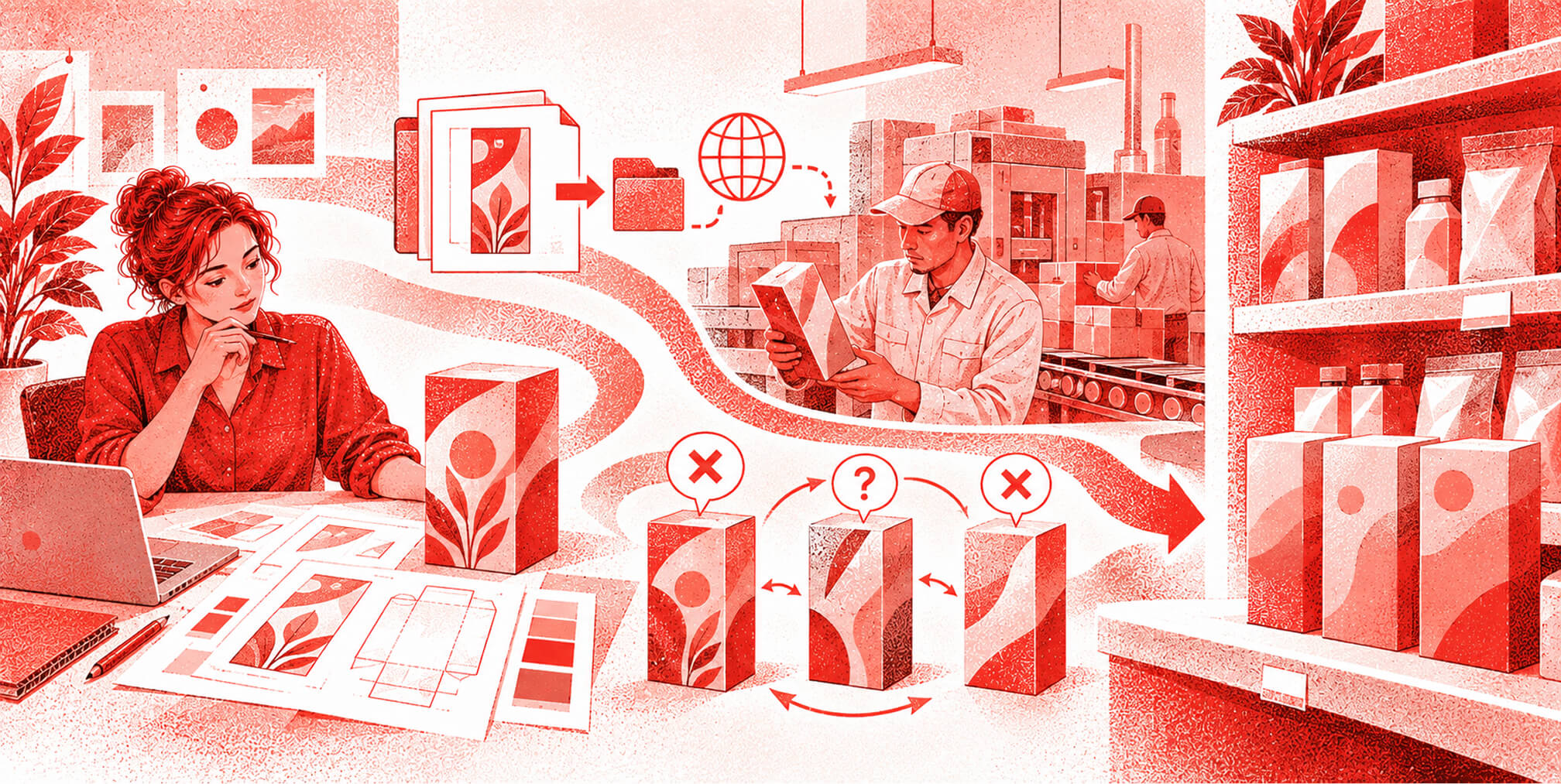
How to choose the right packaging design company for your brand
The agency that wins awards is not always the agency that will serve your brand well — our guide to evaluating award-winning agencies covers this in more depth. Choosing among leading packaging services requires matching the agency's actual capabilities to your specific brief, not just their portfolio highlights.
What to evaluate before you shortlist
- Category experience: Has the agency worked in your product category? Food packaging has different regulatory and structural requirements than cosmetics or spirits. Category experience reduces the learning curve and lowers the risk of avoidable errors.
- Portfolio depth: Look for real product photography showing packages in retail context, not just isolated renders. An agency that can only show mockups may have concepts that never survived production.
- Manufacturing relationships: Agencies without direct relationships with manufacturers or contract packagers will struggle to keep your design producible at your price point. Ask specifically how they coordinate with your production partners.
- Technical documentation: Quality-focused agencies provide dielines, color-coded specifications, and ISO 9001:2015 certifications with defect rates below 0.3%. If an agency cannot describe their technical deliverables clearly, that is a gap worth probing.
- Sustainability integration: Ask whether sustainability is part of the initial brief or added after the concept is set. Agencies that treat it as a bolt-on tend to produce packaging that misses both environmental targets and cost efficiency goals.
- Regulatory knowledge: For food, beverage, cosmetics, and medical products, packaging must meet FDA, USDA, or applicable Canadian labeling requirements. An agency without that knowledge can delay your launch by months.
- Scale fit: An agency experienced at 10,000-unit artisan runs operates very differently from one that handles million-unit retail programs. Confirm their experience at your anticipated production volume.
Questions to ask every agency you evaluate
- What does your discovery process look like before you begin design?
- How do you handle structural versus graphic design, and do you manage both in-house?
- How do you coordinate with our manufacturer or contract packager?
- Can you show us final product photography from past projects, not just renderings?
- What technical files do you deliver, and at what stage?
- How do you integrate sustainability requirements into the initial brief?
Red flags that should stop the conversation
- A portfolio built entirely on renders with no shelf photography.
- No named manufacturing relationships or production partners.
- Sustainability mentioned only in the agency's credentials section, not in their process description.
- Vague answers about regulatory experience for your product category.
- No references from brands at a comparable scale to yours.
Early collaboration between your print and packaging supplier and your design agency is one of the strongest predictors of a successful outcome. Agencies that resist that three-way relationship early in the process tend to create misalignments that surface expensively at press check.
Why creative and sustainable packaging design matters more in 2026
Packaging is the only marketing material every customer physically touches. That fact has always been true, but the stakes in 2026 are higher because consumer purchase decisions and brand loyalty are increasingly shaped by the physical experience of a product, even as digital channels multiply. A package that performs well on shelf and communicates brand values clearly does work that no ad campaign can replicate.
Sustainability has moved from a differentiator to a baseline expectation. Brands that treat eco-friendly packaging solutions as optional are already behind their category leaders. The agencies that are producing the most effective packaging today are the ones that ask lightweighting and recyclability questions at the kickoff brief, not after the structural concept is approved.
Key trends shaping packaging design in 2026
- Mono-material construction: Brands are moving away from multi-layer laminates toward single-material structures that are genuinely recyclable, driven by both consumer preference and incoming extended producer responsibility regulations.
- Lightweighting: Reducing material volume without compromising structural integrity cuts shipping costs and carbon footprint simultaneously, making it a financial and environmental win.
- Tactile and sensory design: As e-commerce grows, the unboxing moment has become a deliberate brand touchpoint. Texture, weight, and opening mechanics are now part of the design brief.
- Shelf-to-digital coherence: Packaging design increasingly needs to photograph well for social media and e-commerce listings, not just perform in physical retail. Agencies that design for both contexts produce more commercially durable work.
- Transparency in materials: Consumers want to know what their packaging is made of and how to dispose of it. Clear on-pack communication about recyclability is now a design requirement, not a footnote.
Agencies that integrate sustainability early produce packaging that is both cost-effective and market-ready, avoiding the expensive redesign cycles that happen when environmental requirements are retrofitted onto a finished concept. That is not a philosophical preference. It is a production reality that affects your budget and your launch date.
Production-Ready vs. Pretty Concepts, Key Takeaways, and How The Branded Agency Helps

What separates production-ready packaging design from pretty concepts
The gap between a beautiful packaging concept and a package that actually reaches shelf on time and on budget is almost always a manufacturing knowledge gap. Agencies that understand tooling, lead times, and material constraints catch problems in the design phase, where fixes cost almost nothing. Agencies that don't understand those constraints hand problems to the manufacturer, where fixes cost multiples of the original design fee.
Tooling and sampling typically take several weeks, and full packaging development cycles can stretch over multiple months from concept to finished product. Brands that don't account for those timelines in their launch planning routinely face rushed projects with added fees and quality compromises. The agency you hire should be the one that tells you this upfront, not the one that agrees to an impossible timeline to win the brief.
Quality-managed packaging production maintains defect rates below 0.3% through rigorous documentation, including dielines, color-coded specifications, and certified quality systems. When you evaluate an agency, ask to see a sample technical package from a past project. An agency confident in their production process will share that without hesitation.
Pro Tip: Request a review of technical production files and physical prototypes before the design is approved for production. An agency that resists this step is signaling that their process stops at the render, not at the shelf.
Sustainability belongs in this conversation too, not as a separate workstream but as a set of constraints that shape structural decisions from the start. The best agencies ask "Can we lightweight this structure?" and "Could a mono-material replace the current laminate?" at the same time they are asking about brand color and typography. Those questions, asked early, are what separate agencies that understand packaging from agencies that understand graphic design.
Key Takeaways
The strongest packaging design agencies combine creative excellence with manufacturing knowledge and sustainability thinking built into the brief from day one, not added as an afterthought. That same discipline applies to logo and identity system work, since packaging is one of the places a brand's visual identity gets tested hardest.
| Point | Details |
|---|---|
| Match agency to your category | Category experience reduces errors and shortens the learning curve for your specific product type. |
| Demand real production evidence | Portfolios showing final shelf photography prove concepts survived manufacturing, not just the render stage. |
| Plan for realistic timelines | Full packaging development runs several months; tooling and sampling alone take several weeks. |
| Treat sustainability as a brief input | Agencies that integrate eco-friendly requirements from kickoff produce more cost-effective, market-ready packaging. |
| The Branded Agency as your growth partner | For brands needing packaging integrated with brand strategy and performance marketing, The Branded Agency connects creative design to measurable business outcomes. |
The part of packaging selection most agencies won't tell you
There is a version of this conversation that most agency comparison articles skip entirely, and it is the one that actually determines whether your packaging succeeds commercially. The question is not which agency has the most impressive portfolio. The question is whether the agency you hire understands what happens after the design file leaves their studio.
The packaging industry has a structural problem: the creative and production sides of the process are often separated by a handoff that nobody owns. Designers hand files to manufacturers. Manufacturers flag problems. Designers revise. Manufacturers flag more problems. By the time the package is producible, the original creative vision has been compromised and the launch date has moved. This cycle is not inevitable. It is the predictable result of hiring an agency that treats manufacturing as someone else's responsibility.
The agencies on this list that consistently avoid that cycle are the ones that have built manufacturing relationships into their practice, not as a value-add but as a core competency. Pearlfisher's sustainability credentials are meaningful precisely because they reflect deep material knowledge, not just design intent. B&B Studio's quality systems exist because they have internalized what it takes to get a package from concept to shelf without losing the creative work along the way. Spazio Di Paolo's early manufacturability assessment is not a differentiator. It is what every agency should be doing.
Brand managers who evaluate packaging design agencies on creative output alone are optimizing for the wrong variable. The right question is: can this agency get my product on shelf, on time, on budget, looking the way we intended? That question filters the list considerably faster than reviewing award submissions.
The Branded Agency brings packaging into your full brand system
Most packaging design agencies hand you a finished file and move on. The Branded Agency connects custom packaging design to your broader brand strategy, performance marketing, and digital presence, so the work on shelf and the work online reinforce each other rather than pulling in different directions.
For growth-stage brands that need packaging to do more than look good, The Branded Agency's integrated approach ties creative execution to measurable outcomes. From brand strategy through packaging and branding services to go-to-market planning, the work is built to perform at every touchpoint. If you are ready to make your product impossible to ignore, let's talk about what that looks like for your brand.
Recommended

Quincy Samycia
As entrepreneurs, they’ve built and scaled their own ventures from zero to millions. They’ve been in the trenches, navigating the chaos of high-growth phases, making the hard calls, and learning firsthand what actually moves the needle. That’s what makes us different—we don’t just “consult,” we know what it takes because we’ve done it ourselves.
Want to learn more about brand platform?
If you need help with your companies brand strategy and identity, contact us for a free custom quote.
We do great work. And get great results.
+2.3xIncrease in revenue YoY
+126%Increase in repurchase rate YoY


+93%Revenue growth in first 90 days
+144% Increase in attributed revenue


+91%Increase in conversion rate
+46%Increase in AOV

+200%Increase in conversion rate
+688%Increase in attributed revenue