Brand Voice Examples That Work, and How to Build Yours
11/24/2026
Branding
Explore six recognizable brand voices and build a repeatable guide that keeps your marketing, sales and content teams sounding consistent.

The best brand voice examples share one trait: you could cover the logo and still know who is talking. Dove sounds like a friend who has seen your bad hair day. Harley-Davidson sounds like the open road. Experian writes down its voice in a guide its own people can follow. Each of these voices was chosen on purpose, tied to an audience, and written into rules. For a startup or scale-up, that is the lesson: a voice is a positioning decision first and a writing style second.


Voice, tone and personality: the difference in one minute



People use these terms loosely, and that is where guidelines go wrong. Search Engine Land describes brand voice as a company’s overall personality and values, consistent across content and platforms, while tone is how that voice is expressed in a given situation. A complaint reply and a playful social post need different tones, but both should clearly come from the same voice.
Think of it as a person. Your CEO sounds like herself at a board meeting and at a team happy hour. The vocabulary relaxes, the pace changes, the personality does not. If you want the definitions in a shorter form, see what a brand voice is and our notes on brand tone guidelines.
For a CMO, the practical point is this: voice is the part you decide once and protect. Tone is the part you hand to every writer, designer and account rep as a set of dials.
Brand voice examples worth studying
The examples below come from the brands’ own pages and published guides, so you can see the voice in the words rather than in a reviewer’s adjectives.
Dove: warm, reassuring, on your side
Dove’s product pages talk to the reader like a friend with a solution. One line tells shoppers not to “waste any more precious time stressing about frazzled locks”, then points to shampoos and conditioners for damaged hair. The voice removes pressure instead of adding it. Short sentences, direct address, a small touch of humor, and a promise of shiny hair rather than a list of ingredients.
What to copy: the order of the message. Name the worry, relieve it, then show the product.
Harley-Davidson: aspiration over specification
Harley-Davidson’s 2026 touring page opens with “Go the distance, in style” and describes its motorcycles as offering freedom for the soul. The copy sells a feeling of independence and leaves torque figures to the spec tab. The sentences are short and confident, and the vocabulary stays emotional.
What to copy: a premium voice does not need long sentences. It needs restraint and one idea per line.
Starbucks: seasonal, sensory, member-first
Starbucks’ homepage leads with flavors such as peppermint, caramel brulée and tiramisu and then explains a rewards perk in plain, practical terms: members receive one free customization a month, up to a stated dollar amount, at participating stores. The voice moves between appetite and fine print without changing personality. It stays friendly and clear in both.
What to copy: the same voice carries both the delight and the terms and conditions. Many B2B companies are charming on the homepage and stiff in the contract. Consistency means avoiding that drop.
Nike: invitation and momentum
Nike’s homepage promotes a customizable shoe with specific choices for the upper, the Air bag color and custom text, and announces a release date for a returning model. The copy invites you to make the product yours and gives you a reason to act now. The brand’s tagline is itself the voice: three words, imperative, no qualifiers. You can see it on Nike’s homepage.
What to copy: use verbs that move the reader forward, and give them something specific to do.
Experian: a voice written down
Experian publishes its tone-of-voice guide, called Expedition Leader. It defines the voice through traits including inquisitive, smart, resourceful, confident and optimistic, and it explains each in a sentence. Optimistic, for example, means looking forward and approaching challenges with a sense of what is possible. The Experian voice guide is a useful model for a regulated, data-heavy business that still wants to sound human.
What to copy: five traits, each defined in behavior terms, not in marketing adjectives.
Bark: a voice that mirrors its customers
Search Engine Land’s guide highlights Bark, the pet-subscription brand. Bark rejects the generic functional voice of pet products and talks the way dog owners talk about their dogs. It even announced a new co-owner, a dog named Hendrix, with the title “chairdog” on its site, and it extends the humor into Instagram memes and YouTube. The lesson is in how the brand’s voice was developed: it started from the audience’s own language.
Free Brand Health Audit
Make sure your brand is built to sell
Search has changed. Your customers aren't just Googling anymore. They're asking ChatGPT, Perplexity, Gemini and other AI platforms what to buy, who to trust and which brands they should consider.
If your brand isn't showing up clearly in those answers, you're already losing opportunities. Our free Brand Health Audit shows you where your brand stands across traditional search, AI search and brand positioning.

Sample brand audit
Live preview
Traditional search
72
AI search (GEO)
34
Brand positioning
58
What tone does to perception: a controlled test

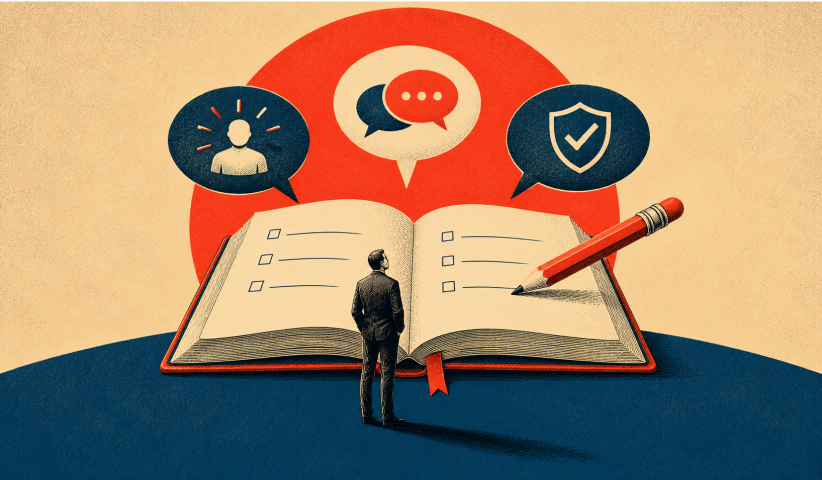
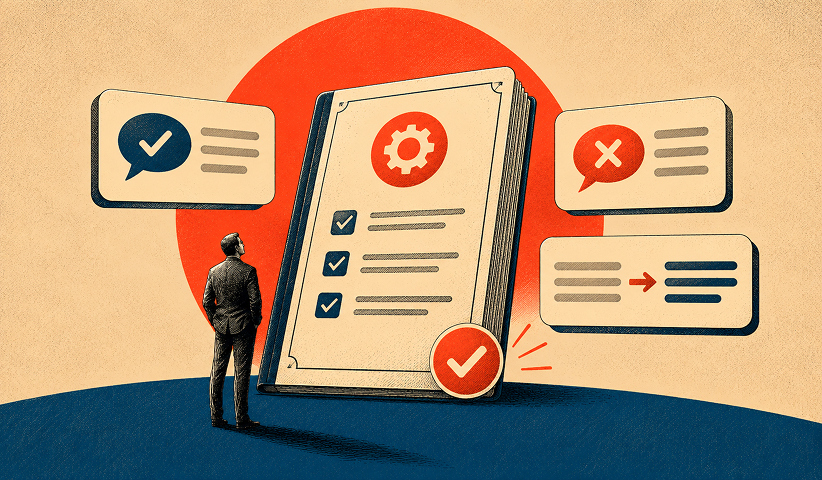

If you need evidence for a skeptical board, the Nielsen Norman Group ran a study in 2016. It built eight website samples along four tone dimensions. One insurance sample, inspired by a high-energy, almost goofy insurer, was rated funny, casual, irreverent and enthusiastic. Another, inspired by a more traditional insurer, was rated serious and matter-of-fact. A third borrowed the humor of a home-security brand’s copy. The NN/g tone-of-voice samples show that readers form a personality impression of a company from word choice alone, before they know anything else about it.
That is the commercial argument for voice. Your prospects are forming a view of you on the pricing page, in the nurture email and in the ad headline. Those views either add up or contradict each other.
The examples side by side
• Dove: warm, reassuring: direct address and relief from everyday worries signal care.
• Harley-Davidson: aspirational, confident: short lines and emotional payoff signal freedom and identity.
• Starbucks: friendly, sensory: flavor-led language and plain-language terms signal comfort.
• Nike: motivating, direct: action verbs and personalization convey momentum.
• Experian: smart, optimistic: defined voice traits communicate expertise and trust.
• Bark: playful, community-led: dog-owner humor builds belonging.
Notice what these have in common. Not one of them is trying to sound like “a leading provider of solutions.” Each picked a position and let the language prove it.
What startups and scale-ups should take from these examples
Most of the famous examples come from consumer brands with enormous budgets. A VC-backed SaaS company cannot borrow Nike’s swagger. It can borrow the method.
Start from the buyer, not the adjective. Bark mirrors dog owners. Your buyer is a CMO, a VP of Engineering or a founder. How do they describe their problem in a Monday-morning meeting? Use that vocabulary.
Let your position set the personality. The Columbia Business School brand language brief by Morais and Lerman says a tone must be believable to people familiar with the brand, compatible with the personality prospects expect, and consistent with the nature of the brand. A security company that jokes about breaches fails the first test. A creative-tools startup that sounds like an insurance policy fails the second.
Be specific about your value. Voice is carried by claims. Vague claims make every voice sound the same. If your value proposition is sharp, the voice has something to say; see our value proposition examples.
Plan for scale. At ten people, the founder’s instincts are the voice. At 100, with new marketers, agencies, sales reps and AI tools drafting copy, instinct is not enough. That is when a written guide earns its place.
How to define your brand voice in five steps
The sources agree on the shape of the process. Here is a version built for a leadership team that has limited time.
1. Listen to buyers: review interviews, sales calls, customer feedback and successful campaigns for recurring phrases and objections.
2. Choose three to five traits tied to positioning; define each in behavior terms and include one “not this” boundary.
3. Map tone to the moment: demonstrate how the voice adjusts for launches, pricing, complaints and sensitive updates.
4. Write a preferred-words list and rewrite real copy: headlines, CTAs, email openings and sales messages.
5. Validate with target readers, document the rules in one place, assign an owner and schedule regular reviews.
The word-list step is more useful than it sounds. Search Engine Land’s example swaps “leverage,” “optimize,” “synergy” and “robust” for “use,” “improve,” “work together” and “strong.” Ten such swaps will change your homepage more than a page of adjectives.
What belongs in the guidelines document
A guide nobody opens is worse than none. Keep it short and make it usable on a deadline.
• One-sentence voice statement connected to your positioning and target audience.
• Three to five actionable voice traits, each with a definition and a “do / do not” example.
• Vocabulary guide with preferred terms, jargon to avoid and product naming conventions.
• Tone examples for website, ads, lifecycle email, sales and customer support.
• Before-and-after copy rewrites that show how to apply the rules under a deadline.
• Ownership, review cadence, approval steps and guidance for AI-assisted drafting.
If you want to see how finished documents are laid out, our collection of brand guidelines examples shows what growing businesses include, and our brand voice guide on video walks through the build.
Keeping the voice consistent as you grow
The hard part is not writing the guide. It is the six months after. Three habits help.
• Assign a voice owner to review a sample of real customer-facing content every quarter.
• Put the rules inside templates, creative briefs, onboarding material and AI writing instructions.
• Check consistency and operational impact with an on-brand audit score, revision rounds and approval time; evaluate conversion outcomes separately.
Put the voice where the writing happens. Templates for emails, ad copy briefs and landing pages should carry the traits and the word list. If the guide lives only in a shared drive, it will not shape anything.
Review against the guardrails. A pass or fail test makes reviews fast and removes taste arguments. Ask whether the draft shows the traits and avoids the “not this” list.
Revisit it as the company changes. After a repositioning, a funding round or a move upmarket, the audience changes and the voice may need to move with it. Learn why this matters in our definition of brand consistency.
Where voice meets performance
Voice is easiest to justify when you can see it in the numbers. The same traits should show up in paid ad headlines, landing page copy, email and SMS flows and the sales deck. When they do, each touchpoint reinforces the last one, and your performance channels start working with a recognizable brand behind them.
• Test whether customers can describe your brand personality consistently after reading different channels.
• Run controlled copy tests on headlines or emails, measuring qualified conversions and downstream quality rather than clicks alone.
• Keep the offer and audience consistent when testing voice changes to avoid attributing unrelated performance shifts to tone.
That is the idea behind brand-backed performance™, and it is how we work at The Branded Agency: branding, creative, web and performance marketing planned together so the message a prospect sees in an ad is the one they find on your site and in their inbox.
Want to learn more about brand platforms, Brand Strategy and Brand Identity? Keep reading!
If you need help with your companies brand strategy and identity, contact us for a free custom quote.
How we can help

If your team is ready to define a voice and carry it across your website, creative and campaigns, our branding services are built for growth-stage companies and their leadership teams. We combine brand strategy, creative design, web development, paid media and retention marketing under one roof. Creative Services start from $4,000 per month and Growth Strategy from $8,500 per month, and you can see all service tiers on our pricing page.
If your current voice has drifted across channels, a rebrand is often the moment to reset it, and we can scope that with you.
Our perspective
Most voice projects fail for the same reason: they end as a document. A founder reads the adjectives, nods, and nothing changes in the ad account, the product pages or the lifecycle emails.
We treat voice as part of one growth system. It starts with positioning, because a voice has to say something true about where you stand. Then it shows up in the creative, the website, the paid media and the email and SMS flows, so every message a buyer meets feels like the same company.
That is why we build brand and performance together. A sharp voice makes a campaign easier to recognize. A campaign gives the voice a measurable place to prove itself. Our approach is designed to keep both accountable to results you can trace.
If you lead a startup, a scale-up or an established brand that needs to sound as ambitious as it is, start with three traits, three guardrails and one page. Then put them to work everywhere you speak.
- Quincy Samycia
Frequently Asked Questions

What is an example of a brand voice?
Dove is a clear one: warm, direct and reassuring, as in its invitation to stop stressing about frazzled hair. Harley-Davidson’s “Go the distance, in style” is another, short and aspirational. A voice is recognizable when the same personality appears in every channel, from a product page to a support reply.
What is the difference between brand voice and tone of voice?
Voice is the consistent personality of your company’s language. Tone is how that voice adjusts to a situation, such as a celebratory launch or a serious complaint. Both should clearly come from the same brand.
How many traits should a brand voice have?
Three to five is the working range in the guides we reviewed. Search Engine Land recommends exactly three because more are hard to remember and apply. Add a “not this” guardrail to each trait so writers can tell where the line is.
What should brand voice guidelines include?
A one-page guide works best. Include your traits with a sentence each, words to use and avoid, tone by channel and scenario, and before-and-after examples from your own copy. Our brand voice guidelines framework has a fuller template.
Sources
Nielsen Norman Group — The Four Dimensions of Tone of Voice
Nielsen Norman Group — Tone of Voice and Brand Perception
Experian — Expedition Leader Tone of Voice Guide
Mailchimp — Voice and Tone Guide

Quincy Samycia
As entrepreneurs, they’ve built and scaled their own ventures from zero to millions. They’ve been in the trenches, navigating the chaos of high-growth phases, making the hard calls, and learning firsthand what actually moves the needle. That’s what makes us different—we don’t just “consult,” we know what it takes because we’ve done it ourselves.
Want to learn more about brand platform?
If you need help with your companies brand strategy and identity, contact us for a free custom quote.
We do great work. And get great results.
+2.3xIncrease in revenue YoY
+126%Increase in repurchase rate YoY



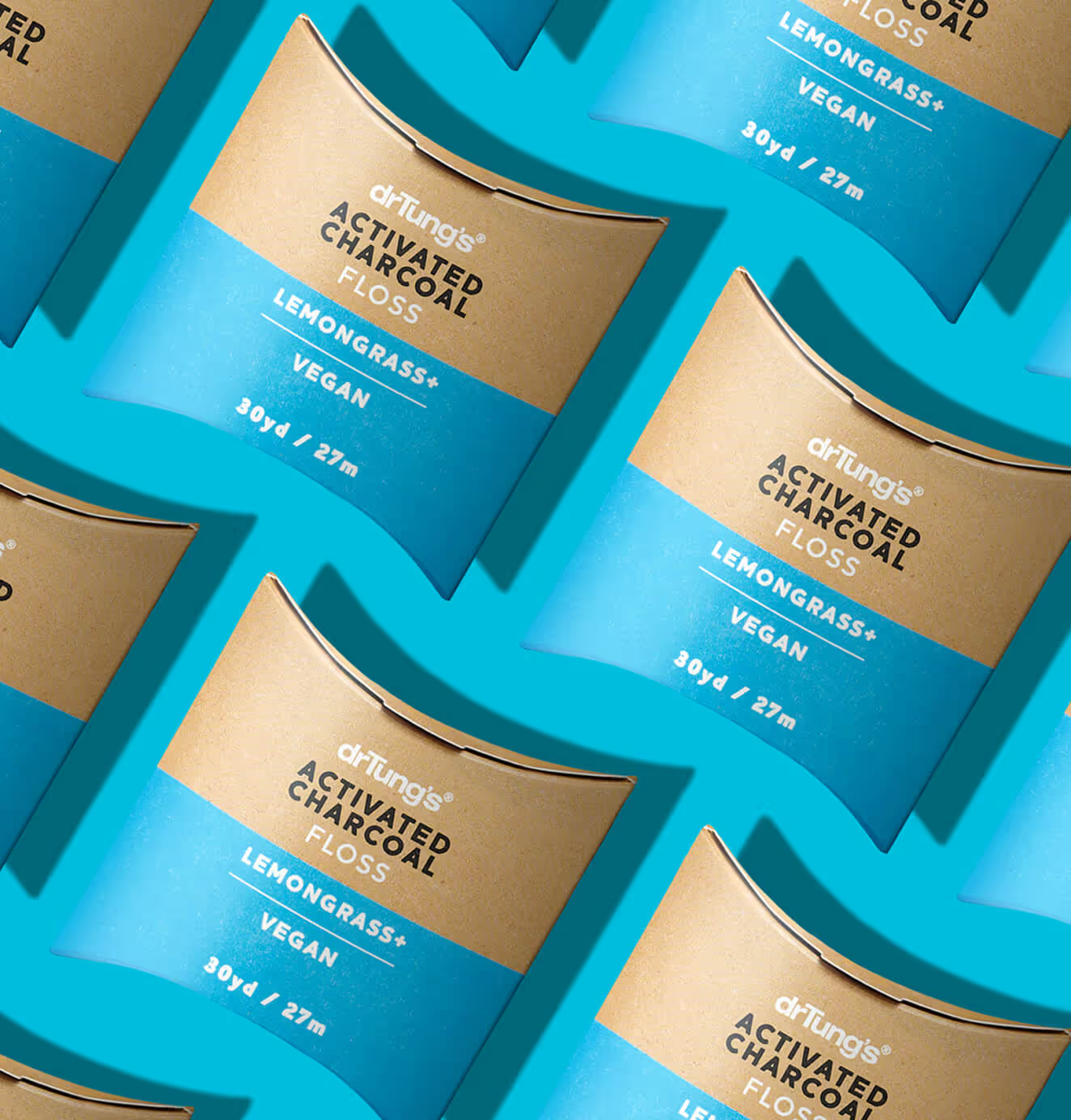
+93%Revenue growth in first 90 days
+144% Increase in attributed revenue




+91%Increase in conversion rate
+46%Increase in AOV


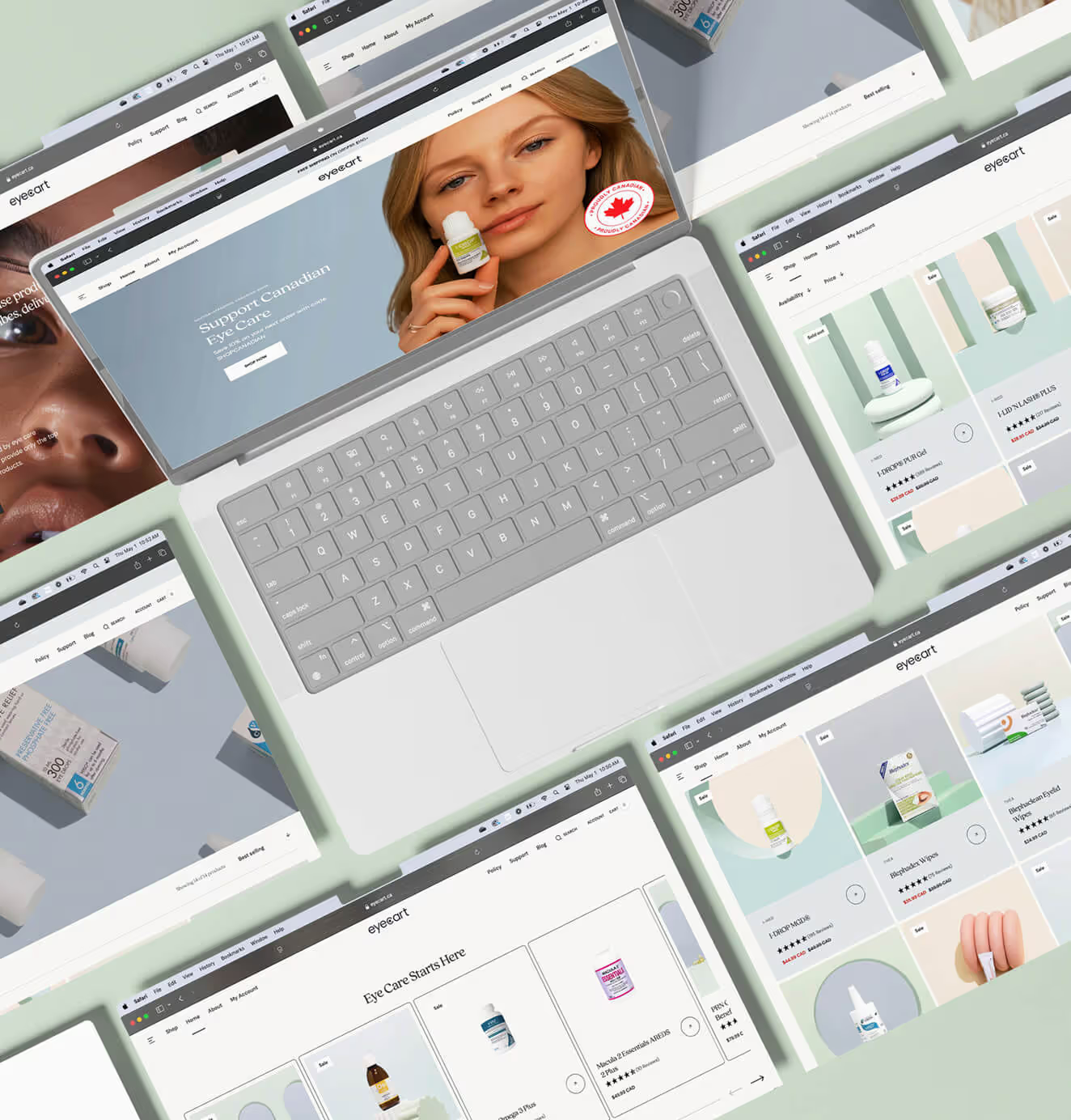
+200%Increase in conversion rate
+688%Increase in attributed revenue