A Guide to Creating a Distinct Brand Persona
03/20/2025
Brand Strategy

.png)


Crafting a Killer Brand Persona: Your Ultimate Guide



Free Brand Health Audit
Make sure your brand is built to sell

Mastering the Art of Brand Persona Creation



Want to learn more about brand platforms, Brand Strategy and Brand Identity? Keep reading!
What is a Brand Persona?

A brand persona represents the tone and voice you wish to use when communicating with customers. It is defined by specific attributes and brand values that shape how your brand is perceived.
A brand persona and brand identity both define what makes a brand unique through visual attributes, but brand identity is a wholesale term that covers all assets contributing to a brand’s representation. A brand identity typically includes a logo, website, typography style, and color palette, while a brand persona is another visual asset that fits within the brand identity. Visual elements like logo and color palette help make the brand persona recognizable and reliable to consumers. While a brand persona may take on the personality of an individual over time, brand identity maintains a more corporate and professional appearance. Brand identity is often less about tone and specific wording and more about overall goals and objectives, while brand persona encompasses identifiers and messaging. A reliable brand persona helps consumers connect with and trust the brand.
It’s not necessarily a person; instead, it can be any number of things: a group of people, an object, or even an animal.
The key is that it creates an emotional connection between your business and its audience by telling them what type of experience they should expect when dealing with your brand or product line.
For example, if you’re selling luxury watches, you might create a brand persona that communicates wealth and success by using words like “exclusive” and “high-end.”
However, if you’re selling sneakers for teens, you might use a more casual tone like “cool” and “fun.”
How to create a brand persona
Branding is a way of differentiating yourself from your competitors.
To create an effective brand persona, focus on the important things that shape your brand's personality, such as tone of voice, design style, values, and goals. A well-defined brand persona supports your marketing strategy and helps your organization communicate consistently across all channels. Positioning your brand as a leader in your industry can be reflected in your brand persona by highlighting your expertise and commitment to innovation, which builds trust and sets you apart from competitors. It's also important to understand the difference between a user persona—a detailed profile of your target audience—and a brand persona, which defines your brand's character and how it interacts with customers; both are essential tools in strategic marketing. Your brand persona should include core values, voice/tone, personality adjectives, and a backstory that explains its worldview. When building a brand persona, consider your brand's relationship with the customer and the role it serves in their life. Without a brand persona, it is difficult for a company to control how its target audience perceives it, making it essential for clear communication of values and goals.
It’s about making an emotional connection with your customers, leading to stronger customer loyalty and increased sales.
But how do you create an effective brand?
Here are 3 steps to creating a distinct brand persona:
Decide on your brand’s personality trait
The first step in creating a brand persona is deciding on one main trait that describes who you are and what you stand for.
This can be any of the 5 key branding personalities.
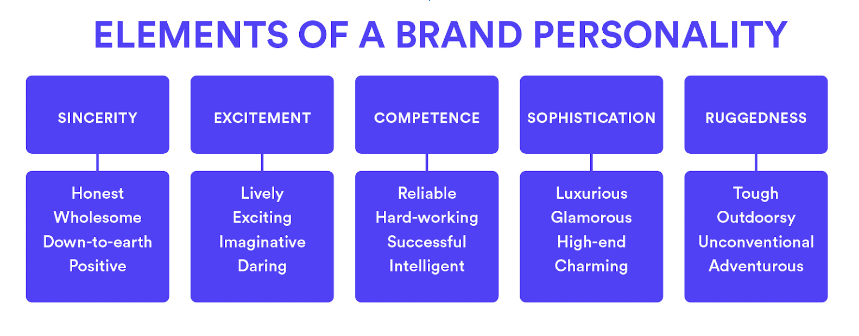
The Five Key Branding Personalities
1. Excitement
The excitement-branding personality is about being fun and exciting — like a superhero who can make anything happen just by showing up.
Brands like Nike, Disney, and Coca-Cola have this kind of branding personality because they want their customers to feel like they’re part of an adventure.
2. Sincerity
The sincerity-branding personality is all about being honest and genuine. It’s about being trustworthy, authentic, and simple — just like your friends who don’t try too hard to impress others with their image.
Brands like Whole Foods Market, Patagonia, and Honest Tea have this kind of branding personality because they’re not afraid to be themselves without worrying about what other people think of them. Dove is another example, with a brand persona centered on authenticity and care, aiming to make beauty a source of confidence, not anxiety.
3. Ruggedness
The ruggedness-branding personality is about being rugged and robust — like a superhero who doesn’t need anyone else’s help to get things done.
Brands like Jeep, Harley Davidson, and Caterpillar have this kind of branding personality because they want their customers to feel strong and confident when using their products or services.
4. Competence
The competence-branding personality is about being intelligent and competent — like a superhero who can handle any situation alone.
Brands like Apple, Google, and Microsoft have this kind of branding personality because they want their customers to feel they can rely on them for anything.
5. Sophistication
The sophistication-branding personality is all about being relaxed and sophisticated — like a superhero who knows the right thing to say in any situation.
Brands like BMW, Louis Vuitton, and Rolex have this kind of branding personality because they want their customers to feel like they belong in an exclusive club.
Your brand doesn’t need to have just one personality trait — it can have several — but it needs at least one to stand out from competitors and attract customers who resonate with this characteristic.
A brand’s personality can be determined by using several different factors
What are the values that your brand has?
For example, if you want to be seen as an innovative company, this should be reflected in your marketing material.
What are the emotions you want to evoke in potential customers?
For example, if you want them to feel happy when they see your product, this should be reflected in your marketing material.
What do you want people to think about when they think about your brand?
For example, if you want them to think about how good their lives would be if they used one of your products, then this should be reflected in your marketing material.
2. Understand your buyer persona
Understanding your buyer persona is the second step to creating a unique brand persona.
A buyer persona is a fictional representation of your ideal customer.
You can create as many buyer personas as you want, but it's best to start with one: the core customer.
The core customer should represent the most essential segment of your audience.
Your core customer should be defined by three or four characteristics that describe what makes them different from other people in their market.
For example, let's say you're an e-commerce store selling home goods and accessories.
You might describe your core customer as someone who lives in a house or apartment with an income between $40K and $60K annually.
They're married or have a significant other but don't have kids yet — they may even be planning on starting a family soon!
This step is vital because the personality of your brand and your target audience are intertwined.
It's a matter of compatibility and connection.
The more clearly you can define and know your target customers, the easier it will be to decide how to market to them.
In this example, we've described a hypothetical couple planning on starting a family.
This means they're likely looking for affordable home goods with a classic style — something that won't look out of place in their home once children are added to the mix.
The ideal scenario would have a brand personality that matches your target audience.
If your brand is all about being luxurious and sophisticated, then there will be a disconnect between who you are and what your customers want to buy from.
3. Create your brand persona profile
It’s time to create your brand persona profile.
Name - This can be anything from “Susie” to “Mandy” (or even “Bob”). It just needs to be something that makes sense for you and your business.
Image - This is the visual representation of your brand. It could be a photo of someone or even just a drawing. There are no rules for what this should look like—just ensure it’s consistent across all marketing materials so people know that it represents you and your business. Make sure your brand persona is recognizable and reliable to your audience, so it stands out and builds trust.
Personality - This is the personality of your brand. In other words, what are you like as a person? This can help guide your marketing efforts and ensure that everything you do reflects who you really are (and not some made-up character).
This should also describe how this person views and how others see them (e.g., confident, friendly).
Goals - These are what your business wants to achieve—what does success look like for your brand? What are the metrics for measuring this success?
Age - This is the age of your persona. This can be a young adult or an older person, depending on who you are trying to target with your marketing.
Likes/Dislikes - These are things that your persona would enjoy doing outside of work. This can be anything from art to sports and should show how this person views.
This is just a basic profile of your brand persona.
You can add more details to the profile as long as it accurately depicts your brand.
Establishing a brand persona is an important part of creating a strong brand identity


Sloane Avery
Want to learn more about brand platform?