Category Entry Points: A Practical Guide for Marketers
11/10/2026
Brand Strategy
Win more buying moments by identifying the real situations that trigger demand, then connect each one to memorable creative and measurable growth.
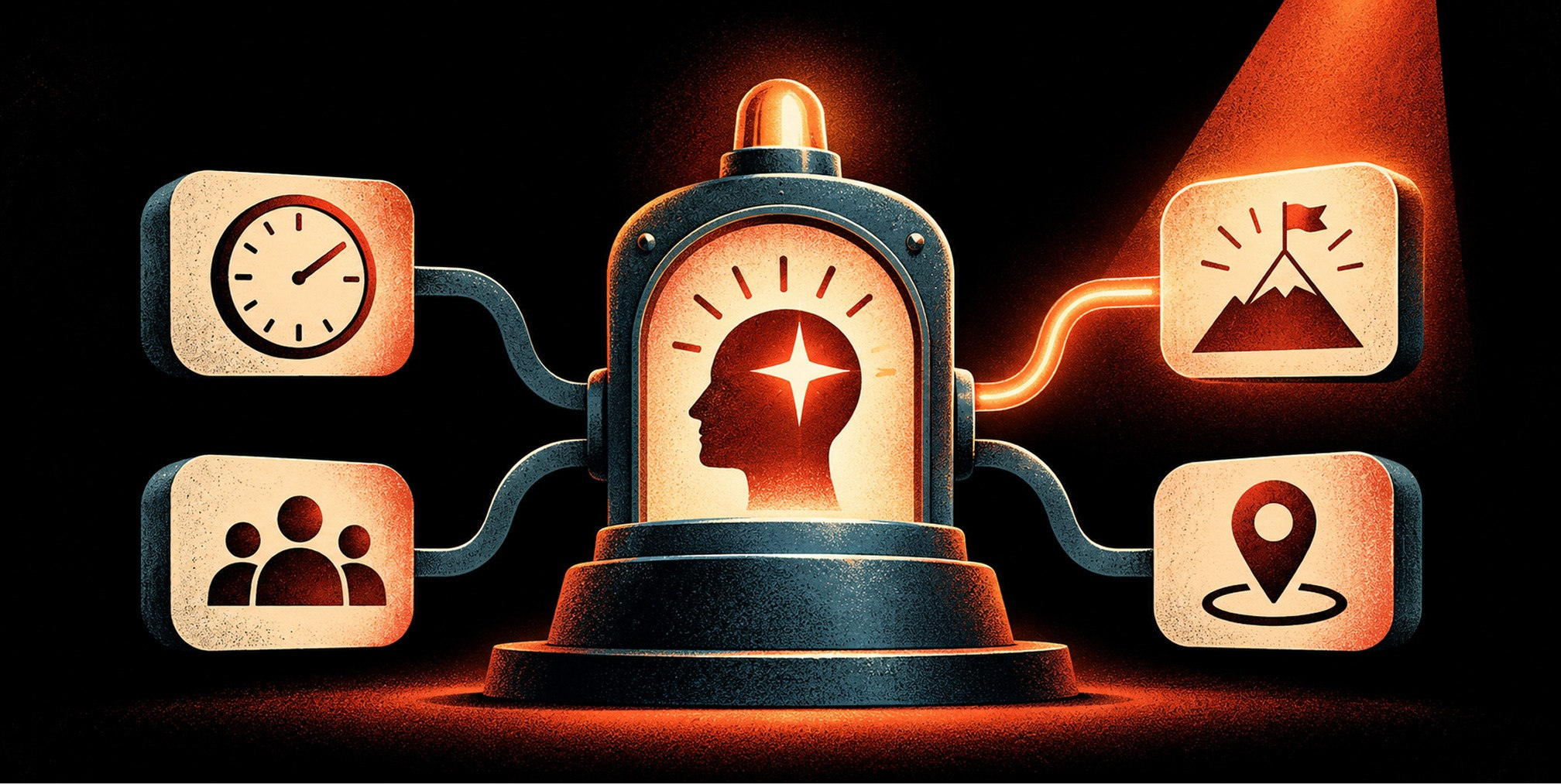
A category entry point (CEP) is a thought, need or situation that makes a buyer think about a product category. It is the moment someone starts to buy, before any brand is chosen. Brands that are linked to many of those moments get thought of more often, and brands that get thought of more often get shortlisted. This guide explains what CEPs are, how to identify and prioritize them, how to measure them, and how to build them into B2B and consumer marketing.


What a category entry point is
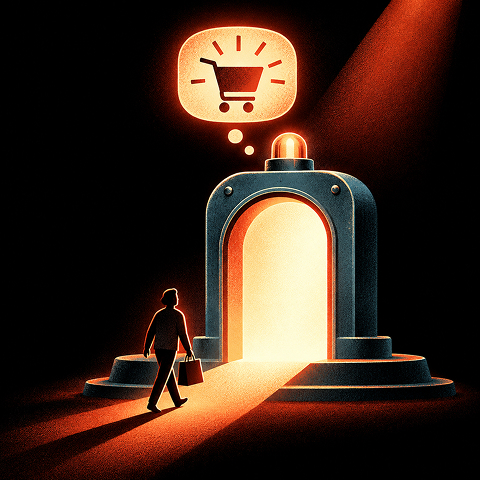

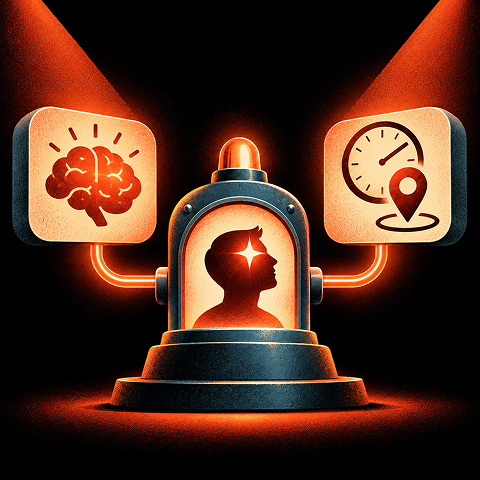
CEPs capture the thoughts category buyers have as they move into a purchase. They are the building blocks of mental availability. Think of them as the many doors into a category. Each door is a different reason, mood, moment or place that sends a buyer in.
The key point is who owns them. CEPs are about the buyer, not the brand, and they would exist even if your brand did not. A manager who has just lost a key customer, a founder preparing for a funding round and a team that has outgrown its tools are each in a situation. Your job is not to invent the situation. It is to be the brand that comes to mind when it happens.
CEPs versus touchpoints
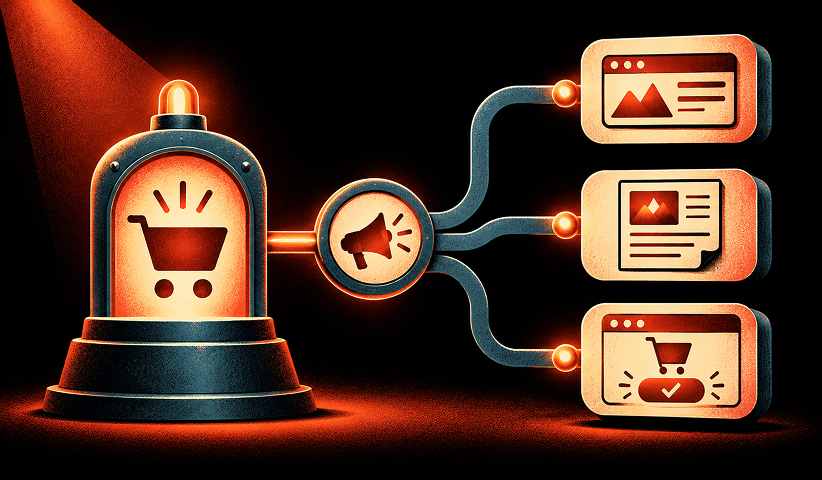
A touchpoint is where a buyer meets your brand: an ad, a webpage, an email, a sales call. A CEP is why the buyer is thinking about the category at all. Touchpoints are your channels. CEPs are the buyer’s context. Confusing the two leads teams to plan around where they want to show up rather than when the buyer is ready to listen.
• Buyer perspective: A category entry point is the situation, need or emotion that prompts category consideration; a touchpoint is the branded encounter that follows.
• Key question: CEPs answer “Why does this buying situation arise?”; touchpoints answer “Where does our brand interact with the buyer?”
• Independence: A CEP exists even when your company does not; your website, ads and sales calls are brand-controlled touchpoints.
• Example: “Our current provider missed a deadline” is a CEP; the comparison page viewed afterward is a touchpoint.
Internal and external cues
CEPs come from two directions. Internal cues are motives and emotions, such as feeling behind plan or wanting to impress a board. External cues include location, time of day and the people involved. The B2B research from Ehrenberg-Bass describes both kinds as shaping which brands are mentally available to decision-makers.
Why CEPs matter for growth
CEPs matter because they connect two ideas that marketers often treat separately: relevance and memory. A brand that is tied to a specific situation is recalled when that situation arrives. A brand that is tied to none is invisible at the very moment the buyer is ready.
The broader framework separates two kinds of availability. Mental availability is how readily a brand comes to mind in category buying situations, while physical availability is how easy it is to find and buy. CEPs sit on the mental side. Linking a brand to CEPs, together with distinctive brand assets, builds a mental shortcut so buyers think of it and recognize it quickly.
There is a planning benefit too. Marketing Week’s 2022 account says CEP-focused planning makes communications customer-centric by linking messages to the cues buyers use to access memories in a buying situation. Instead of asking what we want to say about ourselves, the team asks which buying moments we want to own.
The same B2B research makes an important caveat for growth: being thought of is the first step, but the brand must also be easy to buy. Strong CEP linkage without a clear website, offer and sales path leaves demand on the table. That is why we treat brand and performance as one system.
Category entry point examples
Consumer examples make the idea easy to see. Quantilope’s guide lists cereal for a quick nutritious breakfast or for children, soft drinks after exercise, face wash in the morning, fast food on a long road trip, and house cleaning when guests stay over. Notice that each one is a situation, not a product attribute.
Real data shows how ordinary these moments tend to be. Morning Consult’s study of 20 consumer categories found that the largest entry occasions were generally routine and functional rather than aspirational, such as replenishment, feeding the family or getting through the afternoon. In the same study, about 40% of respondents entered fast casual because they were too tired to cook, and about 44% entered casual dining because they wanted to take the family out. Premium credit cards split closely: 33% entered for maximizing points and 31% for travel.
Two lessons follow. The biggest CEPs are often unglamorous. And two close CEPs in the same category, like points versus travel, can split a market almost evenly, so a brand that owns only one leaves half the doors open to someone else.
B2B examples
B2B categories have their own entry points. These are illustrative situations, the kind a research survey would test, not findings from a study:
• A CFO inherits a higher acquisition cost after a budget review and begins evaluating performance agencies.
• A founder completes a funding round and needs the brand to reflect the company’s new scale.
• A marketing manager changes jobs and inherits inconsistent messaging across regional teams.
• A sales leader misses the pipeline target and looks for better lead qualification tools.
• An operations director faces a compliance audit and begins evaluating a more reliable vendor.
Each of these has a buyer, a moment and an emotion. Each suggests a message that would feel relevant on the day it is read.
How to identify your category entry points
The research approach has two stages: first generate a wide list of CEPs, then quantify them. Here is a workable process.
• Interview recent buyers and lost prospects: ask what happened immediately before they considered the category.
• Gather raw cues from customer calls, reviews, CRM notes, search queries and support tickets; capture situations in buyers’ own words.
• Organize cues into context, task, emotion, time, place and social influences; merge duplicates without erasing meaningful differences.
• Use a category-buyer survey to estimate how commonly each cue occurs and which brands are associated with it.
• Validate cue wording with respondents before finalizing a repeatable baseline list.
A useful starting source for B2B teams is your own closed-won and closed-lost interviews. Ask: what was happening in the month before you started looking? The answers are often more specific than any persona document.
Free Brand Health Audit
Make sure your brand is built to sell
Search has changed. Your customers aren't just Googling anymore. They're asking ChatGPT, Perplexity, Gemini and other AI platforms what to buy, who to trust and which brands they should consider.
If your brand isn't showing up clearly in those answers, you're already losing opportunities. Our free Brand Health Audit shows you where your brand stands across traditional search, AI search and brand positioning.

Sample brand audit
Live preview
Traditional search
72
AI search (GEO)
34
Brand positioning
58
How to prioritize them

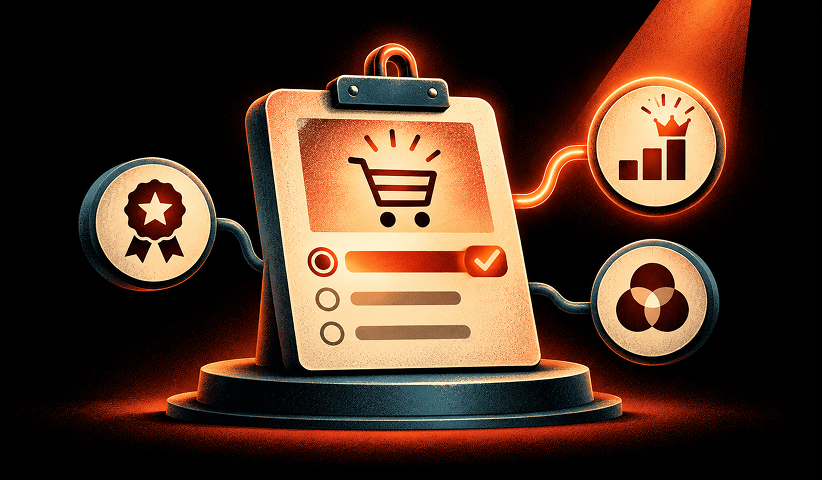
You will not own every CEP, and you should not try. The Marketing Week account describes three filters, the three Cs:
• Credibility: Can your brand realistically deliver in the situation and support the promise with evidence?
• Competitiveness: Is the moment already dominated by a rival, or is there room for a distinctive association?
• Commonality: How often does the buying situation arise across category buyers?
A simple scoring grid keeps the debate honest. Rate each CEP from 1 to 5 on each C, then look at the top tier.
• Illustrative scoring: “New funding, brand must match ambition” = credibility 5/5, competitiveness 3/5, commonality 4/5; high priority.
• Illustrative scoring: “Paid media spend rising, returns flat” = 5/5, 2/5, 5/5; high priority, but crowded.
• Illustrative scoring: “New executive inherits fragmented brand” = 4/5, 4/5, 3/5; medium-high priority.
• Illustrative scoring: “Need more leads” = 3/5, 1/5, 5/5; broad and highly contested.
• Scores are workshop hypotheses, not measured market data; confirm them through buyer research.
The scores above are an example of the format, not data. The point is to expose trade-offs. A frequent but crowded CEP can still be worth entering if you have a distinctive angle. A rare but open one may suit a niche campaign.
How to build CEPs into your marketing
The four-step B2B Institute framework ends with building CEPs into communications and measuring them. The full B2B guide lays out four steps: identify, prioritize, build into marketing communications, and measure. Here is how that looks in practice.
Messaging and creative
Open with the situation, not the service. “Funding closed, and the brand still looks like the seed round” lands harder than “Full-service branding.” Pair each priority CEP with a consistent set of distinctive assets, such as colors, language and a recognizable format, so the link between situation and brand is repeated and remembered.
Media and channels
Match media to moments. Search captures buyers who are already in the situation. Paid social, video and sponsorships reach buyers before the trigger happens, which is when memory is built. If you are working on paid search specifically, our B2B Google Ads strategy guide shows how to organize campaigns around buyer intent. For the broader mix, see B2B marketing strategies for 2026.
Content and SEO
Each priority CEP can anchor a cluster of content: a problem-led article, a comparison, a case story and a checklist. This is where content strategy turns research into assets that match the way buyers actually phrase their need.
Website and conversion
A buyer who arrives from a CEP-led ad should see the same situation on the landing page. If the page speaks only in feature lists, the thread breaks. Physical availability, meaning an easy path to a demo, a quote or a purchase, completes the job.
Retention
CEPs are not only for acquisition. Customers also have recurring situations in which they think about the category again. Lifecycle messaging that connects to those moments helps turn one-time buyers into repeat fans. Our glossary entry on lifecycle marketing covers the full-funnel view.
How to measure CEP performance
Measurement tells you whether the linking is working. Quantilope’s guide defines three metrics:
• Mental penetration: The proportion of category buyers who associate your brand with at least one tested CEP.
• Network size: The average number of CEP associations among buyers who associate your brand with the category.
• Mental market share: Your brand’s share of all measured CEP-to-brand associations within the competitive set.
Can category entry points improve lead generation?
Yes. They identify the situation behind demand so ads and landing pages can address it directly. Measure lead quality and pipeline separately from CEP associations.
How often should CEPs be measured?
Establish a baseline before a substantial campaign and repeat after two or three quarters, using consistent survey wording and a comparable buyer sample.
Track all three against your competitive set, in waves, using the same CEP list each time. Mental penetration tells you reach, network size tells you depth, and mental market share tells you how your brand compares with all possible entry points.
A practical cadence for a growth-stage company: run a baseline survey before a major brand or campaign push, then repeat after two to three quarters. Connect the results to pipeline quality and branded search trends so leadership sees the brand work and the revenue work as the same story.
One warning from the research literature: CEPs belong to a category. A list that works for one category should be tested again before use in another, rather than borrowed.
Want to learn more about brand platforms, Brand Strategy and Brand Identity? Keep reading!
If you need help with your companies brand strategy and identity, contact us for a free custom quote.
Our perspective
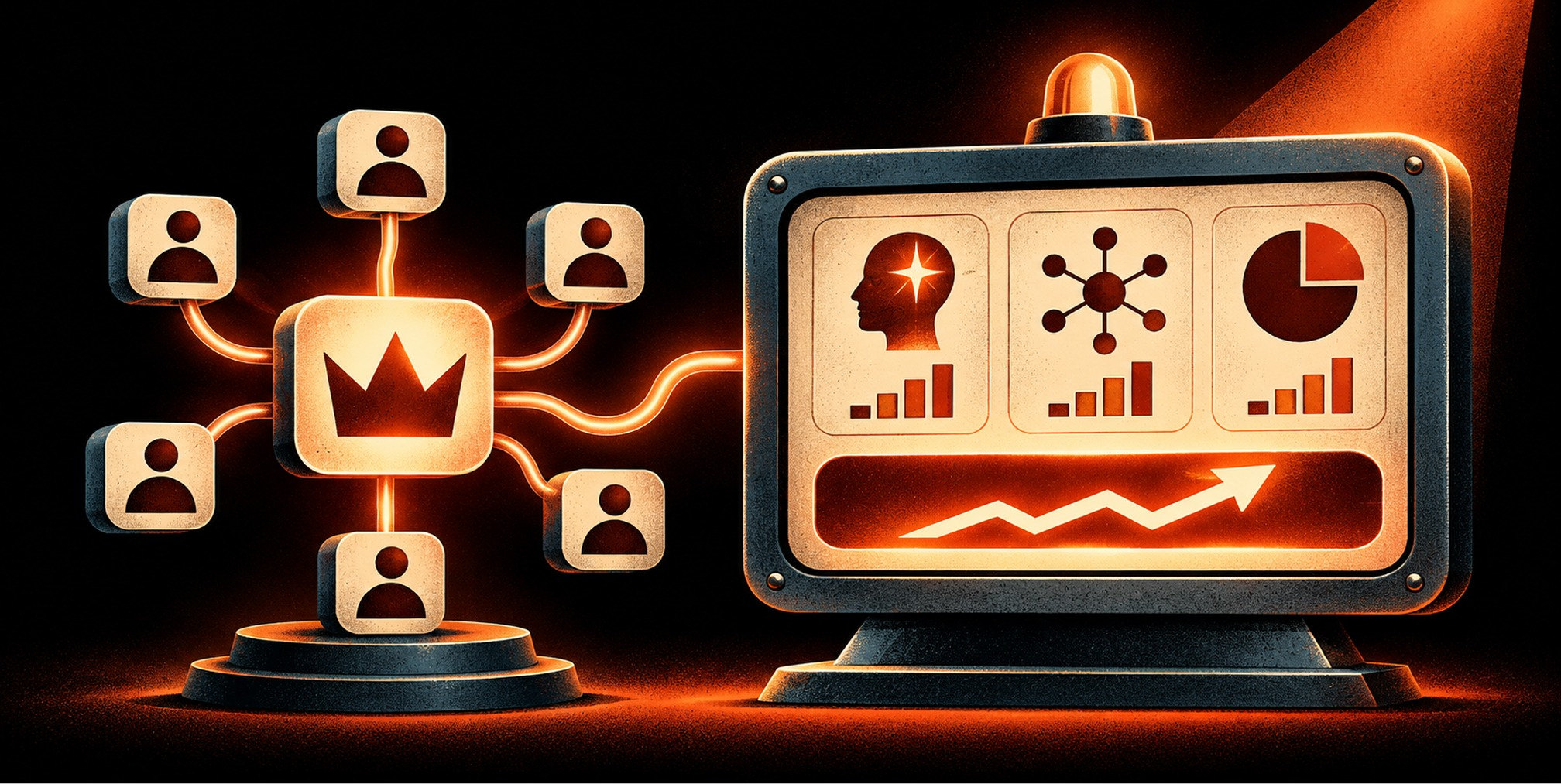
We see category entry points as the missing bridge between branding and performance marketing. Most teams split the two: brand work builds a story, performance work chases the click. CEPs show why that split costs growth. The click happens when a buyer is in a situation, and the brand that already lives in that situation gets the click, the shortlist and the call.
That is the idea behind brand-backed performance™. We start by defining the buying situations that matter for your category. We then align positioning, creative, web experience, paid media and retention so every asset links your brand to those moments, and so every campaign can be traced to a result.
For ambitious startups and scale-ups, this is also a way to find green space. Instead of competing for the same crowded trigger as everyone else, we look for situations where your brand can credibly own the moment. That is how you make your product impossible to ignore, from the first launch to the IPO and beyond.
- Quincy Samycia
Put CEPs to work with The Branded Agency
If you lead marketing at a growth-stage company, CEP thinking changes the brief. It tells your brand team what to say, your paid team where to show up and your web team what the landing page must confirm.
We combine executive-level branding, web development, creative, paid media and retention under one roof, so the situations you choose to own show up consistently everywhere a buyer looks.
Our published monthly starting points include Paid Media Management from $5,500, Content Marketing from $5,500, Creative Services from $4,000 and Growth Strategy from $8,500. Branding and website work are scoped per project. See the full list of services and pricing, or talk to our team about the buying moments your brand should own.
Common mistakes to avoid
• Do not confuse a CEP with a campaign channel; research why the buyer enters the category before choosing where to advertise.
• Do not make up CEPs from internal personas alone; validate them with category buyers, including noncustomers.
• Do not prioritize only rare, dramatic occasions; routine triggers may represent more category demand.
• Do not claim ownership from one survey wave; repeat measurement using consistent prompts and sample definitions.
• Do not build awareness without a usable path to purchase; mental and physical availability need to work together.
Frequently Asked Questions
What is a category entry point?
A category entry point is an internal or external cue that triggers a buyer to think about a category. It might be a need, a motive, an emotion, a place or a time. It is defined from the buyer’s side, so it exists whether or not your brand does.
How are category entry points different from touchpoints?
Touchpoints are the places where a buyer meets your brand, such as ads, email or your site. CEPs are the situations that put the buyer in the market to begin with. You plan touchpoints around CEPs, not the other way around.
How do you use category entry points in B2B marketing?
The B2B Institute framework has four steps: identify the category’s CEPs, prioritize them, build them into communications and measure how well buyers link your brand to them. In B2B, the triggers are often operational, financial, emotional or timing-related. They shape which vendors are in the buyer’s first consideration set.
How many category entry points should a brand target?
There is no fixed number. Score each CEP on credibility, competitiveness and commonality, then focus on the top tier while keeping a wider list for the long term. The goal is to grow the number of situations in which buyers think of you

Quincy Samycia
As entrepreneurs, they’ve built and scaled their own ventures from zero to millions. They’ve been in the trenches, navigating the chaos of high-growth phases, making the hard calls, and learning firsthand what actually moves the needle. That’s what makes us different—we don’t just “consult,” we know what it takes because we’ve done it ourselves.
Want to learn more about brand platform?
If you need help with your companies brand strategy and identity, contact us for a free custom quote.
We do great work. And get great results.
+2.3xIncrease in revenue YoY
+126%Increase in repurchase rate YoY


+93%Revenue growth in first 90 days
+144% Increase in attributed revenue




+91%Increase in conversion rate
+46%Increase in AOV


+200%Increase in conversion rate
+688%Increase in attributed revenue