How to Write Context Hints for ChatGPT Ads: Examples and Best Practices
09/10/2026
Marketing Services
A 2026 guide to writing ChatGPT Ads context hints — formulas, examples by industry, weak vs. strong hints, and how to test and troubleshoot them.
Context hints are one of the most important-and least familiar-parts of creating a ChatGPT Ads campaign.
.png)


What Context Hints Are, How They Differ From Keywords, and How to Write Strong Ones
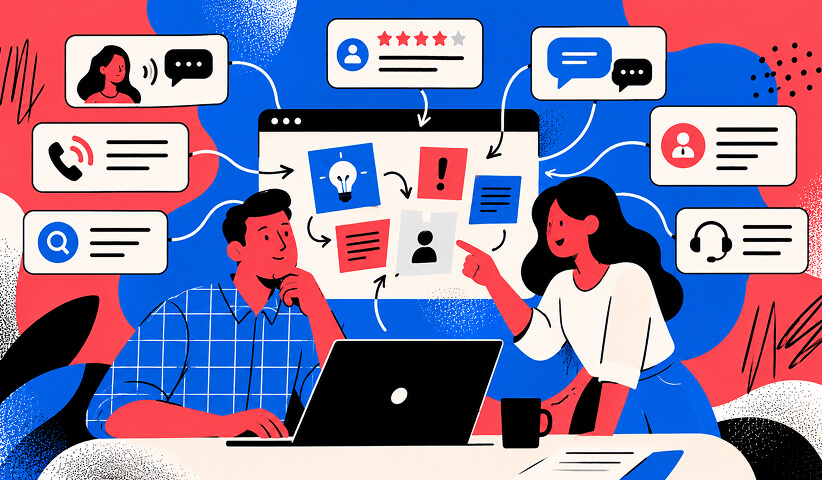
Google Search advertisers use keywords. Meta advertisers use audiences, creative and behavioural signals. ChatGPT advertisers use context hints to help OpenAI understand the conversations in which a product or service may be relevant. A weak context hint such as "marketing" gives the platform very little useful information. A stronger context hint might be: "Marketing leaders comparing agencies that combine brand strategy and paid-media management." The second version describes a potential customer, business need and decision context. In this guide, we explain what ChatGPT Ads context hints are, how they differ from keywords and how to write stronger hints for e-commerce, B2B, software, local services, travel, education and professional services.
What Are ChatGPT Ads Context Hints?
Context hints are descriptive phrases added at the ad-group level inside OpenAI Ads Manager. They describe the conversations, topics, needs or situations in which the ads may be relevant. OpenAI can consider context hints alongside signals such as current conversation context, ad title, ad description, landing page, campaign settings, geographic targeting, bid, custom audiences, and advertiser eligibility. Context hints guide matching, but they do not guarantee that an ad will appear in a specific conversation. OpenAI describes them as broad thematic signals rather than exact-match targeting rules, per OpenAI's official context-hint guidance.
Context Hints vs. Keywords
Context hints and keywords both help connect advertisements with relevant intent, but they work differently.
| Search Keywords | ChatGPT Context Hints |
|---|---|
| Often short terms or phrases | Usually descriptive phrases |
| Can use match types | No equivalent exact, phrase or broad-match syntax |
| Advertiser targets searches | Advertiser describes relevant conversations |
| Search-term reporting may be available | Individual ChatGPT conversations are not disclosed |
| Negative keywords provide exclusions | No direct equivalent to a traditional negative-keyword list |
| Search query is often the central signal | Broader conversation context can influence relevance |
A Google keyword might be "Shopify agency." A ChatGPT context hint might be "Established consumer brands looking for an agency to redesign and develop a Shopify website." The second phrase captures more of the situation.
How ChatGPT Ads Are Matched
ChatGPT Ads can appear below eligible responses when OpenAI determines that an approved advertisement is relevant. OpenAI says its system primarily evaluates relevance to the context and intent of the conversation. Context hints are one input, but they are not the only factor. An advertisement may still fail to deliver when the conversation is not relevant, the bid is uncompetitive, the campaign budget is exhausted, the user is not eligible to receive ads, the category is restricted, the conversation involves a sensitive context, geographic targeting does not match, the landing page is inaccessible, the campaign or advertisement is under review, or the ad is not sufficiently useful or relevant. Context hints improve the information available to OpenAI. They do not override the rest of the advertising system.
Why Context Hints Matter
A short advertisement cannot communicate every relevant customer situation. An ad might say, Title: "Rebuild on Shopify." Copy: "Strategy, UX and development for scaling brands." This identifies the offer but does not explain every use case, such as migrating from WordPress, moving from a template to a custom design, redesigning after a rebrand, improving subscription shopping, supporting wholesale customers, or expanding from Canada into the United States. Context hints can provide this additional information without forcing every detail into the ad.
What Makes a Strong Context Hint?
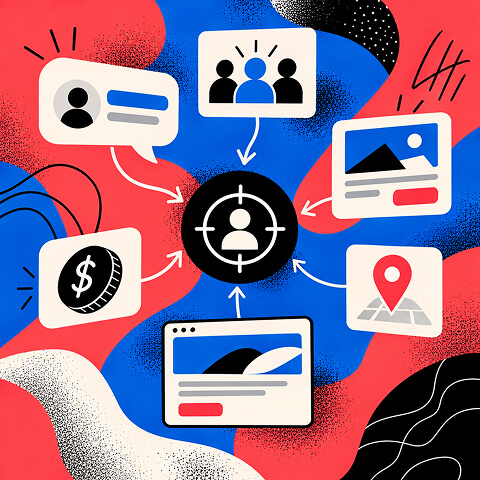
A strong context hint generally includes some combination of customer, need, situation, product or service, intended use, constraint, and decision stage. A practical formula is: [Customer] + [need or situation] + [relevant solution]. For example: "Small-business owners looking for accounting software that supports Canadian sales tax." Or: "Travellers comparing lightweight carry-on suitcases for international flights." The context hint does not always need to include all three components, but it should describe a real situation rather than a vague topic.
Context hint formula examples
Customer plus need: "Marketing directors looking for a brand-positioning agency." Problem plus solution: "Shopify stores struggling to understand which advertising channels generate new customers." Situation plus product: "Travellers preparing for a two-week European trip who need compact luggage." Customer plus constraint: "Small teams comparing CRM software that is affordable and easy to implement." Purchase stage plus category: "Business owners comparing Webflow and WordPress development agencies." Use case plus feature: "Remote teams looking for project-management software with time tracking and client access."
| Weak | Stronger |
|---|---|
| Marketing | Marketing leaders comparing paid-media agencies |
| Branding | Established companies preparing for a rebrand |
| Website | Businesses migrating a large website from WordPress to Webflow |
| Luggage | Travellers comparing lightweight international carry-on luggage |
| Accounting | Canadian small businesses looking for sales-tax accounting software |
| Floss | Shoppers comparing natural dental floss for tightly spaced teeth |
| CRM | Ten-person sales teams looking for an easy-to-implement CRM |
| Education | Marketing professionals looking for practical Google Ads training |
| Furniture | Apartment renters looking for compact modular furniture |
| Travel | Families planning an all-inclusive Caribbean vacation |
Free Brand Health Audit
Make sure your brand is built to sell
Search has changed. Your customers aren't just Googling anymore. They're asking ChatGPT, Perplexity, Gemini and other AI platforms what to buy, who to trust and which brands they should consider.
If your brand isn't showing up clearly in those answers, you're already losing opportunities. Our free Brand Health Audit shows you where your brand stands across traditional search, AI search and brand positioning.

Sample brand audit
Live preview
Traditional search
72
AI search (GEO)
34
Brand positioning
58
Hint Length, Volume, Ad-Group Structure, and Researching Real Customer Language


How Long Should Context Hints Be?
OpenAI does not require every hint to follow one exact word count. A context hint should be long enough to describe a meaningful situation but short enough to remain focused. Most effective hints will likely be one concise phrase or sentence. Too short: "Software." Focused: "E-commerce teams comparing attribution software for Shopify." Too long: "E-commerce teams with between eight and fifteen employees that have been using Shopify for at least three years and spend more than $100,000 every month on Facebook, Instagram and Google but do not understand how to calculate the exact incrementality of every marketing channel." The overly long version combines too many restrictions and assumptions. Break substantially different situations into separate hints or ad groups.
How Many Context Hints Should You Use?
The ideal number depends on the ad group. The goal is not to add as many phrases as possible. The goal is to cover meaningful variations within one focused intent theme. A useful starting point could include five to ten well-defined hints for each ad group. For example, a Shopify-development ad group might include: established brands planning a Shopify website redesign; businesses migrating from WordPress to Shopify; Shopify Plus brands looking for UX and conversion optimization; consumer brands seeking custom Shopify development; e-commerce teams improving subscriptions and product bundles; companies redesigning Shopify after a rebrand; and retail brands expanding from DTC into wholesale e-commerce. If the list begins to cover unrelated services, create another ad group.
How to Organize Context Hints Into Ad Groups
Every ad group should represent one focused theme. A good ad-group structure under a campaign called "Agency Lead Generation" might separate ad groups into brand positioning, packaging design, Shopify development, and paid-media management, with each group receiving its own context hints, ads and landing page. A weak ad-group structure lumps rebranding, Meta advertising, Shopify development, packaging, email marketing, website maintenance and public relations into one ad group called "Agency Services" — the services may belong to the same agency, but the customer needs are too different for one focused ad group.
How to Research Context Hints
Do not invent every hint in a brainstorming session. Use evidence from customer interviews, sales calls, search-term reports, website-search data, customer-service tickets, reviews, Reddit discussions, social comments, request-for-proposal documents, contact-form submissions, CRM notes, competitor reviews, and chatbot conversations. Look for phrases that reveal what happened before the customer began searching, how the customer describes the problem, which constraints matter, which alternatives they are comparing, what makes the decision difficult, which outcome they want, and which objection delays action.
Use search terms as a starting point
Google Ads search terms can help identify how customers express intent. A search term such as "branding agency for food startup" could become "Food and beverage startups looking for a branding agency before launch." A search term such as "migrate wordpress to shopify" could become "Businesses planning to migrate an e-commerce website from WordPress to Shopify." Do not simply copy an entire keyword list into context hints. Translate keyword demand into conversational situations.
Use sales calls to find context
A prospect might say: "We already have a logo and brand guidelines. We need to redesign five packaging SKUs, but we want to approve two initial directions before applying one system to the rest." That could inform several hints: established brands redesigning packaging without replacing their identity; food companies seeking packaging design across several SKUs; consumer brands testing packaging directions before full rollout; and companies extending one approved packaging system across a product family. These hints come from a real buying situation.
Want context hints that actually earn ChatGPT ad delivery? Keep reading!
If you need help building customer-research-backed ChatGPT Ads campaigns, contact us for a free custom quote.
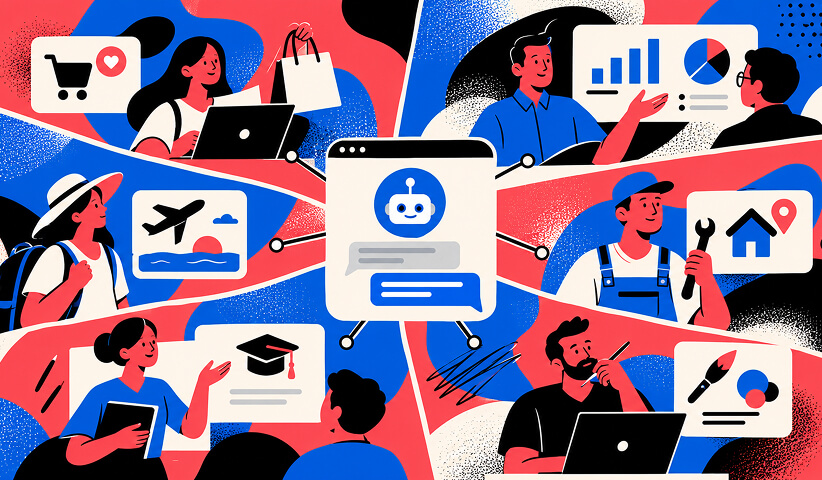
Context Hint Examples for E-Commerce, B2B Software, and Agencies

Context Hints for E-Commerce
General product discovery: shoppers comparing products based on price, features and intended use; consumers looking for practical alternatives to conventional products; people researching products before making an online purchase; shoppers comparing premium and lower-cost options; customers looking for products that ship to Canada.
Oral-care products: shoppers comparing reusable tongue cleaners; consumers looking for stainless steel oral-care products; people comparing copper and stainless steel tongue cleaners; shoppers looking for natural dental-floss options; families looking for multipacks of everyday oral-care products; travellers seeking compact oral-care products; consumers comparing low-waste dental-care alternatives. Avoid hints that target sensitive personal-health conversations. OpenAI does not place ads near sensitive health contexts.
Travel products: international travellers comparing lightweight carry-on luggage; business travellers looking for durable rolling suitcases; shoppers seeking carry-on luggage below a specific budget; travellers comparing hard-shell and soft-shell bags; people preparing luggage for a two-week European trip; travellers concerned about airline cabin-size limits; families comparing luggage sets for upcoming vacations.
Furniture: apartment renters looking for compact furniture; homeowners comparing modular sectional sofas; people furnishing a small home office; shoppers seeking easy-to-assemble furniture; consumers comparing durable furniture for homes with pets; buyers looking for dining tables suitable for small spaces.
Consumer electronics: remote workers comparing laptops for video calls and office software; creators looking for laptops that can edit 4K video; students comparing affordable tablets for note-taking; travellers looking for noise-cancelling headphones; shoppers comparing smart-home devices that work with existing systems.
Context Hints for B2B Software
CRM software: small sales teams comparing easy-to-implement CRM platforms; growing businesses moving from spreadsheets to a CRM; companies looking for CRM software with email integration; professional-service firms comparing client-management software; sales leaders looking for a CRM with pipeline reporting; remote sales teams seeking simple contact and follow-up management.
Project-management software: remote teams comparing project-management platforms; agencies looking for project tracking with client access; operations teams seeking workload and resource planning; small companies replacing spreadsheets with task-management software; professional-service teams looking for time tracking and project profitability; marketing departments comparing creative review and approval tools.
Marketing attribution software: Shopify brands comparing marketing-attribution platforms; e-commerce teams trying to understand Meta and Google performance; marketing leaders looking for new-customer attribution; businesses comparing multi-touch and last-click reporting; consumer brands looking for blended marketing-efficiency reporting; teams evaluating server-side advertising measurement.
Context Hints for Agencies
Brand strategy: established businesses looking to clarify brand positioning; leadership teams preparing to reposition their company; consumer brands entering a new market; founders comparing brand-strategy agencies; companies whose visual identity no longer reflects their scale; businesses preparing for a rebrand before website development; organizations aligning several sub-brands under one architecture.
Packaging design: CPG brands developing packaging for several SKUs; frozen-food companies preparing retail packaging; consumer brands extending one packaging direction across a product family; businesses needing production artwork from manufacturer dielines; e-commerce brands improving packaging for digital shelves; startups preparing packaging for retail buyers; established brands refreshing packaging without replacing their identity.
Shopify services: consumer brands looking for custom Shopify design and development; businesses migrating from WordPress to Shopify; Shopify Plus brands improving conversion and user experience; e-commerce teams rebuilding product and collection templates; retail brands adding wholesale functionality to Shopify; companies updating Shopify after a rebrand; subscription brands improving product-page conversion.
Paid media: consumer brands looking for Meta and Google Ads management; e-commerce companies trying to improve new-customer acquisition; marketing teams seeking integrated media and creative strategy; brands looking for an agency to manage paid media and landing pages; companies comparing performance-marketing agencies; businesses with increasing advertising costs and declining ROAS.
Local, Travel, Education, and Regulated Categories, Hints to Avoid, and Testing

Context Hints for Local Services
Local-service hints should include the need and service area where appropriate. Landscaping: homeowners looking for recurring landscaping services in Sechelt; property owners needing blackberry removal on the Sunshine Coast; homeowners comparing monthly garden-maintenance providers; residents looking for seasonal yard cleanup; property managers seeking reliable landscaping support. Dental services: families looking for a dental clinic accepting new patients; people comparing cosmetic dental services in Vancouver; residents looking for weekend dental appointments; parents searching for a family dentist near downtown Vancouver. Avoid hints focused on sensitive personal medical conditions. Home services: homeowners looking for an emergency plumber in Vancouver; property owners comparing residential roofing contractors; homeowners planning a kitchen renovation; residents looking for licensed electricians nearby; landlords seeking recurring property-maintenance services. Location targeting inside Ads Manager must still support the service area. A location phrase in a context hint does not replace campaign-level geographic targeting.
Context Hints for Travel
Couples comparing boutique hotels in London; families planning an all-inclusive Caribbean vacation; business travellers looking for hotels near a convention centre; travellers seeking pet-friendly accommodations; visitors comparing luxury hotels within walking distance of major attractions; tourists planning a three-day itinerary in Vancouver; travellers looking for direct flights between Canada and Europe; families comparing vacation activities suitable for young children. Travel campaigns should separate substantially different destinations, customer types, budgets, accommodation categories, and seasonal offers.
Context Hints for Education
Marketing professionals looking for practical paid-media training; founders learning how to build a brand strategy; business owners comparing online accounting courses; managers looking for leadership-development programs; designers seeking advanced packaging-design training; e-commerce teams looking for Shopify conversion training; professionals comparing certificate and non-certificate courses; teams seeking private corporate workshops. Do not imply accreditation or certification unless the program legitimately provides it.
Context Hints for Events and Experiences
Marketing leaders looking for AI advertising conferences; founders comparing entrepreneurship events in Vancouver; hospitality professionals looking for social-media workshops; companies planning team-building activities; families looking for weekend attractions; travellers comparing guided local experiences; professionals seeking industry networking events. Use separate ad groups for business events and consumer experiences.
Context Hints for Financial, Legal and Healthcare Categories
These industries require additional caution. OpenAI restricts many legal, financial and healthcare advertisements and may approve certain advertisers only on a case-by-case basis. Context hints should never attempt to work around category restrictions, sensitive-conversation exclusions, licensing requirements, geographic limitations, or advertising-review systems. For example, a general budgeting-software advertiser might use "Small businesses comparing budgeting and expense-management software." It should not use a context hint designed to target someone experiencing financial distress. A legal-education course may be eligible, while a law firm advertising legal representation may not be. Review the latest OpenAI advertising policies before creating campaigns in a regulated sector.
Context Hints to Avoid
Avoid single generic words like "business," "marketing," "shopping," "software" or "travel"; lists of disconnected keywords such as "branding, logo, website, ads, email, marketing, SEO"; competitor-name stuffing simply to intercept unrelated conversations; unsupported needs the product cannot address; sensitive personal contexts involving mental-health vulnerability, personal medical conditions, financial distress, political beliefs or other sensitive circumstances; personal-attribute assumptions using discriminatory or inappropriate targeting language; indirect wording to advertise prohibited categories; and promotional copy — "Best award-winning agency with amazing results" does not describe a relevant conversation, since a context hint is not the ad itself.
Should You Include Competitor Names?
Competitor comparisons may be a legitimate customer intent, but they require care. A software company might consider "Small teams comparing [Product A] and [Product B] for project management." Before using competitor names, confirm the platform permits the use, avoid implying affiliation, avoid misleading comparisons, ensure the landing page supports the comparison, use trademarks appropriately, do not make unsupported superiority claims, and consider legal review. A safer broader hint might be "Small teams comparing project-management platforms for remote work."
Should Context Hints Include Locations?
Yes, when location changes the relevance of the offer. Examples: "Canadian businesses comparing Shopify agencies"; "Homeowners seeking landscaping services in Sechelt"; "Travellers looking for hotels in Vancouver"; "Companies seeking packaging designers in North America." However, campaign-level geographic targeting still determines where ads are eligible to appear. Do not rely on a location phrase inside the context hint as a substitute for campaign targeting.
Should Context Hints Include Price?
Yes, when price is an important part of the customer's decision and the offer genuinely fits. Examples: "Travellers comparing carry-on luggage under $300"; "Small businesses looking for CRM software below $100 per month"; "Founders comparing branding packages within a $25,000 budget." Do not use a price hint if the product frequently exceeds that price, pricing varies too widely, the landing page does not support the claim, fees are hidden, or the amount is misleading.
Should You Use Questions as Context Hints?
Questions can work when they reflect how someone naturally describes a need, such as "Which Shopify agency should an established consumer brand hire?" or "What luggage works for international carry-on travel?" However, descriptive phrases may be easier to organize consistently, such as "Established consumer brands comparing Shopify agencies." Test both approaches if the platform and account workflow allow it.
How to Create Context Hints With ChatGPT
You can use ChatGPT to generate initial hypotheses, but it should work from real customer information. For a full template covering research, ad copy and testing prompts, see our guide to creating ads with ChatGPT. A focused context-hint prompt should ask ChatGPT to act as a paid-media strategist, provide the business, product, audience, customer problems, use cases, customer language and landing page, then request 20 potential context hints that describe real conversations, use descriptive natural-language phrasing, avoid isolated keywords or invented product capabilities, avoid sensitive personal characteristics, and separate hints into focused intent clusters with a recommendation for which hints belong in the same ad group. Review every result manually.
Context Hint Audit Checklist
Before launching, ask: does each hint describe a real customer situation; is the product actually relevant; is the hint specific without becoming too narrow; does it add information beyond the ad copy; does it belong in this ad group; is there a dedicated landing page; does the wording avoid sensitive contexts; are all claims supportable; are different use cases separated; is geographic targeting configured separately; and can performance be interpreted at the ad-group level?
How to Test Context Hints
OpenAI does not expose the individual ChatGPT conversations that generated delivery. This means advertisers should test at the ad-group level, with one intent theme per ad group — for example, Ad group A: rebranding before market expansion; Ad group B: brand clarity and differentiation; Ad group C: rebrand before website development. Keep the ads and landing pages aligned with each theme. Monitor impressions, clicks, CTR, spend, average CPC, conversions, conversion rate, cost per conversion, and lead or customer quality. Ask whether the ad group is delivering, whether the traffic is engaged, whether conversions are relevant, whether one intent theme produces better customers, whether the bid is limiting delivery, whether the ad is sufficiently clear, and whether the landing page continues the message.
What If a Context Hint Does Not Deliver?
Possible causes include being too narrow, low eligible conversation volume, weak relevance, an uncompetitive bid, limited geographic inventory, a restricted category, a sensitive context, an ad-review issue, a landing-page issue, low user eligibility, or campaign budget. Do not immediately add unrelated hints. First review account and campaign status, ad approval, bid guidance, budget, geographic targeting, ad relevance, landing-page relevance, and context-hint specificity. Then expand thoughtfully.
FAQ
What is a ChatGPT Ads context hint?
A context hint is a descriptive phrase that explains the conversations, needs or topics in which an advertisement may be relevant.
Are context hints the same as keywords?
No. Context hints are broad thematic signals and do not use conventional keyword match types.
How many context hints should I use?
There is no universal number. Begin with a focused set that covers meaningful variations within one intent area. Five to ten strong hints may be a practical starting point for many ad groups.
Can I use exact-match keywords?
ChatGPT Ads does not currently use the same exact, phrase and broad-match keyword system associated with Google Search Ads.
Can I see which ChatGPT prompt triggered my ad?
No. OpenAI does not provide advertisers with individual user conversations or search terms.
Can I add negative context hints?
OpenAI does not currently document a direct equivalent to a traditional negative-keyword list. Advertisers should use focused ad groups, accurate hints, eligibility controls and campaign settings.
Can I include locations in context hints?
Yes, but location phrases do not replace campaign-level geographic targeting.
Can I include competitor names?
Potentially, but advertisers should comply with platform policies, trademark requirements and advertising laws. Avoid misleading affiliation or unsupported comparisons.
Should context hints be questions?
They can be, but clear descriptive phrases also work. Focus on accurately describing a real customer need.
Can ChatGPT write context hints for me?
ChatGPT can help generate hypotheses from customer research, but a marketer should review every hint for relevance, accuracy and policy compliance.
Do context hints guarantee delivery?
No. They guide matching but do not guarantee that an ad will appear in a particular conversation.
Do higher bids override relevance?
No. ChatGPT Ads use a relevance-weighted auction. A higher bid does not necessarily compensate for an irrelevant advertisement.
Final Thoughts
Context hints are not simply a new name for keywords. They represent a shift from targeting isolated phrases toward describing customer situations. The strongest hints communicate who needs the product, what problem they are solving, which constraints matter, what they are comparing, and when the offer becomes relevant.
Advertisers should build context hints from real customer evidence, organize them into focused ad groups and connect each theme with clear creative and a relevant landing page. At The Branded Agency, we combine customer research, paid-media strategy, brand positioning and conversion optimization to build campaigns around how customers actually make decisions. Contact The Branded Agency to discuss ChatGPT Ads strategy and campaign development.

Quincy Samycia
As entrepreneurs, they’ve built and scaled their own ventures from zero to millions. They’ve been in the trenches, navigating the chaos of high-growth phases, making the hard calls, and learning firsthand what actually moves the needle. That’s what makes us different—we don’t just “consult,” we know what it takes because we’ve done it ourselves.
Want to learn more about brand platform?
If you need help with your companies brand strategy and identity, contact us for a free custom quote.
We do great work. And get great results.
+2.3xIncrease in revenue YoY
+126%Increase in repurchase rate YoY


+93%Revenue growth in first 90 days
+144% Increase in attributed revenue




+91%Increase in conversion rate
+46%Increase in AOV



+200%Increase in conversion rate
+688%Increase in attributed revenue