ChatGPT Ads for E-Commerce: How Shopify Brands Can Use Product-Feed Campaigns
09/09/2026
Marketing Services
A 2026 guide to ChatGPT Ads for Shopify brands — product feeds, setup, targeting, budgets, and measurement for e-commerce product campaigns.
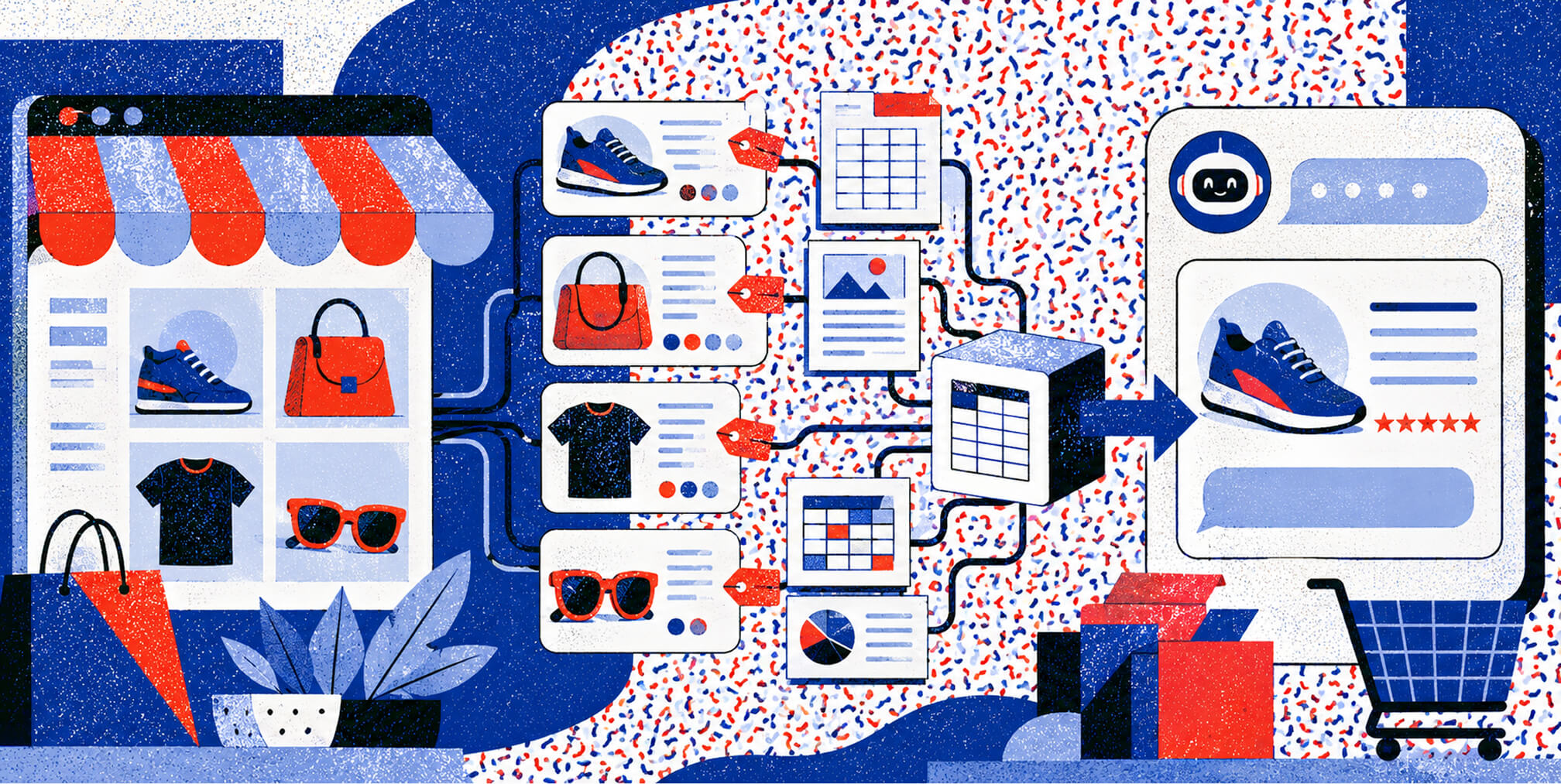
ChatGPT Ads give e-commerce brands a new way to reach customers during product research and comparison.
.png)


What ChatGPT Ads for E-Commerce Are, How Product Feeds Work, and How Ads Are Selected
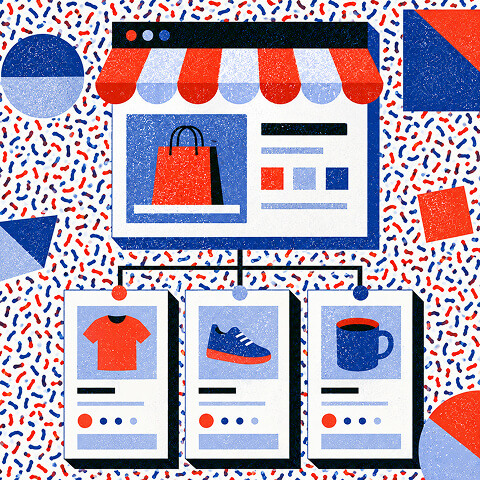

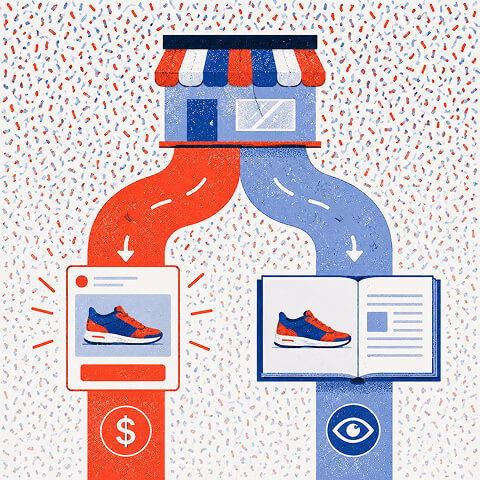
A shopper may ask ChatGPT: "I need a lightweight carry-on suitcase under $300 with durable wheels that meets most international airline limits. Which features should I prioritize?" That conversation contains significantly more information than a search for "carry-on suitcase." It communicates product category, budget, intended use, desired features, travel requirements, and stage of consideration.
OpenAI can use this conversational context to display a relevant sponsored product below the ChatGPT response. Retailers can create these advertisements manually or upload a product feed containing a much larger catalogue. For Shopify merchants, product-feed campaigns may become one of the most valuable ways to test ChatGPT advertising at scale. However, the current beta requires more setup than connecting a typical Shopify advertising app. This guide explains how ChatGPT Ads work for e-commerce, how to prepare a Shopify catalogue, how to create a product-feed campaign and how to measure performance.
What Are ChatGPT Ads for E-Commerce?
ChatGPT Ads are sponsored placements that can appear below eligible ChatGPT responses. For retail advertisers, an ad may include advertiser name, brand logo, product title, product description, product image, a landing-page link, and one or more relevant products. The advertisement is clearly labelled as sponsored and separated from ChatGPT's generated answer. OpenAI says advertisers cannot pay to influence ChatGPT's organic answer. A paid product placement does not mean ChatGPT independently recommends or endorses the product.
Can Shopify Brands Advertise on ChatGPT?
Yes. An eligible Shopify business can create an OpenAI Ads Manager account and advertise products through manually created campaigns, product-feed campaigns, bulk campaign uploads, or eligible custom audiences. OpenAI Ads Manager is currently available to advertisers in Australia, Canada, Japan, Korea, New Zealand, the United Kingdom and the United States. The business must still complete account verification, billing setup and advertising review. Product eligibility is also governed by OpenAI's advertising policies.
Does ChatGPT Ads Connect Directly to Shopify?
OpenAI currently requires product feeds to be uploaded using SFTP. At publication, Shopify merchants should not assume there is a universal one-click ChatGPT Ads sales-channel connection comparable with established Google or Meta integrations. The retailer may need to export product data from Shopify, transform it into OpenAI's required feed format, validate the product information, upload the feed through SFTP, and maintain a regular update process. A developer, feed-management platform or marketing-data specialist may be required for larger catalogues.
For conversion measurement, OpenAI recommends using its browser Pixel for browser-side events and its Conversions API for server-side events. Its documentation specifically identifies this approach for Shopify, headless storefronts and server-side purchase tracking, per OpenAI's ChatGPT Ads measurement guidance.
What Is a ChatGPT Ads Product Feed?
A product feed is a structured file containing information about a retailer's catalogue. OpenAI can use this information to create ads and match eligible products with relevant ChatGPT conversations. A feed may include product ID, title, description, price, currency, availability, product URL, image URL, brand, category, condition, product identifiers, and other required or supported attributes. Product-feed campaigns help retailers advertise a large or frequently changing catalogue without manually creating every individual product ad. OpenAI says feeds can currently contain up to two million products, and each advertiser account is limited to one product-feed connection during the beta.
Why Use a Product Feed?
Feed-based campaigns can help e-commerce advertisers bring a larger catalogue into ChatGPT Ads, create product ads at scale, keep prices and availability current, match specific products with detailed conversations, avoid manually rebuilding ads for every SKU, support catalogue changes, test more products, and improve relevance. OpenAI says advertisers using product feeds have been among the strongest performers in its early advertising program. This is OpenAI's internal platform observation, not a universal benchmark or guarantee of performance, per OpenAI's current product-feed campaign capabilities.
Will a Product Feed Make Products Appear Organically?
No. OpenAI currently states that products uploaded through ChatGPT Ads feeds are eligible for use in paid advertisements only. Uploading a product feed does not make the products eligible to appear in organic ChatGPT conversations. A ChatGPT Ads product feed is used to create paid product advertising, while organic ChatGPT product visibility is influenced by publicly available product information, website accessibility, third-party sources, structured data and ChatGPT's search and answer systems. A retailer may need both a paid product-feed strategy and an organic GEO and product-discovery strategy. Paid advertising does not purchase organic recommendations.
How ChatGPT Product Ads Are Selected
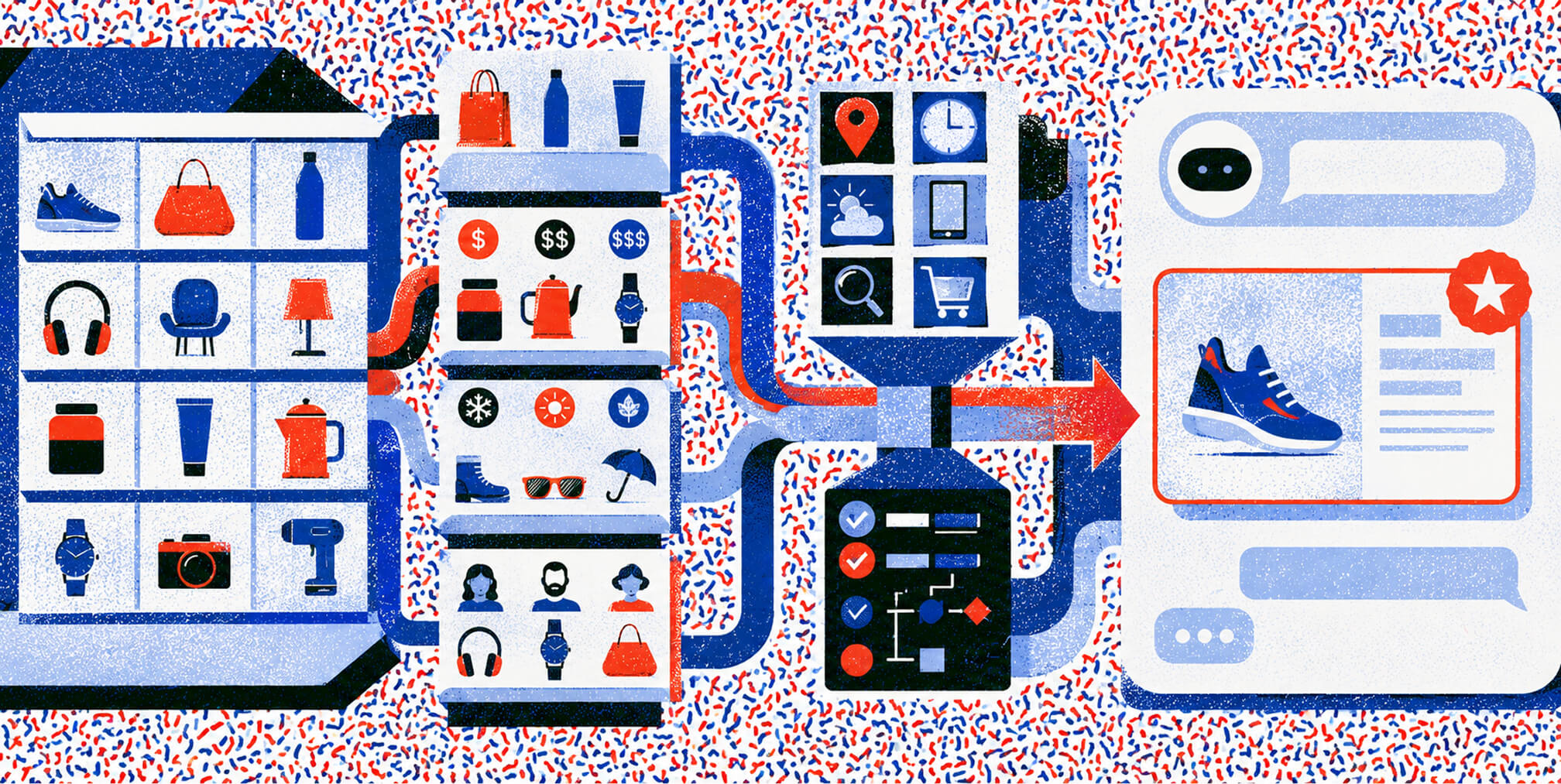
OpenAI says ChatGPT Ads are primarily selected based on relevance to the context and intent of the conversation. The selection system can consider current conversation context, product-feed information, ad title, ad copy, landing page, context hints, campaign settings, geographic eligibility, bid, and advertiser and product eligibility. OpenAI uses a relevance-weighted, second-price auction, which means bid matters, but the highest bid does not necessarily win if the advertisement is not relevant enough to the conversation. The system is designed to balance user value, advertiser value, relevance and auction competitiveness.
Free Brand Health Audit
Make sure your brand is built to sell
Search has changed. Your customers aren't just Googling anymore. They're asking ChatGPT, Perplexity, Gemini and other AI platforms what to buy, who to trust and which brands they should consider.
If your brand isn't showing up clearly in those answers, you're already losing opportunities. Our free Brand Health Audit shows you where your brand stands across traditional search, AI search and brand positioning.

Sample brand audit
Live preview
Traditional search
72
AI search (GEO)
34
Brand positioning
58
ChatGPT Ads vs. Google Shopping and Meta, and Which Products Fit Best
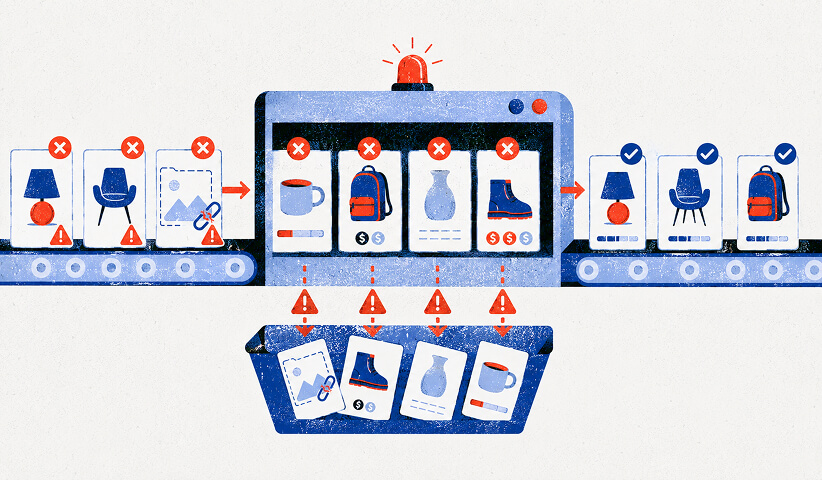

ChatGPT Ads vs. Google Shopping
| ChatGPT Product Ads | Google Shopping |
|---|---|
| Matched with conversational context | Matched with searches and Google signals |
| Managed through OpenAI Ads Manager | Managed through Google Ads and Merchant Center |
| New advertising beta | Mature advertising ecosystem |
| Feeds uploaded through SFTP | Multiple feed and e-commerce integrations |
| Limited historical benchmarks | Extensive historical benchmarks |
| Products appear below eligible conversations | Products can appear across Search, Shopping and other Google surfaces |
| No individual conversation-query reporting | More extensive search-term and performance reporting |
| Paid feed does not currently support organic ChatGPT inclusion | Merchant data can support paid and free Google listings |
Google Shopping will remain the primary product-search channel for most e-commerce brands. ChatGPT Ads should initially be treated as an incremental test rather than a replacement for established Google campaigns.
ChatGPT Ads vs. Meta Catalogue Ads
| ChatGPT Product Ads | Meta Catalogue Ads |
|---|---|
| Conversational product discovery | Social and behavioural product discovery |
| User may be researching a specific need | User may be browsing without active purchase intent |
| Product matched with current conversation | Product matched using interests, actions and other Meta signals |
| New platform | Mature Facebook and Instagram ecosystem |
| Limited creative formats | Extensive image, video, carousel and collection formats |
| Strong potential for considered purchases | Strong potential for visual discovery and retargeting |
| Smaller eligible ad-supported audience | Large social-media audience |
Meta can create demand before someone begins researching. ChatGPT can potentially reach the shopper after the need has become more specific.
Which E-Commerce Products Are Best Suited to ChatGPT Ads?
ChatGPT Ads may be especially relevant when customers need to compare or understand the product before purchasing. Potentially strong categories include consumer electronics, appliances, travel products, furniture, home and garden products, educational products, software, specialized beauty products, fitness equipment, pet products, tools, office equipment, products with technical specifications, products with multiple variants, and products solving a clearly described problem.
For example, a customer may ask: "What type of dog bed should I buy for a large senior dog that overheats easily and has difficulty getting onto elevated surfaces?" The conversation reveals animal size, age, temperature concern, mobility limitation, product category, and feature requirements. A relevant product ad can respond to a specific purchasing context.
Products That May Be More Difficult
ChatGPT Ads may be less compelling for low-differentiation commodity products, products purchased primarily on impulse, products that rely entirely on visual trends, items with very low margins, categories prohibited by OpenAI, products with unsupported health or wellness claims, catalogues with incomplete data, products with frequent inventory inaccuracies, and offers with weak landing pages. A low-priced product can still work, but acquisition costs and margins must be monitored carefully.
Which E-Commerce Categories Are Restricted?
OpenAI's current advertising policies restrict or prohibit several categories, including alcohol, tobacco and vaping, intoxicating cannabis products, psychedelics, gambling, political advertising, adult products and dating services, weapons, counterfeit goods, unsupported wellness claims, certain financial products, certain legal services, regulated medical products, and misleading or deceptive offers. Some healthcare, financial and regulated advertisers may be reviewed on a limited, case-by-case basis, particularly in the United States. A product that is allowed on Shopify is not automatically eligible for ChatGPT Ads. The advertisement, product, business model and landing page must all comply with OpenAI's policies.
Want to test ChatGPT Ads without risking your Shopify margins? Keep reading!
If you need help with product-feed management and paid media for your Shopify store, contact us for a free custom quote.
The 11-Step Process for Preparing a Shopify Store for ChatGPT Ads
How to Prepare a Shopify Store for ChatGPT Ads
Step 1: Audit the Product Catalogue
Review every product field before creating the feed. Confirm product title, description, price, compare-at price, currency, availability, product status, variant data, image URL, product URL, vendor or brand, SKU, barcode or GTIN, product category, and shipping eligibility. Remove draft products, archived products, products that cannot be purchased, disallowed products, duplicate variants, broken image links, incorrect prices, and placeholder descriptions. Feed quality affects ad quality.
Step 2: Improve Product Titles
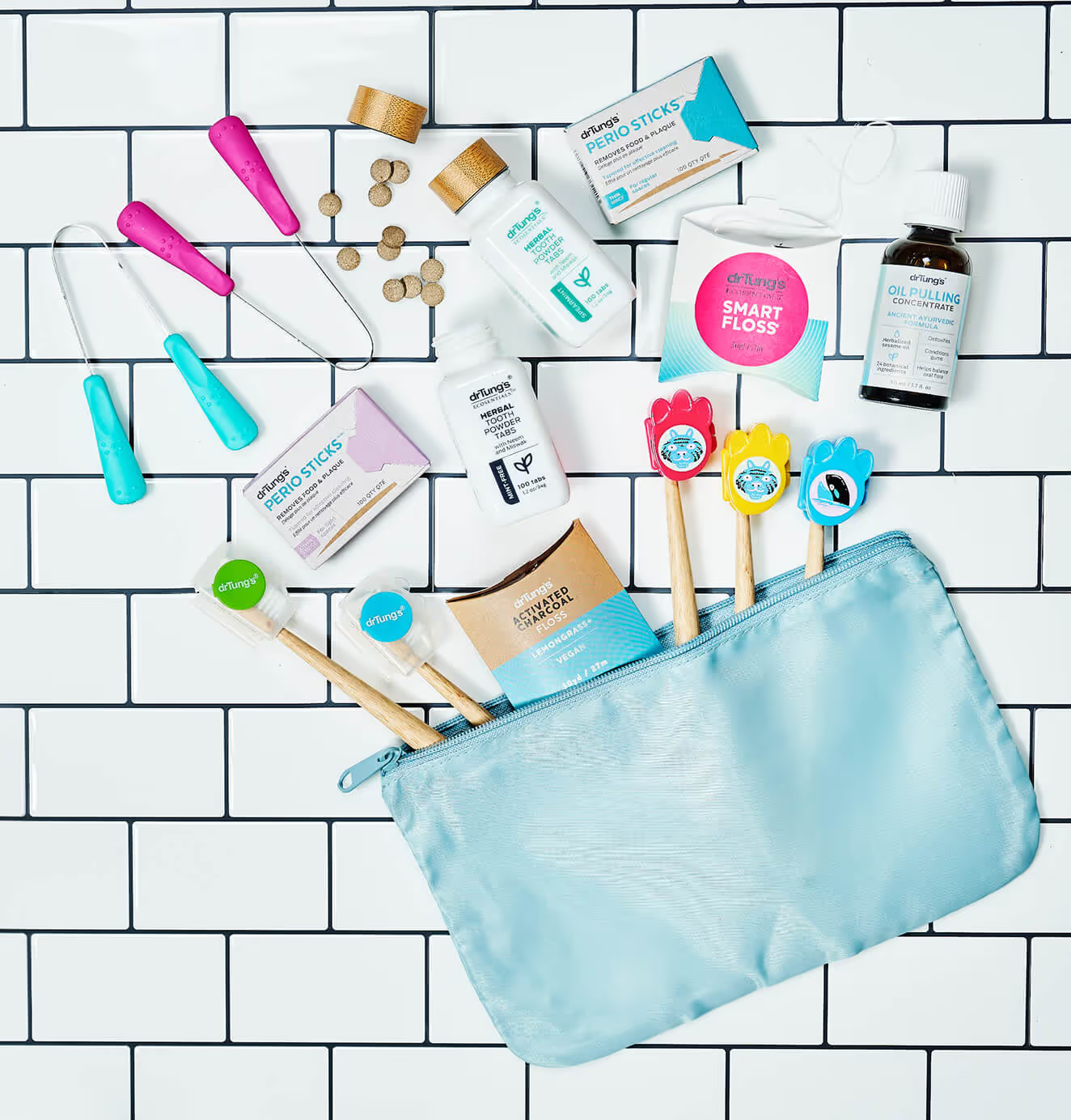
Product titles should communicate what the item is. A weak title such as "Smart Floss" leaves a shopper unsure whether it's a device, software or dental floss. A stronger title, "Smart Floss – Expanding Natural Dental Floss," adds product type and a distinguishing attribute. For a fashion item, "The Lucy" is weak, while "The Lucy Women's Organic Cotton Oversized T-Shirt" is stronger. Strong titles may include brand, product type, intended user, material, size, colour, quantity, key specification, and variant. Do not fill titles with promotional language or unsupported claims.
Step 3: Improve Product Descriptions
A useful product description should help both people and systems understand what the product is, who it is for, how it is used, important features, materials or ingredients, size or quantity, compatibility, care instructions, limitations, and relevant differentiators. Avoid using the same generic description for every variant. A weak description like "Upgrade your routine with our revolutionary, game-changing solution" says nothing concrete. A stronger description, such as "Reusable stainless steel tongue cleaner designed to remove surface buildup from the tongue. The curved handles provide control during use, and the stainless steel construction can be rinsed and reused," provides concrete product information without relying on unsupported promises.
Step 4: Standardize Variant Information
Shopify stores frequently have inconsistent variant names, such as "Sm," "S" and "Small," or "BLK," "Black" and "Jet Black." Standardize size, colour, quantity, material, flavour, subscription term, and product configuration. Consistent variant data makes the catalogue easier to manage and interpret.
Step 5: Use High-Quality Product Images
ChatGPT Ads can include an image asset. Product-feed images should show the correct product, match the advertised variant, use sufficient resolution, avoid broken or temporary signed URLs, display clearly at a small size, use a clean background where appropriate, avoid excessive embedded text, accurately represent packaging, and avoid unsupported visual claims. AI-generated product imagery should be reviewed carefully. Do not use an image that changes product colour, package size, included accessories, ingredients, product quantity, physical design, or material. The customer should receive what the advertisement depicts.
Step 6: Confirm Landing-Page Accessibility
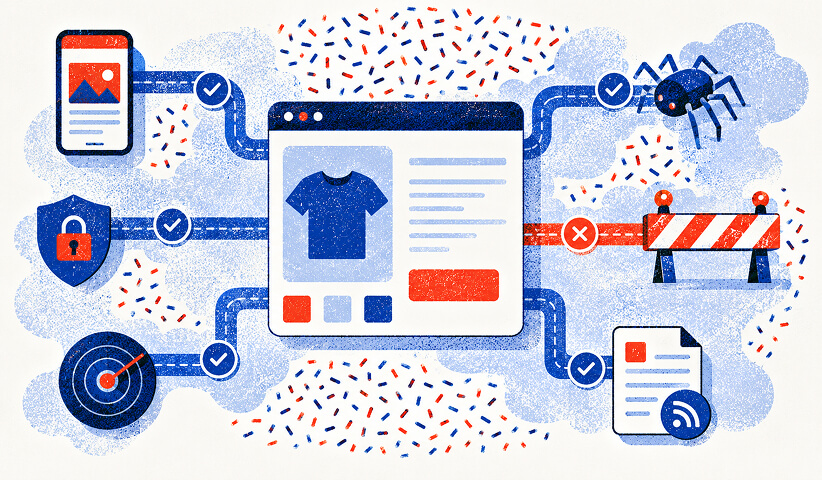
Each product URL should load without authentication, display the correct product, show current pricing and availability, work on mobile, use a secure HTTPS connection, avoid redirect loops, match the feed, support tracking parameters, and allow approved OpenAI crawlers. OpenAI says ad landing pages must not block OAI-AdsBot or OAI-SearchBot. Check robots.txt, firewall rules, bot-protection software, Shopify security apps, CDN rules, geographic blocking, and cookie and consent systems. A product can be rejected or fail to serve if OpenAI cannot review its landing page.
Step 7: Create the Product Feed
OpenAI Ads Manager creates the feed connection. The general workflow is to sign in to OpenAI Ads Manager, navigate to Tools, select Feeds, choose Create Feed, follow the setup prompts, retrieve the generated SFTP connection details, format the feed according to OpenAI's specification, upload the feed using SFTP, review processing and validation results, and correct feed errors. The feed must comply with OpenAI's current schema and technical requirements. Do not assume a Google Merchant Center or Meta catalogue file can be uploaded unchanged — field names, required attributes and validation rules may differ.
Step 8: Establish an Update Schedule
Shopify product information changes. Your feed process should update when prices change, promotions begin or end, inventory changes, products launch or are discontinued, variants change, images change, landing-page URLs change, or product descriptions are corrected. The update frequency should reflect the catalogue: a retailer with rapidly changing inventory may need frequent updates, while a small catalogue with stable stock may require fewer. Advertising an unavailable product wastes budget and damages customer trust.
Step 9: Create a Feed-Based Campaign
After the feed is connected and processed, create a product-feed campaign in Ads Manager. Structure campaigns around meaningful business differences such as country, product category, margin, customer type, season, promotion, inventory, and business objective. Avoid putting every product into one campaign without considering economics — a $15 product and a $1,500 product should not necessarily use the same bid and performance target.
Step 10: Create Product Groups
Product groups allow advertisers to organize eligible feed inventory using filters, such as category, brand, price, product type, collection, custom label, availability, margin tier, bestseller status, or seasonal status. For example, an oral-care retailer might separate tongue cleaners, dental floss, oil pulling, gum-care products, bundles, and accessories. Focused product groups make performance easier to interpret.
Step 11: Create the Ad Template
The feed supplies product-specific information. An ad template provides the base used to create advertisements for products eligible within the group. OpenAI currently pulls the ad title and description from the product feed, which makes feed wording especially important. The title and description should work as advertising copy without becoming exaggerated or vague. Review how the information appears when separated from the complete product page.
Context Hints, Bids, Measurement, Custom Audiences, Testing, and Common Mistakes
How to Write Context Hints for E-Commerce
Context hints describe the conversations in which a product group may be relevant. They are broad thematic signals, not exact-match keywords. Weak context hints like "floss," "teeth," "dental" or "oral care" are too generic. Stronger context hints could include "shoppers comparing natural dental floss options," "people looking for floss that expands between teeth," or "travellers looking for compact oral-care products." For a carry-on luggage group, stronger hints include "travellers comparing lightweight international carry-on luggage" or "shoppers seeking carry-on luggage under $300." Context hints should reflect genuine product capabilities — do not create a hint around "waterproof luggage" if the product is only water-resistant.
How to Set ChatGPT Ads Bids and Budgets
Product-feed campaigns operate within ChatGPT Ads' evolving CPC and CPM buying systems. The appropriate budget depends on product margin, average order value, conversion rate, repeat-purchase rate, customer lifetime value, geographic target, product category, available inventory, and campaign objective. OpenAI currently identifies $25 as the minimum daily campaign budget. For Clicks campaigns, OpenAI recommends beginning with a maximum CPC bid in the range of approximately $3-$5 USD. This is a starting recommendation, not an expected average.
A simplified break-even CPC can be estimated as: Break-even CPC = Conversion Rate × Allowable Customer Acquisition Cost. For example, if your website conversion rate is 3% and your allowable acquisition cost is $40, the break-even CPC is 0.03 × 40 = $1.20. A $5 click would likely be difficult to justify unless ChatGPT traffic converts at a higher rate, produces larger orders, or generates more valuable customers. Use your own unit economics before following platform bid guidance.
Set Up Conversion Measurement for Shopify
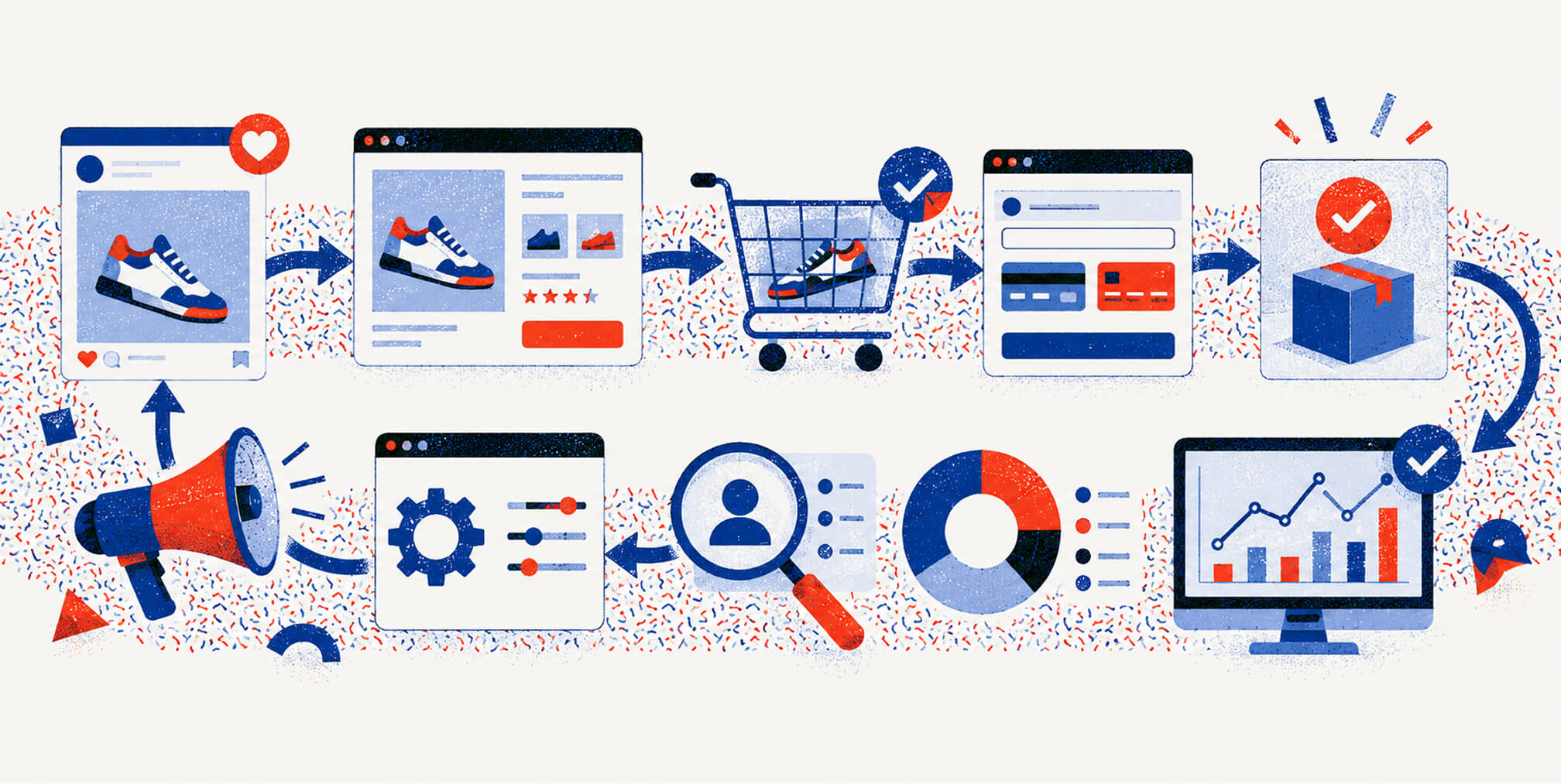
OpenAI Ads Manager supports a JavaScript Pixel, Conversions API, UTM parameters, standard and custom events, and eligible measurement-partner integrations. For Shopify stores, use the browser Pixel for browser-side events and the Conversions API for server-side events. Potential e-commerce events include page view, view content, add to cart, begin checkout, purchase, subscription, and custom qualified events. Server-side measurement can help improve reliability when browser tracking is affected by privacy settings or technical restrictions. Avoid double-counting the same purchase through browser and server events — use appropriate event deduplication based on OpenAI's current implementation guidance.
Use consistent UTM parameters in product URLs, such as utm_source=chatgpt, utm_medium=paid, utm_campaign=product_category, and utm_content=product_or_template. UTMs can help identify ChatGPT traffic within Shopify analytics, Google Analytics, CRM systems, attribution platforms, and data warehouses.
What Can You Measure?
OpenAI Ads Manager currently reports impressions, clicks, spend, click-through rate, average CPC, average CPM, and conversions. Retailers should also measure product views, add-to-cart rate, checkout rate, purchase conversion rate, revenue, average order value, cost per acquisition, return on ad spend, new-customer revenue, gross profit, refund rate, repeat-purchase rate, and subscription rate. Do not judge e-commerce performance solely by CTR — a highly clicked product may still generate poor revenue if the landing page, price or offer is weak.
Will OpenAI Show the Conversations That Triggered Ads?
No. OpenAI says Ads Manager does not expose individual ChatGPT queries or conversation search terms that produced impressions or clicks. Reporting is available at the campaign, ad-group, and ad level. This protects conversation privacy, but it limits the advertiser's ability to analyze individual search language. Retailers must infer intent performance from product groups, context hints, creative, landing pages, conversions, and customer behaviour.
Using Custom Audiences for E-Commerce
OpenAI allows eligible advertisers to create custom audiences using customer or prospect lists. Custom audiences can support inclusion (limiting campaign eligibility to known customers or prospects), exclusion (preventing ads from reaching existing customers, recent buyers, subscribers, or other audiences that should not receive the campaign), and bid adjustments (increasing or decreasing an ad group's bid when the user matches a selected audience). For example, a retailer could exclude recent purchasers from a new-customer campaign, increase bids for high-value customers, create a replenishment campaign for past buyers, or target subscribers with a complementary product.
OpenAI currently requires a custom audience to include at least 25,000 matched users before it can be used and recommends at least 100,000 users, which makes the feature more accessible to established brands than small stores, per OpenAI's custom-audience requirements. Advertisers must have the legal right and appropriate consent to use customer information for advertising.
ChatGPT Ads E-Commerce Campaign Structure and Creative Best Practices
A practical account could separate campaigns by country, objective (Clicks vs. Views), new customer vs. retention, evergreen vs. promotional, high- vs. low-margin products, and distinct seasonal initiatives.
For creative: be product-specific and explain what the item is and why it fits the user's need; avoid vague superlatives like "best," "revolutionary" or "game-changing" unless supported; use relevant imagery that matches the title, variant and landing page; test several angles such as material, convenience, use case, durability, size, compatibility, design, value and portability; use dedicated landing pages rather than the homepage; keep offers consistent between the ad and landing page; and build for conversation coverage, since different shoppers may describe the same need in different ways.
Recommended First Test for a Shopify Brand
Begin with one country, one product category, one clear business objective, five to ten priority products, several context hints, accurate conversion measurement, a daily budget you can monitor, products with healthy margins, dedicated product pages, and at least two weeks of planned testing. Select products that already perform well on other channels — a new advertising platform is not the ideal place to rescue products that have never converted.
How to Evaluate the Test
Ask whether the campaign delivered consistently, which product groups received impressions, which products generated clicks, whether ChatGPT visitors engaged, what the add-to-cart and purchase rates were, what the customer acquisition cost was, whether orders came from new or existing customers, how AOV compared with Google and Meta, whether revenue justified the bid, whether any products were rejected, whether feed information remained accurate, and which context themes should be separated. Do not evaluate only whether ChatGPT produced a positive platform ROAS — consider whether it added profitable customers beyond what Google, Meta and email were already generating.
Common E-Commerce Mistakes
Common mistakes include uploading a dirty Shopify catalogue with incomplete titles, broken images and inconsistent variants; using one campaign for every product regardless of category or margin; ignoring break-even economics when platform bid guidance exceeds what a low-margin product can support; failing to update inventory and wasting spend on unavailable products; blocking OpenAI crawlers with a firewall or Shopify security app; measuring only clicks instead of revenue and customer value; uploading customer lists without permission; assuming paid feeds create organic visibility, which they currently do not; and replacing Google and Meta immediately instead of treating ChatGPT Ads as a complement to established channels.
FAQ
Can Shopify stores advertise on ChatGPT?
Yes. Eligible Shopify merchants can create campaigns through OpenAI Ads Manager and can upload product feeds using OpenAI's current SFTP process.
Is there a ChatGPT Ads Shopify app?
OpenAI's current official product-feed documentation uses SFTP. Merchants should confirm whether a supported direct Shopify connection becomes available before assuming an app can replace the feed setup.
How many products can a ChatGPT Ads feed contain?
OpenAI currently supports feeds containing up to two million products, with each advertiser account limited to one feed connection during the beta.
Do product-feed ads appear in organic ChatGPT answers?
No. OpenAI says products submitted through advertising feeds are currently eligible for paid ads only.
How much do ChatGPT product ads cost?
ChatGPT Ads support CPC and CPM buying. Costs depend on campaign objective, bid, relevance, market and competition. OpenAI currently lists a $25 minimum daily campaign budget.
Can ChatGPT Ads track Shopify purchases?
Yes. OpenAI recommends its browser Pixel for browser events and Conversions API for server-side events. UTMs can also be used in Shopify and analytics reporting.
Are ChatGPT Ads better than Google Shopping?
ChatGPT Ads offer conversational context, while Google Shopping provides a more established product-advertising ecosystem. Most retailers should test ChatGPT incrementally rather than replacing Google Shopping.
Final Thoughts
ChatGPT product-feed campaigns create a promising new opportunity for Shopify retailers. The platform can connect products with detailed conversations containing information about the shopper's budget, intended use, preferences and decision criteria. However, success still depends on familiar e-commerce fundamentals: accurate product data, strong positioning, healthy margins, relevant landing pages, reliable conversion tracking, clear campaign structure, and disciplined testing.
A product feed does not fix a weak catalogue. AI matching does not fix an undifferentiated product. More clicks do not fix a poor customer experience. The brands most likely to succeed will combine strong product information with thoughtful conversational intent and rigorous performance measurement.
At The Branded Agency, we combine Shopify strategy, product-feed management, paid media, creative development and conversion optimization to help e-commerce brands test emerging channels without losing sight of profitability. Contact The Branded Agency to discuss whether ChatGPT Ads are a fit for your Shopify store.

Quincy Samycia
As entrepreneurs, they’ve built and scaled their own ventures from zero to millions. They’ve been in the trenches, navigating the chaos of high-growth phases, making the hard calls, and learning firsthand what actually moves the needle. That’s what makes us different—we don’t just “consult,” we know what it takes because we’ve done it ourselves.
Want to learn more about brand platform?
If you need help with your companies brand strategy and identity, contact us for a free custom quote.
We do great work. And get great results.
+2.3xIncrease in revenue YoY
+126%Increase in repurchase rate YoY

+93%Revenue growth in first 90 days
+144% Increase in attributed revenue




+91%Increase in conversion rate
+46%Increase in AOV


+200%Increase in conversion rate
+688%Increase in attributed revenue