ChatGPT Ads vs. Google Ads vs. Meta Ads: Which Platform Should You Use?
09/08/2026
Marketing Services
A 2026 guide comparing ChatGPT Ads, Google Ads, and Meta Ads — intent vs. discovery, costs, creative, and how to budget across all three platforms.

Businesses now have another major advertising platform to consider.
.png)


ChatGPT Ads and Google Ads: What They Are and How They're Targeted



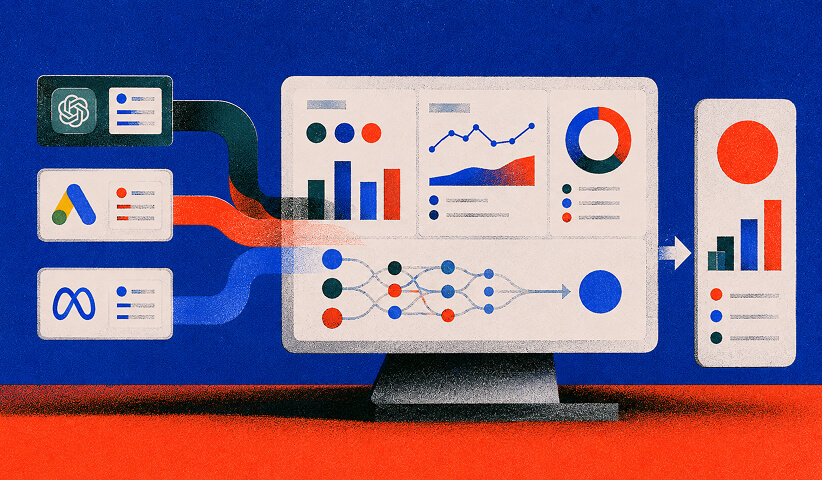
ChatGPT Ads allow brands to appear while people ask questions, compare options and make decisions through conversational AI. Google Ads captures demand across Search, Shopping, YouTube and other Google properties. Meta Ads generates awareness and purchases across Facebook, Instagram, Messenger and its broader advertising network.
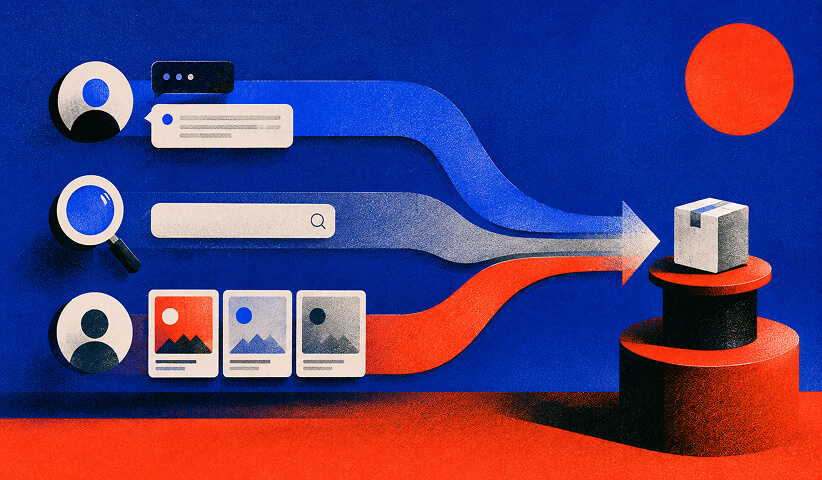
These platforms can all reach potential customers, but they do not reach them in the same context. A customer on Instagram may not be actively shopping. A customer on Google may be searching for a specific product. A customer in ChatGPT may be describing a detailed problem and asking for help evaluating the available solutions.
The best platform depends on whether demand already exists, how much education the customer needs, the strength of your creative, the complexity of the purchase, your budget, your conversion data, your ability to test new channels, and where your customers spend time. In this guide, we compare ChatGPT Ads, Google Ads and Meta Ads to help businesses decide where to invest their advertising budgets in 2026.
ChatGPT Ads vs. Google Ads vs. Meta Ads: The Short Answer
For most businesses: Google Ads is best for capturing established search intent. Meta Ads is best for creating demand through visual discovery and repeated exposure. ChatGPT Ads is best for testing conversational intent during research and decision-making.
| Platform | Best For | User Behaviour | Primary Advantage | Primary Limitation |
|---|---|---|---|---|
| ChatGPT Ads | Conversational research and comparison | Asking detailed questions and evaluating options | Rich context around the customer's need | New platform with limited historical benchmarks |
| Google Ads | Capturing existing demand | Searching for a product, service or answer | Mature high-intent advertising ecosystem | Competitive categories can be expensive |
| Meta Ads | Creating demand and visual discovery | Browsing social content and engaging with media | Scale, creative formats and audience discovery | Users may not have immediate purchase intent |
In many cases, the strongest strategy uses all three platforms for different jobs.
What Are ChatGPT Ads?
ChatGPT Ads are sponsored placements that can appear below eligible ChatGPT responses. OpenAI launched its self-serve advertising platform in 2026. Eligible businesses can create campaigns through OpenAI Ads Manager in supported countries, including Canada, the United States and the United Kingdom. Ads remain separate from ChatGPT's generated answer and are clearly identified as sponsored. Advertisers cannot pay to influence the organic answer or force ChatGPT to recommend their business.
How ChatGPT Ads are targeted
ChatGPT Ads use conversational context and advertiser-provided context hints. Context hints describe the conversations, needs or situations in which an advertiser's product may be relevant. For example, a packaging-design agency could provide context hints such as founders preparing a new frozen-food product for retail, consumer brands redesigning several packaging SKUs, companies looking for Amazon-ready packaging design, or businesses that need production artwork based on manufacturer dielines. These are not exact-match keywords. They help OpenAI understand the types of conversations in which the advertisement may be useful. For a full campaign walkthrough, see our complete guide to ChatGPT Ads.
ChatGPT Ads campaign objectives
ChatGPT Ads currently support Views, which optimizes for impressions using CPM pricing, and Clicks, which optimizes for traffic using CPC pricing. Advertisers set a maximum bid at the ad-group level. OpenAI currently recommends starting Clicks campaigns with a maximum CPC bid of approximately $3 to $5 USD, although actual results will vary by category, market, relevance and competition. OpenAI's ChatGPT Ads overview explains its current CPC and CPM buying options.
What Is Google Ads?
Google Ads is a mature advertising platform that can reach customers across Google Search, Google Shopping, YouTube, Gmail, Google Maps, Discover, the Display Network, Apps, AI Overviews and AI Mode. Google Ads includes several campaign types designed for different objectives.
Search campaigns
Search campaigns reach people who enter relevant queries on Google. They are particularly effective when customers already know what they need, which category to search, which problem they want solved, where they want to buy, or which service they require.
Shopping campaigns
Shopping campaigns display product information such as image, price, merchant, product title, promotion, rating and availability. They are important for e-commerce retailers with accurate Merchant Center feeds.
Performance Max
Performance Max is a goal-based campaign type that can reach customers across Google's available inventory from one campaign. Google uses AI to optimize bidding, placement, creative combinations, audience signals, product selection and landing-page matching. Google describes Performance Max as a complement to keyword-based Search campaigns that can reach customers across Search, YouTube, Display, Discover, Gmail and Maps, as detailed in Google's Performance Max documentation.
Google AI Search ads
Eligible Google campaigns may also appear within AI Overviews and AI Mode. This gives Google an important position between conventional keyword-based advertising and newer conversational advertising. For a broader look at how paid placements work across AI platforms, see our guide to advertising in AI search.
Free Brand Health Audit
Make sure your brand is built to sell
Search has changed. Your customers aren't just Googling anymore. They're asking ChatGPT, Perplexity, Gemini and other AI platforms what to buy, who to trust and which brands they should consider.
If your brand isn't showing up clearly in those answers, you're already losing opportunities. Our free Brand Health Audit shows you where your brand stands across traditional search, AI search and brand positioning.

Sample brand audit
Live preview
Traditional search
72
AI search (GEO)
34
Brand positioning
58
Meta Ads, Intent vs. Discovery, and the Targeting Comparison

What Are Meta Ads?
Meta Ads are paid placements delivered across Meta's advertising ecosystem, including Facebook, Instagram, Messenger, Meta Audience Network and other eligible Meta experiences. Meta Ads are often used to create demand rather than wait for a customer to search. Someone scrolling Instagram may not be looking for a new oral-care product. A compelling video demonstrating why conventional floss fails to reach certain areas may introduce a problem and create interest. This makes creative quality central to Meta performance.
Meta campaign objectives
Meta organizes campaigns around objectives such as awareness, traffic, engagement, leads, app promotion and sales. The objective tells Meta which outcome to prioritize.
Meta Advantage+
Meta uses automation across audiences, placements, budgets and product catalogues. Advantage+ catalogue ads can automatically promote relevant products based on user interests, intent and actions without requiring the advertiser to build an individual ad for every item. Meta's strength is its ability to combine creative engagement, behavioural signals, broad audience discovery, product catalogues, retargeting, conversion optimization and repeated exposure.
The Fundamental Difference: Intent vs. Discovery
The most important distinction among these platforms is the customer's mindset.
Google Ads: Expressed Search Intent
A Google user may search "emergency dentist near me." The need is clear and immediate. The advertiser's primary challenge is appearing for the right search and convincing the user to choose one provider.
Meta Ads: Passive Discovery
A Meta user may be watching Reels, reading posts or viewing friends' updates. They did not necessarily open Instagram intending to purchase. The advertisement must capture attention, introduce or highlight a problem, create interest, build desire, and encourage action. Meta can be exceptionally effective when the product is visual, demonstrable or emotionally compelling.
ChatGPT Ads: Conversational Intent
A ChatGPT user may ask a detailed question expressing a problem and asking for guidance. OpenAI restricts advertisements around sensitive personal-health conversations, but such examples illustrate the depth of context contained in conversational interactions. A less sensitive example might be a business describing a need for a custom Shopify website with subscriptions and wholesale ordering across two countries. That conversation communicates significantly more than a general search for "Shopify agency."
Which Platform Has the Highest Purchase Intent?
Google Search usually provides the clearest immediate purchase intent. A query such as "buy copper tongue cleaner Canada" is strongly commercial. ChatGPT can also reveal high intent, especially when someone is comparing products, requesting recommendations, evaluating trade-offs, planning a purchase, or asking which provider to hire. The difference is that ChatGPT intent may emerge across an entire conversation rather than one query. Meta generally has lower initial intent because the user is browsing rather than searching. However, Meta can create demand and influence customers before they begin actively researching. A strong marketing system recognizes that customers move through several stages.
Targeting Comparison
| Targeting Consideration | ChatGPT Ads | Google Ads | Meta Ads |
|---|---|---|---|
| Conversational context | Strong | Increasing through AI Search | Limited |
| Keyword targeting | Not conventional exact-match targeting | Core Search capability | Not a primary targeting method |
| Demographic and interest signals | More limited during beta | Available depending on campaign | Major platform strength |
| Context hints | Yes | No direct equivalent | No direct equivalent |
| Search intent | Conversational intent | Strong conventional search intent | Indirect |
| Product feeds | Available | Central to Shopping and Performance Max | Central to catalogue ads |
| Retargeting | Developing platform capabilities | Mature | Mature |
| Geographic targeting | Available, with current limitations | Extensive | Extensive |
| Placement control | Limited during beta | Varies by campaign | Manual and Advantage+ options |
Not sure which ad platform deserves your next dollar? Keep reading!
If you need a coordinated strategy across ChatGPT, Google, and Meta advertising, contact us for a free custom quote.
Creative, Measurement, and Cost Comparisons Across All Three Platforms
Creative Comparison
ChatGPT Ads Creative
ChatGPT ad creative should be clear, specific, useful, benefit-focused, relevant to a decision, and closely aligned with the landing page. The ad must explain what the company offers and when it may be helpful. ChatGPT ads can include a brand name, logo, title, copy, image and landing page. OpenAI currently recommends concise titles and descriptions, with guided campaign documentation recommending titles of approximately 16-24 characters and copy of approximately 32-48 characters, although higher maximum limits are available. The system benefits from several genuinely different creative variations.
Google Ads Creative
Google Search creative typically includes headlines, descriptions, business name, logo, sitelinks, callouts, structured snippets, images, prices, promotions, calls and locations. Shopping ads rely heavily on product-feed information and imagery. Performance Max requires a broad collection of text, image and video assets that Google can combine across placements. Google creative must align closely with the customer's search and landing page.
Meta Ads Creative
Meta provides the greatest opportunity for visual storytelling. Formats can include static images, carousels, short-form video, Reels, Stories, Collections, catalogue ads, lead forms, Instant Experiences, creator content and user-generated content. The first seconds or first visual must earn attention. Effective Meta creative often uses strong hooks, product demonstrations, customer problems, social proof, founder stories, before-and-after narratives, comparisons, lifestyle context, offers and urgency. Meta is often the most creatively demanding of the three platforms.
Measurement and Attribution
ChatGPT Ads Measurement
OpenAI Ads Manager currently reports metrics such as impressions, clicks, spend, click-through rate, average CPC, average CPM, and conversions when configured. Advertisers can also add UTM parameters to landing-page URLs. Because the platform is new, businesses have limited category benchmarks and less historical data for forecasting.
Google Ads Measurement
Google offers a mature measurement ecosystem including conversion tracking, enhanced conversions, Google Analytics integration, call tracking, store visits, offline conversion imports, conversion values, attribution reporting and Merchant Center reporting. Google's connection between search intent and conversion can make performance easier to interpret than upper-funnel social activity. However, automation and cross-channel campaigns can make placement-level analysis more complex.
Meta Ads Measurement
Meta measurement includes the Meta Pixel, Conversions API, app events, offline events, attribution settings, A/B testing, lift studies and catalogue reporting. Privacy changes, browser restrictions and cross-device behaviour can make Meta attribution imperfect. Advertisers should compare platform-reported results with website analytics, e-commerce revenue, CRM data, blended customer acquisition cost, marketing-efficiency ratio, new-customer revenue and incrementality testing. No advertising platform should be the only source used to judge its own performance.
Cost Comparison
There is no universal winner for lowest advertising cost. Costs depend on industry, geography, audience, competition, campaign objective, creative quality, conversion rate, product price, landing-page quality, brand awareness, seasonality, measurement and customer lifetime value.
ChatGPT Ads costs
ChatGPT Ads support CPM and CPC buying. OpenAI recommends an initial maximum CPC bid in the range of $3-$5 USD for Clicks campaigns. This is platform guidance, not a guaranteed average CPC. The platform is too new to provide stable industry-wide benchmarks.
Google Ads costs
Google Search costs are driven by the auction and can vary enormously. Legal, insurance, finance and other competitive services may generate expensive clicks. Niche products or local searches may cost considerably less. A high CPC can still be profitable if the traffic converts and the customer value is strong.
Meta Ads costs
Meta costs are influenced heavily by audience size, creative engagement, competition, placement, objective, conversion data, campaign learning and ad fatigue. Meta may generate lower-cost traffic than Google, but low-cost traffic is not automatically qualified traffic.
Choosing and Budgeting Across Platforms by Use Case, and the Final Verdict

Which Platform Is Best for E-Commerce?
For most e-commerce brands, Google and Meta remain the primary platforms. Google Ads helps capture product searches, shopping intent, brand searches, comparison searches and high-intent category demand. Meta Ads helps generate product discovery, visual interest, retargeting, social proof, new-customer acquisition and repeat exposure. ChatGPT Ads may help reach product comparisons, detailed recommendation requests, considered purchases, feature-based searches and customers explaining a specific need. ChatGPT Ads are particularly interesting for products with clear specifications or meaningful differentiation, including technology, travel products, appliances, business software, education, household products and specialized consumer goods. For a low-cost commodity product with little differentiation, the conversation may not create enough additional value.
Which Platform Is Best for B2B?
Google Search is often the strongest starting point for B2B companies when buyers actively search for the service or software. ChatGPT Ads may become particularly relevant to B2B because customers can describe complicated requirements conversationally, such as asking which inventory-management platforms integrate with Shopify Plus, support several warehouses, and provide reporting for both DTC and wholesale orders. That is a rich commercial interaction. Meta can still support B2B through founder-led content, thought leadership, retargeting, video education, event promotion and lead generation, though Meta's professional targeting and context differ from LinkedIn and high-intent search.
Which Platform Is Best for Local Services?
Google Ads is generally the strongest starting point for local services. Customers often search with immediate location-based intent, such as "plumber near me" or "emergency veterinarian Vancouver." Google Search and Maps are naturally aligned with these journeys. Meta can support local awareness, promotions and retargeting. ChatGPT Ads may become useful when the customer needs help evaluating which type of local provider to select, but its geographic targeting and local inventory remain less mature than Google's.
Which Platform Is Best for New Products?
Meta Ads are often strongest for introducing a product people do not yet know to search for. If a new product category has little established search volume, Google Search may have limited demand to capture. Meta creative can demonstrate the problem, the product, how it works, why it is different, customer reactions and the desired outcome. ChatGPT Ads may help once customers begin researching the problem or comparing emerging solutions. Google becomes increasingly valuable as category and brand-search demand grows.
Which Platform Is Best for Professional Services?
Google Ads are a strong fit when prospective clients search for a defined service. ChatGPT Ads may be valuable when clients need to reason through a more complicated decision, such as which type of agency to hire or whether they need a rebrand or a website refresh. Meta Ads can support professional services through authority-building, thought leadership and retargeting, but it may generate lower-intent leads if the offer is too broad.
Which Platform Should a Small Business Use First?
Start with Google Ads when customers actively search for the service, the need is urgent or clearly defined, local intent matters, the company can track calls or leads, and the website converts.
Start with Meta Ads when the product is visual, the category needs education, demand must be created, strong video or image creative is available, and e-commerce is the primary model.
Test ChatGPT Ads when the business operates in a supported country, customers research before buying, the product has meaningful differences, Google and Meta already have a stable foundation, the business can allocate an experimental budget, and the team can build intent-specific ads and landing pages. A new business with a limited budget should generally not divide a small amount equally across all three platforms. Concentrate enough budget on one primary channel to generate useful data.
Recommended Budget Allocation
There is no universal allocation, but businesses can use these starting frameworks. An established e-commerce brand might allocate 40-50% to Meta Ads, 35-45% to Google Ads, and 5-15% to ChatGPT Ads testing. A high-intent professional service might allocate 55-70% to Google Ads, 15-25% to Meta Ads, and 10-20% to ChatGPT Ads testing. A new consumer product might allocate 55-70% to Meta Ads, 20-35% to Google Ads, and 5-10% to ChatGPT Ads testing. A considered B2B purchase might allocate 45-60% to Google Ads, 15-25% to Meta Ads, and 15-25% to ChatGPT Ads testing. These ranges are illustrative, not universal recommendations. Actual allocations should reflect available demand, customer acquisition cost, sales cycle, creative capacity, margins, customer lifetime value, campaign maturity and incremental performance.
How to Test ChatGPT Ads Against Google and Meta
Do not compare the platforms based only on click-through rate or cost per click. Use a shared business objective: select one offer to use across the test, align landing pages so each platform can use an intent-appropriate version while the core offer stays consistent, use standardized tracking with platform-specific UTMs, define qualified outcomes such as purchases, qualified leads, revenue and customer acquisition cost, account for different journey stages since a Meta impression may introduce the product while a ChatGPT ad supports consideration and a Google ad captures the final search, evaluate incrementality by asking whether the platform generated customers who would not have converted through another channel, and allow enough time before making a decision.
How the Three Platforms Work Together
A customer might discover a brand through an Instagram Reel, visit the website without purchasing, ask ChatGPT to compare the product with alternatives, search the brand on Google, click a Shopping ad, purchase, and later see a Meta retargeting ad for a complementary product. Google may receive the final click, but every channel contributed. This is why businesses should also monitor blended metrics such as total marketing spend, total new-customer revenue, blended customer acquisition cost, marketing-efficiency ratio, new-customer return on ad spend, customer lifetime value and overall conversion rate. Platform ROAS is useful, but it is not the entire customer journey.
FAQ
Are ChatGPT Ads better than Google Ads?
Not universally. Google Ads provide mature search intent and larger inventory. ChatGPT Ads provide richer conversational context but are newer and less proven at scale.
Are ChatGPT Ads better than Meta Ads?
They serve different purposes. ChatGPT Ads reach people during conversations and research, while Meta Ads create demand through social and visual discovery.
How much do ChatGPT Ads cost?
ChatGPT Ads support CPC and CPM buying. OpenAI currently recommends starting Clicks campaigns with a maximum CPC bid of approximately $3-$5 USD, although actual costs vary.
Which advertising platform has the best ROAS?
No platform consistently produces the highest ROAS for every business. Results depend on the offer, audience, creative, conversion rate, tracking and customer value.
Should a small business advertise on ChatGPT?
A small business may test ChatGPT Ads if customers research before buying and the business has a strong website and reliable tracking. Google or Meta will often be a better first platform when budgets are limited.
Are ChatGPT Ads available in Canada?
Yes. OpenAI Ads Manager is currently available to eligible Canadian advertisers.
Do ChatGPT Ads influence ChatGPT's answers?
No. OpenAI says advertising is separate from ChatGPT's answers and cannot be used to alter organic responses.
Can I run the same creative on all three platforms?
You can reuse the core idea, but the execution should be adapted. Meta needs an attention-grabbing social creative, Google needs search relevance and ChatGPT needs clear conversational usefulness.
Should I stop Google or Meta campaigns to test ChatGPT Ads?
Usually not. Treat ChatGPT Ads as an incremental test unless existing channels are clearly unprofitable or the budget must be reallocated.
Final Verdict
Google Ads, Meta Ads and ChatGPT Ads are not interchangeable. Choose Google Ads when you want to capture existing search demand. Choose Meta Ads when you need to create demand, demonstrate a product or reach customers through visual discovery. Choose ChatGPT Ads when customers require research, comparison and detailed consideration, and when your business is ready to test an emerging conversational advertising channel.
For many established businesses, the right answer is a coordinated mix: Meta creates awareness, ChatGPT supports exploration, Google captures active demand, and the website converts the customer. The winning platform is not necessarily the one that reports the highest click-through rate. It is the one that adds profitable customers to the overall marketing system.
At The Branded Agency, we combine paid-media strategy, creative development, brand positioning and conversion optimization to build advertising systems around the complete customer journey. Contact The Branded Agency to discuss the right mix of ChatGPT, Google and Meta advertising for your business.

Quincy Samycia
As entrepreneurs, they’ve built and scaled their own ventures from zero to millions. They’ve been in the trenches, navigating the chaos of high-growth phases, making the hard calls, and learning firsthand what actually moves the needle. That’s what makes us different—we don’t just “consult,” we know what it takes because we’ve done it ourselves.
Want to learn more about brand platform?
If you need help with your companies brand strategy and identity, contact us for a free custom quote.
We do great work. And get great results.
+2.3xIncrease in revenue YoY
+126%Increase in repurchase rate YoY


+93%Revenue growth in first 90 days
+144% Increase in attributed revenue




+91%Increase in conversion rate
+46%Increase in AOV

+200%Increase in conversion rate
+688%Increase in attributed revenue