Conversion Rate Optimization Services: A 2026 Guide
08/21/2026
Marketing Services
A practical guide to CRO services — what they cost, how long they take, and how to spot an agency that's just running tests for the sake of it.
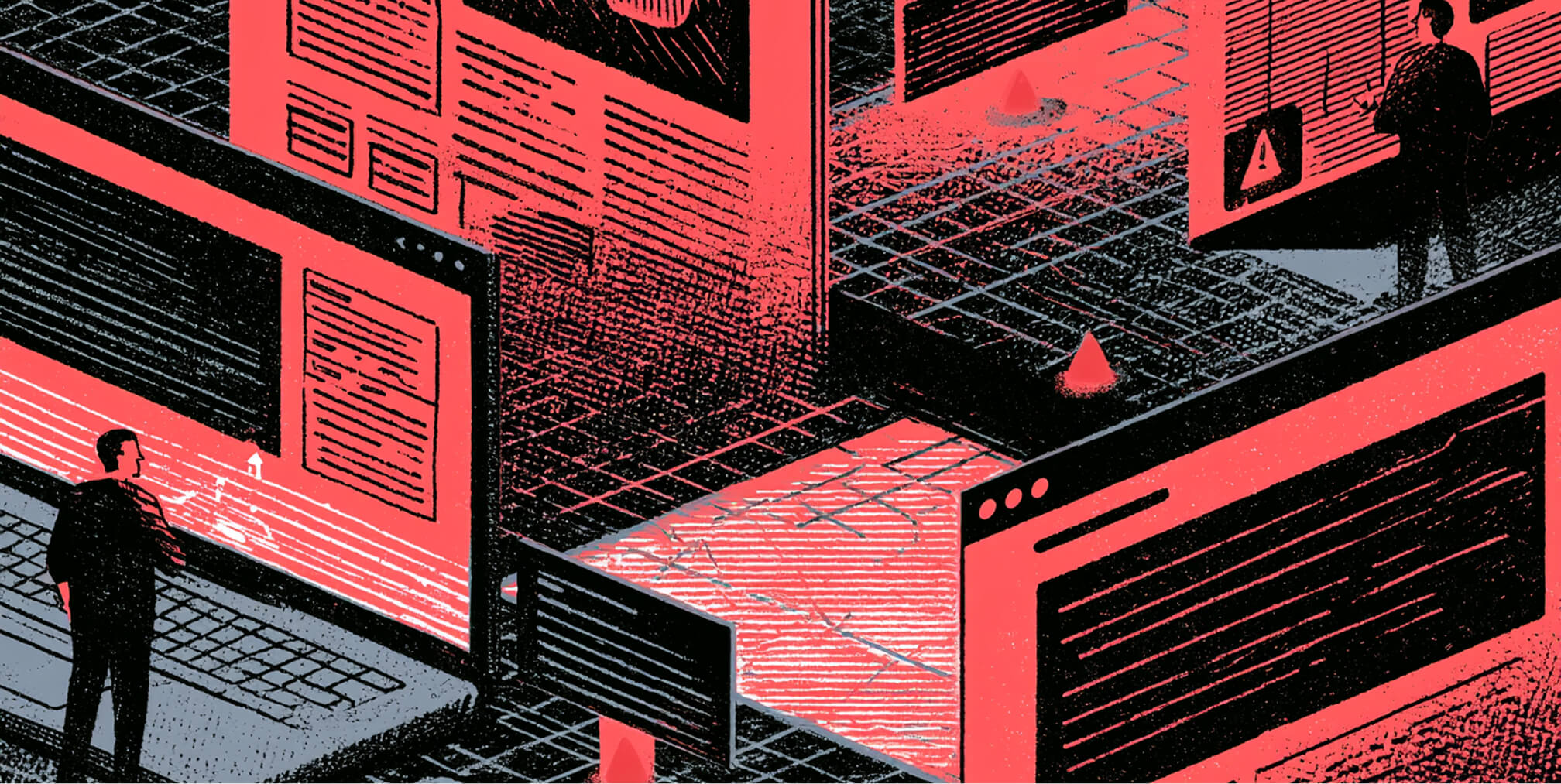
Conversion rate optimization services are specialized processes that increase the percentage of website visitors who complete desired actions, such as purchases, sign-ups, or demo requests, by using data-backed testing and structured experimentation. Known in the industry as CRO services, these programs combine behavioral research, hypothesis development, and iterative A/B testing to remove friction from the buyer journey. The difference between a 2% and a 4% conversion rate on a high-traffic site can represent millions in additional revenue without spending another dollar on ads. This guide breaks down service types, realistic timelines, cost structures, and what separates effective CRO programs from expensive guesswork.
.png)


What CRO Services Actually Include and What They Cost



What conversion rate optimization services actually include
CRO services are not a single product. They come in several distinct models, each suited to a different stage of business maturity and budget.
One-time CRO audits are the entry point. An audit typically covers heuristic analysis, session recording review, funnel drop-off mapping, and a prioritized list of test recommendations. Audits cost roughly $1,000 on the low end and are best for teams that want a clear picture before committing to ongoing work.
Testing retainers are monthly engagements where an agency or specialist runs a defined number of A/B tests on your site. These are the most common service model for growing businesses. CRO monthly retainers range from $3,000 to $8,000 per month for median testing programs, with full program management reaching $30,000 or more monthly for enterprise accounts.
Full program management covers everything: research, test design, development, QA, statistical analysis, and reporting. This is the highest-touch model and the most expensive. It suits teams with significant traffic and a clear mandate to grow conversion rates across multiple pages or funnels.
Training and hybrid consulting options sit between audits and retainers. A consultant trains your internal team on CRO methodology and test design, then reviews work periodically. This model works well for companies building in-house capability without the budget for a full agency.
Here is a quick comparison of service models by scope and typical cost:
| Service Model | Typical Cost | Best For |
|---|---|---|
| One-time audit | $1,000-$5,000 | Early-stage teams, pre-engagement scoping |
| Testing retainer | $3,000-$8,000/mo | Growing businesses with steady traffic |
| Full program management | $10,000-$30,000+/mo | High-traffic sites, enterprise teams |
| Training and consulting | $2,000-$6,000/mo | Teams building internal CRO capability |
Free Brand Health Audit
Make sure your brand is built to sell
Search has changed. Your customers aren't just Googling anymore. They're asking ChatGPT, Perplexity, Gemini and other AI platforms what to buy, who to trust and which brands they should consider.
If your brand isn't showing up clearly in those answers, you're already losing opportunities. Our free Brand Health Audit shows you where your brand stands across traditional search, AI search and brand positioning.

Sample brand audit
Live preview
Traditional search
72
AI search (GEO)
34
Brand positioning
58
How a CRO Engagement Runs From Audit to Results



How do CRO services work from audit to results?
A well-run CRO engagement follows three clear phases. Understanding each phase helps you set realistic expectations and hold your agency accountable.
Phase 1: Discovery and audit (weeks 1-4)
The agency collects quantitative data from analytics platforms and qualitative data from session recordings, heatmaps, and user surveys. They map your funnel, identify the highest-value drop-off points, and build a prioritized test backlog. This phase is research-heavy and sets the entire program's direction. Skipping it or rushing it is the single most common reason CRO programs underperform.
Phase 2: Testing and initial optimization (weeks 5-10)
The first tests go live. Each test requires variant creation, QA across devices and browsers, and a defined sample size to reach statistical significance. Autonomous CRO platforms reduce variant creation time from 8-16 hours manually down to 1-2 hours, freeing the team for analysis and strategy rather than production work. This efficiency matters because test velocity directly affects how quickly you see results.
Phase 3: Results and renewal (weeks 11-12 and beyond)
First statistically significant results typically appear between day 45 and day 75. Meaningful revenue impact becomes visible around day 75 to 90. A realistic and honest benchmark for a well-run engagement is a 5-15% relative conversion rate improvement on optimized pages within 90 days.
Pro Tip: Ask your agency to show you the test backlog and statistical significance thresholds before signing. If they cannot explain their methodology in plain language, that is a red flag.
A full 12-week agency engagement typically requires 42 to 86 hours of agency time, covering project management, research, test design, analysis, and reporting. Your internal team should expect to contribute 4-8 hours per month for approvals, feedback, and implementation support.
Ready for a CRO program that holds up over time? Keep reading!
If you need testing tied to brand positioning instead of just click data, contact us for a free custom quote.
Choosing, Budgeting For, and Maximizing ROI From CRO Services
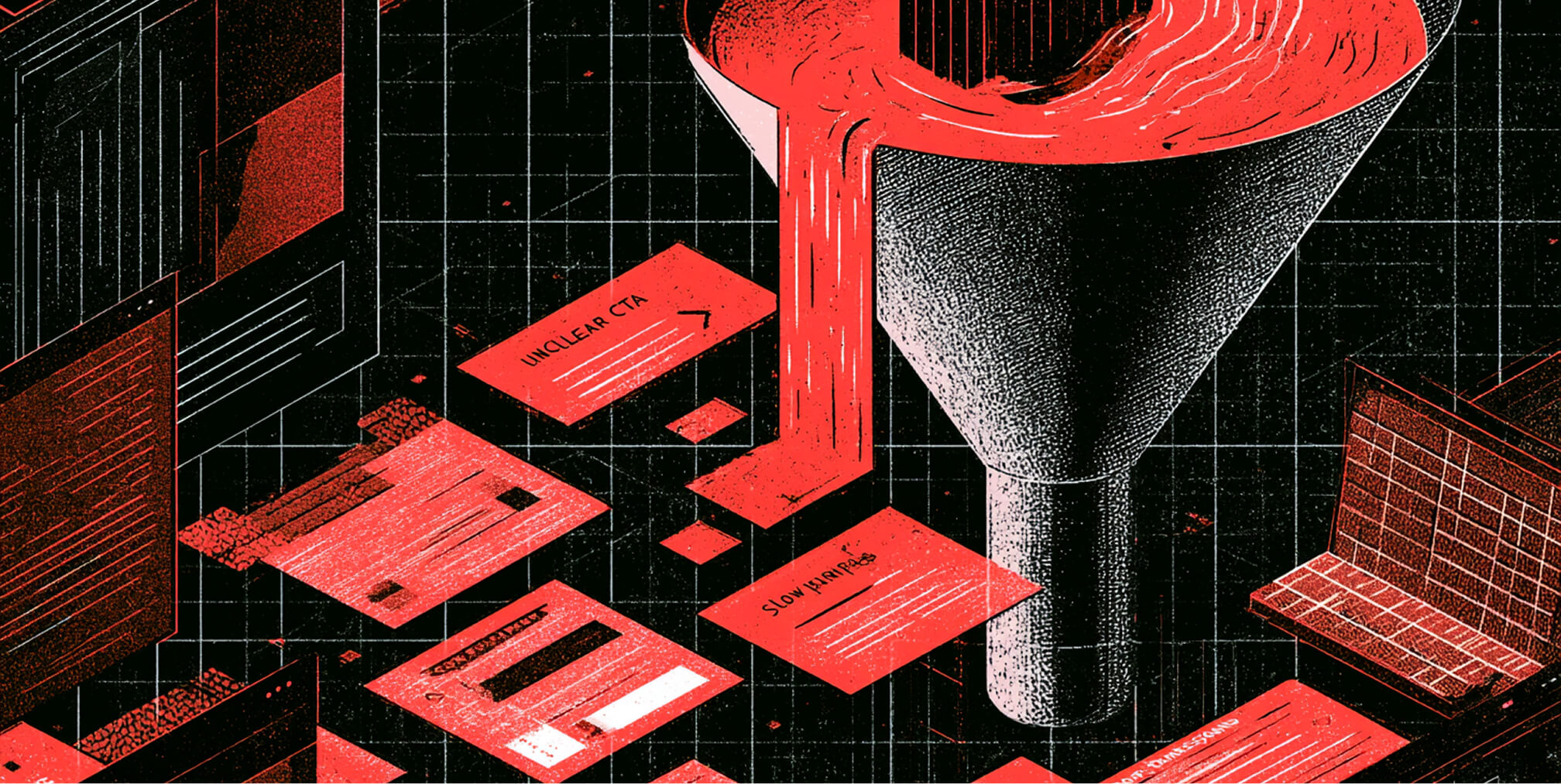
What should you consider when choosing and budgeting for CRO services?
Budget conversations around CRO services often focus on the retainer fee. The real cost is higher. Tool subscriptions and developer hours add $200 to $1,500 per month in tool costs alone, plus 10-40 developer and QA hours per test. Agencies typically require 30-50% additional budget on top of the quoted retainer to cover these operational expenses. A $5,000 monthly retainer can realistically cost $7,000 to $8,000 all in.
Before signing any CRO contract, ask for a full cost breakdown that includes testing tool licenses, developer time estimates, and QA hours. Agencies that cannot provide this breakdown are either inexperienced or obscuring the true cost of the engagement.
Beyond cost, readiness matters. Small businesses often lack the traffic necessary for reliable CRO testing. Pages need at least 5,000 monthly sessions to generate statistically valid test results. If your traffic is below that threshold, a one-time audit or DIY optimization is a better use of budget than a full testing retainer.
Watch for these red flags when evaluating proposals:
- No documented testing methodology or process overview
- Promises of specific conversion rate lifts before any research has been done
- No mention of statistical significance or sample size requirements
- Vague reporting with no connection to revenue or business metrics
- Inability to explain how they prioritize the test backlog
Pro Tip: Request a sample test report from a past engagement. A credible agency will show you the hypothesis, variant design, statistical results, and business impact in a single document.
The choice between a consultant, a full-service conversion rate optimization agency, and an in-house specialist depends on your traffic volume, testing goals, and internal bandwidth. Consultants offer flexibility. Agencies bring a full team and proven process. In-house specialists provide speed and context but require significant hiring and training investment. Most growing businesses get the best return from an agency retainer until their internal team is ready to own the program.
You can also review top CRO agencies to benchmark what strong providers look like before you start outreach.
How do you maximize ROI from CRO services?
The biggest mistake marketing teams make is treating CRO as a one-time project. Sustained CRO success requires 4-12 tests per month, statistical literacy, and a consistent methodology. Most companies do not have this capacity internally, which is exactly why agency partnerships produce better long-term results than ad-hoc internal efforts.
The second biggest mistake is optimizing for conversion rate alone. Conversion rate is insufficient as a success metric on its own. An agency that drives more conversions by discounting aggressively may hurt average order value and profit margins. The right program tracks conversion rate, revenue per visitor, average order value, and customer lifetime value together.
Here is what a high-performing CRO program looks like in practice:
- A documented test backlog with at least 20 prioritized hypotheses at any given time
- Weekly test reviews with clear pass/fail criteria based on statistical significance
- Monthly reporting tied to revenue metrics, not just conversion rate percentages
- Quarterly strategy reviews to reprioritize based on new data and business goals
- A clear process for rolling winning variants into permanent site updates
Pro Tip: Winning tests should be implemented permanently within two weeks of reaching significance. Leaving winning variants running as "tests" wastes the revenue upside you already proved.
The real value of a CRO agency lies in hypothesis development, statistical test design, and roadmap management. Software tools are widely available. The expertise to use them correctly is not. When evaluating digital marketing optimization partners, prioritize methodology and track record over the tools they mention.
For teams managing CRO alongside paid media, understanding how conversion improvements affect paid search ROI is worth the time. A 10% conversion rate lift on a paid landing page effectively reduces your cost per acquisition by the same proportion.
Why Most CRO Programs Underdeliver, How The Branded Agency Approaches It, and Key Takeaways

Why most CRO engagements underdeliver (and how to avoid it)
The CRO engagements I have seen fail share one trait: they started without a data foundation. The team signed a retainer, the agency launched tests in week two, and by week eight nobody could explain why the tests were chosen or what the results meant for the business. That is not optimization. That is activity theater.
The programs that work start with a genuine research phase. Not a week of looking at Google Analytics, but a real investigation: session recordings, exit surveys, sales team interviews, and customer support ticket analysis. The best hypothesis I ever saw came from a customer support ticket, not a heatmap. A customer wrote in asking where the return policy was. The agency added it to the product page above the fold. Conversion rate on that page went up measurably within three weeks.
Patience is the other underrated factor. Marketing teams under quarterly pressure want results in 30 days. CRO does not work that way. The 45-to-90-day timeline for meaningful results is not a limitation of the agency. It is a function of statistics. You need enough data to trust the result. Rushing to call a test early is how you implement changes that hurt revenue.
My honest advice: treat your first 90-day CRO engagement as a research investment, not a revenue guarantee. The test results you generate in that period are worth more than any single winning variant. They tell you what your customers actually respond to, and that knowledge compounds over time.
— Quincy Samycia
How The Branded Agency approaches conversion and brand performance
Marketing teams that want conversion gains without sacrificing brand equity need more than a testing tool. They need a partner who connects research, creative, and performance into one program.
The Branded Agency builds CRO programs inside a broader brand-backed performance™ framework. That means every test is informed by brand positioning, not just click data. The result is conversion growth that holds up over time because it is grounded in what makes your brand worth choosing. From website development built for conversion to integrated branding services that make your product impossible to ignore, The Branded Agency connects every layer of your marketing to measurable outcomes. If your team is ready to build a CRO program that compounds, reach out to discuss what a full-funnel engagement looks like for your business.
FAQ
What are conversion rate optimization services?
Conversion rate optimization services are structured programs that use data analysis, behavioral research, and A/B testing to increase the percentage of website visitors who complete a desired action. They typically include audits, test design, implementation, and reporting.
How long does it take to see CRO results?
First statistically significant results typically appear between day 45 and day 75, with meaningful revenue impact visible around day 75 to 90 of an engagement.
How much do CRO services cost?
Costs range from $1,000 for a one-time audit to $30,000 or more per month for full program management. Testing retainers typically run $3,000 to $8,000 per month, with additional operational costs for tools and developer time.
What traffic volume do I need for CRO testing?
Test pages need at least 5,000 monthly sessions to generate statistically valid results. Sites below this threshold are better served by a CRO audit or targeted on-page improvements before committing to a testing retainer.
What is a realistic conversion rate improvement from CRO services?
A 5-15% relative improvement on optimized pages within 90 days is a realistic benchmark for a well-run CRO engagement. Results vary based on traffic volume, test quality, and the starting conversion rate of the pages being tested.
Key Takeaways
Effective conversion rate optimization services require a documented methodology, sufficient traffic, and a 45-to-90-day timeline before meaningful revenue results appear.
| Point | Details |
|---|---|
| Expect a 45-90 day timeline | First significant results appear around day 45-75; revenue impact shows by day 75-90. |
| Budget beyond the retainer | Add 30-50% for tools, developer time, and QA on top of any quoted monthly fee. |
| Traffic readiness matters | Pages need 5,000+ monthly sessions before A/B testing produces statistically valid data. |
| Track more than conversion rate | Monitor revenue per visitor, average order value, and profit margins alongside conversion rate. |
| Methodology beats tools | The agency's hypothesis process and test design discipline matter more than the software they use. |
Recommended

Quincy Samycia
As entrepreneurs, they’ve built and scaled their own ventures from zero to millions. They’ve been in the trenches, navigating the chaos of high-growth phases, making the hard calls, and learning firsthand what actually moves the needle. That’s what makes us different—we don’t just “consult,” we know what it takes because we’ve done it ourselves.
Want to learn more about brand platform?
If you need help with your companies brand strategy and identity, contact us for a free custom quote.
We do great work. And get great results.
+2.3xIncrease in revenue YoY
+126%Increase in repurchase rate YoY


+93%Revenue growth in first 90 days
+144% Increase in attributed revenue




+91%Increase in conversion rate
+46%Increase in AOV


+200%Increase in conversion rate
+688%Increase in attributed revenue