Creative Brief Examples: 4 Samples and How to Write Yours
11/02/2026
Design
Discover four creative brief examples and learn how to align your team, streamline approvals, and turn creative projects into measurable results.
A creative brief is a short document that tells a creative team why a project exists, who it is for, what it must achieve and what is expected of them. The fastest way to learn the format is to read a few filled-in ones, so below you will find four worked examples (a campaign, a website, a product launch video and a rebrand), the sections every brief needs, and the mistakes that send projects into endless revision rounds.


What a creative brief is
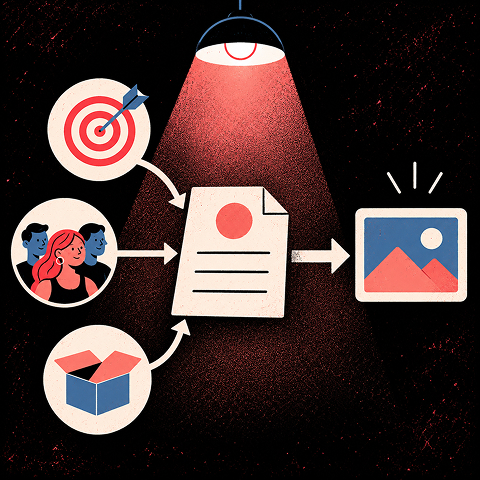

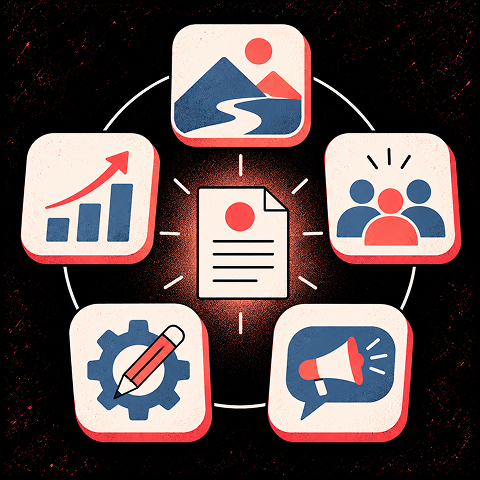
A creative brief is the foundation for a creative project. Mailchimp describes it as a concise document that gathers a project’s purpose, objectives and requirements in one place, and that guides strategists, designers, writers and project managers. Adobe adds that it gives creative teams a roadmap while leaving room for them to develop concepts, rather than dictating the final idea.
That last point matters. A brief that says “make the logo bigger” is an instruction. A brief that says “first-time buyers do not trust us yet, and we need them to feel safe within five seconds” is a problem the team can solve in ways you did not imagine.
Creative brief vs. brand brief
The two documents get mixed up constantly. The difference is scope and shelf life.
• Scope: A brand brief defines the overall brand; a creative brief guides one campaign, asset or project.
• Shelf life: A brand brief is long-term and revisited periodically; a creative brief is created for a specific project and closed after delivery.
• Contents: A brand brief holds vision, mission, values, audience and positioning; a creative brief holds objective, audience, message, deliverables, timing and budget.
• Core question: The brand brief answers “Who are we?” The creative brief answers “What are we making now, and why?”
Mailchimp frames the brand-development brief as the document that establishes vision, mission, values, audience and market position, and informs later creative work. Brandfolder makes the same split: the brand brief is the large-picture strategic roadmap, while a project brief applies that strategy to a particular campaign and adds deliverables, schedule and budget. Monday.com’s guide draws the same line between a broad, long-term brand brief and a narrower brief for a single deliverable.
In practice, every creative brief should quote the brand brief rather than reinvent it. If you have no brand brief, your first creative briefs will keep re-arguing positioning, and that is a sign to fix the foundation first.
What every creative brief should include
Templates differ in wording, but they agree on the core. The American Marketing Association’s template lists project background and goals, deliverables, sponsor, audience and the behavior change you want, messaging and tone, creative direction, brand requirements, mandatory elements, channels, timing, review workflow and budget scope. Asana’s list is similar and stresses stakeholders, approvals and distribution. Canva’s version adds target-audience demographics and technical specifications.
Boiled down, here are the ten sections we use:
1. Project background: Explain the business context, opportunity and why the project is happening now.
2. Measurable objective: Define one primary outcome and the metric that will establish success.
3. Target audience: Describe the priority decision-maker, their needs and barriers.
4. Audience insight: State the tension, behavior or unmet need the creative must address.
5. Single-minded message: Write the one idea people should remember, with supporting proof.
6. Tone and creative direction: Specify voice, visual references, and what to avoid without prescribing the finished concept.
7. Deliverables and channels: List assets, sizes, formats, destinations and technical requirements.
8. Mandatory elements: Include brand rules, approved claims, legal copy and accessibility needs.
9. Timing and approval workflow: Name milestones, feedback rounds, reviewers and the final approver.
10. Budget and success measurement: Share the available budget and how creative performance will be evaluated.
Free Brand Health Audit
Make sure your brand is built to sell
Search has changed. Your customers aren't just Googling anymore. They're asking ChatGPT, Perplexity, Gemini and other AI platforms what to buy, who to trust and which brands they should consider.
If your brand isn't showing up clearly in those answers, you're already losing opportunities. Our free Brand Health Audit shows you where your brand stands across traditional search, AI search and brand positioning.

Sample brand audit
Live preview
Traditional search
72
AI search (GEO)
34
Brand positioning
58
Four creative brief examples
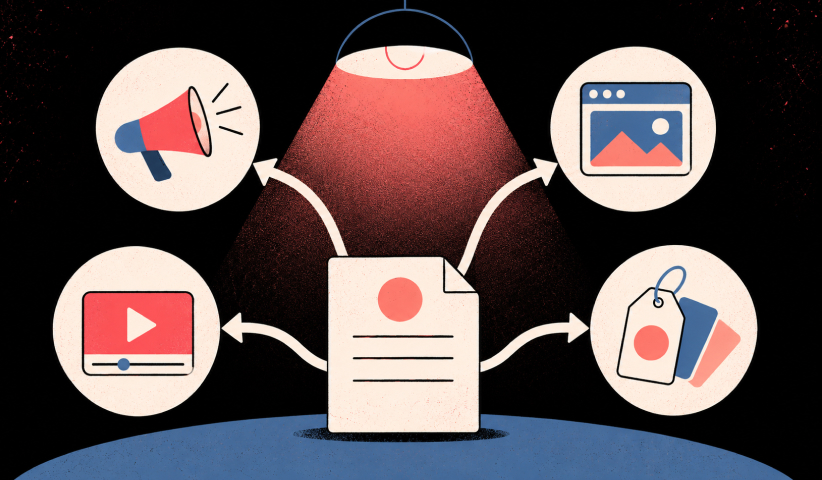
The first example below is a published format. The other three are illustrative briefs we wrote for fictional companies so you can see how the same structure bends to different projects. None describes a real client.
Example 1: The one-page classic (Quaker Oatmeal)
The SDIC ExA model is a public creative brief format built on six elements: goal, audience, problem, insight, single-minded proposition and action, with optional context such as outputs or channels. Its Quaker Oatmeal sample reads like this in outline:
The following is a paraphrased teaching outline of the six-part format, not a verbatim reproduction of the published Quaker sample:
• Goal: Make the product relevant to a busy breakfast routine.
• Audience: People who want a convenient, satisfying start to the day.
• Problem: Breakfast is often rushed or skipped.
• Insight: People want to feel ready for the day without adding complexity to their morning.
• Single-minded proposition: A simple breakfast can help you start the day feeling prepared.
• Action: Choose the product as an easy breakfast option.
Use the original published example when you need the source’s exact wording; this outline demonstrates how the six fields connect.
Notice the economy. Every line is one short sentence, and each leads to the next. If you can only copy one thing from this example, copy the chain from problem to insight to proposition. A creative team can start sketching from those five lines.
Example 2: A demand-generation campaign brief (fictional B2B SaaS)
Project: “Close the Books Faster” Q1 campaign, a fictional finance-automation company.
Background: The product is strong with mid-market controllers but unknown to CFOs, who sign the contract.
Objective: Generate 150 sales-qualified demo requests from CFOs at companies with 200 to 1,000 employees in one quarter, at a cost per qualified request agreed with finance.
Audience: CFOs who spend the first week of every month waiting on reconciliations. They distrust vendor hype and read peer content.
Insight: CFOs do not want faster software. They want to stop apologizing to the board for late numbers.
Message: Month-end close that finishes before the board asks.
Tone: Calm, precise, a little dry. No exclamation points, no stock photos of handshakes.
Deliverables: Three LinkedIn ad concepts with two variants each, one landing page, a four-email nurture sequence, one 90-second customer story video.
Mandatory: Customer logos only with written approval; no savings claim without a documented source.
Timeline: Concepts in three weeks, two feedback rounds, launch in week eight. Approver: CMO. Consulted: VP Sales.
This kind of brief connects creative to a funnel. It is the structure we use when brand-backed performance is the goal: brand message and measurable demand in the same document.
Example 3: A website brief (fictional DTC skincare brand)
Adobe lists website design as a standard brief type, with emphasis on the site’s purpose, audience, functionality, aesthetic, sitemap, wireframes and design inspiration. A short version for a fictional brand:
• Project: Redesign the direct-to-consumer website for a fictional sensitive-skin skincare brand.
• Business problem: Visitors arrive from paid social but struggle to identify the right product and hesitate before checkout.
• Objective: Increase qualified product-page-to-cart conversion against a pre-launch baseline over the first 90 days.
• Audience: First-time skincare buyers seeking straightforward ingredient information and evidence of product suitability.
• Insight: Customers want confidence in choosing a product before they want an elaborate brand story.
• Core message: Understand what your skin needs and choose with confidence.
• Deliverables: Homepage, collection and product templates, mobile-first navigation, ingredient explanation modules, cart improvements and a design system handoff.
• Required functionality: Product filtering, accessible forms, reviews, analytics events and a tested checkout path.
• Visual direction: Clean, reassuring and product-forward; preserve approved brand assets and avoid unsupported medical claims.
• Timeline and owners: Discovery and wireframes first, then design, build and QA; marketing owns approval with e-commerce and development consulted.
• Measurement: Track add-to-cart rate, checkout completion, mobile performance and qualified revenue alongside the primary conversion metric.
Website briefs fail when they list pages but skip the business goal. If you are scoping a build, our strategic website development work starts with exactly this conversation.
Example 4: A rebrand brief (fictional growth-stage company)
Project: Brand identity refresh for a fictional logistics software company moving upmarket after a funding round.
Problem: The brand looks like a startup tool. Enterprise buyers read it as risky.
Objective: Raise perceived credibility with enterprise procurement teams while keeping the affection of current customers.
Audience: Primary: VP Operations at large shippers. Secondary: existing mid-market users, who must not feel abandoned.
Message: Reliable at scale, still built by people who answer the phone.
Deliverables: Positioning statement, name-and-tagline review, logo system, color and type, messaging framework, sales deck template, website homepage design.
Constraints: Product name stays. Existing customers get notice before public launch. Internal rollout plan required, since internal branding determines whether employees carry the new story.
Timeline and budget: Phased: strategy, identity, rollout. Executive sponsor signs off at each phase gate.
A brief like this draws on the brand brief, but it is still a project document. For more on the strategic side, see how we define a rebrand.
How to write your own, step by step
Adobe’s process runs: define the project and measurable objectives, describe the audience and its needs, set the key message and tone, list deliverables and specifications, set timeline and budget, and identify stakeholders and responsibilities. Here is how we apply it.
1. Start with the business outcome
Write the result before the deliverable. “A new landing page” is a task. “Lift trial sign-ups from paid search” is an objective. The American Marketing Association cautions that creative work should connect to both immediate business objectives and long-term brand strategy, because a single campaign or asset cannot carry the entire brand story or repair broader positioning problems. Use the brief to say which job this project does.
2. Pick one audience
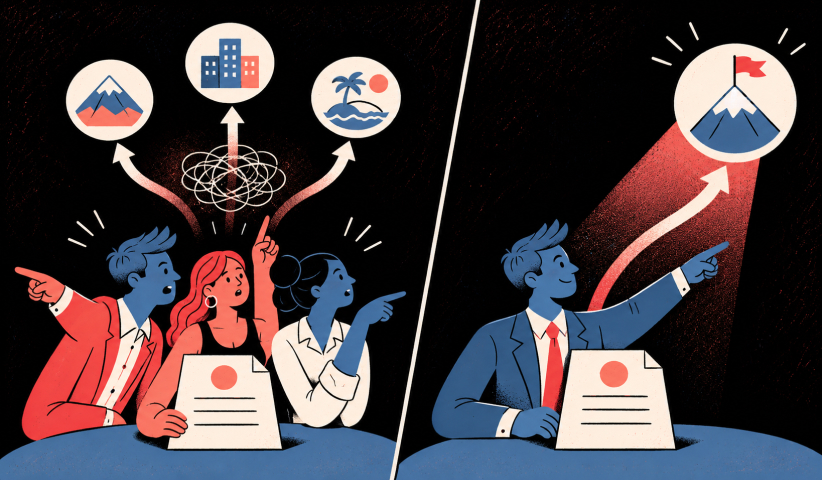
If your audience is “everyone with a budget,” the creative will speak to no one. Choose the person who decides, describe their situation, and name what you want them to do differently after seeing the work.
3. Find the insight
The insight is the reason your message will land. In the Quaker sample, it is that people lack energy, not time. Look for a tension in customer interviews, sales calls or support tickets.
4. Write one message
If your team cannot say it in one sentence, the brief is not ready. Supporting points can follow, but there is only one headline.
5. Be exact about deliverables and limits
List formats, sizes, lengths, channels and mandatory elements. Constraints speed creative work up. Surprises slow it down.
6. Lock timing, approvals and budget
Asana’s view is that putting stakeholders, approvals, budget, timeline and distribution in the brief cuts later back-and-forth. We agree. Name one final approver. State how many feedback rounds are included.
7. Get sign-off, then freeze it
Canva says a brief should be finalized and agreed by stakeholders at the start. Changing the objective in week three is the most expensive edit in any project.
How long should a creative brief be?
Short, usually. Canva puts a typical brief at one or two pages. Mailchimp notes that depending on complexity, a brief can run from one or two pages to more than 20. A full rebrand or a multi-market launch can justify the longer end. A single ad set cannot.
A useful test: could a new designer read it in five minutes and know what to make, for whom, and how you will judge it? If not, cut.
Common mistakes to avoid
The AMA’s perspective is that a brief works as a shared source of truth: early agreement on goals, audience, messaging, deliverables, timelines and brand requirements reduces misalignment, delays and revisions.
• Vague goals: Replace “make it engaging” with a specific audience action and measurable result.
• Too many audiences: Name the primary audience and list secondary audiences only when they genuinely change the execution.
• Multiple competing messages: Choose one central proposition and use supporting proof rather than several equal-weight headlines.
• Missing constraints: List required claims, sizes, accessibility, approvals and usage rights before concepting.
• Designing the solution in the brief: Describe the problem and desired response; let the creative team explore execution.
• Undefined approvals: Assign one final decision-maker and a finite number of review rounds.
• No measurement plan: Choose the success metric and baseline before publishing the work.
Want to learn more about brand platforms, Brand Strategy and Brand Identity? Keep reading!
If you need help with your companies brand strategy and identity, contact us for a free custom quote.
Adapting a template to your project
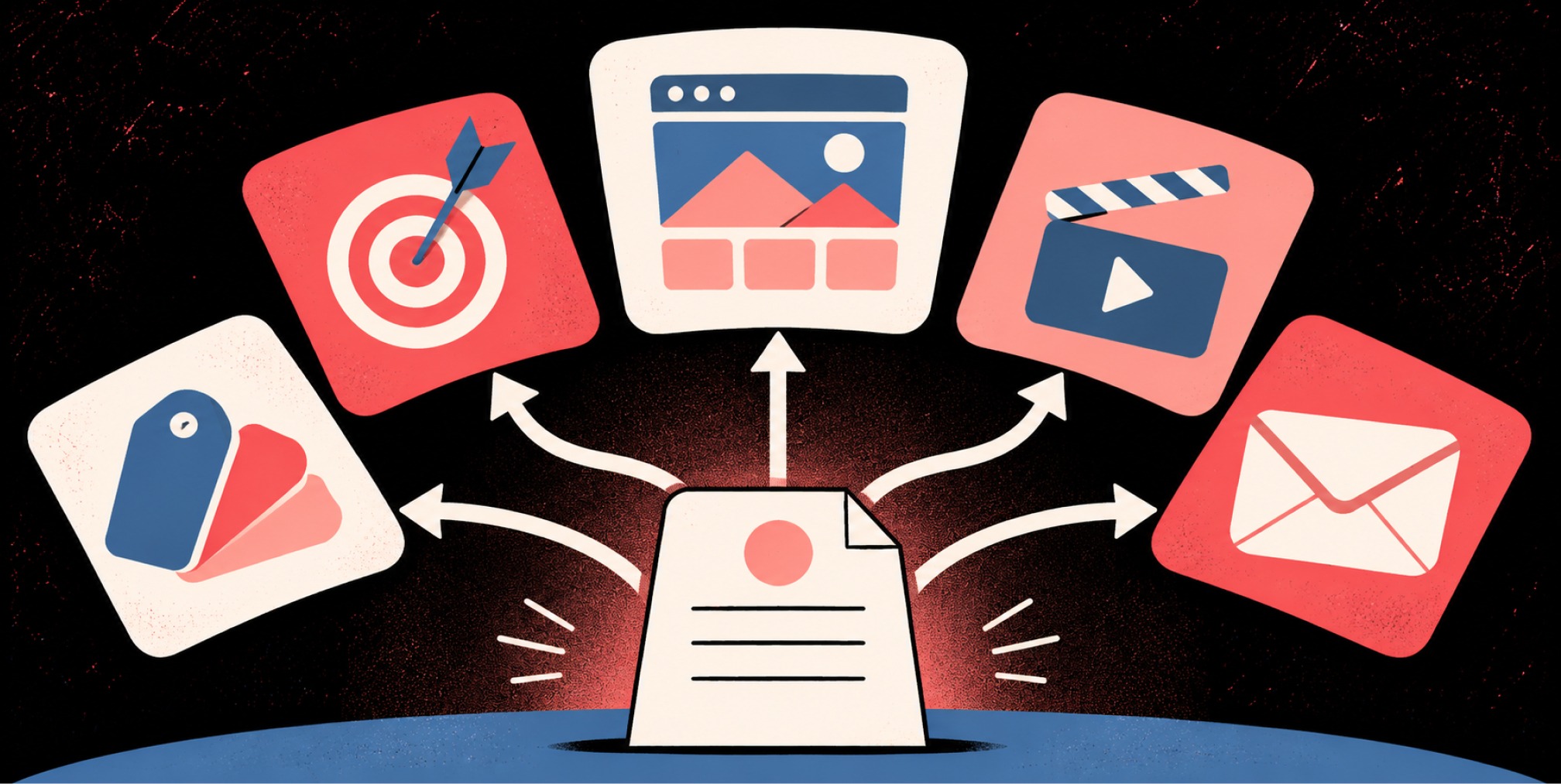
Do not reuse one document for everything. Canva advises tailoring the brief to the project type and the assets required. In practice:
• Paid campaign: Emphasize audience segments, insight, offer, channels, formats, tracking and the primary conversion metric.
• Website or landing page: Add user journeys, page hierarchy, functionality, analytics, mobile requirements and accessibility.
• Product launch video: Add product proof, storyline, script requirements, duration, aspect ratios, sound and usage rights.
• Brand identity or rebrand: Emphasize positioning, competitive context, stakeholder alignment, asset system and internal/external rollout.
• Email campaign: Include audience triggers, journey stage, single CTA, segmentation, email specifications and success measures.
Then fill in the sections: background, goals, deliverables, sponsor, audience and intended shift, creative direction, channels, timing, review workflow and budget scope.
Our perspective: the brief is where brand and performance meet
We see most creative problems before a designer opens a file. The brief says “drive conversions” with no brand direction, or it says “elevate the brand” with no number attached. Both versions produce work that looks fine and does little.
Our view is that every brief should carry two things at once: the brand idea the work must express, and the business result it must move. That is what we mean by brand-backed performance. The brand brief supplies the first. The creative brief names the second, and it says which metric will tell you whether the work succeeded.
We also push clients to write less and decide more. A one-page brief with a clear insight beats a twelve-page document that avoids a choice. Transparency helps too: share the budget range and the real constraints. Teams solve better when they know the true problem.
When you want a partner to write it with you
A good brief is half the work, and many executives would rather build it with a team that will also execute. We combine brand strategy, creative, web development and performance marketing so the brief, the work and the measurement stay connected. Creative Services start from $4,000 per month, and Growth Strategy from $8,500 per month. Branding and website engagements are scoped per project, and you can read about our executive-level branding approach before you reach out.
If you have a project in mind, share your draft brief with us and we will tell you what is missing, from our home page.
Frequently Asked Questions

What is a creative brief?
It is a concise document that states a project’s purpose, objectives and requirements so strategists, designers, writers and project managers work toward the same goal. It covers one project, not the whole brand.
What is the difference between a brand brief and a creative brief?
A brand brief is a long-term document on vision, values, audience and positioning. A creative brief applies that strategy to one campaign or deliverable and adds the schedule, budget and specifications.
What should a marketing creative brief include?
Include the background, a measurable objective, the audience, the message and tone, deliverables, mandatory elements, timeline, review workflow, budget and stakeholders. Add channel and measurement details for campaigns.
How long should a creative brief be?
Most run one to two pages. Complex projects, such as a rebrand, can need more. If a new team member cannot grasp the project in five minutes, the brief is too long or too vague.
Who should write the creative brief?
The project owner on the client side, usually a marketing lead, writes it with input from stakeholders. The creative team should review it and ask questions before work begins.

Quincy Samycia
As entrepreneurs, they’ve built and scaled their own ventures from zero to millions. They’ve been in the trenches, navigating the chaos of high-growth phases, making the hard calls, and learning firsthand what actually moves the needle. That’s what makes us different—we don’t just “consult,” we know what it takes because we’ve done it ourselves.
Want to learn more about brand platform?
If you need help with your companies brand strategy and identity, contact us for a free custom quote.
We do great work. And get great results.
+2.3xIncrease in revenue YoY
+126%Increase in repurchase rate YoY


+93%Revenue growth in first 90 days
+144% Increase in attributed revenue




+91%Increase in conversion rate
+46%Increase in AOV


+200%Increase in conversion rate
+688%Increase in attributed revenue