Email Marketing Services for eCommerce in 2026: Turning Customer Data Into Predictable Revenue
02/16/2026
E-Commerce
Turn subscribers into customers and first-time buyers into repeat purchasers. Explore the strategies, automated flows, and services behind effective ecommerce email marketing.
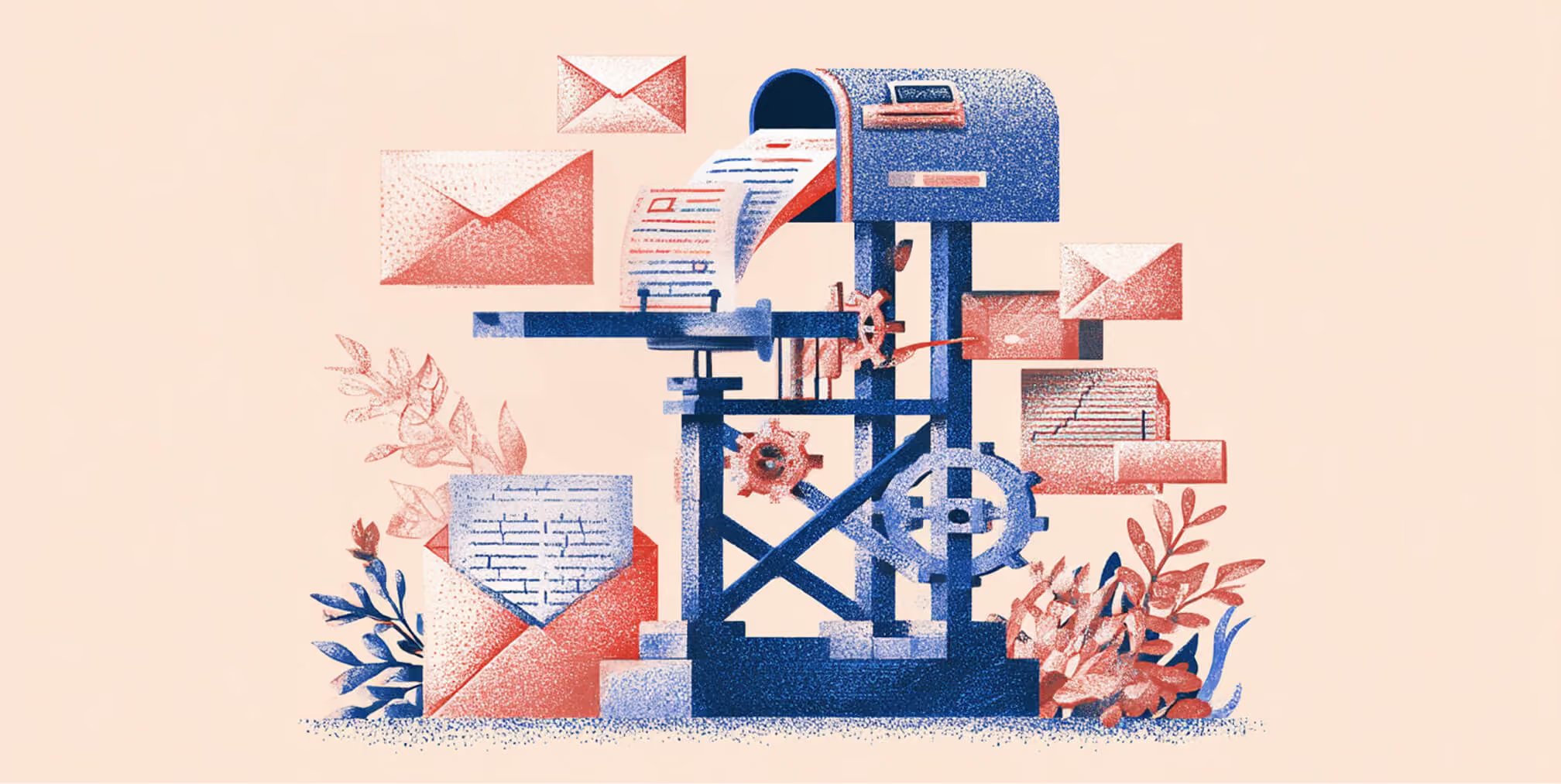
Ecommerce email marketing is the use of email campaigns and automated messages to help online stores convert subscribers, support customers, and encourage repeat purchases. It includes welcome emails, abandoned cart reminders, post-purchase education, product recommendations, and winback campaigns. For brands investing in customer acquisition, what happens after the first visit or purchase matters. A relevant, well-timed email can answer a product question, help someone complete an order, or remind an existing customer when it is time to replenish. An effective strategy connects customer data, audience segmentation, useful content, and consistent brand messaging. Ecommerce email marketing services bring these elements together through planning, copywriting, design, automation, and ongoing performance analysis. This guide explains how those services work, which email flows to prioritize, and how platforms such as Klaviyo and Mailchimp support a broader retention strategy.



Why Email Marketing Matters for eCommerce Growth in 2026


Ecommerce email marketing helps online stores stay connected with subscribers and customers through relevant campaigns and automated messages. It can support first purchases, product education, and repeat orders, making it an important part of a broader customer retention strategy.
With a permission-based email list, brands can:
- Reach subscribers without paying for each advertising impression.
- Help shoppers make informed decisions through product information and answers to common questions.
- Recommend complementary products based on previous purchases.
- Encourage repeat orders through replenishment reminders and timely follow-ups.
Results depend on your audience, product, purchase cycle, deliverability, and execution. Email should be measured alongside acquisition and website performance, with attention to whether it contributes to profitable customer relationships.
At The Branded Agency, our retention marketing services bring together strategy, creative, and automation to help ecommerce brands improve the customer experience before and after a purchase.
What eCommerce Email Marketing Services Include
Ecommerce email marketing services typically cover strategy, platform setup, audience segmentation, copywriting, design, automated flows, campaign management, and reporting. The scope should specify what will be delivered, who is responsible, and how performance will be evaluated.
Strategy Built Around the Customer Journey
A practical email strategy starts with how people discover, evaluate, buy, and use your products. Core deliverables include:
- Customer journey mapping: Identify where emails can answer questions, support a purchase, or encourage a return visit.
- Audience segmentation: Define groups using available purchase history, engagement, preferences, and consented behavioral data.
- An automation roadmap: Prioritize welcome, abandoned checkout, post-purchase, replenishment, and winback flows according to your store’s needs.
- A campaign calendar: Plan product launches, educational content, and promotions around customer interests and business priorities.
- A measurement plan: Establish baseline performance and agree on metrics such as conversion rate, revenue per recipient, repeat purchase rate, unsubscribes, and spam complaints.
Clear Delivery and Approval Responsibilities
An agency’s scope may include platform configuration, integrations, copywriting, email design, flow setup, testing, and ongoing optimization. Specify the number of campaigns and flows included, review rounds, reporting frequency, and who handles technical issues.
The brand typically provides product information, approved claims, promotional details, brand assets, and final approvals. Both teams should agree on access, consent requirements, launch timelines, and ownership of the email account and customer data.
Reporting should also distinguish email-attributed revenue from revenue proven to be caused by email. Attribution assigns credit according to platform settings; it does not, by itself, establish how many purchases would have happened without the message.
Free Brand Health Audit
Make sure your brand is built to sell
Search has changed. Your customers aren't just Googling anymore. They're asking ChatGPT, Perplexity, Gemini and other AI platforms what to buy, who to trust and which brands they should consider.
If your brand isn't showing up clearly in those answers, you're already losing opportunities. Our free Brand Health Audit shows you where your brand stands across traditional search, AI search and brand positioning.

Sample brand audit
Live preview
Traditional search
72
AI search (GEO)
34
Brand positioning
58
Klaviyo vs. Mailchimp: Choosing an eCommerce Email Marketing Platform



The right ecommerce email marketing platform depends on your store’s integrations, customer data, automation requirements, budget, and team capacity. Both Klaviyo and Mailchimp support campaigns and automated customer journeys, but the best fit depends on how you plan to use them.
Klaviyo Email Marketing for eCommerce Brands
Klaviyo is worth evaluating when your retention strategy requires detailed segmentation based on shopping behavior and purchase history. Its audience segmentation tools support targeting using tracked activity, customer attributes, and data from connected platforms.
For example, a brand might build separate audiences for first-time buyers, repeat customers, and shoppers who previously purchased a particular product category. These distinctions help make email content and product recommendations more relevant.
Before choosing Klaviyo, confirm:
- Data availability: Does your store integration capture the events and product information your strategy needs?
- Automation requirements: Which customer actions should trigger messages, and when should customers exit a flow?
- Management capacity: Who will maintain segments, test automations, and review performance?
- Total cost: What will the platform and ongoing management cost as your contact list and sending volume grow?
A more detailed setup creates additional opportunities for personalization, but it also requires reliable data and ongoing attention.
Mailchimp Email Marketing for eCommerce Brands
Mailchimp is worth evaluating when your team needs newsletters, promotional campaigns, and ecommerce automations within a familiar email workflow. With a compatible store connection, it can use purchase data for segmentation, product recommendations, and automated follow-ups. Available features depend on your plan and integration. See Mailchimp’s ecommerce capabilities.
Before choosing Mailchimp, check whether the proposed setup supports your required customer journeys, audience filters, and reporting. Test a representative workflow, such as a post-purchase sequence, before committing to a migration.
An existing Mailchimp account may already meet your needs. Changing platforms makes sense when it resolves a specific limitation and the expected benefit justifies the migration, training, and implementation costs.
Compare Platforms Against Your Actual Requirements
Ask your agency or internal team to demonstrate the same use cases in each platform: a welcome sequence, a purchase-based segment, a post-purchase flow, and a campaign report.
Compare integration coverage, workflow flexibility, ease of use, total cost, and reporting definitions. Agree on who owns setup, testing, approvals, and ongoing maintenance before implementation begins.
Essential eCommerce Email Campaigns and Automated Flows
An ecommerce email program usually combines scheduled campaigns, such as product launches, with automated flows triggered by customer actions or defined conditions. Each should serve a clear purpose in the customer journey.
Welcome Series
A welcome series introduces your brand to new subscribers and helps them decide whether your products meet their needs. It can explain your differentiators, answer common questions, share customer proof, and deliver any promised signup offer.
Tailor the sequence to whether the subscriber has already purchased so new customers do not receive irrelevant first-order messaging.
Abandoned Cart and Checkout Emails
Abandonment emails remind eligible shoppers about an unfinished purchase. Useful content may include product details, shipping information, return policies, or a way to ask questions.
Trigger these messages only when the necessary tracking and contact permissions are in place, and stop the sequence when the shopper completes a purchase.
Post-Purchase Flows
Post-purchase emails help customers get value from what they bought. Depending on the product, they might include setup instructions, care guidance, usage tips, or a request for feedback.
Time these messages around delivery and product use. Someone still waiting for their order needs different information from someone who has used it for several weeks.
Upsell and Cross-Sell Emails
Upsell emails introduce a higher-tier option, while cross-sell emails recommend complementary products. Both should reflect the customer’s purchase history and likely needs.
A relevant recommendation can encourage an additional purchase, but its effect on order value and profitability needs to be measured.
Replenishment Reminders
For consumable products, replenishment emails remind customers when they may be ready to reorder. Set timing using realistic usage intervals and refine it with purchase data.
Account for subscriptions and recent orders so customers do not receive unnecessary reminders.
Winback Emails
Winback emails reconnect with customers who have gone longer than expected without purchasing. The timing should reflect your product’s typical buying cycle.
Give customers a relevant reason to return, such as a useful product update, a new collection, or a reminder of a previous favorite. Monitor engagement and limit repeated messages to people who remain unresponsive.
Campaign Emails
Campaign emails support launches, seasonal events, educational content, and promotions. Send them to relevant audience segments and coordinate them with automated flows to manage message frequency.
Evaluate each email type against its purpose, using purchase activity, clicks, unsubscribes, and customer feedback to guide improvements.
Want to learn more about Email Marketing Services? Keep reading!
If you need help with your company’s branding and marketing, contact us for a free custom quote.
How Flows, Automations, and Triggers Support eCommerce Retention
Email automation helps ecommerce brands respond to customer actions without manually sending every message. Its value comes from making communication relevant and timely—not from guaranteeing a particular share of revenue.
Three terms explain how it works:
- A trigger is the event or condition that starts a sequence, such as a signup, purchase, or entry into an audience segment.
- A flow is the sequence of messages, delays, and decision points that follows.
- Automation is the system that executes those steps according to your rules.
For example, a purchase might trigger a flow that sends product education after delivery, followed by a replenishment reminder at an appropriate interval. If the customer reorders or starts a subscription, the rules should prevent unnecessary reminders.
Turning Customer Signals Into Useful Messages
Common starting points include:
- Browsing activity: Follow up with eligible, identifiable subscribers who viewed a product but did not purchase.
- Purchase activity: Provide guidance relevant to the item ordered and the customer’s stage of use.
- Time since last order: Send a replenishment or winback message based on the product’s typical buying cycle.
- Repeat-purchase milestones: Recognize returning customers with relevant recommendations or loyalty information.
Each flow needs clear entry conditions, timing, exclusions, and exit rules. Ongoing management should include checking data connections, testing links and product content, reviewing message frequency, and updating offers.
Automations can continue running between campaigns, but they still need monitoring to remain accurate and useful.
Case Study: Building DrTung’s Email Retention Program
DrTung’s partnered with The Branded Agency to strengthen its ecommerce business. Retention marketing formed part of a broader engagement that also included brand positioning, paid media, and website improvements.
What We Did
Our email work included:
- Auditing existing flows to identify gaps in messaging and structure.
- Rewriting and reorganizing emails around the updated brand positioning.
- Introducing welcome sequences, replenishment reminders, and educational product flows.
- Connecting customer communication to product use and repeat-purchase opportunities.
The DrTung’s case study explains how this work fit into the wider brand and ecommerce strategy.
Understanding the Results
The work established a more structured email program, with defined journeys for welcoming subscribers, educating customers, and prompting replenishment.
When evaluating commercial performance, email-attributed revenue means revenue credited to email under the reporting platform’s attribution rules. In Klaviyo, those rules include configurable windows for eligible interactions. See Klaviyo’s explanation of message attribution.
Attributed revenue alone does not establish how much additional revenue email caused. Results should be assessed over a stated comparison period, using consistent settings and considering changes in traffic, promotions, and other marketing activity.
Explore The Branded Agency’s retention marketing services.
Common eCommerce Email Marketing Mistakes
Email performance can suffer when the strategy, data, or customer experience is overlooked. Common problems include:
- Sending the same message to everyone: Existing customers, new subscribers, and frequent buyers often need different information.
- Leaving gaps after purchase: Customers may need instructions, support, or replenishment guidance beyond their order confirmation.
- Leaving automations unchecked: Outdated offers, broken links, and incorrect timing can undermine otherwise useful flows.
- Relying heavily on discounts: Repeated promotions can reduce margins and give customers fewer reasons to buy at full price.
- Overlapping campaigns and flows: Uncoordinated sends can create excessive frequency or conflicting messages.
- Treating attributed revenue as proof of incremental growth: Platform reporting needs context, consistent definitions, and comparison with broader business performance.
Diagnosing these issues requires looking beyond the email itself. Product availability, website usability, pricing, and customer experience can also affect whether a recipient purchases.
What Effective eCommerce Email Marketing Looks Like in 2026
A well-managed email program connects customer needs with clear business objectives. It includes:
- Relevant audiences: Segmentation based on useful, reliable customer information.
- Purposeful messages: Each email answers a question, supports a purchase, or provides a reason to return.
- Coordinated timing: Campaigns and automated flows work together without overwhelming subscribers.
- Consistent creative: Copy and design reflect the brand while making the next step easy to understand.
- Accountable management: Named owners handle approvals, technical checks, reporting, and improvements.
- Meaningful measurement: Performance reviews consider conversions, repeat purchases, engagement, unsubscribes, and costs.
The goal is a measurable retention program that helps customers get more value from your products and gives your team evidence for what to improve next.
Is Your eCommerce Email Program Ready for Its Next Stage?

As your store grows, your email program should adapt to new products, different customer needs, and a larger audience. If results have stalled or managing campaigns has become difficult, start by identifying where the gaps are.
Ask yourself:
- Customer retention: Are you measuring repeat purchases and the time between orders?
- Content: Do customers receive useful education and product guidance alongside promotions?
- Automation: Are your priority flows active, tested, and updated when products or offers change?
- Brand consistency: Do emails reflect the same messaging and experience customers find on your website?
- Measurement: Can your team explain the reporting period, attribution settings, and costs behind the results?
These questions can help determine whether you need targeted improvements, additional management support, or a broader review of your email strategy.
At The Branded Agency, our ecommerce email marketing services connect lifecycle planning, copywriting, design, automation, and performance analysis. We help brands identify priorities and define a scope around their customer journey, available data, and internal resources.
Explore our retention marketing services, or contact The Branded Agency to discuss your current email program and the support you need.
Build an Email Program Around Customer Needs
Effective ecommerce email marketing combines relevant messages, reliable data, thoughtful timing, and ongoing improvement. Campaigns and automated flows each have a role in helping customers choose products, use them confidently, and return when they have a reason to buy again.
Start with the most important gaps in your customer journey. Assign clear responsibilities, establish a performance baseline, and use what you learn to guide the next improvement.

Quincy Samycia
As entrepreneurs, they’ve built and scaled their own ventures from zero to millions. They’ve been in the trenches, navigating the chaos of high-growth phases, making the hard calls, and learning firsthand what actually moves the needle. That’s what makes us different—we don’t just “consult,” we know what it takes because we’ve done it ourselves.
Want to learn more about brand platform?
If you need help with your companies brand strategy and identity, contact us for a free custom quote.
We do great work. And get great results.
+2.3xIncrease in revenue YoY
+126%Increase in repurchase rate YoY




+93%Revenue growth in first 90 days
+144% Increase in attributed revenue




+91%Increase in conversion rate
+46%Increase in AOV



+200%Increase in conversion rate
+688%Increase in attributed revenue