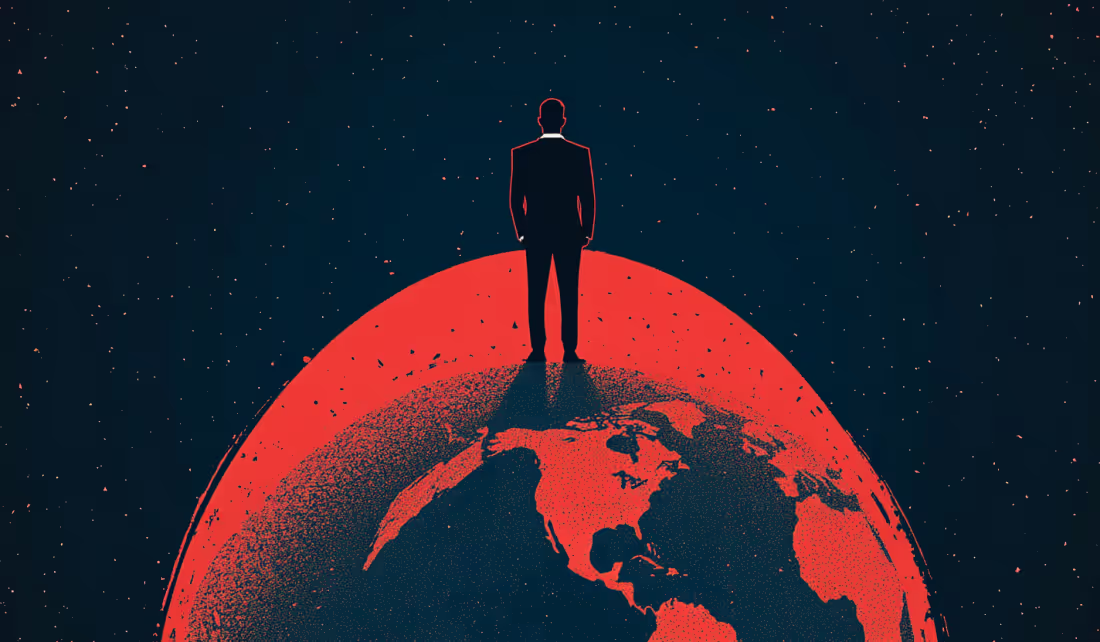
From First Sale to First Million: What Shopify Founders Wish They Knew
01/19/2026
E-Commerce
Most Shopify founders remember their first sale, but the real challenge is building the systems, brand, and discipline required to turn early traction into a sustainable seven-figure business.

Every Shopify founder remembers the moment the first order came through. For many, it’s a mix of disbelief, adrenaline, and validation. That single notification feels like a spark, a sign that someone out there chose you.



The Emotional Rollercoaster Behind Every Shopify Success Story



What founders don’t always remember as fondly are the months that follow. The panic of figuring out fulfillment. The frustration of slow sales. The exhaustion of balancing product development, support, marketing, and operations solo.
The journey from first sale to first million isn’t linear. It’s messy, emotional, and brutally educational. This is the truth founders often share privately, the lessons they wish they understood sooner.
The First Sale: The High That Pulls Every Founder In
Why That First Sale Matters More Than the Revenue
It’s not the $20, $50, or $100 you made, it’s the emotional proof that someone believed in your idea. That feeling carries founders through long nights and slow weeks.
The Early Mistakes Almost Every Founder Makes
Most founders look back and laugh at early choices:
launching with a theme they didn’t understand,
running ads without attribution,
spending hours redesigning a homepage at 2 a.m.
They’re not failures, they’re part of the initiation.
The Messy Middle: Where Most Stores Get Stuck
The “messy middle” is the stretch between validation and scale. It’s where founders question everything.
Traffic Without Conversion
They get visitors, but not buyers. That gap sinks more brands than competition ever will.
The Trap of Copying Other Brands
Many founders chase aesthetics instead of strategy, imitating what they see on big DTC sites. The result is a store that looks nice but doesn’t convert.
The “App for Everything” Problem
In the early days, apps felt like shortcuts. Eventually, they turn into clutter, slowing down funnels and creating technical debt.
Free Brand Health Audit
Make sure your brand is built to sell
Search has changed. Your customers aren't just Googling anymore. They're asking ChatGPT, Perplexity, Gemini and other AI platforms what to buy, who to trust and which brands they should consider.
If your brand isn't showing up clearly in those answers, you're already losing opportunities. Our free Brand Health Audit shows you where your brand stands across traditional search, AI search and brand positioning.

Sample brand audit
Live preview
Traditional search
72
AI search (GEO)
34
Brand positioning
58
What Helps Stores Break Through Their First Plateau



Understanding the Customer Better Than the Competition
The brands that grow aren’t the ones with the fanciest designs, they’re the ones who understand their customer’s fears, desires, and motivations at a deeper level.
Treating Shopify Like a Business, Not a Tool
Founders who scale stop tinkering with themes and start thinking about:
unit economics,
margins,
CAC-to-LTV ratios,
inventory risk,
retention
That switch is a turning point.
Building Repeatable Systems, Not Just Campaigns
Ads, emails, and promotions help, but systems scale.
Automations, templates, reporting dashboards, retention flows, these move the needle consistently.
The Founder Shift: From Doing Everything to Building a Team
Hiring Your First Developer or Agency
Founders regret waiting too long. The right technical partner removes barriers they didn’t even know existed.
Finding the Right Marketing Partner
Growth isn’t about “trying everything”, it’s about doing the right things consistently. Founders often realize they need specialized help sooner than they expected.
Letting Go of Control Without Losing Vision
One of the hardest lessons:You can’t scale if you insist on doing everything yourself.Your job shifts from execution → direction.
Want to learn more about Website Design, Development and E-commerce? Keep reading!
If you need help with your company’s website and development, contact us for a free custom quote.
What Actually Gets You From $100k → $1M

Operational Maturity
Inventory planning, forecasting, fulfillment systems, customer support, all the unsexy work that fuels scale.
Brand Differentiation
- At $100k, you’re selling a product.
- At $1M, you’re selling a brand.
- The emotional connection is what drives repeat purchases.
Retention Beating Acquisition
The brands that scale master:
- LTV,
- Post-purchase flows
- Cross-sell journeys
- Community building
- Brand storytelling that keeps customers coming back
Mistakes Founders Regret Most When Scaling
Not Investing in Brand Early Enough
Many founders focus on quick wins, ads, discounts, hacks, before building a foundation customers trust.
Ignoring Data Until It’s Too Late
Some rely on gut feeling too long. When data finally enters the picture, the insights feel painfully obvious in hindsight.
Building on Bad Tech Foundations
“Cheap now, expensive later” is a common regret. Themes overloaded with apps or fragile code cost far more to rebuild during scale.
FAQs About Growing a Shopify Brand From First Sale to First Million
1. What is the biggest factor in going from first sale to first million?
Operational maturity. Once product market fit exists, growth comes from systems, retention, brand clarity, and disciplined execution rather than luck or viral moments.
2. How long does it typically take a Shopify brand to reach seven figures?
Most successful DTC brands reach one million in revenue within 18 to 36 months. Those timelines depend heavily on margins, retention, and how early founders invest in foundations.
3. Why do so many Shopify brands get stuck in the messy middle?
They generate traffic but lack conversion clarity, strong positioning, or repeatable systems. Many focus on surface level changes instead of fixing structural issues.
4. Is paid advertising enough to scale from six figures to seven?
No. Ads can accelerate growth, but without retention, clear messaging, and operational discipline, paid traffic only magnifies existing weaknesses.
5. When should founders stop doing everything themselves?
As soon as growth starts slowing due to time constraints or technical limitations. Scaling requires shifting from execution to direction and decision making.
6. How important is branding when trying to reach seven figures?
Branding becomes critical at scale. At lower revenue levels you sell products. At higher levels you sell trust, identity, and emotional connection that drives repeat purchases.
7. What technical mistakes do founders regret most later on?
Relying on bloated themes, too many apps, and fragile shortcuts. These choices seem efficient early but become expensive rebuilds during scale.
8. Does better design and messaging really increase conversion?
Yes. Clear storytelling, strong hierarchy, and consistent visuals reduce friction and help customers decide faster, which directly improves conversion rates.
9. Why does retention matter more than acquisition at higher revenue levels?
Retention increases lifetime value, stabilizes cash flow, and reduces dependence on paid ads. Brands that scale master post purchase experience and customer relationships.
10. What mindset shift do founders need to reach their first million?
Moving from chasing tactics to building systems. Growth comes from clarity, patience, and making fewer but better decisions over time.
Your First Million Isn’t an Accident, It’s a Series of Decisions
Every Shopify founder begins with that tiny bolt of electricity, a first sale that feels like a miracle. But getting to your first million isn’t magic. It’s the sum of:
- Clarity
- Systems
- Brand building
- Willingness to grow into a new kind of founder.
If you want expert guidance, a stronger brand foundation, or a scalable Shopify experience, The Branded Agency can help you make those pivotal decisions. To start your next chapter, simply contact us, and we’ll walk the path with you.

Quincy Samycia
As entrepreneurs, they’ve built and scaled their own ventures from zero to millions. They’ve been in the trenches, navigating the chaos of high-growth phases, making the hard calls, and learning firsthand what actually moves the needle. That’s what makes us different—we don’t just “consult,” we know what it takes because we’ve done it ourselves.
Want to learn more about brand platform?
If you need help with your companies brand strategy and identity, contact us for a free custom quote.
We do great work. And get great results.
+2.3xIncrease in revenue YoY
+126%Increase in repurchase rate YoY


+93%Revenue growth in first 90 days
+144% Increase in attributed revenue




+91%Increase in conversion rate
+46%Increase in AOV




+200%Increase in conversion rate
+688%Increase in attributed revenue