HIPAA Compliant Marketing: Rules Every Healthcare Marketer Must Know
09/16/2026
Marketing Strategy
A guide to HIPAA compliant marketing — when authorization is required, exceptions, digital ad rules, BAAs, and a step-by-step compliance checklist.
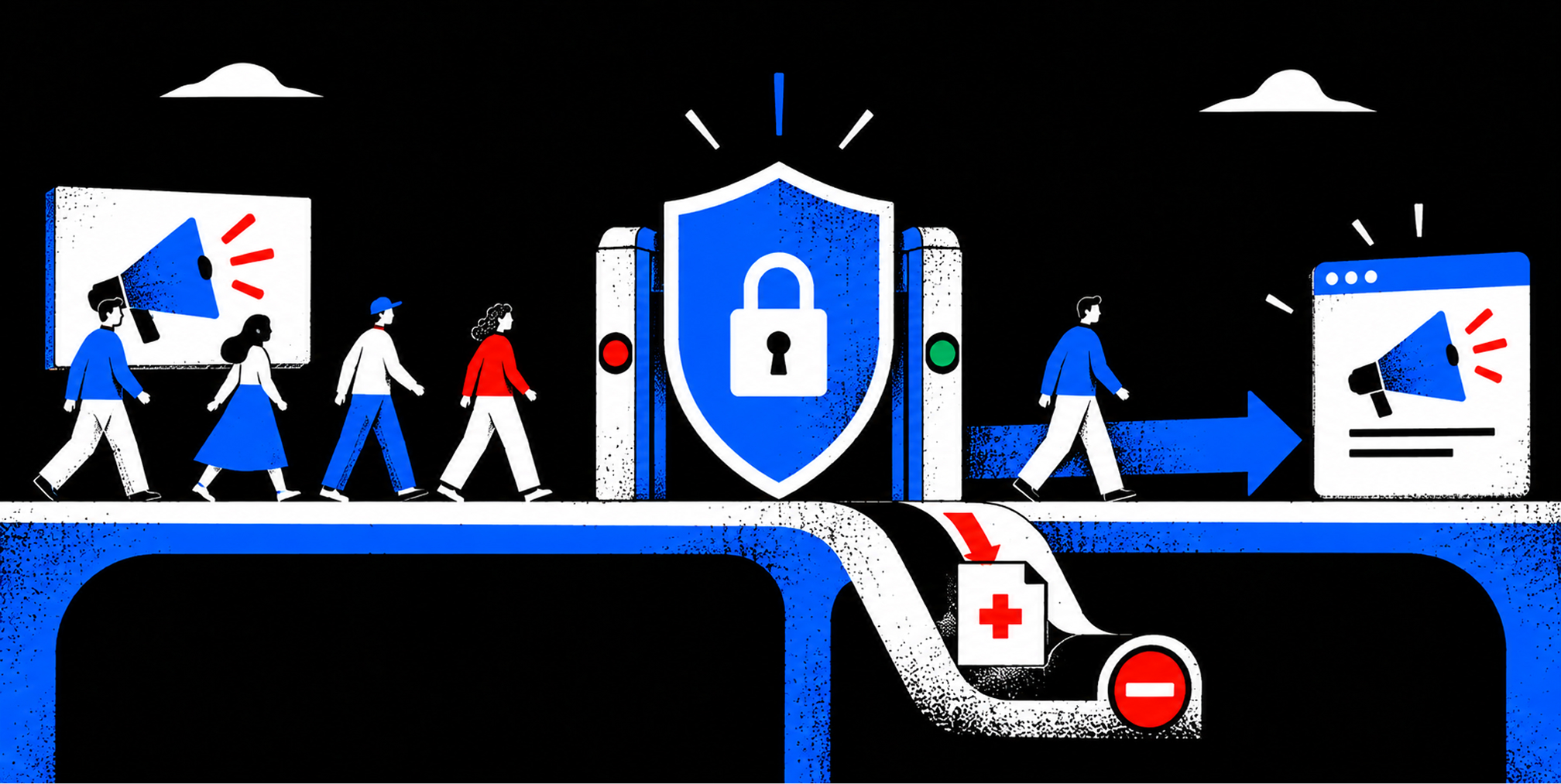
Yes, you can market healthcare services under HIPAA - but the moment your campaign uses or discloses protected health information (PHI), the HIPAA Privacy Rule (45 CFR 164.501 and 164.508(a)(3)) requires prior written authorization from each individual. HHS defines marketing as any communication that encourages recipients to purchase or use a product or service when PHI is used or disclosed to deliver it. The governing authority is HHS's Office for Civil Rights (OCR), and their guidance is the controlling reference for every decision you make. Your immediate next step: run a "PHI used?" check on every active audience segment and ad list, pause any campaign that uses PHI without a documented exception or signed authorization, and flag every vendor receiving PHI for Business Associate Agreement (BAA) review.
.png)


What HIPAA Means by "Marketing," and When Written Authorization Is Required

What HIPAA means by "marketing" and when PHI is involved
Under the Privacy Rule, marketing is not just advertising. A communication becomes HIPAA-regulated marketing when it encourages the purchase or use of a product or service AND it uses or discloses PHI to do so. That second condition is where most healthcare marketers get into trouble. HHS defines marketing as any communication that encourages recipients to purchase or use a product or service when PHI is used or disclosed to deliver it.
PHI in a marketing context includes far more than a patient's name on a mailer. Any of the following can trigger the rule:
- Patient identifiers — name, date of birth, address, phone number, email, IP address, or account number tied to a health record
- Clinical data — diagnoses, medications, treatment history, lab results, or appointment records
- Behavioral inferences — data derived from portal logins, prescription fill history, or visit patterns
- Exported lists — patient rosters pulled from an EHR or practice management system
- Hashed identifiers — even a hashed email or device ID uploaded to an ad platform can constitute PHI if it was derived from a health record and can reasonably identify an individual
The borderline cases are where teams stumble. A clinic sending a general announcement about a new service to its entire community, with no PHI used to select recipients, is likely not marketing under HIPAA. But that same clinic mailing a coupon for a weight-loss program to patients whose records show a diabetes diagnosis? That is textbook HIPAA-regulated marketing, and it requires authorization. The distinction is not the message's tone or how "educational" it sounds; it is whether PHI drove the targeting or disclosure.
When HIPAA requires prior written authorization for HIPAA compliant marketing
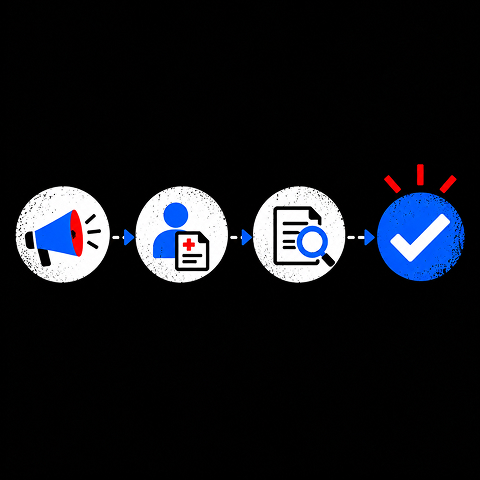
Authorization is required whenever a communication meets the marketing definition AND uses or discloses PHI, unless a statutory exception applies. The rule is that direct. Work through three questions before any campaign launches:
- Does the communication encourage purchase or use of a product or service? If yes, proceed to step two.
- Does it use or disclose PHI to reach, select, or personalize for recipients? If yes, proceed to step three.
- Does a recognized exception cover this communication? If no exception applies, you need a signed marketing authorization before the campaign goes out.
The remuneration rule adds a critical layer. When a covered entity receives direct or indirect payment from a third party in exchange for sending a promotional message, that communication is marketing regardless of how it is framed clinically. A pharmaceutical company paying a health plan to send refill reminders for a specific branded drug is not a care coordination message — it is paid promotion, and the authorization must explicitly disclose that remuneration.
Pro Tip: Build the three-question decision flow into your campaign intake form. Make it a required field before any campaign brief advances to creative. That single gate prevents the majority of authorization failures.
Free Brand Health Audit
Make sure your brand is built to sell
Search has changed. Your customers aren't just Googling anymore. They're asking ChatGPT, Perplexity, Gemini and other AI platforms what to buy, who to trust and which brands they should consider.
If your brand isn't showing up clearly in those answers, you're already losing opportunities. Our free Brand Health Audit shows you where your brand stands across traditional search, AI search and brand positioning.

Sample brand audit
Live preview
Traditional search
72
AI search (GEO)
34
Brand positioning
58
Exceptions That Don't Require Authorization, and How to Craft a Valid One

Exceptions that do not require marketing authorization
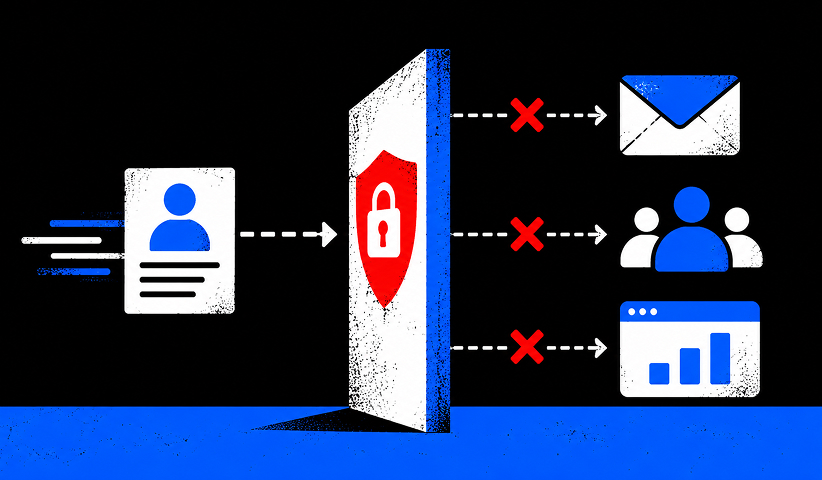
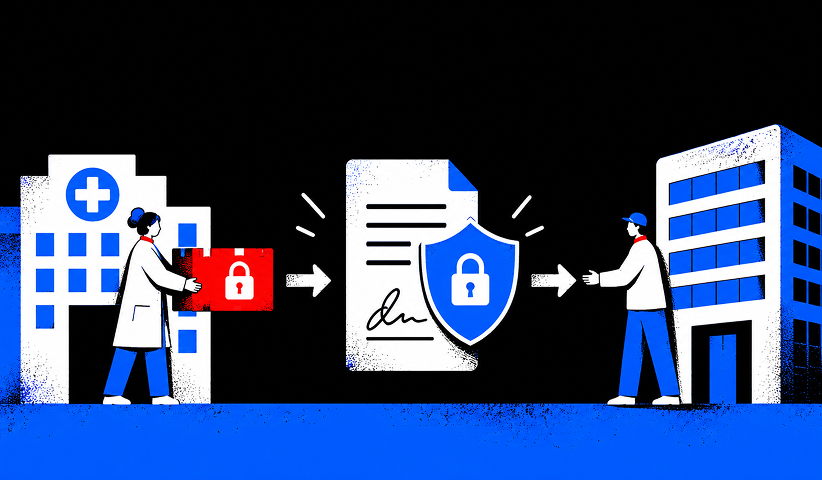
HHS carves out three core categories of communications that do not require a marketing authorization, even when PHI is involved:
- Face-to-face communications — a provider recommending a product or service during an in-person encounter with the patient; no written authorization needed
- Promotional gifts of nominal value — a branded pen or a small health-related gift given directly to a patient; the key word is "nominal"
- Treatment, case management, and health care operations communications — messages describing the covered entity's own services, recommending alternative treatments, or coordinating care, provided no third-party remuneration is involved
Within the operations exception, several specific communications are also permitted without authorization:
- Prescription refill reminders (for the covered entity's own services, no third-party payment)
- Communications about a patient's treatment options
- Case management and care coordination outreach
- General health promotion messages not tied to PHI-based targeting
- Announcements about new services at the covered entity's own facilities
The exception disappears the moment third-party remuneration enters the picture. A refill reminder sent because a drug manufacturer paid the health plan to send it is no longer an operations communication — it is marketing. HHS guidance is explicit: the exclusion for treatment and health care operations does not apply when third-party remuneration is involved or when the communication otherwise meets the marketing definition.
One pattern that trips up compliance teams: labeling a PHI-targeted promotional email as "patient education." If the message encourages purchase of a product, uses PHI to select recipients, and a vendor is being paid to facilitate it, the educational label carries no legal weight.
How to craft, capture, and manage a HIPAA marketing authorization
A valid marketing authorization must be specific, written in plain language, and stand alone — it cannot be buried in a general consent form. Per HHS requirements, every marketing authorization must include:
- Description of PHI to be used or disclosed — specific, not generic ("your prescription history" rather than "your health information")
- Purpose of the use or disclosure — what the marketing communication is for
- Who will receive the PHI — the covered entity, a named third party, or a category of recipients
- Expiration date or event — when the authorization ends
- Right to revoke — instructions for how the individual can withdraw consent and any known limitations on revocation
- Disclosure of remuneration — if a third party is paying for the communication, the authorization must say so explicitly
- Signature and date — the individual's or their personal representative's
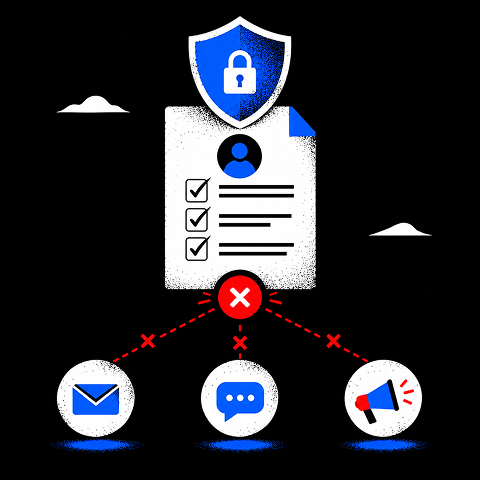
Retain every signed authorization in accordance with HIPAA retention requirements from the date of creation or last effective date. Store authorizations in an indexed, auditable system so your compliance team can pull any record within hours of an OCR inquiry. When a patient revokes authorization, that revocation must propagate across every system — email platform, SMS provider, CRM, and ad audience — before the next send.
Pro Tip: Integrate authorization flags directly into your EHR or CRM so that a revocation in one system automatically suppresses the contact across email, SMS, and portal touchpoints. Manual propagation is where revocation failures happen.
| Requirement | Timeframe / Standard |
|---|---|
| Authorization retention | At least 6 years from creation or last effective date |
| Breach notification to individuals | No later than 60 days after discovery |
| Breach notification to HHS (small breaches) | Within 60 days after end of calendar year |
| Breach notification to HHS (500+ individuals) | No later than 60 days after discovery |
If a marketing-related data incident occurs, activate your incident response plan immediately: contain the exposure, preserve evidence, conduct a risk assessment, and meet breach notification deadlines as the table above summarizes.
Not sure if your ad platform is quietly creating HIPAA exposure? Keep reading!
If you need consent-first campaigns and verified BAAs across your marketing stack, contact us for a free custom quote.
Digital Advertising Rules, and Business Associate Agreements
Applying HIPAA to digital advertising, analytics, pixels, and email
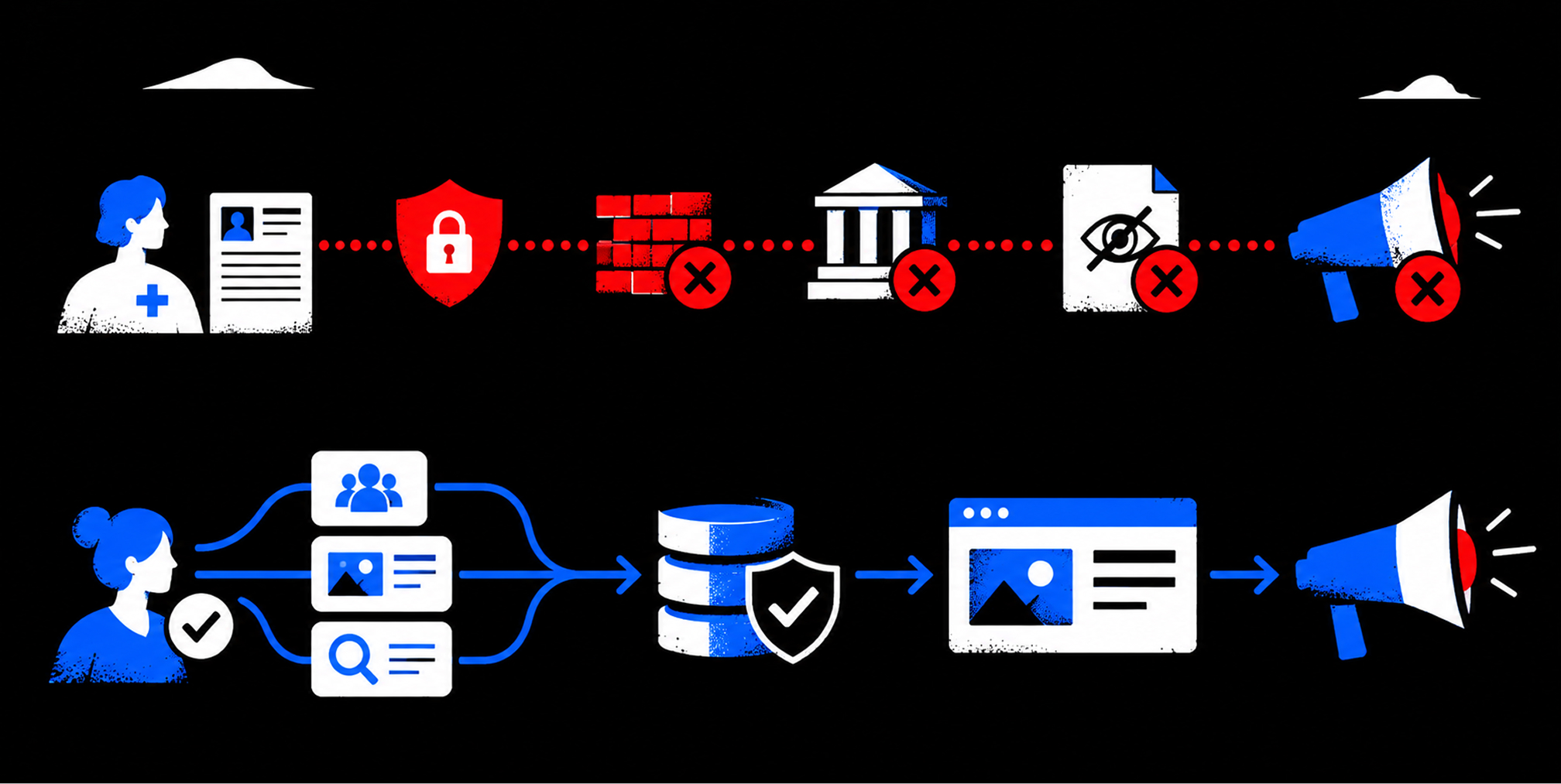
Digital channels are where HIPAA marketing violations are most common and least expected. Any tool that creates, receives, maintains, or transmits PHI in the course of your marketing program is a Business Associate — full stop.
Here is where each major channel creates risk:
Email and SMS
- Do not include PHI in subject lines, preview text, or message bodies unless the communication is authorized and the platform has a signed BAA
- Apply the minimum-necessary standard to every send — use only the data fields required to deliver the message
- SMS is inherently non-encrypted in transit; avoid PHI in SMS content and use secure portal links instead
- Confirm your email service provider (ESP) will sign a BAA and configure access controls before uploading any patient list
Paid social and programmatic advertising
- Never upload a patient list, hashed email, or device ID derived from health records to an ad platform without verifying the platform will sign a BAA
- Lookalike audiences built from PHI-derived seed lists carry the same risk as the original list
- Use paid search campaigns targeting keywords and intent signals rather than PHI-based audience uploads when possible
Tracking pixels and web analytics
- Third-party pixels (Meta Pixel, Google Tag) placed on patient portal pages or appointment booking flows can capture PHI — page URLs, form inputs, and referral strings often contain identifiable data
- Audit every pixel on every patient-facing page; remove or gate any pixel that fires before authentication
- Analytics platforms storing identifiers tied to health-related page visits may require a BAA
De-identification as a mitigation
De-identified data is not PHI and may be used in marketing without authorization — but only when de-identification meets the HIPAA Safe Harbor or Expert Determination standard. Validate your method and document it. When combining datasets, assess re-identification risk before use; a dataset that is safe alone can become PHI when merged with another.
Business Associate Agreements, vendor controls, and remuneration rules
Any vendor that creates, receives, maintains, or transmits PHI for your marketing programs must have a signed BAA before they touch a single record. A vendor claiming to be "HIPAA compliant" without a BAA and verified configuration controls is not compliant — that label is marketing, not a legal shield.
Your vendor onboarding checklist for any marketing technology partner should cover:
- Scope of PHI — exactly which data elements the vendor will access or process
- Permitted uses — limited to the covered entity's purposes; vendor cannot use PHI for its own marketing
- Technical safeguards — encryption at rest and in transit, role-based access, audit logging
- Breach reporting timeline — vendor must notify you within a defined window (typically no more than 60 days, often shorter by contract)
- Subcontractor flow-down — vendor must require BAAs from any subcontractor that touches PHI
- Audit rights — your right to review vendor compliance controls on request
- Termination and data return/destruction — clear process for PHI disposal when the relationship ends
The remuneration rule deserves its own emphasis. If a third party pays your organization — directly or indirectly — to send a promotional message to patients, that message is marketing under HIPAA regardless of its clinical framing. The authorization for that communication must explicitly state that remuneration is involved. Selling patient lists to a pharmaceutical company, accepting payment to include a sponsor's product in a patient newsletter, or receiving referral fees tied to patient outreach all trigger this rule.
Compliance Checklist, Penalties, How Branded Agency Implements It, and Key Takeaways
Step-by-step compliance checklist for running HIPAA-compliant campaigns
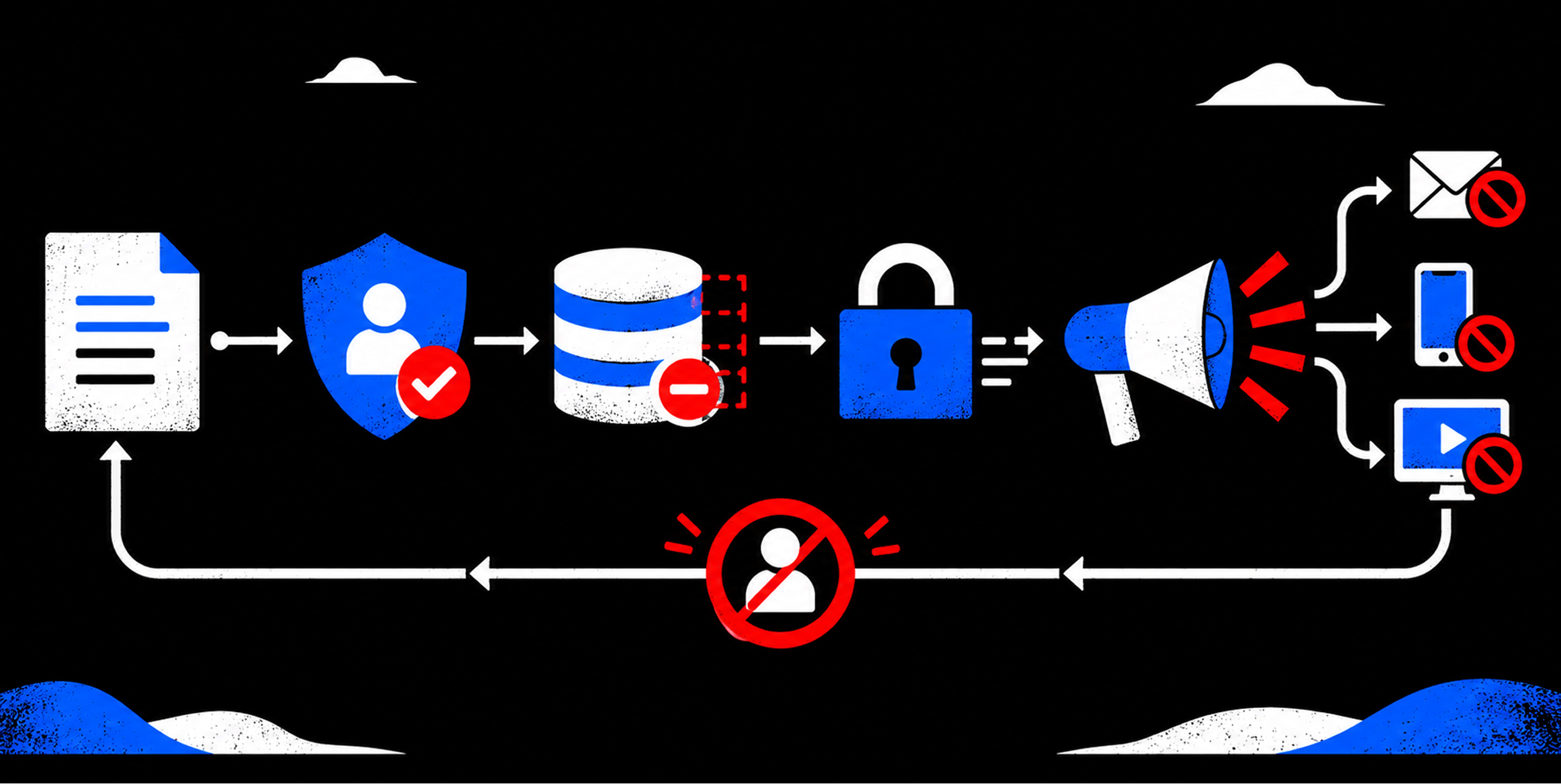
A disciplined pre-launch review prevents most violations. Before any campaign that may involve PHI goes live, complete these steps in order:
- Classify the message — does it encourage purchase or use of a product or service?
- Confirm PHI use — does the campaign use or disclose PHI to select, target, or personalize for recipients?
- Check for exceptions — does a face-to-face, nominal gift, or treatment/operations exception apply? Document your reasoning.
- Secure authorization — if no exception applies, collect signed, compliant authorizations before the campaign launches.
- Verify BAAs — confirm every vendor in the campaign stack has a current, signed BAA.
- Apply minimum-necessary — strip all PHI fields not required to deliver the message.
- Configure platforms — audit pixels, tracking tags, and analytics integrations on all campaign landing pages.
- Test revocation flows — verify that an opt-out in one system propagates to all others before launch.
For each campaign, capture a pre-launch record with these fields:
- Campaign owner and compliance reviewer
- PHI elements used (or confirmation that none are used)
- Recipient list source and de-identification status
- Vendors involved and BAA status for each
- Authorization status (exception documented, or authorization collected and indexed)
- Risk owner and sign-off date
| Risk | Likelihood | Mitigation Priority |
|---|---|---|
| Unauthorized PHI disclosure via ad platform | High | Immediate — audit all audience uploads |
| Vendor misuse of PHI (no BAA) | High | Immediate — execute BAAs before data transfer |
| Re-identification from combined datasets | Medium | High — validate de-identification method |
| Pixel capturing PHI on patient portal | High | Immediate — audit and gate all portal pixels |
| Revocation not propagated across systems | Medium | High — automate opt-out sync |
| Missing or deficient authorization | High | Immediate — review all active campaigns |
Penalties, enforcement trends, and common pitfalls to avoid
OCR investigations tied to marketing violations can result in civil monetary penalties, mandatory corrective action plans, breach notification obligations, and significant reputational damage. The enforcement focus areas OCR returns to consistently include: improper disclosures of PHI for marketing purposes, selling PHI without authorization, insufficient or missing BAAs, and authorizations that fail to disclose third-party remuneration.
The most common pitfalls in practice:
Mixing operational and promotional content. A patient newsletter that combines care reminders with sponsored product promotions is not automatically an operations communication. If PHI was used to select recipients and a sponsor paid for placement, the promotional portion requires authorization. Separate these streams.
Uploading PHI to ad platforms. Exporting a patient list from your EHR and uploading it to a social ad platform, even hashed, without a BAA and verified platform configuration is a high-risk disclosure. Most major ad platforms do not sign BAAs for standard accounts.
Inadequate vendor contracts. A vendor agreement that does not define permitted PHI uses, require breach notification, or include subcontractor flow-down is not a compliant BAA. Review every existing vendor contract against the BAA checklist in the previous section.
Unclear or bundled authorizations. An authorization buried in a general intake form, or one that does not name the specific PHI, purpose, and recipient, is not valid. OCR has cited vague authorizations as a compliance failure in multiple enforcement actions.
When a marketing-related breach does occur, activate your incident response plan immediately: contain the exposure, preserve evidence, conduct a four-factor risk assessment, and meet applicable breach notification deadlines. Delayed or incomplete notification compounds the enforcement risk.
How The Branded Agency implements compliant marketing operations
The core of a compliant marketing operation is a consent-first data flow: every audience segment is verified for authorization status before it enters a campaign, and every vendor in the stack has a signed BAA before receiving any data. At The Branded Agency, that discipline is built into the campaign intake process, not bolted on at the end.
The workflow runs in sequence:
- Intake and classification — every new healthcare campaign is classified against the HIPAA marketing definition at brief stage; PHI use is confirmed or ruled out before creative begins
- Consent verification — audience lists are checked against authorization records and opt-out flags in the CRM before segmentation
- Data segmentation — only de-identified or fully authorized data is passed to campaign platforms; PHI fields are stripped to the minimum necessary
- Secure vendor transfer — data moves to vendors only after BAA confirmation; subcontractor obligations are verified
- Campaign execution — pixels and tracking tags on patient-facing pages are audited before launch; PHI is excluded from subject lines, preview text, and ad copy
- Audit and logging — campaign data flows are logged for compliance review; monthly vendor audits confirm ongoing adherence
- Revocation handling — opt-outs trigger automated suppression across email, SMS, and ad audiences within defined SLA windows
The practical tradeoff every healthcare marketer faces is targeting precision versus PHI exposure. The Branded Agency's approach is to build audience strategy around intent signals, contextual targeting, and first-party consented data rather than PHI-derived segments. The result is campaigns that perform well without the legal exposure of PHI-based targeting. For healthcare branding and marketing strategy, that constraint often produces cleaner, more defensible creative work.
Pro Tip: Run a quarterly pixel audit on every patient-facing page. Tag each pixel with its purpose, its BAA status, and the date it was last reviewed. That single document becomes your first line of defense in an OCR inquiry.
Key Takeaways
HIPAA-regulated marketing requires prior written authorization whenever PHI is used or disclosed for promotional purposes, and no amount of clinical framing overrides that rule when third-party remuneration is present.
| Point | Details |
|---|---|
| PHI + promotional purpose = authorization required | Any campaign using PHI to select or target recipients needs a signed, compliant authorization before launch. |
| Third-party payment triggers disclosure | If a third party pays for a promotional message, the authorization must explicitly state that remuneration. |
| BAAs are mandatory for all PHI-handling vendors | Every marketing vendor that touches PHI must have a signed BAA defining permitted uses, safeguards, and breach reporting. |
| De-identification removes the PHI trigger | Properly de-identified data is not PHI and may be used without authorization; validate the method and document it. |
| The Branded Agency | Offers consent-first campaign workflows, BAA management, pixel governance, and compliance-aware paid media for healthcare marketers. |
The compliance advantage most healthcare marketers are leaving on the table
Healthcare marketers tend to treat HIPAA compliance as a legal tax — a cost center that slows campaigns and limits targeting. That framing is wrong, and it costs organizations more than the occasional OCR fine.
The organizations that build compliance into their marketing infrastructure from the start end up with something their competitors rarely have: a clean, consented, high-quality first-party data asset. When you cannot rely on PHI-derived targeting, you are forced to build audience strategy on intent signals, content engagement, and genuine patient relationships. Those audiences convert better, retain longer, and generate fewer complaints.
There is also a trust dimension that pure performance metrics miss. Patients who receive marketing communications they did not authorize do not just ignore them — they lose confidence in the provider. That erosion is slow, hard to measure, and nearly impossible to reverse. Compliance, done well, is a patient retention strategy as much as a legal one.
The teams that struggle most are those that treat compliance as a final review step rather than a design constraint. By the time a campaign reaches legal review, the audience has been built, the creative is done, and the platform is configured. Unwinding PHI exposure at that stage is expensive and disruptive. Building the three-question decision flow and the BAA checklist into the brief stage costs almost nothing and prevents almost everything.
One more thing worth saying plainly: the "HIPAA compliant" label that vendors attach to their platforms is not a compliance guarantee. It is a marketing claim. The covered entity is responsible for the BAA, the configuration, and the use. Delegating that responsibility to a vendor's sales deck is how organizations end up in corrective action plans.
The Branded Agency brings compliance-aware marketing to healthcare organizations
Healthcare marketing does not have to choose between growth and compliance. The Branded Agency builds marketing programs where both coexist by design, not by accident. For healthcare organizations that need paid media management with verified vendor controls, consent-integrated audience strategy, and campaign execution that holds up to OCR scrutiny, we deliver the full stack.
Our healthcare marketing engagements cover consent integration into CRM and email platforms, BAA management across your vendor stack, pixel governance on patient-facing web properties, campaign audits against HIPAA marketing rules, and post-breach support planning. We work with growth-stage healthcare organizations, clinical practices, and health tech companies that need marketing programs built to perform and built to last.
Ready to audit your current campaigns for PHI exposure and compliance gaps? Talk to our team and we will map your existing stack against the controls in this guide — no obligation, just clarity on where you stand.
This article is general information, not legal advice. Confirm current HIPAA requirements with HHS/OCR guidance or a qualified healthcare attorney before making compliance decisions.
Primary Sources and Further Reading
The sources below are the authoritative references for every rule and standard covered in this article. Bookmark them — they are the primary documents your legal and compliance teams will reference.
- HIPAA Marketing Guidance | HHS.gov — The controlling HHS page defining marketing under the Privacy Rule, listing exceptions, and explaining the remuneration rule. Start here.
- When Is Patient Authorization Required for Marketing? | HHS.gov — Direct HHS FAQ on the two circumstances where authorization is not required and what the authorization must contain when it is.
- How to Distinguish Treatment/Operations from Marketing | HHS.gov — HHS guidance on the overlap between care coordination communications and marketing, with examples for providers and health plans.
Recommended

Quincy Samycia
As entrepreneurs, they’ve built and scaled their own ventures from zero to millions. They’ve been in the trenches, navigating the chaos of high-growth phases, making the hard calls, and learning firsthand what actually moves the needle. That’s what makes us different—we don’t just “consult,” we know what it takes because we’ve done it ourselves.
Want to learn more about brand platform?
If you need help with your companies brand strategy and identity, contact us for a free custom quote.
We do great work. And get great results.
+2.3xIncrease in revenue YoY
+126%Increase in repurchase rate YoY




+93%Revenue growth in first 90 days
+144% Increase in attributed revenue




+91%Increase in conversion rate
+46%Increase in AOV




+200%Increase in conversion rate
+688%Increase in attributed revenue