Lifecycle Marketing Strategy: A Stage-by-Stage Playbook
11/23/2026
Marketing Strategy
Turn first-time buyers into lasting customers with a lifecycle marketing playbook that connects acquisition, onboarding and retention to revenue.
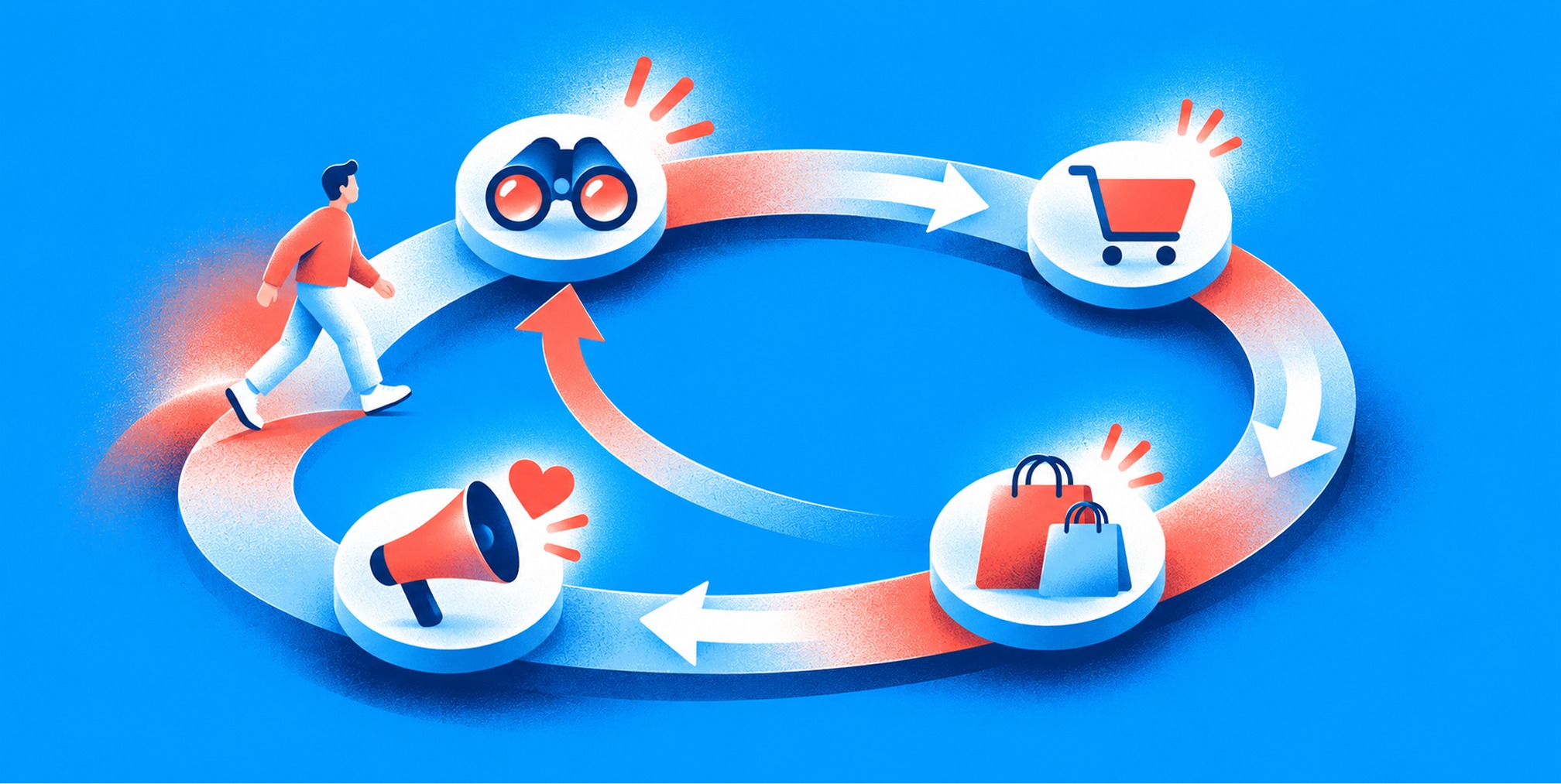
A lifecycle marketing strategy assigns every stage of the customer relationship a goal, a trigger, a message, a channel and a metric, then runs those stages as one system instead of separate campaigns. The payoff is simple: you stop paying to acquire customers you then lose. Our retention team builds this kind of system through email and SMS retention programs for growth-stage brands, and the playbook below is the same logic we would walk your leadership team through.


What lifecycle marketing is, and what it is not
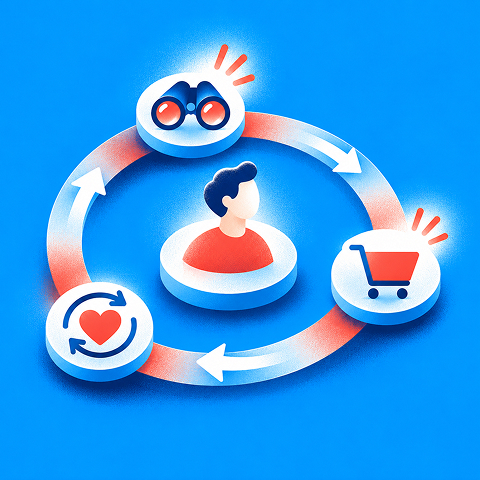
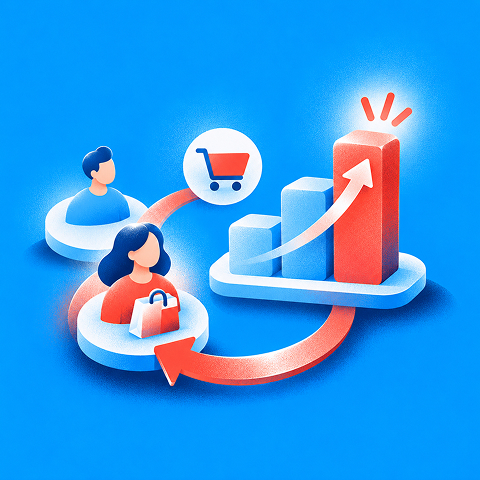
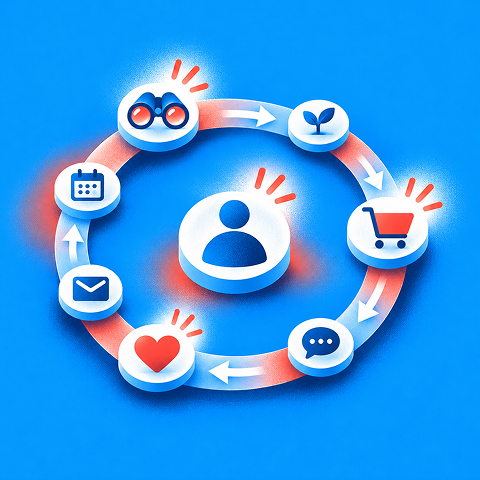
Lifecycle marketing is a data-driven, cross-channel approach that targets content and offers based on a customer’s precise position in the relationship with your brand. Customer lifecycle marketing is usually described this way: attract new customers and keep existing ones at the same time, so lower churn offsets acquisition cost and paying customers become advocates.
It differs from a campaign calendar. A campaign asks, “What are we promoting this month?” A lifecycle strategy asks, “What does this customer need next, and what do we want them to do next?” Those answers are not always identical, and the strategy is the work of reconciling them.
It also differs from pure growth marketing. Growth marketing leans on rapid acquisition and experimentation. Lifecycle marketing deepens relationships over time through personalized experiences at each stage. A growth-stage company needs both, and the strongest results come when they share one set of data and one brand.
Why executives should care: the repeat-customer math
The clearest evidence is about revenue concentration. The Digital Index “Loyal Shoppers” report analyzed 33 billion visits across 180 online retail sites, covering April 2011 to June 2012. In the US, returning purchasers made up 8% of visitors but 40% of revenue. The same report found marketers had to bring in five new shoppers to equal the revenue of one repeat purchaser.
The data is a decade old and retail-specific, so treat it as a pattern, not a forecast for your category. The direction holds for most models: customers who come back are worth disproportionately more than customers you have to find again.
That is the commercial argument for lifecycle thinking. Every dollar of paid media that lands a customer who never reaches a second purchase, a renewal or a referral is a dollar that has not finished its job.
The lifecycle stages: pick the set that fits your model
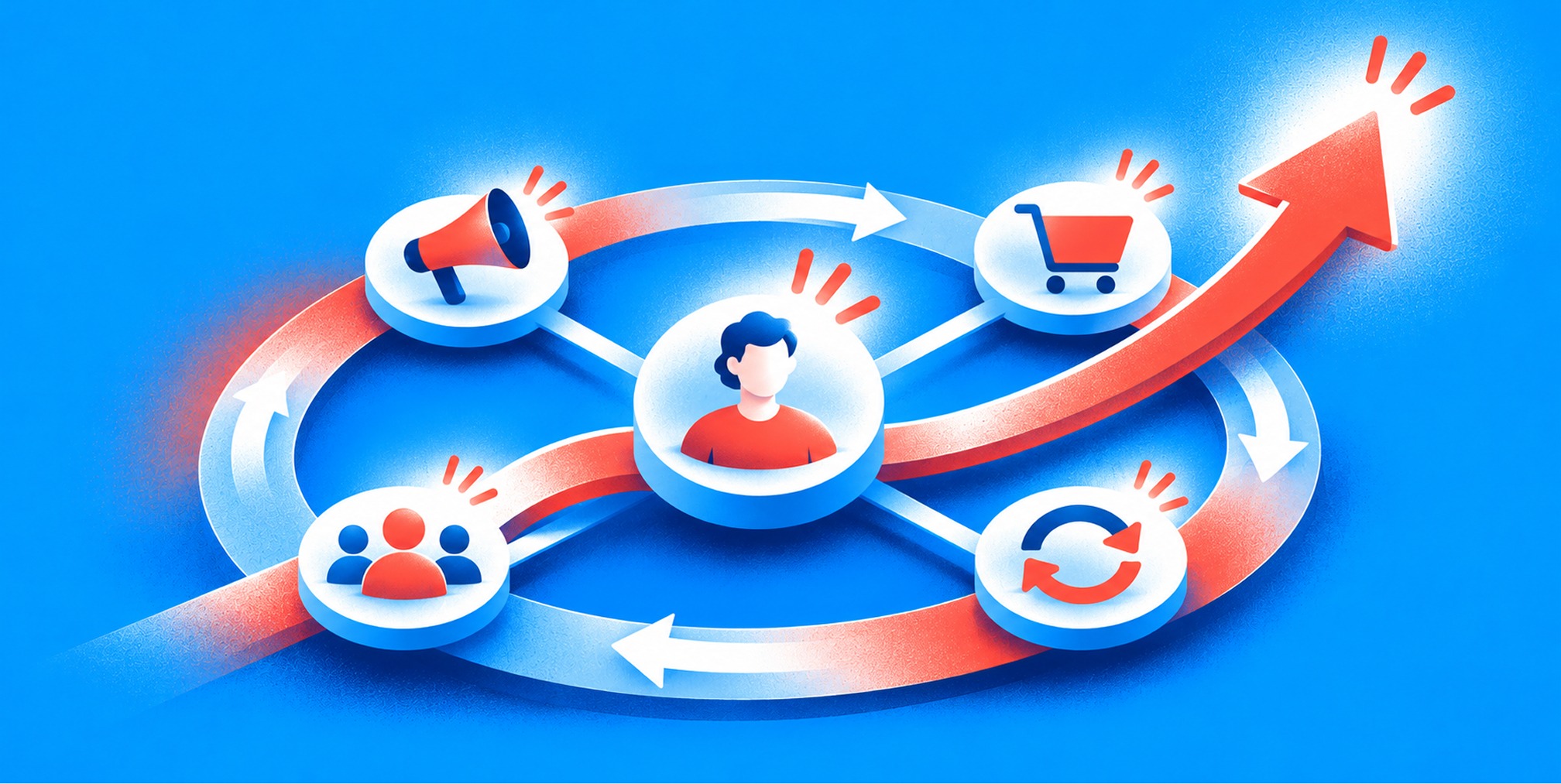
No single stage list is correct. Common versions run from awareness, consideration, conversion, retention and advocacy, and others add onboarding and win-back. The exact set varies by business model: a SaaS company weights onboarding heavily, while a retailer weights conversion and repeat purchase.
Two cautions. First, the lifecycle is circular and dynamic: customers revisit earlier stages, skip steps or go through several cycles. Second, stage durations vary with product complexity and familiarity, so a fixed day-count rarely describes real behavior.
Here is a working set most B2B and DTC growth companies can adapt:
• Awareness: Customer discovers the brand. Goal: earn relevant attention. Metrics: qualified reach, engagement and visitor-to-subscriber rate.
• Consideration: Customer compares options. Goal: provide proof and answer objections. Metrics: demo bookings, trial starts and lead qualification.
• Conversion: Customer purchases or commits. Goal: remove friction. Metrics: purchase conversion, trial-to-paid rate and time to close.
• Onboarding: Customer starts using the product. Goal: reach first value. Metrics: activation and time to first meaningful action.
• Retention: Customer repeats, uses or renews. Goal: increase profitable lifetime value. Metrics: repeat purchase, renewal and cohort retention.
• Advocacy: Satisfied customer recommends the brand. Goal: drive credible referrals. Metrics: referral conversions and verified reviews.
• Win-back: Customer becomes inactive or churns. Goal: reactivate selectively. Metrics: incremental reactivation rate and contribution margin.
Metrics such as feature activation, trial-to-paid and reactivation rate work best when you pick one or two per stage and review them monthly. More than that and the dashboard becomes noise. If you need a model for what belongs on one, see our piece on marketing dashboard metrics that drive decisions.
How to build a lifecycle marketing strategy in six steps
The sequence below follows the logic of published frameworks, defining stages from actual behavior, then goals, then coordinated journeys, then measurement. Here is how to run it, and where it usually goes wrong.
1. Map the journey you actually have
Start with the current customer journey, not the ideal one. Pull the real paths from first touch to second purchase or renewal. Look for where people stall, skip or leave.
Where it goes wrong: teams draw a tidy funnel from a workshop whiteboard. The data usually shows a messier loop, and the gaps are where the revenue is.
2. Define the behaviors that signal movement
Choose observable events that mean a person has changed stages: a first order, a completed setup, a missed renewal window, a lapse in usage. State-change triggers rather than fixed calendar days keep messaging relevant.
Where it goes wrong: a three-day welcome sequence sent to everyone treats the customer who already activated the same as the one who has done nothing.
3. Set one outcome per stage
Connect each stage to an outcome, such as conversion, repeat purchase, renewal or advocacy, and build communications around that outcome instead of a send quota. Define success metrics per stage too: reach and brand lift for awareness, repeat purchase rate and customer lifetime value for retention.
A practical rule: start with one or two outcomes you can measure over a defined group of customers, with a baseline period and guardrails like unsubscribes, complaints or margin. Without guardrails, a tactic can lift a metric while hurting the business.
4. Segment and design the journeys
Create segments from behavior and value, then design a journey for each. High-value customers and one-time discount buyers should not receive the same win-back offer. This is also where brand matters most: the message at each stage must sound like one company. Our customer strategy guide covers how loyalty and retention connect to the wider business plan.
5. Coordinate channels with priority rules
Decide which channel leads at each stage, and which messages suppress others. A customer who just bought should not receive a discount for the item they bought. Channel mix matters: one analysis cited by a customer-engagement vendor found customers engaging across three or more channels spent 13% more than single-channel users. Read that as a signal about coordination, not a promise for your brand.
6. Measure movement, then refine
Measure how many customers move from one stage to the next and use that to tighten stage definitions, audiences and messages. Be careful with last-click attribution, which overlooks the cumulative impact of upper- and mid-funnel activity. Improvement usually comes from small changes to message, timing or channel, measured again, not from more dashboards.
Free Brand Health Audit
Make sure your brand is built to sell
Search has changed. Your customers aren't just Googling anymore. They're asking ChatGPT, Perplexity, Gemini and other AI platforms what to buy, who to trust and which brands they should consider.
If your brand isn't showing up clearly in those answers, you're already losing opportunities. Our free Brand Health Audit shows you where your brand stands across traditional search, AI search and brand positioning.

Sample brand audit
Live preview
Traditional search
72
AI search (GEO)
34
Brand positioning
58
Planning lifecycle campaigns: audience, trigger, message, channel, exit
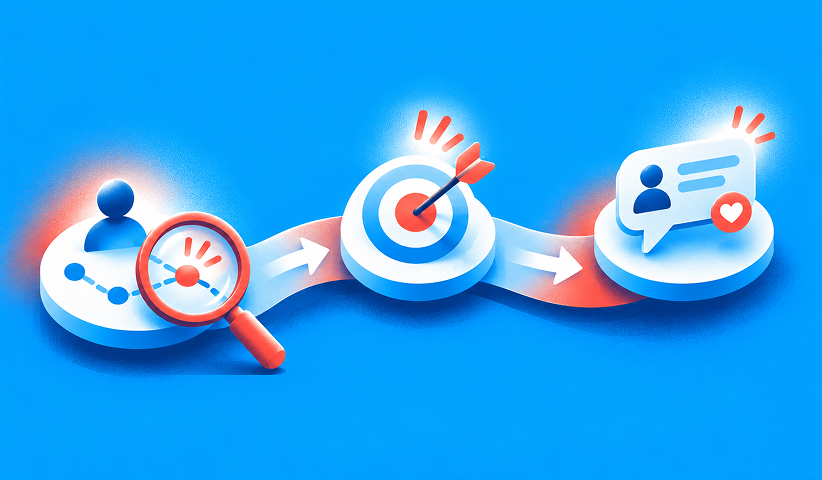
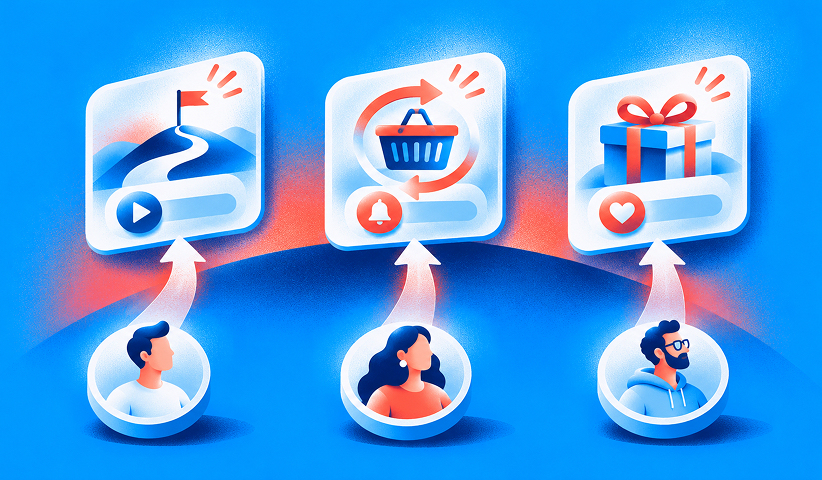
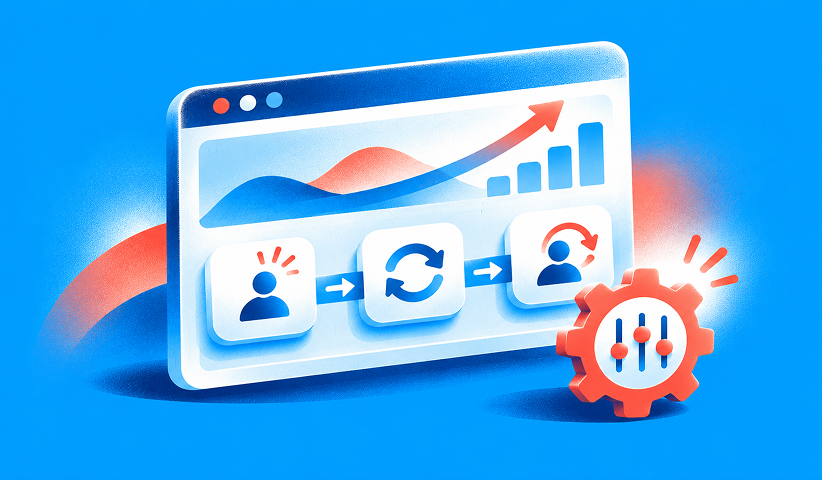
Every lifecycle campaign can be written on one line. A useful template: audience, trigger, customer outcome, message, exit condition and metric. One published example set follows exactly this structure: a welcome series triggered by account creation or first order, measured by onboarding completion.
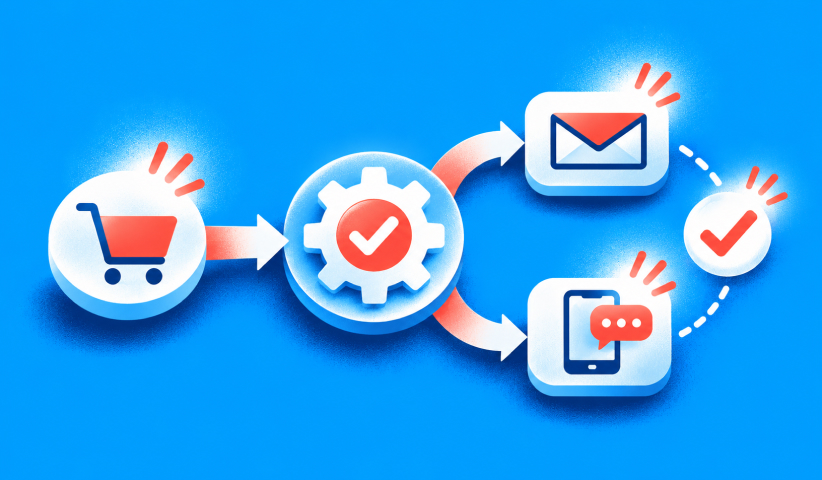
The simplest trigger framework is three parts: a trigger signals stage movement, a message fits the current stage, and a channel delivers it. Trigger, message, channel keeps teams from sending content because a calendar says so.
Start automation with two trigger types:
• Event triggers: A customer completes or abandons an action, such as purchasing, visiting pricing, activating a feature or leaving a cart.
• State or threshold triggers: A customer crosses a lifecycle boundary, such as entering a renewal window, declining in usage or becoming inactive for a defined period.
Always define the exit. A cart-recovery sequence should stop the moment the customer buys. Otherwise your most engaged customers get your worst experience.
Lifecycle marketing examples by stage
These are illustrations of patterns, adapt them to your own data.
Awareness and acquisition. Reduce risk for new prospects with free trials, webinars or demos. A common ecommerce version is a welcome discount for new email subscribers to remove price hesitation and open an ongoing channel.
Onboarding. For software and subscription products, early activation drives everything after it. We go deeper on this in our guide to onboarding email flows. The principle: tie messages to what users do or fail to do, and point each one at a single next step.
Conversion. Retail brands use cart and browse abandonment messages, while financial services use application-completion reminders. A worked pattern: an email reminder hours after abandonment, then a shorter SMS with the cart link if the email goes unopened for 24 hours. Tailor by cart value and use urgency sparingly.
Retention. Replenishment journeys timed to real usage suit retail. SaaS teams watch for declining product usage ahead of renewal and intervene before the renewal conversation.
Advocacy. Ask for reviews or referrals only after verified success, such as a completed project or a repeat order. Our customer loyalty ladder article shows how buyers progress toward advocates.
Lifecycle journey example: Newly registered trial users receive setup help, users who activate stop receiving setup nudges, and accounts that have not reached first value receive targeted assistance.
Guardrail: Suppress promotional journeys after purchase, pause conflicting messages when an account is in an active support escalation, and honor channel consent and opt-outs.
Win-back. Build it before you need it, with churn signals defined in advance. Our winback email campaign guide covers how to approach lapsed customers with offers based on what they bought.
Testing and optimizing as behavior shifts
Treat the strategy as a living system. Test subject lines, calls to action and landing pages, track conversion, open and click-through rates, and reuse consistently outperforming elements as templates. Test cadence, send time and sender name as well, but change one variable at a time so you know what moved the result.
Review stage definitions quarterly. If a new product line, a pricing change or a new channel alters how customers behave, your triggers should change with it.
Where lifecycle marketing breaks inside growth-stage companies
The failure is rarely the idea. It is the handoffs. Brand sets one promise, paid media makes another, the website says a third, and the email program sounds like a different company again. Each stage is run by a different person or vendor, so nobody owns the movement between stages.
For a CEO or CMO, the practical test is whether one person can show how a customer moves from first ad to second purchase, and what each step costs. If acquisition cost lives in one report and retention in another, the strategy is not yet a lifecycle strategy. Our glossary entry on CAC is a quick reference for the cost side of that comparison, and the lifecycle marketing definition frames the full-funnel view.
Want to learn more about Digital Marketing and Strategy? Keep reading!
If you need help with your company’s marketing, contact us for a free custom quote.
Our perspective
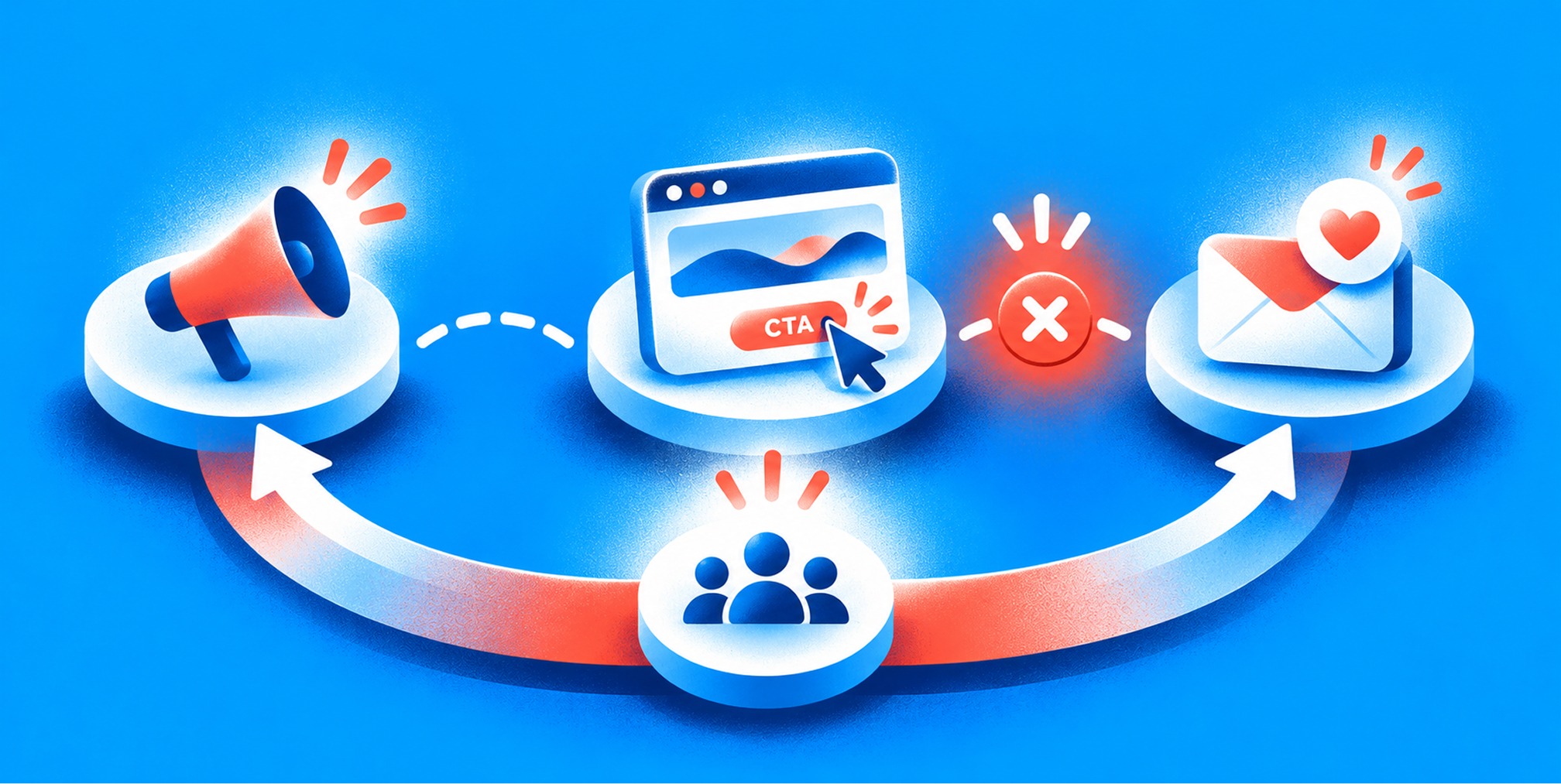
Lifecycle marketing fails when it is treated as an email project. We see it as the point where brand and performance meet. If the positioning is vague, the welcome series cannot sound distinct. If the website does not deliver on the ad, the best retention flow is repairing damage.
That is why we build brand-backed performance™: branding, creative, web and performance marketing, including email and SMS retention, aligned to one measurable outcome. Acquisition earns the first purchase. Retention turns one-time buyers into repeat fans.
Our advice to any CMO: pick the stage where customers leak out, define the behavior that signals it, and fix that first. Then connect the stages, so every message reflects one brand and every metric traces back to revenue.
- Quincy Samycia
How we help growth-stage teams run the lifecycle
If you want one team accountable for the whole journey, our retention marketing service covers email and SMS programs, and it sits alongside branding, creative, web and paid media so the stages stay consistent. Retention Marketing starts at $6,500 per month, and Growth Strategy, which sets the full-funnel plan, starts at $8,500 per month. See the pricing and service overview for the full list.
If your acquisition is working but repeat purchase, renewal or referral is lagging, talk to us about your retention program.
Frequently Asked Questions
What are the stages of the customer lifecycle in marketing?
The most common version is awareness, consideration, conversion, retention and advocacy. Many companies add onboarding and win-back. Pick the set that matches how your customers behave: SaaS teams weight onboarding, while retailers weight conversion and repeat purchase.
What is the difference between lifecycle marketing and growth marketing?
Growth marketing focuses on acquiring customers quickly and scaling through experimentation. Lifecycle marketing nurtures and retains customers through personalized experiences at each stage. Growth-stage companies need both, working from shared data.
Which metrics should I track for a lifecycle marketing strategy?
Choose one or two per stage. Examples include blog-to-email conversion for awareness, demo booking rate for consideration, trial-to-paid for conversion, feature activation or repeat purchase rate for retention, and reactivation rate for win-back. Review them monthly and add guardrails such as unsubscribes and refund rates.
How do lifecycle campaigns differ from regular email campaigns?
A regular campaign is scheduled around a promotion. A lifecycle campaign starts from a customer behavior, such as an abandoned cart or a lapse in usage, and ends when the customer completes the desired action. It has a defined audience, trigger, message, exit and metric.
Sources
Adobe Digital Index: The ROI from Marketing to Existing Online Customers
Klaviyo: Customer lifecycle marketing

Quincy Samycia
As entrepreneurs, they’ve built and scaled their own ventures from zero to millions. They’ve been in the trenches, navigating the chaos of high-growth phases, making the hard calls, and learning firsthand what actually moves the needle. That’s what makes us different—we don’t just “consult,” we know what it takes because we’ve done it ourselves.
Want to learn more about brand platform?
If you need help with your companies brand strategy and identity, contact us for a free custom quote.
We do great work. And get great results.
+2.3xIncrease in revenue YoY
+126%Increase in repurchase rate YoY



+93%Revenue growth in first 90 days
+144% Increase in attributed revenue




+91%Increase in conversion rate
+46%Increase in AOV




+200%Increase in conversion rate
+688%Increase in attributed revenue