OneTrust vs TrustArc: Which Enterprise Privacy Platform Wins?
09/16/2026
Technology
OneTrust vs TrustArc compared for enterprise buyers — GRC breadth vs privacy depth, pricing, modules, contract terms, and procurement guidance.
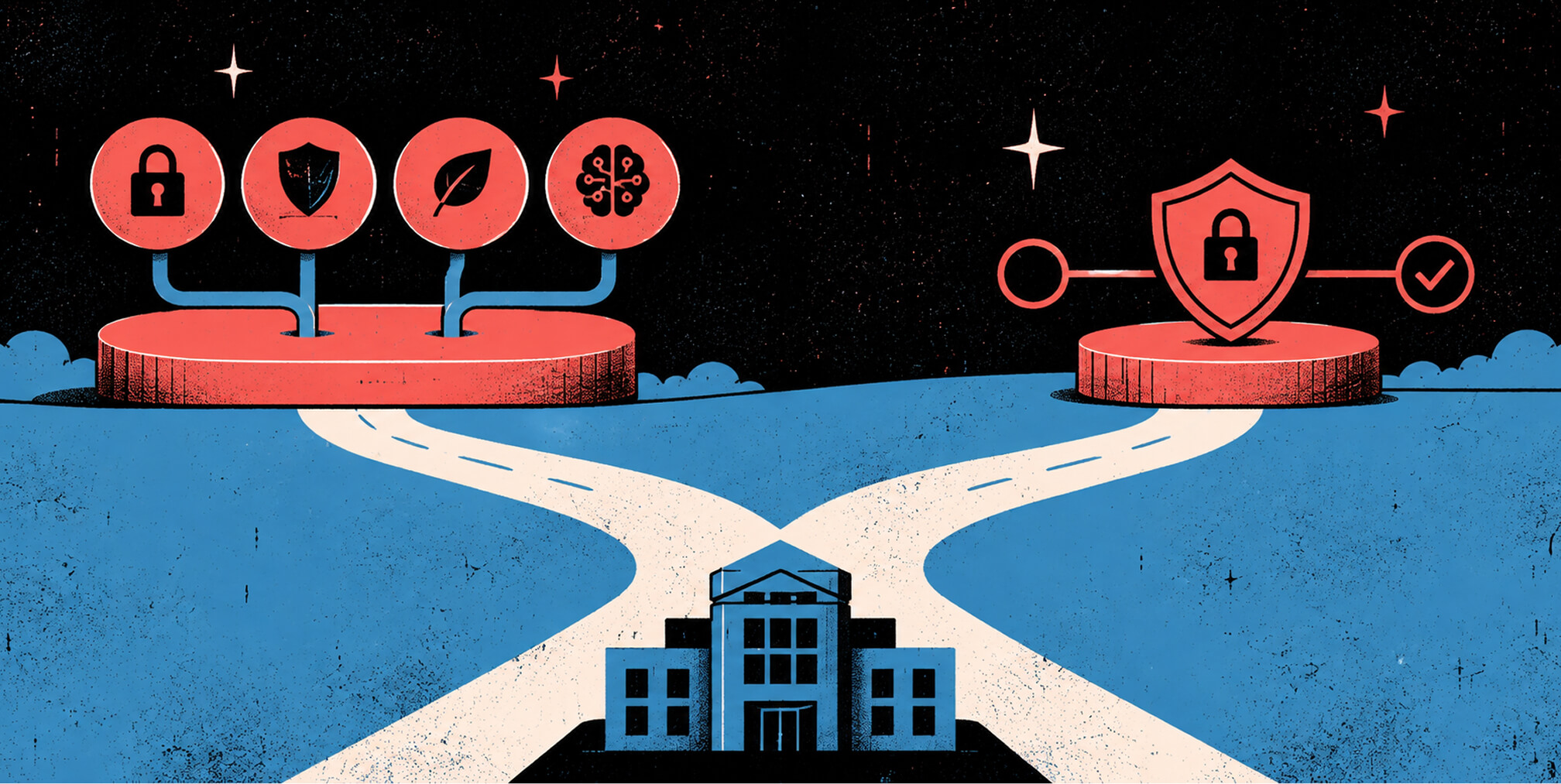
Choose OneTrust if your organization needs a consolidated GRC platform spanning privacy, security, ESG, and AI governance. Choose TrustArc if your team is privacy-first and needs deep regulatory intelligence, faster deployment, and predictable pricing. Both platforms carry a reported pricing floor that puts them out of reach for mid-market self-serve options.
.png)


OneTrust vs TrustArc: Side-by-Side Comparison and What Makes OneTrust Right for GRC
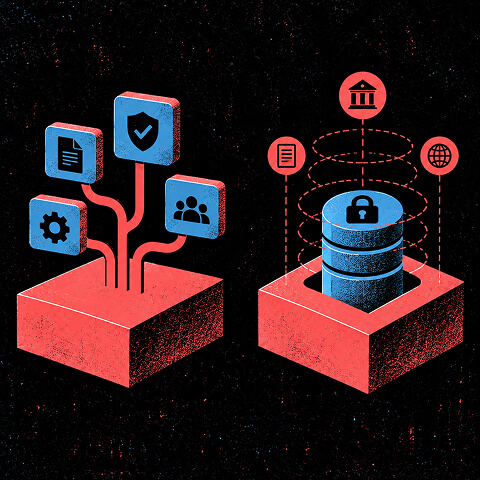


Pricing signal: Both platforms start at approximately $10,000/year. Vendr transaction data shows OneTrust typically lands at higher average deal sizes, with multi-year discounts available from both vendors.
OneTrust vs TrustArc: Side-by-side comparison
The table below maps both platforms across the dimensions that matter most to procurement and privacy teams. All ratings and module availability reflect publicly available information from G2 and vendor sources, including OneTrust's published pricing and TrustArc's own comparison materials.
| Dimension | OneTrust | TrustArc |
|---|---|---|
| Best for | Large enterprises running consolidated GRC programs | Dedicated privacy teams prioritizing regulatory depth |
| Consent management / CMP | Yes, full CMP with geo-targeting | Yes, full CMP with geo-targeting |
| Cookie banner management | Yes | Yes |
| DSAR / DSR automation | Yes, workflow-driven | Yes, workflow-driven |
| Data mapping | Automated discovery + survey | Survey-based; less automated discovery |
| Vendor risk / third-party assessments | Yes, full VRM module | Yes, but narrower scope |
| Reporting & analytics | Extensive, cross-module dashboards | Privacy-focused dashboards |
| APIs / integrations | Public API; 1,000+ pre-built connectors | API available; fewer native connectors |
| AI governance module | Yes | Limited |
| ESG module | Yes | No |
| Regulatory intelligence | Broad, updated library | Deep, Nymity Research + Arc Intelligence |
| TRUSTe certification | No | Yes |
| SOC 2 / ISO attestations | SOC 2 Type II, ISO 27701 | SOC 2 Type II |
| Pricing floor | ~$10,000/year | ~$10,000/year |
| Typical deal size | Higher average (per Vendr data) | Lower average |
| Implementation complexity | High; often requires professional services | Medium; faster time-to-value reported |
| G2 ease of setup | Lower relative score | Higher relative score |
| G2 support responsiveness | Lower relative score | Higher relative score |
| G2 breadth of features | Higher relative score | Lower relative score |
Quick procurement notes:
- OneTrust's public API and 1,000+ connector ecosystem make it the stronger choice when your tech stack requires deep integrations with SIEM tools, HR systems, or marketing platforms.
- TrustArc's TRUSTe certification is a recognized trust signal for consumer-facing privacy programs, particularly in North America.
- G2 feature comparisons show TrustArc scoring higher on ease of setup and support quality, while OneTrust leads on centralized feature breadth.
- Hidden implementation costs are a documented risk for both platforms; budget professional services into year-one TCO before signing.
What makes OneTrust the right choice for GRC-driven enterprises?
OneTrust is the dominant choice when privacy is one pillar of a larger compliance program rather than the whole program. It is positioned as a breadth-first GRC platform that consolidates privacy, security risk, ESG reporting, and AI governance into a single environment, which is exactly what large enterprises need when their legal, IT, and compliance teams share a single risk register.
Strengths:
- Widest module coverage of any privacy-adjacent platform: consent, DSAR, data mapping with automated discovery, vendor risk management, ESG, and AI governance all live in one license.
- 1,000+ pre-built integrations and a documented public API, which means your IT team can connect OneTrust to Salesforce, Workday, ServiceNow, or your SIEM without a custom build.
- SOC 2 Type II and ISO 27701 attestations, which satisfy most enterprise security review requirements.
- Strong analyst recognition and a large customer reference base, useful when internal stakeholders need third-party validation before approving a purchase.
Weaknesses:
- Implementation is complex. Most enterprise deployments require OneTrust's professional services team or a certified implementation partner, adding cost and time to year one.
- Renewal pricing can be aggressive. Customers have reported uplift and licensing-model shifts at renewal, particularly as OneTrust moves toward usage-based metering.
- The breadth of modules creates configuration overhead. Teams that only need privacy operations often find themselves paying for capabilities they never activate.
- G2 reviewers rate OneTrust lower than TrustArc on ease of setup and support responsiveness, two factors that directly affect time-to-value.
Pricing signals: OneTrust discontinued its lower-cost Pro tier and now requires enterprise contracts starting around $10,000/year. Vendr data confirms OneTrust typically produces higher average deal sizes than TrustArc, and multi-year commitments are the primary negotiation lever for discounts.
Pro Tip: Before signing, ask OneTrust to scope the modules you actually plan to activate in year one versus year two. Contracts that bundle all modules upfront create shelfware and reduce your negotiating position at renewal.
Free Brand Health Audit
Make sure your brand is built to sell
Search has changed. Your customers aren't just Googling anymore. They're asking ChatGPT, Perplexity, Gemini and other AI platforms what to buy, who to trust and which brands they should consider.
If your brand isn't showing up clearly in those answers, you're already losing opportunities. Our free Brand Health Audit shows you where your brand stands across traditional search, AI search and brand positioning.

Sample brand audit
Live preview
Traditional search
72
AI search (GEO)
34
Brand positioning
58
What Makes TrustArc Right for Privacy-First Teams, and the Module-by-Module Comparison

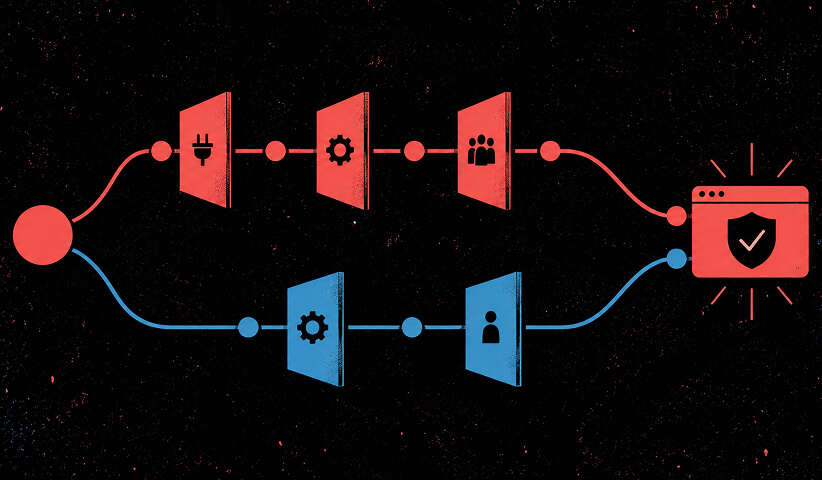


What makes TrustArc the right choice for privacy-first teams?
TrustArc, now operating under the Arc platform brand, is the cleaner choice when your organization's primary compliance driver is privacy regulation rather than broad GRC. Its regulatory intelligence library, built on Nymity Research and powered by Arc Intelligence, gives privacy counsel and DPOs a depth of regulatory guidance that OneTrust's broader platform does not match.
The company has operated in the privacy space since 1997, originally as TRUSTe, and that history shows in the product. TRUSTe certification remains a recognized North American trust signal for consumer-facing privacy programs. The Nymity Research database covers hundreds of global privacy laws and is updated continuously, which matters when your team is tracking state-by-state CPRA amendments or new Canadian federal requirements.
Strengths:
- Deep regulatory intelligence through Arc Intelligence and Nymity Research, covering GDPR, CCPA/CPRA, and a broad library of global and state-level privacy laws.
- TRUSTe certification, a credibility signal for consumer-facing privacy programs in North America.
- Faster reported time-to-value and higher G2 scores for ease of setup and support responsiveness.
- Acquisition by Main Capital Partners signals a growth-focused investment strategy with product development and international expansion planned.
- More predictable pricing relative to OneTrust, with fewer reported renewal surprises.
Weaknesses:
- Narrower module scope: no ESG module, limited AI governance, and fewer native integrations than OneTrust.
- Data mapping relies more heavily on survey-based methods rather than automated discovery, which increases manual effort for large data inventories.
- Smaller connector ecosystem means more custom integration work if your stack includes non-standard enterprise tools.
- PeerSpot and G2 review volume is lower than OneTrust's, which can make it harder to find peer references in your specific industry vertical.
Pro Tip: TrustArc's TRUSTe certification is often underused as a procurement differentiator. If your organization is consumer-facing and subject to FTC scrutiny, the certification adds a layer of third-party accountability that OneTrust does not offer.
How do the platforms compare module by module?
The table below maps both platforms at the module level, with implementation complexity and typical resource ownership noted for each.
| Module | OneTrust | TrustArc | Complexity | Resource Owner |
|---|---|---|---|---|
| Consent management / CMP | Full, geo-targeted | Full, geo-targeted | Low | Privacy ops / marketing |
| Cookie banner | Yes | Yes | Low | Web / marketing |
| DSAR / DSR automation | Workflow-driven, configurable | Workflow-driven | Medium | Privacy ops / legal |
| Data mapping | Automated discovery + survey | Survey-based | High | Privacy ops / IT |
| Vendor risk management | Full VRM module | Narrower scope | High | Procurement / legal |
| Reporting & analytics | Cross-module dashboards | Privacy-focused | Medium | Privacy ops / compliance |
| APIs / integrations | Public API, 1,000+ connectors | API available, fewer connectors | Medium-High | IT / engineering |
| AI governance | Yes | Limited | High | IT / legal / compliance |
| ESG reporting | Yes | No | High | Sustainability / legal |
| Regulatory intelligence | Broad library | Deep, Nymity + Arc Intelligence | Low | Privacy counsel / DPO |
Module-level notes for demo preparation: Data mapping is the highest-complexity module on both platforms. OneTrust's automated discovery reduces manual effort significantly; TrustArc's survey-based approach requires more privacy ops time to maintain accuracy at scale.
Choosing between OneTrust and TrustArc but dreading the integration? Keep reading!
If you need help scoping vendor selection and connecting privacy tools to your marketing stack, contact us for a free custom quote.
How to Decide Between the Two, Migration and Professional Services, and UI Comparison

How do you decide between OneTrust and TrustArc for your organization?
The right platform depends on your program scope, your internal resources, and your tolerance for implementation complexity. Work through this checklist before your first vendor call.
Decision checklist by buyer priority:
- GRC breadth required? If privacy is one module in a larger compliance program that includes security risk, ESG, and AI governance, OneTrust is the only platform that covers all four without a supplemental tool.
- Privacy-first program? If your team is a dedicated privacy function and regulatory intelligence is the primary value driver, TrustArc's Arc platform delivers more depth per dollar in that specific domain.
- TCO and pricing predictability? Both platforms start around $10,000/year, but OneTrust's renewal history and usage-based metering create more budget uncertainty. TrustArc's pricing has been reported as more stable.
- Time-to-value? TrustArc consistently scores higher on ease of setup. If you need a live consent program within 60-90 days, TrustArc is the lower-risk choice.
- Integration requirements? When your stack requires deep API connectivity, OneTrust's public API and 1,000+ connectors are a material advantage. Verify API availability and documented rate limits for any vendor before signing.
Top demo questions to ask both vendors:
- Show us a complete DSAR workflow from intake to fulfillment using a sanitized copy of our data environment.
- What is your SLA for support ticket response, and at what contract tier does that SLA apply?
- Where is our data hosted, and what data residency options are available for our jurisdiction?
- What does renewal pricing look like, and is there a cap on annual uplift written into the contract?
- Which modules are included in the base license versus add-on pricing?
Red flags to watch for:
- Pricing opacity: if the sales team cannot give you a module-level price breakdown, assume bundled shelfware.
- Forced professional services: if onboarding requires a mandatory professional services engagement with no self-serve option, budget that into year-one TCO before comparing sticker prices.
- No public API documentation: vendors that lack public API docs often require custom integration projects that cost materially more than the license itself.
- Aggressive renewal language: watch for auto-renewal clauses with short opt-out windows and no uplift cap.
Procurement timing and negotiation levers:
- Both vendors negotiate on multi-year commitments. A two-year or three-year term typically unlocks the most meaningful discount.
- Scope your initial contract to the modules you will activate in year one. Adding modules at renewal gives you a negotiation point; buying them upfront does not.
- End-of-quarter timing matters. Both vendors have quarterly sales targets, and deals signed in the final two weeks of a quarter tend to carry better terms.
Pro Tip: Run the same three scripted workflows against both platforms during your demo: a DSAR flow, a consent revocation, and a vendor assessment. Identical scripts reveal real execution friction that polished demo environments hide.
What should you know about migration and professional services?
Neither OneTrust nor TrustArc is a plug-and-play deployment. Both platforms carry meaningful implementation complexity, and year-one costs routinely exceed the license fee when professional services are factored in.
OneTrust's implementation typically involves a certified implementation partner or OneTrust's own professional services team. Data mapping configuration, API integrations, and VRM setup each require dedicated project resources. Customers migrating from a legacy consent tool or a point solution should budget for data migration, workflow reconfiguration, and staff training as separate line items.
TrustArc's implementation is generally faster, which aligns with its higher G2 ease-of-setup scores. The Arc platform is designed for privacy teams that want to go live on consent and DSAR workflows without a multi-month IT engagement. That said, market commentary consistently flags hidden implementation costs for both platforms, particularly when customization or non-standard integrations are required.
For organizations migrating from one platform to the other, vendor assistance varies. Both vendors offer migration support as part of professional services engagements, but the scope and cost of that support should be negotiated explicitly in the contract, not assumed. Get migration scope, timelines, and accountability in writing before signing.
How do the user interfaces compare?
OneTrust's interface reflects its breadth. The platform is organized around a module-based navigation structure, which gives cross-functional teams a clear entry point for each compliance domain. The trade-off is cognitive load: a privacy analyst working only in consent and DSAR workflows will navigate past ESG, AI governance, and VRM modules they never use. G2 reviewers note that the interface can feel dense for teams with narrow program scope.
TrustArc's Arc platform takes a privacy-first navigation approach. The interface is organized around privacy workflows rather than compliance domains, which makes it more intuitive for dedicated privacy teams. Reviewers on G2 and PeerSpot cite the cleaner workflow experience as a factor in faster onboarding and higher day-to-day adoption among privacy ops staff.
Both platforms have invested in dashboard customization, allowing teams to surface the metrics and workflow queues most relevant to their role. OneTrust's dashboards are more configurable across modules; TrustArc's are more opinionated but faster to set up out of the box.
Roadmaps, Training, Contracts, Data Residency, Key Takeaways, and How Branded Agency Helps
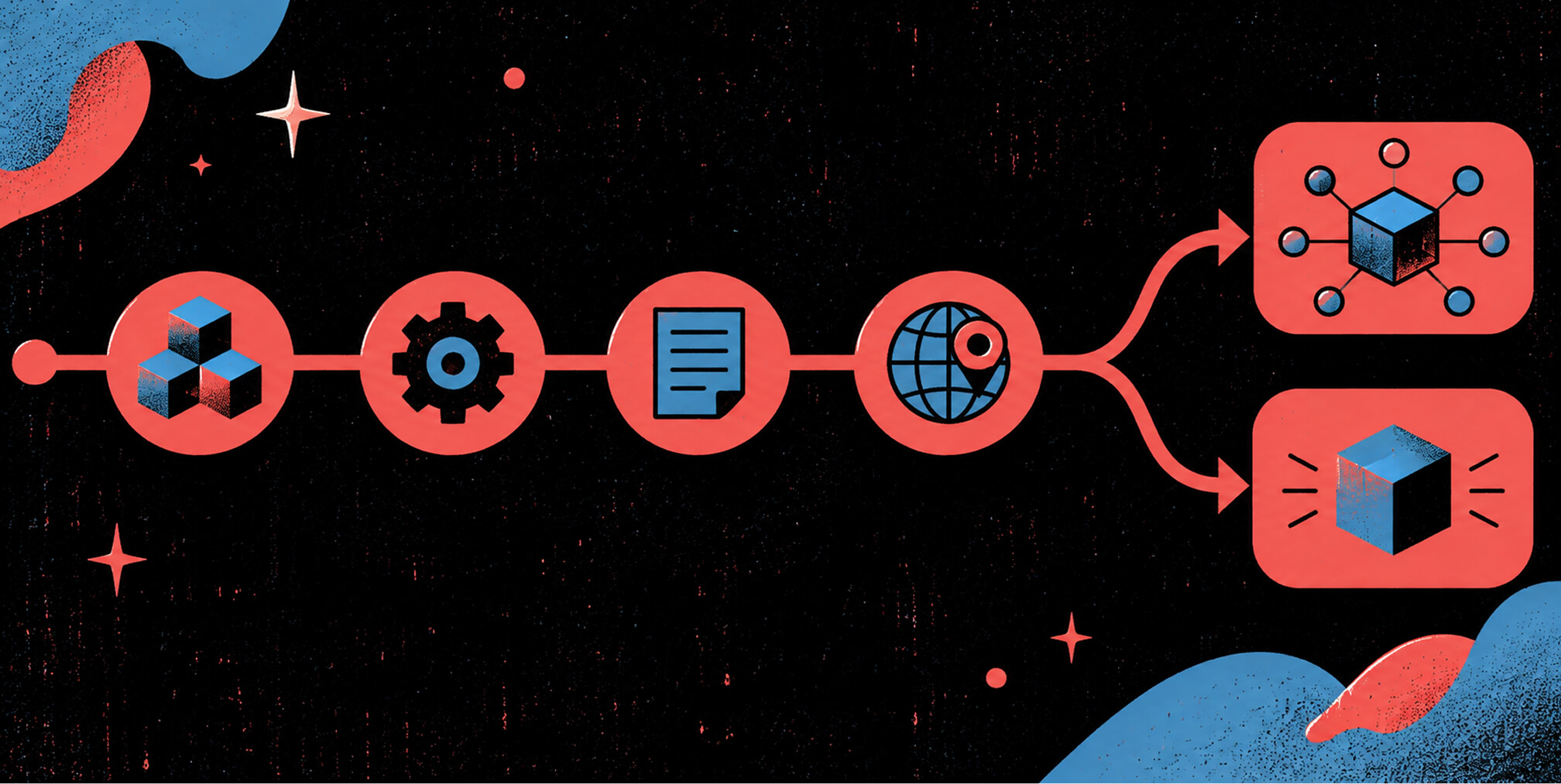
How frequently do each platform update, and how transparent are their roadmaps?
OneTrust releases product updates on a rolling basis and maintains a public changelog. The platform's scale means updates span multiple modules simultaneously, which can create testing overhead for enterprise IT teams managing integrations. OneTrust has historically communicated roadmap direction through its annual Trust Intelligence Summit and through customer advisory boards, though specific feature timelines are not always published publicly.
TrustArc's roadmap transparency has increased following the Main Capital Partners acquisition in October 2025. The acquisition signals a growth-focused investment strategy, and TrustArc leadership has publicly committed to product development and international expansion. For buyers evaluating long-term platform viability, private equity backing with a stated growth mandate is a positive signal, though it also introduces the possibility of future pricing or product repositioning as the investor seeks returns.
What training resources and community support does each platform offer?
OneTrust operates the OneTrust Academy, a structured learning platform with role-based certifications for privacy professionals, compliance teams, and IT administrators. The Academy covers platform-specific training and broader privacy program management topics. OneTrust also maintains a customer community portal and hosts an annual user conference. For enterprise buyers, dedicated customer success managers are typically included at higher contract tiers.
TrustArc offers training through its customer success team and a library of privacy-focused educational content, including webinars, guides, and the Nymity Research content library. The Nymity content is a genuine differentiator: it gives privacy counsel access to regulatory analysis and program templates that go beyond platform training into substantive privacy practice support. Community resources are less extensive than OneTrust's, reflecting TrustArc's smaller customer base, but support responsiveness scores higher on G2.
What are the contract terms and negotiation flexibility like?
Both platforms use annual or multi-year subscription contracts with enterprise minimums. OneTrust contracts tend to be more complex, reflecting the platform's module breadth and the potential for usage-based pricing tiers. Key negotiation points include module scope, user seat counts, data volume thresholds, and professional services inclusions.
Vendr transaction data confirms that multi-year commitments are the primary discount lever for OneTrust, and that discounting is common in observed deals. The risk is renewal: reports of aggressive renewal uplift and licensing-model shifts at OneTrust are well-documented enough that procurement teams should negotiate a written uplift cap before signing the initial contract.
TrustArc's contracts are generally reported as more straightforward, with more predictable renewal terms. The Main Capital Partners acquisition may introduce changes to pricing strategy over time, so locking in multi-year terms now could protect against future increases. Both vendors will negotiate on professional services scope, implementation timelines, and module activation schedules when pushed.
What data residency and localization options are available?
Data residency is a material procurement consideration for organizations subject to GDPR, Canadian PIPEDA, or sector-specific data localization requirements. Both OneTrust and TrustArc offer data hosting options in multiple regions, including the United States and the European Union, but the specific configurations available depend on contract tier and negotiation.
OneTrust's scale gives it more flexibility on data residency configurations, with regional hosting options documented for enterprise contracts. TrustArc's Arc platform also supports regional data hosting, and the company's Walnut Creek, California headquarters means its default infrastructure is US-based. For cross-border data transfer documentation, TrustArc's regulatory intelligence library includes Standard Contractual Clauses guidance and transfer impact assessment templates, which is a practical advantage for privacy teams managing international data flows.
Ask both vendors to specify data residency options, sub-processor lists, and cross-border transfer mechanisms in writing during the procurement process. Do not rely on sales representations; require contractual commitments.
Key Takeaways
OneTrust suits large enterprises running consolidated GRC programs across privacy, security, ESG, and AI governance; TrustArc suits dedicated privacy teams that need regulatory depth, faster deployment, and more predictable pricing.
| Point | Details |
|---|---|
| Pricing floor is shared | Both platforms start at approximately $10,000/year; neither serves low-cost mid-market needs. |
| GRC breadth vs. privacy depth | OneTrust covers more compliance domains; TrustArc delivers deeper regulatory intelligence via Nymity and Arc Intelligence. |
| Implementation complexity differs | TrustArc scores higher on ease of setup and support responsiveness on G2; OneTrust typically requires more professional services investment. |
| Negotiate renewal terms upfront | OneTrust customers report aggressive renewal uplift; secure a written uplift cap and module scope before signing any initial contract. |
| The Branded Agency | For teams that need procurement scoping, RFP support, or integration project management, The Branded Agency offers hands-on vendor selection and implementation services. |
A consultant's perspective on choosing the right privacy platform
The most common mistake I see in enterprise privacy platform evaluations is treating this as a features race. Teams build a spreadsheet, score each module, and hand the result to procurement. The platform with the most checkmarks wins. That approach consistently produces the wrong outcome.
The real question is not which platform has more modules. It is which platform your team will actually use in 12 months. A privacy team of three people does not need ESG reporting and AI governance modules. They need consent management that works, a DSAR workflow that does not require IT support to run, and regulatory intelligence that keeps them ahead of new state laws. TrustArc is built for that team. OneTrust is built for the enterprise that has a privacy team, a security team, an ESG function, and a GRC program office that all need to share a single risk register.
The second mistake is underestimating implementation cost. Both platforms will quote you a license fee. Neither will lead with the professional services, customization, and integration costs that make year-one spend materially higher than the headline number. Budget those costs explicitly before you compare sticker prices.
Practical advice for your evaluation:
- Run a parallel pilot if your timeline allows. Activate consent management and one DSAR workflow on both platforms simultaneously against a real but limited scope. The friction you discover in a 30-day pilot is worth more than any demo.
- Scope your initial contract to year-one modules only. Buying the full suite upfront reduces your negotiating leverage at renewal and creates shelfware.
- Get data residency, uplift caps, and professional services scope in writing before you sign. Verbal commitments from sales teams do not survive contract renewals.
How The Branded Agency supports privacy platform procurement and integration
Selecting between OneTrust and TrustArc is only half the work. The harder part is scoping the implementation, aligning your marketing and data teams on consent workflows, and integrating the platform with your existing tech stack. That is where most enterprise projects stall.
The Branded Agency is not a software vendor. We are a full-service marketing and branding firm that works alongside growth-stage and enterprise organizations to scope vendor selections, facilitate RFP processes, and manage the integration work that connects privacy platforms to your web infrastructure, paid media stack, and retention marketing programs. When your consent management platform needs to talk to your ad measurement tools or your email platform, we handle the integration project management so your privacy team can focus on compliance, not technical coordination.
If you are mid-evaluation and need a structured scoping session, contract review support, or help defining your integration requirements, reach out to The Branded Agency to set up a working session.
Authoritative Sources and Next Reads for Procurement Teams
Use these sources to validate claims, benchmark pricing, and prepare for vendor conversations.
- G2: Compare OneTrust Privacy Automation and TrustArc — the most useful source for side-by-side user sentiment, feature scores, and support ratings. Use this for technical validation and peer reference discovery.
- Vendr: OneTrust Software Pricing & Plans — transaction-level pricing signals and negotiation benchmarks. Use this before entering any pricing conversation with OneTrust.
- Enzuzo: OneTrust vs TrustArc 2026 — a detailed third-party comparison covering pricing floors, module parity, and implementation signals. Useful for procurement teams building an internal business case.
- TrustArc: Acquisition by Main Capital Partners press release — primary source for TrustArc's ownership change and stated strategic direction.
- Tracxn: Main Capital Partners Acquires TrustArc — deal context and acquisition date (October 15, 2025) for roadmap and viability assessments.
- Wikipedia: TrustArc — background on TRUSTe origins, certification history, and company profile.
Procurement reminder: Every pricing signal, SLA commitment, data residency option, and renewal term you hear from a vendor sales team should be captured in writing and reflected in the contract before you sign. Market pricing data gives you a benchmark; your signed agreement is the only document that protects you at renewal.
Recommended

Quincy Samycia
As entrepreneurs, they’ve built and scaled their own ventures from zero to millions. They’ve been in the trenches, navigating the chaos of high-growth phases, making the hard calls, and learning firsthand what actually moves the needle. That’s what makes us different—we don’t just “consult,” we know what it takes because we’ve done it ourselves.
Want to learn more about brand platform?
If you need help with your companies brand strategy and identity, contact us for a free custom quote.
We do great work. And get great results.
+2.3xIncrease in revenue YoY
+126%Increase in repurchase rate YoY



+93%Revenue growth in first 90 days
+144% Increase in attributed revenue




+91%Increase in conversion rate
+46%Increase in AOV


+200%Increase in conversion rate
+688%Increase in attributed revenue