How to Build a Paid Media Strategy That Pays You Back
09/22/2026
Marketing Services
How to build a paid media strategy — channel selection, budgets, KPIs, attribution, a 90-day test-to-scale plan, and compliance essentials.
A paid media strategy is a documented plan that connects business goals to specific ad channels, budgets, creative, and measurement systems so every dollar spent on advertising can be traced back to revenue. If you're starting from zero, the fastest credible move is a target economics exercise: know your target cost per acquisition or return on ad spend before you touch a single ad platform.
.png)


What Paid Media Is vs. Owned and Earned Media
Three numbers anchor almost every serious program. A 4x return on ad spend is a common baseline target for ecommerce and lead-gen brands with healthy margins. GA4 is the standard tracking backbone most teams use to stitch clicks to conversions. And multi-touch attribution has become the working alternative to last-click reporting, because most buyers touch three or more paid channels before they convert.
Here's what to do in the next 20 minutes: open your ad accounts and check whether conversion tracking actually fires correctly on your highest-traffic landing page. That single audit catches the most common reason paid budgets get wasted before strategy even enters the conversation.
- Confirm your primary conversion event is tracked, not just pageviews
- Check that at least one attribution model beyond last-click is available in your reporting
- Write down your current CAC or ROAS, even if it's rough. You can't optimize what you haven't measured.
Pro Tip: If you don't know your break-even CAC off the top of your head, stop reading and calculate it first. Everything else in this article assumes you have that number.
Key Takeaways
A paid media strategy succeeds when target economics and measurement are locked in before a single dollar reaches an ad platform.
| Point | Details |
|---|---|
| Start with target economics | Know your CAC or ROAS goal before choosing channels or writing creative. |
| Match channels to intent | Use search for existing demand, social and video to create it, programmatic to scale and retarget. |
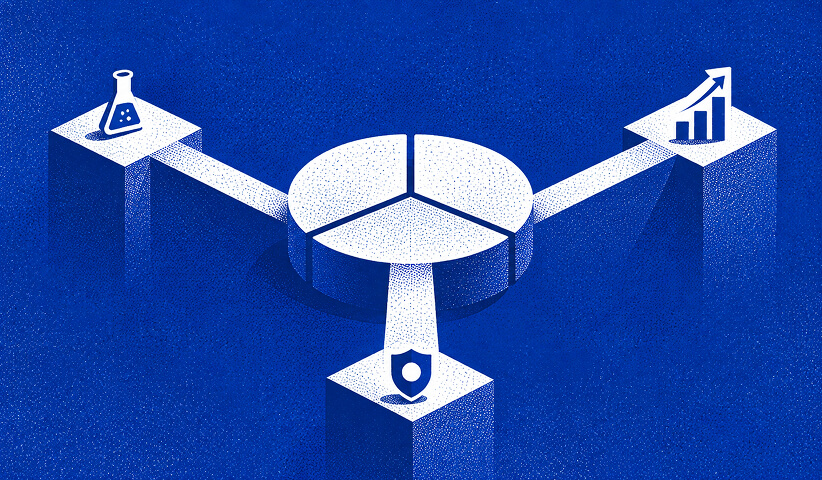
| Reserve a testing budget | Allocate roughly 15 to 20% of spend to experimentation so new channels and creative get a fair test. |
| Fix conversion rate before bids | A 1% CVR lift can cut CAC by 10 to 28%, often more impactful than raising bids. |
| Work with a brand-first partner | The Branded Agency's Brand-Backed Performance™ approach pairs qualification-forward creative with performance measurement for growth-stage brands. |
What Is Paid Media, and How Does It Differ From Owned and Earned Media?
Paid media is advertising you pay to place in front of a specific audience, and it works by renting attention you'd otherwise have to earn slowly through content or word of mouth. Adobe describes it well: you're buying guaranteed visibility and precise targeting instead of waiting for organic discovery to catch up. That speed is the entire value proposition. Owned media, your website, email list, and app, costs nothing incremental to reach but takes months or years to build an audience. Earned media, press coverage, reviews, organic shares, costs nothing either but you can't fully control the message or the timing.
| Dimension | Paid Media | Owned Media | Earned Media |
|---|---|---|---|
| Channel control | Full control over placement and message | Full control over content and format | Limited or no control over framing |
| Cost model | Pay per click, impression, or action | Fixed cost (platform, staff, tools) | Free, but requires PR/content investment |
| Speed to impact | Immediate, scales with budget | Slow, compounds over time | Unpredictable, depends on pickup |
The three work together rather than competing. Paid media delivers controlled, scalable reach that fills the gap while your owned and earned assets mature. The strongest programs use paid budget to amplify content and proof points that are already resonating organically rather than starting from a blank page every time.
Free Brand Health Audit
Make sure your brand is built to sell
Search has changed. Your customers aren't just Googling anymore. They're asking ChatGPT, Perplexity, Gemini and other AI platforms what to buy, who to trust and which brands they should consider.
If your brand isn't showing up clearly in those answers, you're already losing opportunities. Our free Brand Health Audit shows you where your brand stands across traditional search, AI search and brand positioning.

Sample brand audit
Live preview
Traditional search
72
AI search (GEO)
34
Brand positioning
58
Why Paid Media Matters for Growth, and Which Channels to Use When
Why Does Paid Media Matter for Business Growth?
Paid media's core value is speed: it's the fastest lever most companies have to hit a specific, measurable business outcome on a specific timeline. The catch is that "paid media" isn't one objective; it's four different jobs, and confusing them is where most budgets go sideways.
Each objective maps to a different metric your executives should actually be watching:
- Awareness campaigns should be judged on reach, CPM, and brand lift studies, not clicks
- Consideration campaigns live or die by CTR and engagement rate, since the job is pulling people deeper into the funnel
- Conversion campaigns get measured on CPA and ROAS because the outcome is a transaction
- Retention campaigns succeed or fail on repeat-purchase rate and customer lifetime value, not new-customer metrics at all
A useful gut check: a 1% improvement in conversion rate can cut customer acquisition cost by 10 to 28%, which means fixing your landing page often beats raising your bids. That single statistic should reorder how most teams prioritize their optimization backlog.
Paid media isn't always the right tool, though. When you already have a large organic audience actively discussing your product, earned and owned channels should lead, and paid should amplify what's already working rather than try to manufacture demand from scratch. When you're entering a new market or launching against zero brand awareness, paid media is usually the only channel fast enough to matter.
Which Paid Media Channels Should You Use, and When?
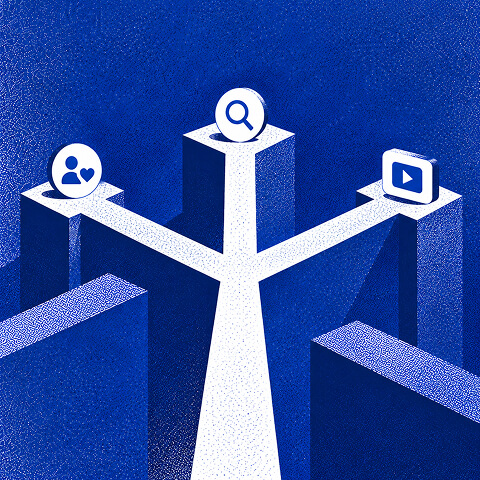
Match the channel to buyer intent, not to where your competitors happen to be spending. Search captures demand that already exists; social and video create demand that doesn't exist yet; programmatic and native extend reach and retarget people who've already shown interest. CXL's mapping of channels to funnel stages is one of the clearest breakdowns of this logic, and it holds up regardless of industry.
Google Ads remains the default for capturing existing demand. If someone is typing "best CRM for agencies" into a search bar, they've already decided they have a problem. A search campaign built around that intent should send them to a landing page that confirms the decision, not one that tries to educate them from scratch.
Meta Ads (Facebook and Instagram) work best for demand creation and mid-funnel nurture, especially with visually strong creative. A direct-to-consumer skincare brand launching a new product line will typically see Meta outperform search early on, simply because nobody is searching for a product that didn't exist yesterday.
Microsoft Advertising (Bing Ads) gets overlooked constantly, and that's precisely the opportunity. CPCs run lower than Google Ads in most B2B and older-demographic verticals, because fewer advertisers bother competing there.
LinkedIn Ads is the only channel on this list built around job title, company size, and seniority targeting at that level of precision, which makes it the default for B2B lead generation where the buyer committee matters more than the individual click.
TikTok Ads rewards native-feeling creative over polished brand assets, and it's proven especially effective for reaching younger consumer segments with top-of-funnel awareness plays that feel like content rather than ads.
YouTube Ads sits in an interesting middle ground: skippable pre-roll works for awareness at scale, while longer-form non-skippable formats work for consideration when you need to explain something complex, like a SaaS product's core workflow.
The Trade Desk and other programmatic DSPs exist for scale and precision retargeting across the open web, letting you follow a warm audience with display and video far beyond the walled gardens of Google and Meta.
Native, affiliate, and audio/CTV channels round out a mature program. Native ads blend into publisher content for softer awareness plays; affiliate programs pay for performance rather than impressions; and connected TV has become a legitimate awareness channel now that streaming viewership rivals traditional cable in most demographics.
Ad copy selling vision but never mentioning price or fit? Keep reading!
If you need creative that filters for qualified buyers instead of just clicks, contact us for a free custom quote.
Building a Strategy Step by Step, and Setting Budgets and Bidding Strategy
How Do You Build a Paid Media Strategy Step by Step?
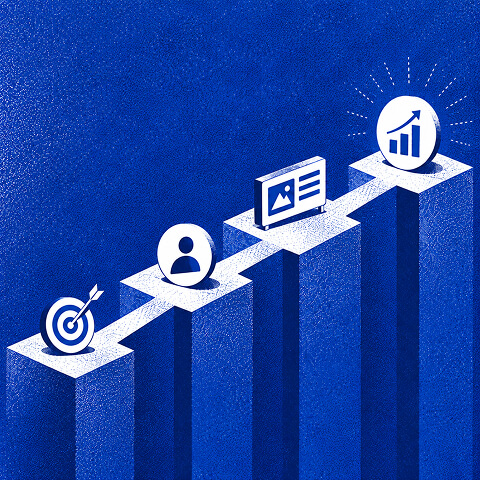
The single discipline that separates strategies that work from ones that burn budget is this: define your target economics and your measurement plan before you write a single ad. Everything else, channel choice, creative, budget splits, is downstream of those two decisions.
- Define the business goal and the number that proves success. Not "increase awareness," but "reduce CAC to $85 within 90 days while maintaining a 3.5x ROAS."
- Build or refine your ideal customer profile (ICP). Vague targeting wastes budget faster than almost anything else in paid media.
- Select channels based on where your ICP already spends attention and what stage of intent they're in, using the search-versus-social-versus-programmatic logic above.
- Write a creative brief that treats the ad as a qualification filter, not just an attention grab. Visible pricing, team size requirements, or technical prerequisites in B2B ad copy repel unqualified clicks before they cost you a lead.
- Build or audit the landing page so the post-click experience matches the ad's promise exactly. Mismatched expectations are the single most common source of high CPC-to-conversion drop-off.
- Confirm tracking is live in GA4 or your analytics platform of choice before spending a cent, not after.
- Launch with a governance rule, like a spend cap or a mandatory 48-hour check-in, so nobody discovers a runaway budget on day five.
A campaign brief template worth copying into your own project management tool includes: business objective, target KPI and number, ICP definition, primary and secondary channels, budget by channel, creative concepts and qualification angle, landing page URL and tracking setup, launch date, and review cadence. HubSpot's fundamentals framework covers similar building blocks, channel choice, creative, targeting, budget, and measurement, and it's a solid structure to adapt if you're building this brief for the first time.
Pro Tip: Treat your ad copy as a filter, not just a hook. Naming your price range or minimum team size in a B2B ad will lower your click volume, but it dramatically improves the quality of leads that make it to sales.
How Should You Set Budgets and Choose a Bidding Strategy?
Set your budget by working backward from target CAC or ROAS and your payback window, never by picking a round number that feels comfortable. If your target CAC is $100 and your historical conversion rate from click to customer is 2%, you need roughly $5,000 in spend to generate 25 test conversions, which is close to the minimum sample most channels need before their algorithms stabilize.
A workable budget shape splits into three buckets: a testing bucket recommended to be a moderate share of total spend, a figure that industry guidance on experimentation backs up consistently, a scale bucket for channels with proven performance, and a reserve for opportunistic tests when a new format or placement becomes available. Timelines to statistical significance vary by channel. Search campaigns can show directional signal within a week given enough volume; social platforms with algorithmic optimization often need two to four weeks before you can trust the data; programmatic campaigns targeting narrow retargeting audiences may need even longer simply because the audience pool is smaller.
Manual bidding still has a place when you understand your audience better than the platform's algorithm does, typically in niche B2B categories with small audience pools. Automated bidding, target CPA, target ROAS, tends to outperform manual once you have enough conversion volume (usually 30 to 50 conversions per month) to give the algorithm something to learn from. Google's own benchmark data and Meta CPC trend tracking are both useful for sanity-checking whether your costs are in a normal range before you assume your creative or targeting is broken.
Daily budgets and pacing aren't the same thing. A $100 daily budget doesn't guarantee $100 spent every single day. Most platforms pace spend based on predicted conversion opportunity, so slower days aren't a bug, they're the algorithm doing its job.
KPIs, Optimization, Tools, the 90-Day Plan, Integration, Compliance, and Agency Perspective
Which KPIs and Attribution Models Actually Tie Ads to Revenue?
Pick your primary KPI family based on your business model, not based on what's easiest to report. Ecommerce businesses should anchor on ROAS and CAC. B2B pipeline businesses should anchor on pipeline contribution and eventually LTV:CAC. Subscription businesses need to weight LTV heavily from day one, because a cheap acquisition that churns in month two is worse than an expensive one that stays for two years.
| Metric | Definition | Primary or Secondary |
|---|---|---|
| CTR | Click-through rate; clicks divided by impressions | Secondary for most objectives, primary for awareness/consideration diagnostics |
| CPC | Cost per click | Secondary; useful for pacing checks, not a success metric on its own |
| CPA | Cost per acquisition | Primary for lead-gen and ecommerce conversion campaigns |
| CVR | Conversion rate from click to desired action | Primary diagnostic; drives CAC more than bid strategy does |
| ROAS | Return on ad spend | Primary for ecommerce and revenue-driven programs |
| LTV:CAC | Lifetime value to acquisition cost ratio | Primary for subscription and retention-dependent businesses |
| Pipeline contribution | Revenue in the sales pipeline attributable to paid campaigns | Primary for B2B with long sales cycles |
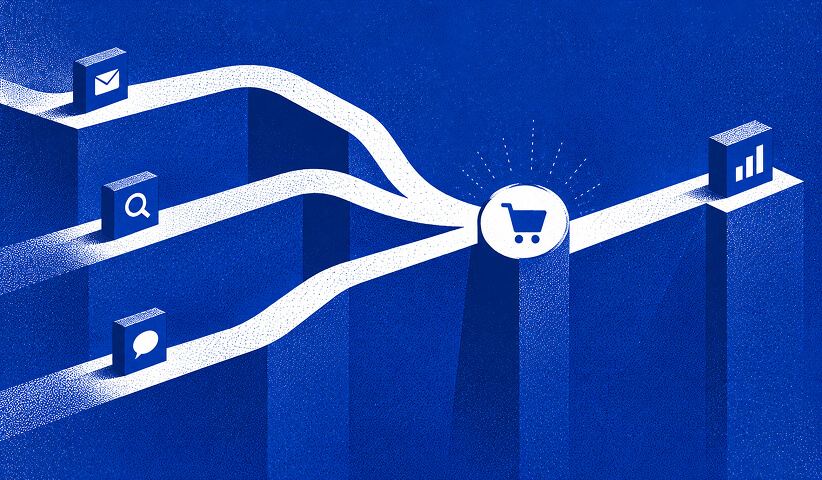
Attribution is where most reporting breaks down. Last-click attribution is simple but systematically overcredits the final touchpoint, usually a search ad, even when a TikTok or YouTube ad did the actual persuading earlier in the journey. Multi-touch attribution distributes credit across several touchpoints and gives a fairer picture for buyers who interact with three or more channels before converting. Data-driven attribution, now the default model inside most major ad platforms, uses your own conversion data to weight each touchpoint algorithmically rather than applying a fixed rule. Incrementality testing, running geo-holdouts or platform-off tests, is the only method that tells you what would have happened without the ad at all, and it's worth running at least once a year on your largest channel.
A workable reporting routine runs on three cadences: daily diagnostics to catch tracking breaks or budget overruns, weekly optimization reviews to adjust bids and creative, and a monthly business review that ties spend to the pipeline or revenue number your executives actually care about.
What's the Highest-Impact Way to Optimize a Paid Media Program?
Change one variable at a time and tie every test back to a business outcome, not a vanity metric. Testing five things simultaneously feels efficient, but it means you'll never know which change actually moved the number.
A sensible testing roadmap runs in this order:
- Landing page and post-click experience first. The CAC math above shows why: conversion rate improvements compound faster than bid changes.
- Creative next. Rotate at least three variations per ad set and retire underperformers within two weeks of clear signal.
- Audience targeting third. Test lookalikes against interest-based segments, and always maintain an exclusion list for existing customers unless the campaign is specifically about retention.
- Bidding strategy fourth. Only once creative and landing page are stable, since a bidding change on unstable creative just adds noise.
- Placements last. Automatic placements often perform fine; manual placement control mostly matters at scale, once you have enough data to know which placements actually convert.
Guardrails matter as much as the tests themselves. Set a maximum daily spend cap per test so a runaway automated bid doesn't drain a month's budget in 48 hours. Never test more than one funnel stage at a time in the same campaign.
Pro Tip: Frequency caps are underused. If your audience is seeing the same ad more than seven times in a week without converting, the creative is fatigued, not the offer. Refresh the creative before you touch anything else.
Know when to stop testing and scale. Once a variation beats its control by a meaningful margin across two consecutive reporting periods, stop iterating and put budget behind it. Continuing to test a winner just delays the returns you already earned.
What Tools Should You Use for Media Buying, Measurement, and Reporting?
Separate your tools by function before you separate them by brand name: media buying, orchestration and automation, creative testing, and analytics and attribution are four different jobs, and conflating them is how tool stacks get bloated.
For media buying, the platforms you'll actually spend on are Google Ads for search and YouTube inventory, Meta Ads Manager for Facebook and Instagram, Microsoft Advertising for Bing's lower-competition search inventory, LinkedIn Campaign Manager for B2B targeting precision, and TikTok Ads Manager for short-form video reach. Each has its own interface, its own bidding logic, and its own learning phase, so budget time for onboarding each one properly rather than assuming they behave like Google Ads with a different skin.
For programmatic scale and retargeting across the open web, The Trade Desk is the category leader among independent DSPs, giving you reach and frequency control that the walled gardens don't expose.
For analytics and attribution, GA4 has become the standard baseline, though most mature teams layer a data-driven attribution model or a dedicated attribution platform on top of it once volume justifies the investment.
Orchestration and automation is where the real decision lives: what do you keep in-house, and what do you hand to an agency partner? Smaller in-house teams typically manage their own bidding and reporting but struggle to keep up with creative testing volume across five or six channels simultaneously. That's usually the first function worth outsourcing, since creative velocity, not platform mechanics, is what separates flat programs from ones that keep improving month over month.
What Does a Sample 90-Day Paid Media Plan Look Like?
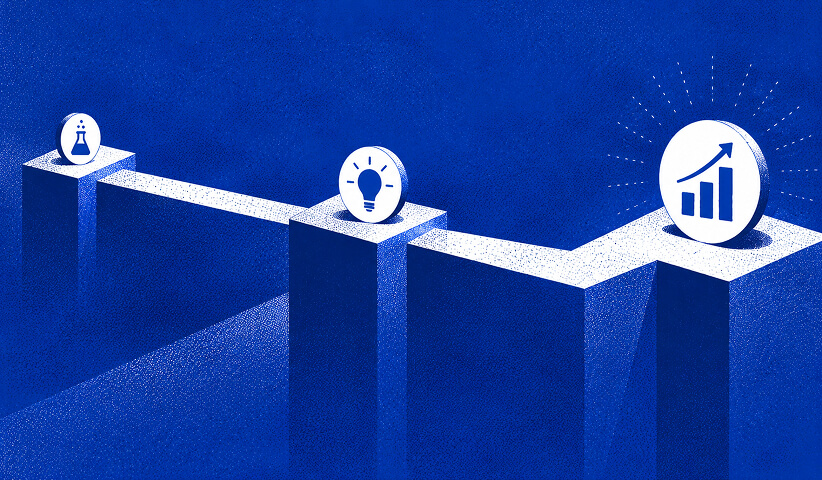
The objective for a first 90-day cycle should be narrow and specific: hit your target CAC or ROAS on one primary channel with statistically reliable data, not "test everything everywhere." Trying to prove five channels in 90 days usually means proving nothing.
Run at least three creative variations per primary audience segment. Resist the urge to change targeting mid-week; let each test run a full 7 to 10 day cycle before judging it.
Weeks 7 to 8 (learnings checkpoint): Pull a formal review. Which creative angle won? Which audience segment converted at the lowest CAC? This is the point where a documented plan starts paying for itself, because treating paid media as a repeatable operating system rather than a series of one-off launches is what reduces CAC volatility over time.
Weeks 9 to 12 (scale): Shift budget toward winning creative and audiences. Introduce a second channel only if the primary channel has hit its target KPI consistently for at least two weeks.
A sample campaign brief for this cycle: objective (hit $90 CAC on Meta Ads for a mid-market SaaS trial signup), ICP (marketing directors at 50 to 200 employee companies), budget ($15,000 across 90 days, split 20/50/30 across the three phases above), creative angle (qualification-forward, naming the minimum team size the product serves), and review cadence (weekly Tuesday check-ins, formal review at day 60).
- Set a hard spend cap for weeks 1 to 2 so early tracking errors don't compound into wasted budget
- Never scale a channel past its test budget until it has hit target KPI for two consecutive weeks
- Reserve at least 10% of the total 90-day budget for a mid-cycle creative refresh
Pro Tip: Your brand messaging shouldn't stay static across 90 days. Early creative should qualify hard and filter aggressively; once you've found your winning angle, later creative can loosen slightly to widen the funnel without sacrificing lead quality.
How Should Paid Media Integrate With Owned and Earned Channels?
Paid media should extend and amplify what your owned and earned channels already prove works, not duplicate it from scratch. If a blog post or an organic social post is already getting strong engagement without a dollar behind it, that's your signal to put media budget behind it rather than commissioning entirely new creative you haven't validated.
A practical integration checklist covers four handoffs. Reuse high-performing organic content as paid creative once it's proven engagement organically. Build retargeting flows that follow site visitors and email openers with a sequenced ad path rather than one generic remarketing ad. Connect email and SMS follow-up to paid conversion events, so a new lead from a paid campaign enters a nurture sequence within hours, not days. And feed PR or earned coverage into paid amplification the moment it lands, since a press mention has a short shelf life for driving traffic before it fades from relevance.
A realistic flow looks like this: a prospect clicks a LinkedIn ad, lands on a page that confirms the qualification angle from the ad, doesn't convert immediately, then gets retargeted with a case study pulled from an existing brand campaign, converts on the second or third touch, and enters an email nurture sequence that reinforces the same brand message the ads led with. Paid drove awareness, owned content did the convincing, and email closed the loop. None of the three worked as well in isolation as they did as a sequence.
What Are the Most Common Paid Media Mistakes and Red Flags?
The clearest sign a paid program is in trouble is the absence of attribution: if you can't say which channel or creative drove a given conversion, you're spending on faith, not data. Other red flags show up just as often. Broad, untargeted audiences that never get refined past the platform's default suggestions waste budget on people who were never going to convert. A missing or mismatched post-click experience, where the landing page doesn't reflect the ad's promise, kills conversion rate no matter how good the targeting is.
Risk controls worth building into every launch checklist:
- Maintain a negative keyword list on search campaigns and review it weekly for the first month
- Build exclusion audiences so you're not paying to reach existing customers with acquisition-focused ads
- Set pacing caps so a single day's algorithmic overspend can't wipe out a week's budget
- Run at least one landing page variant test per major campaign, not just ad copy tests
Compliance and platform policy checks belong in that same launch checklist, not as an afterthought: confirm your tracking setup respects applicable privacy requirements and that your ad creative and targeting comply with each platform's advertising policies before launch, not after a rejection notice.
What Compliance and Legal Rules Apply to Paid Media?
Data privacy law is no longer a background consideration in paid media, it directly shapes what targeting and measurement you're allowed to run. If your ads reach audiences in the European Union or the United Kingdom, the General Data Protection Regulation governs how you collect, store, and use personal data for targeting, and it requires clear consent mechanisms before certain tracking cookies or pixels can fire. In the United States, state-level privacy laws are increasingly filling a similar role, and requirements vary enough by state that a compliance review specific to where your customers are located is worth doing before you scale spend, not after.
Beyond formal privacy law, every ad platform enforces its own advertising policies, and violations can get accounts suspended without much warning. Google Ads and Meta both restrict health, financial, and political ad claims heavily; LinkedIn has stricter rules around employment-related targeting; TikTok enforces community guidelines that go beyond what search and social platforms typically require. Building a policy check into your campaign brief template, reviewing claims, targeting categories, and creative against each platform's current policy page before launch, prevents the kind of last-minute account flag that stalls an entire campaign cycle.
This is general guidance, not legal advice specific to your business or jurisdiction. Confirm current privacy and advertising requirements with your legal counsel or each platform's official policy documentation before launching campaigns that touch personal data or regulated categories.
How Do You Segment and Target Audiences Effectively?
Effective segmentation starts with buying signals, not demographics. Age and location matter far less than what someone has actually done, visited a pricing page, abandoned a cart, opened three emails in a row, than who they demographically resemble. AdStellar's framework for building segments from buying signals rather than static profiles holds up well across both B2B and ecommerce contexts, because behavior predicts intent far better than a job title or an age bracket does.
Layering matters more than most teams realize. A single broad "marketing managers" segment on LinkedIn will underperform a segment layered with company size, seniority, and a recent engagement signal like a webinar registration. The same logic applies on Meta: a lookalike audience built from your highest-LTV customers, not just any past converter, tends to outperform a generic interest-based audience by a wide margin.
First-party data has become the foundation this all sits on, especially as third-party cookie availability keeps shrinking. Building your own audience lists from email subscribers, past purchasers, and CRM data, then uploading them as custom or matched audiences across platforms, gives you a targeting advantage no interest-based segment can replicate. Modern paid media guidance increasingly treats first-party data as non-optional, pairing it with privacy-aware measurement methods like server-side tagging and modeled conversions to keep targeting sharp even as tracking signals degrade.
What's Beyond Standard Attribution Models?
Standard attribution models, first-click, last-click, even basic multi-touch, all share the same blind spot: they can only credit touchpoints they can actually see, and cross-device or cross-platform journeys routinely break that visibility. A buyer who sees a YouTube ad on their phone, later clicks a LinkedIn ad on their laptop, then converts through a direct visit a week later, will often show up in reporting as a single direct conversion with zero ad credit at all.
Incrementality testing is the more rigorous answer, and it's underused precisely because it's harder to run. A geo-holdout test, turning ads off in a matched set of regions while running normally elsewhere, tells you what portion of your "attributed" conversions would have happened anyway. Many teams that run this test for the first time discover a meaningful share of their reported conversions were incremental in name only. Marketing mix modeling, a statistical approach that looks at spend and outcomes in aggregate rather than at the individual touchpoint level, has resurfaced as a complement to platform-level attribution specifically because it doesn't rely on tracking individual users at all, sidestepping the privacy and cross-device problems entirely.
Agency Perspective: How The Branded Agency Structures Paid Media for Growth-Stage Brands
We build paid media programs around one non-negotiable principle: creative is a filter before it's a hook. Most agencies treat ad creative as an attention problem to solve, more clicks, more impressions, more reach. We treat it as a qualification problem first, because a growth-stage brand with a finite sales team doesn't benefit from a flood of unqualified leads no matter how cheap the click was.
A vignette worth sharing, anonymized because the specifics belong to the client: a B2B software company came to us with strong click-through rates on LinkedIn and terrible sales-qualified lead conversion. Their ad copy sold the product's vision without mentioning price, team size, or use case fit, so every click looked promising and almost none of them were. We rewrote the creative to name the target team size and the price band directly in the ad. Click volume dropped. Sales-qualified conversion climbed, because the people who clicked after that were the people who actually fit the product. That's the qualification-as-filter principle in practice, and it's the same logic behind pricing and positioning work we build into every brand-backed performance engagement from day one.
The intersection of branding and performance is where most paid media programs quietly fail. A campaign built on borrowed creative or a generic value proposition can hit its CPC targets and still lose to a competitor with a sharper brand story, because performance metrics measure efficiency, not persuasion. We've found that integrated strategy work that aligns brand positioning with the media plan from the outset consistently outperforms media plans bolted onto a brand identity as an afterthought.
Get Expert Help Building Your Paid Media Program
Building all of this in-house, target economics, channel selection, qualification-forward creative, attribution modeling, and a 90-day test-to-scale cadence, is a full-time discipline, and most growth-stage marketing teams are already stretched thin running the business day to day.
That's the gap our Brand-Backed Performance™ paid media service is built to close. Rather than handing you a media plan disconnected from your brand story, we align creative, positioning, and platform strategy from the start, so your ads don't just generate clicks, they generate qualified pipeline that sales actually wants to work. Clients typically see the qualification-as-filter approach reduce wasted spend on unqualified leads within the first campaign cycle, freeing budget to scale what's already converting. If you're ready to see what a documented, brand-aligned paid media strategy looks like for your business, start a conversation with our paid media team and we'll walk through where your current program has room to grow.
Sources
- The Basics & Fundamentals of Paid Media
- What is paid media? Definition, strategies, and campaigns
- Paid Media: Definition, Channels, and Tactics (+ Examples)
- Paid Media Strategy: A 6-Step Framework for 2026 | AdStellar
Recommended

Quincy Samycia
As entrepreneurs, they’ve built and scaled their own ventures from zero to millions. They’ve been in the trenches, navigating the chaos of high-growth phases, making the hard calls, and learning firsthand what actually moves the needle. That’s what makes us different—we don’t just “consult,” we know what it takes because we’ve done it ourselves.
Want to learn more about brand platform?
If you need help with your companies brand strategy and identity, contact us for a free custom quote.
We do great work. And get great results.
+2.3xIncrease in revenue YoY
+126%Increase in repurchase rate YoY


+93%Revenue growth in first 90 days
+144% Increase in attributed revenue




+91%Increase in conversion rate
+46%Increase in AOV


+200%Increase in conversion rate
+688%Increase in attributed revenue