Performance Branding: Drive Measurable Brand-Led Growth
09/18/2026
Marketing Strategy
A guide to performance branding — the 5-layer framework, step-by-step implementation, measurement models, governance, and real case study results.

Performance branding is the deliberate integration of brand-building and performance marketing so every marketing dollar creates both immediate, measurable returns and longer-term brand equity. Done right, it turns brand identity into a growth engine you can actually track.
.png)


Why Performance Branding Matters Right Now



The core elements you need to assemble:
- Identity and data: A customer data platform (CDP) and identity graphs that unify first-party signals across channels
- Creative that builds memory: Messaging and visuals engineered to create category entry points, not just clicks
- Full-funnel media: Top-of-funnel brand content working in concert with bottom-funnel activation
- Measurement framework: Marketing mix modeling (MMM), lift tests, and multi-touch attribution (MTA) all running in parallel
- Governance: Consent-first data collection, data quality standards, and cross-functional ownership
McKinsey, HBR, and practitioners at The Branded Agency all point to the same conclusion: the brands winning on efficiency and growth are the ones that stopped treating brand and performance as separate budgets.
Key Takeaways
Performance branding delivers its strongest results when brand identity, first-party data infrastructure, and performance media share a single measurement framework from the start.
| Point | Details |
|---|---|
| Audit before you spend | Map brand health, CAC by channel, and data gaps before reallocating any budget. |
| Set blended KPIs first | Agree on brand lift, blended ROAS, CAC, and LTV targets with finance before launching. |
| Run a holdout pilot | A two-market holdout test over 8–12 weeks gives you causal proof of brand impact. |
| Model long and short | Use MMM for budget allocation and MTA for tactical optimization; neither alone is sufficient. |
| The Branded Agency | Structures brand strategy, paid media, and measurement as one integrated engagement for growth-stage and enterprise B2B teams. |
Why performance branding matters right now
The business case is direct. Brand building and performance marketing increase the return on both when the right metrics and models are used together. Brand primes demand; performance captures it. Run them in isolation and you pay more for the same outcome.
McKinsey reports that companies applying data-driven performance-branding approaches have seen marketing-efficiency gains of up to ~30% and incremental top-line growth of around 10% in some reported cases, without increasing overall budget. Those numbers are company-reported and vary by category, but the directional signal is consistent across multiple industries.
The urgency comes from two converging pressures. Paid media costs keep rising as more brands compete for the same bottom-funnel inventory. At the same time, third-party cookie deprecation is eroding the identity layer that performance-only programs depend on. Brands that have invested in first-party data and brand recognition are structurally less exposed to both.
What you risk by staying performance-only:
- Rising customer acquisition costs (CAC): Without brand recognition, every paid click costs more because you're competing on price and placement alone
- Platform dependency: Concentrating spend in bottom-funnel channels creates fragility when algorithms shift or CPMs spike
- Diminishing returns: Performance campaigns without brand support see conversion rates erode as audiences become ad-fatigued
- CFO friction: Short-term ROAS looks fine until the pipeline dries up, and then there's no brand equity to fall back on
The upside of integration is a compounding effect. Brand marketing tends to outperform performance marketing on total sales impact over the long term, while performance remains more predictable for short-term goals. A blended approach captures both curves.
Free Brand Health Audit
Make sure your brand is built to sell
Search has changed. Your customers aren't just Googling anymore. They're asking ChatGPT, Perplexity, Gemini and other AI platforms what to buy, who to trust and which brands they should consider.
If your brand isn't showing up clearly in those answers, you're already losing opportunities. Our free Brand Health Audit shows you where your brand stands across traditional search, AI search and brand positioning.

Sample brand audit
Live preview
Traditional search
72
AI search (GEO)
34
Brand positioning
58
The 5 Core Elements of a Program, and How to Implement It Step by Step

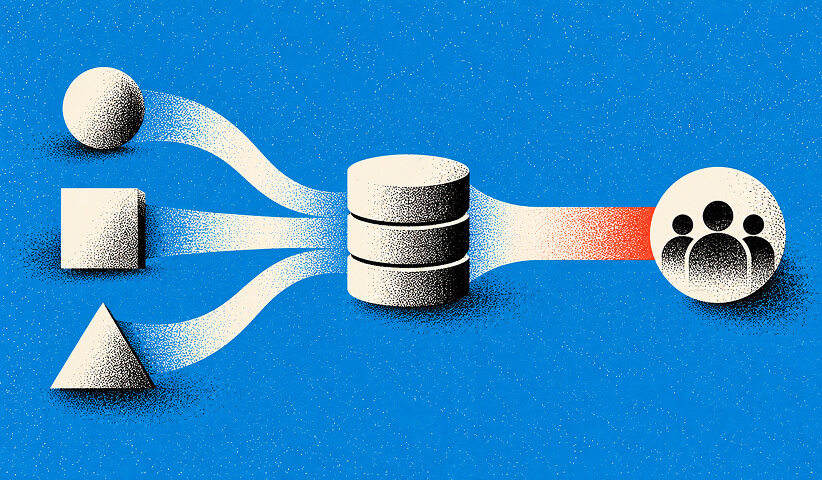


Core elements of a performance-branding program
A working performance-branding program has five layers: data and identity infrastructure, creative built for memory, a full-funnel media strategy, a measurement framework, and governance. Each layer depends on the one below it.
- CDP and identity resolution: A customer data platform centralizes first-party behavioral, transactional, and CRM data into unified customer profiles. Identity graphs extend that resolution across devices and channels, so you're targeting real people, not fragmented cookies. McKinsey identifies identity graphs and CDPs as the core technologies enabling performance branding at scale.
- Creative that builds category entry points: Brand creative needs to do more than look good. It should link your brand to the specific situations buyers are in when they enter a category. That's what creates mental availability, the probability that your brand comes to mind at the moment of purchase.
- Full-funnel media strategy: Top-funnel content builds awareness and primes audiences. Mid-funnel content nurtures consideration. Bottom-funnel activation converts. All three stages need to share creative signals and audience data so the message compounds rather than contradicts.
- Measurement layer: MMM quantifies long-run channel contributions. Randomized lift tests or geo holdouts prove causal brand impact. MTA handles tactical optimization at the campaign level. You need all three because each answers a different question.
- Governance and consent: Data quality and consent management aren't optional. They determine whether your CDP data is trustworthy and whether your identity resolution is legally defensible.
| Program Element | Primary Technology | Key Role |
|---|---|---|
| CDP and identity resolution | CDP platform, identity graph | Data engineering |
| Creative and memory structures | Creative studio, brand guidelines | Creative lead |
| Full-funnel media | DSP, paid social, search | Performance media manager |
| Measurement (MMM, lift, MTA) | Analytics platform, experimentation tools | Measurement lead |
| Governance and consent | Consent management platform (CMP) | CDP owner, legal |
For practical guidance on B2B brand positioning that feeds directly into creative development, that's a useful starting point before you brief your creative team.
How to implement performance branding step by step
The simplest path is: audit your current state, set blended KPIs, fix your data and tech foundation, redesign creative, run a pilot with a holdout, measure, then scale what works.
- Audit your brand and performance baseline. Map existing brand health metrics (awareness, consideration, net promoter score), current CAC by channel, and conversion rates by funnel stage. Identify where brand and performance data are siloed. This audit typically takes two to four weeks and should involve marketing, analytics, and finance.
- Set blended KPIs. Define the metrics that will govern the program: brand lift, mental availability, blended ROAS, CAC trend, customer lifetime value (LTV), and organic or direct traffic growth. Agree on these with your CFO before you spend a dollar on new creative.
- Centralize your data. Implement or audit your CDP. Map data flows from your CRM, website, paid platforms, and email stack into a single customer view. This is also when you audit consent coverage and close any gaps. Don't wait for a perfect identity graph before moving to the next step.
- Redesign creative for memory and activation. Brief your creative team on category entry points, not just product features. Creative assets should work at the top of the funnel to build association and at the bottom to convert. The B2B branding playbook from The Branded Agency covers this sequencing in detail.
- Run a two-market pilot with a holdout. Select two comparable markets or audience segments. Expose one to the integrated brand-plus-activation campaign; hold the other back. Run for eight to twelve weeks minimum. This is your causal proof of concept.
- Measure and model. After the pilot, run an MMM or lift analysis to separate brand effects from activation effects. Report blended results to leadership with the CFO-ready dashboard you built in step 2.
- Scale and optimize. Allocate budget based on what the model shows, not gut feel. Rebalance toward brand as performance matures. Revisit the budget split quarterly.
Pro Tip: Don't let imperfect identity resolution block your creative testing. Waiting for perfect data means waiting forever, and the learning you lose in that time is more expensive than the noise in your early results.
Still running brand and performance as separate budgets? Keep reading!
If you need brand and paid media sharing one measurement framework, contact us for a free custom quote.
How to Measure Performance Branding, and Organizing Teams and Agency Collaboration

How to measure performance branding: KPIs, models, and proving brand impact
Your blended KPI set should include brand lift, mental availability scores, blended ROAS, CAC, LTV, and organic or direct traffic growth, tracked together in a single dashboard so brand and performance metrics tell one story.
No single model gives you the full picture. Here's how to use each:
- Marketing mix modeling (MMM): Best for long-run budget allocation. MMM uses historical spend and sales data to estimate the contribution of each channel, including brand. It's slow to update but gives you the most defensible view of long-term ROI. Run it annually or semi-annually.
- Randomized lift tests and geo holdouts: Best for causal proof of brand impact. A holdout test isolates the effect of your brand campaign from baseline trends. This is the evidence your CFO will actually believe.
- Multi-touch attribution (MTA): Best for tactical, campaign-level optimization. MTA shows which touchpoints in a conversion path contributed, but it systematically undervalues upper-funnel brand exposure. Use it for creative and channel decisions, not for budget strategy.
| Model | Best For | Measurement Approach | Tech Needed | Time to Impact | Typical Budget Allocation |
|---|---|---|---|---|---|
| MMM | Long-run allocation | Statistical regression on historical data | Analytics platform, data warehouse | 6 months of data | Brand 60%, activation 40% (consumer); ~46/54 (B2B) |
| Geo/randomized lift test | Causal brand proof | Holdout vs. exposed market comparison | Experimentation tools, geo data | 8-12 weeks per test | Pilot budget, typically 10-15% of total |
| Multi-touch attribution | Tactical optimization | Path-to-conversion modeling | CDP, ad platform APIs | Real-time to 30 days | Activation-heavy channels |
Industry modeling from Binet and Field frameworks suggests a consumer baseline of roughly 60% brand to 40% activation, with B2B programs adjusting closer to 46% brand and 54% activation depending on category and sales cycle length.
For a practical breakdown of brand health metrics worth tracking alongside these models, that resource covers the definitions and dashboard structure in detail.
Organization, teams, and agency collaboration for performance branding
A small cross-functional squad, supported by a steering committee with commercial and finance representation, is the operating model that works. Large, siloed teams with separate brand and performance P&Ls almost always produce fragmented results.
The core squad roles:
- CDP owner: Manages data ingestion, identity resolution, and consent compliance. This person is the connective tissue between marketing and engineering.
- Measurement lead: Owns the MMM, lift test calendar, and the shared dashboard. Reports to both the CMO and CFO.
- Creative lead: Responsible for brand creative that works across funnel stages. Must be briefed on category entry points, not just campaign deliverables.
- Performance media manager: Runs paid channels with access to CDP audiences and brand lift data. Optimizes toward blended KPIs, not just ROAS.
- Commercial owner: A senior stakeholder (VP Marketing or CMO) who owns the integrated budget and arbitrates trade-offs between brand and activation spend.
Cutting brand spend to improve short-term performance typically raises acquisition costs and erodes long-term effectiveness. The commercial owner's job is to hold that line when quarterly pressure builds.
Pro Tip: When working with external agencies, build test-and-learn cadences into the SLA from day one. Agree on a shared measurement framework before the first campaign launches, not after. Agencies that operate without access to your CDP data will optimize toward their own platform metrics, which rarely align with your blended KPIs.
Privacy and Governance, When to Prioritize It, Real Examples, and Our Approach
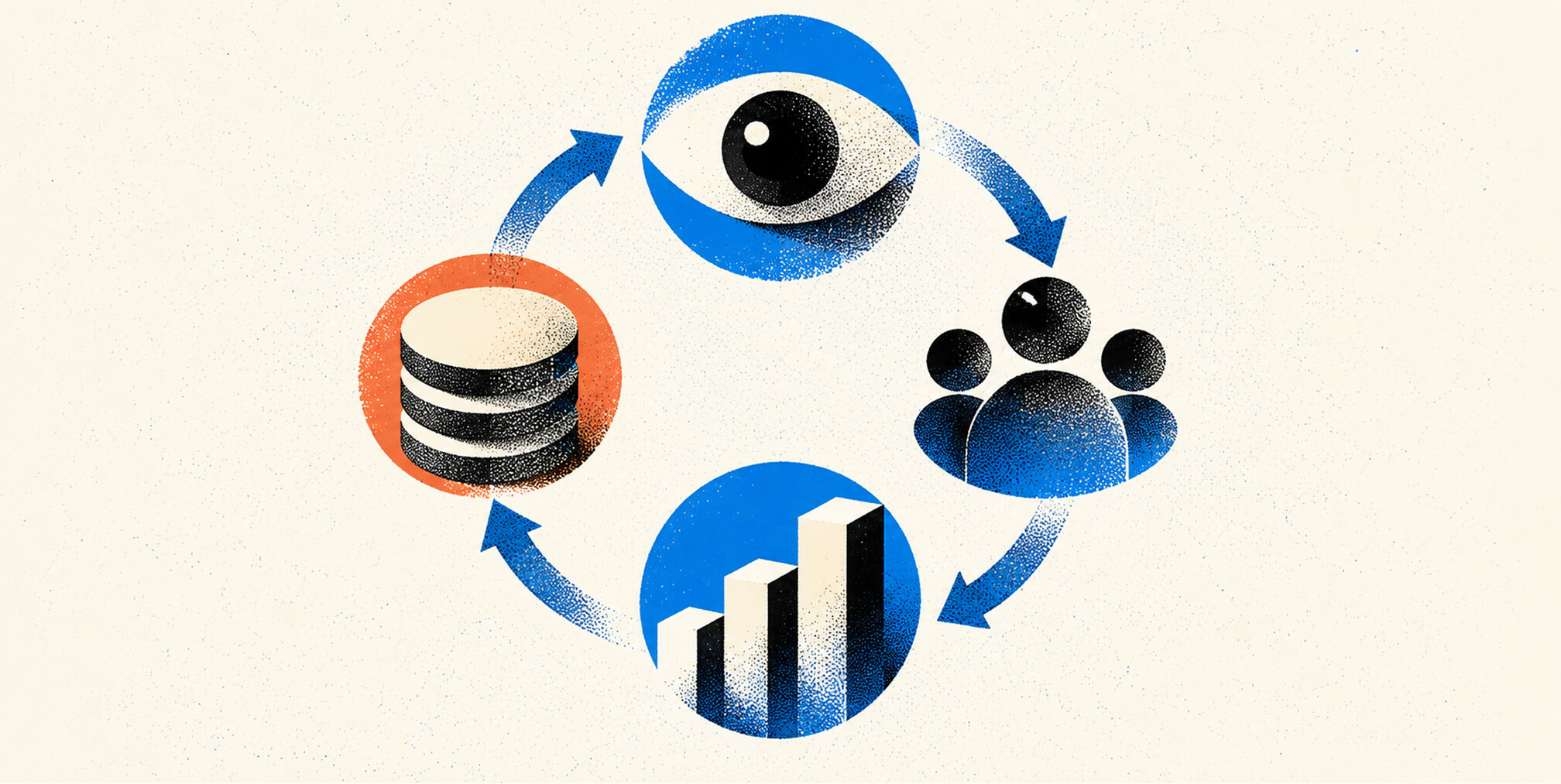
Privacy, consent, and governance requirements in North America
Compliance in North America requires consent-first data collection, clearly designed opt-in flows, and documented data governance tied directly to your CDP. This isn't a legal formality; it's what makes your identity data trustworthy and your targeting defensible.
Required actions for marketing teams:
- Honest consent UX: Consent flows must be clear, affirmative, and easy to decline. Pre-checked boxes and buried opt-outs don't meet the standard set by state-level laws like the California Consumer Privacy Act (CCPA) and its amendments under CPRA, or Canada's PIPEDA.
- Data minimization: Collect only what you need for the stated purpose. Every additional data field is a liability if your governance documentation doesn't justify it.
- Vendor DPIAs: Run data protection impact assessments for any third-party partner that touches your CDP or identity graph data. This includes your DSP, your identity resolution vendor, and your analytics platform.
- Data flow mapping: Document where every data type originates, where it travels, and how long it's retained. Your CDP should be the authoritative record.
- Regular audits: Review consent coverage, data accuracy, and vendor compliance at least quarterly. Consent records decay as users change preferences.
Privacy law in North America varies by state and province, and the regulatory picture continues to evolve. Consult qualified legal counsel for edge cases and for any program that involves sensitive data categories.
When performance branding delivers the most value: an agency perspective
Prioritize performance branding when purchase journeys are long or complex, channel costs are rising, or your brand recognition is low but you need to scale. Those three conditions describe most B2B and regulated-industry marketers today.
MarketingProfs argues that performance branding is especially valuable in B2B and regulated sectors with long purchase cycles because it balances short-term activation with long-term memory creation. When a buyer takes six to eighteen months to make a decision, the brand impressions from month one compound through every subsequent touchpoint. Performance-only programs miss that compounding entirely.
The conditions that signal it's time to shift:
- CAC has risen more than 20% year-over-year without a corresponding increase in deal size
- Direct and organic traffic as a share of total acquisition is declining
- Brand recall in your category is below your market share
- Your paid media efficiency has plateaued despite creative and bid optimization
Performance branding is not a campaign type. It's an operating model where brand and performance share data, creative, and measurement infrastructure. The brands that treat it as a one-time campaign miss the compounding effect entirely.
LinkedIn's full-funnel platform data shows that B2B advertisers running integrated top-to-bottom campaigns consistently outperform those running brand and lead generation as separate programs, both on engagement and on pipeline contribution.
For growth-stage and enterprise B2B companies, The Branded Agency structures engagements around exactly this model: brand strategy, creative, and paid media operating from a shared data foundation. Their enterprise branding and marketing solutions are built for teams that need to move fast without sacrificing measurement rigor.
Pro Tip: Use brand recall and share-of-voice data as your leading indicators. If those metrics are moving in the right direction, conversion improvements typically follow within two to three quarters. If you're only watching ROAS, you'll miss the signal until it's too late to course-correct.
What performance branding looks like when it works: two concrete examples
When performance branding is executed well, you see brand metrics and performance metrics move together, not in trade-off. Here are two patterns drawn from industry evidence.
Telco: brand consideration and gross adds
A telecommunications company applied a data-driven performance-branding approach across its full media mix, integrating brand creative with targeted activation campaigns using a unified customer data foundation. McKinsey reports the outcome: brand consideration increased significantly and marketing-driven gross subscriber adds rose markedly. The efficiency gains came without a budget increase. The mechanism was straightforward: brand creative reduced the cost of conversion by warming audiences before activation campaigns reached them.
B2B SaaS: full-funnel LinkedIn campaign
A B2B software company running separate brand and lead generation programs on LinkedIn consolidated them into a single full-funnel campaign structure, sharing creative signals and audience data across stages. LinkedIn's B2B Institute case data shows that this integrated approach produced measurable gains in both brand engagement and lead generation volume compared to the siloed baseline.
The pattern is consistent: when brand and performance share the same data layer and creative brief, the lift in one amplifies the other. The brands that see the biggest efficiency gains are the ones that stopped optimizing each funnel stage in isolation.
Both examples follow the same structure: a unified data foundation, creative designed to work across funnel stages, and measurement that captures both brand and conversion outcomes in the same reporting view.
The performance branding approach we take at The Branded Agency
Brand-backed performance is the operating model we build for every client: brand identity and performance marketing sharing the same data, creative, and measurement infrastructure from day one.
In practice, that means we start with a brand audit and KPI alignment session before any media dollar moves. We map the client's existing data infrastructure, identify gaps in identity resolution and consent coverage, and set the blended KPI framework that will govern the engagement. Creative is briefed on category entry points, not just campaign objectives. Media is planned full-funnel, with brand and activation budgets modeled against the Binet and Field guidance adjusted for the client's category and sales cycle. Measurement cadences, including lift tests and MMM runs, are scheduled into the engagement from the start.
The clients who get the most from this model are growth-stage and enterprise B2B companies where sales cycles are long, CAC pressure is real, and the CMO needs to make a credible case to the CFO. We build the measurement infrastructure that makes that conversation possible.
How The Branded Agency builds brand-backed performance for your team
The Branded Agency delivers integrated brand strategy and positioning alongside paid media management built on a shared data and measurement foundation, so your brand investment and your performance spend work as one system rather than two competing budgets.
Our core services for performance-branding engagements include brand strategy, creative development, paid media management, conversion rate optimization, and retention marketing. Every engagement is structured around blended KPIs agreed with your leadership team before work begins. We bring the measurement infrastructure, the creative expertise, and the media execution under one roof, so you're not managing three separate agency relationships to get one integrated outcome.
If you're ready to see what brand-backed performance looks like for your specific category and growth stage, schedule a discovery call with our team and we'll map the opportunity against your current data and media mix.
Sources
These sources give you the research foundation, measurement frameworks, and practical models behind the guidance in this article.
- How Brand Building and Performance Marketing Can Work Together
- Performance Branding in B2B | MarketingProfs
- Why performance branding is at the frontier of B2B marketing | The Drum
- Performance Branding | LinkedIn Marketing Solutions
- Performance marketing vs brand marketing: when to use each and how to balance both | rule1
The single most useful next step after reading these sources is running your own two-market holdout test. No framework or case study will be as persuasive to your leadership team as your own data showing brand lift translating into measurable pipeline.
Recommended

Quincy Samycia
As entrepreneurs, they’ve built and scaled their own ventures from zero to millions. They’ve been in the trenches, navigating the chaos of high-growth phases, making the hard calls, and learning firsthand what actually moves the needle. That’s what makes us different—we don’t just “consult,” we know what it takes because we’ve done it ourselves.
Want to learn more about brand platform?
If you need help with your companies brand strategy and identity, contact us for a free custom quote.
We do great work. And get great results.
+2.3xIncrease in revenue YoY
+126%Increase in repurchase rate YoY



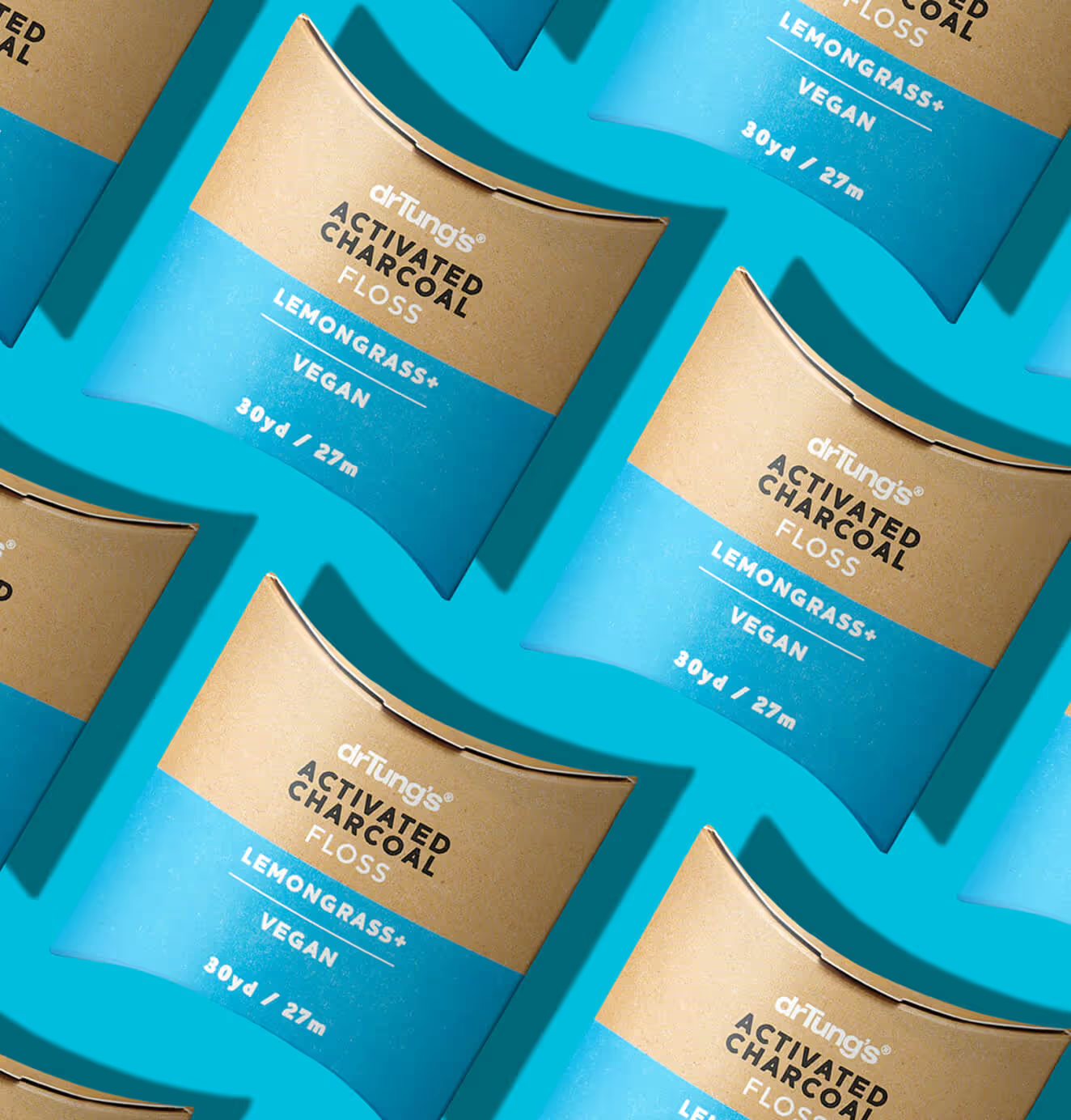
+93%Revenue growth in first 90 days
+144% Increase in attributed revenue




+91%Increase in conversion rate
+46%Increase in AOV


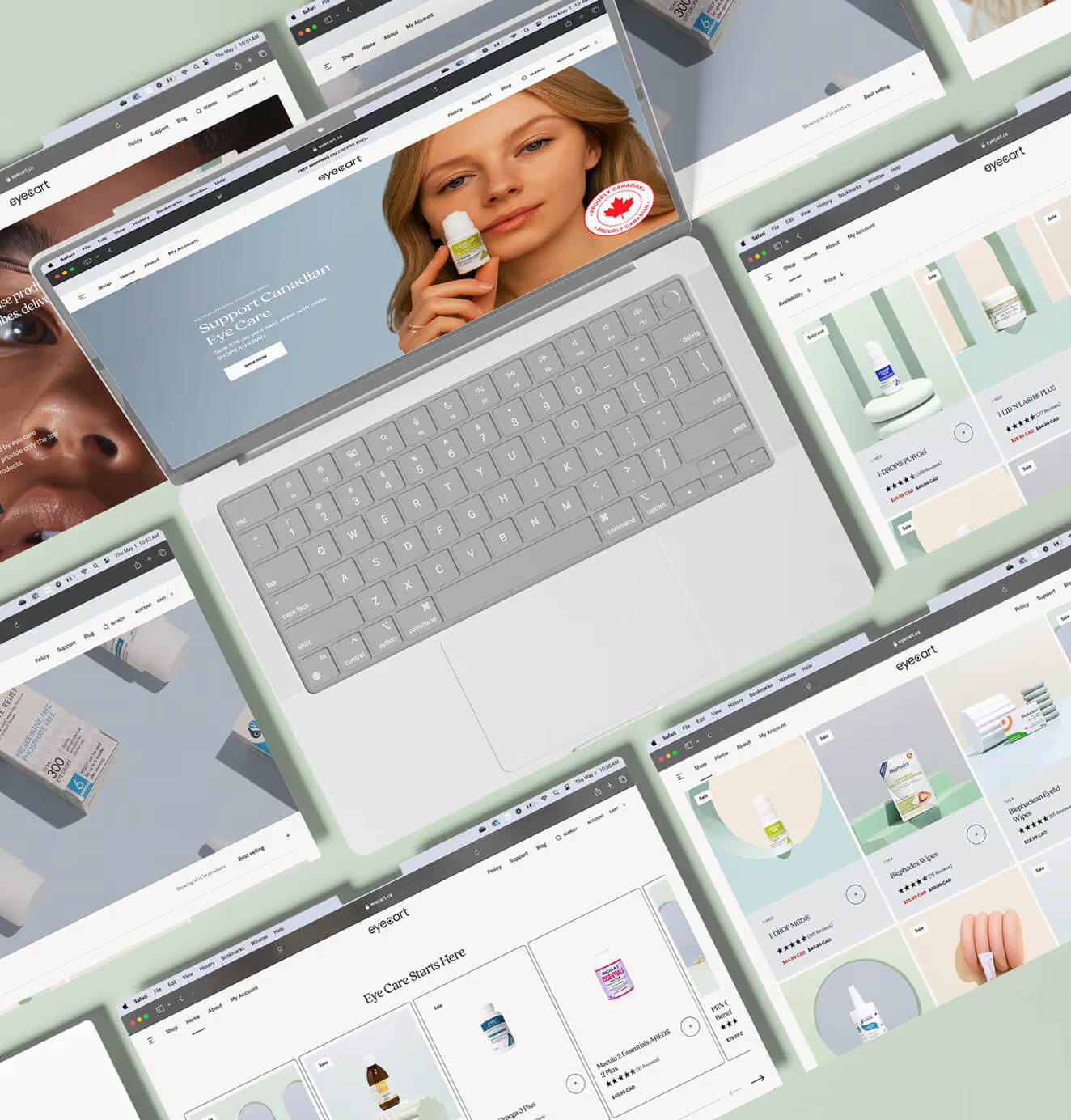
+200%Increase in conversion rate
+688%Increase in attributed revenue