Branding Professional Services: How Firms Win Trust, Fees, and Market Share

05/06/2026

Branding

Discover how strategic branding helps professional services firms build trust, command premium fees, and win high-value clients in competitive markets.

Large business figure controlled by multiple hands like a puppet, representing influence, perception, and trust shaping in professional services branding.

In crowded markets where expertise looks similar on paper, the challenge for professional services firms is to stand out in the marketplace. Branding is how a company expresses itself so people recognize, remember, and trust it. For professional services firms, this encompasses unique characteristics, personality, vision, mission, and goals that separate one advisor from thousands of competitors.

Quincy Samycia
Play IconPause Icon
0:00
0:00

Why Branding Matters More for Professional Services Firms

Presenter speaking to a seated audience, representing thought leadership and expertise in professional services.
Two professionals shaking hands in an office, representing trust, partnership, and client relationships.
People walking along a winding path, representing complex decision-making journeys in professional services.
No items found.

Trust is a foundational element in professional services relationships. Buyers often cannot objectively assess quality before purchase, so they use brand signals—clarity, consistency, thought leadership, referrals—as proxies for competence and reliability. Research shows that consistent brands can see double-digit revenue lifts, and consumers base buying decisions on trust, shared values, and strong brand values that serve as a foundation for building trust and guiding strategic decisions.

This article shows how branding professional services helps firms win premium engagements, attract better clients, recruit talent, and grow margins by understanding and engaging customers across multiple touchpoints. We will cover positioning, points of view, visual identity systems, consistency, activation campaigns, and the tools that keep brands coherent in daily documents and client interactions.

Professional services means law, accounting, consulting, IT, engineering, architecture, digital marketing, corporate finance, HR, and other expertise-based firms that sell knowledge rather than physical products.

What Makes Branding Different for Professional Services Firms?

In professional services, the product is the expertise and experience of the people delivering the service. Organizations must reduce perceived risk and convey credibility before any work begins.

Consider the differences from consumer branding:

  • Higher stakes: Decisions involve multi-year engagements, regulatory implications, and reputation risk
  • Longer sales cycles: Multiple stakeholders evaluate advisors over weeks or months
  • Intangible deliverables: Clients cannot test the product before buying
  • Personal brand integration: How partners sell, present, and communicate becomes part of the firm brand

Trust is the primary currency for intangible services, and establishing credibility is crucial. Buyers look for signals like sector specialization, track record with named case studies, and cultural fit—not just attractive logos. Buyers engage with brands through multiple touchpoints, building trust over time as they interact with consistent messaging and credible signals.

The 3-7-27 rule of branding suggests it takes three impressions for people to recognize a brand, seven impressions to remember it, and twenty-seven impressions to develop trust. This means professional services firms need consistent, repeated touchpoints across every client interaction.

Core Elements of a Strong Professional Services Brand

Individual standing under a spotlight among others, representing differentiation and positioning in a competitive market.
Architectural structure with professionals at different levels, representing structured brand systems and organizational clarity.
Abstract head filled with documents and content, representing knowledge, expertise, and intellectual capital.
Person speaking into a megaphone with digital elements, representing communication strategy and brand messaging.

A strong brand combines strategic positioning, clear messaging, distinctive identity, and verifiable proof. Here are the essential components:

Strategic Positioning: Define a specific who, what, and why. Instead of “full-service consultancy,” try “Europe-based cybersecurity consultancy for critical infrastructure operators, focused on incident readiness and regulatory compliance.” Clarify and communicate your firm's unique position through targeted brand messaging that reflects your core values and differentiates you in the marketplace.

Brand Promise and Value Proposition: Make outcomes concrete and measurable. For example: “reduce average time-to-resolution by 30% within 12 months.” Defining a niche and articulating a unique value proposition are critical for effective branding in professional services.

Brand Personality and Tone of Voice: Trustworthy yet human. A tax advisory might sound authoritative and precise; a creative agency might sound bold and conversational. Avoid both legalese and vague marketing speak.

Visual Identity: Logo design, colors, typography, and photography style that signal professionalism. Visual consistency—including a unified logo, color palette, and typography—is essential for building brand recognition in professional services. Companies with well-defined positioning can experience a 2-3x increase in market share.

Proof Points and Social Proof: Showcase client success through testimonials and case studies to provide social proof. Include rankings, ISO certifications, awards, and publication history. Research indicates 84% of consumers trust online reviews as much as personal recommendations.

Transparency: Transparency about business practices, pricing, and processes builds trust with clients in professional services.

Positioning Professional Services: Choosing a Defensible Space

Generic positioning makes premium fees impossible. Firms must specialize by industry, problem, geography, or business stage.

Consider these examples:

  • A boutique firm helping only European SaaS companies prepare for Series B fundraising
  • An architecture studio focused solely on net-zero public buildings
  • A litigation practice serving exclusively pharmaceutical manufacturers

Build your positioning statement by answering four questions:

  1. Who are your target clients?
  2. What key problems do you solve?
  3. What is your unique approach or methodology?
  4. What distinct outcomes do you deliver versus larger competitors?

Real-world patterns show spin-offs from large firms winning market share by narrowing focus and branding themselves as deep specialists rather than generalists. This market positioning creates defensibility that competitors cannot easily replicate.

Brand Strategy VS Brand Identity: Understanding the Brand Development Process

Most brands don’t fail because they look bad. They fail because they mean nothing.

At Branded Agency, we see it all the time—companies investing heavily in logos, colors, and websites before they’ve done the foundational work. The result? A brand that’s visually polished but strategically hollow.

If you want a brand that actually performs—one that attracts, converts, and scales—you need to understand the difference between brand strategy and brand identity, and more importantly, how they work together.

Brand Strategy: The Thinking Before the Doing

Brand strategy is the blueprint. It’s the invisible architecture that defines how your brand operates, communicates, and competes.

It answers the hard questions:

  • Why does your brand exist beyond making money?
  • Who are you really for (and who are you not for)?
  • What space do you own in the market?
  • Why should anyone care?

Insights gained from research and analysis play a crucial role here, informing positioning and messaging decisions to ensure your brand resonates with your target audience and stands out in your industry.

This is where positioning is sharpened, messaging is clarified, and differentiation is built. Without this layer, every creative decision becomes subjective—and that’s where brands start drifting.

At Branded Agency, strategy isn’t a phase we rush through. It’s where we create leverage. Because when strategy is clear, everything that follows becomes faster, sharper, and more effective.

Brand Identity: Making Strategy Visible

If strategy is the brain, identity is the face.

Brand identity is how your strategy shows up in the real world:

  • Logo systems
  • Color palettes
  • Typography
  • Imagery and art direction
  • Tone of voice

But here’s the critical distinction: identity is not decoration—it’s translation.

A strong identity doesn’t just look good; it communicates meaning instantly. It signals who you are, who you’re for, and why you matter—before a single word is read.

When identity is built on strategy, it feels cohesive and intentional. When it’s not, it feels generic—no matter how “modern” or “clean” it looks.

The Brand Development Process (How It Actually Works)

Too many businesses treat branding like a checklist. Logo? Done. Website? Done. Colors? Done.

That’s not brand building—that’s asset creation.

A real brand development process is layered and deliberate:

1. Discovery & InsightWe dig into your business, audience, competitors, and market dynamics—actively involving your internal team in workshops to surface insights and align perspectives. This is where surface-level assumptions get challenged.

2. Strategy & PositioningWe define your brand’s core: purpose, positioning, messaging, and voice. This is where clarity replaces guesswork.

3. Identity DevelopmentWe translate strategy into a visual and verbal system that’s distinctive, scalable, and aligned.

4. Activation & ExecutionWe apply the brand across touchpoints—website, campaigns, content, and beyond—ensuring consistency and impact by engaging your team in implementation and ongoing support.

Each step builds on the last. Skip one, and the entire system weakens.

Why This Distinction Matters

If you start with identity, you might end up with something that looks good—but doesn’t perform.

If you start with strategy, you build something that:

  • Attracts the right audience
  • Communicates value instantly
  • Scales with your business
  • Creates long-term brand equity

In other words, you stop guessing—and start building with intent.

The Branded Agency Perspective

We don’t separate strategy and identity—they’re part of the same system. But we do sequence them correctly.

Because a brand isn’t what you design.
It’s what you define, then express.

And when both are done right, your brand stops being a cost—and starts becoming an asset.

Creating a Distinctive Point of View (POV)

Content marketing in professional services should focus on publishing high-quality, educational content to demonstrate expertise and build trust. In 2026, thought leadership is a core brand asset, and firms should aim to position their internal subject matter experts as thought leaders within their industry.

Firms like Deloitte, McKinsey, and Accenture maintain brand equity through continuous publication of sector reports, white papers, and webinars. Mid-sized firms can replicate this at appropriate scale.

Example: A global HR advisory publishing annual “Future of Hybrid Work” reports underpins positioning as a workforce transformation specialist. The reports generate media coverage, provide sales conversation content, establish conference presence, and create digital marketing assets.

Developing internal subject matter experts into recognized industry influencers and thought leaders can significantly enhance a firm’s credibility. This means taking clear stances on issues—AI’s impact on audit quality, ESG reporting obligations—rather than producing generic, low-risk content. A consistent POV becomes the backbone of sales narratives, keynote speeches, and LinkedIn content.

Want to learn more about brand platforms, Brand Strategy and Brand Identity? Keep reading!

If you need help with your companies brand strategy and identity, contact us for a free custom quote.

When Less Is More: Simplifying Complex Professional Service Brands
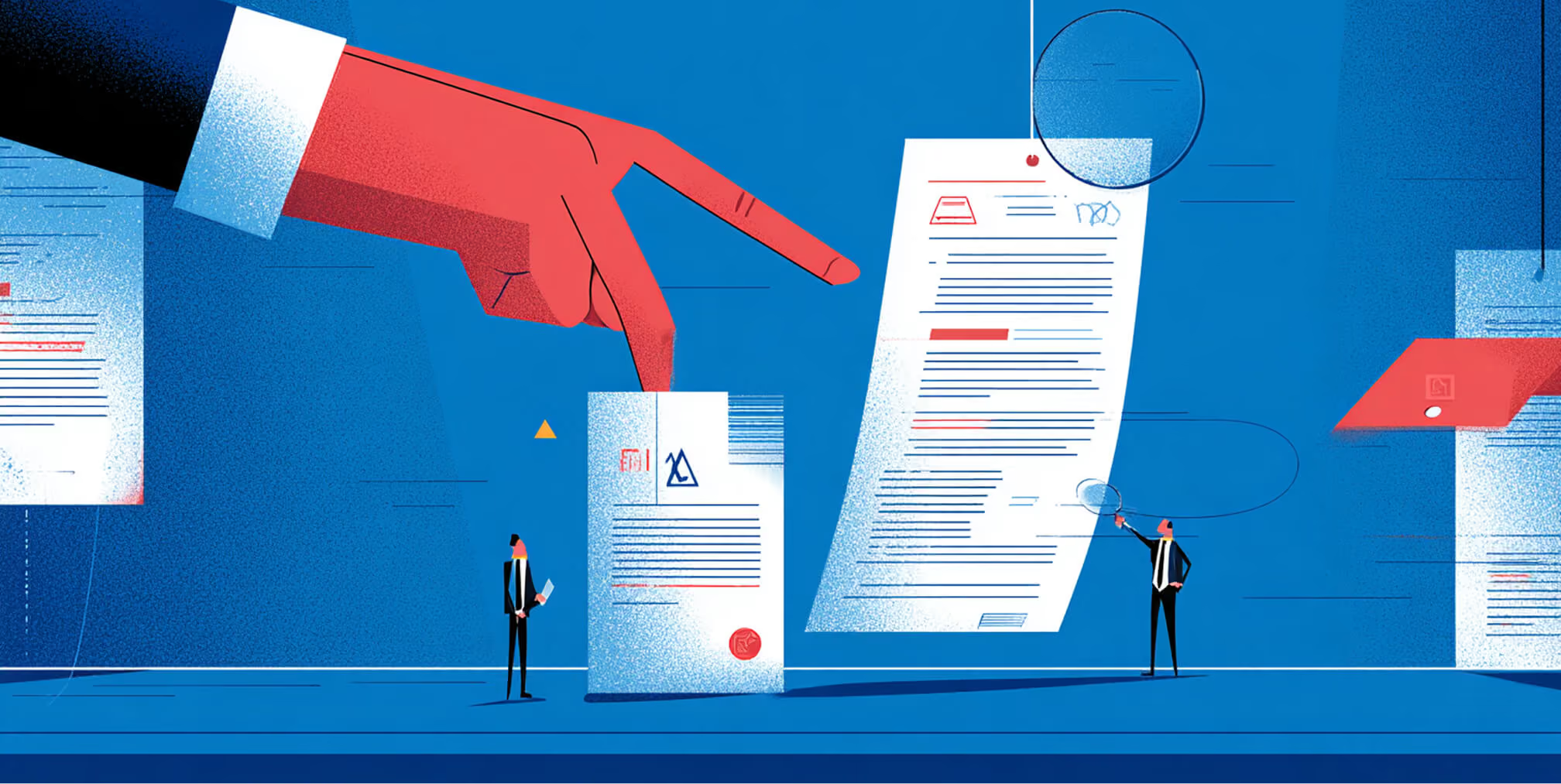
Large hand selecting a document while others analyze, representing decision-making, credibility, and evaluation of services.

Fragmented sub-brands and service lines confuse clients and dilute equity. Many firms grown through acquisition accumulate multiple brand names that make it difficult for clients to understand what the firm actually does.

The solution involves:

  • Audit your portfolio: Conduct brand audits to evaluate and analyze existing brand elements, performance, and identity. List services, sectors, and regional brands.
  • Apply decision criteria: Does each sub-brand build client recognition? Represent distinct market position? Create internal confusion?
  • Rationalize architecture: Keep, retire, or consolidate into a simpler system
  • Map internal to external: Align practice structures with client-friendly naming

The benefit is significant: easier cross-selling, reduced marketing complexity, and stronger name recognition when every touchpoint builds one master brand.

Brand Architecture for Multi-Service and Multi-Region Firms

Three primary models exist:
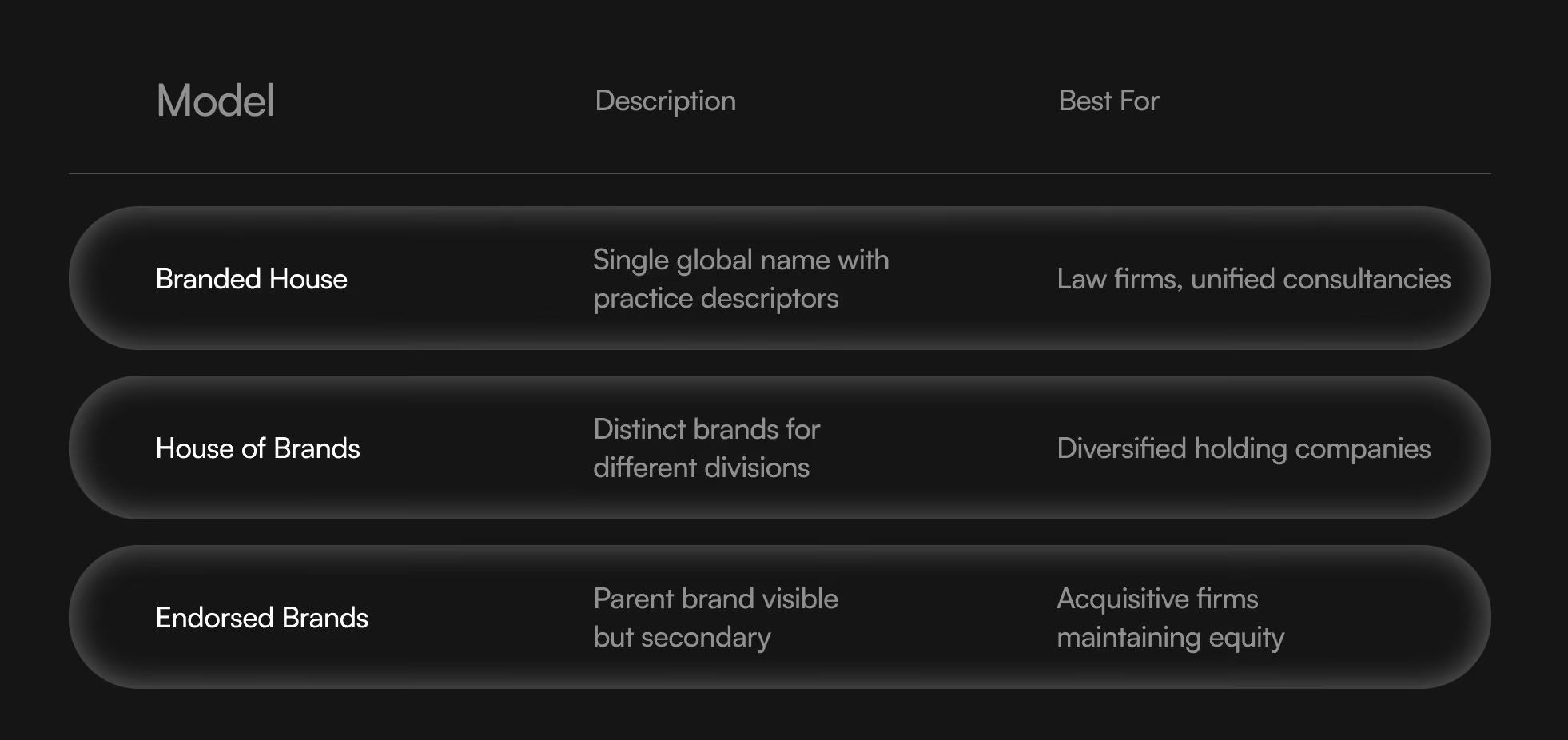
Smaller and mid-market firms typically benefit from a branded-house approach so every internal win and case study builds the same reputation. Rename practice groups to be client-centric: “Digital Transformation & Data” instead of “Practice 3.4.”

Keeping the Brand Alive: Active Brand Management in a Changing Market

Brands remain top-of-mind through continuous communication, not one-off rebrands. Large firms stay visible through:

  • Annual outlooks and sector deep dives
  • High-visibility campaigns and event sponsorships
  • Quarterly insight themes and webinar series
  • Sector-specific reports aligned with positioning

Internal activation matters equally: Town halls, partner enablement decks, and training ensure consultants, lawyers, and engineers tell a consistent brand story. It's essential to maintain brand consistency across all platforms—both digital and physical channels—by centralizing brand resources and ensuring all employees, partners, and customers interact with unified brand elements. Monitor market shifts—regulatory changes, technology disruption, new competitor offerings—and adjust messaging while protecting core brand promise.

Case-Style Example: A National Firm’s Brand Campaign

Consider a mid-market UK consultancy launching a “Look Deeper” campaign (2022-2024) to reposition from compliance-only advisor to strategic partner.

Campaign components:

  • Refreshed visual identity with updated logo and photography style
  • Short brand films explaining transformation and capabilities
  • Targeted LinkedIn campaigns segmented by client type
  • Sector-specific landing pages with downloadable reports
  • Annual “Future of Growth” flagship report

Internal elements:

  • Partner workshops on new positioning
  • Updated sales enablement decks
  • Training for business development teams

Measured outcomes over 18-24 months: Increased inbound RFPs, higher average deal size, improved employer-brand metrics with more qualified applicants.

Consistency as a Competitive Advantage in Professional Services

For firms selling expertise, inconsistency erodes trust quickly. When a law firm uses outdated logos in proposals, off-brand slide decks, or contradictory language, it signals lack of operational rigor.

Professional services firms generate thousands of documents yearly—pitches, reports, opinions, statements of work. Each carries the brand into boardrooms and regulators’ offices. Research indicates that consistent brands can experience double-digit revenue increases, highlighting the financial benefits of a strong brand strategy.

Deloitte’s Brand Space serves as a centralized host site for guidelines to ensure brand consistency, containing templates and best practices for over 200,000 associates to follow. Yet WVU’s research notes that although 85% of companies have brand guidelines, less than one-third actually follow them—highlighting the importance of ongoing support. To build trust and recognition, it is essential to brand consistently by following these guidelines and ensuring uniformity across all touchpoints.

The business case is clear: consistent branding shortens sales cycles, reduces confusion, and signals operational excellence.

Operationalizing Consistency: Templates, Tools, and Governance

Even 20-50 person firms should adopt basic brand governance:

  • Centralize templates in Microsoft 365 or Google Workspace—proposals, reports, contracts accessible where employees already work, supporting brand standards on a daily basis through regular document creation and employee communication
  • Deploy brand-checking tools that flag outdated logos, incorrect fonts, and off-brand colors with one-click replacements
  • Implement version control so only up-to-date, legally compliant disclaimers are used
  • Conduct quarterly audits of commonly used templates
  • Appoint brand managers or a small committee to maintain oversight

Run short refresher sessions for new joiners and promoted partners

Practical Steps to Build or Refresh Your Professional Services Brand

Profile of a business figure with multiple people and data elements around, representing brand perception, influence, and market presence.

Follow this roadmap over 6-12 months to develop tailored branding solutions that address your firm’s specific needs and can be adapted as your business evolves:

Step 1 – Diagnose current perception: Run client interviews, NPS-style surveys, and review RFP feedback through market research to understand how the firm is really seen.

Step 2 – Clarify strategy and focus: Choose target markets and signature problems. Decide what to stop doing to make brand positioning credible.

Step 3 – Define positioning, POV, and messaging: Write clear positioning statements with messaging frameworks for use in pitches and content. Branding professional services requires building trust and expertise through a clearly defined value proposition and thought leadership.

Step 4 – Refresh identity and assets: Update logo only if necessary. Prioritize consistent typography, color palette, photography style, and unified document systems.

Step 5 – Activate internally: Train partners and managers. Every employee in a professional services firm should understand the brand promise and their role in delivering it effectively. A high-performance website is a critical tool for showcasing expertise and generating leads.

Step 6 – Activate externally: Plan 2-3 flagship initiatives—a 2027 industry outlook, event series, or research partnership—that express new positioning. Customer engagement should drive campaign design.

Step 7 – Measure and refine: Set KPIs for inbound leads, proposal win rate, fee levels, and recruitment quality. Review every 6 months.

Typical Timelines and Investment Levels

Realistic timeframes:

  • Small firm refresh (brand strategy plus identity): 3-4 months
  • Multi-country firm program: 9-18 months from research to full rollout

Cost ranges:

  • Basic small business branding services focused on logo design and color palettes typically cost between $1,000 and $5,000
  • Mid-tier packages that include strategy and messaging can range from $10,000 to $30,000
  • Full-service branding agencies that handle everything from naming to packaging and digital campaigns often charge $25,000 to $50,000 or more

When considering these investments, it's crucial to carefully select and evaluate a branding agency to ensure their approach aligns with your firm's goals and delivers effective branding strategies.

The largest hidden cost is internal time—partner workshops, leadership decisions, content development. Think of branding as a capital investment paying off over 5-10 years through higher fees, stronger deal pipelines, and reduced client churn.

Key Takeaways

  • Professional services branding differs fundamentally because the product is intangible expertise
  • Positioning requires specialization by industry, problem, or business stage
  • Consistent brand experiences across all touchpoints build trust faster than occasional campaigns
  • Both internal activation and external campaigns matter for long-term success
  • Brand governance and templates operationalize consistency at scale

Start with a brand audit of your current customer perceptions. Define your unique value and positioning. Then implement the governance and tools that make consistency automatic. The firms that invest in brand building today will command premium fees and stronger client relationships for decades to come.

An image of the author Quincy Samyica

Quincy Samycia

As entrepreneurs, they’ve built and scaled their own ventures from zero to millions. They’ve been in the trenches, navigating the chaos of high-growth phases, making the hard calls, and learning firsthand what actually moves the needle. That’s what makes us different—we don’t just “consult,” we know what it takes because we’ve done it ourselves.

Want to learn more about brand platform?

If you need help with your companies brand strategy and identity, contact us for a free custom quote.

We do great work. And get great results.

DrTung’s
Breathed new life into a storied oral care brand with a smarter site and marketing for scalable growth.

+2.3x
Increase in revenue YoY

+126%
Increase in repurchase rate YoY

READ MORE
Smiling man with bright teeth on a light blue background, surrounded by floating DrTung’s herbal tooth powder tabs and packaging.
Smartphone on a textured blue surface displaying a DrTung’s ad with the text “Make the Switch” and an image of a woman holding herbal tooth powder tabs.
Flat lay of DrTung’s oral care products, including floss, tooth powder tabs, perio sticks, tongue cleaners, and toothbrushes, arranged with a blue pouch on white tile.
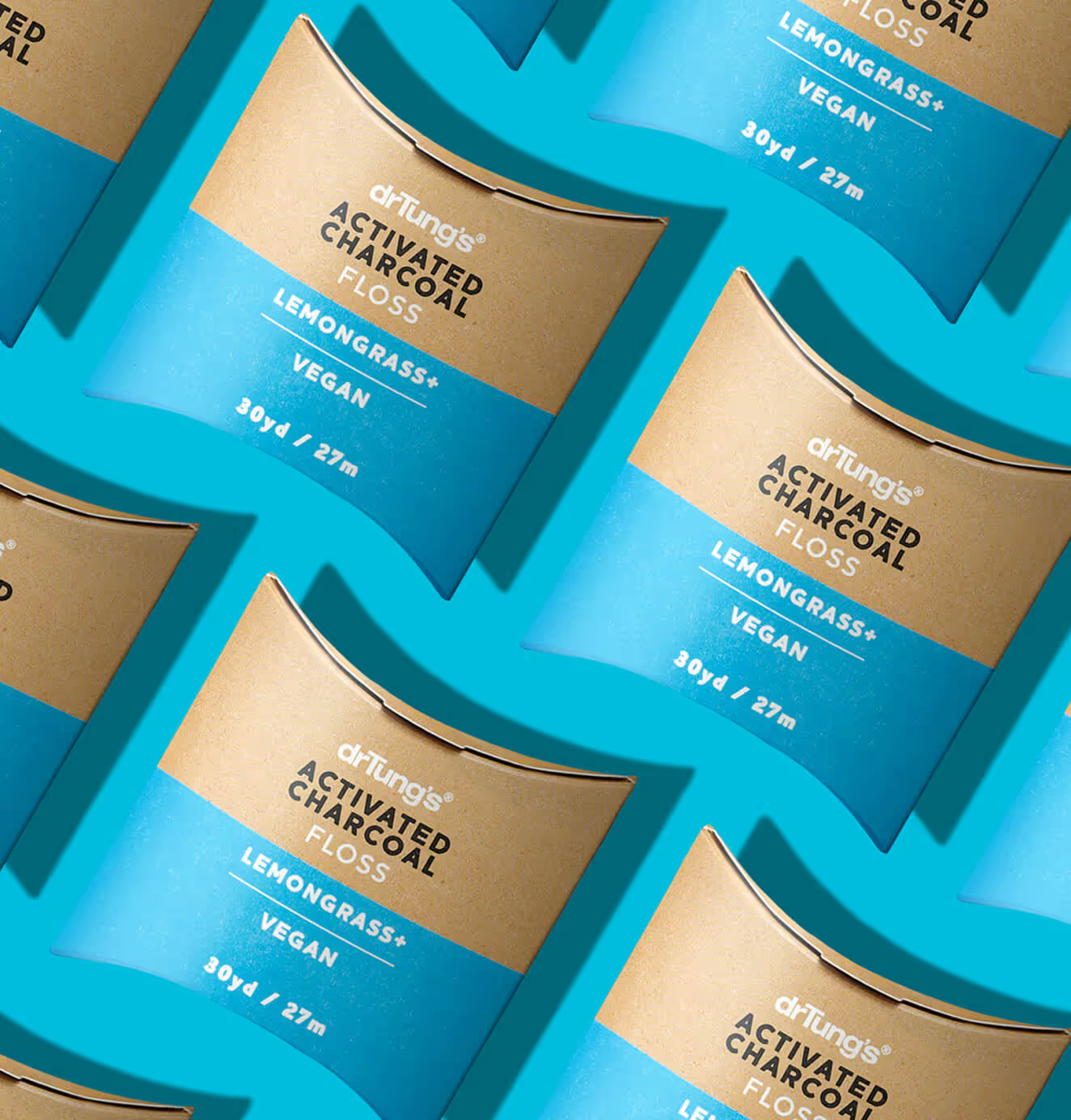
Pattern of DrTung’s Activated Charcoal Floss in brown and blue packaging, arranged diagonally on a bright blue background.
Smiling man with bright teeth on a light blue background, surrounded by floating DrTung’s herbal tooth powder tabs and packaging.
Smartphone on a textured blue surface displaying a DrTung’s ad with the text “Make the Switch” and an image of a woman holding herbal tooth powder tabs.
Flat lay of DrTung’s oral care products, including floss, tooth powder tabs, perio sticks, tongue cleaners, and toothbrushes, arranged with a blue pouch on white tile.
Pattern of DrTung’s Activated Charcoal Floss in brown and blue packaging, arranged diagonally on a bright blue background.
Mary Louise Cosmetics
Scaled a heritage-inspired clean beauty brand with modern performance marketing and farm-to-face storytelling.

+93%
Revenue growth in first 90 days

+144%
Increase in attributed revenue

READ MORE
A jar of Mary Louise Lilac & Shea Body Butter with the lid open, showing creamy texture, placed on a beige surface beside sprigs of lavender.
A Mary Louise Miracle Serum bottle with a dropper cap, lying on a bed of small yellow flowers.
Mary Louise promotional print materials featuring the body butter, with images of skincare application and product photography on a textured beige background.
A close-up overhead view of multiple Mary Louise Miracle Serum bottles with yellow dropper caps arranged tightly together.
A jar of Mary Louise Lilac & Shea Body Butter with the lid open, showing creamy texture, placed on a beige surface beside sprigs of lavender.
A Mary Louise Miracle Serum bottle with a dropper cap, lying on a bed of small yellow flowers.
Mary Louise promotional print materials featuring the body butter, with images of skincare application and product photography on a textured beige background.
A close-up overhead view of multiple Mary Louise Miracle Serum bottles with yellow dropper caps arranged tightly together.
Eyecart
Made eye care feel modern, then marketed it like a DTC darling—with the results to match.

+91%
Increase in conversion rate

+46%
Increase in AOV

READ MORE
A smiling woman holds a magnifying lens with the word "eyecart" printed on it over her eye, creating a playful optical effect against a mint green background.
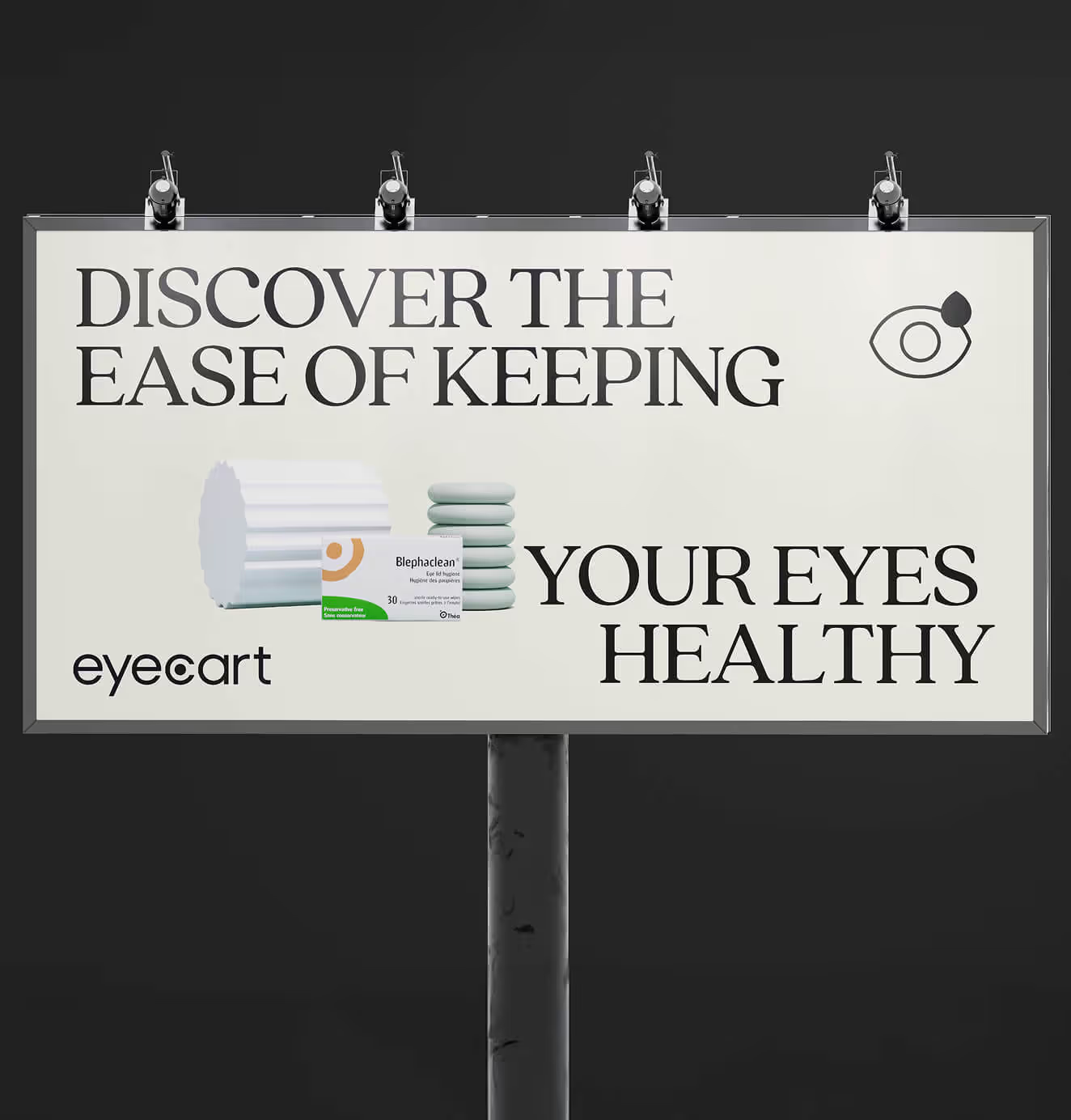
A billboard ad reads “Discover the ease of keeping your eyes healthy,” featuring Eyecart branding and Blephaclean eye care wipes packaging.
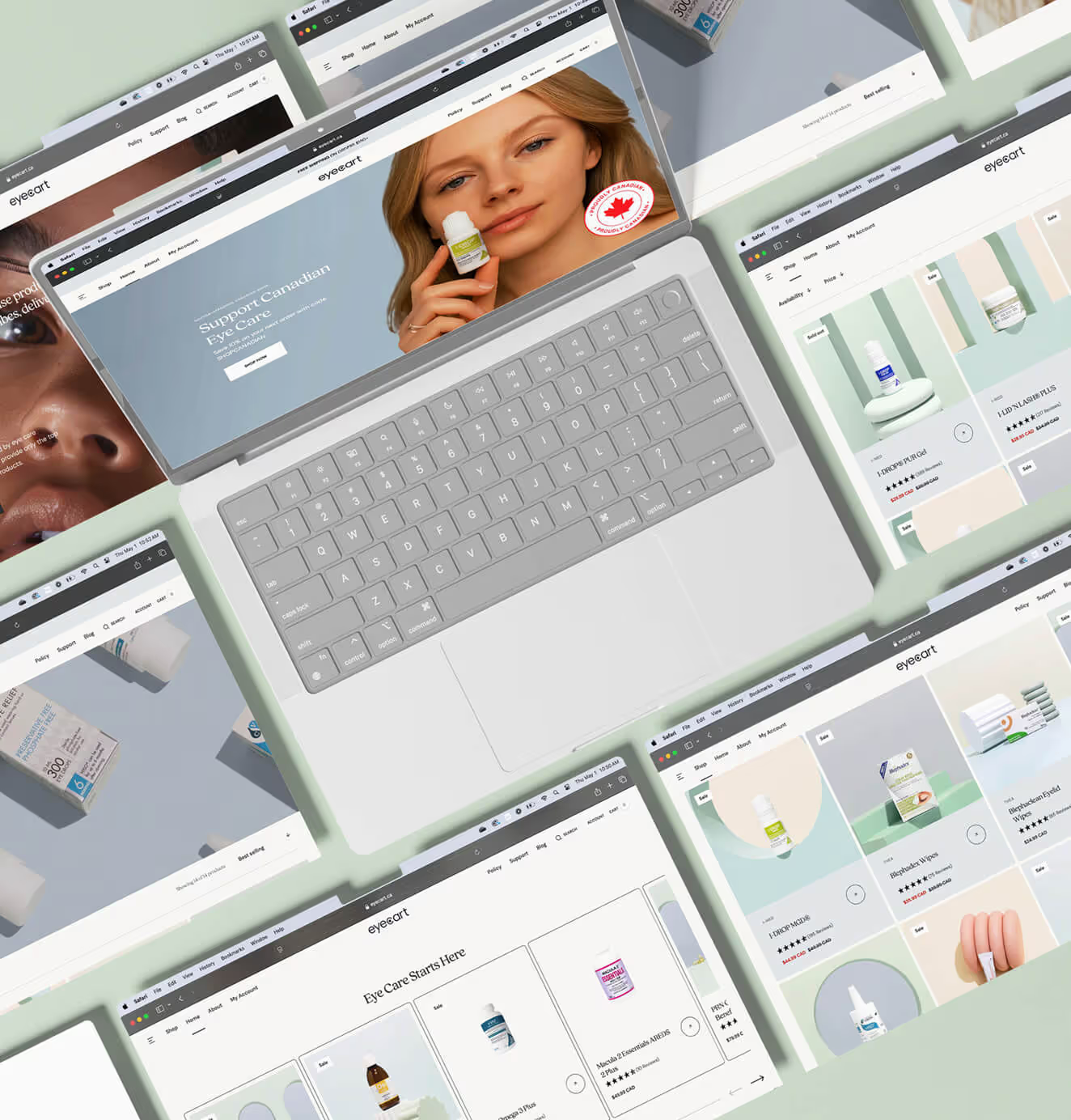
Multiple laptop screens display the Eyecart website, showcasing product pages and banners promoting eye care items.
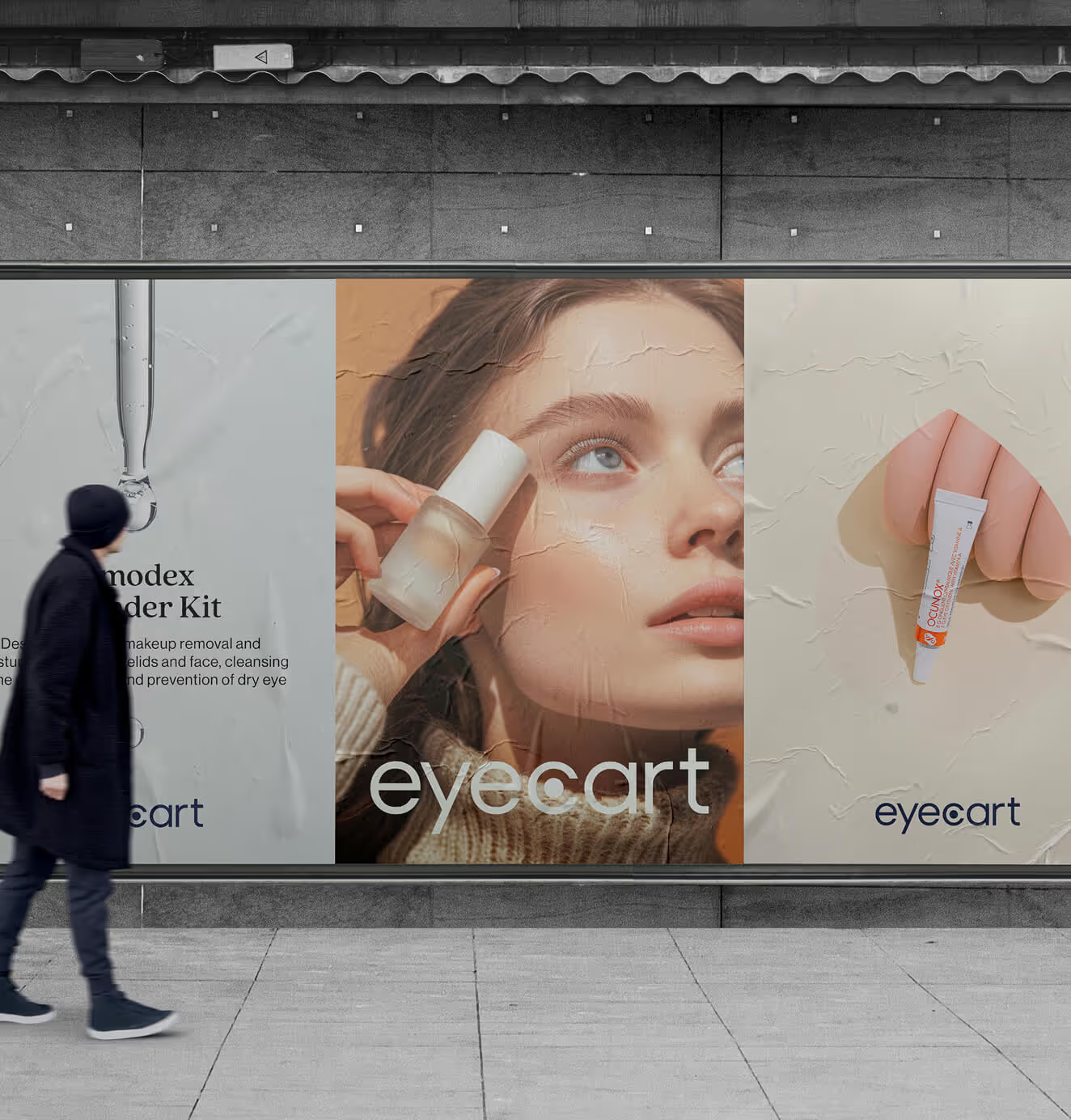
A person walks past large Eyecart posters on a city wall, featuring product photography of eye care serums and creams with clean, modern branding.
A smiling woman holds a magnifying lens with the word "eyecart" printed on it over her eye, creating a playful optical effect against a mint green background.
A billboard ad reads “Discover the ease of keeping your eyes healthy,” featuring Eyecart branding and Blephaclean eye care wipes packaging.
Multiple laptop screens display the Eyecart website, showcasing product pages and banners promoting eye care items.
A person walks past large Eyecart posters on a city wall, featuring product photography of eye care serums and creams with clean, modern branding.
Lucky Girl Rosé
We turned a zero-carb rosé into a lifestyle brand that makes every moment worth celebrating.

+200%
Increase in conversion rate

+688%
Increase in attributed revenue

READ MORE
A bottle of Lucky Girl rosé wine nestled among pink and white flowers in a rustic outdoor setting.
Lucky Girl rosé wine on a red-and-white checkered picnic blanket with cherries, strawberries, sunglasses, and a pink notebook titled The Lucky Club.
A wine glass filled with rosé on a gold tray surrounded by hands with red-painted nails, overlaid with the text “Pour yourself some luck.”
A bottle of Lucky Girl rosé wine with floral label design, dramatically lit against a soft pink background with a shadow cast.
A bottle of Lucky Girl rosé wine nestled among pink and white flowers in a rustic outdoor setting.
Lucky Girl rosé wine on a red-and-white checkered picnic blanket with cherries, strawberries, sunglasses, and a pink notebook titled The Lucky Club.
A wine glass filled with rosé on a gold tray surrounded by hands with red-painted nails, overlaid with the text “Pour yourself some luck.”
A bottle of Lucky Girl rosé wine with floral label design, dramatically lit against a soft pink background with a shadow cast.