Cookieless B2B Retargeting: Capture up to 70% of Account Traffic
11/03/2026
Marketing Strategy
Learn how cookieless B2B retargeting helps identify high-intent accounts, improve ad targeting, and turn website traffic into qualified pipeline opportunities.
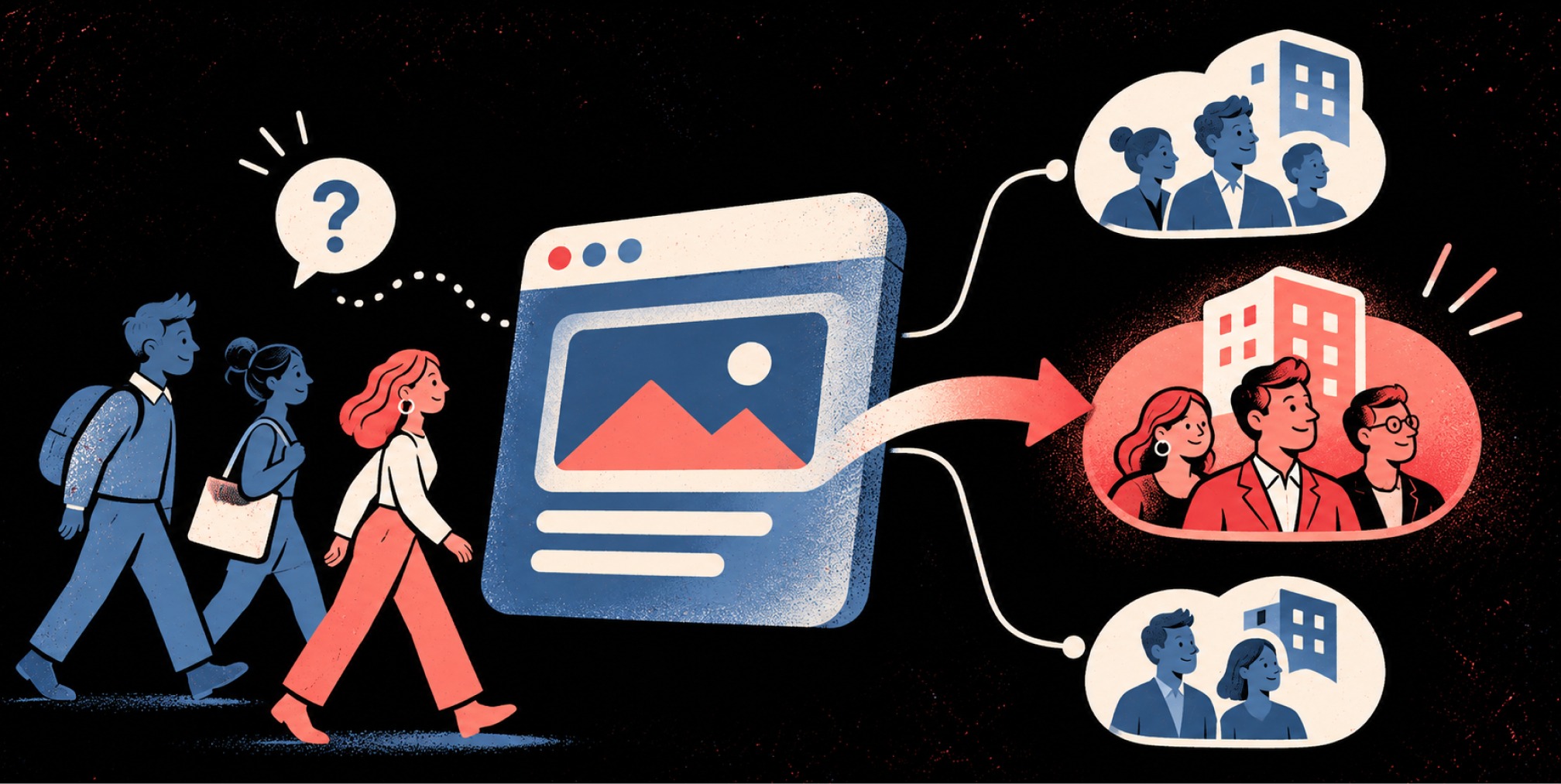
Effective B2B retargeting is account-first, cookieless-ready, and staged by funnel, with strict suppressions and measurement tied to pipeline, not clicks. That means building first-party audiences off firmographic and intent data, sequencing LinkedIn, Google, email, and direct mail by buying stage, syncing suppression lists constantly, and reporting cost per pipeline opportunity instead of CTR. The rest of this guide breaks down how to build it.


What Is a B2B Retargeting Strategy, and Why Does It Matter for Pipeline?

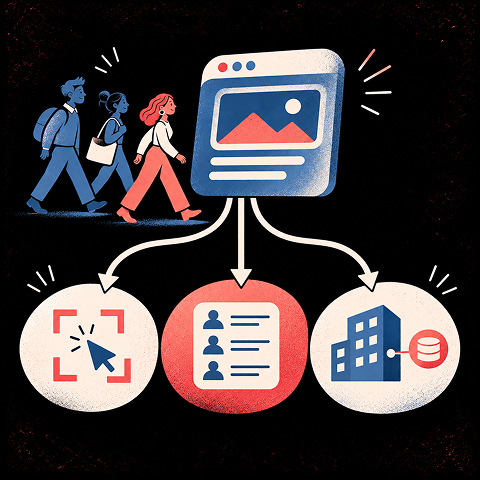
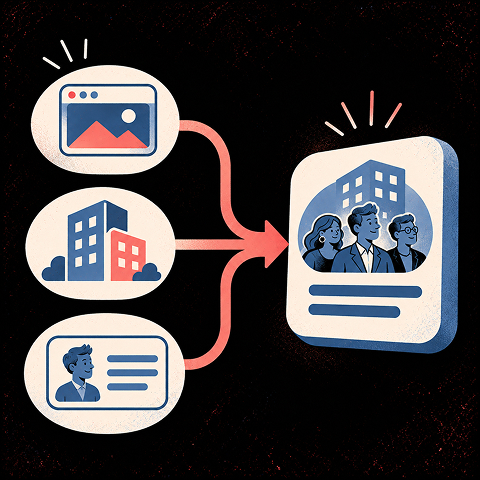
A B2B retargeting strategy is a system for re-engaging accounts, not individuals, at the right funnel stage using owned data instead of borrowed cookies. That distinction changes almost everything about how the program gets built.
In consumer marketing, retargeting chases a single shopper who abandoned a cart. In B2B, a single deal often involves five to eleven stakeholders who each visit your site at different times, from different devices, with different questions. Retargeting has to work at the account level or it misses the point entirely. A common industry distinction separates retargeting, which uses paid ad networks to re-engage anonymous visitors, from remarketing, which relies on owned channels like email and CRM to nurture known contacts. Both matter, but they solve different problems.
Retargeting accelerates pipeline when it targets accounts already showing buying signals: a pricing page visit from a company matching your ideal customer profile, a return visit after a sales call, or repeat engagement with a product page. It wastes budget when it targets cold, generic traffic with no firmographic fit, or when it keeps hitting accounts that already closed or already have an open deal.
Retargeting also has a specific job inside an account-based marketing (ABM) motion: it keeps a brand visible while sales works a deal manually. Consider the difference in practice:
• Without account-aware retargeting: A prospect visits pricing, but sales has no coordinated follow-up audience. Generic ads repeat introductory messages, even after an opportunity has advanced.
• With account-aware retargeting: CRM stage, website intent, and account fit determine the next ad. Evaluation-stage accounts see implementation proof or case studies, while sales owns the direct conversation.
• The distinction: The program supports the entire buying committee without assuming that a company-level match identifies a particular person or grants permission to contact them.
Retargeting doesn’t replace outbound or sales follow-up. It supports both by keeping your brand present during the research-heavy periods between sales touches, when a buyer is comparing vendors and no one from your team is in the room.
Pixel-Based vs. List-Based vs. Cookieless Retargeting: Which Should You Use?
Three technical approaches dominate B2B retargeting, and most mature programs blend all three rather than picking one.
1. Pixel-based retargeting tracks anonymous site visitors through a browser cookie or tag, then serves ads to that same browser across the web. It’s fast to set up and works well for volume plays, but it’s losing reliability as third-party cookie deprecation and privacy-focused browsers cut into match rates.
2. List-based retargeting uploads a known contact or account list (from your CRM, a webinar registration, or a trade show) directly to an ad platform for matching. It’s more accurate than pixel tracking because you already know who the account is, but it depends on how current and clean that list stays.
3. Cookieless, first-party approaches identify the company behind an anonymous visit using IP-to-company matching, then build audiences from that firmographic data rather than a browser identifier. This is where the 2026 playbook has shifted. Identified-company approaches can account for up to roughly 70% of B2B traffic at the company level, according to vendor reporting, which makes first-party identification the backbone of a durable strategy rather than a nice-to-have.
Server-side event tracking, sent through tools like Meta’s Conversion API or Google’s Enhanced Conversions, closes another gap: it reports conversions directly from your server to the ad platform, bypassing the browser entirely. Pair that with a CRM sync that updates audiences daily, and you get a system that survives whatever the next round of cookie restrictions brings.
Channel selection follows a rough hierarchy based on buyer behavior:
• LinkedIn Matched Audiences: Prioritize job-function and company-list targeting for known buying committees, subject to list matching and minimum audience requirements.
• Google Ads: Capture existing search intent and use eligible first-party audience signals for remarketing and Customer Match, with privacy and policy requirements respected.
• Email: Use consented CRM contacts for helpful, stage-specific nurture and sales follow-up; do not turn anonymous company identification into unsolicited personal outreach.
• Direct mail: Reserve for a small set of high-value accounts when an appropriate business address, budget, and coordinated sales plan justify the cost.
• Meta and other display channels: Test only where your buyers actually spend time and where first-party matching or approved tracking supports responsible targeting.
Watch platform features closely: Customer Match list-size minimums, Matched Audience refresh cadence, and Conversion API event coverage all directly affect how well your audiences actually match reality.
How Should You Segment Retargeting Audiences by Funnel Stage?
Segmentation is where most B2B retargeting programs quietly fail. Treating all website traffic as one audience guarantees you’ll waste spend on people who were never going to buy, while under-serving the accounts actively evaluating you right now.
Structure audiences around three funnel stages, each with its own behavioral trigger and message intent:
• Early stage / awareness: Trigger on relevant educational content engagement and ICP fit. Show a practical guide or industry benchmark; measure engaged-account progression rather than demo bookings alone.
• Middle stage / consideration: Trigger on repeat solution-page visits, comparison content, webinar activity, or sales-identified research. Serve proof such as case studies, use-case explainers, and integration information.
• Late stage / evaluation: Trigger on pricing, security, implementation, or demo activity with an open qualified opportunity. Coordinate with sales on testimonials, procurement materials, and a clear next step.
• Post-conversion: Remove closed-won accounts from acquisition retargeting and, where appropriate, route them into separately approved onboarding or expansion audiences.
Layer firmographic ICP-fit signals on top of behavioral data before you spend a dollar. A pricing-page visit from a 5,000-employee company in your target industry matters far more than the same visit from a two-person shop outside your service area. According to reported vendor benchmarks, ICP-fit segments built this way can outperform general “all visitors” audiences by five to eight times, which is the single strongest argument for spending the extra hour building the segment correctly instead of running one blanket campaign.
Minimum list-size guidance matters here too. Most ad platforms need a few hundred matched contacts or more before frequency and reporting become reliable. For smaller ICP segments, extend the retargeting window (30 to 90 days instead of 7) rather than forcing an undersized list into a high-frequency campaign it can’t support.
A practical sequencing example: a visitor hits your pricing page, gets tagged into the mid-funnel segment, sees a case-study ad on LinkedIn for two weeks, then if they request a demo, moves into the bottom-funnel segment with a direct, calendar-focused message. If they go quiet for 60 days without converting, they roll back into a lighter-touch nurture segment instead of getting dropped entirely.
Free Brand Health Audit
Make sure your brand is built to sell
Search has changed. Your customers aren't just Googling anymore. They're asking ChatGPT, Perplexity, Gemini and other AI platforms what to buy, who to trust and which brands they should consider.
If your brand isn't showing up clearly in those answers, you're already losing opportunities. Our free Brand Health Audit shows you where your brand stands across traditional search, AI search and brand positioning.

Sample brand audit
Live preview
Traditional search
72
AI search (GEO)
34
Brand positioning
58
What Suppression Rules and Frequency Caps Should You Set?

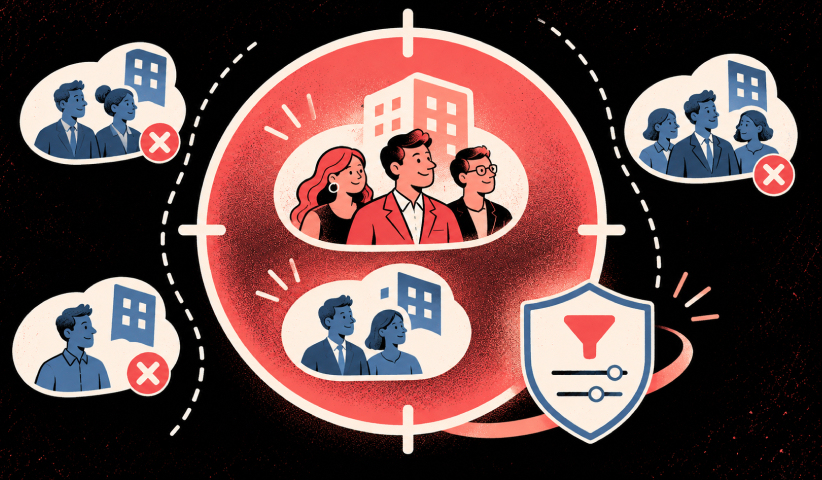
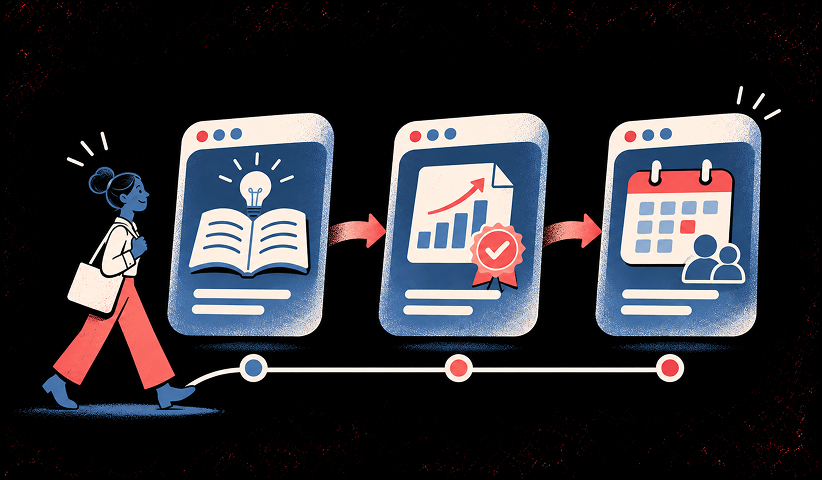
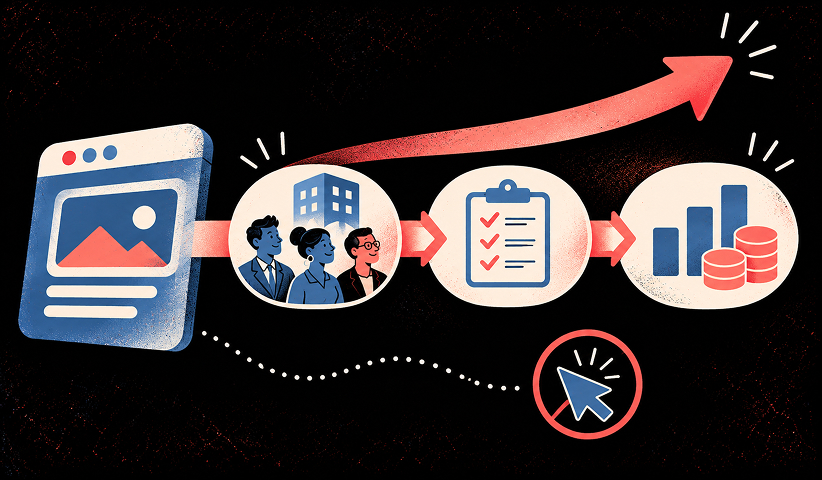
Suppression is the least glamorous part of retargeting and the one that determines whether your program builds trust or burns it. Skipping this step is how B2B teams end up serving ads to their own sales team, to job seekers browsing the careers page, or to a customer who signed a contract two weeks ago.
Build suppression around these core categories, synced continuously rather than checked occasionally:
• Current customers and closed-won accounts: Exclude from acquisition ads unless a separately approved expansion or renewal campaign exists.
• Open opportunities and active sales conversations: Exclude from generic prospecting; if retargeting continues, align messaging with the opportunity owner and buying stage.
• Disqualified leads and poor-fit accounts: Suppress accounts outside the ideal customer profile, such as unsupported geographies, company sizes, or industries.
• Employees, agencies, applicants, and vendors: Exclude internal traffic and irrelevant audiences, including job seekers visiting careers pages.
• Opt-outs and legal restrictions: Respect contact preferences, consent withdrawals, contractual exclusions, and applicable privacy requirements.
• Recently converted actions: Suppress demo-booked users from demo-request messaging and prevent overlapping audiences from showing contradictory offers.
Frequency caps should scale with intent, not run at one flat rate across every audience. Hand-raisers, meaning bottom-funnel accounts who requested a demo or downloaded a proposal, can tolerate more frequent exposure since the relationship is already warm; something like 3 to 5 impressions per week per account is reasonable. Fuzzy, top-of-funnel audiences need a lighter touch, closer to 1 to 2 impressions per week, to avoid the sense that your brand is following them around uninvited. Recommended practice includes running monthly creative refreshes and capping impressions per company per week across every platform combined, not per platform, since a buyer doesn’t distinguish between the ad they saw on LinkedIn and the one they saw on Google.
Operationally, suppression lists need daily health checks, since stale lists are the fastest way to waste budget and annoy the exact accounts sales is trying to close. Run a weekly audit comparing your ad platform suppression lists against CRM stage changes, and rotate creative monthly to prevent fatigue. Assign clear ownership: marketing ops typically owns the sync process, RevOps signs off on suppression logic changes, and any exception (say, re-including a churned customer for a win-back campaign) needs a documented approval, not an ad-hoc decision made inside the platform.
Pro Tip: Set an automatic suppression trigger tied to CRM stage changes rather than a manual weekly pull. A deal that closes on a Tuesday shouldn’t still be getting retargeted on Thursday.
How Should Creative and Messaging Change by Funnel Stage?
Creative that works at the top of the funnel usually falls flat at the bottom, and the reverse is just as true. Message match, meaning the promise in the ad matches exactly what the buyer sees on the next page, matters more in B2B than almost any other creative variable, because a mismatched click signals to a skeptical buyer that they’re dealing with a sloppy vendor.
A few principles hold across every stage: lead with the outcome the buyer cares about, not the feature you’re proud of; keep copy short enough to read in a scroll; use specific proof (a named client result, a real number) instead of vague claims; and always give a clear, single next step.
Format guidance by stage and channel:
• Awareness: Short LinkedIn thought-leadership posts, brief explainer videos, and downloadable benchmarks that frame the problem without demanding a sales call.
• Consideration: Customer case studies, comparison guides, integration walkthroughs, and webinar clips showing how the solution works for the target role.
• Evaluation: Implementation checklists, security and procurement resources, ROI assumptions, or a demo invitation relevant to the open opportunity.
• Email and direct mail: Use specific, permission-appropriate follow-up from known relationships, not generic repeats of the paid ads.
• Creative guardrail: Match every ad to a dedicated, relevant landing page and avoid invented customer results or unsupported percentage claims.
Landing page routing has to match the creative promise exactly. An ad promising “see how [Company] cut onboarding time in half” should land on that specific case study, not a generic homepage. Rotate creative on a monthly cadence at minimum, and retire any ad showing declining click-through or rising frequency without matching conversion lift, since that’s the earliest sign of fatigue setting in.
How Do You Measure Retargeting’s Impact on Pipeline?
Cost per pipeline opportunity, not click-through rate, is the metric that should drive budget decisions. A campaign with a mediocre CTR that consistently produces qualified opportunities at a reasonable cost is worth more than a high-CTR campaign that never turns into a conversation with sales.
Report on a small set of business KPIs rather than a dashboard full of platform vanity metrics:
• Reached ICP accounts: Number of in-scope accounts exposed to the program, separated from total impressions.
• Engaged-account rate: Share of reached accounts taking a defined meaningful action, such as returning to a solution page or engaging with sales.
• Opportunity creation rate: Share of eligible engaged accounts becoming qualified opportunities during a defined measurement window.
• Cost per qualified opportunity: Total retargeting spend divided by newly created qualified opportunities; keep influenced and sourced opportunity definitions distinct.
• Pipeline value and progression: Opportunity value associated with exposed accounts and movement through CRM stages, reported alongside a non-exposed comparison where feasible.
• Incremental lift: Difference in outcomes between randomized eligible holdout and exposed groups, with sample size and attribution limits disclosed.
• Waste and governance metrics: Suppression-sync accuracy, audience overlap, frequency, and spend on non-ICP accounts.
Holdout and incrementality testing is the only reliable way to know whether retargeting is causing the lift you’re seeing or just riding alongside deals that would have closed anyway. Hold out a small, randomly selected audience segment from retargeting entirely, then compare branded search volume, demo request rate, and opportunity rate between the two groups over a full sales cycle. Run this quarterly at minimum; monthly if your sales cycle is under 60 days.
Server-side signals matter here as much as they do for targeting. Conversion API events and CRM-to-ad-platform syncs give you attribution that survives ad blockers and browser restrictions, which pixel-only tracking increasingly can’t. Align reporting cadence across marketing ops, RevOps, and sales, ideally on a shared dashboard reviewed monthly, so nobody’s arguing over which system’s numbers are “correct.” Our paid ads strategy work with growth-stage clients consistently shows that the teams reporting to pipeline, not clicks, are the ones that get retargeting budget renewed without a fight the next quarter.
Want to learn more about Digital Marketing and Strategy? Keep reading!
If you need help with your company’s marketing, contact us for a free custom quote.
Implementation Checklist: How The Branded Agency Builds This
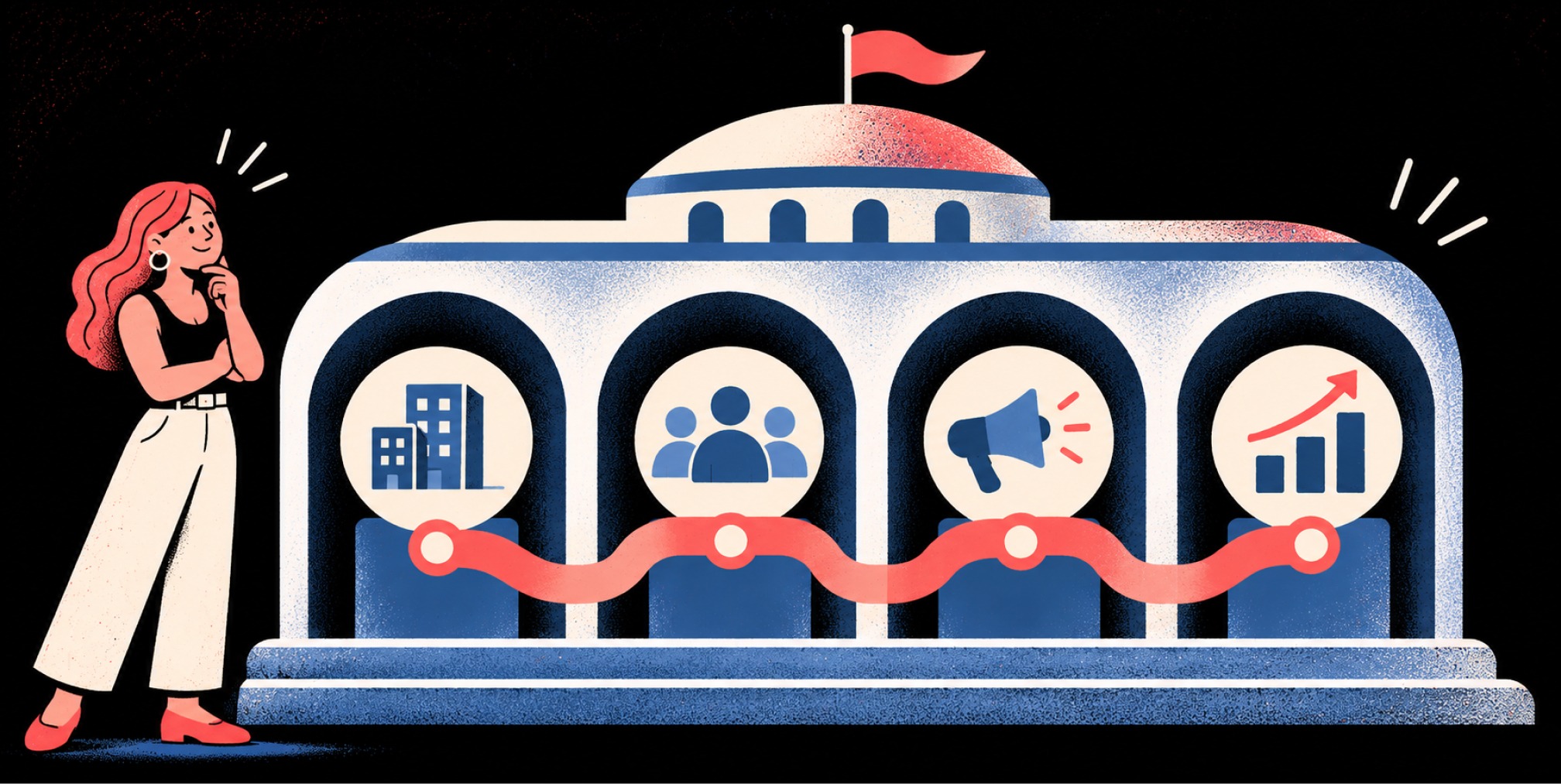
Running this well takes a specific sequence, not a scattershot mix of tactics:
1. Define the ICP and business goal. Agree with sales on target industries, account sizes, buying-stage definitions, and what constitutes a qualified opportunity.
2. Audit available signals. Review CRM accounts, marketing consent, website events, company identification coverage, match rates, and where records are incomplete.
3. Build three stage-based audiences. Combine firmographic fit with observed intent, but keep company identification distinct from verified individual identity.
4. Create exclusions and owners. Configure customer, employee, applicant, competitor, and active-opportunity rules with documented CRM triggers and a named RevOps approver.
5. Launch a limited channel pilot. Start with one or two channels and message-matched landing pages rather than spreading budget thinly across every platform.
6. Validate tracking. Check event deduplication, consent signals, CRM stage updates, campaign UTMs, and qualified-opportunity imports before trusting dashboards.
7. Set a test and refresh cadence. Review spend and suppression weekly, rotate tired ads as needed, and use a holdout where volume permits.
8. Decide whether to scale. Judge the pilot on incremental opportunity creation, cost per qualified opportunity, and sales feedback rather than CTR alone.
Templates that make this repeatable: a suppression rule sheet reviewed weekly, a one-month test plan with a defined holdout percentage, and a creative rotation calendar tied to fatigue signals rather than a fixed schedule.
When Does Retargeting Belong In-House vs. With an Agency?
Integrated brand and performance work cuts waste because creative, targeting, and measurement get built by one team instead of stitched together across vendors. In-house makes sense once a team has mature tooling and a dedicated RevOps owner. Below that maturity line, an agency accelerates the build. Either way, one person should own the suppression list, and one function, usually RevOps, should approve every exception.
• Keep it in-house when marketing operations owns the CRM and audience feeds, analysts can test incrementality, and the creative team can refresh stage-specific assets reliably.
• Use an agency or specialist partner when account identification, platform integrations, measurement design, or production capacity are the bottleneck.
• Choose a hybrid model when internal RevOps must retain data governance and customer decisions, but outside specialists can build campaigns, creative, and testing infrastructure.
• Regardless of model, document ownership for CRM integrity, platform permissions, privacy review, exclusions, creative approval, and reporting.
Building and Running This With The Branded Agency
Most teams don’t lack retargeting ideas. They lack the operational muscle to sync suppressions daily, rotate creative monthly, and report to pipeline instead of clicks, all at once, quarter after quarter. That’s the gap The Branded Agency closes: brand-backed creative and paid media management built by the same team, so targeting logic and creative message stay aligned instead of drifting apart the way they do when five vendors touch one campaign.
Our retention marketing and creative services work alongside paid media to cover the full loop: audience build, suppression governance, message-matched creative, and CRO on the landing pages your ads point to. If your retargeting program needs an audit or a structured pilot to prove incrementality before you commit further budget, our paid media management engagements start from $5,500 per month. Review current pricing and engagement options and request a pilot scoped around your funnel stages and suppression rules.
Frequently Asked Questions
What Are Some Effective B2B Retargeting Strategies?
Building ICP-fit first-party audiences, sequencing two or three channels like LinkedIn and Google Display rather than all channels at once, and enforcing daily suppression syncs consistently outperform broad, unsuppressed campaigns.
What Is the Rule of 7 in B2B Marketing?
The rule of 7 holds that a buyer typically needs around seven exposures to a brand before they act, which is why frequency-capped retargeting across multiple touchpoints (ads, email, content) matters more than a single high-intensity push.
What Are the Four C’s of B2B Marketing?
Definitions vary by source, but a common version frames them as customer, cost, convenience, and communication, an update of the traditional four P’s that centers the buyer’s experience rather than the seller’s product.
What Are the Best Strategies for B2B Marketing Right Now?
First-party audience building, account-level segmentation, and measurement tied to pipeline rather than clicks are the strategies driving results as cookie-based tracking keeps eroding. Agencies like The Branded Agency pair that operational discipline with brand-backed creative to keep targeting and messaging aligned.
How Much Should a B2B Company Budget for Retargeting?
Many B2B teams allocate roughly 10% to 20% of ad budgets to retargeting, though the right share depends on funnel size and how much first-party data you already have to build audiences from.
Sources and further reading
• Google Ads Help, About Customer Match: https://support.google.com/google-ads/answer/6379332
• Google Ads Help, About enhanced conversions: https://support.google.com/google-ads/answer/9888656
• LinkedIn Marketing Solutions, Matched Audiences: https://business.linkedin.com/marketing-solutions/ad-targeting/matched-audiences
• Meta for Developers, Conversions API: https://developers.facebook.com/docs/marketing-api/conversions-api/
• UK Information Commissioner’s Office, Online advertising guidance: https://ico.org.uk/for-organisations/direct-marketing-and-privacy-and-electronic-communications/online-advertising/

Quincy Samycia
As entrepreneurs, they’ve built and scaled their own ventures from zero to millions. They’ve been in the trenches, navigating the chaos of high-growth phases, making the hard calls, and learning firsthand what actually moves the needle. That’s what makes us different—we don’t just “consult,” we know what it takes because we’ve done it ourselves.
Want to learn more about brand platform?
If you need help with your companies brand strategy and identity, contact us for a free custom quote.
We do great work. And get great results.
+2.3xIncrease in revenue YoY
+126%Increase in repurchase rate YoY



+93%Revenue growth in first 90 days
+144% Increase in attributed revenue




+91%Increase in conversion rate
+46%Increase in AOV




+200%Increase in conversion rate
+688%Increase in attributed revenue