SaaS Marketing Agency: A Startup's 2026 Guide
08/21/2026
Marketing Strategy
A practical guide to picking the right SaaS marketing agency for your growth stage — services, benchmarks, and the questions that separate real expertise from a good sales deck.
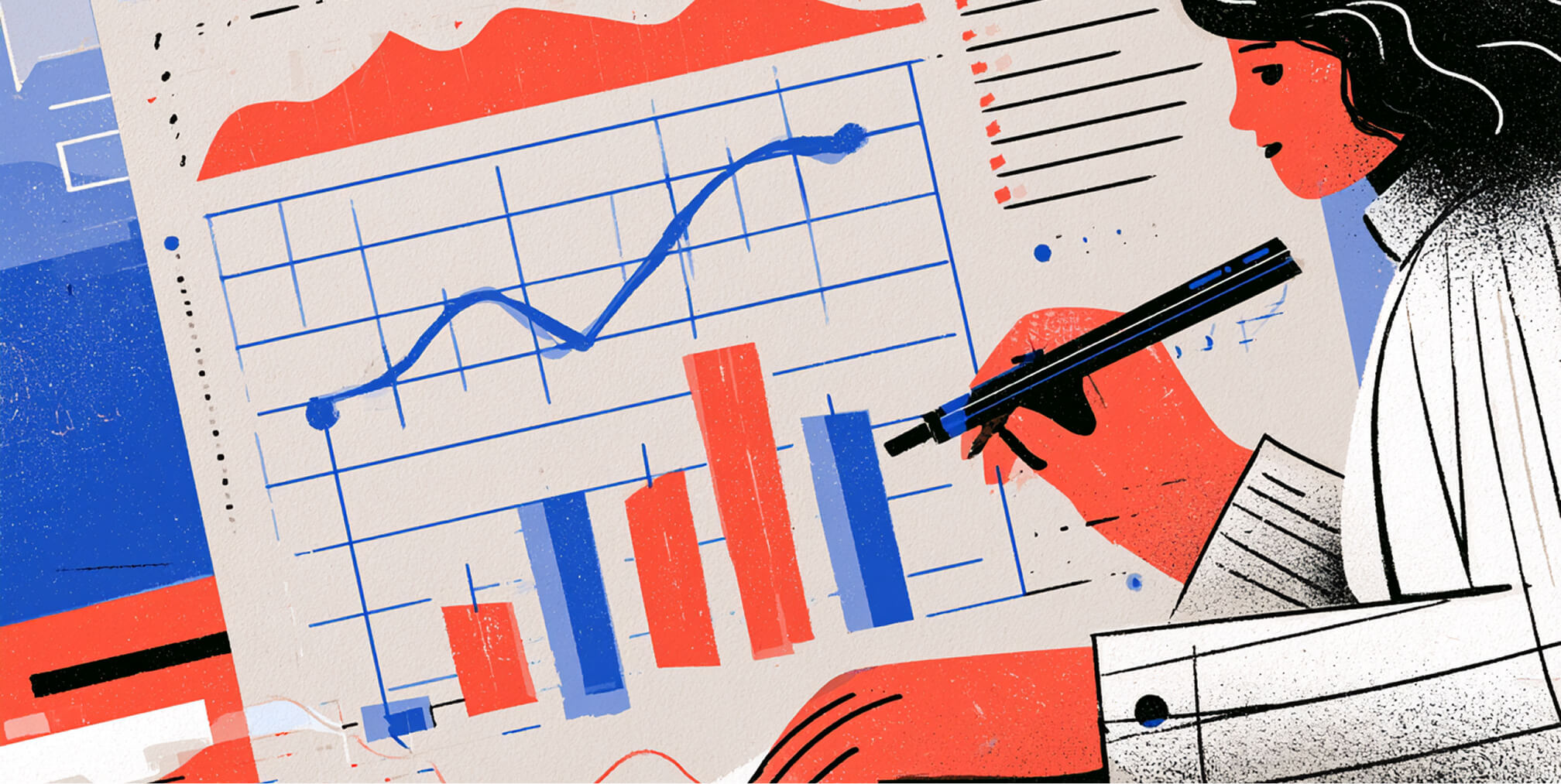
A SaaS marketing agency is a specialized firm that helps software-as-a-service companies build brand awareness, generate qualified leads, and accelerate revenue growth through targeted marketing execution. Unlike general digital agencies, these firms understand SaaS-specific metrics like annual recurring revenue (ARR), customer acquisition cost (CAC), and lifetime value (LTV). The right agency partner can compress your growth timeline significantly. Early-stage SaaS companies typically spend 20-40% of ARR on marketing, which means the agency you choose directly controls a major share of your runway. Getting that decision right is not optional.
.png)


What a SaaS Marketing Agency Actually Does — and Why Vertical Expertise Matters

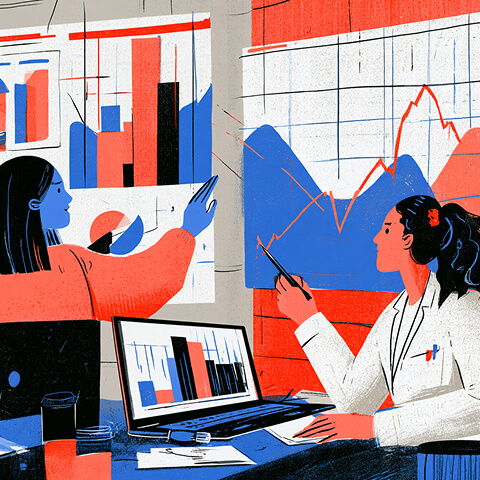
What does a SaaS marketing agency actually offer?
A specialized digital marketing agency for SaaS covers a wide range of services, but the best ones tailor their mix to your business model and growth stage. The core service categories include:
- SEO and content marketing: Long-form articles, technical documentation, and comparison pages that capture buyers researching solutions
- Paid media: Google Ads, LinkedIn, and Meta campaigns targeting decision-makers at the right funnel stage
- Email nurturing: Automated sequences that move trial users toward paid conversion and reduce churn
- Social media management: LinkedIn thought leadership and community-building for B2B SaaS audiences
- Conversion rate optimization (CRO): Landing page testing, onboarding flow improvements, and pricing page refinement
The agency model you choose matters as much as the services themselves. A generalist agency handles many industries and applies broad playbooks. A specialist content marketing agency for SaaS, by contrast, understands why a product-led growth (PLG) company needs different content than a sales-led one. PLG companies need bottom-of-funnel content that drives free trial signups. Sales-led companies need thought leadership that generates demo requests. These are fundamentally different strategies, and a generalist rarely executes both well.
Pro Tip: Ask any agency you evaluate to show you a content brief or paid media strategy they built for a SaaS company at your ARR stage. Generic answers reveal generic thinking.
Agencies with deep vertical expertise, including those who shadow customer calls and study your ICP alongside your team, consistently outperform agencies that apply the same playbook across every client. Vertical expertise is not a nice-to-have. It is the difference between campaigns that resonate and campaigns that burn budget. You can also explore organic growth strategies that complement paid efforts at every stage.
Free Brand Health Audit
Make sure your brand is built to sell
Search has changed. Your customers aren't just Googling anymore. They're asking ChatGPT, Perplexity, Gemini and other AI platforms what to buy, who to trust and which brands they should consider.
If your brand isn't showing up clearly in those answers, you're already losing opportunities. Our free Brand Health Audit shows you where your brand stands across traditional search, AI search and brand positioning.

Sample brand audit
Live preview
Traditional search
72
AI search (GEO)
34
Brand positioning
58
Matching Your Agency to Your Growth Stage




How to choose the right SaaS marketing agency for your startup
Matching an agency to your growth stage is the single most important selection criterion. Here is how the relationship typically maps:
- Pre-seed: Founders handle marketing themselves. The focus is on positioning, messaging, and early content. No agency needed yet.
- Seed: A small number of contractors or a focused agency handles SEO, content, and basic paid experiments. Budget is tight and every dollar must be traceable.
- Series A: Agency partnerships begin in earnest at this stage. You need a full-funnel partner who can build pipeline while you hire your first in-house marketer.
- Series B and beyond: Specialized in-house roles emerge. Agencies shift to filling gaps in paid media, ABM, or analyst relations.
- Growth and scale: Agencies serve episodic, high-leverage functions rather than owning the full marketing program.
Beyond stage matching, evaluate agencies on four criteria: team transparency, measurement approach, pricing clarity, and proof of execution. The biggest red flag is an agency that claims to specialize in "B2B SaaS" but cannot show you a methodology specific to your go-to-market motion. Vague promises about "brand awareness" without tied metrics signal a mismatch.
Agencies that own proprietary data, original research, or owned media channels deliver differentiated value. Ask specifically: "What do you know about our market that you did not learn from us?" A strong answer reveals genuine expertise. A weak answer reveals a generalist in disguise.
Pro Tip: Request the LinkedIn profiles of the people who will manage your account daily. Junior staff turnover is common at agencies, and you need to know who actually runs your campaigns, not just who pitched you.
Verifying your daily account team before signing protects you from the classic bait-and-switch. Senior strategists close the deal, then hand off to junior coordinators. This single check prevents months of frustration. For a broader framework on evaluating any agency partner, the guide to finding the right agency covers the core assessment criteria in detail.
Ready to grow your SaaS beyond founder-led marketing? Keep reading!
If you need a partner who ties every campaign to measurable SaaS growth, contact us for a free custom quote.
The CAC, ARR, and Payback Benchmarks Your Agency Should Hit

Key SaaS marketing benchmarks to set with your agency
Benchmarks give you a shared language with your agency. Without them, "good performance" is whatever the agency says it is.
Marketing budget as a share of ARR follows a clear pattern by stage. Seed-stage companies spend 20-40% of ARR on marketing. Series A companies typically spend 15-25%. Series C and beyond compress that to 5-10% as efficiency improves. These ranges tell you whether your agency's proposed budget is realistic or inflated.
CAC varies dramatically by channel. Google Ads CAC averages around $802 for SaaS, LinkedIn CAC exceeds $1,200, Meta runs 350-500, and email or referral programs average around $150. These numbers explain why early-stage companies should not default to LinkedIn just because it feels "B2B appropriate." The channel must match your budget and your buyer's behavior.
| Funding Stage | Marketing Budget (% of ARR) | Healthy CAC Payback | Primary Agency Role |
|---|---|---|---|
| Pre-seed | Founder-led | N/A | None or positioning only |
| Seed | 20-40% | 12-18 months | Content, SEO, experiments |
| Series A | 15-25% | 10-14 months | Full-funnel growth partner |
| Series B | 10-20% | 8-12 months | Paid media, ABM, pipeline |
| Series C+ | 5-10% | Under 8 months | Specialized functions |
CAC payback periods under 18 months signal strong unit economics for most growth-stage SaaS businesses. Payback periods stretching past 24 months indicate either a CAC problem or a retention problem, and your agency should help you diagnose which one. LTV:CAC ratios above 3:1 are the standard target for healthy SaaS growth.
Funnel conversion benchmarks vary widely by average contract value, go-to-market motion, and vertical. A PLG company converting 5% of free users to paid is performing well. A sales-led company converting 20% of demos to closed-won is also performing well. These are not comparable numbers. Your agency must contextualize every metric against your specific model, not industry averages pulled from a generic report.
In-House vs. Agency, Key Takeaways, and How The Branded Agency Fits In

How SaaS marketing agencies integrate with in-house teams
The agency-versus-in-house question has a clear answer: it depends on your ARR stage and the function in question. The smarter question is which functions belong in-house and which belong with an agency.
Functions that work well with agency partners include:
- Paid media management: Requires constant platform expertise and testing. Agencies with multi-client exposure spot trends faster than a single in-house hire.
- SEO and content production: High-volume content programs benefit from agency infrastructure, writers, and editorial systems.
- Fractional CMO services: Pre-Series A companies often need strategic leadership without a full-time executive salary.
- Specialized functions at scale: Scale-stage companies above $20M ARR use agencies for analyst relations, account-based marketing (ABM), and event production rather than day-to-day execution.
Functions that belong in-house include brand voice ownership, customer research, and product marketing. These require deep product knowledge and daily collaboration with your product and sales teams. Outsourcing them creates a disconnect that no agency can fully bridge.
Pro Tip: Build a shared Notion or Confluence workspace with your agency from day one. Document every campaign decision, audience insight, and test result. If the agency relationship ends, your institutional knowledge stays with you.
Managing the relationship well requires clear ownership. Assign one internal point of contact who attends weekly syncs, reviews reports, and escalates issues. Agencies perform better when they have a responsive client. Slow feedback loops kill campaign momentum and waste retainer hours. You can read more about effective startup marketing tactics that complement agency-led programs.
Key Takeaways
The right SaaS marketing agency matches your growth stage, demonstrates vertical expertise, and ties every campaign to measurable unit economics.
| Point | Details |
|---|---|
| Match agency to stage | Pre-seed founders self-market; Series A is the right time to bring in a full-funnel agency partner. |
| Verify the daily team | Request LinkedIn profiles of account managers before signing to avoid junior staff bait-and-switch. |
| Know your CAC by channel | Google Ads averages $802, LinkedIn exceeds $1,200, and email runs around $150 per acquired customer. |
| Set benchmark expectations | CAC payback under 18 months and LTV:CAC above 3:1 are the standard targets for growth-stage SaaS. |
| Protect institutional knowledge | Document all campaign decisions in a shared workspace so insights stay with your company, not the agency. |
What I've learned from watching SaaS founders pick the wrong agency
Most SaaS founders I've worked with make the same mistake. They evaluate agencies on presentation quality rather than execution evidence. A polished deck with SaaS logos does not prove the agency understands your specific go-to-market motion. It proves they have a good designer.
The agencies that consistently deliver results share one trait: they ask uncomfortable questions early. They push back on your positioning. They challenge your ICP assumptions. They tell you your CAC payback is too long before you even sign a contract. That friction is a feature, not a problem. Agencies that agree with everything you say are agencies that will execute your bad ideas without warning you.
The other pattern I've noticed is that founders underestimate how much the agency relationship depends on their own responsiveness. The best agency in the world cannot run effective campaigns without timely creative approvals, access to customer data, and honest feedback on what is and is not working internally. The relationship is a two-way system.
My honest recommendation: prioritize agencies that specialize in your specific go-to-market motion, whether PLG or sales-led, over agencies that claim to do everything for everyone. Niche expertise compounds. A generalist's broad knowledge rarely translates to the specific insight your buyers need to see.
— Quincy Samycia
How The Branded Agency helps SaaS companies grow with purpose
SaaS companies at every growth stage need more than tactics. They need a partner who connects brand positioning to performance outcomes.
The Branded Agency builds brand-backed performance for growth-oriented SaaS companies by aligning creative assets, messaging, and paid media into a single, measurable system. From paid media management that maximizes ad spend efficiency to retention marketing that reduces churn and extends LTV, the team covers the full customer lifecycle. If you are a startup ready to move beyond founder-led marketing or a growth-stage company looking for a partner who ties every campaign to traceable results, The Branded Agency is built for exactly that conversation.
FAQ
What is a SaaS marketing agency?
A SaaS marketing agency is a specialized firm that executes marketing strategies for software-as-a-service companies, focusing on metrics like CAC, ARR, and LTV rather than generic brand awareness goals.
When should a SaaS startup hire a marketing agency?
Series A is typically the right time. Pre-seed and seed-stage companies benefit more from founder-led marketing and targeted contractors before committing to a full agency retainer.
What does a healthy CAC payback period look like for SaaS?
CAC payback periods under 18 months signal strong unit economics for most growth-stage SaaS businesses, with top performers achieving payback in 8-14 months.
How do I avoid getting a junior team after signing with an agency?
Ask for the LinkedIn profiles of the people who will manage your account daily before you sign. This single step reveals whether senior strategists or junior coordinators will run your campaigns.
What marketing budget should a SaaS company allocate by stage?
Seed-stage companies typically spend 20-40% of ARR on marketing, Series A companies spend 15-25%, and Series C and beyond compress spending to 5-10% as efficiency improves.
Recommended

Quincy Samycia
As entrepreneurs, they’ve built and scaled their own ventures from zero to millions. They’ve been in the trenches, navigating the chaos of high-growth phases, making the hard calls, and learning firsthand what actually moves the needle. That’s what makes us different—we don’t just “consult,” we know what it takes because we’ve done it ourselves.
Want to learn more about brand platform?
If you need help with your companies brand strategy and identity, contact us for a free custom quote.
We do great work. And get great results.
+2.3xIncrease in revenue YoY
+126%Increase in repurchase rate YoY



+93%Revenue growth in first 90 days
+144% Increase in attributed revenue




+91%Increase in conversion rate
+46%Increase in AOV




+200%Increase in conversion rate
+688%Increase in attributed revenue