AI Ready Topic Cluster SEO Playbook for Agencies: Results in 4–8 Months
11/05/2026
Marketing Strategy
Learn how to build an AI-ready topic cluster SEO strategy that strengthens topical authority, improves search visibility, and drives measurable organic growth in 4–8 months.
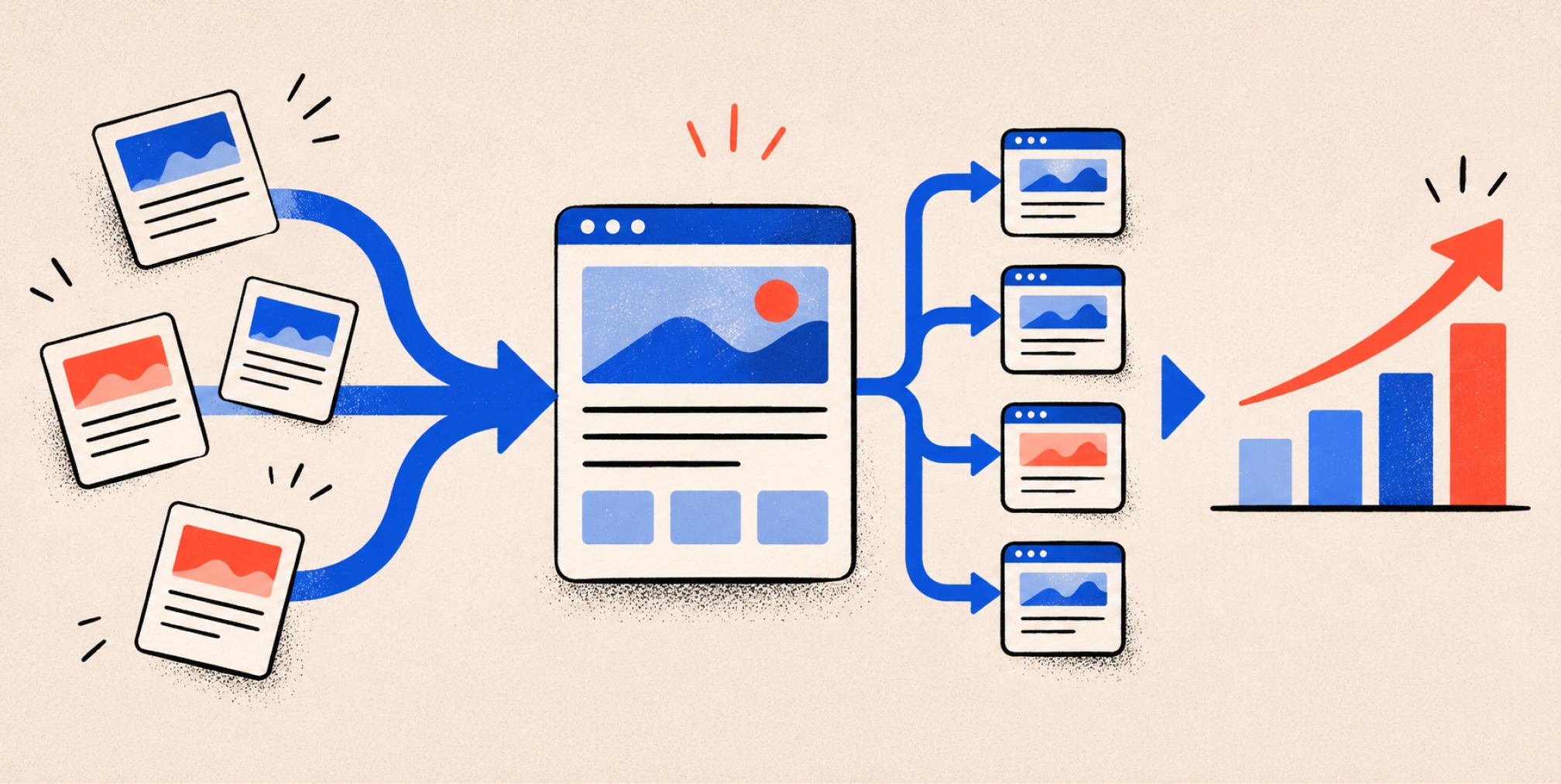
A topic cluster is a pillar page surrounded by a network of interlinked subtopic pages that together cover a subject the way a real expert would. Built correctly, it turns scattered blog posts into one consolidated authority asset that lifts organic rankings and, increasingly, earns citations from AI answer engines. This guide gives you the workflow, the linking rules, and the KPIs to build one that actually compounds.


Why Topic Clusters SEO Matters More Than Ever

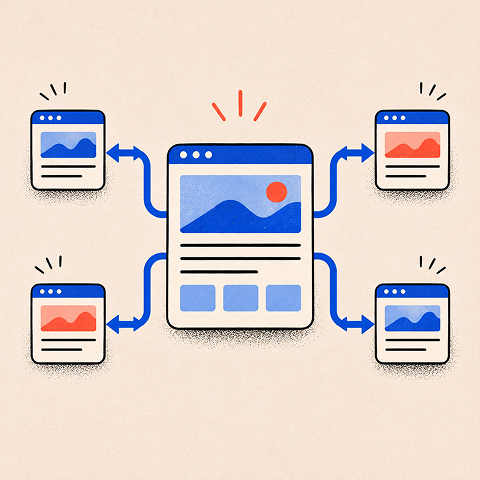

Search has moved past keyword matching. Modern engines evaluate whether a site covers a subject comprehensively, a concept practitioners now call topical authority. That shift changes what “ranking well” even means. A single page targeting one keyword string can no longer compete with a coordinated set of pages that map every angle of a topic to the entities search engines actually track.
Topic clusters SEO strategy answers that shift directly. Instead of writing isolated posts hoping each one ranks independently, you build a pillar and a set of cluster pages that reinforce each other through deliberate internal linking. The payoff compounds in ways a single article never can:
- Broader intent coverage: A pillar answers the central question while supporting pages address distinct use cases, comparisons and implementation problems.
- Clearer navigation: Contextual links help readers move from introductory guidance to the detail needed to make a decision.
- More efficient content maintenance: Editors can update the relevant spoke without rewriting the entire pillar each time a subtopic changes.
- More paths to conversion: Related pages can guide qualified visitors toward a service, product or consultation once they have the information they need.
Pro Tip: If a topic doesn’t have both business relevance and measurable search demand, it doesn’t deserve a cluster. Save the pillar-and-spokes structure for subjects tied directly to revenue.
The volume of AI-mediated search makes this urgent. AI engines don’t rank single keywords the way traditional search once did. They evaluate whether a domain’s cluster of content resembles the semantic shape of the subject, then cite the passage that answers the sub-question most cleanly.
How Do Pillar Pages and Cluster Pages Work Together?
A pillar page covers a broad topic comprehensively, while each cluster page drills into one subtopic in depth. The pillar’s job is breadth. The cluster page’s job is depth on one specific question. Confusing the two roles is the fastest way to end up with pages that compete with each other for the same search intent instead of reinforcing one another.
The link graph is what turns a pile of related pages into an actual cluster. The pillar links out to every cluster page, and every cluster page links back to the pillar using descriptive anchor text rather than a generic “learn more.” That bidirectional structure eliminates orphan pages and gives crawlers a clear map of the hierarchy. It also matters at a purely technical level: Google requires standard HTML anchors to discover and index a page at all, so a link graph built entirely on JavaScript click events or buried navigation defeats the purpose before it starts.
A few structural rules keep the graph functional as it grows:
- Give the pillar one broad primary intent and each supporting page one differentiated subtopic or user question.
- Link from the pillar to important supporting pages using readable, descriptive anchor text.
- Link each spoke back to the relevant pillar section, not automatically to the homepage.
- Add helpful spoke-to-spoke links only where they answer the reader’s next logical question.
- Avoid orphan pages, repetitive anchor text and creating several URLs that answer essentially the same query.
Entity coverage and link equity work in tandem here. A cluster page that introduces a new entity, a named tool, a regulation, a technique, earns its place in the structure. A cluster page that just restates the pillar in different words steals link equity without adding coverage, which is exactly the kind of internal competition a well-designed cluster is supposed to prevent.
How Do You Build a Topic Cluster Step by Step?
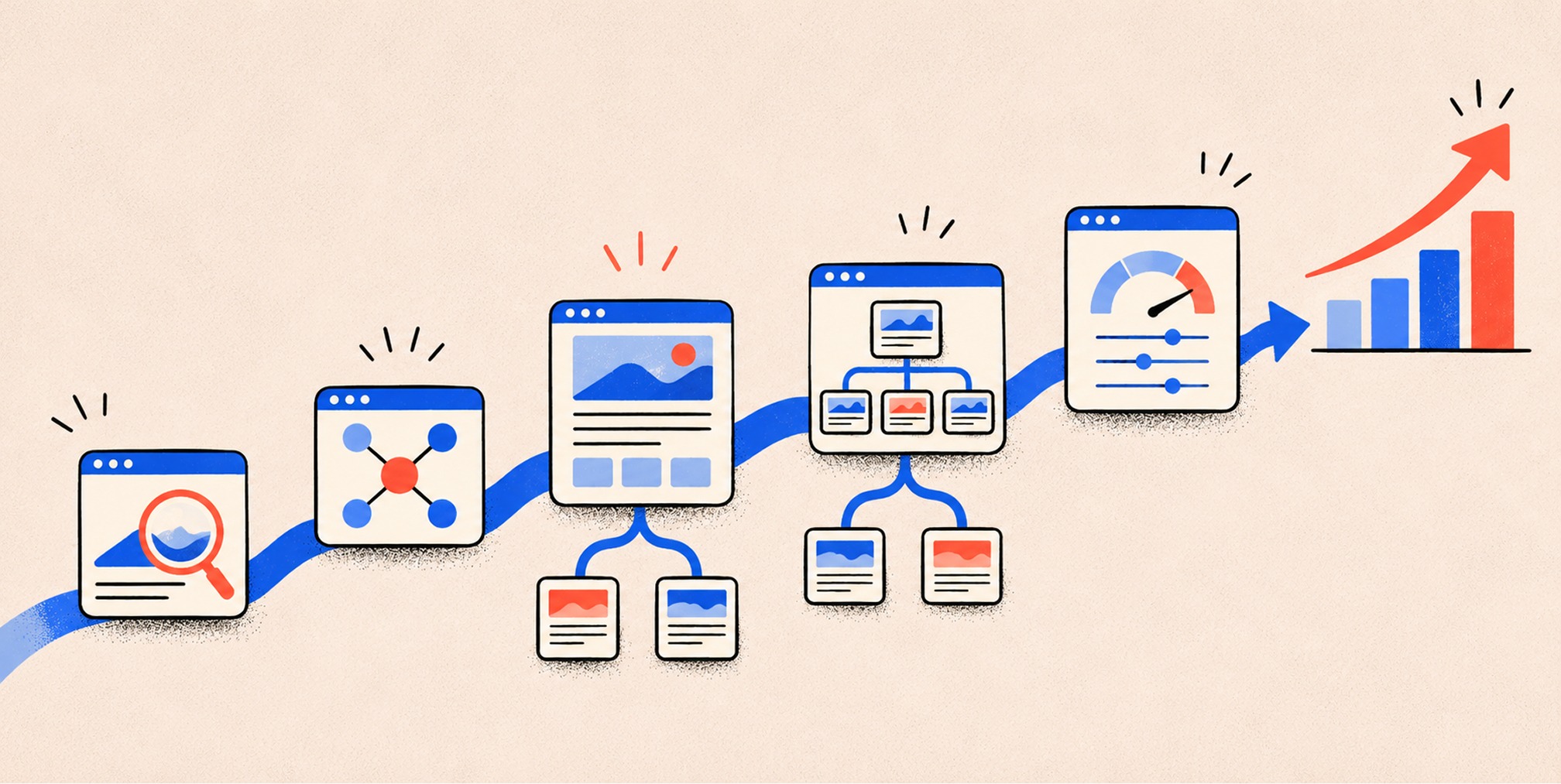
Building a topic cluster model is a sequence, not a single content sprint. Skipping steps, especially the entity mapping step, is how teams end up with clusters that look complete but rank inconsistently.
- Define the business outcome and audience. Choose a topic linked to a service, product or problem your organization genuinely solves.
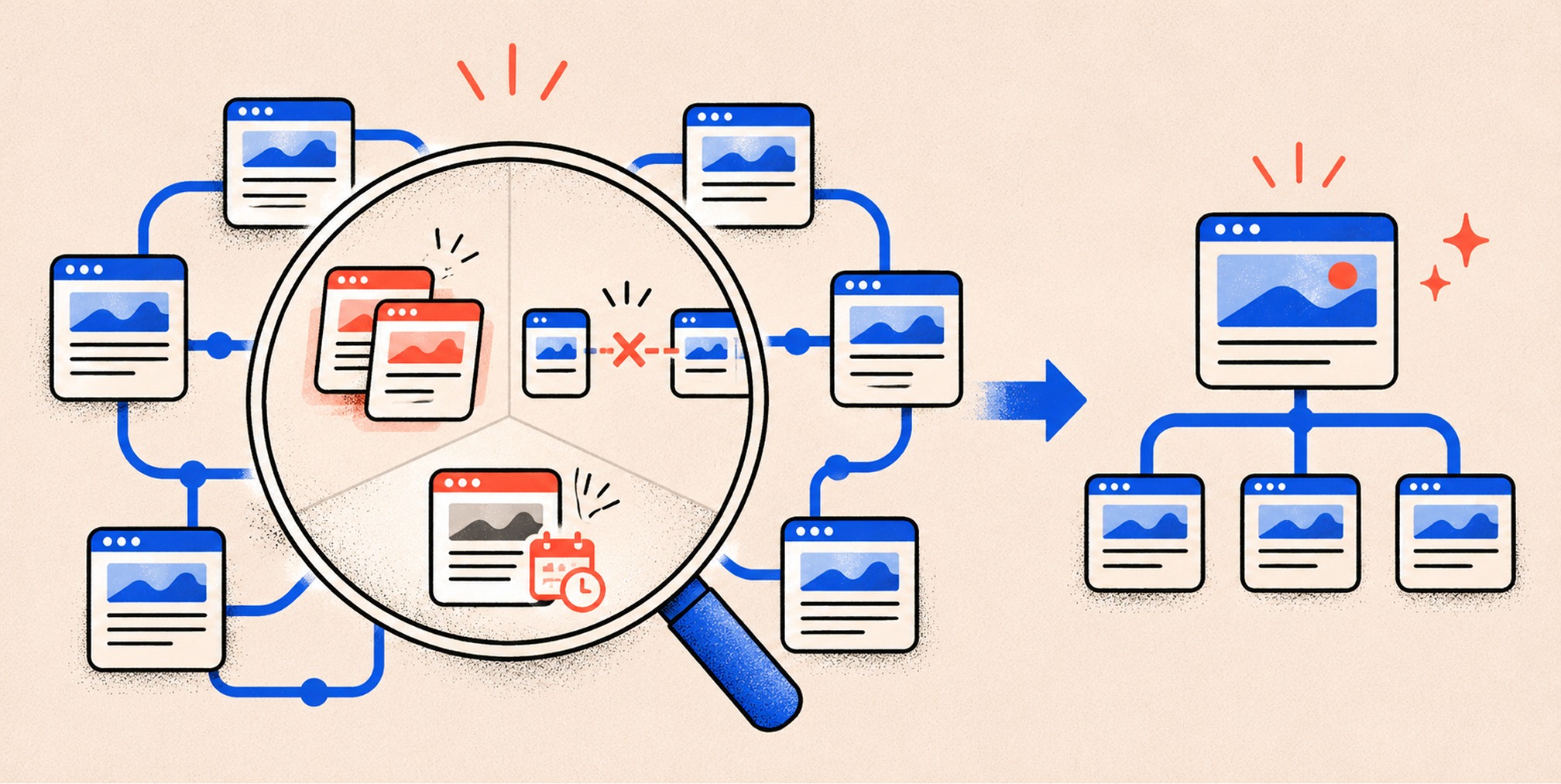
- Audit existing pages. Inventory URLs, search intent, rankings, conversions and pages that can be improved rather than replaced.
- Map subtopics and entities. Group related questions, methods, tools and use cases by distinct search intent; consolidate overlapping ideas.
- Select the pillar. Choose or create a broad, useful resource that introduces the topic and points readers toward deeper coverage.
- Build a prioritized content plan. Assign a unique purpose, primary question, evidence needs and conversion path to every supporting page.
- Publish and connect the cluster. Add reciprocal contextual links, descriptive anchors, accurate canonicals and crawlable HTML navigation.
- Measure and refresh. Track cluster-wide search visibility, engagement, conversions and citation observations over time, then address gaps.
Consider consolidating several related intents onto a single comprehensive page rather than spinning up a separate page per micro-intent. Search Engine Land’s guidance on AI-cited content notes that consolidation, done carefully, increases the odds of being cited because it gives the AI system more surface area to pull from on one authoritative page instead of forcing it to stitch together several thin ones.
Free Brand Health Audit
Make sure your brand is built to sell
Search has changed. Your customers aren't just Googling anymore. They're asking ChatGPT, Perplexity, Gemini and other AI platforms what to buy, who to trust and which brands they should consider.
If your brand isn't showing up clearly in those answers, you're already losing opportunities. Our free Brand Health Audit shows you where your brand stands across traditional search, AI search and brand positioning.

Sample brand audit
Live preview
Traditional search
72
AI search (GEO)
34
Brand positioning
58
What Are the Best Internal Linking Practices for Topic Clusters?
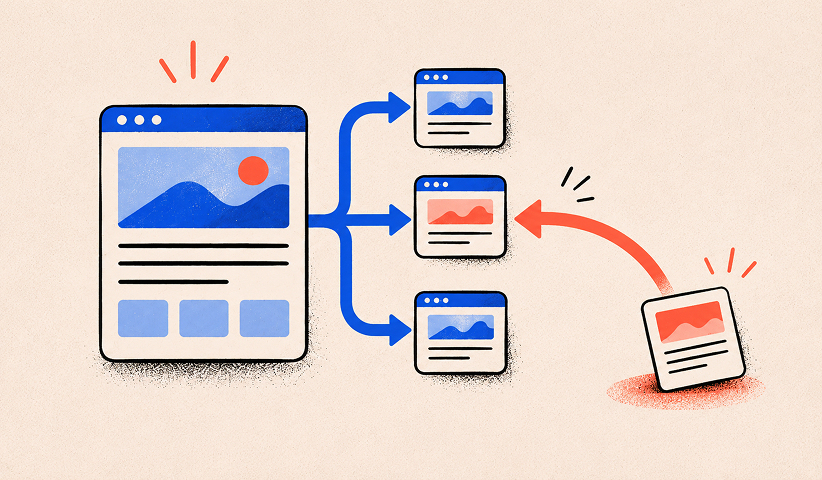
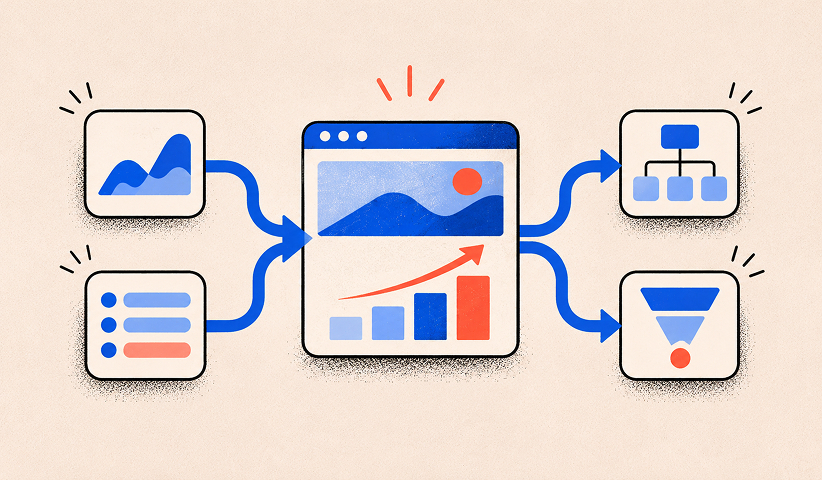

Internal linking is where most clusters quietly fail. The pages get written, the pillar gets published, and then nobody builds the connective tissue that makes the structure work as a system rather than a folder of related articles.
A few rules cover most of what matters:
- Use native HTML anchor links with meaningful text that describes the destination.
- Place links where they naturally support an explanation, not in a block of unrelated keyword-rich links.
- Link both ways between the pillar and spokes, while prioritizing relevant lateral links between closely related spokes.
- Update links whenever a page is consolidated, renamed, redirected or removed.
- Check crawl depth, broken links, redirects and orphan pages during each cluster audit.
- Do not force an exact-match keyword into every anchor. Vary wording to fit the sentence and the reader.
Pro Tip: Keep a simple spreadsheet listing every cluster page, its target subtopic, and every internal link pointing to or from it. When you audit, you’ll spot missing links and orphaned pages in minutes instead of hours.
On cadence: audit internal links at least twice yearly for evergreen clusters, and quarterly for anything tied to fast-moving trends or seasonal demand. During each audit, check for pages that gained new content but never received a corresponding internal link, and for anchor text that has gone stale because the linked page’s focus shifted.
How Do You Measure Topic Cluster Performance?
Measure a cluster as a system, not as a set of individual pages competing for attention. Four metrics tell you most of what you need to know: total organic sessions across the whole cluster, average ranking position for the pillar and its top cluster queries, internal click-through rate between pages, and conversions attributed to cluster traffic.
HubSpot’s guidance on cluster measurement treats the frequency of AI answer engine citations as a maturity indicator worth tracking alongside traditional metrics. That means periodically checking whether your pillar or cluster pages show up as sourced answers in AI search results, not just where they land in a traditional results page. There’s no universal dashboard for this yet, so most teams track it manually: run your target queries through major AI search tools monthly and log whether your content gets cited, paraphrased, or ignored entirely.
Timelines matter for setting expectations internally. Expect early ranking movement within 60 to 120 days of publishing a complete cluster, with the real compounding gains, more sessions, better average position, stronger internal engagement, showing up over 4 to 8 months. Clusters that look flat at day 45 are often just early in their crawl and indexation cycle, not underperforming.
A cluster-level KPI table beats a page-by-page report for stakeholder conversations:
Cluster-level KPI scorecard:
- Organic sessions across the cluster: Shows whether the subject as a whole is attracting more search visits.
- Google Search Console impressions, clicks and query groups: Shows changes in search demand and visibility across the pillar and spokes.
- Average position for representative pillar and subtopic queries: Adds context to ranking movement; review individual query trends rather than relying on one blended average.
- Internal navigation clicks: Indicates whether readers use links to discover relevant supporting content.
- Conversions and assisted conversions from cluster traffic: Connects visibility with inquiries, trials, purchases or other business outcomes.
- Observed AI citations: Log whether relevant answers reference your pages; treat this as directional visibility data, not a guaranteed ranking factor.
Reporting cluster performance this way also makes it easier to connect the work to broader brand visibility metrics that go beyond a simple rankings snapshot.
What Do Effective Topic Clusters Look Like in Practice?
Three patterns cover most of the clusters worth building, and each fits a different business goal.
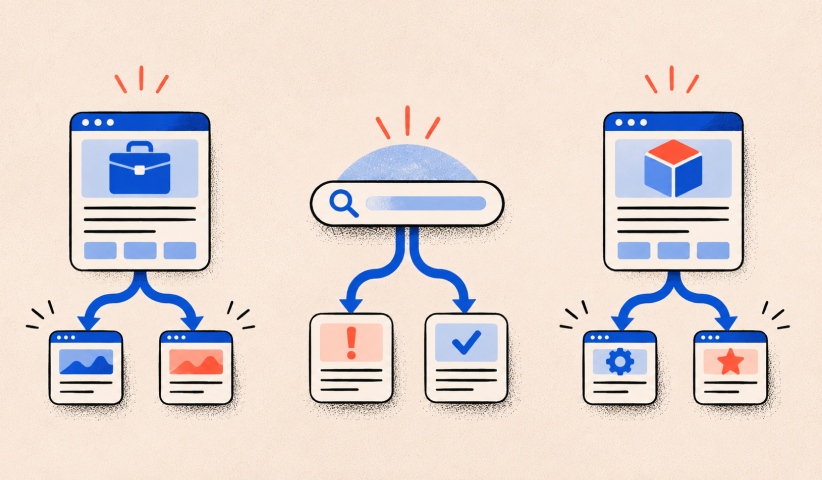
- Service-led cluster: A “B2B SEO services” pillar connects to technical audits, content strategy, internal linking and measurement articles. Best for reaching qualified buyers evaluating an agency.
- Problem-led cluster: A “website traffic recovery” pillar connects to redirects, crawl errors, content migration and reporting. Best for audiences seeking solutions to a pressing operational problem.
- Product- or category-led cluster: A “marketing automation platforms” pillar connects to integration guides, comparisons, setup tutorials and workflows. Best for helping evaluators research and choose a solution.
Each pattern still follows the same underlying rule: the pillar sets scope, the cluster pages go deep, and the links between them do the work of proving topical depth to both readers and AI systems.
Want to learn more about Digital Marketing and Strategy? Keep reading!
If you need help with your company’s marketing, contact us for a free custom quote.
Which Tools and Workflows Support Topic Cluster Strategy?
Building topic clusters at scale requires chaining a few tool categories together rather than relying on one platform to do everything.
- Search research: Use Google Search Console and keyword research tools to identify query families, existing visibility and unmet questions.
- Content inventory: Use a crawler and spreadsheet or database to assign every live URL to a pillar, spoke or consolidation candidate.
- Editorial production: Brief writers on audience, search intent, unique evidence, subheadings and the links each article must include.
- Technical QA: Crawl staging and production to catch noindex mistakes, broken links, canonical conflicts and orphaned URLs.
- Reporting: Combine Search Console, web analytics and CRM conversions in one cluster-level dashboard.
- AI visibility review: Sample a stable list of relevant prompts in selected answer engines and record citations without assuming complete coverage.
Three templates make the workflow repeatable: a chunk-first content outline for authors, an internal-link matrix mapping every planned connection before publishing, and a cluster KPI dashboard that reports at the cluster level rather than the individual page level.
What Goes Wrong With Topic Clusters, and How Do You Fix It?
Most underperforming clusters fail for one of three reasons, and none of them require starting over.
- Overlapping intent: Several pages target the same question and compete. Fix by merging duplicates, clarifying each page’s purpose and redirecting retired URLs appropriately.
- Weak or incomplete links: Good articles exist but readers and crawlers cannot navigate between them. Fix by updating pillar-to-spoke, spoke-to-pillar and relevant cross-links.
- Thin or outdated coverage: Pages repeat generic advice without answering the user’s actual question. Fix with original examples, updated evidence, subject-matter review and clearer next steps.
Iterate rather than rebuild when the structure is sound but individual pages are thin or the links are incomplete. Rebuild only when the entity map itself was wrong from the start, meaning the cluster was organized around keyword strings instead of real subject coverage.
How The Branded Agency Approaches Topic Cluster Projects
Running a cluster project well means treating it as sequential work, not a single deliverable. A typical engagement moves through an audit of existing content, entity discovery and mapping, a focused content sprint to fill coverage gaps, deliberate link architecture design, and a measurement phase that reports at the cluster level from day one.
Budget for four roles even on a lean team: someone owning strategy and entity mapping, someone writing to a chunk-first outline, someone handling the technical SEO and link audit, and someone reading the analytics against the KPIs that actually matter. At The Branded Agency, we tie this work to brand strategy from the outset, because a cluster that ranks well but doesn’t reflect the brand’s actual positioning converts poorly no matter how many AI citations it earns.
Get Expert Help Building Your Topic Cluster Strategy
You get entity mapping, content production, link architecture, and cluster-level measurement built by one team that also understands how the structure ties back to your brand positioning and conversion goals.
Our approach starts with an audit of what you’ve already published, so we’re not rebuilding pages that are already pulling their weight. From there, we map the entity graph, prioritize cluster pages by business value, design the link architecture before a single new page goes live, and set up cluster-level reporting so you can see organic sessions, ranking movement, and internal click-through in one view instead of scattered page reports. If your site also needs CMS changes to support proper chunking and link structure, our website development team handles that alongside the content work.
Ready to see what a properly mapped cluster could do for your organic visibility? Request a branding and content strategy consultation and we’ll walk you through what a discovery audit for your specific topic would look like.
Frequently Asked Questions
What is a topic cluster in SEO?
A topic cluster is a broad pillar page supported by focused pages on related questions. Relevant internal links connect the pages so readers can move between an overview and deeper guidance.
How many supporting pages should a topic cluster have?
There is no universal number. Start with the subtopics that reflect genuinely different search intent and have business relevance. Add pages only when they contribute information a current page cannot cover well.
How do you choose a pillar page?
Choose a page that addresses the broad topic, matches your audience’s needs, can link naturally to supporting resources, and connects the subject to a meaningful business outcome.
How long does topic cluster SEO take to work?
Some pages may show movement in weeks, while meaningful cluster-wide results can take months. The four-to-eight-month window in this playbook is a planning assumption, not a guaranteed recovery or growth timeline.
Do topic clusters improve visibility in AI search?
Well-organized, specific and useful pages may be easier for search and answer systems to discover and cite, but no internal-link structure guarantees inclusion in an AI-generated answer. Track actual citations separately.
Sources
- Google Search Central, SEO Starter Guide: https://developers.google.com/search/docs/fundamentals/seo-starter-guide
- Google Search Central, Make links crawlable: https://developers.google.com/search/docs/crawling-indexing/links-crawlable
- Google Search Central, Creating helpful, reliable, people-first content: https://developers.google.com/search/docs/fundamentals/creating-helpful-content
- Google Search Console documentation: https://support.google.com/webmasters/
- Google Analytics documentation: https://support.google.com/analytics/

Quincy Samycia
As entrepreneurs, they’ve built and scaled their own ventures from zero to millions. They’ve been in the trenches, navigating the chaos of high-growth phases, making the hard calls, and learning firsthand what actually moves the needle. That’s what makes us different—we don’t just “consult,” we know what it takes because we’ve done it ourselves.
Want to learn more about brand platform?
If you need help with your companies brand strategy and identity, contact us for a free custom quote.
We do great work. And get great results.
+2.3xIncrease in revenue YoY
+126%Increase in repurchase rate YoY




+93%Revenue growth in first 90 days
+144% Increase in attributed revenue




+91%Increase in conversion rate
+46%Increase in AOV




+200%Increase in conversion rate
+688%Increase in attributed revenue