Offline vs Online Marketing: What's the Difference? A Complete Comparison Guide

11/06/2025

Marketing Strategy

Explore the real differences between offline and online marketing—what works, when, and why—with expert insight from BrandedAgency.com on blending both for maximum ROI. Choosing the right marketing strategy can make all the difference in your brand’s growth and business success.

Illustration of two hands — one red and one blue — each holding a pen, meeting at the center over a small blue circle. Symbolizes balance, collaboration, and the intersection of offline and online marketing.

At BrandedAgency.com, we’ve helped everyone from scrappy startups to national power players face the same fork in the road you’re likely staring at: Do you double down on classic offline tactics—or chase the precision of digital? Selecting the right marketing strategy—whether offline, online, or a blend—can significantly impact your results. When we talk about offline marketing, offline marketing refers to traditional advertising methods that take place outside the digital space, such as print ads, billboards, and direct mail. What’s the Difference Between Offline Marketing vs Online Marketing?

What's the Difference Between Offline Marketing vs Online Marketing?
Quincy Samycia
Play IconPause Icon
0:00
0:00
https://cdn.prod.website-files.com/673ec61d219571e72b3eba03/690ce6f14131b647908c906a_294_What%27s%20the%20Difference%20Between%20Offline%20Marketing%20vs%20Online%20Marketing.mp3

Top 5 Takeaways from the Frontlines

Two circular shapes — one red and one blue — colliding in the center, representing contrast and connection between traditional and digital marketing.
A person standing between a red and blue divided path, symbolizing the decision between offline and online marketing strategies.
A professional writing on paper, with a red and blue background split, symbolizing analysis, planning, and the merging of creative and strategic thinking.
No items found.

Here’s the truth: it’s not a binary choice. It’s a balancing act. Offline builds trust. Online drives scale. Together, they build unstoppable momentum through a holistic strategy that leverages both online and offline strategies.

We’ve run enough integrated campaigns to know that both sides play a role—integrating online and offline strategies is essential for maximum impact if you know when and how to use them. A well-placed print ad can still command credibility in industries built on relationships. A sharp digital funnel, on the other hand, can turn every click into measurable ROI without breaking the budget.

So instead of asking which one works, start asking how they work together.This guide breaks it down—no fluff, just facts and frameworks that deliver.

1. Offline Builds Trust‍

Offline marketing helps build relationships through direct interaction with customers. Print media, TV, and direct mail typically have higher perceived authority and trust. Tangible touchpoints—print, mail, events—establish credibility and brand recall that screens can’t replicate.

2. Online Scales Fast‍

Digital channels such as online ads, social media, and email deliver reach, precision, and real-time analytics that turn marketing into measurable performance. Online marketing is also cost-effective, offering global reach at lower costs compared to traditional methods.

3. Each Has a Lane‍

Offline marketing strategies = Authority and presence, often focusing on local or regional audiences. Online = Efficiency and adaptability.

4. Integration Wins‍

The strongest brands aren’t choosing sides—they’re syncing both offline and online strategies to amplify results. Combining online and offline marketing methods can yield excellent results by reaching audiences on multiple platforms, overcoming challenges presented by each method.

5. The Future Is Hybrid‍

Smart brands are building ecosystems where integrating offline and online channels allows offline authenticity to fuel online acceleration, helping to overcome challenges faced by relying on just one approach.

Understanding Offline Marketing

Illustration of people working under a large glowing red billboard, symbolizing offline advertising and large-scale brand exposure.
Blue hand reaching for a stack of papers with a red glow underneath, symbolizing print media, contracts, or tangible marketing assets.
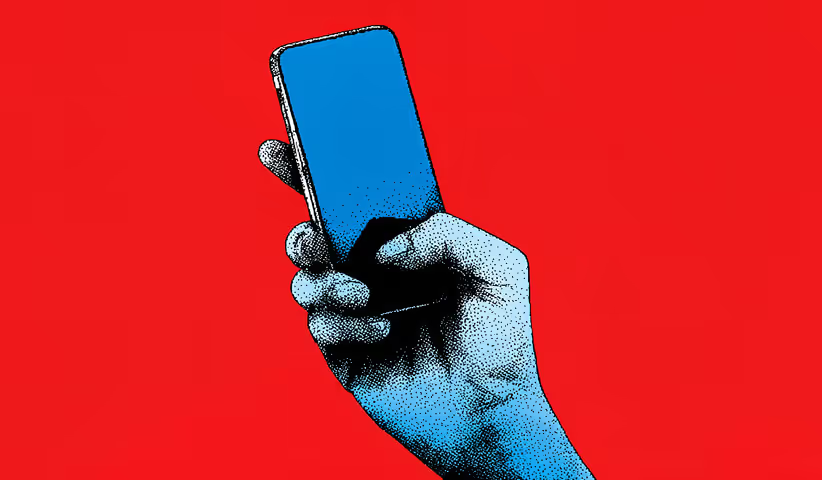
Blue hand holding a smartphone against a red background, representing mobile marketing, digital communication, and social media engagement.
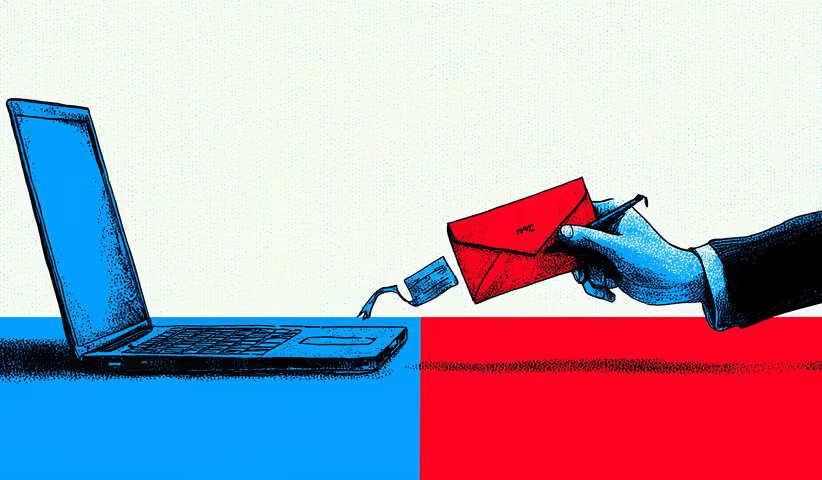
Blue laptop sending a red envelope through a cable, symbolizing email marketing, connectivity, and digital outreach.

Offline marketing refers to traditional marketing methods and offline channels such as print ads, direct mail, TV commercials, radio, outdoor advertising, and in-person events. These offline marketing methods—billboards that dominate highways, brochures and flyers that live on coffee tables, direct mail that still gets opened, TV spots that stick, radio ads that reach people during their daily drives, and event marketing at local events—are not relics of the past. They are trust builders and remain crucial offline strategies for small businesses aiming to foster local trust, credibility, and customer loyalty through physical stores, sponsorships, and face-to-face interaction.

Offline marketing employs traditional advertising and offline efforts to build relationships and customer engagement, especially in offline scenarios where word-of-mouth and personal connections matter. Print media, TV, and direct mail typically have higher perceived authority and trust—42% of respondents in a consumer survey said print advertising was somewhat trustworthy, compared to only 18% for internet websites. Print ads and television commercials can create a lasting emotional impression, with print advertisements being kept for an average of 17 days.

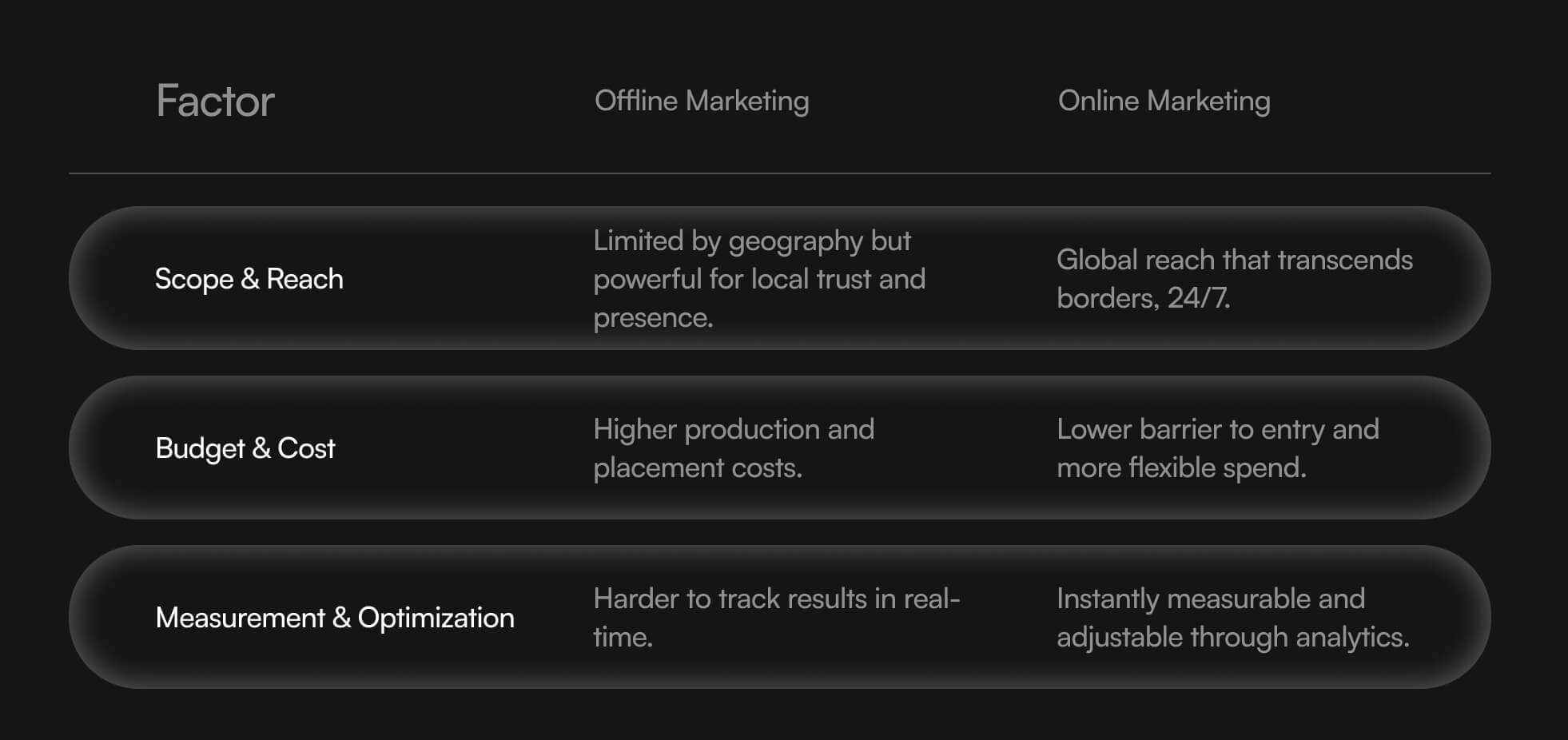
However, offline marketing is often more expensive, with high costs associated with TV, radio, and billboard ads, and its content is fixed once produced. Offline marketing is limited in its measurement capabilities, making it hard to track specific actions from audiences, but tools like QR codes can help bridge offline and online efforts. Offline campaigns and offline methods can effectively reach demographics that online marketing struggles to connect with, such as busy executives, and often create a long-lasting brand presence in the community.

The magic happens when you understand who you’re talking to and how they make decisions. Knowing your audience’s habits, preferences, and demographics turns these traditional offline marketing strategies into ROI engines.

Why Offline Still Works

Traditional channels hold their ground for one reason—they deliver results where credibility matters most. Offline marketing strategies, such as print, mail, and events, offer high credibility and strong local reach, making them effective for engaging audiences who aren’t glued to screens—like seniors, local shoppers, or rural consumers. However, these strategies are often expensive and hard to track compared to digital methods.

  • Reach the Unplugged: Print, mail, and events connect with audiences who aren’t glued to screens—like seniors, local shoppers, or rural consumers.
  • Borrow Trust: Ads in respected magazines or prime-time TV slots elevate your brand’s authority.
  • Controlled Targeting: Placement data—like readership and Nielsen ratings—help you reach exactly who you want, without digital noise.

Offline marketing gives your brand weight. It says, “We’re real, we’re here, and we’re invested.”

Grasping Online Marketing

Now, enter the digital arena—where scale meets precision. Online marketing, also known as internet marketing, leverages online platforms, online marketing channels, and online channels such as social media, websites, email marketing, and online ads to reach, engage, and convert audiences anywhere in the world.

Social media, email campaigns, SEO, and content marketing aren’t just buzzwords—they’re tactical levers for measurable growth. Digital tools enable precise targeting, analytics, and campaign optimization, making it easier to measure success. Online marketing offers global reach at lower costs than traditional methods, making it a highly cost-effective option for businesses. Digital channels remove borders and open new conversations between brands and customers—directly, instantly, globally.

Why Digital Dominates

Digital strategies win on data, efficiency, and adaptability. They’re built for real-time insights and audience connection.

  • Hyper-Targeted Reach: Market to your exact audience using behavior, interests, and search intent—not guesswork. Digital marketing tools enable precise targeting and lead generation, allowing you to reach the right people at the right time.
  • High Engagement: Custom messages and personalized offers, powered by customer data and analytics, drive higher customer interactions and conversion rates. Digital tools enable businesses to engage customers more effectively and foster real-time connections.
  • Cost Efficiency: No print runs, no postage—just performance. You spend smarter, scale faster, and see exactly what’s working.

Online ads, social media, and email marketing help engage customers, build customer loyalty, and support ongoing relationships. The average lead-to-sale conversion rate is up to 77.5 times higher for online marketing compared to offline efforts, highlighting the effectiveness of digital strategies.

The bottom line? Digital levels the playing field. You don’t need a national budget to make a national impact.

Want to learn more about Offline Marketing and Online Marketing? Keep reading!

If you need help with your company’s marketing strategy, contact us for a free custom quote.

Offline vs. Online — The Real Comparison
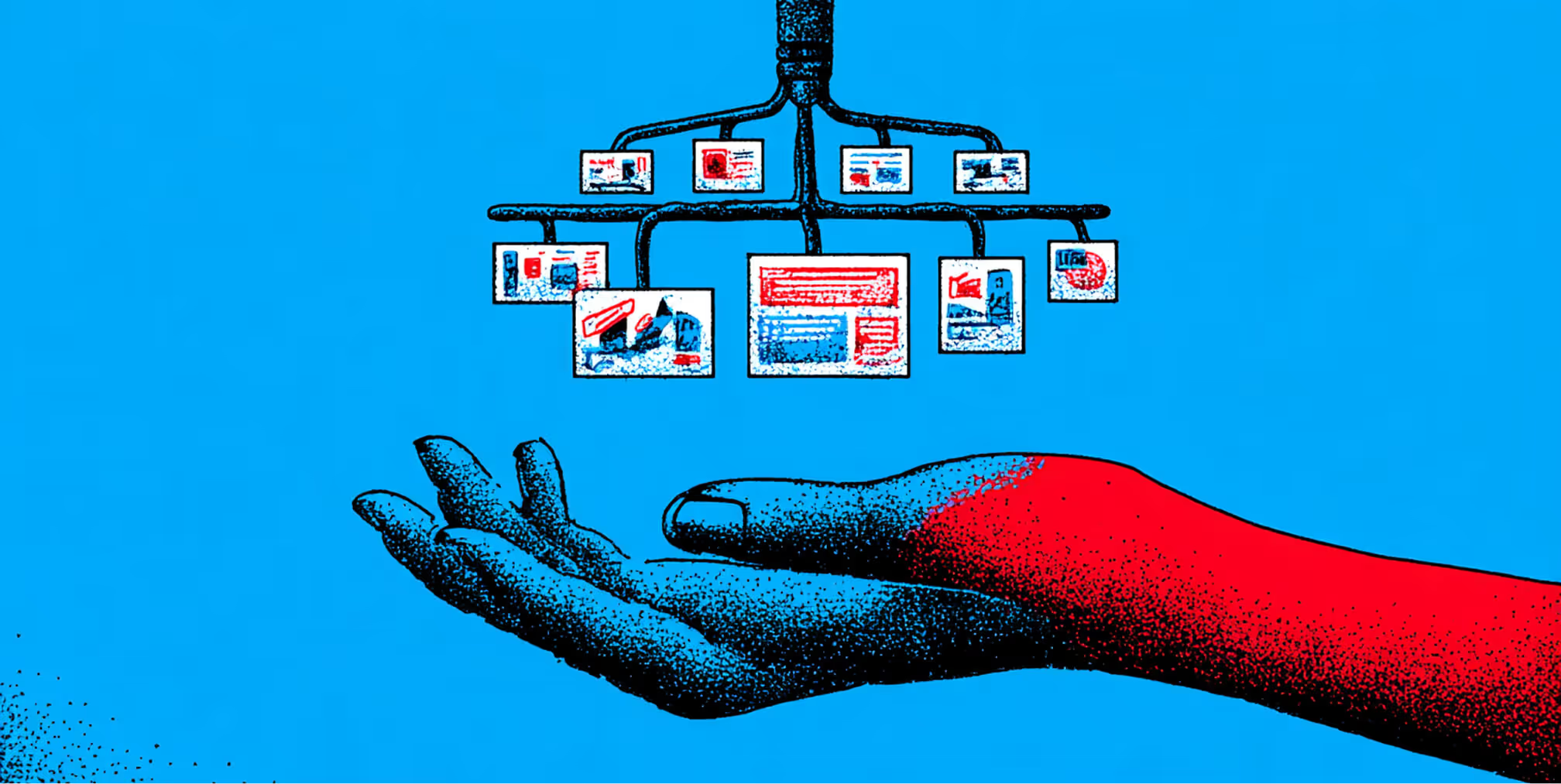
Illustration of a blue and red hand beneath a digital network of screens and ads, representing online campaigns, automation, and multi-channel marketing.

Forget the “either/or” debate. The smartest brands don’t pick sides—they play both games strategically. Integrated marketing efforts that combine online and offline methods can yield excellent results by meeting audiences on multiple platforms and overcoming the challenges presented by each method.
The Branded Take:

Offline earns trust. Online drives momentum. Together, they scale your brand faster than either could alone. Integrating offline and online marketing is just the beginning of a broader growth strategy.

At The Branded Agency, we don’t do silos. We build hybrid ecosystems where traditional credibility fuels digital acceleration. Because real growth doesn’t come from choosing one—it comes from connecting both.

“After two decades in the trenches—from scaling startups to steering Fortune 500 brands—we’ve seen one truth hold steady: offline builds trust, online builds momentum. A single print feature in the right industry publication can legitimize a brand overnight in ways no digital ad can match—especially where trust is the currency. But when that credibility feeds into a digital funnel that nurtures and converts in real time, the growth curve isn’t linear—it’s exponential. The future isn’t offline versus online. It’s knowing how to make them amplify each other. That’s where the real performance lives. Integration is just the beginning—ongoing growth and competitive advantage come from continuously evolving your strategy.”

Supporting Facts and Statistics — Where Data Meets Experience

At The Branded Agency, we don’t deal in opinions—we deal in outcomes. Leveraging customer data is crucial for driving effective marketing decisions, enabling brands to personalize content and improve engagement. The data backs what our campaigns have proven time and again: when you combine the credibility of offline with the scalability of digital, your brand doesn’t just grow—it compounds. In fact, a recent survey found that 82% of respondents trust print advertising the most when making purchase decisions, while only 18% consider internet websites trustworthy, highlighting the effectiveness of offline marketing in building trust.

1. Traditional Ads Still Build Trust

A global study tracking $264B in ad spend revealed a clear split:

  • National ads drive higher quality and value perception
  • Local ads boost trust and satisfaction.

That aligns with what we've seen firsthand in industries like finance and healthcare, where credibility isn't optional—it's everything.

Source: arxiv.org

2. Direct Mail Beats the Inbox

Response rates tell the story: ~9% for mail vs. ~1% for email.
We've watched physical mailers slice through digital clutter and spark real action—especially when paired with an online retargeting funnel.

Source: givingusa.org

3. Consumers Still Crave the Physical World

Yes, 79% of U.S. adults shop online, but 64% still prefer to buy in physical stores when given the option. We’ve leveraged that insight to turn digital ad clicks into real-world showroom visits and in-person conversions.

Source: pewresearch.org

The Branded Take — The Real Win Isn't Choosing Sides

After guiding brands from startup to scale-up to standout, one truth keeps proving itself: The future isn’t offline vs. online. It’s about selecting the right marketing strategy—fusing both approaches to best serve your specific goals.

Where Offline Still Wins

  • Credibility & Trust: Print, mail, and events create real-world authority that screens can’t replicate, especially in offline scenarios where face-to-face interactions build trust.
  • Industry Advantage: Sectors like healthcare and finance thrive in offline scenarios when relationships and reputation drive growth.
  • Brand Recall: Tangible experiences linger longer. Digital clicks come and go; physical touchpoints stick, making offline scenarios particularly effective for lasting brand impressions.

Frequently Asked Questions — Straight Talk on Offline vs. Online Marketing

Two groups of professionals working at desks divided by red and blue lighting, symbolizing the collaboration and contrast between offline and online marketing teams.

Because not everything needs a 50-slide deck. Here’s the no-fluff breakdown of what businesses actually ask (and what actually matters).

What are the downsides of online marketing?

Online marketing faces several challenges, including the widespread use of ad blockers, which are commonly used by consumers to avoid digital marketing ads. This can significantly reduce the reach and effectiveness of online campaigns. Additionally, digital fatigue—a state of mental exhaustion caused by overexposure to digital platforms—can decrease engagement as audiences become less responsive to online ads.

1. What's the real difference between online and offline marketing?‍

Online marketing lives in the digital world—think websites, social, email, and search ads. Offline marketing uses traditional methods such as print, radio, billboards, events, and TV. The difference isn’t just the medium—it’s the mindset. One tracks in real time; the other builds credibility over time.

2. Can you give an example of each?

Sure. Running a Facebook Ads campaign targeting your local market? That’s online. Dropping flyers in your neighborhood or running a print ad in the local paper? That’s offline. The smart move: connect both by, for example, adding QR codes to your print materials, which drive people directly to your online content and enhance engagement. This integration ensures your audience sees you everywhere they already are.

3. What are the two main types of marketing?

It comes down to online and offline strategies. The strongest brands don’t choose—they integrate both approaches to meet customers wherever they spend attention.

4. What are the downsides of offline marketing?

Traditional channels can cost more, target less precisely, and make measurement tricky. For example, a TV spot might reach thousands—but you can't always tell who actually converted. It's powerful for trust, not tracking.

5. What exactly counts as offline marketing?

Offline marketing refers to anything that doesn’t require the internet: print ads, direct mail, radio, TV, billboards, events, sponsorships. Basically, if it leaves a physical impression, it’s offline.

6. Does offline marketing still work?

Absolutely. It’s alive and kicking—especially for local businesses or industries where relationships matter more than reach. Offline efforts, such as print, mailers, and in-person campaigns, still move the needle when done strategically.

7. What's another name for offline marketing?

You’ll hear it called traditional advertising. It’s the foundation that modern strategies were built on—and still delivers when used in tandem with digital.

8. What is online marketing?

Online marketing is everything that happens on the internet to promote a brand—SEO, social media, online ads, PPC ads, email, and content marketing. It’s measurable, scalable, and laser-targeted when done right.

9. What's the difference between offline and online in practice?

Offline relies on tangible experiences—ads you see, touch, or attend, such as loyalty programs and word-of-mouth referrals in offline scenarios. Online lives in pixels and platforms. The biggest difference? Offline earns attention. Online tracks it. Together, they multiply impact.

10. What are the main types of online marketing?

The core four:

  • SEO (Search Engine Optimization) – Get found organically.
  • Content Marketing – Educate, inspire, and attract.
  • Social Media Marketing – Build community and engagement.
  • PPC Advertising – Drive instant visibility.

Many brands also layer in email marketing for retention and loyalty, and leverage various online tools as part of their digital marketing toolkit.

11. What's an example of an online market?

Think Amazon—a digital marketplace where customers browse, buy, and review products entirely online. The internet is the storefront, allowing businesses to reach a global audience.

12. Is online marketing difficult?

At first, sure—it has a learning curve. But with the right strategy, digital tools, and support, online marketing becomes much simpler. The real challenge isn’t complexity—it’s consistency. That’s where expert guidance turns chaos into clarity.

An image of the author Quincy Samyica

Quincy Samycia

As entrepreneurs, they’ve built and scaled their own ventures from zero to millions. They’ve been in the trenches, navigating the chaos of high-growth phases, making the hard calls, and learning firsthand what actually moves the needle. That’s what makes us different—we don’t just “consult,” we know what it takes because we’ve done it ourselves.

Want to learn more about brand platform?

If you need help with your companies brand strategy and identity, contact us for a free custom quote.

We do great work. And get great results.

DrTung’s
Breathed new life into a storied oral care brand with a smarter site and marketing for scalable growth.

+2.3x
Increase in revenue YoY

+126%
Increase in repurchase rate YoY

READ MORE
Smiling man with bright teeth on a light blue background, surrounded by floating DrTung’s herbal tooth powder tabs and packaging.
Smartphone on a textured blue surface displaying a DrTung’s ad with the text “Make the Switch” and an image of a woman holding herbal tooth powder tabs.
Flat lay of DrTung’s oral care products, including floss, tooth powder tabs, perio sticks, tongue cleaners, and toothbrushes, arranged with a blue pouch on white tile.
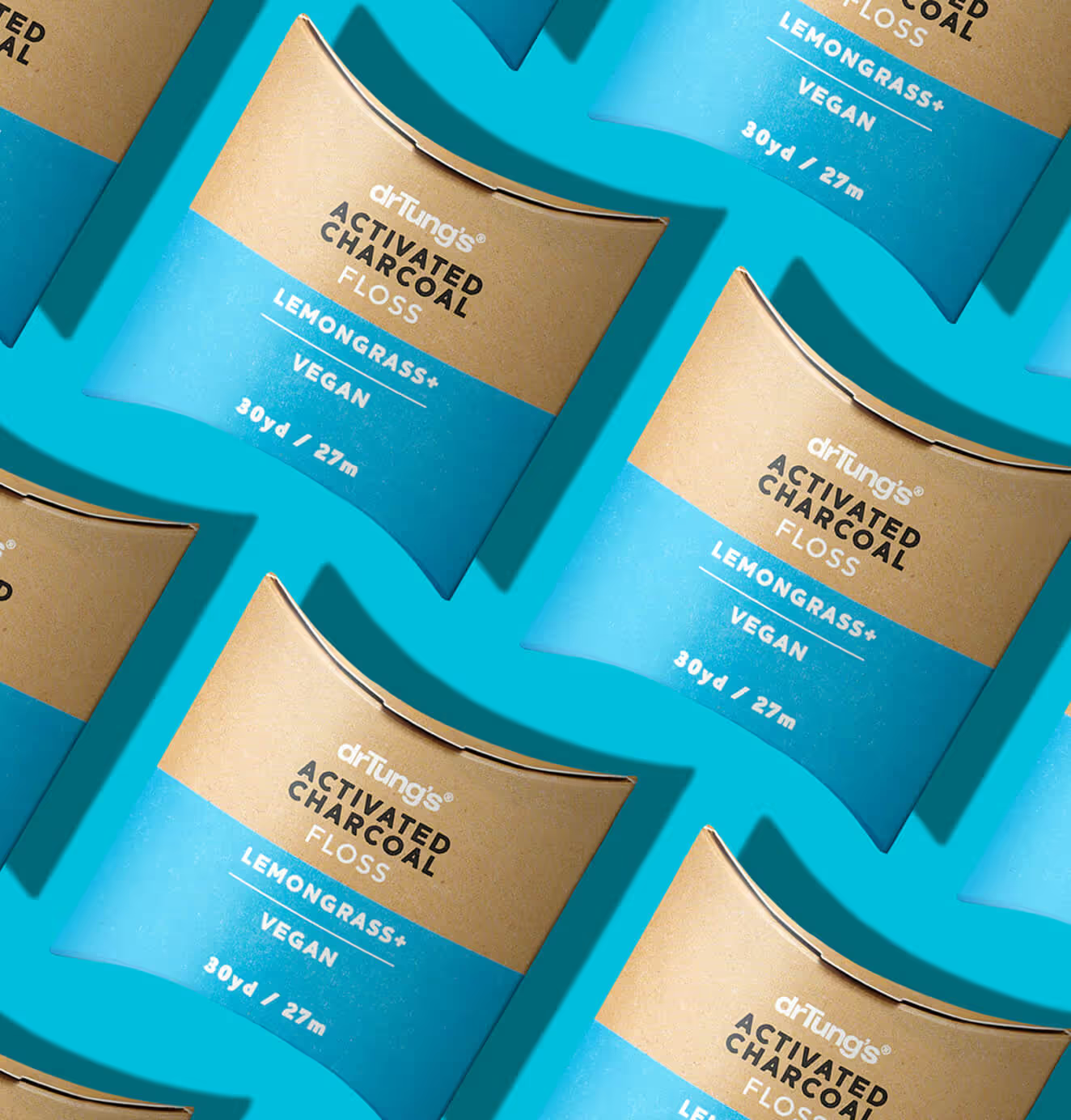
Pattern of DrTung’s Activated Charcoal Floss in brown and blue packaging, arranged diagonally on a bright blue background.
Smiling man with bright teeth on a light blue background, surrounded by floating DrTung’s herbal tooth powder tabs and packaging.
Smartphone on a textured blue surface displaying a DrTung’s ad with the text “Make the Switch” and an image of a woman holding herbal tooth powder tabs.
Flat lay of DrTung’s oral care products, including floss, tooth powder tabs, perio sticks, tongue cleaners, and toothbrushes, arranged with a blue pouch on white tile.
Pattern of DrTung’s Activated Charcoal Floss in brown and blue packaging, arranged diagonally on a bright blue background.
Mary Louise Cosmetics
Scaled a heritage-inspired clean beauty brand with modern performance marketing and farm-to-face storytelling.

+93%
Revenue growth in first 90 days

+144%
Increase in attributed revenue

READ MORE
A jar of Mary Louise Lilac & Shea Body Butter with the lid open, showing creamy texture, placed on a beige surface beside sprigs of lavender.
A Mary Louise Miracle Serum bottle with a dropper cap, lying on a bed of small yellow flowers.
Mary Louise promotional print materials featuring the body butter, with images of skincare application and product photography on a textured beige background.
A close-up overhead view of multiple Mary Louise Miracle Serum bottles with yellow dropper caps arranged tightly together.
A jar of Mary Louise Lilac & Shea Body Butter with the lid open, showing creamy texture, placed on a beige surface beside sprigs of lavender.
A Mary Louise Miracle Serum bottle with a dropper cap, lying on a bed of small yellow flowers.
Mary Louise promotional print materials featuring the body butter, with images of skincare application and product photography on a textured beige background.
A close-up overhead view of multiple Mary Louise Miracle Serum bottles with yellow dropper caps arranged tightly together.
Eyecart
Made eye care feel modern, then marketed it like a DTC darling—with the results to match.

+91%
Increase in conversion rate

+46%
Increase in AOV

READ MORE
A smiling woman holds a magnifying lens with the word "eyecart" printed on it over her eye, creating a playful optical effect against a mint green background.
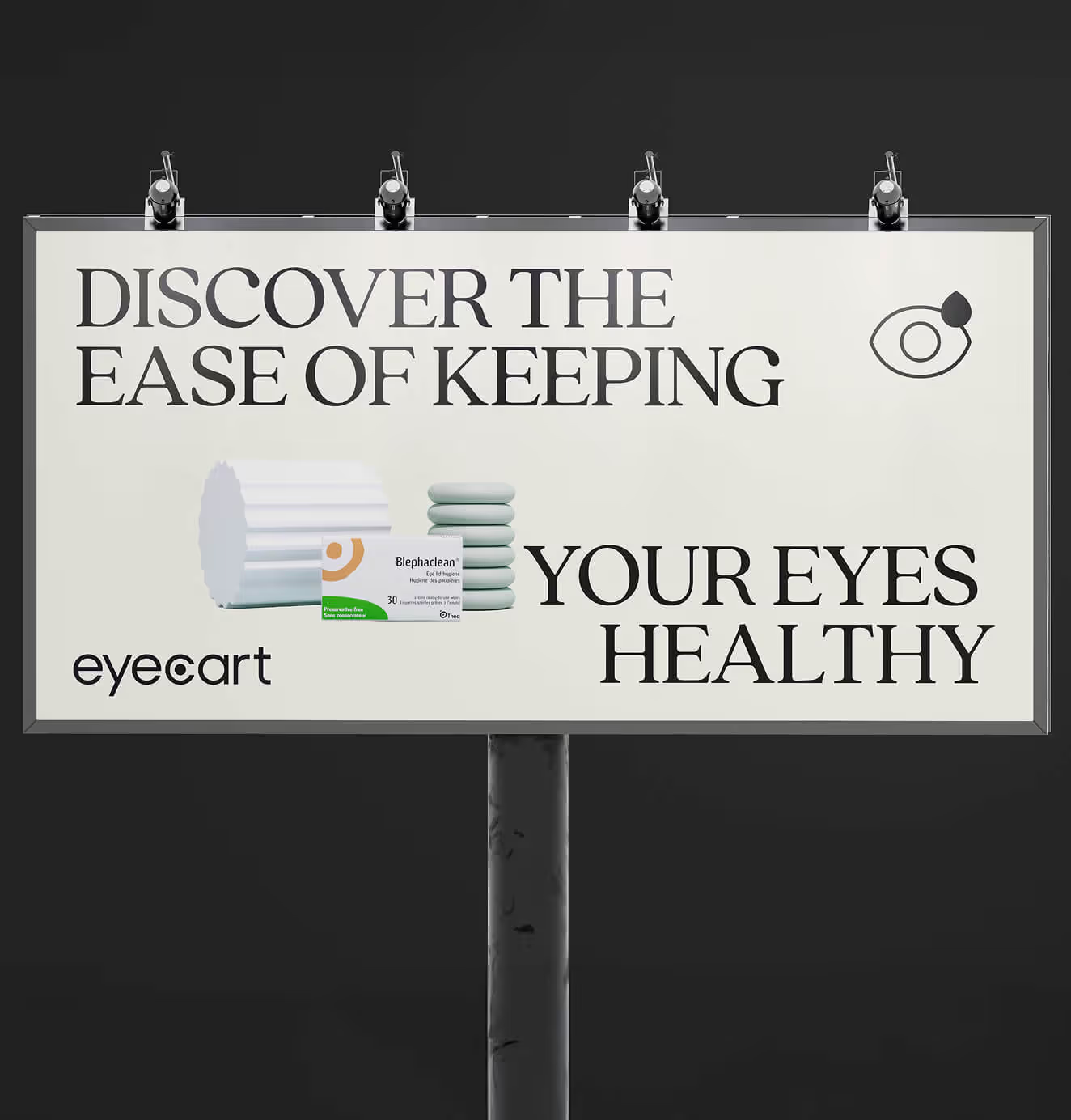
A billboard ad reads “Discover the ease of keeping your eyes healthy,” featuring Eyecart branding and Blephaclean eye care wipes packaging.
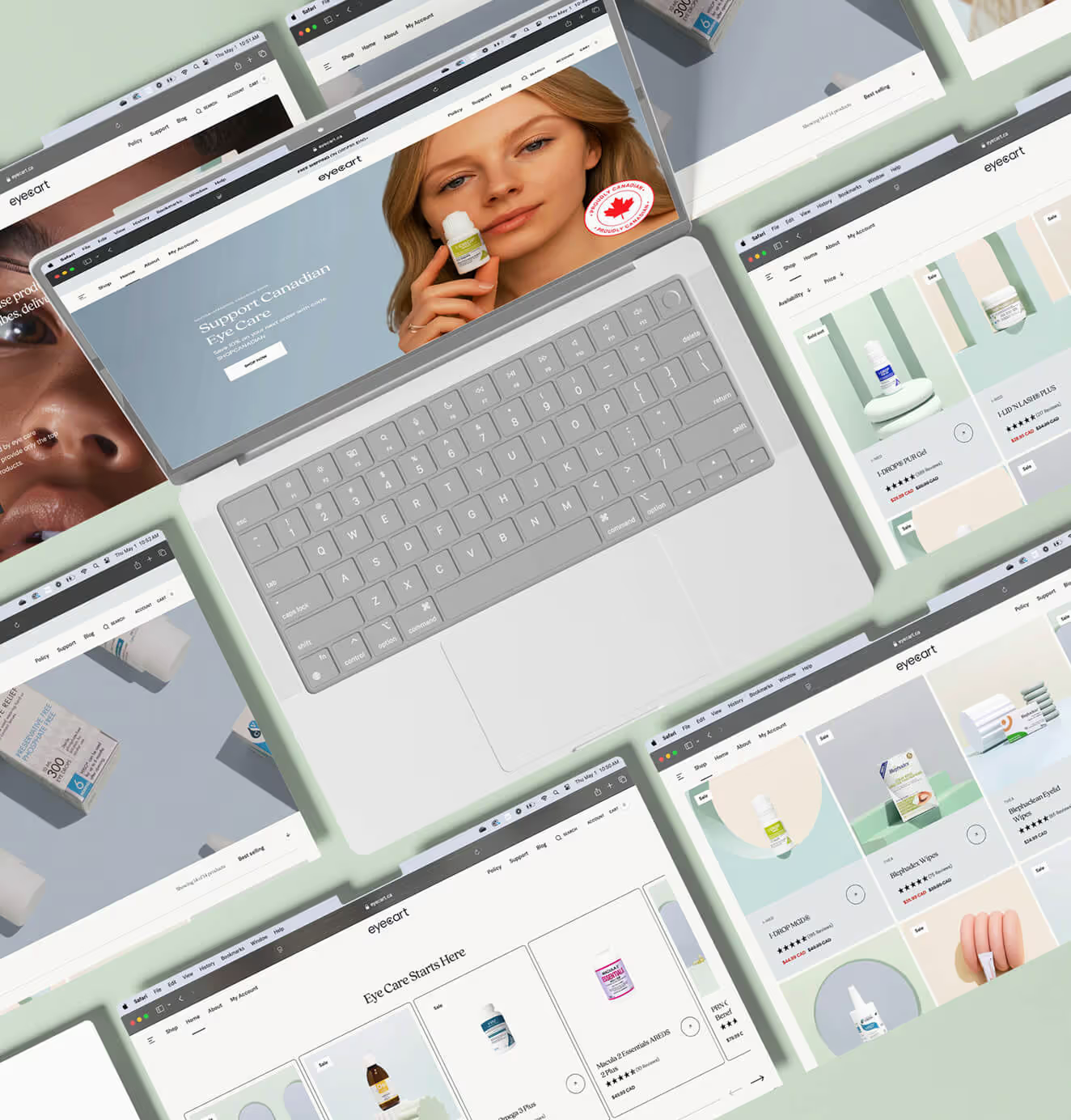
Multiple laptop screens display the Eyecart website, showcasing product pages and banners promoting eye care items.
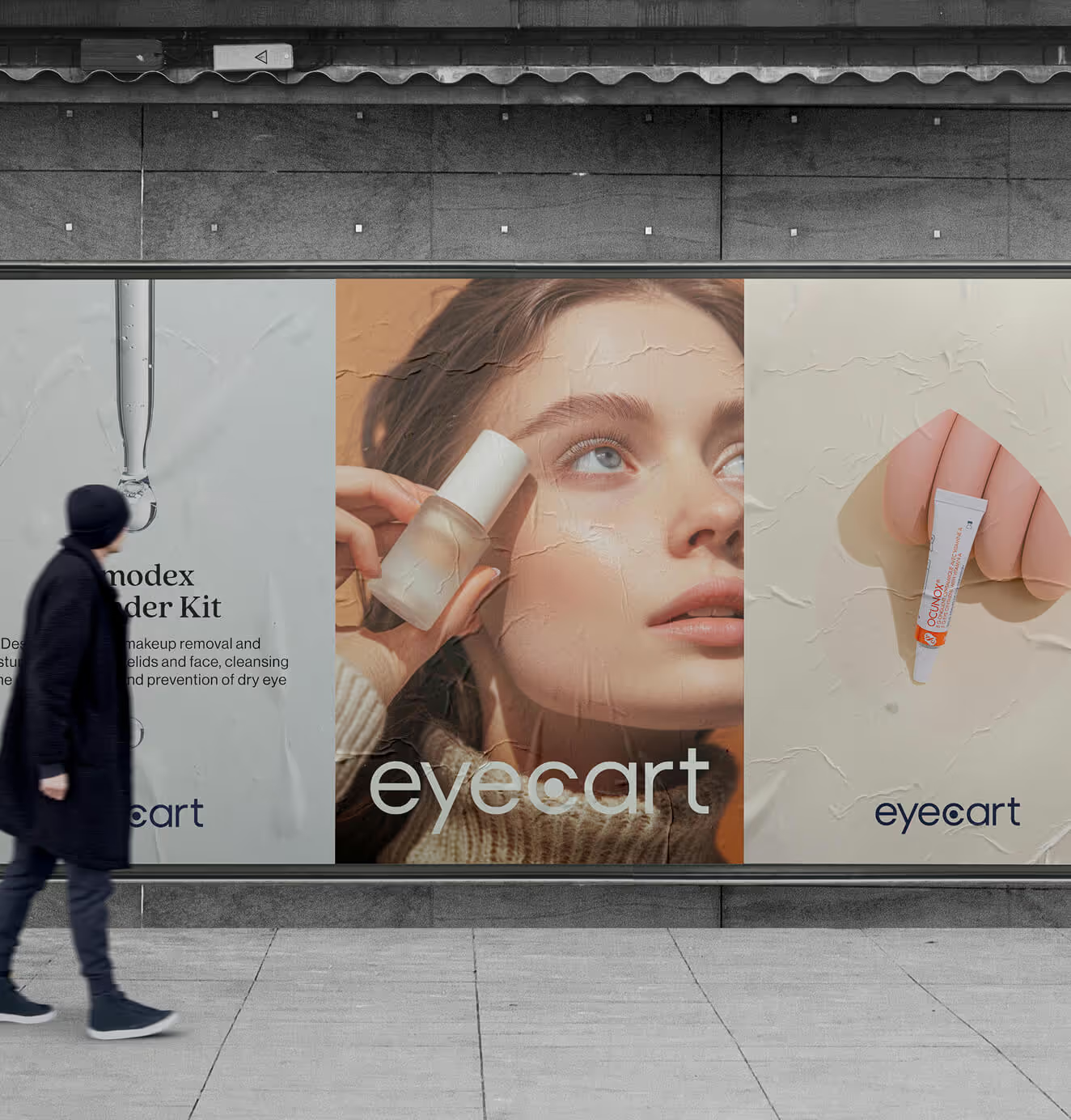
A person walks past large Eyecart posters on a city wall, featuring product photography of eye care serums and creams with clean, modern branding.
A smiling woman holds a magnifying lens with the word "eyecart" printed on it over her eye, creating a playful optical effect against a mint green background.
A billboard ad reads “Discover the ease of keeping your eyes healthy,” featuring Eyecart branding and Blephaclean eye care wipes packaging.
Multiple laptop screens display the Eyecart website, showcasing product pages and banners promoting eye care items.
A person walks past large Eyecart posters on a city wall, featuring product photography of eye care serums and creams with clean, modern branding.
Lucky Girl Rosé
We turned a zero-carb rosé into a lifestyle brand that makes every moment worth celebrating.

+200%
Increase in conversion rate

+688%
Increase in attributed revenue

READ MORE
A bottle of Lucky Girl rosé wine nestled among pink and white flowers in a rustic outdoor setting.
Lucky Girl rosé wine on a red-and-white checkered picnic blanket with cherries, strawberries, sunglasses, and a pink notebook titled The Lucky Club.
A wine glass filled with rosé on a gold tray surrounded by hands with red-painted nails, overlaid with the text “Pour yourself some luck.”
A bottle of Lucky Girl rosé wine with floral label design, dramatically lit against a soft pink background with a shadow cast.
A bottle of Lucky Girl rosé wine nestled among pink and white flowers in a rustic outdoor setting.
Lucky Girl rosé wine on a red-and-white checkered picnic blanket with cherries, strawberries, sunglasses, and a pink notebook titled The Lucky Club.
A wine glass filled with rosé on a gold tray surrounded by hands with red-painted nails, overlaid with the text “Pour yourself some luck.”
A bottle of Lucky Girl rosé wine with floral label design, dramatically lit against a soft pink background with a shadow cast.