Advertisement: Definition, History, Types, and Modern Strategies
05/01/2026
Marketing Strategy
Unlock how strategic advertising in 2026 turns fragmented media channels into measurable growth, helping you increase conversions, scale visibility, and outperform competitors.
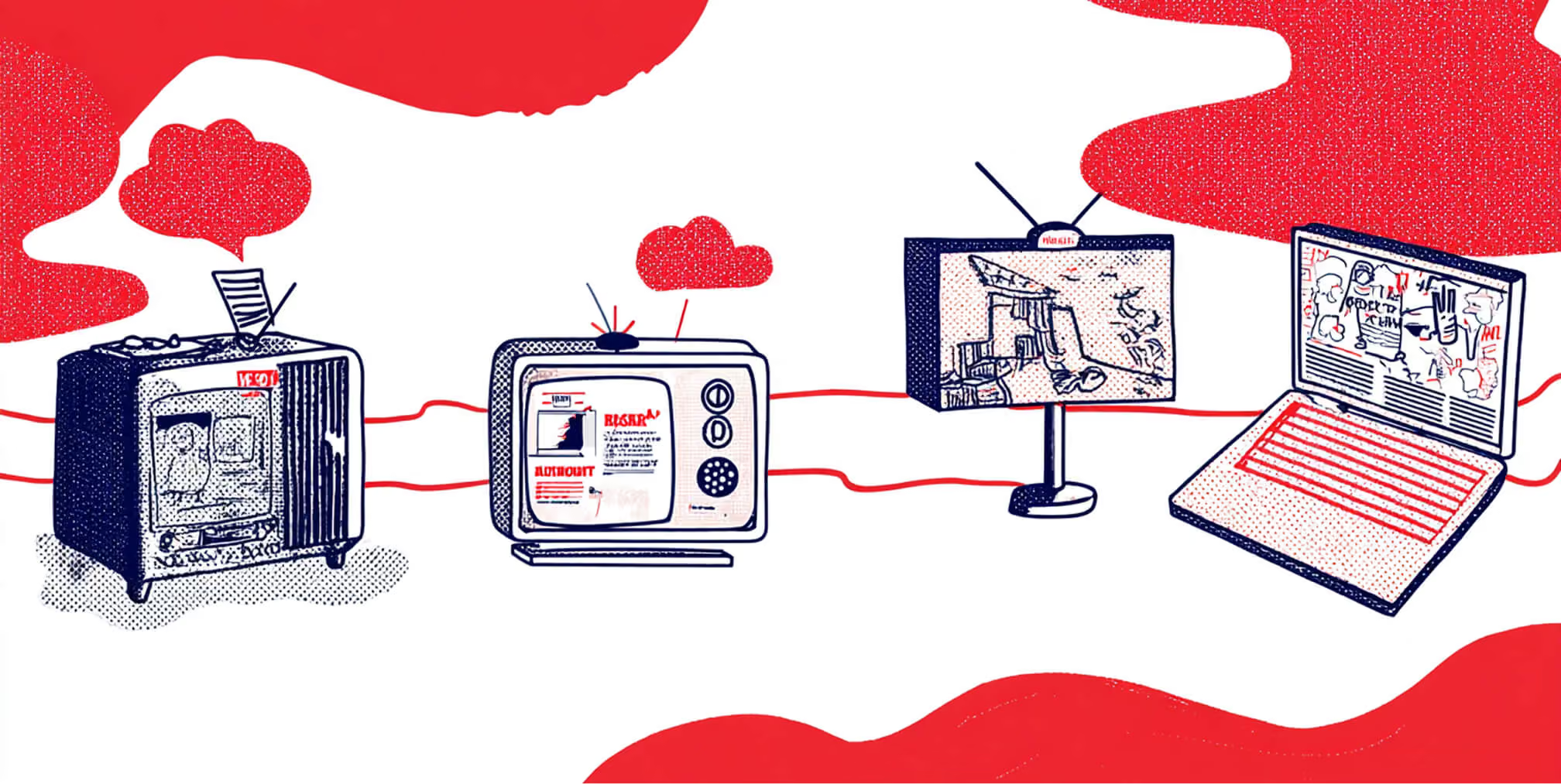
An advertisement is a paid message delivered through media channels—television, websites (or a site), print publications, outdoor displays—designed to promote products, services, brands, or ideas to specific audiences. Advertisers pay for placement across these various media. Consider a 2026 YouTube pre-roll ad for Nike featuring a 15-second high-energy video of athletes in cutting-edge apparel, overlaid with text urging viewers to “Unleash Your Potential – Shop Now.” In the industry, such video advertisements are sometimes referred to as short films or promotional films. Or picture a full page advertisement in the New York Times on Earth Day 2025, depicting vivid renewable energy landscapes with a corporate sponsor’s logo encouraging sustainable action. These examples illustrate how modern advertising blends persuasive copy, striking visuals, and clear calls to action for promotion. When accessing digital ads, sometimes a browser may block certain ad content, requiring users to adjust settings or add site exceptions to view the full advertisement.
.png)


What Is an Advertisement?
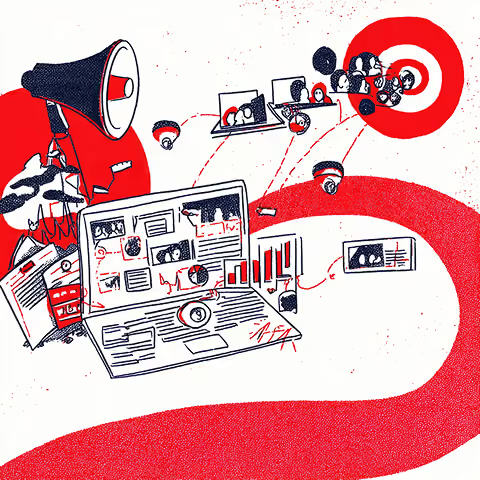
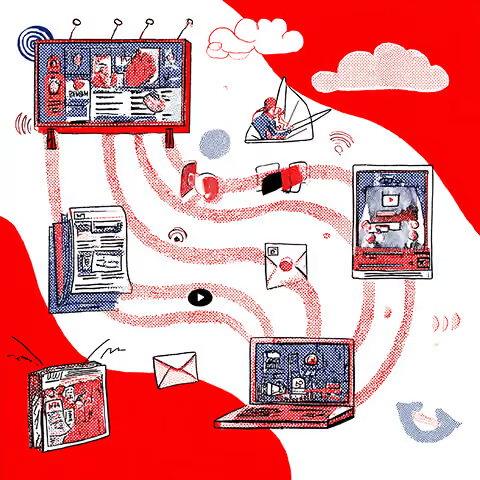
For businesses and organizations in 2026, advertisement remains indispensable for creating an effective advertising campaign. It amplifies brand awareness in fragmented media landscapes, fuels sales through performance marketing, supports political campaigns (the 2024 US elections saw approximately $15 billion in ad spend), and advances public health initiatives like the 2023-2024 COVID-19 booster drives that achieved 70% uptake in targeted demographics through multichannel messaging. Advertising is used to help achieve various business objectives, including informing consumers about products, enhancing company image, promoting new products or services, and influencing purchasing decisions. Marketers, the professionals who design and manage advertisements, use advertising to recognize and seize opportunities to reach their audience.
This article covers definition, goals, history, classifications, major media types, and current issues in advertising. Today’s landscape fuses traditional channels like cable television and radio with digital advertising powerhouses—Google Ads commanding 28% of global search spend, Meta Ads holding 20% of social, and TikTok growing at 15% annually. We’ll explore how these elements combine in modern advertising campaigns.
A precise, modern definition frames an advertisement as a paid, non-personal, identifiable communication—often used for promotion—for which advertisers pay for placement, controlled by an advertiser, disseminated through mass or targeted media, including web sites as digital platforms, to influence audience attitudes, behaviors, or choices toward a product, service, brand, event, or cause. Marketers craft these messages to influence audience attitudes, purchasing decisions, and behaviors, recognizing consumer needs and opportunities. This distinguishes it as a discrete unit rather than the overarching practice of advertising itself.
Concrete Examples Across Media
Consider the February 2024 Super Bowl commercial for State Farm—a 30-second humorous spot featuring Arnold Schwarzenegger that garnered 120 million views and delivered a 10% brand lift. Such high-profile video ads are sometimes referred to as advertising films, crafted by marketers to maximize impact. A sponsored Instagram Reel by Glossier in 2025 demonstrated skincare routines with shoppable tags, yielding five times the engagement of organic posts; this ad also appeared on the brand's site, expanding its reach. A job advertisement on LinkedIn for a tech role at Google used sponsored InMail with personalized salary previews to attract 20% more qualified applicants; companies pay for this sponsored content to influence purchasing or application decisions. Meanwhile, a public service announcement about climate change via UN-backed YouTube videos reached 500 million impressions without any commercial sales intent, serving the public interest and focusing on promotion as a key goal. Organizations recognize the importance of reaching large audiences with such messages. Some users may need to adjust their browser settings to view these ads on platforms like YouTube. In British English, you might hear someone refer to an informal ad or informal advert when describing a casual public notice promoting a local event.
Advertisement vs. Advertising
The term “advertisement” denotes the singular execution—a specific spot, banner, or post—versus “advertising,” which encompasses the strategic ecosystem of planning, creation, placement, and optimization across campaigns. Common terminology includes “ad” (American shorthand), “advert” (UK usage), “spot” or “commercial” for broadcast video, “paid social” for platform-boosted posts, “promotion” as another common term, “display ad” for graphical web banners (often shown on a web site), and “native ad” for content-mimicking formats. Advertisers pay for these placements. Not all promotional content qualifies as advertising: PR coverage, organic social posts, and word-of-mouth endorsements lack direct paid placement, evading ad regulations while still amplifying reach. Marketers create these ads to influence consumer choices, including purchasing decisions, and recognize consumer needs to shape behaviors.
Goals and Purposes of Advertising
Every advertisement should anchor to specific, quantifiable objectives aligned with organizational priorities. Common advertising goals include increasing brand awareness, customer retention, lead generation, promotion, and stimulating sales through promotions. Marketers often design campaigns that layer goals but should designate one primary objective per ad set to avoid diluted messaging and to create an effective advertising campaign.
Primary purposes manifest across contexts: Apple’s 2024 Vision Pro campaigns combined keynote teasers, AR demo videos on YouTube, and retail pop-ups to generate $1.5 billion in pre-orders. Job ads on platforms like Indeed fill vacancies by targeting specific skills. Political ads in the 2024 US elections totaled $12 billion according to OpenSecrets, as advertisers pay for these campaigns to sway margins in key races. App install drives via TikTok Spark Ads achieved cost-per-installs under $2 for gaming titles in 2025, influencing purchasing decisions. Advertisers set objectives by recognizing opportunities in the market and aligning their strategies accordingly.
Brand Awareness and Positioning
Brand awareness encompasses aided recognition (prompted recall, reaching 90% for Coca-Cola globally) and top-of-mind unaided recall, while positioning carves perceptual territory against rivals. A successful and effective advertising campaign typically defines a clear purpose, which can include promotion, creating awareness of new features, or improving customer loyalty. Marketers design these campaigns to influence consumer behavior, particularly purchasing decisions, and advertisers set objectives by recognizing opportunities in the market.
Coca-Cola’s “Share a Coke” campaign personalized bottles with over 250 names, spiking US sales 2% and earning more than one billion impressions via user shares. Nike’s “Just Do It” evokes empowerment, with 2024 Olympics campaigns yielding 25% sentiment lift despite no direct sales push. These campaigns favor mass-reach channels: television for household penetration, Times Square digital billboards flashing 10-second loops to 300,000 daily viewers, and broad social campaigns to raise awareness and drive awareness among prospective customers. Advertisers pay for these campaigns, including video ads and advertising films, to maximize exposure. Metrics include impressions, reach, branded search volume uplift, and lift studies like YouTube Brand Lift surveys.
Lead Generation and Direct Response
Lead generation ads capture data—emails, phone numbers, form submissions—for B2B and high-consideration sales, with promotion as a key objective. Marketers design these campaigns to create an effective advertising campaign that not only generates leads but also influences purchasing decisions. For example, SaaS firms using HubSpot gated webinars yield cost-per-leads of $50-200, or automotive test-drive sign-ups converting 10% of leads. Direct response advertising triggers immediate action with urgency cues like “Limited Stock – Buy Now.” Advertisers recognize opportunities and set objectives to maximize campaign impact.
Facebook Lead Ads auto-fill forms for 20-30% higher completion on mobile, and advertisers pay for these campaigns to reach targeted audiences. Google Search extensions capture high-intent queries, often directing users to the brand's site. A startup running a LinkedIn campaign to attract customers for a webinar might target marketing directors at technology companies with sponsored content promising exclusive insights, tracking cost per lead, cost per acquisition, and conversion rates to optimize performance. Video ads, including short advertising films, are also used to engage audiences and drive results.
Customer Retention and Loyalty
Retention advertising re-engages existing customers via owned channels and retargeting, with promotion as a key objective. Marketers design these efforts to create an effective advertising campaign that not only boosts loyalty but also influences purchasing decisions. Email campaigns achieve 20-30% open rates, while SMS delivers 98% delivery rates. Starbucks Rewards app pushes personalized offers post-purchase, lifting repeat visits by 20%. Win-back flows for Netflix churners offering 50% discounts reactivate 10-15% per cohort. Advertisers recognize opportunities to set objectives that maximize customer retention.
Personalization in 2024-2026 leverages CRMs like Salesforce and CDPs analyzing purchase history, achieving five times ROI versus acquisition costs. After an online purchase, a brand might trigger an email sequence featuring complementary products, followed by a retargeting ad on Instagram showcasing items left in abandoned carts and directing users to the brand's site. Advertisers pay for these campaigns, which may include video ads or short advertising films to further engage customers. Key metrics include repeat purchase rate (target 30%+), churn rate (under 5% monthly), customer lifetime value, and reactivation rate.
Brief History of Advertising
Advertising traces to ancient commerce. Egyptians used papyrus to make sales messages and wall posters, and commercial messages have been found in the ruins of Pompeii and ancient Arabia, evidencing persuasive visuals predating widespread literacy. These early forms established the fundamental principle: using media to attract attention for goods and services.
The 18th-19th centuries birthed print scale in London and Philadelphia. During this period, the advertising agency emerged, initially specializing in space brokerage—buying and selling advertising space in newspapers—and later evolving to create full-service campaigns. Agencies played a significant role in the writing of advertisements and even influenced the writing of program content. Marketers and agencies became key players in shaping advertising history, focusing on promotion as a primary goal. By the end of the 18th century in England, advertising accounted for a significant proportion of newspaper content, with about half of the daily newspapers in the 1810s using the word ‘advertiser’ in their name. Advertisers would pay for space in newspapers and other media, fueling expansion amid the Industrial Revolution. Industry players began to recognize the importance of branding and consumer insights to maximize reach and effectiveness.
Radio dawned in the 1920s with sponsored programs; television exploded post-1948 with national spots, early advertising films, and Nielsen ratings standardizing buys.
Digital ignited with AT&T’s 1994 banner ad achieving a remarkable 44% click-through rate. The importance of a web site as an advertising platform grew rapidly. Google AdWords launched in 2000, Facebook Ads socialized targeting in 2007, and TikTok viralized short-video advertising by the late 2010s. Today, programmatic buying handles 80% of display inventory, and AI-driven optimization dominates the 2020s landscape.
Print and Newspaper Advertising Era
Eighteenth and nineteenth century newspapers thrived on ads funding significant portions of their revenue, as advertisers paid for space in newspapers and magazines. Early advertising agencies emerged during this period, specializing in placing print ads and helping marketers craft persuasive copy. Marketers and advertisers recognized opportunities to reach readers and influence purchasing decisions through effective promotion. Writing compelling and persuasive copy became essential, with print ads displayed at specific sites, such as newsstands, to maximize visibility.
Early advertisements included railway schedules, patent medicines like Dr. Jayne’s Carminative Balsam promising cures, and missing person notices. Print advertisements are one of the oldest forms of advertising and can be found in various places such as newspapers and magazines.
In August 1859, British pharmaceutical firm Beechams created a slogan for Beecham’s Pills, which is considered to be the world’s first advertising slogan. This marked the shift from purely informational notices to persuasive copywriting. Illustrated magazines like Harper’s Weekly expanded visual advertising during the Civil War era, with 20th-century titles such as Time and Life hosting iconic brand campaigns.
Broadcast, Television, and the Creative Revolution
Radio in the 1920s-1930s introduced sponsored programs and jingles, with advertisers recognizing the opportunity to reach mass audiences and paying for radio airtime. Soap operas earned their name from sponsors like Procter & Gamble, whose advertising agencies often influenced the writing of scripts to align with brand messaging. Post-WWII television transformed advertising with iconic 30-second spots, where marketers crafted campaigns focused on promotion and influencing purchasing decisions. The 1960s Madison Avenue “creative revolution” saw advertising agencies play a pivotal role in producing legendary campaigns—Doyle Dane Bernbach’s VW “Think Small” subverted automotive bloat, while Avis “We Try Harder” gained 30% market share.
Broadcast advertising effectively reaches a wide audience through traditional media and is best for brand credibility. TV commercials, sometimes referred to as advertising films, are placed on specific sites or channels, and advertisers pay for these valuable spots. Apple’s “1984” Super Bowl commercial cemented cultural icon status. By 2024, Super Bowl spots escalated to $7 million per 30 seconds, with 120 million viewers generating massive buzz. These milestone events demonstrate television advertisements combine audio and visual elements, making them a powerful medium for reaching wide audiences and shaping consumer purchasing behavior.
Digital and Data-Driven Advertising
The rise of digital advertising has transformed how brands engage with consumers, allowing for more personalized and targeted marketing strategies based on user behavior and preferences. Advertising agencies now play a crucial role in managing digital campaigns, ensuring effective promotion and maximizing reach. Marketers are responsible for creating digital ads, carefully writing compelling ad copy to influence purchasing decisions. Advertisers recognize opportunities to reach online audiences and pay for digital ad placements, often targeting specific sites where their ads will be displayed. Video ads, sometimes referred to as advertising films, are a popular format. The effectiveness of these ads can depend on whether a browser blocks or displays them, based on user settings. Ultimately, digital advertising aims to drive promotion and influence consumer purchasing behavior.
From 1994’s AT&T banner to Google AdWords in 2000, search engine advertising scaled into a $300 billion ecosystem by 2025.
Programmatic advertising emerged in the 2010s with real-time bidding completing auctions in 300 milliseconds via demand-side platforms. Privacy pivots reshaped targeting: GDPR in 2018 mandated consent, CCPA in 2020 enabled opt-outs, and Apple’s 2021 iOS ATT changes slashed iOS tracking by 70%, spurring cookieless alternatives. By 2024, Google commanded 29% of global ad spend, Meta held 22%, Amazon captured 15%, and TikTok secured 12%. AI-generated creatives now test hundreds of variants per hour while autobidding optimizes return on ad spend by 20-30%.
Free Brand Health Audit
Make sure your brand is built to sell
Search has changed. Your customers aren't just Googling anymore. They're asking ChatGPT, Perplexity, Gemini and other AI platforms what to buy, who to trust and which brands they should consider.
If your brand isn't showing up clearly in those answers, you're already losing opportunities. Our free Brand Health Audit shows you where your brand stands across traditional search, AI search and brand positioning.

Sample brand audit
Live preview
Traditional search
72
AI search (GEO)
34
Brand positioning
58
Classification and Major Types of Advertisements
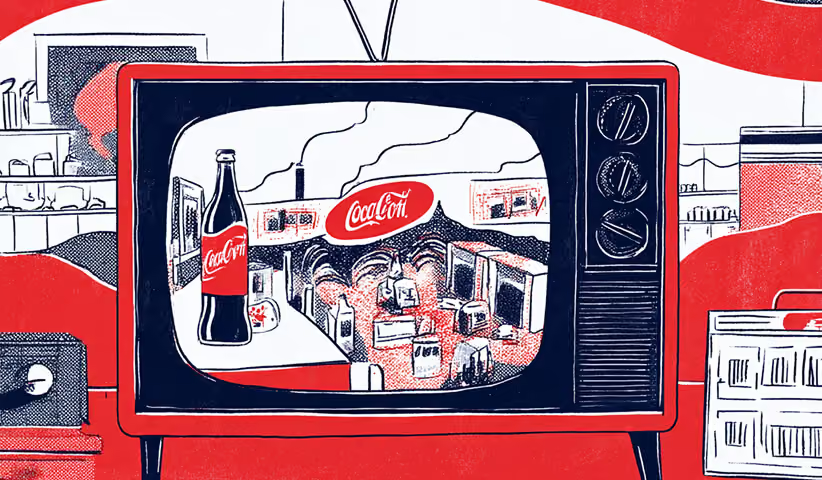
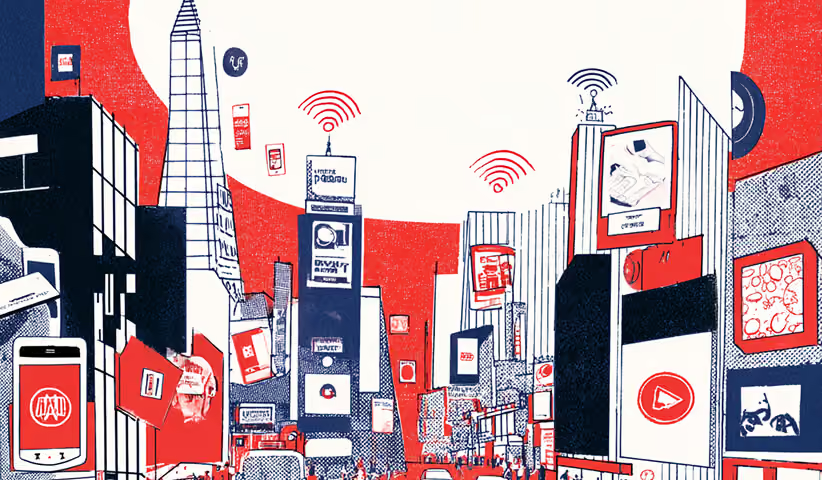
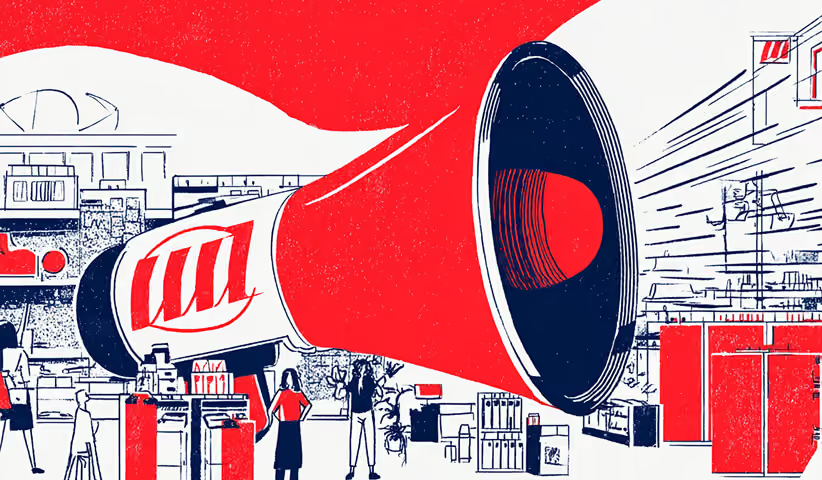
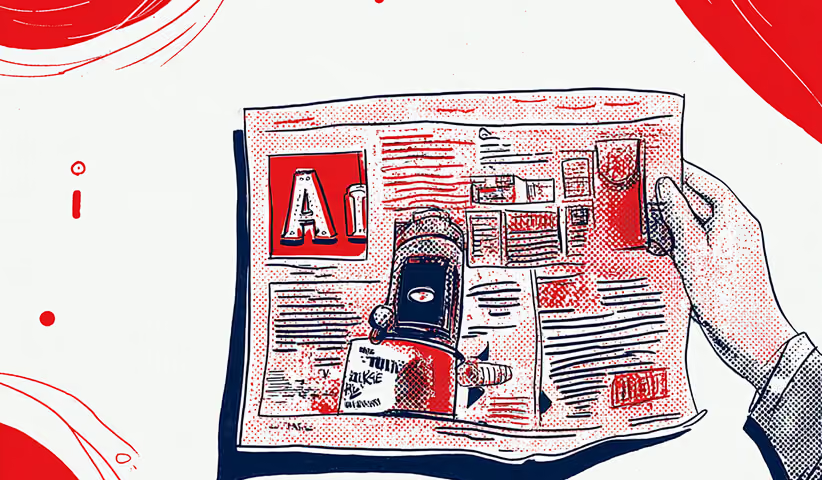
Classifications pivot on objectives (awareness, promotion, or performance), audiences (B2C impulse purchases versus B2B sales cycles), mediums (analog print and TV versus digital), and formats (static display, immersive video, or advertising film). Marketers and advertising agencies recognize opportunities to reach audiences and influence purchasing decisions by creating and writing effective ad copy. Advertisers pay for ad placements across various channels, including web ads displayed on specific sites, where browsers can block or display ads depending on settings. Modern campaigns typically combine multiple ad types in integrated strategies—Procter & Gamble’s Tide 2024 campaign unified Super Bowl spots, YouTube pre-rolls, out-of-home placements, and social ads around a single “Loads of Hope” message for 15% sales uplift.
Print Advertisements
Newspapers, magazines, brochures, direct mail, and catalogs persist in specific contexts. Advertising agencies play a crucial role in placing print ads, ensuring effective campaign strategies and space brokerage. Marketers and advertisers focus on writing persuasive copy to capture attention and drive promotion, aiming to influence purchasing decisions. Advertisers recognize opportunities to reach readers by selecting the right publications and pay for space in newspapers and magazines to maximize exposure. Print ads are displayed at specific sites, such as newsstands, where they target niche audiences. A Vogue 2025 Chanel full-page ad reaches 1.2 million readers seeking luxury content. Regional papers’ real estate listings drive 10% of inquiries for local agents. Wall Street Journal advertisements reach high-income decision-makers effectively.
Strengths include tangibility (70% longer attention per print industry research), credibility (60% higher trust versus some digital formats), and niche readership for B2B trade publications. Limitations in 2026: US print circulation has declined 70% since 2000 to approximately 20 million daily copies. Measurement lags digital metrics. Use cases include luxury branding, local service businesses, event programs, and political flyers.
Outdoor and Out-of-Home (OOH) Advertisements
Outdoor advertisements, also known as out-of-home advertisements, include billboards and ads placed in public spaces to capture attention quickly. Advertising agencies often manage OOH campaigns, coordinating with marketers who create compelling ads aimed at promotion and influencing purchasing decisions. Advertisers recognize opportunities to reach passersby and pay for billboard space at specific sites to maximize exposure. Writing concise billboard copy is crucial—best practices recommend seven words maximum, bold imagery, clear brand logos, and simple calls to action.
LED billboards in Piccadilly Circus cycle ten creatives daily to 100,000 viewers. Times Square’s 2025 Coca-Cola wraparound reaches 500,000 daily pedestrians. In the US, some communities have attempted to ban billboard advertising due to concerns about visual blight, leading to legislation like the Highway Beautification Act. Programmatic DOOH enables dynamic creatives changing by time of day or weather—ice cream ads on hot days, coffee ads during morning commutes. QR codes enable tracking engagement.
Radio and Audio Advertisements
Radio advertisements are paid spots on specific radio sites or stations, with advertisers and marketers often working through advertising agencies to place and manage these ads. Advertisers recognize opportunities to reach listeners during commutes or daily activities, aiming for promotion and influencing purchasing decisions. Marketers and agencies focus on writing effective ad scripts, ensuring the message is clear and engaging. Advertisers pay for radio airtime to secure these placements.
Traditional 15-60 second FM/AM spots remain valuable, while streaming platforms like Spotify and podcast networks expand audio advertising reach.
Local car dealership radio ads during morning drive time capture commuters. Host-read podcast sponsorships on shows like “Reply All” (sponsored by companies like Mailchimp) yield 15% attribution rates. Advantages include low CPM ($5-10), strong frequency (12+ weekly exposures), and voice intimacy. Measurement includes gross rating points for radio and download metrics for podcasts. Creative elements: memorable jingles, repeated taglines, clear brand name mentions, and specific offers.
Television and Video Advertisements
Traditional TV spots on broadcast and cable networks differ from connected TV ads on services like Hulu, Peacock, and regional streaming platforms. Advertising agencies play a crucial role in placing TV ads, ensuring they appear on specific sites or channels to maximize reach. Marketers and advertisers recognize opportunities to reach viewers and focus on writing effective ad scripts to enhance promotion and influence purchasing decisions. TV commercials, sometimes referred to as advertising films, are designed to promote brands and products, and advertisers pay for TV airtime to secure their placement.
Placing advertisements during the 2024 Olympics commanded premium pricing for 200 million viewer reach. Regional ads during local news maintain strong local targeting.
Strengths include sight, sound, and motion for storytelling that creates memorable experiences, prestige association, and mass reach. Challenges include higher production costs ($200,000-$10 million), 40% skip rates on digital, cord-cutting affecting 50% of US households, and format adaptation requirements from six-second bumpers to 60-second brand films. Linear TV buys deliver broad reach while targeted CTV campaigns use audience data for precision.
Internet and Digital Advertisements
Internet advertisements leverage online platforms, including social media, to promote products and services, utilizing targeted approaches to reach specific audiences. Advertising agencies often manage digital campaigns, coordinating with marketers who create digital ads and focus on writing effective ad copy to maximize impact. Advertisers recognize opportunities to reach online audiences and pay for digital ad placements as a key part of their promotion strategies. Main formats include search ads (Google processes 8.5 billion queries daily), display banners, social media ads on Facebook, Instagram, LinkedIn, and TikTok, video pre-rolls—sometimes referred to as advertising films—native advertising that blends ads with the content of a site to reduce ad fatigue and build trust, and email advertising. Web ads are displayed on specific sites, and browsers can block or display ads depending on user settings, which can affect ad visibility and campaign performance. These digital ads are designed to influence purchasing decisions by targeting users at various stages of the buying process.
Social media advertising targets users based on behavior and interests, making it effective for building brand loyalty and re-engaging users. Search engine marketing (SEM/PPC) captures high-intent users looking to buy immediately by displaying ads based on specific search terms. Remarketing/retargeting involves showing ads to people who have already interacted with a brand, aiming to increase conversions.
An e-commerce brand running Meta ads with product carousels might achieve 15% ROAS lift. A B2B company using LinkedIn Sponsored Content generates three times more leads than organic. A local café using Google Local Services Ads captures nearby searchers. Core metrics: click-through rate (0.5-2%), cost per click ($1-5), cost per thousand impressions ($5-20), return on ad spend (3-5x), and view-through conversions.
Guerilla, Experiential, and Unconventional Ads
Guerilla advertising uses unconventional methods or venues to promote a product, aiming to attract attention and create memorable experiences. Advertising agencies often manage these campaigns, coordinating with marketers who are responsible for designing and writing creative ad copy that resonates with audiences. Marketers and advertisers recognize unique opportunities for unconventional promotion, seeking to influence purchasing decisions through innovative approaches. Promotion remains a key goal, with advertisers willing to pay for campaign execution at specific sites or locations to maximize impact. Low-cost, high-impact stunts in public spaces—creative street art, flash mobs, 3D sidewalk illusions—generate outsized buzz. Ambush marketing around major events like unofficial brand stunts at the 2024 UEFA European Championship can reach millions via social amplification without official sponsorship costs.
Experiential marketing includes pop-up stores (Glossier NYC locations drew 1,000 daily visitors), interactive brand experiences, and product sampling at festivals. Social media sharing amplifies these campaigns far beyond their physical location—70% of reach often comes from user-generated shares. Risks include regulatory issues (permits, potential fines exceeding $10,000), public backlash from intrusive tactics, and logistical complexity.
Product Placement and Branded Content
Product placement integrates brands into movies, TV shows, streaming content, and video games, with advertising agencies often managing these deals to ensure effective campaign execution. Marketers and advertisers recognize opportunities for product placement as a strategic form of promotion, aiming to influence purchasing decisions by embedding brands within popular films and shows. Car brands featured in James Bond films command deals exceeding $50 million, as advertisers pay significant sums for such exposure. Beverage brands appear prominently in Netflix series through annual arrangements worth $100 million or more, with branded content distributed on specific sites or platforms to reach targeted audiences. Sports video games like FIFA and NBA titles feature authentic brand logos and signage, further extending brand presence.
Branded content encompasses mini-documentaries, web series, and influencer collaborations where brands fund creation without overt selling, often relying on compelling writing to engage viewers. Advertising agencies and marketers play a crucial role in crafting these campaigns, ensuring that the content aligns with brand objectives and resonates with audiences. Benefits include subtle exposure, positive association with beloved characters or creators, and bypassing traditional ad-block behavior. Regulatory disclosure requirements mandate #ad hashtags and “paid partnership” labels across many jurisdictions to maintain transparency.
Want to learn more about Social Media Marketing? Keep reading!
If you need help with your company’s marketing, contact us for a free custom quote.
Key Elements of an Effective Advertisement
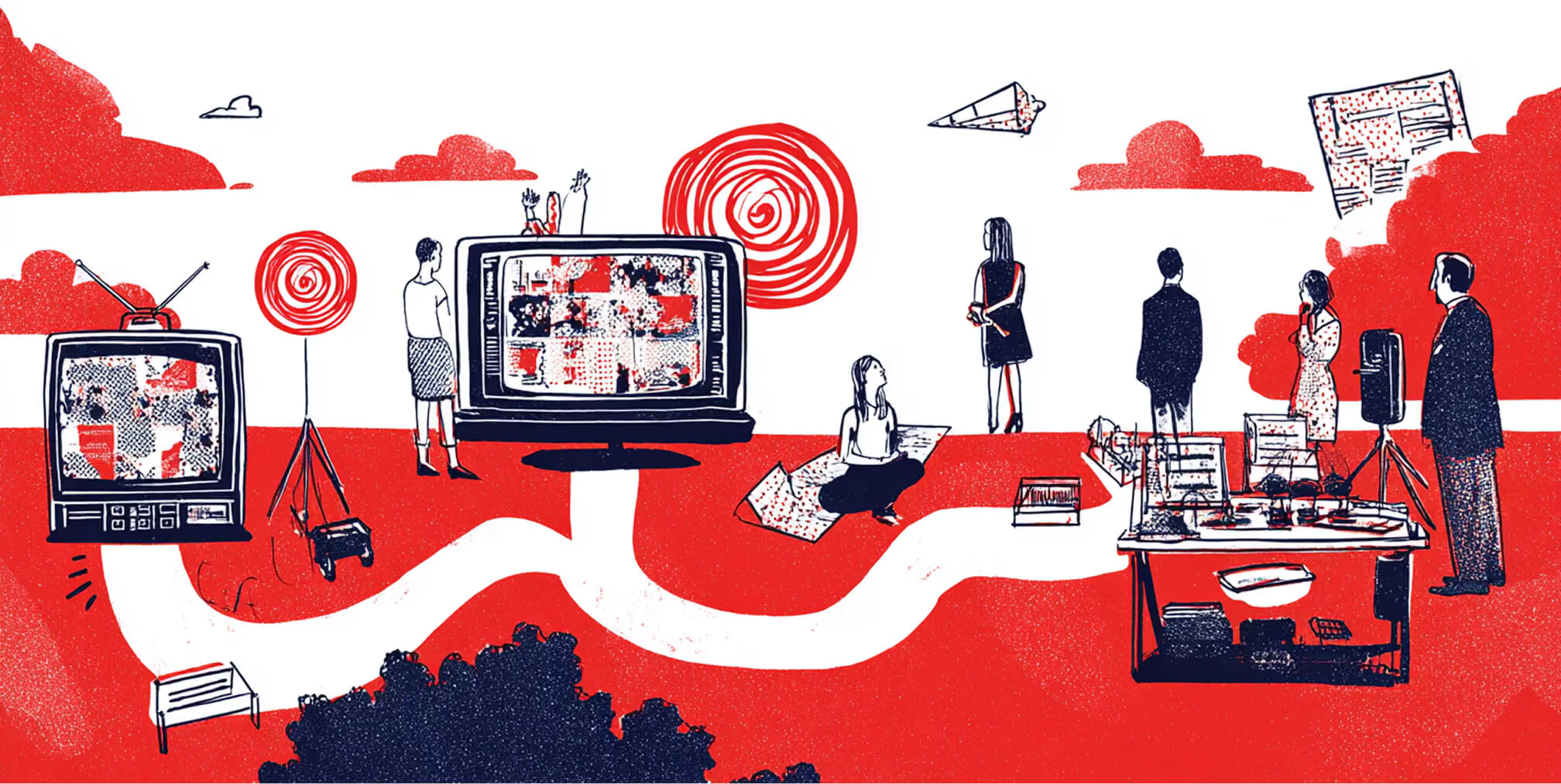
A successful advertisement blends strategic planning with creative execution to drive specific consumer actions, influence purchasing decisions, and achieve promotion goals. Marketers and advertising agencies work together to create an effective advertising campaign by recognizing opportunities to reach audiences, paying for ad placements on specific sites, and managing campaign elements. These campaigns may include video ads, sometimes referred to as advertising films, which can be displayed or blocked by a browser depending on its settings. Core components include target audience definition, value proposition, creative concept, writing compelling ad copy, visuals, call to action, and media placement.
Consider contrasting approaches: A weak social media ad shows a generic product image with “Buy Now” text (0.2% click-through rate). A strong version features a customer testimonial video, vibrant visuals, and “Claim 50% Off – 24 Hours Only” (2.5% CTR). The difference lies in strategic execution.
Audience, Positioning, and Messaging
Define clear target audiences via personas—for example, “urban professionals aged 25-34 using food delivery apps three or more times per week.” Marketers and advertising agencies work together to create an effective advertising campaign by recognizing opportunities to reach audiences, paying for ad placements on specific sites, and focusing on promotion as a key goal. Positioning (budget versus premium, innovative versus traditional) shapes message tone and helps influence purchasing decisions. A premium positioning statement might read: “For discerning home cooks who value time and quality, our meal kits deliver restaurant-caliber ingredients with chef-designed recipes, unlike mass-market alternatives that compromise on freshness.” Video ads, sometimes referred to as advertising films, may be displayed on a site, but a browser can block or display these ads depending on its settings.
Successful advertisements utilize a compelling, concise message, high-impact visuals, and a clear call-to-action targeted at a specific audience. Writing compelling ad copy is essential. Craft value propositions centered on benefits, not just features. Use audience research, customer interviews, and analytics data to refine messaging continuously.
Creative: Copy, Visuals, and Format
Writing compelling ad copy is essential for effective advertisement campaigns, as it captures attention and communicates value. Marketers, often working with an advertising agency, craft these campaigns with the primary goal of promotion—reaching target audiences and influencing purchasing decisions. Advertisers recognize opportunities to engage consumers and pay for ad placements across various media. On the web, ads are displayed on specific sites, and video ads are sometimes referred to as advertising films. The delivery of these ads can depend on the user's browser, which may block or display content based on its settings. The collaboration between marketers, advertisers, and agencies ensures campaigns are managed efficiently and tailored to maximize impact.
Break down creative elements: headlines (five to seven words, curiosity-driven), body copy (benefit-focused), imagery or video (80% of brain processing is visual), and design layout. Visual dominance is crucial as 90% of processed information is visual, prompting the use of vibrant contrasts and high-quality images.
Advertisers leverage psychological and design principles to secure attention within the first 2.5 seconds of exposure. Storytelling in advertisements creates memorable hooks that engage the audience more effectively than listing features. Emotional engagement in ads that evoke strong feelings significantly increases effectiveness in driving action. Psychological triggers such as scarcity and novelty motivate quick action in response to advertisements.
Practical tips: keep billboard headlines under seven words, use vertical 9:16 video for TikTok and Reels (70% view rate improvement), make CTAs prominent above the fold on landing pages. AI tools in 2025-2026 generate and test multiple creative variations, but require human oversight to protect brand voice—roughly 10% of AI-generated content risks being off-brand without review.
Media Planning, Targeting, and Measurement
Media planning aligns channels and budgets with goals and audience habits. Marketers and advertising agencies work together to create an effective advertising campaign that drives promotion and influences purchasing decisions. Advertisers recognize opportunities to reach audiences and pay for ad placements across various media, including web ads displayed on specific sites and video ads, sometimes referred to as advertising films. Writing compelling ad copy is essential, and browsers can block or display ads depending on their settings. Advertising agencies play a crucial role in campaign management.
Effective advertising strategies include digital methods like social media and search engine marketing (SEM), as well as traditional and influencer approaches.
Basic targeting methods across platforms include geography, interests, behaviors, custom audiences, lookalike audiences, and frequency caps (typically three to five exposures per user per week). Measurement frameworks require setting KPIs, implementing pixels and tracking, and reading dashboards in tools like Google Analytics 4, Google Ads, and Meta Ads Manager.
A sample dashboard might show: 50,000 impressions, 1.5% CTR (750 clicks), $2.50 CPC, 45 conversions, and 2.5x ROAS. A/B testing creatives, audiences, and bids enables optimization over time. Advertisers continually refine landing pages, test messaging variants, and adjust targeting based on performance data.
Ethics, Criticisms, and Regulation of Advertising
Advertising has been shown to significantly influence consumer behavior and purchasing decisions by appealing to emotions and desires, often using psychological tactics crafted by marketers to create connections with audiences. Marketers, often working with an advertising agency, design campaigns with promotion as a key goal, and advertisers pay for ad placements on specific sites, including web ads that may be blocked or displayed depending on browser settings. Video ads, sometimes referred to as advertising films, are also used to engage audiences. The writing of ethical ad copy is crucial, and advertisers recognize the importance of ethical considerations in their messaging and campaign management.
There have been increasing efforts to protect people by regulating the content and influence of advertising, including restrictions on advertising alcohol, tobacco, or gambling in many countries. Regulations and self-regulatory codes aim to balance commercial freedom with consumer protection.
Common Criticisms and Social Concerns
Concerns persist around misleading or exaggerated claims in sectors like weight loss, cosmetics, and financial products. Marketers, often working with an advertising agency, create campaigns with the primary goal of promotion and influencing purchasing decisions. Advertisers recognize the importance of writing ethical ad copy and pay for ad placements, whether on television, radio, or digital platforms. On the web, ads are displayed on specific sites, and video ads are sometimes referred to as advertising films. The delivery of these ads can depend on the user's browser, which may block or display content based on its settings. Advertising agencies play a crucial role in campaign management, ensuring compliance with regulations and ethical standards.
Some advertising regulations focus heavily on the veracity of claims, leading to tighter restrictions on advertisements for food and healthcare products. The FTC levied $2.5 billion in fines between 2010-2020 for deceptive advertising practices, including Volkswagen’s diesel emissions scandal.
Research indicates that advertisements targeting children can lead to unhealthy eating habits, as children may not fully understand the persuasive intent behind these ads, making them more impressionable. The UK implemented HFSS (high fat, sugar, salt) advertising restrictions in 2025, with predictions of 10% reductions in youth sugar consumption. Chile’s labeling requirements drove 15% sales declines in affected categories.
Debates continue about portrayals of gender, race, and body image, with shifts toward inclusive campaigns like Dove’s “Real Beauty” (launched 2004, credited with 700% sales growth). Ad clutter, spam emails, and intrusive pop-ups fuel ad blocker adoption. Greenwashing and unsubstantiated sustainability claims face increasing regulatory scrutiny in the 2020s.
Regulation, Standards, and Self-Regulation
Government regulators enforce advertising standards globally, and marketers—often working with an advertising agency—create campaigns with promotion as a key goal, aiming to influence purchasing decisions. Advertisers recognize regulatory requirements and must ensure their writing, especially ad copy, is compliant. They pay for ad placements, whether on television, radio, or digital platforms, including specific sites where web ads are displayed. Video ads, sometimes referred to as advertising films, are also common, but browsers can block or display these ads depending on user settings. Advertising agencies play a central role in campaign management, ensuring all aspects meet legal and ethical standards.
The US Federal Trade Commission mandates truth-in-advertising with substantiation requirements. The UK Advertising Standards Authority achieves 95% compliance rates. EU consumer protection bodies enforce cross-border standards.
Concrete rules include: disclosure requirements for sponsored content and influencer marketing, restrictions on tobacco, alcohol, gambling, and pharmaceutical advertising, and truth-in-advertising laws requiring substantiated claims. In the UK, most forms of outdoor advertising are regulated by the Town and County Planning system, and displaying some advertisements without consent is a criminal offense. Governments often regulate the advertising of pricing information, with some countries requiring that advertised prices include all applicable taxes to ensure transparency for consumers.
Data privacy regulations reshape digital advertising: GDPR enables 4% of revenue fines, the ePrivacy Directive governs cookies, and CCPA/CPRA provide California consumer opt-outs. Industry self-regulation operates through codes like the ICC Advertising and Marketing Communications Code and platform policies from Google Ads and Meta. Examples of enforcement: Red Bull paid $13 million to settle claims about “giving you wings,” while numerous health supplement ads have been pulled for unsubstantiated medical claims.
Future Trends in Advertising
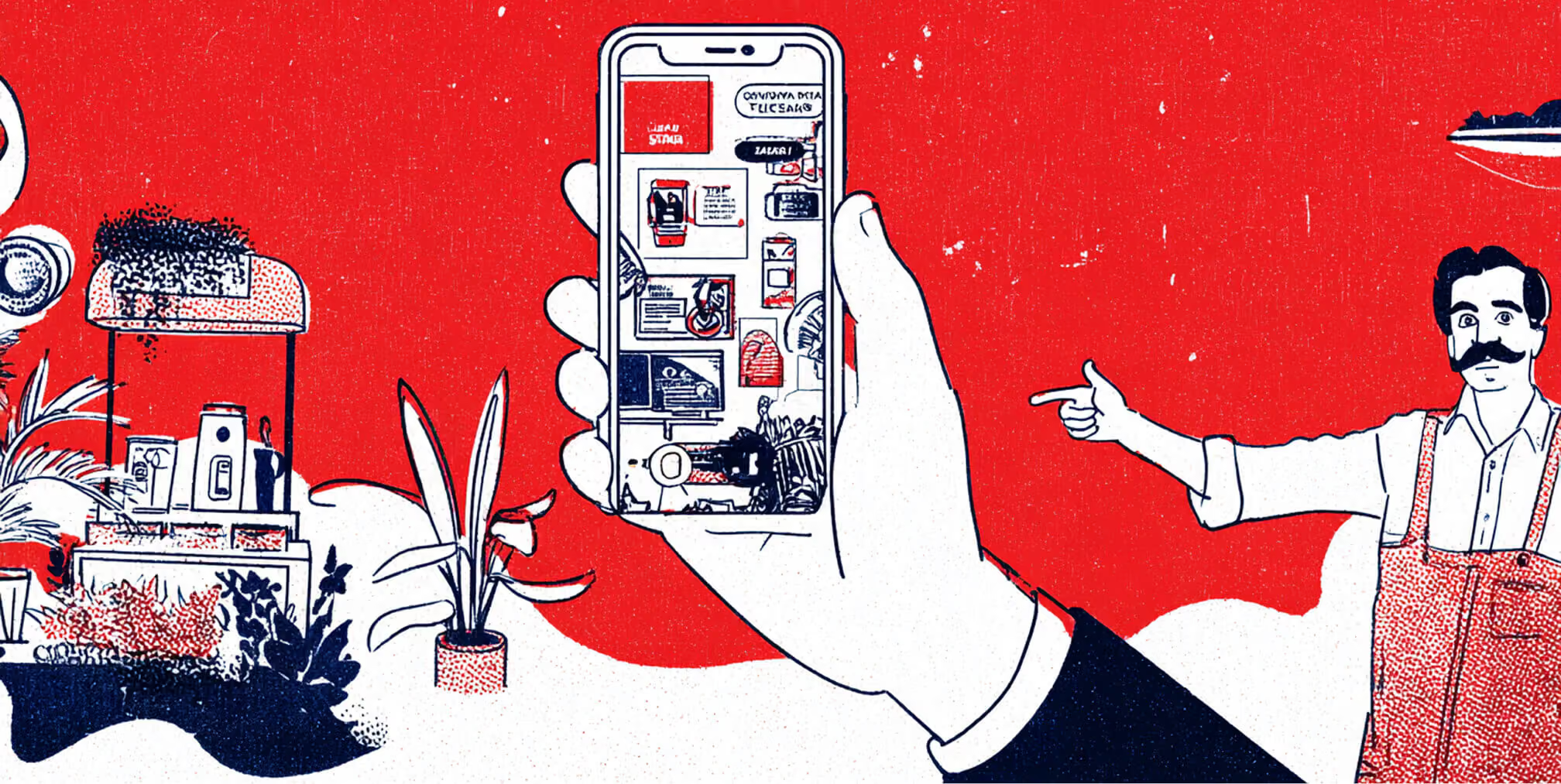
Technology, privacy shifts, and evolving consumer behavior reshape advertisement strategies beyond 2026. Marketers, often working with an advertising agency, now rely on AI-generated creative and optimization tools to handle 30% of campaign decisions through platforms like Google Performance Max. Writing innovative ad copy and recognizing emerging trends are crucial, as advertisers pay for new ad formats and invest in promotion to influence purchasing decisions. Cookieless targeting accelerates as Chrome phases out third-party cookies, driving 50% growth in contextual advertising solutions. Web ads are displayed on specific sites, and browsers can block or display ads depending on user settings, sometimes requiring site exceptions. Video ads, sometimes referred to as advertising films, are increasingly used for engaging audiences.
Retail media networks—ads within Amazon, Walmart, and supermarket apps—project growth to $100 billion by 2028. Shoppable video and social commerce expand, with TikTok attributing 20% of engagement to commerce features. Influencer marketing leverages influential individuals to promote products on social media, building trust and social proof. Micro-creators with 10,000 followers achieve six times higher engagement than mega-influencers.
Expectations grow for transparency, ethical targeting, and sustainability-focused messaging—70% of consumers prefer purpose-driven brands according to 2025 research. The fundamentals of a good advertisement remain constant: clear value proposition, honest messaging, and deep audience understanding. Whether placing a company advertisement during the Super Bowl or running targeted TikTok campaigns, success comes from combining timeless principles with emerging tools. Start by auditing your current advertising strategy against these frameworks, test one new format this quarter, and build first-party data relationships that will sustain your marketing through whatever changes come next.

Quincy Samycia
As entrepreneurs, they’ve built and scaled their own ventures from zero to millions. They’ve been in the trenches, navigating the chaos of high-growth phases, making the hard calls, and learning firsthand what actually moves the needle. That’s what makes us different—we don’t just “consult,” we know what it takes because we’ve done it ourselves.
Want to learn more about brand platform?
If you need help with your companies brand strategy and identity, contact us for a free custom quote.
We do great work. And get great results.
+2.3xIncrease in revenue YoY
+126%Increase in repurchase rate YoY




+93%Revenue growth in first 90 days
+144% Increase in attributed revenue




+91%Increase in conversion rate
+46%Increase in AOV




+200%Increase in conversion rate
+688%Increase in attributed revenue