Advertising: Definition, Types, Strategies & Future Trends

05/12/2026

Branding / Brand Strategy

Master advertising in 2026 with data-driven strategies, modern channels, and proven frameworks that turn spend into measurable growth.

People interacting in a vibrant city environment filled with greenery, vehicles, and signage, representing advertising woven into everyday urban life.

Advertising is paid, persuasive communication designed to promote products, services, ideas, or causes across channels like television, print, out-of-home media, and digital platforms. In 2026, understanding advertising isn’t optional—it’s essential for anyone involved in business growth, brand building, or customer acquisition.

Quincy Samycia
Play IconPause Icon
0:00
0:00

What Advertising Really Means in the Digital Era

Woman holding a smartphone surrounded by layered digital ads, screens, and city elements, representing personalized and connected advertising experiences.
Modern cityscape with a large outdoor billboard overlooking busy streets and pedestrians, representing large-scale outdoor advertising and media visibility.
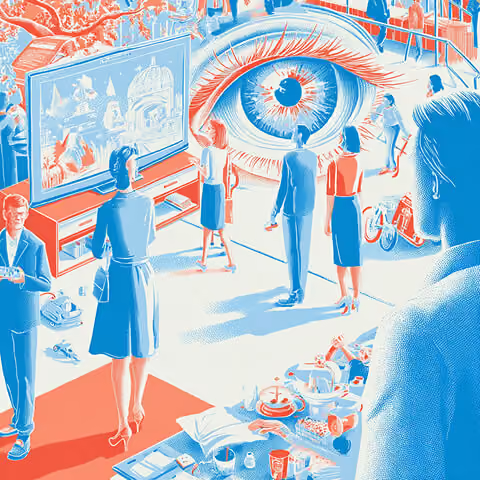
People gathered around oversized screens and a giant eye illustration, representing audience attention, engagement, and visual advertising impact.
No items found.

Global ad spend surpassed US$1 trillion in 2025, with digital advertising accounting for more than 70% of that total. This shift reflects how advertising has transformed from simple product announcements into data-driven, personalized campaigns delivered across multiple screens simultaneously. Where advertisers once purchased newspaper columns and hoped for the best, they now bid in real-time auctions for individual impressions targeted at specific audiences.

The evolution from ancient marketplace announcements to today’s AI-optimized campaigns represents one of commerce’s most dramatic transformations. Yet the core purpose remains unchanged: capturing attention and persuading action. What’s different is the precision, speed, and measurability modern advertising offers.

This article covers everything you need to understand advertising in today’s landscape. We’ll explore the modern definition and what distinguishes advertising from related disciplines. Then we’ll trace its history from Egyptian papyrus to programmatic buying. You’ll learn about major types of advertising—both traditional and digital—along with the purposes and techniques that drive successful advertising campaigns.

We’ll also examine the regulatory environment that governs advertisers and look ahead to emerging trends shaping the industry through 2030. Whether you’re building your first ad campaign or refining an established marketing strategy, this guide provides the foundation you need.

Brief History of Advertising

The impulse to advertise predates writing itself. Archaeological evidence documents Egyptian papyrus sales notices dating to approximately 1500 BCE, promoting goods in commerce-focused communities. In ancient Rome and Greece, painted wall inscriptions and carved stone notices advertised everything from gladiatorial games to available properties. These ancient advertisements shared modern advertising’s core function—capturing attention and promoting specific actions—despite lacking sophisticated targeting.

The Song dynasty copper plate from around 960–1127 CE, promoting a Chinese needle shop, represents widely cited evidence of the world’s oldest known printed advertisement. Printing’s revolutionary impact on advertising proliferated rapidly in Europe after Gutenberg’s movable type innovation around 1440 CE.

By the 1790s, newspaper advertisements occupied significant column space in British and American publications. These early ads functioned primarily as commercial directories—text-only listings of goods availability, prices, and merchant details—rather than persuasive narratives with emotional appeals.

Modern branding emerged in the late 19th century when pioneers like Thomas J. Barratt transformed Pears’ Soap advertising through artistic imagery, celebrity endorsements, and consistent visual identity. This period established advertising as strategic marketing communication rather than simple announcement.

The 20th century brought mass media transformation. The first recognized radio ads appeared in the early 1920s, followed by television advertising’s explosion after World War II. Iconic campaigns like “I’d Like to Buy the World a Coke” (1971) demonstrated advertising’s capacity to generate cultural conversation beyond product benefits.

The shift to digital began in 1994 when AT&T purchased the first banner ad on HotWired. Google AdWords launched in 2000, establishing paid search as a dominant channel. By the mid-2010s, programmatic buying and social media targeting became mainstream, fundamentally reshaping how advertisers reach consumers.

From Newspapers to Modern Agencies

Late 18th– and early 19th-century newspapers in England and the United States monetized quickly by selling ad space, with many publications adding “Advertiser” to their mastheads to signal this commercial function. These early newspaper advertisements were primarily text-based, listing available goods and merchant information.

In 1836, the French newspaper La Presse implemented a transformative strategy by reducing cover price significantly and funding operations through paid advertisements rather than subscriptions alone. This business model innovation proved paradigm-shifting. Lower cover prices expanded readership, which increased advertising value, creating a virtuous cycle that established ad-supported media as economically viable.

Dedicated advertising agencies emerged in the mid-19th century in London, New York, and Philadelphia. Initially, these agencies functioned as space brokers, purchasing newspaper advertising inventory in bulk and reselling it to merchants at markup without creative involvement.

Early memorable slogans demonstrated that concise, memorable phrases could drive consumer recall. “Beecham’s Pills: Worth a guinea a box” (1859) exemplified how global brand recognition could be built through consistent messaging. These campaigns established advertising as essential for market differentiation.

The model evolved as agencies recognized competitive advantages in offering comprehensive services. Rather than just buying space, they began providing copywriting, artwork creation, and complete advertising campaigns planning. This professionalization transformed advertising from merchant announcements into strategic marketing communication that modern practice continues to build upon.

20th–21st Century: Mass Media to Digital

U.S. advertising expenditure reached approximately 2.5% of GDP by 1919, driven by industrial growth, urban population concentration, and national brand emergence. This spending level reflected advertising’s recognition as essential to economic development and market expansion.

The 1920s brought influential figures like Edward Bernays, who combined psychology and public relations concepts to shape consumer desires rather than simply inform about product availability. Bernays’ approach marked a shift from informational advertising toward emotional and aspirational persuasion—a fundamental change that continues influencing advertising strategies today.

Post-World War II television adoption transformed advertising’s reach and creative possibilities. The first presidential television advertising campaigns in the 1952 U.S. election demonstrated political advertising’s potential through televised spots. Television’s visual and audio capabilities enabled narrative storytelling impossible in print or radio advertising, while geographic broadcast reach created unprecedented audience scale. Primetime “commercial breaks” became institutionalized programming structure.

The online advertising era commenced formally when AT&T purchased a banner ad on HotWired in 1994, marking the internet’s first recognized clickable advertisement. Google AdWords (now Google Ads) launched in 2000, establishing paid search as performance marketing’s dominant channel. Facebook’s self-serve ad platform around 2007 democratized social media advertising, enabling small businesses to create targeted campaigns without agency intermediation.

Programmatic automation and real-time bidding became mainstream between 2010 and 2020, introducing algorithmic decision-making to media buying. TikTok Ads launching globally by 2020 represented the latest major platform shift, enabling short-form video ads to reach younger demographics with unprecedented engagement rates.

Classification of Advertising

Person overlooking a futuristic city filled with media screens and visual content, representing the broad reach of advertising across environments.
Large megaphone projecting light across a public square filled with people, representing amplified brand messaging and public communication.
Adult and child reading together in a stylized landscape with flowers and architecture, representing educational and emotionally driven advertising.
Workspace with printed materials, digital screens, and coffee cups, representing creative planning and content production in advertising campaigns.

Advertising can be classified across multiple dimensions simultaneously, with modern campaigns often spanning several categories to achieve integrated marketing objectives. Understanding these classification axes enables strategic channel and message selection for your specific target audience.

By audience: Business-to-consumer (B2C) advertising targets individual consumers making personal purchases, emphasizing emotional appeals and lifestyle positioning. Business-to-business (B2B) advertising targets decision-makers, emphasizing functionality, ROI, and technical specifications.

By geographic scope: Local advertising serves neighborhood businesses; regional campaigns span multiple states; national advertising reaches country-wide audiences; and international or global campaigns operate across borders for luxury brands and technology platforms.

By objective: Brand-building advertising focuses on long-term awareness and perception development. Direct-response advertising emphasizes immediate, measurable actions like purchases or form submissions.

By buying method: ATL (above the line) refers to mass media buys in television, radio, print, and outdoor advertising. BTL (below the line) encompasses direct mail, in-store promotion, and experiential marketing. TTL (through the line) represents integrated campaigns combining both approaches—increasingly the standard for major product launches.

Traditional Media Channels

Traditional media channels remain significant despite digital advertising’s growth, commanding substantial ad spend particularly for awareness-focused campaigns.

Print advertising encompasses newspapers and magazines. Newspapers reach broad, geographically defined audiences, particularly effective for retail and local advertising. Magazine advertising offers stronger targeting through audience segmentation—a campaign in The Economist reaches business decision-makers; a placement in a parenting magazine reaches families.

Broadcast television remains advertising’s highest-reach channel. A television commercial delivers moving imagery, sound, and narrative storytelling, creating psychological weight that positions brands as significant. Linear TV advertising reaches broad audiences effectively, particularly for consumer goods, automotive, and political campaigns.

Radio advertising reaches commuters and workplace audiences cost-effectively. The medium enables geographic targeting precision superior to television, making it valuable for regional campaigns. However, audio-only communication limits visual brand reinforcement.

Outdoor advertising includes billboards, transit ads, and digital displays like those in New York’s Times Square. This channel reaches mobile audiences during daily transit, providing repeated exposure through frequency of travel patterns. Street advertising and transit placements target specific commuter demographics.

Direct mail advertising maintains effectiveness for targeted campaigns despite digital disruption. Personalized mail pieces—addressing recipients by name and tailoring offers to purchase history—generate response rates often exceeding digital equivalents for specific audiences.

Strengths across traditional channels include broad reach, strong visual or audio impact, and suitability for brand awareness. Limitations include reduced targeting precision and measurement challenges compared to digital alternatives.

Digital & New Media Channels

Digital advertising encompasses search, display, social media, online video, mobile advertising, email, and emerging formats like connected TV and augmented reality ads. Combined, these channels enable precise targeting and real-time optimization impossible with traditional form advertising.

Paid search through Google Ads and Microsoft Advertising operates on auction-based mechanisms where advertisers bid for placement when users query specific keywords. This channel captures demand signals—users searching “best running shoes” demonstrate explicit purchase intent. Pricing typically employs cost-per-click (CPC) models, aligning advertiser and platform interests through pay per click structures.

Display and native advertising appear on websites and apps throughout the digital ecosystem. Banner ads, rich media units, and in-feed native content reach users across thousands of properties. Display excels for retargeting, reconnecting with users who previously visited a website but didn’t purchase. Text ads and shopping ads serve different intent signals within search results.

Social media advertising on platforms like Meta (Facebook and Instagram), LinkedIn, X, Pinterest, Snapchat, and TikTok leverages extensive user data—interests, behaviors, demographics, purchase history—to identify specific audiences likely to respond. Combined social ad spend exceeded US$200 billion in the mid-2020s. These social media platforms enable younger demographics engagement despite skepticism toward traditional advertising methods.

Online video advertising includes YouTube pre-roll, in-stream video ads, and connected TV advertising reaching audiences through internet-connected devices. Video ads enable storytelling and demonstration sequences superior to static formats.

Mobile advertising formats include in-app ads, push notifications, and SMS marketing. Location data capabilities enable geographic targeting impossible with desktop internet advertising. Newer options include augmented reality “try-on” filters for visualizing products and drone-based displays at large events.

Programmatic Advertising & Automation

Programmatic advertising automates digital ad buying through software, algorithms, and data analysis rather than manual negotiations. This approach represents a fundamental shift in how ad space is purchased and optimized.

The main parties involved include:

  • Demand-side platforms (DSPs): Used by advertisers to manage campaigns across multiple publishers
  • Supply-side platforms (SSPs): Used by publishers to manage inventory across multiple buyers
  • Ad exchanges: Marketplaces facilitating real-time auctions

Real-time bidding (RTB) operates at extraordinary velocity. When a user loads a webpage containing ad inventory, auctions occur within milliseconds. DSPs evaluate whether the user matches campaign targeting criteria and determine appropriate bid prices based on conversion probability models. The highest bidder’s ad displays before the user perceives any loading delay.

From 2020 onward, AI and machine learning increasingly optimize programmatic campaigns:

  • Bid optimization dynamically adjusts prices for individual impressions
  • Creative optimization automatically selects from multiple ad variants based on predicted performance
  • Audience targeting refinement identifies high-probability users beyond explicit targeting rules

Programmatic advertising’s advantages include unprecedented scale, real-time data optimization, and sophisticated targeting. However, marketers must manage brand safety concerns (ads appearing alongside inappropriate content), ad fraud (bot traffic generating fake impressions), and privacy issues as third-party cookies phase out. According to industry claims, programmatic display can reach over 90% of worldwide internet users, demonstrating the channel’s massive reach potential.

Want to learn more about brand platforms, Brand Strategy and Brand Identity? Keep reading!

If you need help with your companies brand strategy and identity, contact us for a free custom quote.

Main Purposes of Advertising

Massive billboard displaying a detailed eye above a busy urban setting, representing visibility, consumer attention, and large-format advertising.

Advertising serves multiple objectives spanning awareness building, perception shaping, lead generation, immediate sales activation, and relationship maintenance. Clear, specific objectives—such as “increase unaided brand awareness by 10% in six months” or “generate 5,000 qualified leads in Q3”—guide media and creative decisions that drive sales and build brand equity.

The marketing funnel framework maps advertising purposes to customer journey stages:
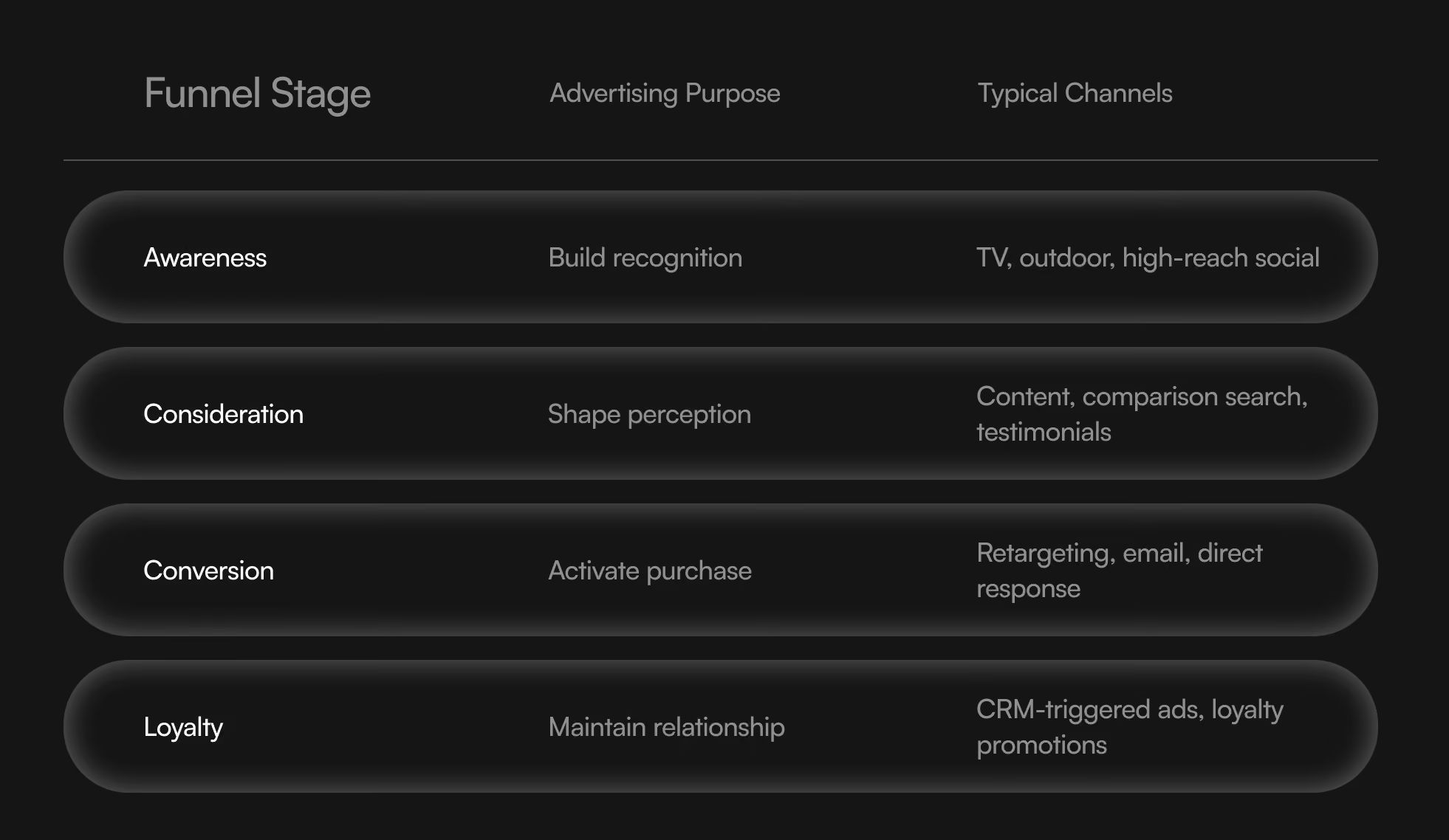
Each subsequent section explores these purposes in detail, connecting objectives to specific advertising techniques and measurement approaches.

Brand Awareness & Positioning

Brand awareness measures how easily potential customers recognize and recall a brand. Aided recall captures recognition when prompted with the brand name; unaided recall measures spontaneous recognition without prompting—the stronger indicator of brand establishment.

Brand positioning represents the psychological space brands occupy in consumers’ minds relative to competitors. Volvo occupies the “safety” position; Nike owns “athletic performance”; Apple dominates “innovative design.” Strong positioning directs consumer perception and purchase preference without requiring explicit claims in every advertising message.

Typical awareness tactics include:

  • Television campaigns around major events like UEFA Euro 2024 or the Super Bowl
  • Large-format outdoor advertising in high-traffic urban centers
  • High-reach social ads targeting broad audience segments
  • Event sponsorships associating brands with consumer interests

Awareness measurement employs aided and unaided recall surveys, search volume trends (tracking brand name search frequency), social mention analysis, and reach/frequency metrics from media buying platforms.

Consider how legacy banks have approached brand positioning shifts. When traditional financial institutions rebrand around digital convenience, they employ mass awareness channels to establish new associations while measurement tracks whether the repositioning takes hold among target customers.

Lead Generation & Direct Response

Lead generation collects contact information from potential buyers for future sales follow-up. This approach proves especially common in B2B marketing and high-ticket B2C products where sales cycles span weeks or months and require multiple touchpoints between initial interest and purchase.

Common lead generation tactics include:

  • Paid search campaigns offering downloadable resources (whitepapers, guides, tools) in exchange for contact information
  • Social ads driving webinar registrations or course enrollments
  • Landing pages with clear conversion mechanics and minimal navigation distraction
  • Email nurturing sequences maintaining engagement with collected leads

Cost per lead (CPL) measures average expense for acquiring contact information. Lead quality assessment examines what percentage of generated leads convert to sales opportunities and ultimately purchases. CRM integration enables tracking individual lead performance over time, identifying highest-performing lead sources.

Direct response advertising asks for immediate actions: “Buy now,” “Sign up today,” “Book a demo.” Unlike brand-building campaigns measured over months, direct response advertising produces measurable outcomes within specific timeframes. An ad campaign focused on direct response emphasizes clear calls-to-action and frictionless conversion paths to attract customers ready to act.

Sales Activation & Promotions

Sales activation generates short-term advertising revenue through time-limited offers, seasonal campaigns, and price-based promotions. This purpose differs from long-term brand building—it’s about converting existing demand into immediate transactions.

Examples of sales activation campaigns:

  • Black Friday and Cyber Monday digital campaigns coordinating offers across email, social, and display
  • Back-to-school retail store advertising targeting parents and students during late summer
  • Flash-sale SMS promotions creating urgency through limited time windows
  • Seasonal campaigns around holidays driving gift purchases

Common promotional tools include discount codes (enabling precise tracking through redemption metrics), coupons, free samples, loyalty points multipliers, and “buy one, get one” offers promoted across TV advertising, email, and social channels. Such advertising emphasizes the advertised price and limited availability to convince customers to act immediately.

Measurement focuses on incremental sales (revenue directly attributable to promotions beyond baseline), redemption rates, and return on ad spend (ROAS). The challenge lies in balancing frequent promotions with long-term brand equity—excessive discounting can train consumers to wait for sales rather than purchase at full price.

Customer Retention & Loyalty

Retention advertising targets existing customers, aiming to increase repeat purchases, cross-sell complementary products, or upsell premium versions. This approach often proves more cost-effective than acquisition—maintaining a customer relationship costs less than building a new one.

Concrete retention tactics include:

  • Personalized email sequences tailored to purchase history and browsing behavior
  • App push notifications about loyalty rewards, point balances, and member-exclusive offers
  • “Win-back” campaigns targeting lapsed customers who haven’t purchased in 12+ months
  • Abandoned cart email reminders recovering lost sales from incomplete purchases

Segmentation based on purchase history, engagement patterns, and lifetime value became standard practice by the mid-2020s. Machine learning models identify churn risk—customers most likely to stop purchasing—enabling proactive intervention before customer loss.

Retention advertising ties into broader CRM strategies and subscription models across industries like streaming services, SaaS platforms, and e-commerce. The goal is maximizing lifetime value from existing relationships rather than constantly acquiring new customers at higher costs.

Common Advertising Techniques & Creative Approaches

Beyond channel selection, advertisers rely on psychological and creative techniques to capture attention and persuade audiences. Understanding these approaches separates effective campaigns from wasted advertising spend.

Major technique categories include:

  • Emotional appeals: Tapping into feelings like joy, nostalgia, fear, or belonging
  • Rational appeals: Focusing on features, benefits, price, or performance
  • Social proof: Demonstrating that others approve or use the product
  • Scarcity: Creating urgency through limited availability
  • Storytelling: Constructing narrative arcs that make messages memorable

Consistent visual identity—logo, color palette, typography—and memorable taglines contribute to long-term brand image building. The creative process must balance immediate persuasion with cumulative brand equity.

Hierarchy-of-effects models like AIDA (Attention, Interest, Desire, Action) frame how creative elements guide audiences through decision stages. Each element of an advertising message should advance audiences toward the intended action.

Emotional & Rational Appeals

Emotional appeals tap into feelings that drive purchase decisions. Holiday retail campaigns featuring families gathering together generate emotional responses triggering celebration associations. Nostalgia marketing evokes memories of past experiences, connecting products with positive emotional contexts. Food advertisements often emphasize family connection and comfort rather than nutritional specifications.

Charity and cause advertising employ fear or compassion appeals generating concern about social problems. Athletic brand advertising—Nike’s social justice messaging, for example—appeals to pride and values alignment, positioning brands as extensions of consumer identity.

Rational appeals emphasize features, functional benefits, performance metrics, and value propositions. B2B technology advertising details specifications, integrations, and ROI calculations. Insurance advertising highlights coverage options and claims processes. These appeals support logical evaluation during high-stakes purchase decisions.

Many effective campaigns blend both approaches—establishing emotional connection while providing rational proof points. A technology company might emotionally position around innovation leadership while rationally detailing specifications. The specific blend depends on product category, target audience, and purchase decision complexity.

Social Proof, Scarcity & Authority

Social proof demonstrates that others approve of or use the product, reducing perceived purchase risk through consensus validation. Customer reviews and ratings on e-commerce platforms strongly influence purchase decisions. Case studies demonstrating successful implementations build credibility in B2B contexts where stakes justify evaluation depth.

Influencer endorsements leverage authority figures’ existing reputation for credibility transfer. User generated content—authentic customer photos and testimonials—often outperforms polished advertising spots because it appears more trustworthy.

Scarcity and urgency tactics create artificial purchase urgency based on loss-aversion psychology:

  • “Only X units remaining” alerts on e-commerce sites
  • Countdown timers on landing pages
  • Limited-time offers expiring within hours
  • Flash sales with unexpected inventory limits

Authority appeals highlight expert endorsements, certifications, or awards. “Voted Best SUV of 2025” or professional association endorsements serve as credibility signals reducing purchase risk.

Ethical limits matter. Fabricated reviews, fake scarcity (claiming limited stock when inventory is plentiful), and unsubstantiated expert claims damage trust when exposed. Transparency in applying these techniques protects long-term brand credibility.

Visual Identity, Semiotics & Storytelling

Semiotics studies how signs and symbols convey meaning. The Nike swoosh instantly triggers performance and athletic associations without text explanation. Apple’s minimalist product imagery signifies premium design and sophistication. These symbols, reinforced through decades of advertising, generate instant recognition.

Colors, fonts, and imagery function as signifiers triggering specific associations:
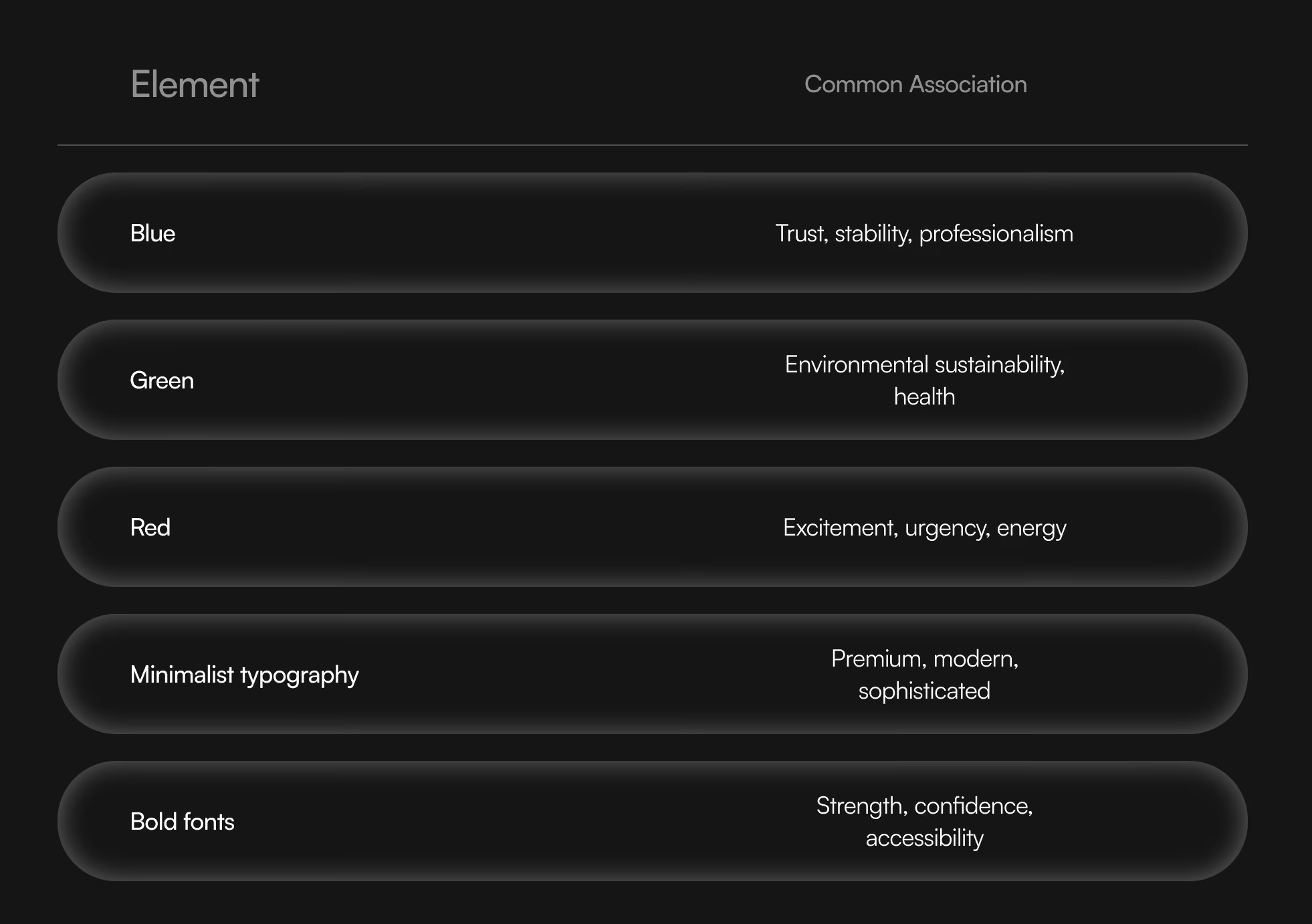
Storytelling constructs narrative arcs generating emotional engagement exceeding facts-based messaging. Television spots and long-form branded content enable narrative development. The hero’s journey framework positions products as enabling customer achievement rather than advertising products in isolation.

Iconic campaigns rely on recurring symbols and themes over years. Advertising spots featuring brand mascots—Tony the Tiger, the Geico gecko—build instant recognition through repetition. Jingles become audio branding elements triggering brand recall from sound alone. These elements accumulate meaning through consistent application across different channels over time.

Digital vs. Traditional Advertising in Practice

Effective campaigns now integrate both digital and traditional advertising rather than choosing one exclusively. Understanding when each approach excels enables smarter budget allocation.
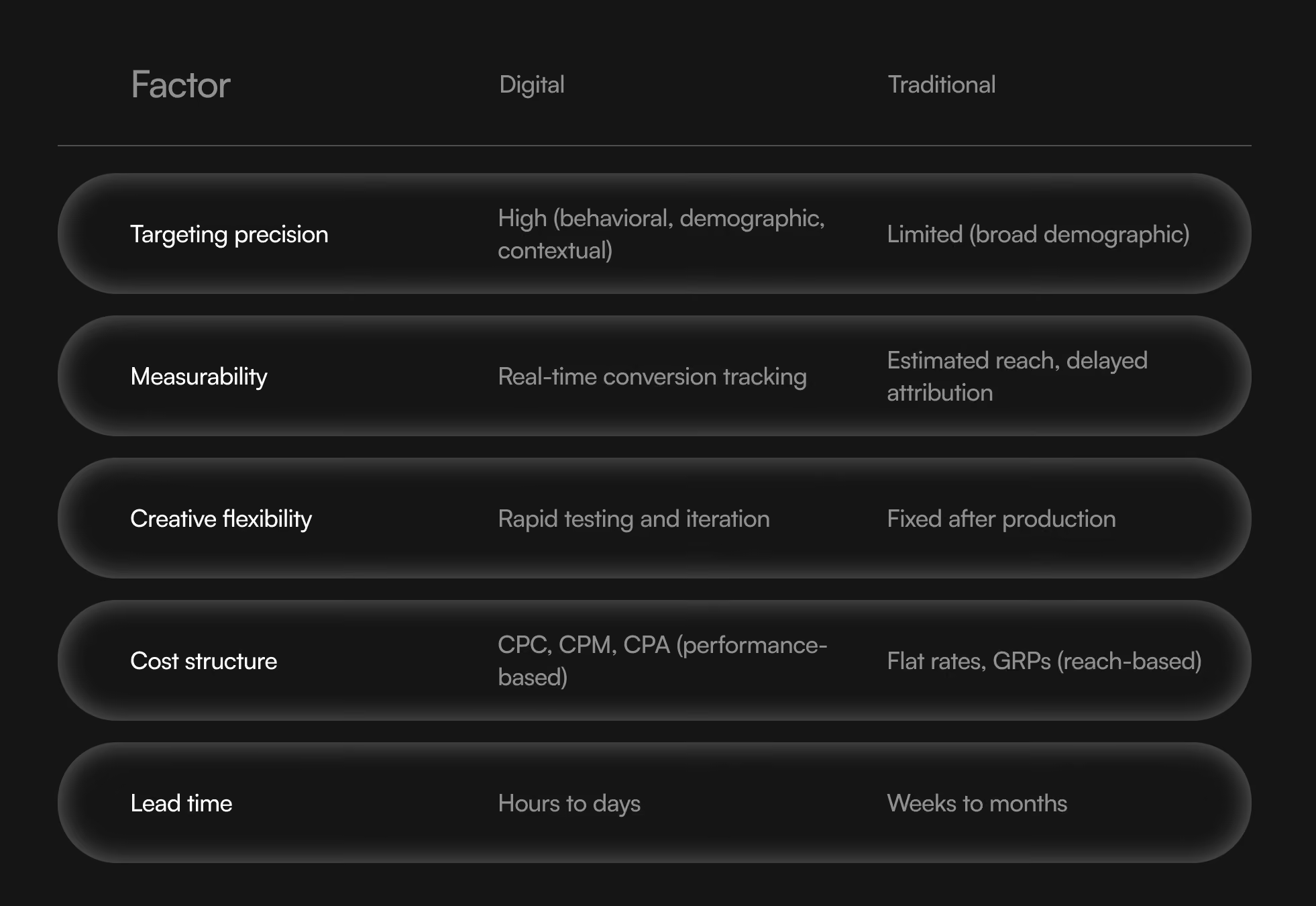
A consumer electronics product launch might employ TV advertising for mass awareness (reaching 70%+ of target demographic), outdoor billboards in major cities for reinforcement, paid search capturing demand from consumers actively searching, display remarketing reconnecting with website visitors, and email to existing customers with exclusive offers. This integration addresses the entire customer journey through online platforms and traditional touchpoints.

Budget allocation trends show digital advertising surpassing traditional spend worldwide around 2019, continuing growth through 2025-2026. However, television and outdoor advertising remain significant for awareness objectives where digital’s targeting capabilities provide less advantage. Internet advertising dominates performance-focused budgets while traditional form advertising maintains brand-building roles.

Technology, Data & AI in Advertising

First-party data—information collected directly from customers—has become increasingly critical as third-party cookies phase out in major browsers. Advertisers build proprietary audience platforms from customer data they directly own rather than relying on third-party brokers whose access faces regulatory restriction.

Machine learning models optimize advertising across multiple dimensions:

  • Bid optimization: Automatically adjusting prices for impressions based on predicted conversion probability
  • Creative selection: Testing multiple variants and accelerating spend toward winners
  • Audience expansion: Identifying lookalike prospects resembling existing customers
  • Churn prediction: Identifying at-risk customers for proactive retention campaigns

Generative AI tools assist with writing ad copy variations, creating image and video content, and localizing messages for different markets. These capabilities accelerate the creative process while reducing production costs.

Dynamic creative optimization represents a practical application: systems automatically select from multiple headlines, images, and calls-to-action based on user characteristics, serving different ad formats to different segments within a single campaign.

However, human oversight remains essential. Algorithmic optimization toward narrow metrics can damage long-term brand equity through aggressive messaging or inappropriate placement contexts. AI-generated content frequently requires editing. Technology augments professional judgment rather than replacing it.

Regulation, Ethics & Consumer Protection

Advertising receives government regulation through agencies including the U.S. Federal Trade Commission (FTC), the UK’s Advertising Standards Authority (ASA), and EU regulatory bodies. These frameworks exist to prevent deception, protect vulnerable groups—especially children—and maintain fair competition.

Common regulatory restrictions affect specific sectors:

  • Tobacco: Prohibited from television and youth-accessible media in most jurisdictions
  • Alcohol: Restricted from youth-targeted messaging and limited in broadcast hours
  • Gambling: Increasing restrictions on online advertising, particularly targeting problem gambling
  • Pharmaceuticals: Direct-to-consumer advertising (permitted in the U.S.) requires extensive benefit and risk disclosure

Penalties for deceptive advertising have increased over time. U.S. civil penalty maximums were updated for inflation as recently as January 2025, reflecting regulatory commitment to maintaining deterrent effect.

Industry self-regulation through advertising codes commits practitioners to legal, decent, honest, and truthful communication. Complaints can lead to ads being withdrawn through formal processes. This self-regulation provides quicker resolution than government enforcement while maintaining advertising industry credibility.

Truth-in-Advertising & Sensitive Categories

Core principles require ads to be truthful, not misleading, and substantiated by evidence. This standard proves especially critical for health, environmental, and financial claims where consumer harm from false information is significant.

Weight-loss products and dietary supplements face frequent enforcement when claiming rapid or “effortless” results without adequate scientific backing. The fine print disclaimer approach—burying contradictory information in small text—doesn’t satisfy regulatory requirements when headlines make unsupported claims.

Environmental claims (“eco-friendly,” “sustainable,” “natural”) face increasing scrutiny. Companies face investigation when environmental claims lack credible basis, and “greenwashing” generates both regulatory and consumer backlash.

Political advertising increasingly requires transparency—platforms must disclose advertising sponsors and maintain public records. Sponsored content and influencer partnerships require clear disclosure (“#ad,” “#sponsored”) to prevent consumer deception about commercial interests.

Data protection regulations including GDPR restrict behavioral targeting and data collection, requiring explicit consent before processing personal data for advertising purposes. Advertisers balance targeting precision with privacy compliance, increasingly relying on consent-based strategies.

The Future of Advertising
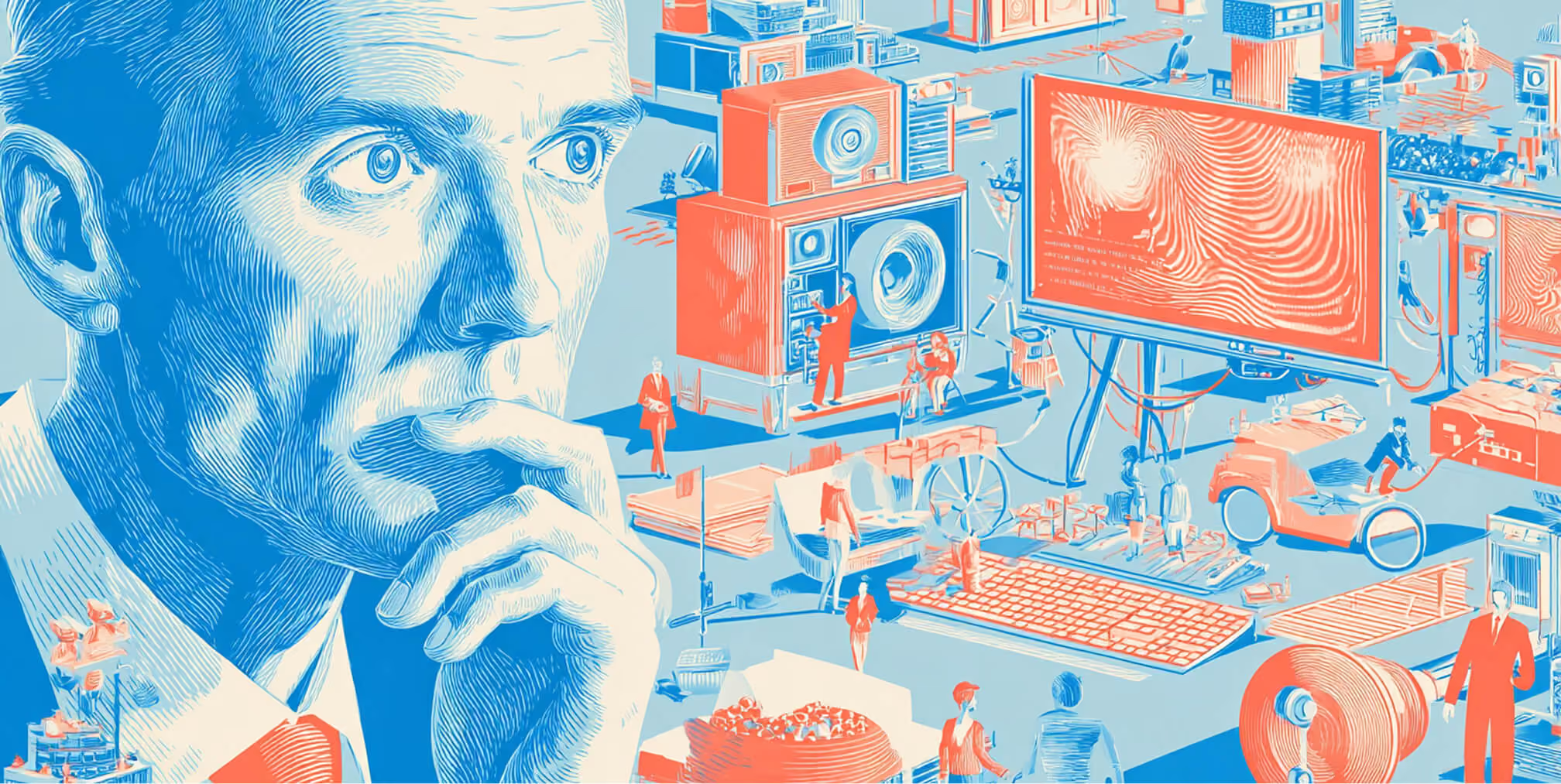
Thoughtful professional surrounded by oversized screens, media equipment, and advertising displays, representing strategic thinking and campaign development in advertising.

Looking toward 2026-2030, several trends will shape advertising’s evolution while core principles remain constant.

Privacy-safe targeting becomes essential as third-party cookies complete their deprecation. Contextual advertising—targeting based on webpage content rather than user history—provides a viable alternative. Google’s Privacy Sandbox initiative develops technical standards for aggregated audience insights rather than individual tracking. First-party data strategies and consent-based collection become competitive advantages.

Connected TV (CTV) continues rapid growth as viewers shift to streaming services. CTV combines television’s creative impact with digital’s targeting precision, enabling specific audiences to be reached within premium video environments. Shoppable video enables direct purchase from video ads, eliminating friction between viewing and conversion.

In-game advertising within popular video games reaches engaged audiences in entertainment contexts. Augmented reality advertising through AR filters enables interactive product experiences—virtual try-ons, furniture placement visualization—driving engagement and reducing return rates.

Sustainability messaging faces increasing scrutiny. Consumers evaluate whether advertising claims align with actual corporate environmental practices. Authentic commitment demonstrated through operational changes outperforms performative campaign gestures.

AI-driven personalization continues advancing, enabling one-to-one marketing at scale. Generative AI tools assist with rapid creative adaptation across cultural contexts and audience segments. However, over-reliance on algorithmic optimization risks brand damage through inappropriate messaging or context misalignment.

Successful advertisers will combine creative excellence, responsible data practices, and cross-channel orchestration. Online ads, traditional media, and emerging formats must work together within unified customer experiences. Organizations developing capabilities to integrate customer data from multiple sources—CRM systems, advertising platforms, website analytics—gain advantages through superior targeting and attribution.

The fundamentals remain timeless: clear objectives, audience understanding, compelling messaging, and consistent measurement. Technology changes the tools; it doesn’t change the requirement to reach consumers with messages that resonate and persuade.

Advertising FAQ

What’s the difference between advertising and marketing? Advertising is one component of marketing. Marketing encompasses the entire process of understanding customer needs, developing products, setting prices, determining distribution channels, and promoting offerings. Advertising specifically refers to paid promotional communication.

How much should a small business spend on advertising? Small businesses typically allocate 5-10% of revenue to marketing, with advertising representing a portion of that budget. The specific amount depends on growth objectives, competitive landscape, and industry norms.

Which advertising channels work best for reaching specific target audience segments? Channel effectiveness depends on audience behavior. Paid search captures high-intent users actively searching. Social media advertising reaches users based on interests and demographics. Television and outdoor advertising build broad awareness. The best approach typically combines multiple channels.

How do I measure advertising effectiveness? Digital channels provide direct metrics: click-through rates, conversions, cost per acquisition. Traditional media requires brand lift studies and incrementality testing. Establish baseline metrics before campaigns and measure changes across exposed versus unexposed audiences.

What makes an advertising campaign successful? Successful complete advertising campaigns start with clear objectives tied to business outcomes. They target well-defined audiences with relevant messages through appropriate channels. They measure results and optimize based on performance data. And they maintain consistency with overall brand positioning.

Key Takeaways

  • Advertising is paid, persuasive communication delivered through mass or digital media to influence audience behavior
  • Digital advertising now exceeds 70% of global spend, but traditional channels remain valuable for awareness objectives
  • Programmatic buying automates media purchasing through real-time bidding and algorithmic optimization
  • Clear objectives—awareness, lead generation, sales activation, or retention—guide channel and creative decisions
  • Psychological techniques including emotional appeals, social proof, and scarcity increase advertising effectiveness
  • Regulation requires truthful, substantiated claims with particular scrutiny on health, environmental, and financial advertising
  • Future trends emphasize privacy-safe targeting, connected TV, and AI-assisted personalization

The advertising landscape continues evolving, but fundamentals persist. Whether you’re building your first campaign or optimizing an established program, success requires understanding your audience, selecting appropriate channels, crafting compelling messages, and measuring results rigorously.

An image of the author Quincy Samyica

Quincy Samycia

As entrepreneurs, they’ve built and scaled their own ventures from zero to millions. They’ve been in the trenches, navigating the chaos of high-growth phases, making the hard calls, and learning firsthand what actually moves the needle. That’s what makes us different—we don’t just “consult,” we know what it takes because we’ve done it ourselves.

Want to learn more about brand platform?

If you need help with your companies brand strategy and identity, contact us for a free custom quote.

We do great work. And get great results.

DrTung’s
Breathed new life into a storied oral care brand with a smarter site and marketing for scalable growth.

+2.3x
Increase in revenue YoY

+126%
Increase in repurchase rate YoY

READ MORE
Smiling man with bright teeth on a light blue background, surrounded by floating DrTung’s herbal tooth powder tabs and packaging.
Smartphone on a textured blue surface displaying a DrTung’s ad with the text “Make the Switch” and an image of a woman holding herbal tooth powder tabs.
Flat lay of DrTung’s oral care products, including floss, tooth powder tabs, perio sticks, tongue cleaners, and toothbrushes, arranged with a blue pouch on white tile.
Pattern of DrTung’s Activated Charcoal Floss in brown and blue packaging, arranged diagonally on a bright blue background.
Smiling man with bright teeth on a light blue background, surrounded by floating DrTung’s herbal tooth powder tabs and packaging.
Smartphone on a textured blue surface displaying a DrTung’s ad with the text “Make the Switch” and an image of a woman holding herbal tooth powder tabs.
Flat lay of DrTung’s oral care products, including floss, tooth powder tabs, perio sticks, tongue cleaners, and toothbrushes, arranged with a blue pouch on white tile.
Pattern of DrTung’s Activated Charcoal Floss in brown and blue packaging, arranged diagonally on a bright blue background.
Mary Louise Cosmetics
Scaled a heritage-inspired clean beauty brand with modern performance marketing and farm-to-face storytelling.

+93%
Revenue growth in first 90 days

+144%
Increase in attributed revenue

READ MORE
A jar of Mary Louise Lilac & Shea Body Butter with the lid open, showing creamy texture, placed on a beige surface beside sprigs of lavender.
A Mary Louise Miracle Serum bottle with a dropper cap, lying on a bed of small yellow flowers.
Mary Louise promotional print materials featuring the body butter, with images of skincare application and product photography on a textured beige background.
A close-up overhead view of multiple Mary Louise Miracle Serum bottles with yellow dropper caps arranged tightly together.
A jar of Mary Louise Lilac & Shea Body Butter with the lid open, showing creamy texture, placed on a beige surface beside sprigs of lavender.
A Mary Louise Miracle Serum bottle with a dropper cap, lying on a bed of small yellow flowers.
Mary Louise promotional print materials featuring the body butter, with images of skincare application and product photography on a textured beige background.
A close-up overhead view of multiple Mary Louise Miracle Serum bottles with yellow dropper caps arranged tightly together.
Eyecart
Made eye care feel modern, then marketed it like a DTC darling—with the results to match.

+91%
Increase in conversion rate

+46%
Increase in AOV

READ MORE
A smiling woman holds a magnifying lens with the word "eyecart" printed on it over her eye, creating a playful optical effect against a mint green background.
A billboard ad reads “Discover the ease of keeping your eyes healthy,” featuring Eyecart branding and Blephaclean eye care wipes packaging.
Multiple laptop screens display the Eyecart website, showcasing product pages and banners promoting eye care items.
A person walks past large Eyecart posters on a city wall, featuring product photography of eye care serums and creams with clean, modern branding.
A smiling woman holds a magnifying lens with the word "eyecart" printed on it over her eye, creating a playful optical effect against a mint green background.
A billboard ad reads “Discover the ease of keeping your eyes healthy,” featuring Eyecart branding and Blephaclean eye care wipes packaging.
Multiple laptop screens display the Eyecart website, showcasing product pages and banners promoting eye care items.
A person walks past large Eyecart posters on a city wall, featuring product photography of eye care serums and creams with clean, modern branding.
Lucky Girl Rosé
We turned a zero-carb rosé into a lifestyle brand that makes every moment worth celebrating.

+200%
Increase in conversion rate

+688%
Increase in attributed revenue

READ MORE
A bottle of Lucky Girl rosé wine nestled among pink and white flowers in a rustic outdoor setting.
Lucky Girl rosé wine on a red-and-white checkered picnic blanket with cherries, strawberries, sunglasses, and a pink notebook titled The Lucky Club.
A wine glass filled with rosé on a gold tray surrounded by hands with red-painted nails, overlaid with the text “Pour yourself some luck.”
A bottle of Lucky Girl rosé wine with floral label design, dramatically lit against a soft pink background with a shadow cast.
A bottle of Lucky Girl rosé wine nestled among pink and white flowers in a rustic outdoor setting.
Lucky Girl rosé wine on a red-and-white checkered picnic blanket with cherries, strawberries, sunglasses, and a pink notebook titled The Lucky Club.
A wine glass filled with rosé on a gold tray surrounded by hands with red-painted nails, overlaid with the text “Pour yourself some luck.”
A bottle of Lucky Girl rosé wine with floral label design, dramatically lit against a soft pink background with a shadow cast.