B2B Google Ads: A Pipeline-First Playbook for 2026
10/30/2026
Marketing Services
Learn how to optimize B2B Google Ads to attract qualified leads, reduce wasted ad spend, and drive measurable pipeline growth.
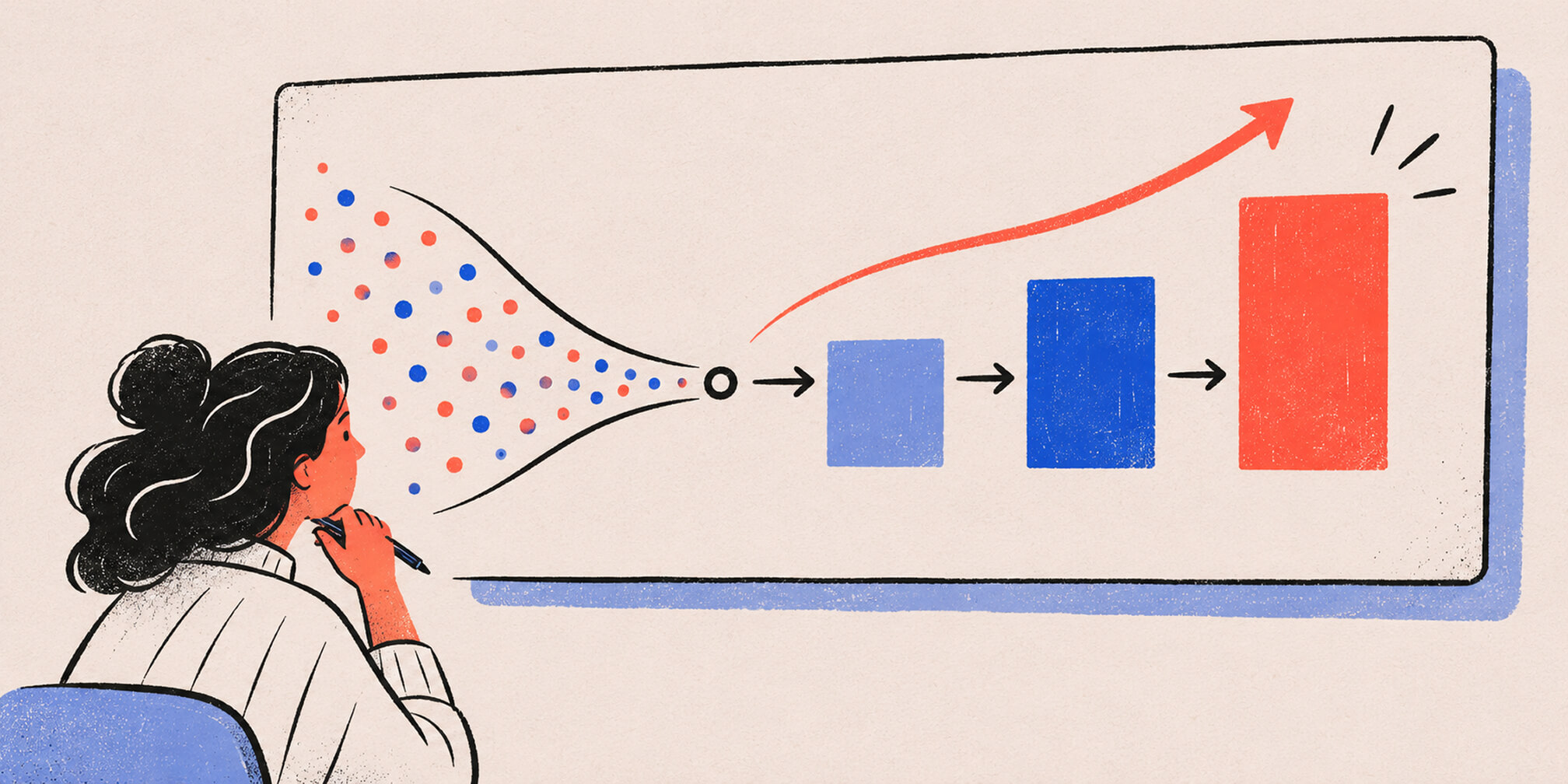
How to run B2B Google Ads that produce qualified pipeline, not junk leads: funnel mapping, keywords, conversion tracking, budget logic and common mistakes.


How B2B Google Ads differs from consumer advertising
Google Ads is Google’s paid platform for placing ads across Search, YouTube, Maps and other Google inventory, and the mechanics are identical whether you sell sneakers or security software. The difference is the buyer.
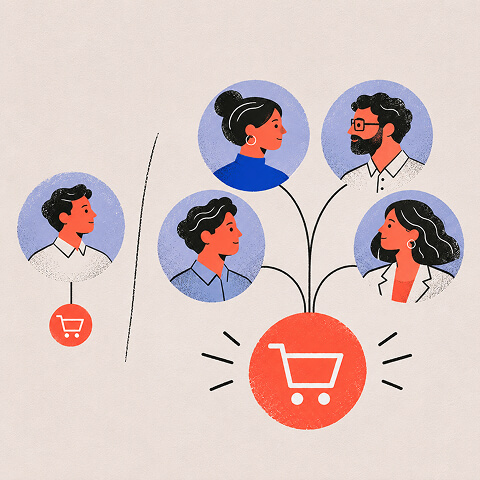
Google’s own guidance notes that the B2B funnel can be more complex than B2C, largely because of longer sales cycles and the number of people involved in a purchase. A consumer clicks and buys in one session. A B2B buyer might involve a champion, a finance approver, an IT reviewer and an executive sponsor, each searching for different things over months.
That changes three things in practice:
• Longer measurement window: Report on qualified pipeline and influenced opportunities as deals mature, not only same-session conversions.
• Multiple buying roles: Address technical evaluators, budget owners and business sponsors with different query themes and proof.
• More deliberate qualification: Use precise keywords, negative terms and explicit fit criteria to reduce expensive, low-quality inquiries.
If you want the broader context for where paid search fits, our B2B marketing strategies guide covers the full mix.
Does Google Ads work for B2B with long sales cycles?
Yes, with a caveat: it works when the account is designed for the cycle. Google says Google Ads can help at every stage of the B2B funnel, from webinars and white papers through to repeat sales.
Where it fails is when a company runs a handful of broad keywords, sends everyone to a “Contact us” page and judges success by form fills. Those accounts produce leads that sales ignores, and then the verdict becomes “Google Ads doesn’t work for us.” The platform did what it was told. It was told the wrong thing.
Google Ads also suits some situations better than others:
• Strong fit: Buyers search for a defined solution, have a clear commercial problem and can be directed to a relevant demo, consultation or pricing page.
• Possible fit with patience: Sales cycles are long but the CRM can return meaningful intermediate stages such as accepted leads or qualified opportunities.
• Weak fit initially: Search demand is extremely limited, the offering is not yet defined or no one can follow up on leads promptly. In those cases, prioritize positioning, demand creation and measurement readiness before scaling search.
Map campaigns to the buyer journey
Google’s guidance describes stages from awareness through post-purchase retention and says different strategies are required at each one. A practical structure looks like this.
• Awareness — Buyer recognizes a problem but is not looking for a vendor. Campaigns: video, Demand Gen or carefully targeted problem-based Search. Offer: benchmarks, educational content or a diagnostic guide.
• Interest and consideration — Buyer compares approaches. Campaigns: category and comparison Search, relevant remarketing. Offer: guides, webinars, trials or credible testimonials.
• Intent and evaluation — Buyer shortlists providers. Campaigns: solution, brand and alternative Search terms. Offer: demo, consultation, product proof or pricing information.
• Purchase and retention — Buyer is converting or already a customer. Campaigns: appropriately permissioned customer-list targeting and remarketing. Offer: onboarding, expansion or renewal resources.
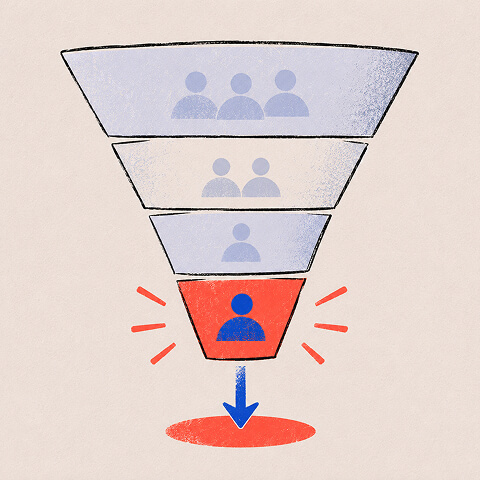
Google describes how the formats play different roles: Search captures high-intent queries, Display and Video build consideration and reach past visitors, and lead-form assets collect contact details inside the ad. Industry guidance recommends separating campaigns and messaging by funnel stage, with keywords and copy matched to where the prospect is.
One public example: a B2B software company describes running content-download campaigns at the top, non-brand demo campaigns in the middle, and brand, competitor and bottom-funnel campaigns aimed at demo or pricing conversions. The principle matters more than the specifics: each layer has its own goal, budget and success metric.
Start at the bottom
If budget is limited, build bottom-funnel first. High-intent search is where Google Ads has the clearest advantage over other channels. Add upper-funnel layers once the bottom is profitable and you have conversion data to learn from.
Keywords: classify first, then spend
B2B search terms fall into buckets that deserve very different treatment. We sort every account into four:
• Brand terms: Protect branded demand and distinguish new prospects from existing customers in reporting.
• High-intent solution terms: Prioritize queries signaling vendor evaluation, demos, software selection or pricing.
• Category and comparison terms: Address buyers researching approaches and alternatives; send them to proof-led comparison or educational pages.
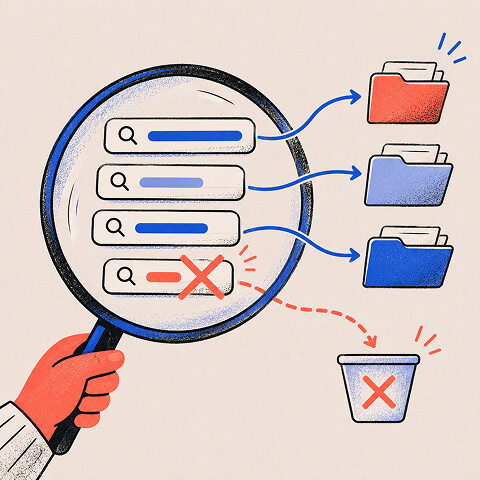
• Low-fit and exclusion terms: Build negatives for irrelevant jobs, free resources, consumer intent and unsupported use cases, checking actual search-term data rather than guessing.
Prequalify in the ad copy
In B2B, a lower click-through rate can be a feature. Copy that names the company size, the industry or the starting price range discourages the wrong clicks. If your product starts at a five-figure annual contract, saying so in the ad is cheaper than paying for 40 clicks from people who cannot buy.
Mind the broad match and automation
Broad match and AI-driven expansion can find real demand, and they can also match you to tangential searches. If you use Performance Max or AI-assisted search expansion, review the search terms they trigger weekly. Add negatives aggressively early on. Let automation widen the net only after your conversion signal is clean.
Landing pages that qualify, not just convert
A B2B landing page has two jobs: convince the visitor and filter them. A few principles we apply:
• Match headline to query: Carry the core search intent into the landing page headline and offer.
• State who the solution is for: Mention industries, company sizes or technical requirements where relevant so the wrong prospects can self-select out.
• Show credible proof: Use relevant customer outcomes, use cases, certifications or specific implementation details, with substantiated claims.
• Ask for the next sensible step: Reserve demo CTAs for evaluation intent; offer a guide or webinar for earlier-stage visitors.
• Minimize friction without losing quality: Keep fields essential to routing and qualification, make the page mobile-friendly and test speed, accessibility and form completion.
Page structure and messaging are brand decisions as much as performance ones. That is why our website design and development work is built around conversion from the start.
Free Brand Health Audit
Make sure your brand is built to sell
Search has changed. Your customers aren't just Googling anymore. They're asking ChatGPT, Perplexity, Gemini and other AI platforms what to buy, who to trust and which brands they should consider.
If your brand isn't showing up clearly in those answers, you're already losing opportunities. Our free Brand Health Audit shows you where your brand stands across traditional search, AI search and brand positioning.

Sample brand audit
Live preview
Traditional search
72
AI search (GEO)
34
Brand positioning
58
Tracking and measurement: where most B2B accounts break

The single biggest upgrade most B2B advertisers can make is connecting ad clicks to what happens in the CRM.
Import offline conversions
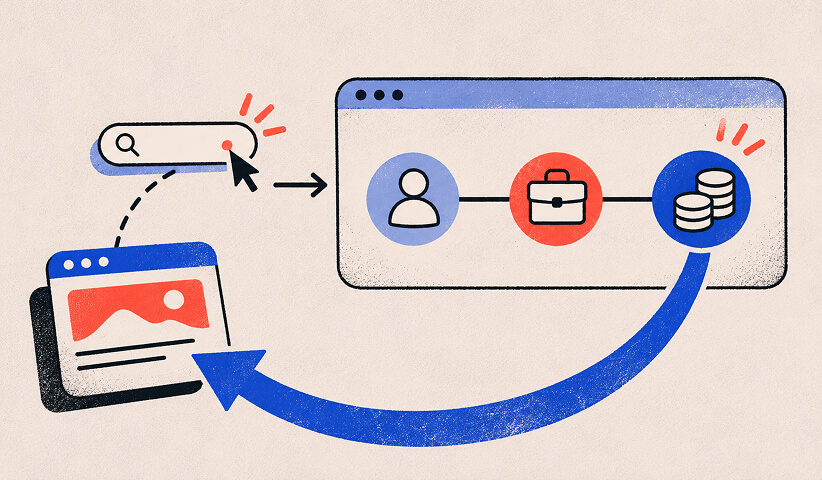
Google Ads supports offline conversion imports, and enhanced conversions for leads uses first-party hashed customer data, such as email addresses, to attribute conversions back to ad interactions in a privacy-safe way. In plain terms: when a lead becomes a sales-qualified opportunity or a closed deal, you tell Google, and Google learns which clicks led there.
Keep junk out of the signal
Google recommends lead verification methods such as server-side validation or double opt-in so that fake or low-quality submissions do not feed the conversion signals that guide automated bidding. Bad data in, bad bidding out.
Choose the conversion you bid on carefully
With an 18-month sales cycle, closed deals may be too slow and too rare to optimize toward. Search Engine Land’s October 2026 guidance suggests using an earlier meaningful milestone, such as a qualified demo request, while validating it against downstream results. The same piece makes the key point: the bidding conversion is a business decision. An easy but weak conversion, like a whitepaper download, can teach the system to chase low-value behavior.
Proxy metrics can also give earlier signals to algorithmic bidding when cycles are long. Just check them against revenue every quarter.
Report on pipeline, not volume
The metrics that matter, per Search Engine Land’s 2026 analysis, include cost per qualified lead, pipeline value by campaign, revenue by campaign and ROAS, not just cost per lead or click counts. Our definition of a qualified lead is worth aligning with your sales team before you launch, because every number downstream depends on it.
Budget: how much does B2B Google Ads need?
Searchers ask whether $500 a month, $20 a day or $10 a day is enough. There is no universal number, and anyone quoting one without knowing your deal size and close rate is guessing. What we can say is how to find yours.
The reverse-engineering method
Start with the revenue goal and work backward:
• Revenue target: Assume $600,000 in new annual contract value attributable to paid search; this is an illustrative planning example, not a benchmark.
• Deal count: At 30,000averageannualcontractvalue,thetargetrequires20newcustomers(600,000 / $30,000).
• Opportunity requirement: With a 25% opportunity-to-close rate, the team needs 80 qualified opportunities (20 / 0.25).
• Lead requirement: With 40% of qualified leads becoming opportunities, the team needs 200 qualified leads (80 / 0.40).
• Click requirement: At a 5% click-to-qualified-lead rate, the campaigns need approximately 4,000 clicks (200 / 0.05).
• Media budget: At a $12 average CPC, estimated spend is $48,000 for the relevant campaign period (4,000 x $12), excluding production, tools and agency fees. Validate every assumption against your funnel and sales cycle.
Then compare the result with what a customer is worth. If the cost to win a customer is well under customer lifetime value, the channel can scale. If not, fix conversion or pricing before adding budget.
Why small budgets struggle
Automated bidding learns from conversions. Google’s guidance recommends at least 50 monthly conversions for better Target CPA performance. If your cost per conversion is $200, that is $10,000 a month of spend before the system has what it wants. A budget of $10 a day produces around 30 clicks a month at a $10 click price, which in most B2B niches will not generate enough data to optimize anything.
Small budgets can still work if you narrow the scope: one or two high-intent campaigns, exact and phrase match, manual or maximize-clicks bidding with a cap at first, and a micro-conversion that still reflects intent. Expect to learn slowly.
What drives your cost
• Auction competition: Intent-heavy B2B categories and competitor names can carry higher CPCs.
• Match types and search terms: Looser targeting can expand reach but also introduce irrelevant clicks if negatives and signals are weak.
• Landing-page conversion and lead quality: An expensive click may still be economical when it becomes a sales-accepted opportunity; a cheap click is wasteful when sales rejects it.
• Geography, device and schedule: Demand and competition vary by market and buyer behavior; review performance rather than imposing arbitrary restrictions.
• Creative and quality: Relevance between query, ad and landing page influences user experience and auction outcomes.
• Sales follow-up and CRM completeness: Delayed responses or missing opportunity stages can make effective advertising appear unprofitable.
Want to learn more about brand platforms, Brand Strategy and Brand Identity? Keep reading!
If you need help with your companies brand strategy and identity, contact us for a free custom quote.
What we do differently
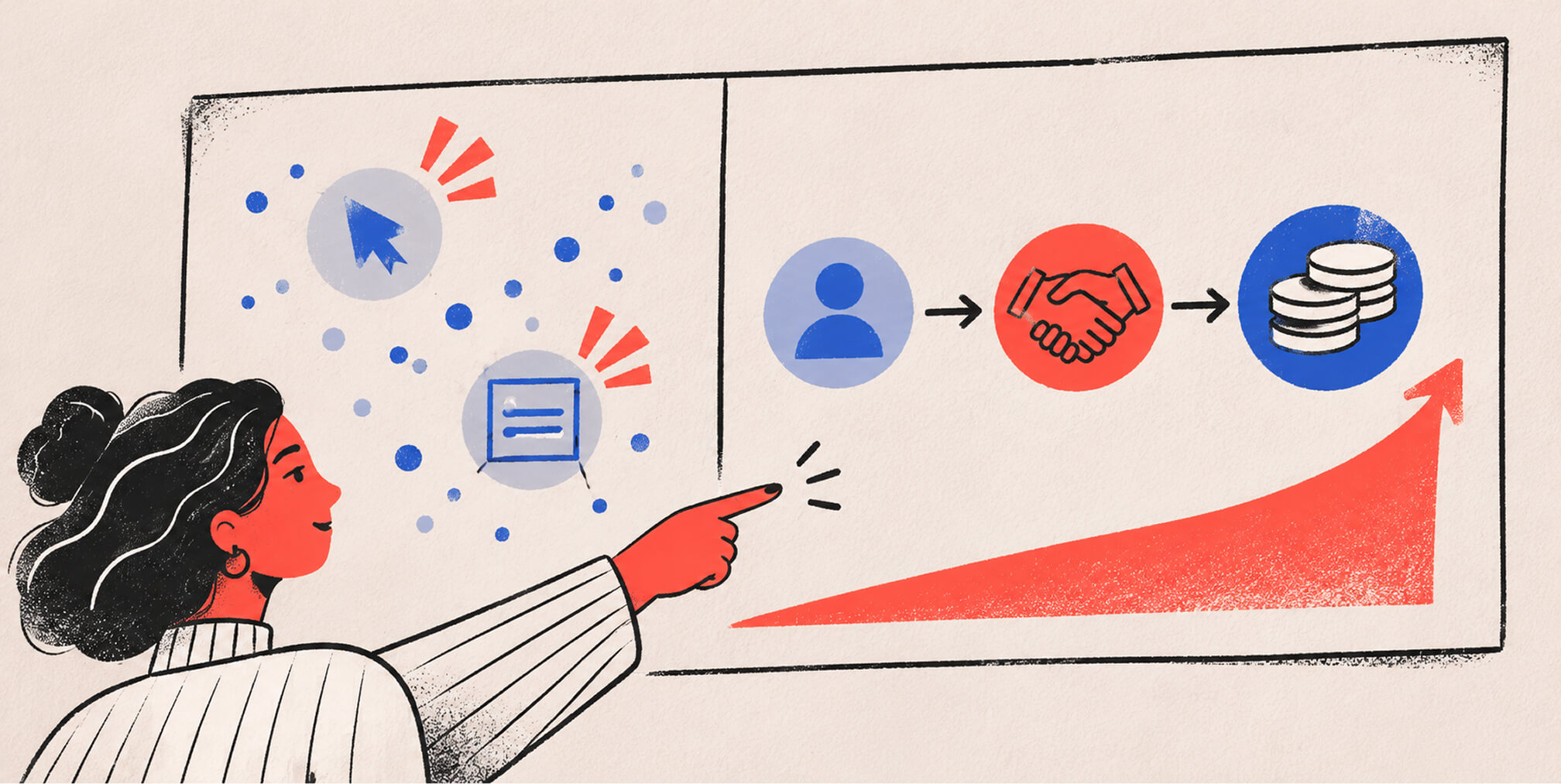
Most B2B accounts we audit have the same pattern: decent keywords, weak qualification, no CRM feedback and a brand that does not give buyers a reason to choose them once they land. That last piece matters. Paid search captures demand. Brand determines whether the captured visitor trusts you.
Our approach is what we call brand-backed performance: positioning, creative, web experience and media working as one system, so every click lands on a message that was built for it.
If you want Google Ads run inside that system, our paid media team handles account structure, creative, landing pages, tracking and reporting tied to pipeline. See our services and pricing for current engagement levels, or talk to us about a full-funnel plan.
For teams that want the strategy layer before the media layer, our growth strategy service starts from $8,500 per month and focuses on revenue rather than vanity metrics.
Our perspective: the budget is rarely the problem
When a B2B company tells us Google Ads “doesn’t work,” the issue is almost never the platform and rarely the budget. It is that the account optimizes toward something sales does not value, or that the brand gives a qualified visitor no reason to pick them over the next tab.
We push clients to decide three things before spending another dollar. First, what counts as a qualified lead, in words sales agrees with. Second, which conversion the system should chase, and how it connects to revenue. Third, what the visitor sees after the click, because a forgettable page makes even a perfect keyword expensive.
We also treat Google as one channel in a system. Buyers who first see you on LinkedIn convert better on search later, and the reverse is true too. If you are weighing platforms, read our LinkedIn Ads pipeline-first playbook and our comparison of emerging ad platforms. The winning plan is usually a sequence, not a single bet.
Common B2B Google Ads mistakes
• Optimizing for all form fills: Replace low-intent conversion signals with verified lead stages and maintain visibility into downstream value.
• Sending mixed search intent to one page: Separate campaigns and landing pages by buying stage and problem.
• Ignoring negatives: Review queries frequently, especially after expanding match types or automation.
• Launching without CRM feedback: Connect marketing-generated leads to sales acceptance, opportunities and closed revenue.
• Scaling before meaningful evidence: Evaluate qualified pipeline over a suitable window, not the first week of clicks.
• Overlooking the buying group: Address technical, financial and operational objections with relevant content and remarketing where consent permits.
A 90-day starting plan
Days 1 to 30: foundation. Define a qualified lead with sales. Set up conversion tracking and CRM import. Build the keyword buckets and negative list. Launch one or two bottom-funnel campaigns with dedicated landing pages.
Days 31 to 60: learn. Review search terms weekly. Test ad copy that prequalifies. Compare cost per qualified lead across campaigns. Start importing opportunity stages.
Days 61 to 90: scale what works. Move bidding toward the pipeline-linked conversion once volume allows. Add remarketing and a mid-funnel offer. Cut campaigns that generate leads sales rejects.
AI is also changing how buyers discover vendors. If you are planning beyond classic search, our guide to advertising in AI search shows where budgets are heading.
Frequently Asked Questions
Is $500 a month enough for B2B Google Ads?
Usually not for meaningful optimization. At typical B2B click prices, $500 buys a small number of clicks and very few conversions, which is too little for automated bidding to learn from. It can work as a narrow test on a few exact-match, high-intent terms, but treat it as research, not a growth channel.
Is Google a B2B or B2C platform?
Both. Google Ads serves any advertiser, and Google says its campaign types and targeting suit businesses in every industry, while advising you to adapt strategy to how people in your market make decisions. For B2B, that means planning for longer cycles and several decision-makers.
Should B2B companies use Google Ads or LinkedIn Ads?
They do different jobs. Google Ads captures people already searching for a solution. LinkedIn lets you target by job title and company, which suits demand creation and account-based plays. Many B2B teams use both, with search on the bottom funnel and LinkedIn higher up.
How long before B2B Google Ads show results?
You can see click and lead data within days, but a reliable read on lead quality usually takes a few months, and revenue impact depends on your sales cycle. Judge early performance on cost per qualified lead and pipeline created, then on closed revenue as deals mature.
What should I track beyond form fills?
Track qualified leads, opportunities, pipeline value and revenue by campaign, and import those stages into Google Ads as offline conversions. That gives both you and the bidding system a view of what actually grows the business.

Quincy Samycia
As entrepreneurs, they’ve built and scaled their own ventures from zero to millions. They’ve been in the trenches, navigating the chaos of high-growth phases, making the hard calls, and learning firsthand what actually moves the needle. That’s what makes us different—we don’t just “consult,” we know what it takes because we’ve done it ourselves.
Want to learn more about brand platform?
If you need help with your companies brand strategy and identity, contact us for a free custom quote.
We do great work. And get great results.
+2.3xIncrease in revenue YoY
+126%Increase in repurchase rate YoY



+93%Revenue growth in first 90 days
+144% Increase in attributed revenue




+91%Increase in conversion rate
+46%Increase in AOV



+200%Increase in conversion rate
+688%Increase in attributed revenue