1. Patagonia
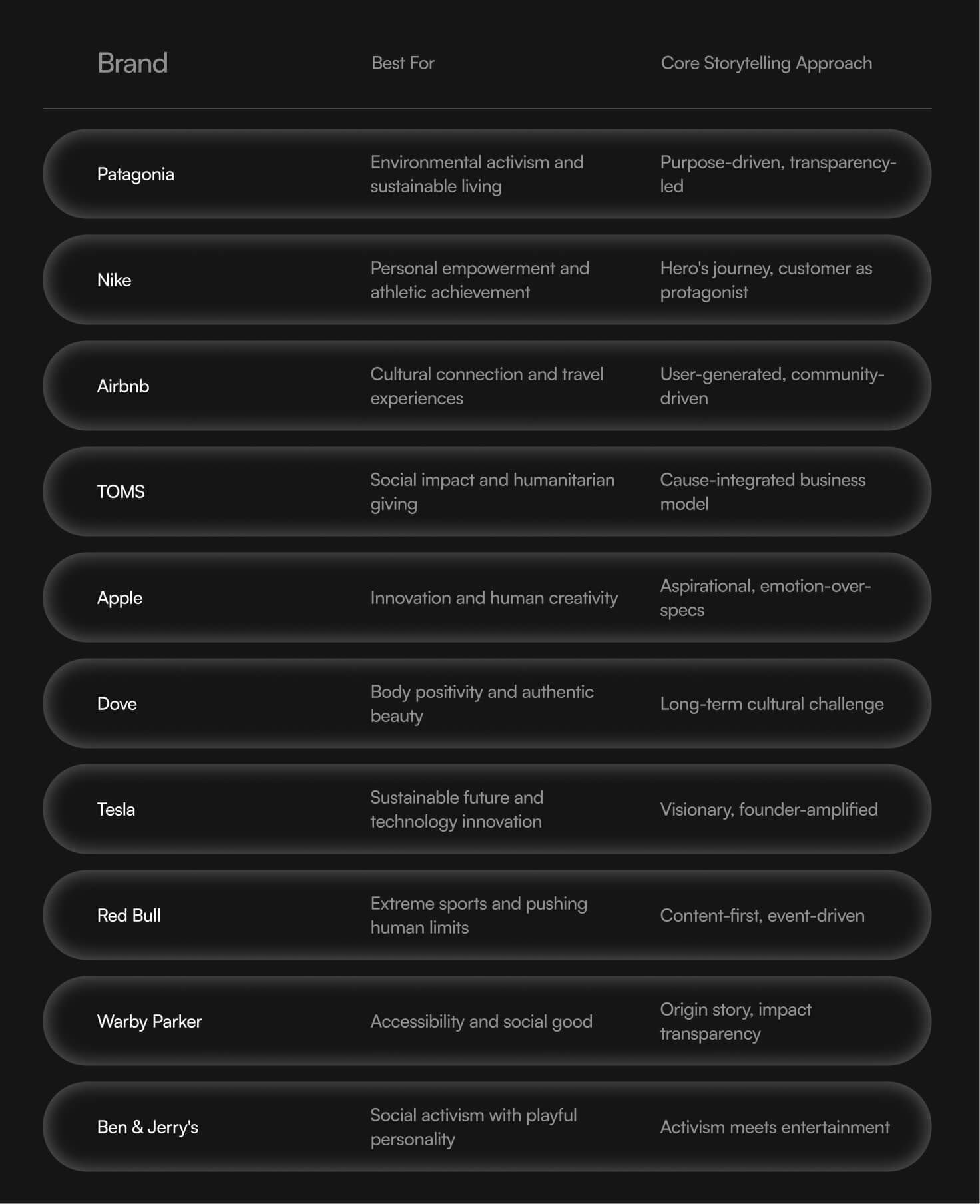
Patagonia integrates environmental activism into its brand narrative so deeply that it's nearly impossible to separate the product from the cause. This brand exists to save the planet-and it structures every business decision around that story, reflecting broader branding trends in 2026 toward purpose and sustainability.
Why It Stands Out
Patagonia's founder Yvon Chouinard's journey emphasizes environmental activism, and that journey has shaped every layer of the company. In 2022, Chouinard transferred ownership so that "Earth is our only shareholder." Their 2025 Work in Progress report reveals the receipts: $14.7 million in grants to 824 nonprofits in FY25, with cumulative environmental grants totaling roughly $240 million since founding.
This is what separates a great brand story from mere slogans. Patagonia doesn't just communicate brand values-it restructures its legal charter around them.
Best For
Environmentally conscious consumers who want their purchases to align with their values.
Key Strengths
- Consistent messaging across "Worn Wear" campaigns, documentaries, and behind the scenes content showing repair processes
- 174,799 items repaired globally in FY25, reinforcing durability over consumption
- The brand's commitment to eliminating PFAS chemicals in new products and maintaining 95% Fair Trade production
- Environmental activism that extends beyond marketing into real business decisions
Possible Limitations
- May alienate customers who don't share environmental concerns
- Premium pricing can limit accessibility despite inclusive messaging
2. Nike
Nike's storytelling promotes athletes overcoming barriers and challenges. For decades, Nike has built compelling stories around the idea that greatness isn't reserved for the elite-it's a choice available to everyone, illustrating how brand marketing campaigns use emotional storytelling to build long-term loyalty.
Why It Stands Out
Nike's brand story positions every customer as an athlete with potential. The "Just Do It" tagline has evolved over decades, and in September 2025, the brand launched its "Why Do It?" campaign, reframing greatness as a deliberate choice for Gen Z. This is how a brand story evolved while staying true to its origin stories.
Best For
Athletes and fitness enthusiasts who want motivation and inspiration from a brand that stands for personal achievement.
Key Strengths
- Decades-long consistent messaging around personal achievement and empowerment
- Customer-centric storytelling that makes the buyer the hero, not the product
- Powerful visual storytelling across social media and advertising that creates an emotional response
Possible Limitations
- Can feel exclusionary to non-athletes or casual exercisers
- High-performance focus may not resonate with everyday consumers seeking relatable stories
3. Airbnb
Airbnb transformed itself from a lodging platform into a storytelling engine built on the idea that travel is about belonging, not beds. Their brand's narrative centers on human connections and cultural experiences, showing how powerful branding can shape customer perceptions and behaviour.
Why It Stands Out
Airbnb's unique narrative focuses on placemaking-the intangible, affective dimensions of travel that make a trip meaningful. Academic research studying thousands of reviews from cities like Paris, London, and Barcelona shows that guests consistently describe experiences in emotional terms: belonging, authenticity, discovery. The platform enables customers to become storytellers themselves, sharing their own stories through reviews and content that attract new customers.
Best For
Experience-focused travelers seeking authentic cultural connections rather than cookie-cutter hotel stays.
Key Strengths
- User generated content creates authentic travel stories at scale
- Emotional focus on belonging and community across cultures drives a deeper connection
- The platform itself functions as a content strategy, with each listing telling a personal story
Possible Limitations
- Stories may not address practical concerns like safety or reliability
- Cultural narrative can feel forced in certain markets
4. TOMS
TOMS' story started with a trip to Argentina and a need for shoes. Founder Blake Mycoskie saw children without footwear and built an entire brand around solving that problem. TOMS' "One for One" model donates shoes for every purchase, making each customer part of a larger giving narrative.
Why It Stands Out
Every purchase becomes a chapter in a larger story of global impact. This is a notable example of a brand where the business model directly supports the brand's message-buying shoes isn't consumption, it's contribution.
Best For
Socially conscious consumers who want their purchases to make a difference and invite customers into a shared mission.
Key Strengths
- Clear, measurable impact with specific beneficiary examples that function as success stories
- The brand's journey from a single trip to a global movement is one of the best brand stories in modern retail
- Emotional connection through shared humanitarian values makes the brand memorable
Possible Limitations
- Focus on giving may overshadow product quality considerations
- Some critics question the long-term impact of charitable giving models
5. Apple
Apple's brand identity has been built on a single powerful idea since "Think Different": technology should serve human creativity, not the other way around. Their marketing strategy positions every product as a tool for self-expression.
Why It Stands Out
Apple rarely talks about specs. Instead, the brand tells compelling narratives about what people create using their products. Product launches become cultural moments-shared experiences that generate billions in earned media. This content marketing approach makes Apple's marketing efforts feel less like ads and more like favorite stories about human potential.
Best For
Creative professionals and consumers who value design, innovation, and a brand that champions imagination.
Key Strengths
- Consistent narrative of empowering human potential through technology
- Emotional product launches that create cultural moments and inspire customer loyalty
- Strong visual storytelling that emphasizes lifestyle over features
Possible Limitations
- Premium positioning may feel elitist to some consumers
- Innovation narrative can feel disconnected from practical, everyday pain points
6. Dove
Dove's "Real Beauty" campaign-launched in 2004 and still winning awards in 2025-is the gold standard of long-term brand storytelling. By featuring real women instead of models, Dove challenged an entire industry and built a brand strategy around body positivity and self-acceptance, making it a template for beauty and cosmetic branding built on authenticity.
Why It Stands Out
The brand has spent two decades inspiring customers to redefine beauty on their own terms. Their 2025 "Real Beauty Redefined for the AI Era" campaign partnered with Pinterest to build interactive tools that let users influence how AI represents beauty. The results: approximately 787 million global impressions, engagement 21.4% above Pinterest benchmarks, and a 2.9 percentage point increase in brand-Real Beauty association.
Another campaign, "Beauty Never Gets Old," targeted women over 60 and delivered an $11 million increase in Beauty Bar sales, 1.4 billion earned media impressions, and 92% share of voice in beauty coverage.
Best For
Women seeking authentic beauty brands that celebrate diversity and real beauty rather than airbrushed perfection.
Key Strengths
- Long-term commitment to featuring real women creates lasting impression and credibility
- Self-Esteem Project creates meaningful social impact beyond product sales
- Storytelling strategies that respond to emerging challenges like AI-generated beauty standards
Possible Limitations
- Can feel preachy or politically charged to some consumers
- Beauty product focus may occasionally contradict the natural beauty messaging
7. Tesla
Tesla's brand story is built around a single compelling vision: accelerating the world's transition to a sustainable future. The brand positions every customer as a pioneer of sustainable energy and transportation.
Why It Stands Out
Tesla leverages CEO Elon Musk's personal stories and public persona to amplify its brand's narrative. Unlike most automakers that rely on traditional advertising and dealer networks, Tesla relies on its community of owners as storytellers-encouraging customers to share success stories about range, savings, and environmental impact.
Best For
Early adopters and environmentally conscious consumers who want cutting-edge technology wrapped in a sustainability mission.
Key Strengths
- CEO's personal storytelling amplifies the brand narrative across various marketing channels without traditional ad spend
- Customer community becomes part of the sustainability mission, creating meaningful connections
- Innovation stories create excitement about sustainable energy and the future of transportation
Possible Limitations
- High price point limits accessibility despite inclusive environmental messaging
- Dependence on CEO's personal brand creates reputation risks when controversies arise
8. Red Bull
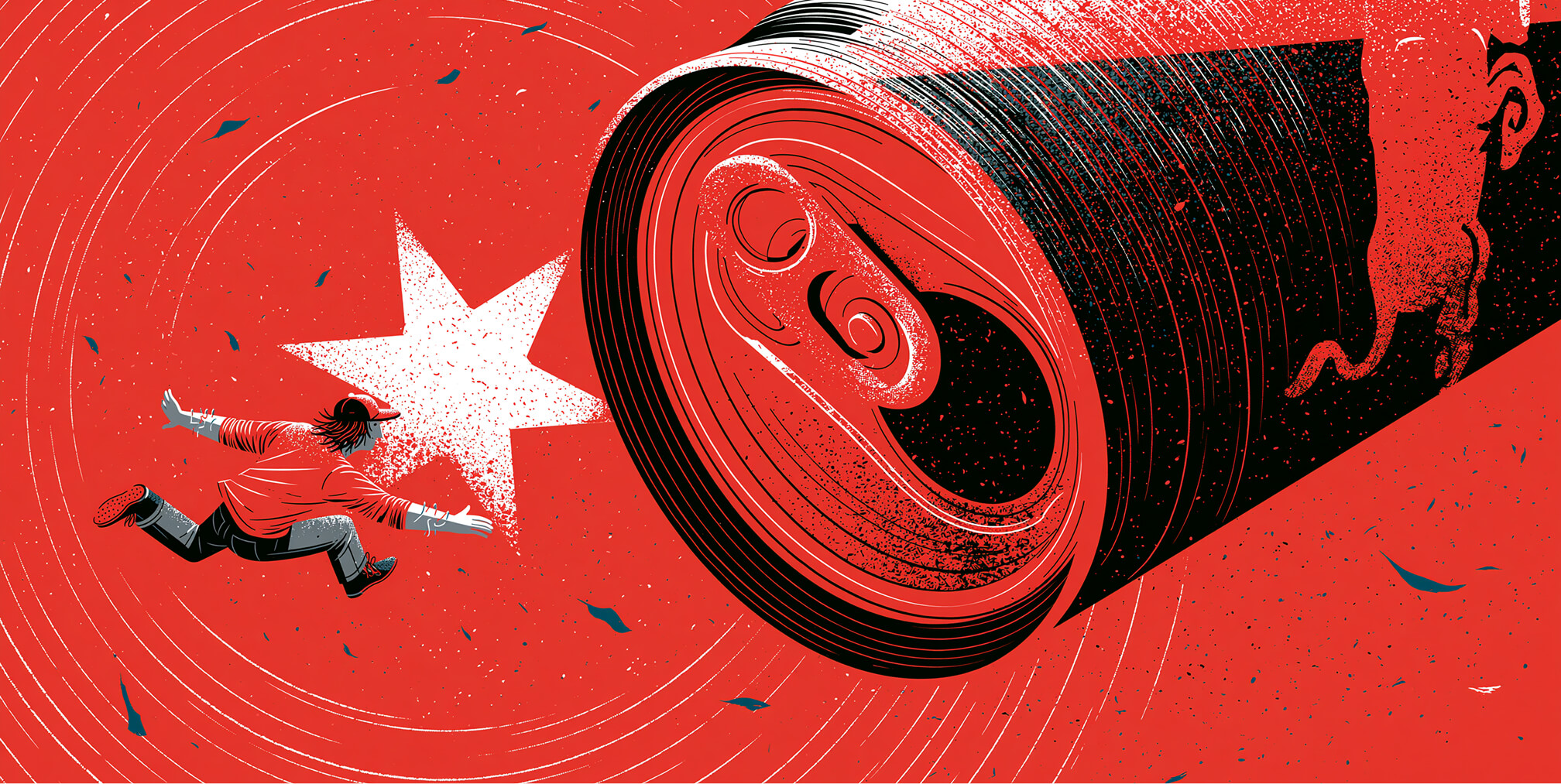
Red Bull's campaigns focus on extreme sports and pushing human limits. The brand long ago stopped being "just" an energy drink-it's now a media company that happens to sell beverages.
Why It Stands Out
Red Bull's storytelling approach is the definition of branded content done right. Red Bull Media House produces professional-quality films, series, and event coverage that embody the brand without feeling like advertisements. Events like the Red Bull Stratos jump-where Felix Baumgartner leaped from the edge of space-became cultural storytelling moments shared by millions. Red Bull's storytelling strategy is a powerful marketing tool that a marketing team in any industry can study.
Best For
Adventure seekers and sports enthusiasts who value adrenaline, pushing boundaries, and powerful stories about human potential.
Key Strengths
- Red Bull Media House functions as a streaming service of sorts-producing documentary-quality branded content
- Events create shared cultural moments that generate massive earned media
- Consistent extreme sports narrative across all touchpoints, from social media to live events
Possible Limitations
- Extreme sports focus may not resonate with mainstream consumers
- High-energy narrative may feel exhausting or exclusionary to certain demographics
9. Warby Parker
Warby Parker's origin story began with a lost pair of glasses. Co-founder Dave Gilboa lost his glasses on a backpacking trip and couldn't afford to replace them-a frustration millions of people share. That relatable problem became the foundation for an entire brand.
Why It Stands Out
Warby Parker's model donates a pair of glasses for each sold through its "Buy a Pair, Give a Pair" program, which has distributed over 20 million pairs globally. Their brand storytelling weaves social impact, accessible pricing, and customer experience into one cohesive narrative. Revenue reached $872 million in 2025-a 13% year-over-year increase-proving the story drives real business results.
Best For
Style-conscious consumers who want quality eyewear with a positive impact and a founder story that speaks to real customer pain points.
Key Strengths
- Home Try-On program reinforces the accessibility narrative with a tangible customer experience
- The "Buy a Pair, Give a Pair" model creates clear, shareable impact-encouraging customers to feel part of the mission
- Impact reporting covering carbon footprint and social metrics adds transparency
Possible Limitations
- Online-first model may not suit customers who prefer in-store shopping, though 323+ stores address this
- Charitable focus may feel secondary to business growth as the company scales
10. Ben & Jerry's
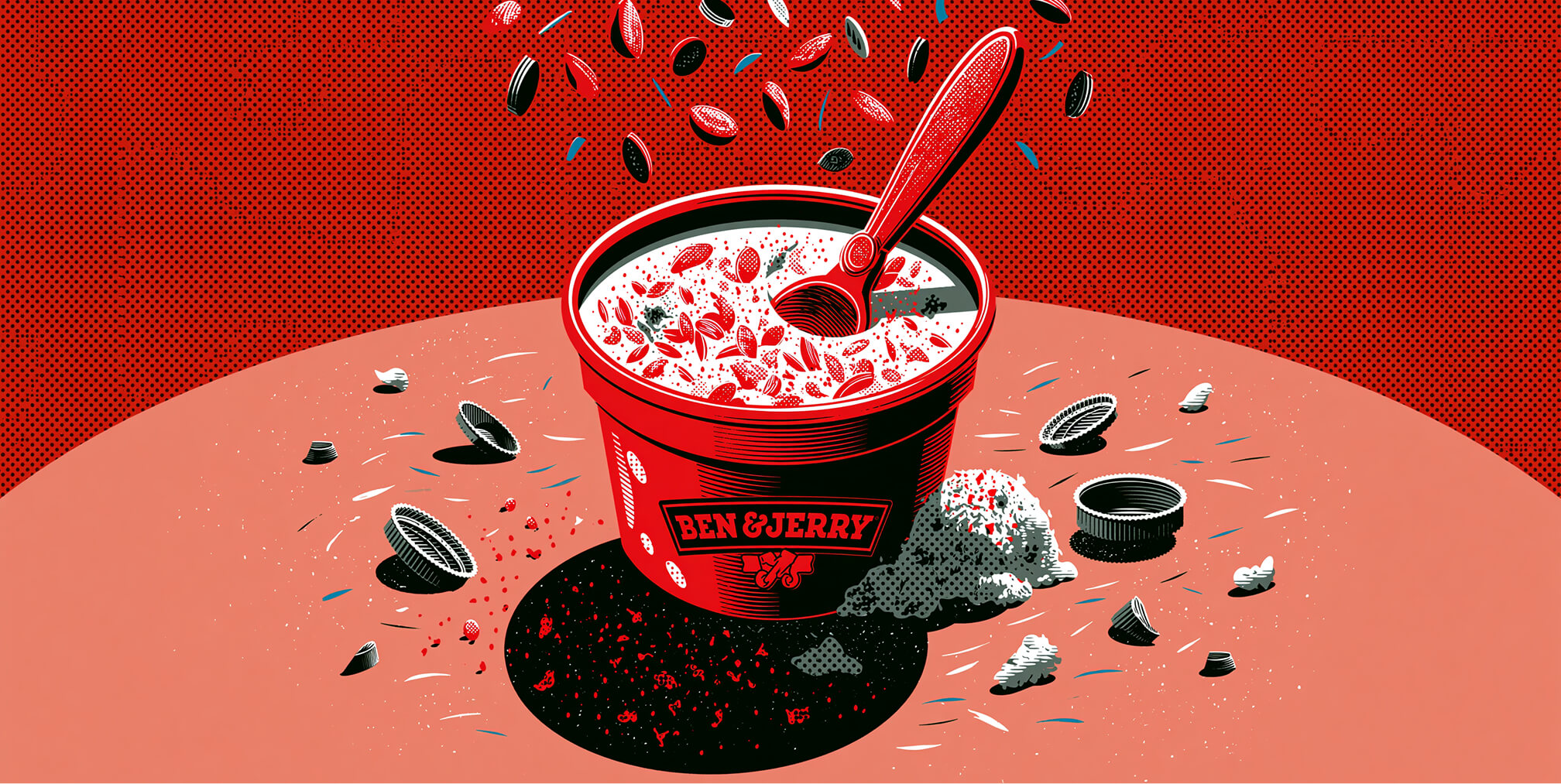
Ben & Jerry's has spent decades proving that an ice cream brand can simultaneously deliver playful flavor experiences and serious social justice messaging. Their own brand story is inseparable from activism, much like how emotional narratives in food can foster deep emotional branding in the food industry.
Why It Stands Out
Internal research shows that people familiar with Ben & Jerry's social mission are 30% more likely to consider the brand among their favorites. Their core values-linked prosperity, human rights, environmental restoration-aren't afterthoughts. They're baked into product naming, packaging, employee stories, and public advocacy.
The tension is real, though: co-founder Jerry Greenfield resigned in 2025, citing that parent company Unilever has restricted the brand's ability to fully pursue its values-based activism. This conflict illustrates the risk when a brand's commitment to activism collides with corporate structure.
Best For
Progressively-minded consumers who want their ice cream choices to reflect their values and who appreciate brands willing to take a stand.
Key Strengths
- Authentic activism that goes beyond marketing to real advocacy and policy positions
- Playful flavor names and packaging reinforce brand personality while making the brand memorable
- Long history of consistent social justice storytelling creates customer retention and loyalty
Possible Limitations
- Political stances may alienate customers with different views
- Activism focus can overshadow product quality in some consumers' eyes


.png)