Product Advertisement Examples for Students: Best Ad Examples | Branded Agency

11/06/2025

E-Learning

Discover the best product ad examples for students—complete with strategy breakdowns, creative insights, and marketing lessons to help you think like a pro.

Illustration of a person with a backpack standing at a city crosswalk, surrounded by tall red and blue buildings, symbolizing creativity, ambition, and discovery in advertising.

Let’s be clear — product advertising isn’t about shouting the loudest. It’s about connecting the dots between what people feel and what they buy. The real power lies in persuasion done right — where storytelling, psychology, and creativity merge to spark action. Effective advertising goes beyond just selling features; it uses strategic storytelling, audience targeting, and psychological insights to create campaigns that resonate. The emotional impact of visuals and messaging is key to raising awareness and driving engagement. Great advertising doesn’t just sell a product; it builds belief. Great ads are rooted in understanding audience psychology and reflect deep insights into consumer feelings and decision-making. When done well, it nudges people toward a choice that feels natural — not forced. Whether that’s trying something new, switching brands, or simply remembering a name the next time they scroll by, effective product ads tap into emotion, not just logic. Identifying the one truth that connects with the audience is essential for genuine connection. Creativity in advertising is essential for differentiation in a crowded market, as it helps brands remain memorable and meaningful to consumers.

Best Product Advertisement Ad Examples for Students
Quincy Samycia
Play IconPause Icon
0:00
0:00
https://cdn.prod.website-files.com/673ec61d219571e72b3eba03/690cd67ecd99e41a06d3c97d_292_Best%20Product%20Advertisement%20Ad%20Examples%20for%20Students.mp3

Statistic-Focused

Split-color office scene in red and blue, showing a workspace filled with design sketches, charts, and a computer monitor — symbolizing dual perspectives in creative thinking.
Two hands, one red and one blue, connecting puzzle pieces beneath a heart — representing collaboration, empathy, and emotional connection in advertising.
Illustration of a designer reviewing a glowing white display board, symbolizing inspiration, creative review, and campaign vision.
No items found.

The Psychology Behind What Works

People don’t respond to features — they respond to feelings. Understanding consumer behavior is the not-so-secret weapon of every effective campaign. When you know what motivates your audience — their desires, frustrations, and unspoken needs — you can craft messaging that hits deeper than the discount. Reviewing advertisement examples is a great way to showcase successful strategies used to connect with different audiences.

Advertisements targeting students often emphasize affordability, convenience, and relevance to their academic or lifestyle goals, making them more relatable to the student demographic.

Pair that insight with visual storytelling, and you’ve got the foundation of influence. A well-placed image or short video can say what a paragraph never could — showing people their future with your product in it. Using a creative approach can make ads more memorable and help them stand out in a crowded market.

Looking at real-world campaigns can provide inspiration and spark new ideas for designing impactful ads tailored to students.

Why BrandedAgency.com's Ad Examples Hit Different

At The Branded Agency we don’t just show ads that look good, we unpack why they work. Each example reflects a real understanding of human behavior and market dynamics, not textbook theory.

Our strategies blend data with instinct — creativity backed by measurable outcomes. Great campaigns are data-driven, well-timed, and refined through continuous testing and measurement, leading to creative excellence. You’ll see how we use context, emotion, and visual cues to move people from attention to action. As a creative director, we shape innovative campaigns by guiding the vision and execution of each project. We don’t describe products; we show them in motion — in stories that make sense and moments that stick. These ads are designed to promote products or services effectively, persuading consumers and building brand awareness through strategic messaging.

In every example, you’ll find the same throughline: clarity, connection, and creative courage. Successful student advertisements frequently use a tone and visuals that resonate with youth culture, highlighting relatable scenarios like studying, socializing, or managing a busy schedule.

What Sets Great Ads Apart

  • Strategy + Creativity: The magic happens when you balance logic with emotion.
  • Visual Storytelling: Images and movement make ideas stick.
  • Consumer Psychology: Understand why people act, not just how.
  • Adaptability: Take lessons from proven campaigns and remix them into your own authentic voice.

Our Firsthand Experience

From classrooms to boardrooms, the formula for impact stays the same:

  • The strongest ads combine design with audience insight.
  • Students who treat assignments like real campaigns create work that performs.
  • Asking “What does my audience care about—and how do I make them feel?” transforms projects from decoration into persuasion.

The Truth About Advertising

There’s no permanent playbook. What worked yesterday might flop tomorrow.
Great advertising requires flexibility, cultural awareness, and creative courage.

Our Take

The best ad examples don’t just inspire—they provoke action. They push you to think sharply, take risks, and build confidence through doing.

At BrandedAgency.com, we don’t just drop examples and call it a day. We break down why great ads work — from the psychology behind the message to the creative strategy that turns a scroll into a sale.

We’ve tested hundreds of ad concepts in real campaigns — from classroom projects to national launches. We’ve seen what lands, what flops, and what makes people stop mid-scroll. This guide distills that experience into student-friendly examples with professional-level insight — the same thinking we use when building campaigns that convert.

Here’s the deal: this isn’t inspiration for inspiration’s sake. It’s a practical playbook to help you think, create, and present like a marketer who knows their stuff. Whether you’re crafting a student project or pitching your first client, this is how you bridge creative instinct with strategy that wins.
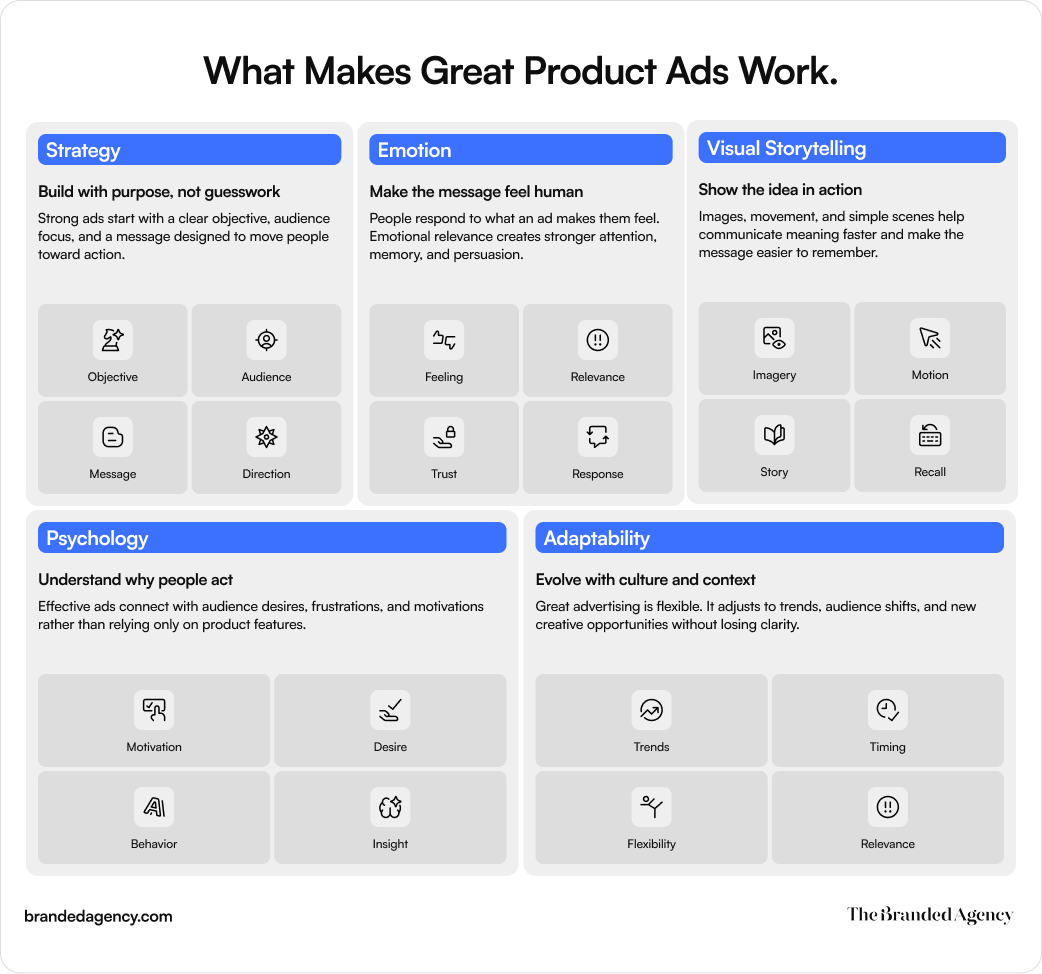
Editorial infographic titled “What Makes Great Product Ads Work” showing five connected cards that summarize the blog’s core advertising principles: strategy, emotion, visual storytelling, psychology, and adaptability, with short explanations and support labels about audience insight, trust, recall, motivation, and relevance.

Top 5 Takeaways

Abstract 3D pathway in red and blue leading toward a bright horizon, symbolizing progress, innovation, and forward-thinking marketing strategy.
Sunlit creative studio with a red and blue color palette, featuring a desk, computer, and large windows — representing creativity, workspace energy, and focus.
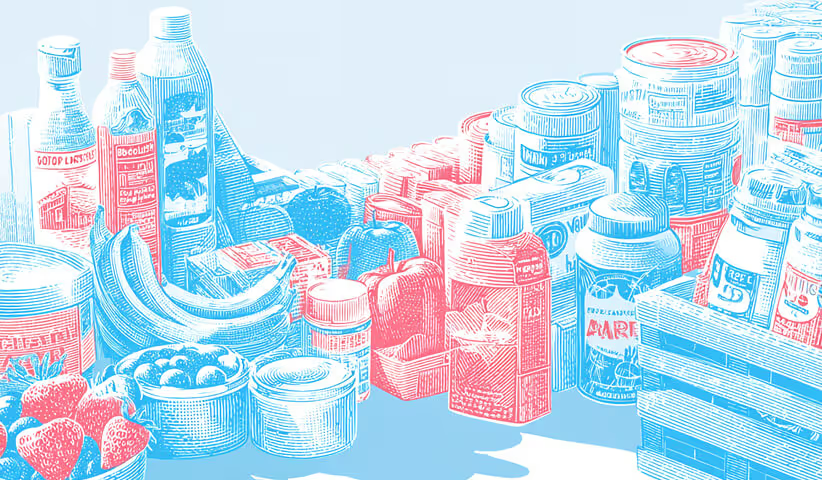
Still life of red and blue illustrated groceries, fruits, and packaged goods — symbolizing product variety, branding, and consumer lifestyle.
Illustration of hands assembling printed materials on a table, symbolizing craftsmanship, attention to detail, and the process behind effective advertising.

1. Connection beats cleverness.

The best ads blend strategy, creativity, and psychology — not just catchy lines. They make people feel something real.

2. Visual storytelling is your edge.

Relatable, emotion-driven visuals make your message stick. It’s not about more design — it’s about the right story.

3. Think like a pro, not a student.

Approach every project like a live campaign. Build with purpose. Measure impact. That mindset separates the amateurs from the hired.

4. Forget the formula.

There’s no “perfect ad.” Great campaigns evolve with trends, audience shifts, and bold creative risks.

Inspiration means nothing without action.
Each example here comes with insider commentary — proven strategies you can actually apply to your next project or campaign.
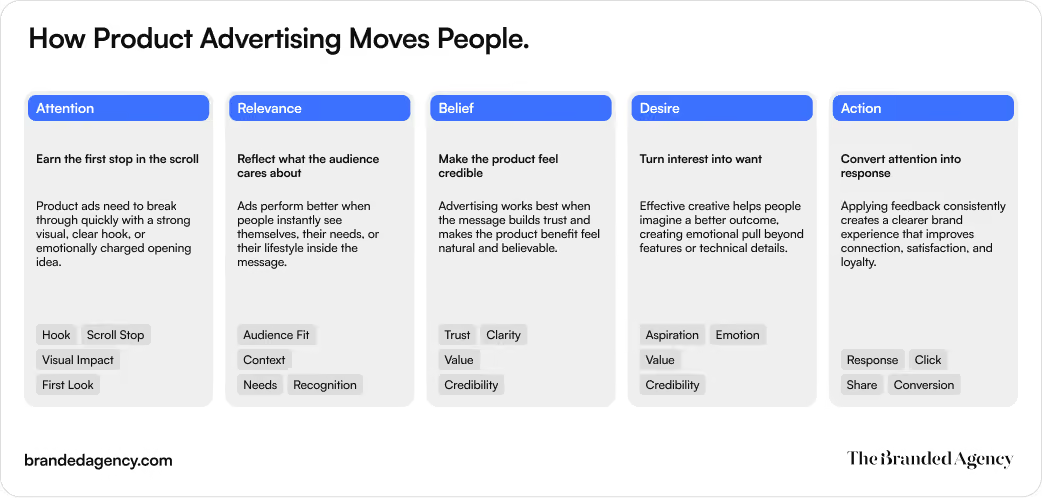
Editorial infographic titled “How Product Advertising Moves People” with five connected cards showing the blog’s persuasion framework: attention, relevance, belief, desire, and action, each paired with brief explanations and support labels about hooks, audience fit, trust, emotion, clicks, and conversion.

Want to learn more about E-Learning? Keep reading!

If you need help with your company’s marketing, contact us for a free custom quote.

Understanding the Power of Product Advertising
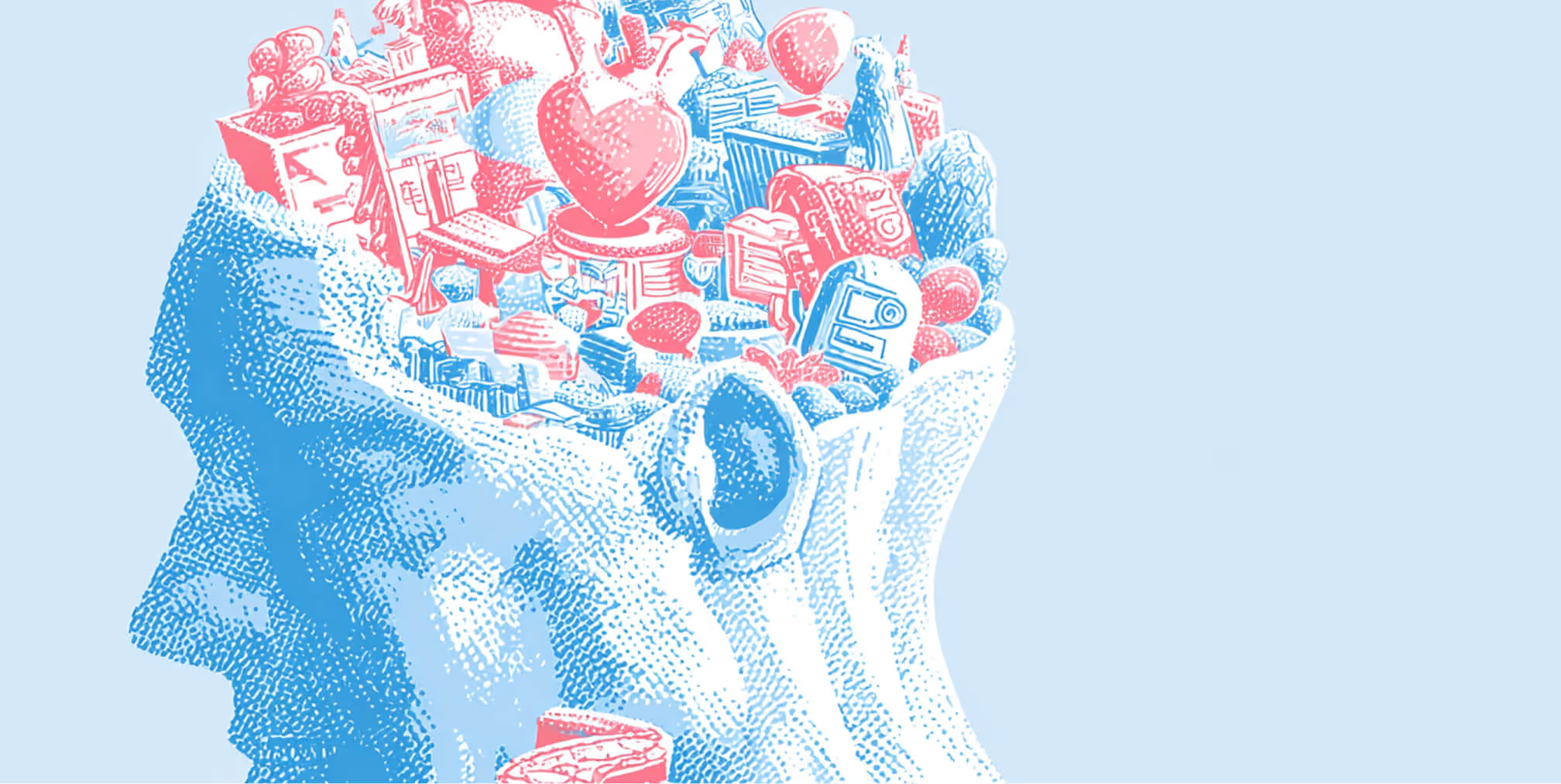
Abstract human head filled with illustrated objects — including products, symbols, and hearts — representing imagination, learning, and marketing creativity.

Leveraging Creativity That Converts

Creativity isn’t decoration — it’s differentiation. In a crowded market, creative strategy is how brands stay memorable and meaningful.

The best ads challenge comfort zones. They surprise. They earn attention by being true, not just trendy. Creativity grabs attention and engages viewers by using compelling visuals, emotional storytelling, and innovative formats that make ads stand out. From bold copy to visual storytelling that simplifies big ideas, creativity transforms an ad from “seen” to “shared.”

Our favorite formula? Truth + Taste + Timing. When all three align, creativity doesn’t just capture attention — it drives growth.

Short-form video content is currently the most effective media format for product advertising, with 48.6% of marketers ranking it as the top format for return on investment (ROI).

Resources to Sharpen Your Advertising Skills

If you’re learning the ropes, don’t settle for theory. Today’s best resources bridge design with strategy — because good visuals only matter when they drive results.

  • Design Techniques: Master color, contrast, and typography that make your message pop. Tools like Canva tutorials or Adobe courses can build your visual fluency fast. Studying and practicing with formats like a print campaign, such as Volkswagen's initiative targeting young, rural residents, can also provide valuable insights into effective product advertisement examples for students.
  • Marketing Strategy: Dive into case studies, webinars, and marketing courses that unpack real-world campaigns. Understanding trends, behavior, and brand positioning is what turns design into persuasion.
  • Hands-On Learning: Try exercises that mimic agency life — from group brainstorms to real-world client simulations. Participating in a student project offers hands-on, experiential learning and helps you gain practical experience for real-world marketing success. Practice makes perspective.

User-generated content (UGC) style advertisements, which mimic organic social media posts, have been shown to increase conversions by 161% on e-commerce product pages, making them particularly effective for reaching students.

Authenticity in advertising is crucial, as students trust their peers more than brand advertisements.

Using student ambassador programs can create a sincere representation of a brand on college campuses.

Turning Knowledge Into Marketing Impact

Learning is one thing — applying it is another. Once you understand how design and psychology work together, channel that insight into campaigns that actually convert.

Start with your audience: What do they care about? What keeps them scrolling? Then build a creative that speaks their language — visually and emotionally. Outdoor advertising is also a powerful way to reach students in their daily environments, using innovative formats and integrating with physical surroundings to create memorable messages.

And remember, there’s no one-size-fits-all playbook. Every campaign should flex with the market, the message, and the moment. The real pros know how to adapt — and that’s where confidence (and conversion) happen. Coca-Cola's marketing campaigns are a great example, using emotional branding, vibrant visuals, and multicultural themes to connect with diverse audiences and promote their products.

Brands often use humor and student-specific scenarios in advertisements to build credibility with students.

Financial independence is a top concern for students, making affordability an essential messaging point in marketing.

Exclusive student incentives, such as significant discounts or free trials, help build loyalty among the student demographic.

Connected TV advertising is an effective approach, reaching a significant portion of Gen Z who have moved away from traditional cable.

Traditional media is experiencing a resurgence as students face digital burnout.

High-energy, digital-first campaigns are effective in targeting budget-conscious Gen Z consumers.

“After years of testing ad concepts—from global brands to student campaigns—we’ve learned one thing that never changes: the ads that stick aren’t the flashiest or the most expensive. They’re the ones that tell a story people actually feel. When psychology, visuals, and strategy line up, you don’t just make an assignment—you make impact. That’s why at BrandedAgency.com, we go beyond examples. We share the insight, data, and lessons behind every creative move, so students learn to think—and build—like real marketers.”
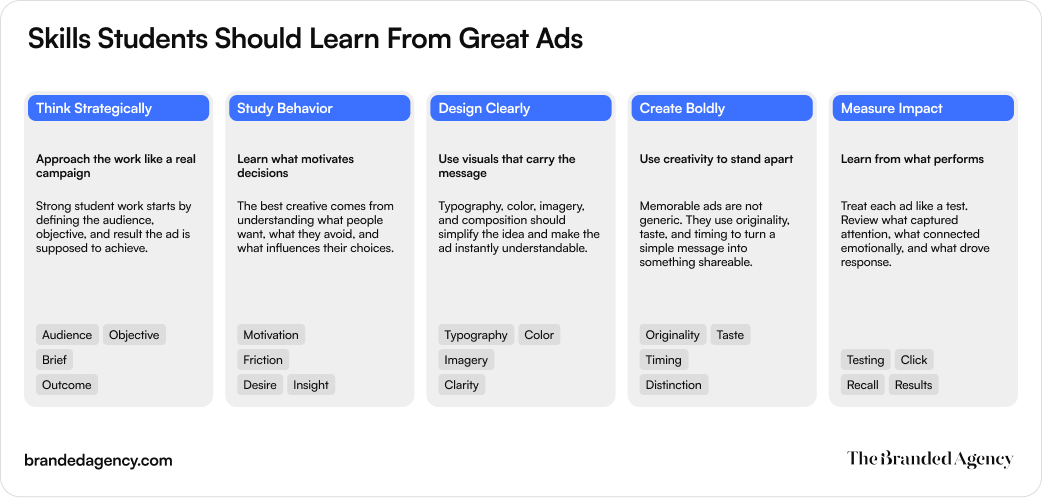
Editorial infographic titled “Skills Students Should Learn From Great Ads” with five connected cards outlining key lessons from the blog: think strategically, study behavior, design clearly, create boldly, and measure impact, each supported by short explanations and labels about audience, motivation, clarity, originality, testing, and results.

Frequently Asked Questions

Illustration of blue and red clouds converging at the center of the frame, symbolizing ideas colliding, innovation, and the merging of creativity and logic.

You’ve got questions — we’ve got straight answers. No jargon. No fluff. Just the fundamentals of advertising and product marketing, explained like a pro.

1. What is an advertisement (with examples)?

An advertisement is any message designed to influence behavior or drive action.
Think: a smartphone commercial, a shoe ad on your Instagram feed, or a YouTube pre-roll before your favorite video.
Different formats, same goal — to make you notice, remember, and act.

2. What’s an example of a product?

A product is anything that solves a problem or meets a need.
It can be physical (like sneakers or laptops) or digital (like an app or streaming service).

3. What are the two main types of product advertising?

  • Informative advertising educates — showing features, benefits, and how something works.
  • Persuasive advertising convinces — showing why this product is the choice over the rest.
    Both matter. The first earns attention. The second closes the deal.

4. What’s an example of a product ad that uses a simile?

A good simile paints a picture.
Example: “Our juice is as refreshing as a cool breeze on a summer day.”
It’s sensory, memorable, and human — the trifecta of strong copy.

5. What are the different types of advertisements?

Advertising comes in five major forms:

  • Print (magazines, newspapers)
  • Broadcast (TV, radio)
  • Outdoor (billboards, transit ads)
  • Digital (websites, streaming, search)
  • Social media (Instagram, TikTok, LinkedIn)
    Different channels — same strategy: reach the right people, with the right message, at the right time.

6. What’s the definition of a product?

A product is a good, service, or idea that fulfills a need or desire.
It can be tangible (like clothing) or intangible (like software or consulting).

7. How can I create my own ad?

Follow the same process pros use:

  1. Define your audience.
  2. Clarify your message.
  3. Design visuals or write copy that captures attention.
  4. Choose your channel — social, digital, print, or video.
  5. Test, measure, and refine.
    Good ads are built, not guessed.

8. What is product advertisement?

Product advertising promotes a single item — highlighting its key features, benefits, and what sets it apart.
It’s the difference between “buy our brand” and “buy this product now — here’s why.”

9. What are the 4 types of products in marketing?

  • Convenience products: Bought often with little thought (snacks, toothpaste).
  • Shopping for products: Compared before buying (laptops, furniture).
  • Specialty products: Unique or premium (luxury cars, designer fashion).
  • Unsought products: Not actively searched for (insurance, emergency tools).

10. What are the three main types of ads?

  • Informative ads: Teach and explain.
  • Persuasive ads: Convince and convert.
  • Reminder ads: Keep your product top-of-mind.
    Each plays a different role in the customer journey.

11. What are the five product levels?

Every product evolves through layers of value:

  1. Core benefit – what problem it solves
  2. Basic product – the physical or service form
  3. Expected product – what customers assume comes with it
  4. Augmented product – added features or experiences
  5. Potential product – future innovation or differentiation

Smart marketers know which level they’re selling at — and why.

12. What are the 7 P’s of marketing?

The full marketing mix includes:
Product, Price, Place, Promotion, People, Process, and Physical Evidence.
Together, they shape every touchpoint between your brand and your audience — from first impression to final purchase.

An image of the author Quincy Samyica

Quincy Samycia

As entrepreneurs, they’ve built and scaled their own ventures from zero to millions. They’ve been in the trenches, navigating the chaos of high-growth phases, making the hard calls, and learning firsthand what actually moves the needle. That’s what makes us different—we don’t just “consult,” we know what it takes because we’ve done it ourselves.

Want to learn more about brand platform?

If you need help with your companies brand strategy and identity, contact us for a free custom quote.

We do great work. And get great results.

DrTung’s
Breathed new life into a storied oral care brand with a smarter site and marketing for scalable growth.

+2.3x
Increase in revenue YoY

+126%
Increase in repurchase rate YoY

READ MORE
Smiling man with bright teeth on a light blue background, surrounded by floating DrTung’s herbal tooth powder tabs and packaging.
Smartphone on a textured blue surface displaying a DrTung’s ad with the text “Make the Switch” and an image of a woman holding herbal tooth powder tabs.
Flat lay of DrTung’s oral care products, including floss, tooth powder tabs, perio sticks, tongue cleaners, and toothbrushes, arranged with a blue pouch on white tile.
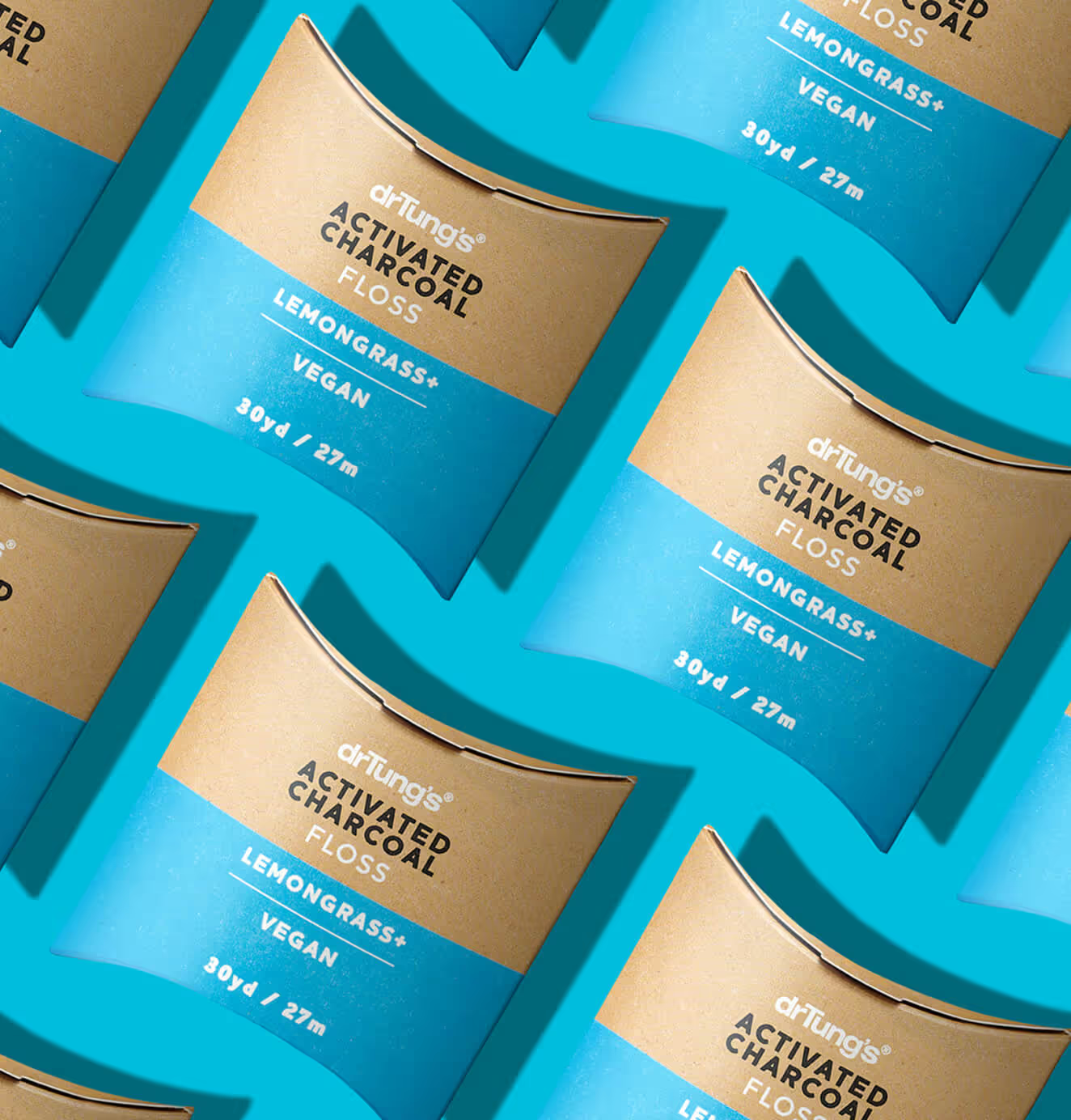
Pattern of DrTung’s Activated Charcoal Floss in brown and blue packaging, arranged diagonally on a bright blue background.
Smiling man with bright teeth on a light blue background, surrounded by floating DrTung’s herbal tooth powder tabs and packaging.
Smartphone on a textured blue surface displaying a DrTung’s ad with the text “Make the Switch” and an image of a woman holding herbal tooth powder tabs.
Flat lay of DrTung’s oral care products, including floss, tooth powder tabs, perio sticks, tongue cleaners, and toothbrushes, arranged with a blue pouch on white tile.
Pattern of DrTung’s Activated Charcoal Floss in brown and blue packaging, arranged diagonally on a bright blue background.
Mary Louise Cosmetics
Scaled a heritage-inspired clean beauty brand with modern performance marketing and farm-to-face storytelling.

+93%
Revenue growth in first 90 days

+144%
Increase in attributed revenue

READ MORE
A jar of Mary Louise Lilac & Shea Body Butter with the lid open, showing creamy texture, placed on a beige surface beside sprigs of lavender.
A Mary Louise Miracle Serum bottle with a dropper cap, lying on a bed of small yellow flowers.
Mary Louise promotional print materials featuring the body butter, with images of skincare application and product photography on a textured beige background.
A close-up overhead view of multiple Mary Louise Miracle Serum bottles with yellow dropper caps arranged tightly together.
A jar of Mary Louise Lilac & Shea Body Butter with the lid open, showing creamy texture, placed on a beige surface beside sprigs of lavender.
A Mary Louise Miracle Serum bottle with a dropper cap, lying on a bed of small yellow flowers.
Mary Louise promotional print materials featuring the body butter, with images of skincare application and product photography on a textured beige background.
A close-up overhead view of multiple Mary Louise Miracle Serum bottles with yellow dropper caps arranged tightly together.
Eyecart
Made eye care feel modern, then marketed it like a DTC darling—with the results to match.

+91%
Increase in conversion rate

+46%
Increase in AOV

READ MORE
A smiling woman holds a magnifying lens with the word "eyecart" printed on it over her eye, creating a playful optical effect against a mint green background.
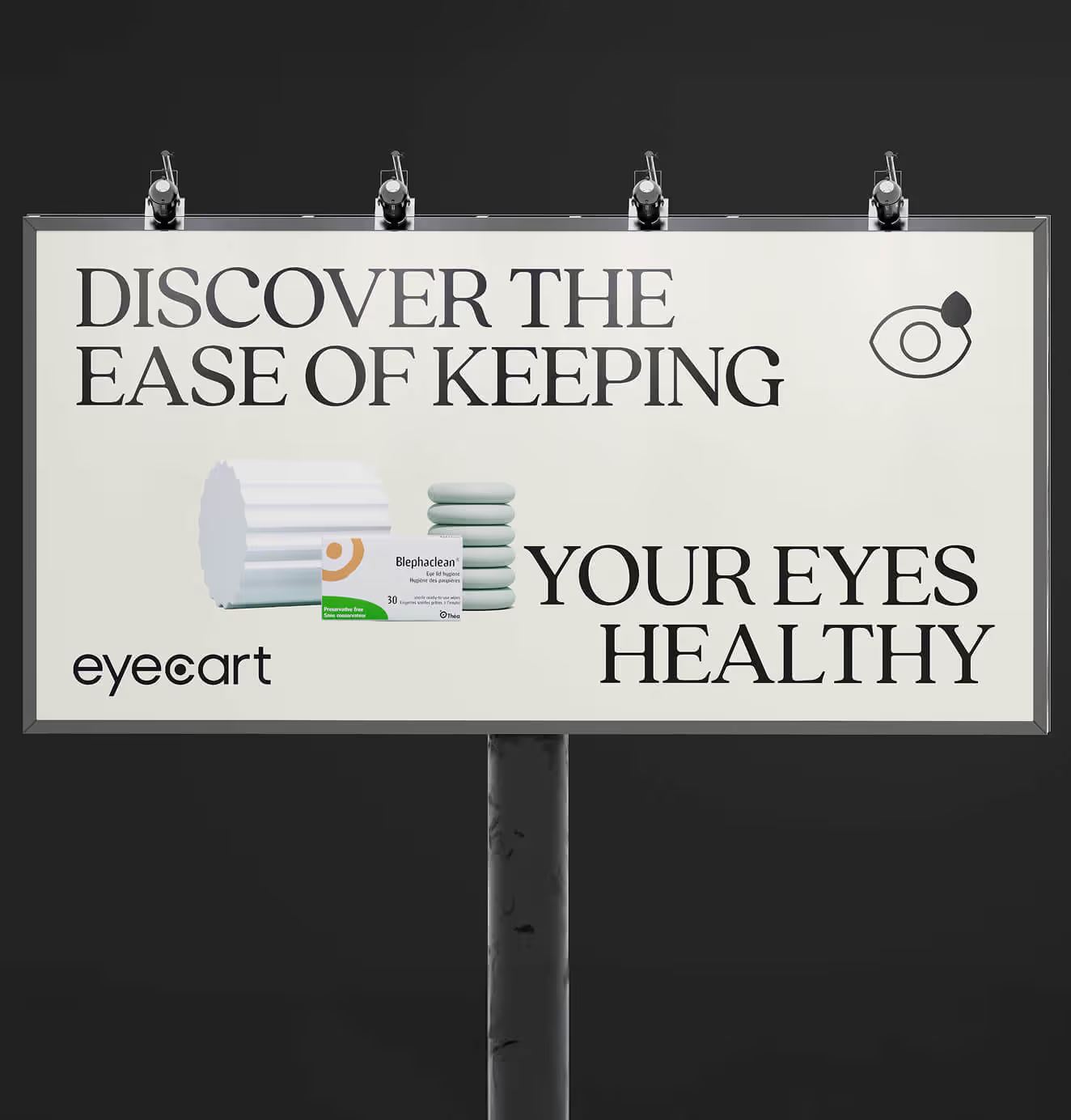
A billboard ad reads “Discover the ease of keeping your eyes healthy,” featuring Eyecart branding and Blephaclean eye care wipes packaging.
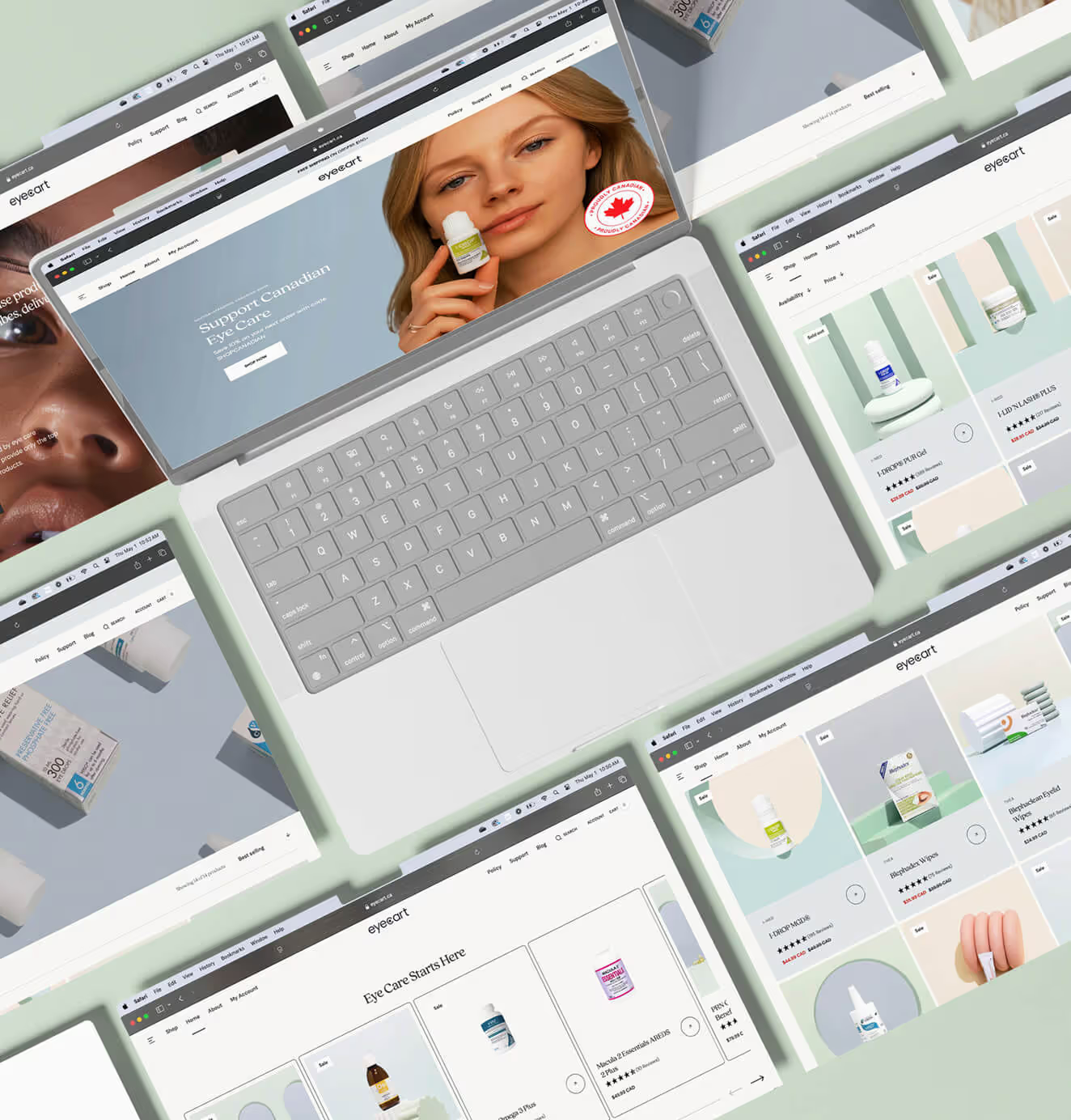
Multiple laptop screens display the Eyecart website, showcasing product pages and banners promoting eye care items.
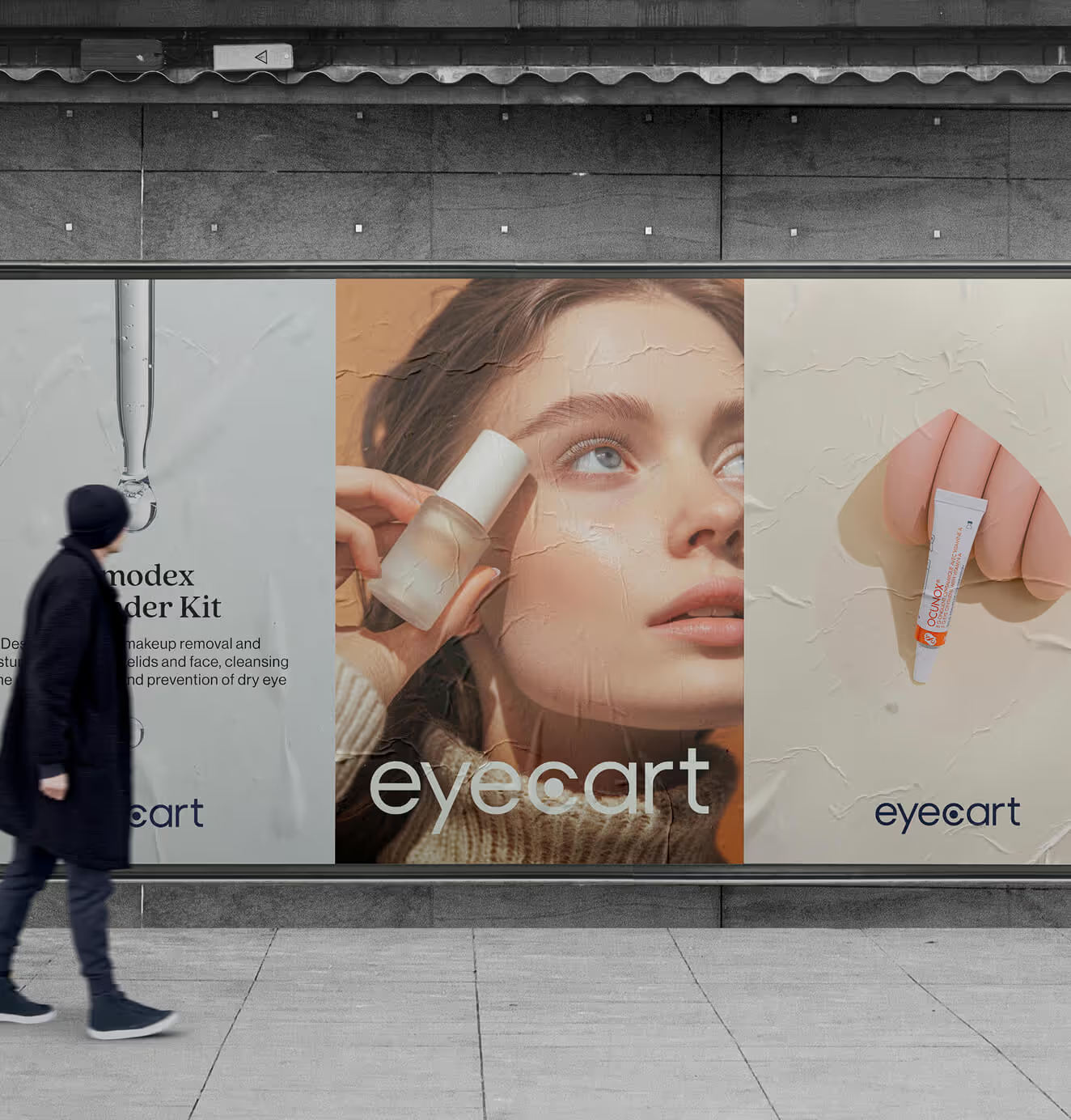
A person walks past large Eyecart posters on a city wall, featuring product photography of eye care serums and creams with clean, modern branding.
A smiling woman holds a magnifying lens with the word "eyecart" printed on it over her eye, creating a playful optical effect against a mint green background.
A billboard ad reads “Discover the ease of keeping your eyes healthy,” featuring Eyecart branding and Blephaclean eye care wipes packaging.
Multiple laptop screens display the Eyecart website, showcasing product pages and banners promoting eye care items.
A person walks past large Eyecart posters on a city wall, featuring product photography of eye care serums and creams with clean, modern branding.
Lucky Girl Rosé
We turned a zero-carb rosé into a lifestyle brand that makes every moment worth celebrating.

+200%
Increase in conversion rate

+688%
Increase in attributed revenue

READ MORE
A bottle of Lucky Girl rosé wine nestled among pink and white flowers in a rustic outdoor setting.
Lucky Girl rosé wine on a red-and-white checkered picnic blanket with cherries, strawberries, sunglasses, and a pink notebook titled The Lucky Club.
A wine glass filled with rosé on a gold tray surrounded by hands with red-painted nails, overlaid with the text “Pour yourself some luck.”
A bottle of Lucky Girl rosé wine with floral label design, dramatically lit against a soft pink background with a shadow cast.
A bottle of Lucky Girl rosé wine nestled among pink and white flowers in a rustic outdoor setting.
Lucky Girl rosé wine on a red-and-white checkered picnic blanket with cherries, strawberries, sunglasses, and a pink notebook titled The Lucky Club.
A wine glass filled with rosé on a gold tray surrounded by hands with red-painted nails, overlaid with the text “Pour yourself some luck.”
A bottle of Lucky Girl rosé wine with floral label design, dramatically lit against a soft pink background with a shadow cast.