Brand in Brand: How Brands Live Inside Other Brands
07/21/2026
Branding

Discover how brand-in-brand strategies help businesses leverage trusted partnerships, strengthen brand equity, and create more compelling products that stand out in competitive markets.

As markets become more crowded and consumers face endless choices, brands increasingly rely on strategic partnerships and brand architecture to build credibility faster. Whether it's a premium ingredient like Intel Inside, a luxury collaboration, or a carefully positioned sub-brand, brand-in-brand strategies allow companies to leverage existing trust while creating new value for customers. Understanding how these relationships work—and how they influence perception, purchasing decisions, and long-term brand equity—is essential for businesses looking to expand their portfolios, launch new offerings, or strengthen their competitive position in today's marketplace.
.png)
How Nested Brands Build Trust and Value



Key Takeaways
- The term brand-in-brand refers to ingredient branding or a host and ingredient brand strategy, where an ingredient is independently branded and marketed to consumers. This includes sub-brands, co-branding partnerships, and branded components like Intel Inside.
- Brand-in-brand strategies became especially visible in the 1990s and 2000s with tech component branding (Intel Inside launched 1991) and luxury collaborations like Louis Vuitton x Supreme (2017).
- When a host product features a premium ingredient brand, it inherits the sub-brand’s reputation and perceived reliability, increasing consumer willingness to pay.
- The key difference between truly new brands and sub-brands lies in ownership and control: sub-brands operate under a parent company’s umbrella, while co-brands combine two independent entities.
- Successfully managing brand-in-brand relationships requires clear brand architecture, consistent integrated marketing communications, and proactive risk management against reputation spillover.
Introduction: What Does “Brand in Brand” Mean?
Picture yourself unboxing a brand new Dell laptop in 2026. Before you even power it on, you notice the small sticker near the keyboard: “Intel Inside.” You’re experiencing two brands simultaneously. Dell made the laptop, but Intel’s processor is doing the heavy lifting under the hood. This is brand-in-brand in action.
The brand-in-brand approach enhances the host brand’s identity by injecting premium quality and trust. Much like a person with a distinct personality, a brand can be anthropomorphized—given human-like traits and characteristics that foster emotional connections with customers. When one brand is embedded within, endorsed by, or visually nested inside another brand’s ecosystem, you’re witnessing a strategic relationship that goes far beyond simple product features. Whether it’s a sub-brand created by a parent company, a co-branding partnership between independents, or an ingredient brand certifying quality, these nested structures shape how we perceive, choose, and trust products.
Here’s a linguistic curiosity worth noting: the phrase brand new (sometimes commonly pronounced bran new or written as span new) has roots in completely different territory than modern branding practice. The origin traces back to Old English ideas about items fresh from the forge, marked by fire. Today, launching a span new brand inside an existing corporate structure is roughly the same idea applied to business strategy rather than blacksmithing.
Why does brand-in-brand matter in 2026? Markets are cluttered. Attention is fragmented. Brands need to borrow or lend credibility to cut through noise. The rest of this article breaks down brand names, architecture models, communication strategies, collaborations, and the protections you need for these nested brand structures.
From “Brand New” to “Bran New”: Origins of the Phrase
Between the sixteenth and nineteenth centuries, English speakers needed ways to describe completely new objects. The word choices reveal fascinating patterns about how people understood freshness, quality, and manufacture.
The brand new etymology connects directly to Old English. The term brand referred to a burning piece of wood or, more specifically, the mark made by a hot iron or branding iron on goods or livestock. Items fresh from the forge—still hot from production—were literally marked by burning wood or the fire new stamp of recent creation. William Shakespeare and his contemporaries used fire new as a synonym. In Twelfth Night and Richard III, Shakespeare’s characters describe objects as fresh from creation, using language that would evolve into our modern phrase.
The earliest known attestation of alternative forms like bran new and span new appears in the eighteenth and nineteenth centuries. One explanation suggests that new items were cushioned in bran (the husk of grain) or wood fresh shavings when shipped, keeping the object fresh and unmarked. Charles Cotton writes of a bran new flaxen smock in his work, using language that would represent dialectal speech patterns of the era. George William Limon documented these variations, and by the time Noah Webster included entries in his American Dictionary, the linguistic landscape showed fascinating regional differences.
By the late nineteenth centuries, usage increased dramatically for brand new while bran new became scarce current. The rising popularity of mass manufacturing meant the forge-fire connection faded from collective memory, but the sense of freshness remained. Noah Webster and other lexicographers standardized spelling, pushing regional variants to the margins.
The irony? Today’s brand-new brand launches inside existing corporate structures are anything but isolated creations. They’re strategically nested, carefully positioned, and deliberately connected to parent identities. The old norse word origins pointing to fire and fresh creation contrast sharply with modern practice, where new minds approach branding as architecture rather than spontaneous creation.
Brand Names: The Building Blocks Inside Bigger Brands
A brand name is the part of a brand that can be spoken or written and identifies a product, service, or company, setting it apart from other comparable products within a category. Brand names may include words, phrases, signs, symbols, designs, or any combination of these elements, serving as a memory heuristic for consumers to remember preferred product choices.
Inside larger corporate ecosystems, individual brand names function as signposts. Consider The Coca-Cola Company’s portfolio: Coca-Cola, Sprite, and Fanta each carry distinct identities despite sharing corporate parentage. Consumers navigate these names like landmarks, recognizing which products belong to which occasions and preferences. Brand awareness involves a customer’s ability to recall and/or recognize brands, logos, and branded advertising, which helps customers understand which brands belong to which product or service category.
A trademark refers to the brand name or part of a brand that is legally protected, distinguishing it from other brands in the marketplace. Coca-Cola’s distinctive script, registered in 1893, demonstrates how visual identity compounds with linguistic identity. Registered trademarks are trademarks that have been officially registered with a government authority, providing legal protection to the brand owner. Apple’s bitten apple logo similarly functions as both visual mark and brand signal within a broader brand identity, appearing alongside retailer branding on packaging worldwide.
Memory heuristics matter enormously in retail environments. When you scan supermarket shelves, a clear brand name like Nescafé or iPhone creates instant recognition compared with generic alternatives. Ingredient branding allows consumers to identify and remember products easily as they are anchored by known entities. Marketers typically identify two distinct types of brand awareness: brand recall and brand recognition, which operate in different ways and have important implications for marketing strategy and advertising.
When launching brand spanking new names, even those piggybacking on parent brands, the new name must be:
- Linguistically distinct from existing portfolio entries
- Protectable as trademark across target markets
- Culturally safe in all languages where you’ll operate
- Pronounceable without confusion or embarrassment
Brand awareness is a key step in the customer’s purchase decision process, as some level of awareness is a precondition to purchasing; customers will not consider a brand if they are not aware of it. Your brand name strategy either accelerates or blocks this awareness.
Brand Architecture: How Brands Nest Inside Brands



Brand architecture is the blueprint showing how corporate, family, and individual brands relate to each other. Think of it as an organizational chart for brand relationships and hierarchy, defining who reports to whom and who stands independently.
Corporate/Multiproduct Branding
Microsoft exemplifies corporate branding where the parent name appears on everything. Microsoft 365, Microsoft Teams, and Microsoft Azure all carry the company’s brand as an umbrella identifier. The advantage? Every new launch benefits from accumulated corporate equity. The risk? One product failure can splash back on siblings.
Individual Branding Within Single Companies
Contrast Microsoft’s approach with Unilever’s strategy. Unilever owns Dove, Axe/Lynx, and Ben & Jerry’s, but each acts as an independent brand in brand relationship. The Unilever “U” logo appears in corporate communications but rarely dominates consumer-facing packaging. Each brand targets different audiences with different personalities, protected from cross-contamination.
The Toyota-Lexus Model
Toyota launched Lexus in 1989 specifically for the US luxury market. The company recognized that Toyota’s reliable-but-mainstream positioning would actively damage luxury aspirations. Lexus operates with complete brand separation: different dealerships, different design language, different marketing. The parent company provides manufacturing expertise and financial backing while remaining invisible to consumers.
Successful brand-in-brand strategies, such as Nike’s Air Jordan and Apple’s iPhone, enhance brand identity by creating specialized identities within a parent brand. The brand-in-brand strategy helps organizations expand their portfolio and reach new markets while maintaining the parent brand’s reputation, but poor execution or overextension can lead to brand dilution when extensions stray too far from core equity.
Multibranding vs. Mixed Branding
Procter & Gamble separates Tide and Ariel completely, allowing them to compete in different markets with different positioning. Meanwhile, companies like Michelin appear both under their own name and as components within retailers’ private brands. The brand-in-brand strategy is prevalent in technology, automotive, apparel, and culinary industries.
Brand Collaborations and Co-Branding: When Two Brands Share the Stage
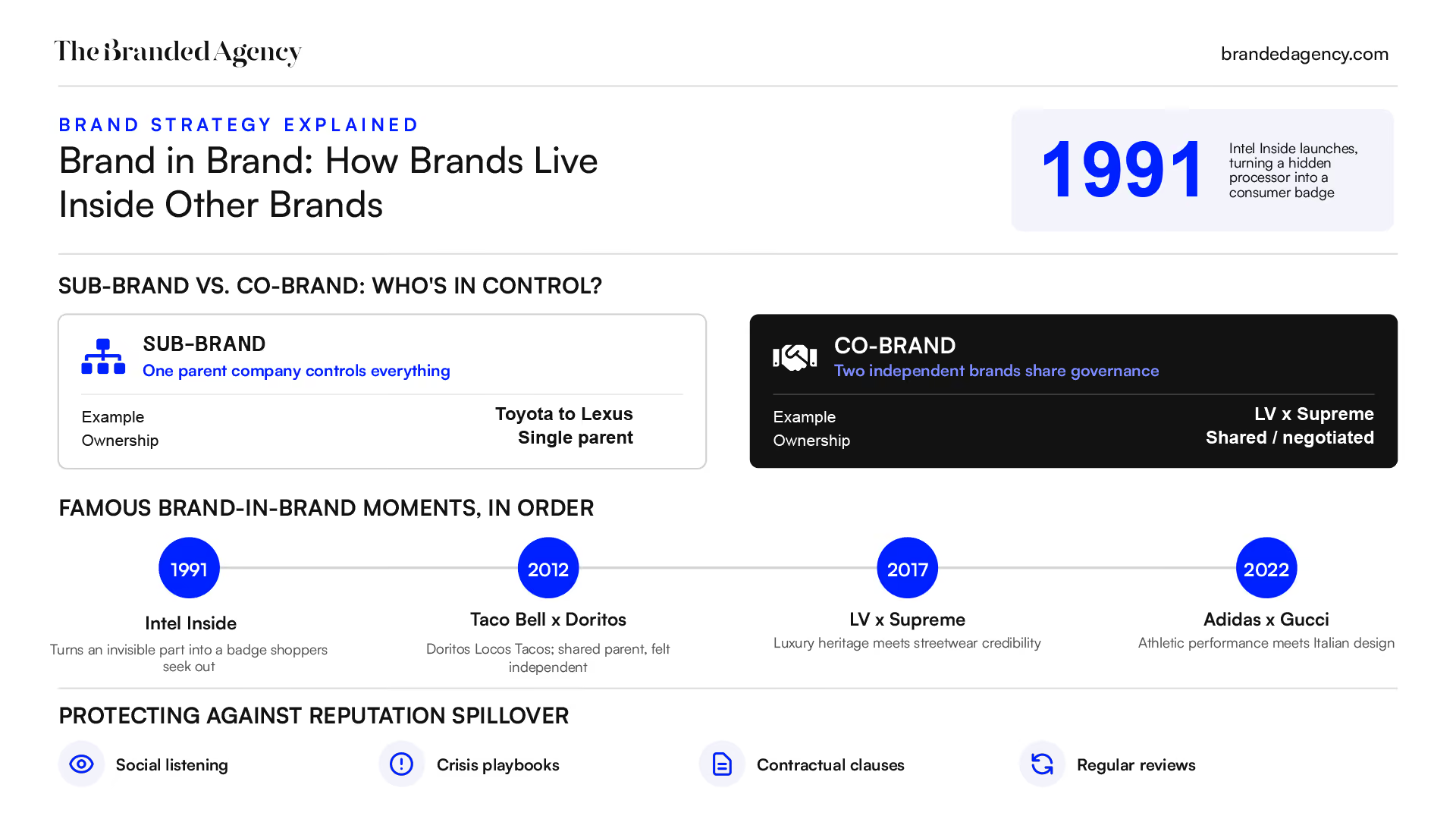
Co-branding occurs when two or more independent brands intentionally appear together on one product, service, or campaign. Unlike sub-branding (where one company controls everything), co-branding requires negotiation, alignment, and shared governance.
Fashion and Food Examples
Louis Vuitton x Supreme (2017) combined French luxury heritage with New York streetwear credibility. The collaboration allowed Louis Vuitton to attract customers from younger, trend-conscious demographics while Supreme gained luxury legitimacy. Adidas x Gucci (2022) followed similar logic, merging athletic performance with Italian design.
In food, Taco Bell x Doritos created the Doritos Locos Tacos (launched 2012). Both brands share PepsiCo parentage, making this technically an intra-corporate collaboration, but the consumer experience presents it as two independent brands creating something novel together. Consumer willingness to pay increases when they perceive distinct added value from a verified ingredient brand.
Ingredient Branding
Intel Inside, launched in 1991, transformed how consumers evaluated computers. Before the campaign, processors were invisible components. After? Consumers actively sought the Intel badge, associating it with performance and reliability. In a brand-in-brand model, component manufacturers build direct pull-demand from the end-consumer.
Dolby Vision and Dolby Atmos labels on televisions and streaming devices operate similarly. The host brand (Samsung, LG, Netflix) benefits from Dolby’s credibility in audio-visual quality. Ingredient brands often carry cultural or lifestyle meanings, allowing host brands to align quickly with specific consumer subcultures.
Alignment Requirements
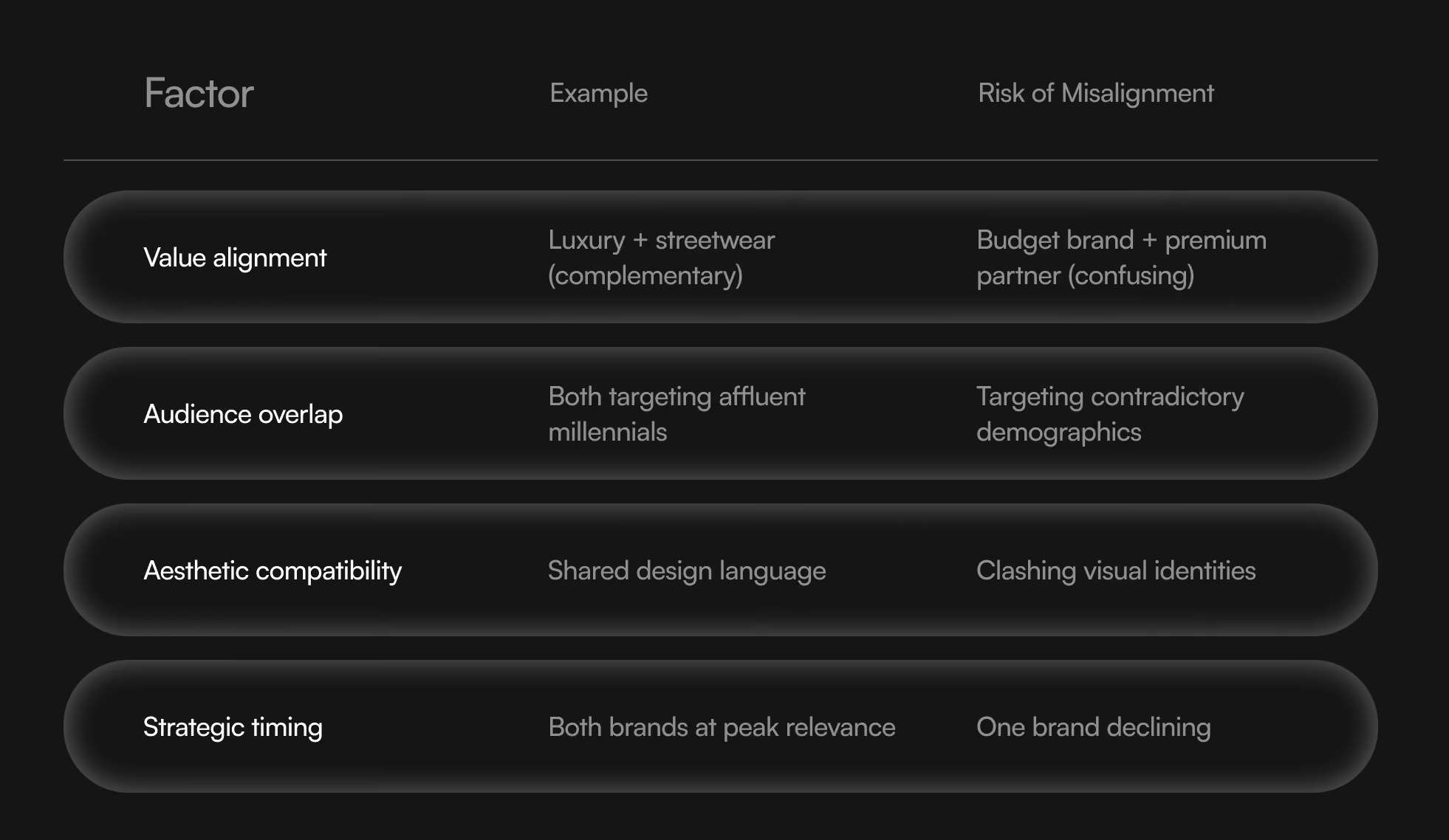
Apple CarPlay appearing in BMW and Mercedes models illustrates careful tech-auto positioning. Both Apple and luxury automakers target affluent, design-conscious consumers, making the partnership feel natural rather than forced.
Want to learn more about brand platforms, Brand Strategy and Brand Identity? Keep reading!
If you need help with your companies brand strategy and identity, contact us for a free custom quote.
“No-Brand” and Minimalist Brands Living Inside Others
Muji, founded in 1980, pioneered no-brand branding. The name translates to “no brand quality goods,” deliberately rejecting conventional brand apparatus: loud logos, celebrity endorsements, complex packaging. Instead, Muji products feature minimal design, neutral colors, and quiet confidence in product quality, demonstrating how even stripped-back aesthetics can strongly shape customer perceptions and behaviour.
Here’s the paradox: Muji’s anti-brand strategy became one of the most recognizable brand identities globally. The act of associating a product or service with a brand has become part of pop culture, with many products having some kind of brand identity, from common items to designer goods. Even rejection of branding becomes a brand statement.
When Muji products appear inside powerful retailer environments like Aeon malls in Japan or European department stores, the minimalist aesthetic creates distinctive presence. Surrounded by visual noise, Muji’s plainness becomes the loudest signal on the shelf. Brand identity is a collection of individual components, such as a name, design, images, slogan, vision, writing style, font, or symbol, which sets the brand apart from others and is codified through comprehensive visual and non-visual brand guidelines.
Intel Inside provides an interesting bridge here. The component badge is visually low-key—a small sticker on laptops from Dell, HP, and Lenovo—yet carries enormous influence on purchase decisions. Minimal visual footprint doesn’t mean minimal brand impact.
Direct-to-consumer brands like early Everlane and Glossier (emerging in the 2010s) built minimalist identities that later entered larger marketplaces like Amazon. These brands become nested within Amazon’s dominant retail frame, maintaining identity through consistent typography, color, and packaging rules rather than through aggressive logo placement.
The brand identity works as a guideline, framing how a brand will evolve and define itself, and is essential for consumer recognition and differentiation from competitors. Even no-brand strategies require this consistency to remain recognizable across host brand environments.
Brand Communication: Telling a Brand-in-Brand Story
When one brand operates inside another—as sub-brand, component, or collaborator—integrated marketing communications (IMC) must coordinate both voices. Integrated marketing communications (IMC) relates to how a brand transmits a clear consistent message to its stakeholders, comprising five key components, and benefits from a structured brand communication strategy that aligns channels and messaging.
Key Touchpoints
Touch points represent the channel stage in the traditional communication model, where a message travels from the sender to the receiver, and any point where a customer interacts with the brand defines a touchpoint. For brand-in-brand relationships, dual branding typically appears at these strategically managed brand touchpoints:
- Packaging (both logos, clear hierarchy)
- In-store displays (co-branded signage)
- Joint digital campaigns (shared landing pages)
- Sponsored content (both brands mentioned)
- Social media posts (cross-tagging, shared hashtags)
Electronic Word-of-Mouth
One method of brand communication that companies can exploit involves electronic word-of-mouth (eWOM), particularly through social networking sites like Twitter, which can enhance consumer trust and loyalty when paired with well-planned brand marketing campaigns. When YouTube reviewers evaluate a “brand new Samsung TV with built-in Dolby Atmos,” they communicate both brands together organically. This uncontrolled communication often carries more credibility than advertising.
Contemporary Examples
Apple’s App Store features “with Apple Arcade” tags, indicating integration with Apple’s gaming subscription service. Netflix displays “A Netflix Series in partnership with Shondaland,” giving Shonda Rhimes’ production company visible creative credit while maintaining Netflix’s distribution ownership. These layered narratives serve both parties.
Message Simplicity
When communicating a brand, a company should simplify its message to increase the likelihood of target consumers recalling and recognizing the brand. The effectiveness of a brand’s communication is determined by how accurately the customer perceives the brand’s intended message through its IMC.
Both brands must agree on:
- Tone of voice
- Specific claims and promises
- Visual standards and logo hierarchy
- Crisis communication procedures
- Approval workflows for joint content
A brand’s identity may deliver four levels of meaning: attributes, benefits, values, and personality, which collectively help to explain why customers should choose one brand over its competitors. When two brands share communication space, both must ensure their distinct identities remain clear while harmonizing the joint message.
Risks: Doppelgänger Brand Images and Reputation Spillover
A doppelgänger brand image (DBI) is a negative, often satirical shadow-brand created in culture to criticize or parody a well-known brand. Think of modified logos mocking oil companies’ environmental records or sugar-laden drinks’ health impacts. These culture-jamming efforts can spread rapidly online.
How DBIs Affect Brand-in-Brand Relationships
When backlash hits one partner in a co-branding relationship, it frequently splashes onto collaborators. A fast-food chain criticized for environmental practices in the 2020s can inadvertently transfer negative associations to its ingredient brand partners or endorsed component brands, which is why a periodic strategic brand audit of partnerships and perceptions becomes critical.
Consider this scenario: Brand A partners with Brand B for a high-profile collaboration. Brand B later faces a scandal involving labor practices. Even though Brand A had no involvement, consumers may associate both brands with the controversy, particularly if the collaboration is recent and prominently marketed.
Management Strategies
Protecting against reputation spillover requires proactive measures and, where appropriate, carefully designed strategic brand partnerships with clear governance:
- Social listening: Monitor online conversations, activist spaces, and media for emerging criticisms of partners
- Shared crisis-response playbooks: Establish pre-agreed communication protocols before problems arise
- Contractual clauses: Include conduct standards, values alignment requirements, and exit options in partnership agreements
- Regular reviews: Periodically assess partner brands for emerging risks
International standards like ISO/TC 289 on branding, while still evolving, encourage consistent terminology and practice, which can help brands anticipate cross-border PR issues in co-branded ventures.
Exit Strategy Planning
Every brand-in-brand relationship should include clear procedures for unwinding the partnership without confusing consumers. This includes:
- Timeline for removing co-branded materials
- Communication templates for explaining changes
- Customer service scripts addressing questions
- Legal frameworks for trademark separation
How to Launch a Brand-New Sub-Brand Inside an Existing Brand (Step by Step)
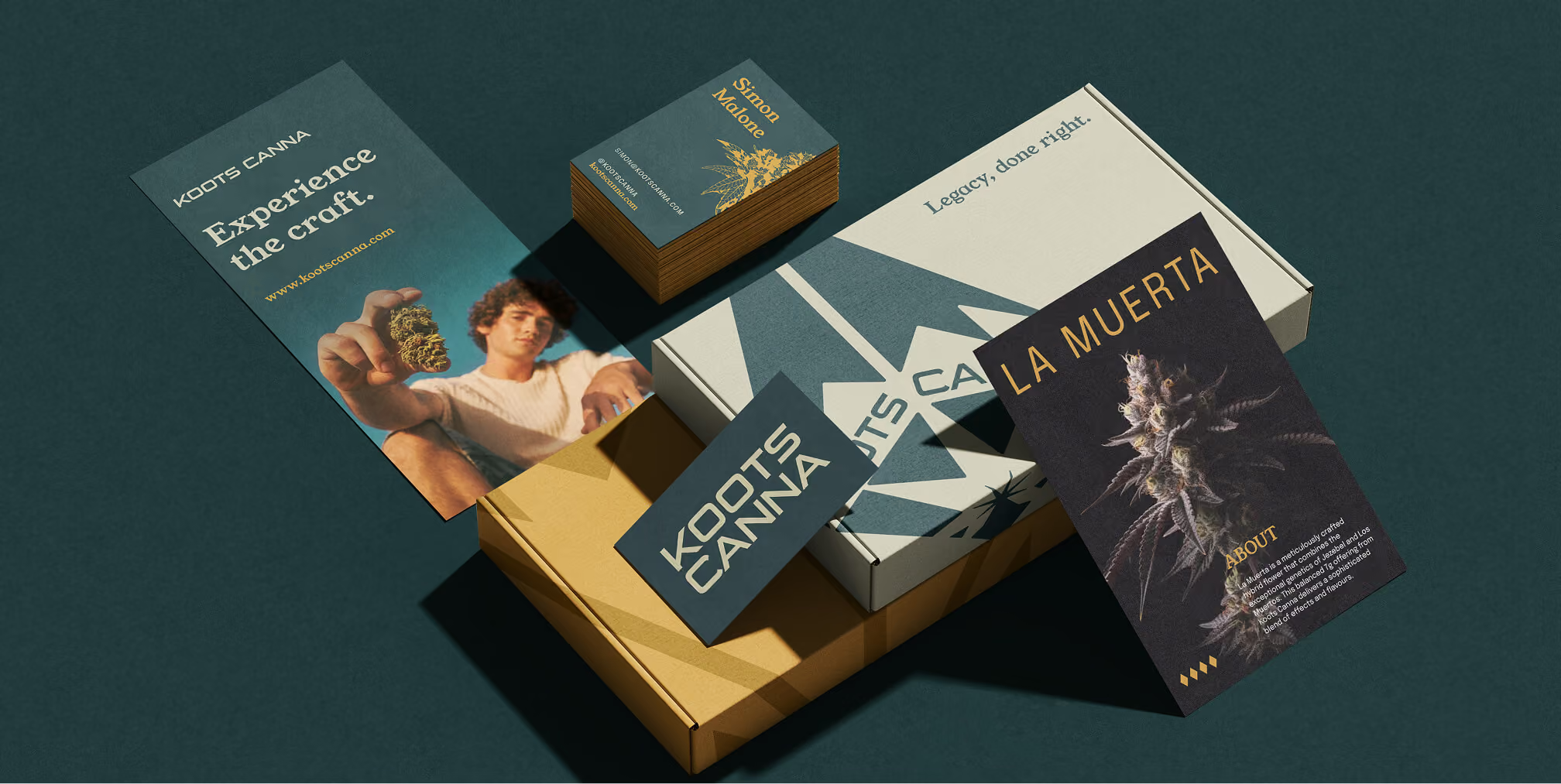
If you’re a marketing manager planning a brand new or span new sub-brand rollout in 2026, here’s your practical roadmap for embedding that work inside a broader end-to-end brand strategy framework.
Step 1: Research and Analysis
Before naming anything, complete thorough groundwork, ideally informed by a recent audit of your existing brand’s strengths and weaknesses:
- Market analysis: Is there genuine demand for a new offering, or could you extend existing lines?
- Audience segmentation: Does the new target differ meaningfully from your current customers?
- Competitive mapping: Where do competitors operate, and where are gaps?
The fundamental question: Does this offering need its own brand identity, an endorsed name, or just a line extension under existing branding?
Step 2: Naming Decisions
Once you’ve confirmed a new brand is warranted and aligned with your overarching brand platform of purpose, values, and positioning:
- Check trademark availability across all target markets
- Test pronunciation in target languages (avoid embarrassing translations)
- Confirm the name won’t confuse with existing portfolio entries
- Verify domain and social handle availability
The excellent jests about minced meat aside, naming errors can derail launches. Wine brands have learned this lesson repeatedly when names appropriate in one market prove problematic elsewhere.
Step 3: Design Guidelines
Your visual identity should signal both novelty and continuity, guided by clear brand guidelines that define how the system works:
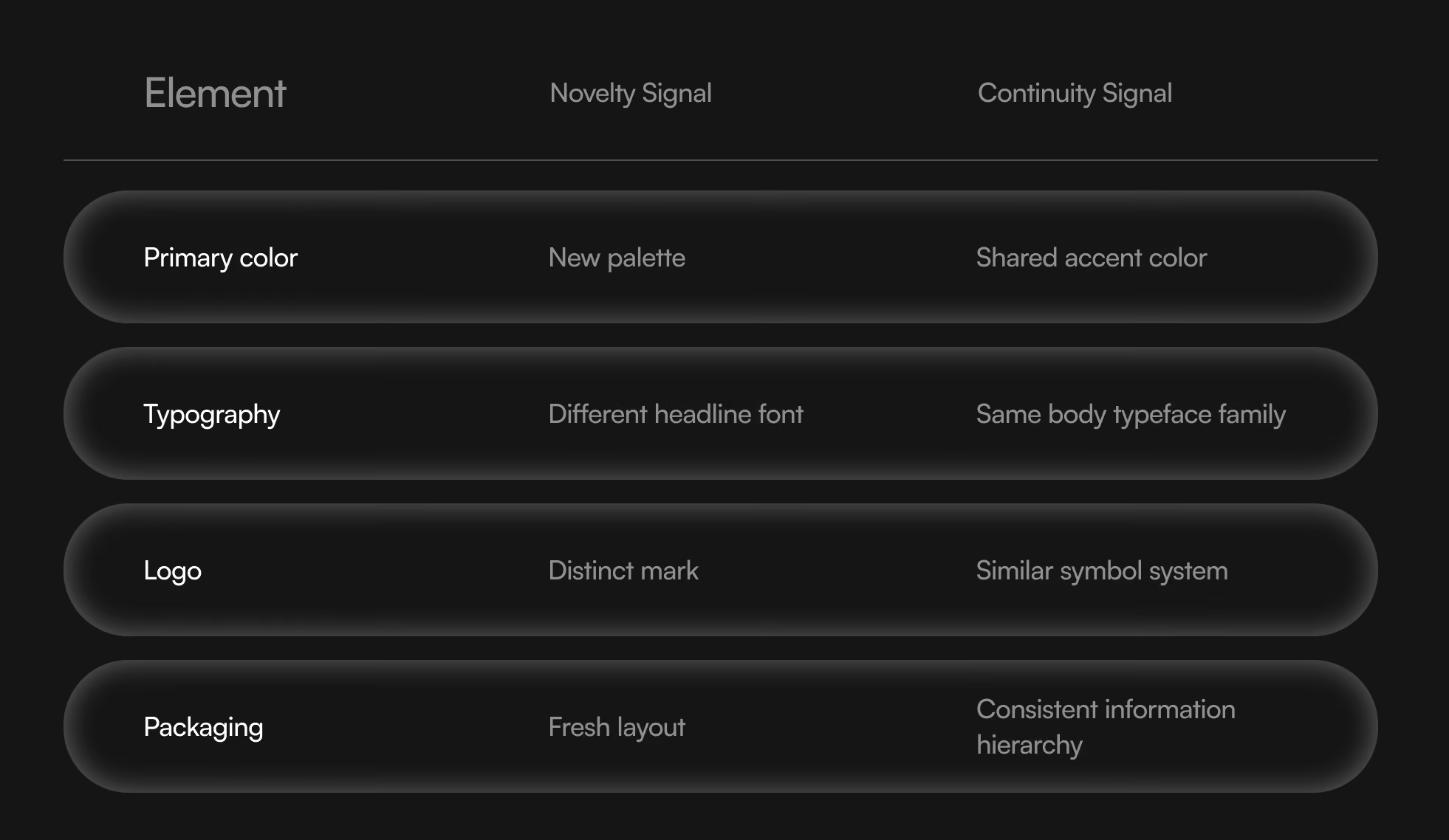
The sub-brand should feel like a family member, not a stranger, while still standing as its own entity.
Step 4: Phased Communication
Launch communication typically follows three stages and should be mapped carefully across priority brand touchpoints in your ecosystem:
- Teaser phase: Corporate brand announces something new is coming, building anticipation
- Co-branded launch: Parent and sub-brand appear together prominently, establishing the relationship
- Independence migration: As the sub-brand accumulates equity, parent branding recedes
This phased approach lets consumers understand the connection while allowing the new brand to develop its own personality. Campaigns should evolve from heavily endorsed to increasingly independent as market recognition grows.
Step 5: Measurement and Adjustment
Track performance through metrics that demonstrate why strong, consistent branding drives measurable business results:
- Awareness metrics (unaided and aided recall)
- Sales attribution
- Brand perception surveys
- Social sentiment analysis
- Trademark monitoring for potential infringement
Be prepared to adjust communication balance based on real-world results. Some sub-brands need longer parent endorsement; others can accelerate to independence—a consideration that is especially important for small businesses building their first serious brand.
FAQ
What is the difference between a sub-brand and a co-brand?
A sub-brand is owned and controlled by one parent company. Toyota owns Lexus entirely and sets all long-term strategy. In contrast, a co-brand combines two independent brands with shared but negotiated control. Nike x Off-White collaborations require both parties to agree on everything from design to distribution. Sub-branding offers complete control but requires full investment. Co-branding shares risk and reward but demands compromise and coordination.
Can a “no-brand” product really be considered a brand?
Absolutely. Even no-brand or generic-looking products use consistent visual cues, quality standards, and narratives that function as brand elements in consumers’ minds. Muji’s minimalism and plain-packaged supermarket lines both create strong, distinctive identities through their consistency. The absence of traditional branding becomes a brand signal itself. What matters is whether potential customers can recognize and differentiate the offering—and minimalist products absolutely achieve this through deliberate design choices.
How do I protect my brand if it appears inside another brand’s ecosystem?
Register trademarks for brand names and key visual elements before entering partnerships or marketplaces. This includes app stores, online marketplaces, or retailer shelves. Negotiate clear brand-usage guidelines in contracts, including logo placement rules, quality standards, crisis procedures, and specific terms for ending the partnership without confusing consumers. Sell only through authorized channels and monitor for unauthorized usage that could dilute your brand, and ensure partners respect your logo branding guidelines for consistent use.
When should I use a brand-new name versus extending my existing brand?
A brand-new name works best when you’re entering a very different category, targeting a distinct audience, or needing distance from the parent brand’s current associations. Toyota created Lexus specifically to purchase access to the luxury segment without mainstream baggage. Line extensions under existing names are more efficient when the new offer shares core benefits, price tier, and positioning with the parent brand. A business selling related products to similar customers rarely needs a completely new identity.
Does “brand spanking new” have any practical meaning in branding strategy?
The phrase brand spanking new is an emphatic idiom emphasizing freshness. It has no formal role in brand theory but can be used in marketing campaigns to dramatize launches. The caution: if you promise brand spanking new features, ensure genuine innovation backs the claim. Consumers who feel misled by hyperbolic language develop negative associations quickly. Use emphatic language when you have something genuinely novel; otherwise, more measured claims protect your credibility and create sustainable trust with your example customers—and working with an experienced branding agency to shape that voice and identity can help keep you on track.

Quincy Samycia
As entrepreneurs, they’ve built and scaled their own ventures from zero to millions. They’ve been in the trenches, navigating the chaos of high-growth phases, making the hard calls, and learning firsthand what actually moves the needle. That’s what makes us different—we don’t just “consult,” we know what it takes because we’ve done it ourselves.
Want to learn more about brand platform?

If you need help with your companies brand strategy and identity, contact us for a free custom quote.
We do great work. And get great results.
+2.3xIncrease in revenue YoY
+126%Increase in repurchase rate YoY


+93%Revenue growth in first 90 days
+144% Increase in attributed revenue


+91%Increase in conversion rate
+46%Increase in AOV


+200%Increase in conversion rate
+688%Increase in attributed revenue