Five Step Playbook to Unite Brand and Performance Marketing for CMOs
11/09/2026
Marketing Strategy
Bring brand building and performance marketing into one growth plan with shared briefs, clear KPIs and more defensible budget decisions.
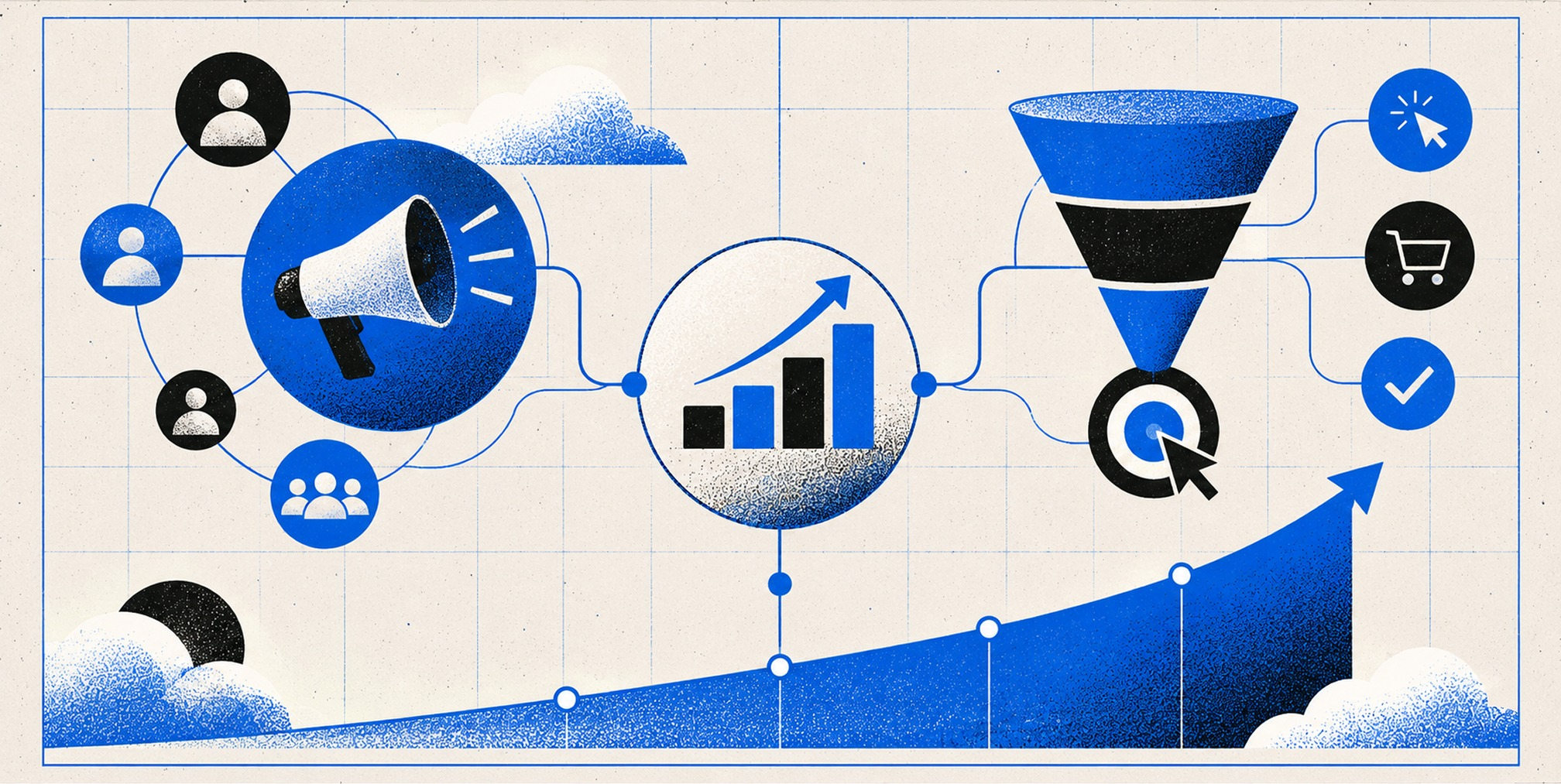
Brand marketing builds the pool of future buyers; performance marketing converts the ones ready to buy today. Treat them as separate budgets and you win short-term efficiency at the cost of long-term growth. The right move is to plan both together: set brand and performance KPIs at the same kickoff meeting, not in separate silos six months apart.


Brand vs Performance Marketing: What Each One Actually Does

Every debate over brand vs performance marketing starts with a definitional mix-up. Performance marketing chases measurable action right now: a click, a cart, a signed contract. Brand marketing builds the mental shortcut that makes someone choose you before they ever open a search bar. Confuse the two and you end up judging a six-month brand campaign by last week’s cost-per-acquisition, which is like judging a garden by how it looks the morning after you plant the seeds.
The practical difference shows up in three places: timeline, what you measure, and where the money goes. Performance marketing tactics are built for speed and traceability. Brand marketing tactics are built for reach and memorability, and they pay off on a longer curve. Neither one is optional if you plan to grow past your current customer base.
Performance Marketing: What It Is, Tactics, and Short-Term KPIs
Performance marketing is any spend built to capture existing intent and produce a measurable action, usually within days or weeks. It works because the buyer has already decided to look, and your job is to be the answer they find first.
Common performance marketing techniques include:
- Paid search and shopping campaigns aimed at active demand.
- Conversion-focused paid social, retargeting and landing-page experiments.
- Lifecycle email and SMS for qualified, consented audiences.
- Optimization using CPA, ROAS, contribution margin and incremental conversions.
Success gets measured through return on ad spend, cost per acquisition, conversion rate, and incremental revenue. Mailchimp’s guidance on balancing the two approaches points out that the same channels, like paid social or email, can serve either performance or brand goals depending on the creative and the optimization target. That flexibility is exactly why so many teams blur the line without realizing it.
Brand Marketing: Definition, Channels, and Long-Term KPIs
Brand marketing builds mental availability, the likelihood that a buyer thinks of you first when the need finally arrives. Its job is trust and preference, built before the transaction, not during it.
Brand marketing strategies typically run through:
- Distinct positioning and memorable creative built for category entry points.
- Broad-reach video, PR, podcasts, sponsorships and social storytelling.
- Consistent visual and verbal identity across owned and paid touchpoints.
- Longitudinal awareness, consideration, share-of-search and pricing-power measurement.
Brand success gets tracked through brand lift surveys, share of search, direct traffic growth, Net Promoter Score, and the ability to hold price without losing volume. The catch: these effects compound over 6 to 12 months, not days. A brand campaign that looks flat in month two can be the reason your performance campaigns get cheaper in month eight.
Brand vs Performance Marketing at a Glance
- KPIs: Use CPA, conversion and incrementality for performance; use reach, brand lift and future demand for brand.
- Time horizon: Performance responds quickly; brand outcomes often accumulate over longer periods.
- Purpose: Performance captures measurable action now; brand builds future preference and category familiarity.
Here’s how the two stack up when you put them side by side.
A blended-metrics reality check: Last-click attribution routinely undercounts brand’s contribution because it only credits the final touch before conversion. ClickZ’s analysis of the false dichotomy makes the case that calibrated measurement, not click counting, is what reveals brand’s real value.
Three takeaways for the executive meeting: performance marketing wins the efficiency argument short-term, brand marketing wins the margin argument long-term, and any measurement plan built solely on click attribution will systematically starve your brand budget.
When to Prioritize Performance vs Brand
Watch two signals closely: rising customer acquisition cost with flat conversion rates usually means your performance channels are saturated and need brand support to reduce click costs. Falling branded search volume, even while paid spend holds steady, signals a brand awareness gap that no amount of retargeting will fix.
Stage-based allocation works better than a fixed rule. Here’s a rough sequence:
- Early stage: Validate positioning and a small number of acquisition paths while building recognizable brand assets.
- Growth stage: Protect proven acquisition channels and experiment with sustained reach and demand creation.
- Mature stage: Allocate across brand and activation based on market saturation, incrementality and long-term margin.
Phase the move over two or three cycles so you can watch ROAS for early warning signs before committing further.
How to Blend Brand and Performance Marketing: A Five-Step Playbook
Integrating brand and performance starts with one brief, not two. A shared creative brief with joint KPI targets is the single highest-leverage change most teams can make this quarter.
Build it around five steps:
- Step 1, set one business outcome and shared audience definition across brand and performance teams.
- Step 2, create one creative brief with positioning, proof, formats, messaging and the conversion action.
- Step 3, assign leading and lagging KPIs, including brand reach, qualified demand, CAC and incremental revenue.
- Step 4, run a staged media plan that pairs reach-building with demand capture rather than treating them as competing campaigns.
- Step 5, review monthly, test incrementality where feasible and adjust budgets only with evidence.
Team structure matters too. A unified pod works for lean, growth-stage companies. Dedicated growth teams with a shared measurement lead fit mid-size organizations. Centers of excellence, where brand and performance specialists serve multiple business units, suit larger enterprises running several product lines at once. Our integrated digital marketing framework breaks down templates for each model.
Free Brand Health Audit
Make sure your brand is built to sell
Search has changed. Your customers aren't just Googling anymore. They're asking ChatGPT, Perplexity, Gemini and other AI platforms what to buy, who to trust and which brands they should consider.
If your brand isn't showing up clearly in those answers, you're already losing opportunities. Our free Brand Health Audit shows you where your brand stands across traditional search, AI search and brand positioning.

Sample brand audit
Live preview
Traditional search
72
AI search (GEO)
34
Brand positioning
58
Measuring Performance Marketing Success Alongside Brand Impact
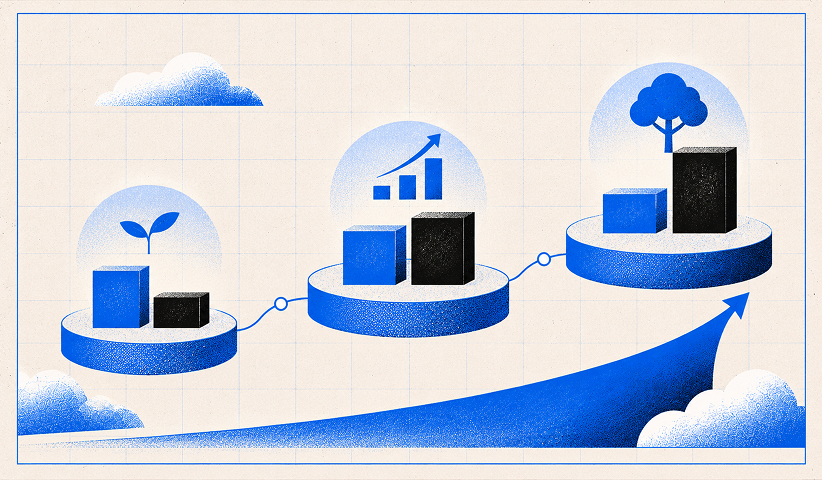


Report short-term and long-term KPIs in the same document, on the same cadence, or finance will always default to funding whichever number is easier to read.
Harvard Business Review’s research on integrating the two recommends using incremental tests and marketing mix modeling as primary evidence when defending upper-funnel spend, because leading indicators during the payback window are what convince a CFO who has only ever seen last-click dashboards.
The Budget Case: What the 60/40 Research Actually Says
Is brand marketing effective enough to justify a bigger line item? The IPA’s long-running research, summarized by Binet and Field’s 60/40 framework, points toward roughly 60% brand and 40% activation for long-term profit growth. That ratio is directional, not a rule to copy blindly. It varies heavily by category, company stage, and competitive intensity.
Representative outcomes when brand supports performance well:
- Higher branded search and direct demand can signal improved familiarity, but do not prove causality alone.
- More consistent ad-to-landing-page messaging can reduce friction and improve qualified conversion.
- Incrementality experiments can reveal whether broad-reach spend is creating outcomes beyond what conversion dashboards credit.
- The safest path to rebalancing: shift budget in phases, run incrementality tests at each step, and set a guardrail metric, like CAC or ROAS, that triggers a pause if performance degrades faster than expected.
How The Branded Agency Builds Brand-Backed Performance
We built our entire model around the premise that brand and performance are not two departments. Our teams cover branding, paid media, conversion rate optimization, and retention under one roof, which means the creative that builds trust and the campaign that converts it come from the same strategic brief.
Common Misconceptions About Brand vs Performance Marketing
The biggest myth is that you have to pick one. That framing comes almost entirely from measurement tools that only see the last click, not from how buying decisions actually happen. A second misconception treats brand marketing as unmeasurable, when brand lift surveys, share of search, and NPS tracking have existed for years, they’re just slower than a conversion dashboard.
A third myth: performance marketing is “cheap” and brand marketing is “expensive.” Both get expensive when poorly targeted. A badly optimized search campaign burns cash just as fast as an unfocused brand campaign with no positioning behind it.
Some marketers also assume brand work only matters for large, established companies. Early-stage companies benefit from brand clarity just as much, arguably more, because a confused positioning statement makes every performance dollar work harder to explain what you do. And a final misconception worth correcting: integrating brand and performance doesn’t mean merging every metric into one number. It means reporting them on the same calendar, to the same stakeholders, with a shared understanding of which one drives which outcome and on what timeline.
Case Studies Illustrating Successful Brand and Performance Strategies
The clearest evidence for integration comes from companies that stopped treating brand spend as a discretionary cut whenever performance targets got tight. HBR’s research on the two working together documents that brand investment raises the efficiency of performance channels, meaning campaigns convert better and cost less per acquisition when a coherent brand story runs alongside them.
The pattern shows up across categories: companies running consistent brand messaging alongside performance campaigns see branded search volume climb, which lowers the cost of paid search because branded terms are cheaper to bid on than generic ones. That branded search lift is itself a leading indicator finance teams can watch monthly, well before slower brand lift studies confirm the trend.
The operational lesson from these outcomes isn’t a specific creative execution, it’s the sequencing. Companies that win run brand and performance from the same strategic brief, with shared audience definitions and a single measurement plan that accounts for both. Companies that struggle tend to run brand as an annual campaign disconnected from the always-on performance calendar, which makes it nearly impossible to see how the two interact.
Challenges and Pitfalls in Combining Brand and Performance Marketing
The most common failure point is organizational, not strategic. Brand and performance teams often report to different leaders with different bonus structures, which means nobody is incentivized to optimize for the combined outcome. Fixing the org chart matters more than fixing the media plan in most cases.
A second pitfall: setting a single blended KPI too early, before either team has agreed on what “blended” actually means. If performance marketers see blended ROAS as a threat to their individual number, they’ll quietly under-report brand’s contribution to protect their own metrics.
Budget governance creates a third problem. Brand budgets often get cut first when quarterly numbers miss target, because the immediate impact is harder to see than a paused search campaign. That short-term fix creates a long-term cost: reduced brand recall six months later, right when the company needs it most.
Finally, measurement sophistication is a real barrier. Incrementality testing and marketing mix modeling require data volume and statistical rigor that smaller teams don’t always have in-house. Attempting a full causal measurement build before you have the traffic to support it wastes time better spent on directional signals like branded search and assisted conversions.
Want to learn more about Digital Marketing and Strategy? Keep reading!
If you need help with your company’s marketing, contact us for a free custom quote.
AI and Programmatic Technology’s Effect on Brand vs Performance
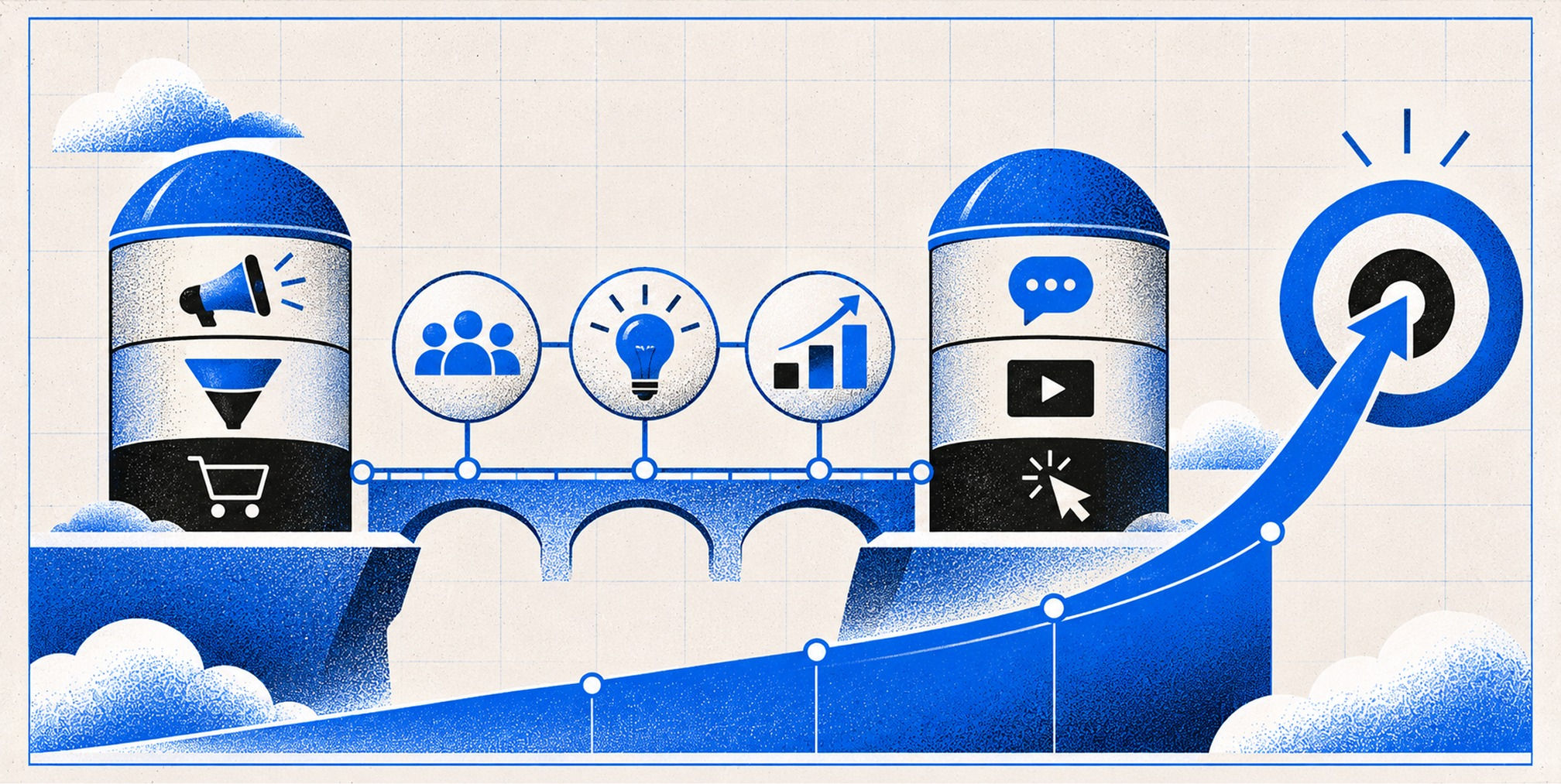
Programmatic buying and AI-driven bidding have made performance marketing faster to optimize, but they’ve also made the brand vs performance distinction blurrier at the platform level. Automated bidding systems on paid social and search now optimize toward whatever conversion signal you feed them, which means a poorly configured campaign can quietly starve upper-funnel reach in favor of short-term efficiency, even when that’s not the intent.
AI-generated creative variants have lowered the cost of testing brand messaging at scale, letting teams run more story-driven concepts through paid social without the production cost that used to make brand testing prohibitive for smaller budgets. That shift is closing the gap between what performance-first and brand-first teams can afford to experiment with.
The bigger shift is in measurement. Marketing mix modeling, once reserved for enterprise budgets with dedicated data science teams, is becoming more accessible as platforms build in modeling tools that don’t require a custom build. This accessibility matters because it is exactly the capability ClickZ points to as the fix for measurement blind spots that made brand and performance look like rivals in the first place.
The Real Divide Isn’t Brand vs Performance, It’s Measurement vs Reality
The conventional advice on this topic treats brand vs performance marketing as a budget allocation problem. It isn’t. It’s a measurement problem wearing a budget allocation costume. Every team I’ve seen struggle with this fight has the same root cause: a dashboard that only counts the last click, reporting to a CFO who reasonably wants numbers, funding decisions that then starve the channel the dashboard can’t see.
What gets underrated is how fast this compounds against you. A single quarter of brand cuts doesn’t show up immediately. It shows up two quarters later as rising CAC that nobody can explain, because the dashboard never connected the dots.
Prioritize the measurement plan before the budget split. Get incrementality testing or marketing mix modeling in place first, even in a limited form, and the allocation debate mostly resolves itself. Teams that skip this step end up refighting the brand vs performance argument every single budget cycle, because they never built the evidence to end it.
Get an Integrated Brand and Performance Strategy Built Around Your Growth Stage
Everything in this playbook, the joint KPI briefs, the phased budget shifts, the incrementality testing, is exactly what The Branded Agency builds for growth-stage and VC-backed companies every day. We don’t split your brand team from your paid media team because we don’t believe in the split. Our paid media management built around brand-backed performance connects the creative, the targeting, and the measurement plan into one system instead of three disconnected vendors.
This fits best if you’re a founder or CMO at a company past initial product-market fit, spending real budget on paid media, and frustrated that your brand investment never shows up clean in a dashboard. Book a strategy call and we’ll map your current spend against a phased brand-performance allocation, with a measurement plan your CFO can actually trust.
Frequently Asked Questions
What is brand marketing versus performance marketing?
Brand marketing grows awareness and preference over time; performance marketing optimizes for defined, observable actions.
What is the 60/40 brand and activation rule?
It is a directional research finding about long-term effectiveness, not a mandatory budget split for every industry or growth stage.
Can brand marketing be measured?
Yes, through research, branded demand trends, experiments and aggregate modeling, while acknowledging measurement uncertainty.
How do you bring brand and performance teams together?
Give them shared audiences, one creative brief, joint reviews and a measurement plan that separates immediate and longer-term outcomes.
Sources
- IPA effectiveness research: https://ipa.co.uk/knowledge
- Think with Google marketing measurement: https://www.thinkwithgoogle.com/marketing-strategies/data-and-measurement/
- Google Meridian MMM: https://developers.google.com/meridian

Quincy Samycia
As entrepreneurs, they’ve built and scaled their own ventures from zero to millions. They’ve been in the trenches, navigating the chaos of high-growth phases, making the hard calls, and learning firsthand what actually moves the needle. That’s what makes us different—we don’t just “consult,” we know what it takes because we’ve done it ourselves.
Want to learn more about brand platform?
If you need help with your companies brand strategy and identity, contact us for a free custom quote.
We do great work. And get great results.
+2.3xIncrease in revenue YoY
+126%Increase in repurchase rate YoY




+93%Revenue growth in first 90 days
+144% Increase in attributed revenue




+91%Increase in conversion rate
+46%Increase in AOV




+200%Increase in conversion rate
+688%Increase in attributed revenue