Checklist for Starting Online Business in 2026
08/05/2026
Business
Use this complete online business checklist to validate your idea, build a strong brand, launch efficiently, and avoid the costly mistakes that prevent many new businesses from succeeding.
Starting an online business requires more than a good idea and a website. A successful launch depends on validating demand, choosing the right business model, setting up the legal and financial foundations, building a consistent brand, and creating systems for marketing, sales, and operations. This checklist walks through the essential steps so you can launch with greater confidence, avoid costly mistakes, and use real customer data to improve your business during the first 90 days.
.png)


How to Start an Online Business in 2026


Key Takeaways
- Validate demand, choose a clear online business model, and write a lean business plan before spending heavily on design, inventory, or digital marketing.
- A proper online business checklist covers legal setup (employer identification number, business licenses), financial systems (separate business bank account, basic accounting records), and core operations like fulfillment or inventory management.
- Lock in your brand identity, business name, and domain before launching any e commerce store or social media campaigns-consistency from day one builds trust.
- Successful small business owners iterate: test offers, pricing, and social media channels in the first 90 days using real data, then refine what works.
- Following this structured checklist can realistically take 30–120 days, depending on your business type (service based business versus product-based) and your available time.
Introduction: Why You Need an Online Business Checklist in 2026
Starting an online business in 2026 is more accessible than ever. Remote work is mainstream, e commerce spending continues climbing, and starting an online business costs less than traditional brick-and-mortar alternatives. But accessibility doesn't mean easy. Over 20% of new businesses fail within their first year, and roughly half won't survive past year five. The gap between those who succeed and those who don't often comes down to preparation, not passion.
This article is your ultimate checklist-a practical, step-by-step guide covering the key steps for planning, launching, and growing an online business, tailored specifically for online and e commerce businesses. We'll cover market research, your business plan, business structure, bank account setup, brand identity, website build, digital marketing foundations, and post-launch optimization. A structured approach can help in planning a long-term successful online business. The goal is to help you skip the guesswork and avoid the common mistakes that sink most new ventures before they gain traction.
Free Brand Health Audit
Make sure your brand is built to sell
Search has changed. Your customers aren't just Googling anymore. They're asking ChatGPT, Perplexity, Gemini and other AI platforms what to buy, who to trust and which brands they should consider.
If your brand isn't showing up clearly in those answers, you're already losing opportunities. Our free Brand Health Audit shows you where your brand stands across traditional search, AI search and brand positioning.

Sample brand audit
Live preview
Traditional search
72
AI search (GEO)
34
Brand positioning
58
How to Start an Online Business: 12 Essential Steps


Step 1: Clarify Your Online Business Idea and Business Model
Before you register anything or build a single page, you need to answer two questions: what exactly will you sell, and how will you run the business online to make money?
Your business model describes who pays you, for what outcome, how often, and through which channel. A one-time digital download works nothing like a monthly subscription box from a financial and operational standpoint-even though both are online businesses. E-commerce businesses can sell physical or digital products, so your first decision shapes everything that follows.
Common online business types include:
- E commerce store (DTC) – You control production, inventory, and branding for physical products.
- Dropshipping – Dropshipping allows selling without holding inventory; a third party fulfills orders.
- Print-on-demand – Similar to dropshipping but for custom-designed merchandise.
- Digital products – Courses, ebooks, templates. High margins, minimal ongoing costs.
- Subscription models – Subscription models provide regular income from loyal customers through recurring deliveries of physical or digital goods.
- Affiliate / Advertising – Advertising is a primary revenue source for content providers; affiliates earn commissions promoting third-party products.
- Freemium – Freemium models offer basic services for free with paid upgrades.
- Service-based – Consulting, design, coaching. Revenue tied to deliverables.
A few quick examples: a digital course teaching Python to college students, a niche subscription box delivering eco-friendly pet products monthly, or a print-on-demand store selling apparel for local sports teams. Each of these represents a different business model with distinct startup costs, margins, and operational demands.
Choose the Right Business Type and Niche
A broad business idea-"I want to sell online"-isn't enough. Narrowing your niche increases your chances of traction because you can speak directly to a specific audience instead of competing with everyone.
Concrete niche examples: eco-friendly pet products, resume writing for tech professionals, handmade candles for minimalist home décor, or budget meal-prep guides for college students. Notice the specificity-each targets a clear group with clear needs.
Match your niche to your skills, interests, and available time, not just trending topics. Your niche choice impacts everything: the content you create, which digital marketing channels work best, your inventory management setup, and whether you need professional services like photography or graphic designer support. Many entrepreneurs chase trends and burn out. Pick a niche where you can sustain effort for a year or more.
Step 2: Perform Market Research and Validate Demand
Validation helps you avoid building an online store or offer nobody wants. This is not optional. Studies show that roughly 42% of startup failures stem from poor product-market fit-the single biggest killer of new ventures. Successful businesses often validate demand before fully launching their product.
Market research includes primary and secondary sources:
- Secondary research: Use Google Trends, SEO keyword tools, and industry reports to gauge search demand. Browse competitor reviews, Reddit threads, and niche forums to understand what potential customers are saying.
- Primary research: Conduct surveys and interviews for primary market research. Talk to 10–20 people in your target market. Ask about their pain points, spending habits, and what solutions they've tried.
Practical validation tests:
- Build a pre-launch landing page describing your offer and measure signups or email captures.
- Run a small paid traffic test (US$50–$100) to a waitlist page and track conversion.
- Sell a limited beta version or offer a small batch before committing to full inventory.
Testing your business idea can validate market needs before you invest thousands. Market research helps identify customer needs and preferences, and defining your target audience and niche leads to better marketing down the line. Validating a market niche is essential for starting an online business-treat it as your first real business task.
Analyze Competitors and Position Your Offer
Every serious online business has competition, and that's a good thing. Analyzing competitors helps identify market gaps for business opportunities.
- Map 3–5 direct competitors. Note their pricing, positioning, product range, and unique selling points.
- Read 1–2 star reviews on competitor e commerce sites to uncover unmet needs-these are your openings.
- Identify a positioning angle that gives you a competitive edge: faster shipping, better customer support, ethical sourcing, unique customization, or serving an underserved segment.
- Analyze competitors to understand market demand and where incumbents are weakest.
This analysis doesn't need to be exhaustive. A simple spreadsheet comparing competitor prices, messaging, and top complaints will tell you more than weeks of abstract brainstorming.
Step 3: Define Your Brand Identity and Choose a Business Name
A strong brand identity includes a memorable name and logo, and it's what makes your online business recognizable and trustworthy from the first click; many entrepreneurs hire a full-service agency for branding and identity to get this right from day one. Branding helps communicate your business's mission and values to the people you're trying to reach. Your brand identity for a small business should resonate with your target audience-not just look pretty to you.
Cover these brand basics early:
- Mission and values – What does your business stand for? Why does it exist beyond making money? Clarifying these elements feeds directly into your brand positioning framework and strategy.
- Tone of voice – Casual and playful? Professional and authoritative? Match your target market.
- Visual identity – Brand design and development work to ensure brand colors and visual style are defined early in branding. Choose a logo, color palette, and typography that feel cohesive.
For your business name, aim for something short, easy to spell, distinct, and aligned with your niche and brand personality; use a structured approach to choose the perfect brand name. Choose a domain name that is easy to spell and remember. Check availability across domain registrars, social media platforms, and your local business register before committing. Register your business and secure a domain name as early as possible to avoid losing them.
Secure Your Domain and Social Media Handles
A matching domain and social media handles support brand consistency and help customers find your business. A cohesive online presence enhances brand recognition across every touchpoint.
- Search for a .com first. If unavailable, consider strong alternatives like .co, .io, or country-specific TLDs.
- Claim handles on the social platforms most relevant in 2026: Instagram, TikTok, YouTube, and LinkedIn for B2B-even before launch.
- Check the trademark office and government trademark databases to avoid conflicts with existing registered names.
Don't skip this. Losing your preferred name to a squatter or facing a trademark dispute six months in is an expensive, avoidable problem.
Step 4: Write a Lean Online Business Plan
A lean business plan doesn't need to be a 50-page document. Two to five pages is enough, but it must clearly explain how the business will work, including how much you intend to invest and how much your branding should cost. A business plan outlines strategy, financial projections, and operational plans-it forces you to think through the details before spending money.
Key sections to include:
- Problem and solution – What specific pain point does your business idea address?
- Target customer – Who is your target audience? Demographics, behaviors, buying triggers.
- Business model – Revenue streams, pricing, and cost structure.
- Marketing channels – Which 1–2 channels will you focus on first?
- Operations – How will orders be fulfilled, or services delivered?
- Financial projections – A 12-month revenue and expense forecast, plus a simple break-even calculation.
Treat this as a living document. Revisit and update it at least every 6–12 months as your new business evolves.
Set Clear Goals, Metrics, and Timeline
Setting measurable goals-like acquiring your first 100 customers in six months-keeps your online business focused and prevents drifting.
- Track KPIs such as monthly website visitors, conversion rate, email list growth, average order value (AOV), and customer lifetime value (CLV).
- Map a 90-day action plan aligning tasks (site build, content creation, marketing tests) with these goals.
- Set up basic analytics tools like Google Analytics 4 from day one. Implementing analytics tools helps track visitor behavior and sales conversions from the start.
Specific numbers and dates beat vague ambitions every time.
Step 5: Decide on Business Structure and Register Your Online Business
Your business structure affects taxes, liability, and how you pay yourself. Establishing legal structures is necessary for launching an online business, and understanding legal requirements is necessary to ensure compliance for online businesses.
Common structures for small business owners:
- Sole proprietorship – Simplest to set up; no liability separation.
- LLC – Choose a business structure like LLC or sole proprietorship. LLCs offer liability protection and flexible taxation. Formation typically costs US$100–$800 depending on your state government requirements.
- S-Corp / C-Corp – More complex; relevant if seeking investors or specific tax treatment.
- Partnership – For businesses with multiple founders.
Consult a qualified accountant or lawyer before finalizing. Register your business with state and federal authorities to conduct business legally. Legal costs include business licenses and permits, so budget for them.
Obtain Tax IDs, Licenses, and Permits
Even online-only businesses may need specific licenses, sales tax registration, or permits depending on location and business type.
- Obtain a federal tax id-your employer identification number (EIN)-from the federal government. You need an EIN to open a business bank account. Federal tax obligations attach to this number.
- Obtain necessary business licenses and permits based on your location. Examples of regulated niches requiring extra approvals: health supplements, financial advice, children's products.
- The small business administration's website can guide you through state-specific legal requirements.
- Create a small compliance checklist with renewal dates (state filings, annual reports) and filing deadlines so nothing slips through the cracks.
- Secure a business address if required for registration-this can be a home address or a registered agent service.
Step 6: Set Up Your Business Bank Account and Financial Systems
Mixing personal finances with business finances is one of the fastest ways to create tax headaches and obscure your actual profitability. Setting up a business bank account is essential for financial management. Open a business bank account to separate finances cleanly.
To open a dedicated bank account, you'll typically need:
- Government-issued ID
- Business registration documents
- Your EIN or federal tax id
- Operating agreement (if LLC)
Benefits of a separate business bank account include cleaner bookkeeping, easier tax preparation, and the ability to build business credit over time. Keep your personal finances completely walled off.
- Choose simple accounting software or even a well-organized spreadsheet to track income and expenses.
- Set up categories for revenue, cost of goods sold, software, marketing, and other factors.
- Plan for quarterly tax payments, especially if self-employed.
- Create a basic monthly cash flow forecast for the first 6–12 months. This is especially important for inventory-heavy e commerce businesses where ecommerce businesses incur costs for product development and inventory upfront.
Create a Simple Budget and Pricing Strategy
Pricing must cover product costs, operating expenses, taxes, and a profit margin. Underpricing is one of the most common mistakes-many entrepreneurs forget to include transaction fees, shipping materials, returns, and overhead.
- List fixed costs: web hosting service, software subscriptions, insurance.
- List variable costs: product cost, payment processing fees (~2.9% + $0.30 per transaction), shipping, packaging.
- Set your minimum viable price using the total of these costs plus your target margin.
Common online pricing models include subscription (recurring), tiered pricing (basic/premium), and one-time purchase with upsells. Revisit pricing after 60–90 days of actual sales data-your initial assumptions will almost certainly need adjustment.
Step 7: Design Your Brand Assets and Customer Experience
Your brand should look and feel consistent across your website, social media accounts, email templates, and packaging (if you sell physical products). Creating a professional digital branding presence is vital to an online business launch.
- Create a logo, color palette, typography system, and core imagery style. You can use affordable tools or hire a website designer or graphic designer on a freelance platform.
- Map a simple customer journey: from first contact (ad, search result, social post) through browsing, purchase, and post-purchase follow-up.
- Write a clear value proposition and key messages for your homepage, product pages, and ads. These should answer: why should a visitor buy from you instead of anyone else?
Plan Product Packaging and Unboxing (If Selling Physical Goods)
Even online businesses benefit from strategic, on-brand packaging design to encourage repeat purchases and social sharing. If you sell physical products, packaging is part of your brand experience.
- Align shipping materials, inserts, and labels with your brand identity and sustainability goals, taking into account emerging packaging trends for 2026.
- Add practical elements: clear return instructions, care guides, or QR codes linking to support pages or tutorials.
- Calculate per-package cost versus perceived value. Small e commerce operations should sample packaging materials before placing large orders.
Step 8: Build Your Website or E Commerce Store
Your website is the core asset of your online business. Even if you also sell on marketplaces or multiple platforms, your own site is the hub you control. Create a simple website using WordPress or an e-commerce platform-WordPress powers 43% of all websites, making it one of the most supported options available.
Platform options at a glance:
| Platform Type | Best For | Trade-off |
|---|---|---|
| Hosted e-commerce (Shopify, BigCommerce) | Product stores needing fast setup with platforms like Shopify for small businesses | Less customization, monthly fees |
| Website builders (Squarespace, Wix) | Service sites, simple stores | Limited scalability |
| Self-hosted (WooCommerce, Magento) | Full control, custom needs | Requires technical skill, separate web hosting service |
A business website should include an About, Services, and Contact page at minimum. Must-have pages and elements:
- Homepage with clear value proposition above the fold
- Product or service pages with compelling descriptions
- About page, contact page, and FAQs
- Legal pages: create a privacy policy and terms of service for your website. It's important to draft policies such as privacy, terms of service, and refund policies before launch.
Ensure mobile responsiveness (most traffic comes from mobile devices), fast loading times (under 3 seconds), and basic search engine optimization: title tags, meta descriptions, headings, alt text, and internal links. Accessibility basics-readable fonts, sufficient contrast-make your site usable for everyone.
Set Up Secure Payments and Checkout
A smooth, secure checkout is critical for conversion and trust. Testing the checkout process is crucial before launching an online business.
- Connect popular payment gateways: Stripe, PayPal, Apple Pay, Google Pay. Test them across devices and browsers.
- Offer at least one instant card option and one wallet or alternative method. Add Buy Now Pay Later only if it fits your audience. Multiple payment options reduce cart abandonment.
- Use SSL certificates and display trust badges on checkout pages.
Test every step of the checkout flow yourself-and have at least two other people test it-before going live. Broken payments mean lost customers.
Step 9: Set Up Operations, Fulfillment, and Inventory Management
Even "online" businesses require solid behind-the-scenes operations. How you handle orders, deliveries, and customer issues determines whether new customers come back or leave negative reviews.
For product-based businesses:
- Choose a fulfillment model: self-fulfillment from home (consider how much space you actually have), third-party logistics (3PL), or dropshipping. Each has trade-offs in cost, control, and shipping speed.
- Factor in the true cost of delivery: warehousing, packaging, shipping materials, fees, and return logistics.
For a service based business:
- Standardize client onboarding with legal contracts, scopes of work, and project management tools.
- Define what constitutes delivery and set review milestones.
Before launch, define processing times, return policies, and customer service response standards. These affect your business needs around staffing and tools.
Basic Inventory Management for E Commerce
Even small online stores need a simple inventory management system to avoid overselling and stockouts.
- Start with low-tech options: a well-organized spreadsheet tracking SKUs, stock levels, and costs.
- Set minimum stock levels and reordering triggers for bestsellers.
- Track SKU-level profitability so you know which products to scale or discontinue.
- As volume grows, upgrade to entry-level inventory tools that integrate with your shopping cart platform.
Step 10: Establish Your Digital Marketing Foundations
Marketing is not a one-time launch activity-it's an ongoing system. Developing a marketing strategy is essential for acquiring customers, and creating content for marketing purposes is part of the online business operation. Content marketing helps improve SEO and customer relationships over time.
Core digital marketing pillars:
- Search engine optimization (SEO) – Organic traffic that compounds over time.
- Email marketing – Your most powerful owned channel.
- Social media – Social media is essential for customer discovery and engagement.
- Paid ads – Optional early on, but useful for testing messaging and offers quickly.
Align your marketing channels with target audience behavior. If you're selling to Gen Z, TikTok matters more than LinkedIn. If you offer professional services to B2B clients, LinkedIn and content SEO are your priority. Start with 1–2 channels and do them well, rather than trying to be everywhere. Set up basic tracking-analytics, conversion pixels, and dashboards-before running any campaigns.
Build and Nurture Your Email List
Building an email list is a highly effective marketing strategy because your email list is an owned asset-unlike social media followers, it can't be taken away by an algorithm change. Email marketing can generate over $1 million in sales for businesses that invest in it consistently. Set up an email list to nurture leads and send promotions from day one.
- Choose an email service provider (Mailchimp, ConvertKit, etc.) and create a simple lead magnet: a checklist, discount code, free guide, or mini course.
- Add signup forms to your homepage, blog, and checkout flow.
- Plan a basic welcome sequence (3–5 emails) that introduces your brand, shares value, and gently presents your offers.
- Include clear unsubscribe links and respect consent requirements to meet modern email regulations (GDPR, CAN-SPAM).
Set Up and Optimize Your Social Media Presence
Use social media to drive awareness and trust, not to chase vanity metrics. Social media profiles should be established on platforms relevant to the audience. Choose 1–2 primary social platforms where your target market actually spends time.
- Create a simple 30-day content plan mixing educational posts, behind-the-scenes content, and promotional offers.
- Optimize profiles: consistent handles across social media accounts, bios with a clear value proposition, and link-in-bio tools pointing to key pages on your site.
- Help customers find your business by posting consistently and engaging with comments. Social platforms reward active accounts.
Step 11: Prepare for Launch – Testing and Soft Launch Strategy
A soft launch reduces risk and surfaces problems before a big marketing push. Think of it as a dress rehearsal for your new venture.
Pre-launch testing checklist:
- Check for broken links, test mobile navigation, submit all forms, and verify email automations fire correctly.
- Process test orders through every payment method you offer.
- Test page load speeds under normal conditions.
Soft launch steps:
- Recruit a small group of testers-friends, early email subscribers, or beta customers-to place real or test orders and share honest feedback.
- Create a simple launch calendar: teaser content, countdown posts on social media channels, and a launch offer (limited-time discount or early-bird bonus).
- Adjust based on feedback before inviting larger traffic.
Track Key Metrics from Day One
Early data guides quick improvements in messaging, offers, and site layout. Implementing analytics tools helps track visitor behavior and sales conversions from the moment you go live.
Core launch metrics to watch:
- Site traffic (by source)
- Conversion rate
- Cart abandonment rate
- Average order value
- Cost per lead or acquisition (if running paid ads)
Review these weekly for the first 30–90 days and document insights. Make small, focused changes-a headline tweak, a new product image, a price point test-rather than constant big redesigns. Let data tell you what to fix.
Step 12: Your First 90 Days After Launch
The first 90 days should focus on learning, improving, and stabilizing operations-not rapid scaling. Resist the urge to pour money into ads before you understand what's converting.
Break it into three phases:
| Phase | Focus | Key Actions |
|---|---|---|
| Days 1 to 30 | Foundation | Monitor metrics, fix friction points, respond to every customer inquiry fast |
| Days 31 to 60 | Optimization | Refine messaging, adjust pricing, double down on what's working |
| Days 61 to 90 | Growth | Expand to a second marketing channel, collect testimonials, plan next quarter |
Maintain consistent marketing throughout. Collect reviews, testimonials, and case studies during this period-they'll fuel your next wave of growth. Refine your business plan based on real-world results, not assumptions.
Want to learn more about Marketing? Keep reading!
If you need help with your companies brand strategy and identity, contact us for a free custom quote.
Common Mistakes to Avoid When Starting an Online Business
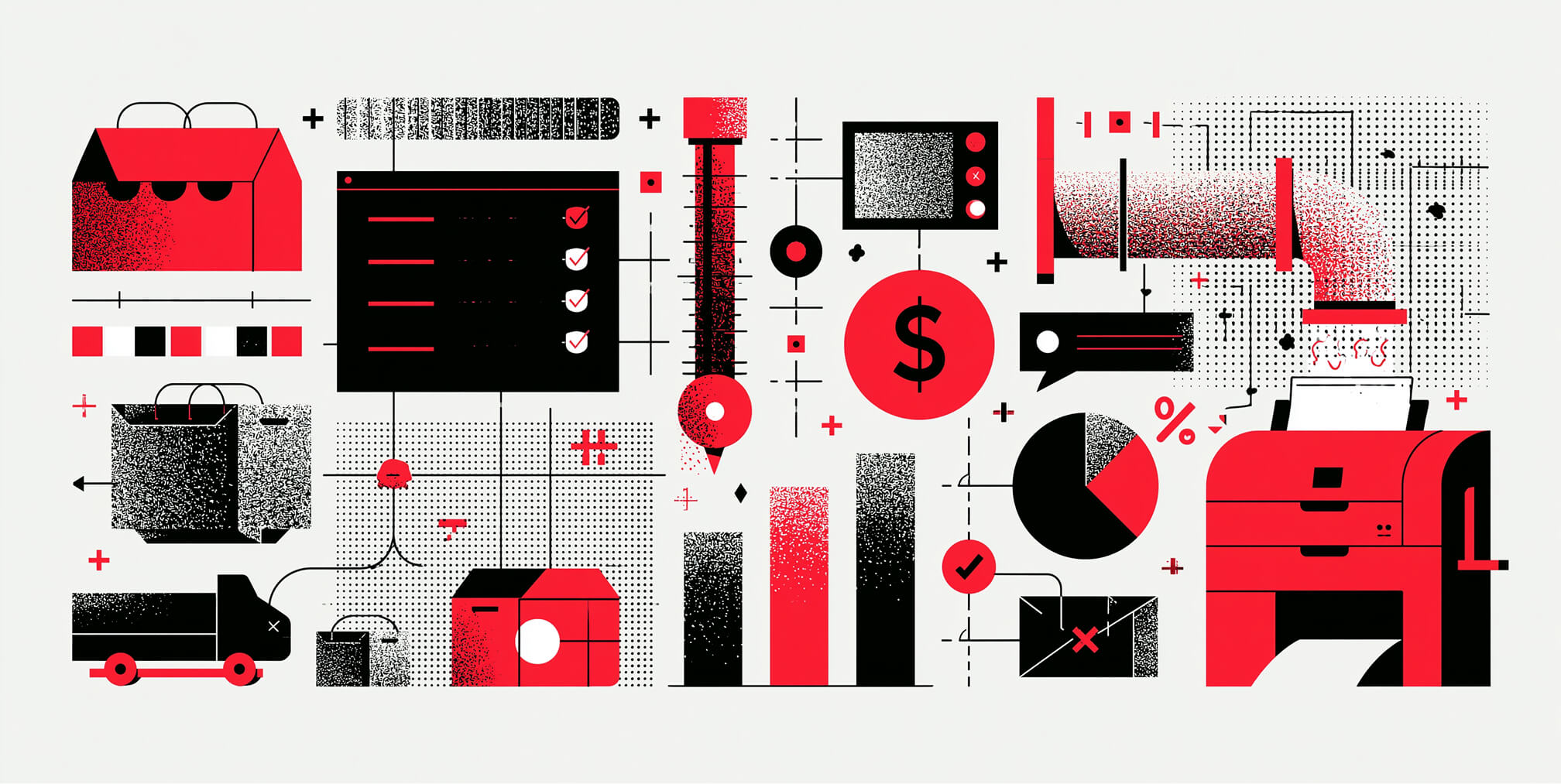
Before you launch, run through this quick risk checklist. These are the errors that sink most new businesses:
- Skipping market research – Building something nobody asked for is the #1 cause of failure.
- Mixing personal and business finances – This creates tax confusion, personal liability exposure, and makes profitability impossible to measure.
- Over-ordering inventory – Don't buy 5,000 units before proving demand with 50.
- Underpricing – Factor in all costs: COGS, shipping materials, transaction fees, returns, overhead.
- Ignoring legal basics – Skipping business licenses, permits, or required disclosures can lead to fines or shutdowns.
- Relying on one traffic source – If your only channel is one social media platform, an algorithm change can kill your business overnight.
- Over-investing in branding or complex tech before validating – A great idea means nothing if nobody wants to buy it. Validate first, polish later.
Online Business Checklist: Quick Recap

Here's the full business checklist condensed into a printable action list:
- Define your online business model and niche
- Conduct market research and validate demand with real potential customers
- Analyze competitors and define your positioning
- Choose a business name and secure your domain
- Define your brand identity (logo, colors, tone, messaging)
- Write a lean business plan with financial projections
- Decide on your business structure (LLC, sole proprietorship, etc.)
- Register with state government and federal government authorities
- Obtain your federal tax id (EIN), business licenses, and any specific licenses
- Open a separate business bank account and set up accounting records
- Create a budget and pricing strategy covering all startup costs
- Design brand assets and plan customer experience
- Build your website or online store with all the tools you need
- Set up secure payments and test checkout
- Establish operations, fulfillment, and inventory management
- Set up digital marketing foundations (SEO, email, social media)
- Execute a soft launch with testers
- Track key metrics and iterate for 90 days
- Attract customers through consistent effort and data-driven optimization
FAQ: Starting an Online Business
These questions address common follow-up concerns not fully covered in the main checklist above.
How much money do I realistically need to start an online business?
It depends entirely on your business type. Starting an online business can have low startup costs below $500 for a lean service based business or digital product venture-think a domain, hosting, and basic branding. A small product-based e commerce store with inventory typically requires US$2,000–$10,000+ in the first year for inventory, platform fees, packaging, and initial marketing. You can start an online business on a tight budget with self-education and free tools, but expect to invest more time in exchange. Prioritize spending on validation and core tools first; delay advanced design work and heavy paid advertising until you have traction.
How long does it take to launch a simple online business?
A basic service site or digital product store can launch in 2–4 weeks if you're working evenings and weekends. A simple website can be built in weeks. A product-based e commerce store with inventory, photography, and branding typically takes 1–3 months for a minimum viable launch-ecommerce websites typically take several weeks to set up properly. Doing validation and planning upfront can actually speed things up by reducing rework. Don't wait for perfection. Launch a functional "version 1.0" and iterate based on real feedback.
Do I need a formal business plan if I'm starting small from home?
A full investor-style business plan isn't mandatory for a home-based new business, but a short written plan is still highly recommended. Even 1–2 pages covering your goal, target market, offer, pricing, and basic financials forces clearer thinking and better budgeting. It also makes conversations with potential partners, accountants, or lenders much easier. Treat your plan as a living document and revisit it quarterly.
Can I start an online business while keeping my full-time job?
Absolutely-many entrepreneurs start part-time, and this is often the wisest financial approach. Structure 5–10 hours per week across planning, building, and marketing tasks. Be realistic: your launch will take longer, but you'll have less financial pressure. Review your employer contracts for non-compete clauses or conflict-of-interest policies before starting your new venture. Consistent weekly effort matters more than sporadic all-nighters.
What if my first online business idea doesn't work?
This is normal. Many successful entrepreneurs adjusted their business model, target market, or pricing before finding traction. Treat early attempts as learning experiments and keep detailed notes on what you tried and what results occurred. Specific pivot options include targeting a different audience, revising your offer, changing your pricing model, or transforming from one-off sales to a subscription. The skills you gain in selling products, marketing, operations, and customer service transfer directly to your next project. The only real failure is not learning anything.

Quincy Samycia
As entrepreneurs, they’ve built and scaled their own ventures from zero to millions. They’ve been in the trenches, navigating the chaos of high-growth phases, making the hard calls, and learning firsthand what actually moves the needle. That’s what makes us different—we don’t just “consult,” we know what it takes because we’ve done it ourselves.
Want to learn more about brand platform?
If you need help with your companies brand strategy and identity, contact us for a free custom quote.
We do great work. And get great results.
+2.3xIncrease in revenue YoY
+126%Increase in repurchase rate YoY




+93%Revenue growth in first 90 days
+144% Increase in attributed revenue




+91%Increase in conversion rate
+46%Increase in AOV



+200%Increase in conversion rate
+688%Increase in attributed revenue