Chief Creative Officer (CCO): Role, Skills, and Career Path

07/01/2026

Design

Learn how successful Chief Creative Officers align brand strategy, creative leadership, and business objectives to drive innovation, differentiation, and long-term growth.

Conceptual illustration of a large audience, megaphone, and funnel transforming ideas into influence, symbolizing how a Chief Creative Officer shapes brand vision, audience engagement, and creative strategy at scale.

The chief creative officer stands at the intersection of artistry and business strategy, shaping how organizations present themselves to the world. As brands compete for attention across dozens of channels, the CCO has become essential to translating creative vision into measurable growth. This guide breaks down what the role involves, the skills required, and a realistic path to reaching the top of the creative ladder.

Quincy Samycia
Play IconPause Icon
0:00
0:00

Inside the Role of a Chief Creative Officer

Stylized professional standing beside performance dashboards and analytics, representing the strategic leadership and business-minded decision-making expected from a Chief Creative Officer.
Creative workspace filled with reports, design materials, and digital tools, illustrating the blend of creativity, research, and planning involved in leading brand and marketing initiatives.
Team of professionals collaborating around data visualizations and project discussions, highlighting the cross-functional leadership role of a Chief Creative Officer within creative organizations.
No items found.

Key Takeaways

  • The chief creative officer CCO is the highest executive position within an organization’s creative department, responsible for setting the overall creative direction and managing the creative team alongside the chief marketing officer and CEO.
  • Most chief creative officers hold a bachelor’s degree in a creative field such as graphic design, fine arts, or advertising, combined with 10–15 years of progressive experience as creative directors, art directors, or senior designers.
  • The best CCOs blend creative and leadership skills with strong business acumen and business management capabilities, bridging creativity and commerce to ensure every idea aligns with broader business goals.
  • A strong chief creative officer defines the edge between an agency that’s good and one that’s unforgettable, ensuring that creative leadership is clear and impactful.
  • This article explains what the CCO role involves, how it differs from a creative director, essential skills, salary expectations, and a step-by-step path to becoming a chief creative.

What Is a Chief Creative Officer?

A chief creative officer is the highest-ranking creative executive overseeing all brand, design, and creative output for an organization. The chief creative officer is essential to the success of a company’s brand image, advertising, and design projects, as they oversee all initiatives undertaken by the creative department.

CCOs lead the creative department and shape big-picture creative strategy for advertising, digital experiences, product launches, and internal culture. The CCO role emerged prominently in the 2000s in advertising agencies and global brands like Wieden+Kennedy and BBDO. By the mid-2010s, it became a standard C-suite position in tech, fashion, and media companies.

CCOs sit at the intersection of creativity and business, translating brand vision into campaigns that support revenue, market share, and long-term brand equity. The chief creative officer plays a critical role in bridging creativity and commerce, ensuring that every idea aligns with broader business goals and drives cultural impact.

Consider Bozoma Saint John, who as CCO at Endeavor shaped content strategies for UFC and WME, blending cultural insights with IP extensions to drive over $1B in media value. This illustrates how CCOs operationalize vision without micromanaging execution.

What Does a Chief Creative Officer Do?

Abstract portrait combining human insight, data charts, and performance metrics, symbolizing the balance between creative intuition and measurable business outcomes.
Expansive landscape overlooking cities, industries, and communities, representing a Chief Creative Officer’s responsibility for shaping long-term brand vision and organizational growth
Individual working in a creative outdoor environment surrounded by design tools and technology, illustrating innovation, ideation, and strategic thinking in creative leadership.
Two business leaders standing beside growth charts and target symbols, representing executive collaboration, strategic alignment, and creative direction tied to business objectives.

What Does a Chief Creative Officer Do?

CCOs are responsible for creative direction, team management, and aligning work with company strategy. They define the creative vision that shapes everything from Super Bowl ads to app interfaces.

Core responsibilities include:

  • Defining brand identity and visual language across all touchpoints
  • Approving high-stakes campaigns and setting verbal guidelines
  • Overseeing creative concepts from ideation to launch
  • Managing creative briefs for web, social, print, TV, and product
  • Ensuring brand consistency across all platforms

Chief creative officers collaborate daily with creative directors, art directors, copy leaders, UX heads, and producers. CCOs lead, mentor, and inspire multiple teams of creative directors, art directors, copywriters, and designers to move projects from idea to completion.

Major initiatives under CCO purview include global rebrands (like Airbnb’s 2014 “Belong Anywhere” overhaul across 191 countries), product launches, high-budget advertising campaigns exceeding $200M, experiential events, and strategic partnerships. CCOs are responsible for shaping the creative strategy of an organization, which includes overseeing projects such as advertising campaigns, brand development, and design initiatives.

Chief Creative Officer Within a Company

The CCO typically reports to the CEO or chief marketing officer and sits on the executive leadership team. They partner with the CMO on marketing strategy, the product team on customer experience, and HR on employer brand and culture.

The chief creative role often oversees multiple disciplines: design, copywriting, content, video, brand strategy, and sometimes in-house production studios. CCOs collaborate with senior management to ensure that creative projects support marketing goals and brand strategies.

In agencies, the CCO co-leads client relationships with account and strategy leaders. In in-house teams, they represent creative in board and investor conversations. A Chief Creative Officer collaborates with other executives, such as the CEO, to align the creative vision with the overall business goals of the organization.

The CCO’s responsibility for building a scalable creative organization includes hiring senior creatives, setting processes, and defining creative standards that can extend across 100+ markets.

Why the Chief Creative Officer Role Matters

The CCO guards the integrity of the company’s brand, ensuring visual and verbal consistency across every customer touchpoint. CCOs ensure consistency in brand messaging across all platforms and act as the brand’s champion.

In crowded markets, chief creative officers differentiate companies by championing bold creative concepts that balance creative risk with business objectives. CCOs ensure that creativity remains a driving factor in business strategy, focusing on the highest quality of creative output.

The CCO connects creative output to measurable outcomes such as brand communication strategy, engagement, customer loyalty, and pricing power. Studies show consistent branding correlates with 20-30% higher customer loyalty.

In fast-moving categories like streaming, e-commerce, and direct-to-consumer brands, a strong CCO can be a key role in rapid growth. Consider a merger scenario: during Disney-Fox’s $71B combination in 2019, creative leadership orchestrated brand unification, harmonizing visuals and narratives to retain 90% audience overlap while launching hits like “The Mandalorian.”

Chief Creative Officer vs. Creative Director and Art Director

Many people confuse chief creative officers with creative directors or art directors, but the scope and focus of these job titles differ significantly in responsibilities and decision-making authority.
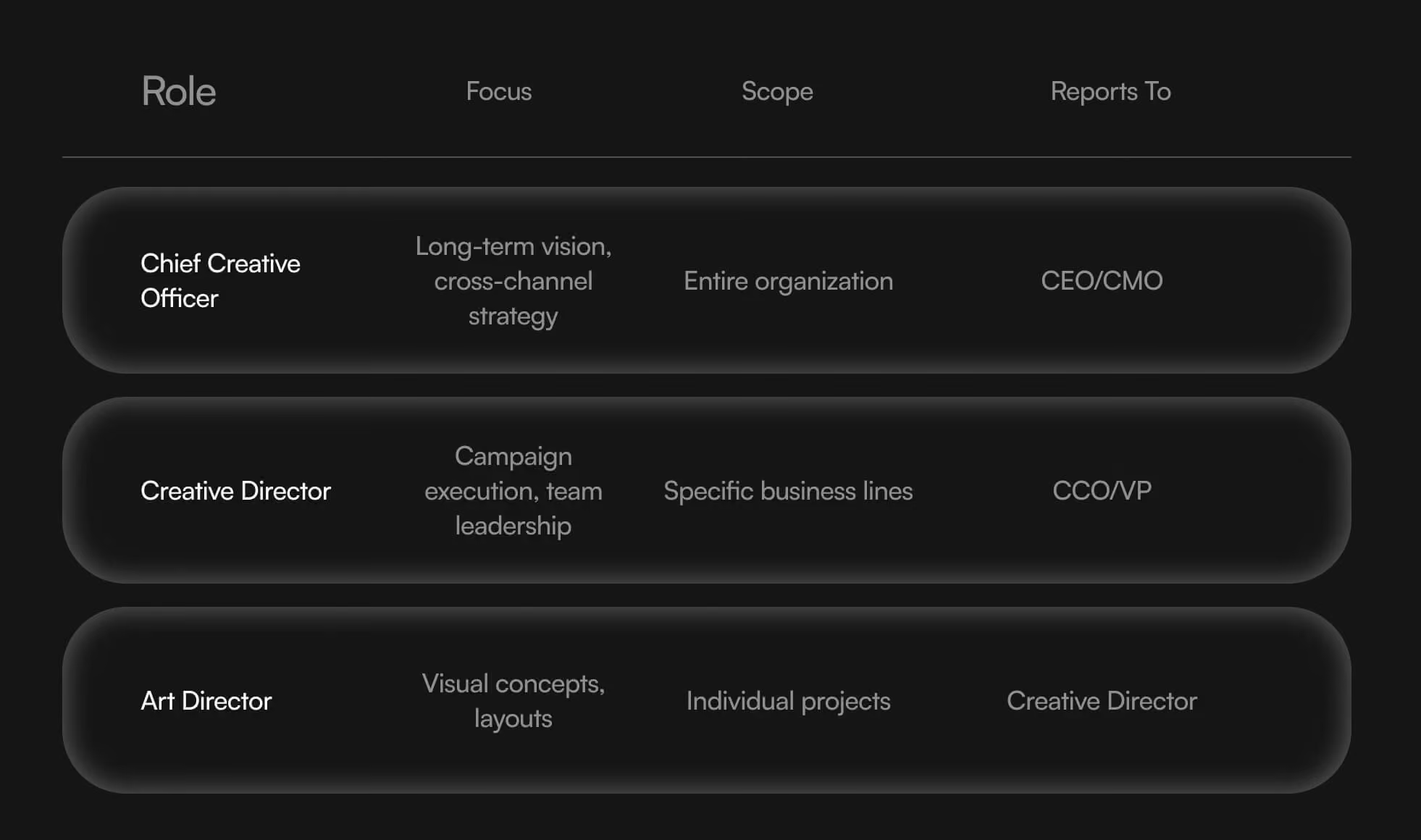
The CCO focuses on the “what” and “why” of the creative product, distinguishing it from roles that concentrate on the execution of processes. Creative directors typically manage specific teams interpreting the CCO’s vision into campaigns. Art directors concentrate on visual concepts and the look and feel of individual projects.

The CCO typically operates at a higher strategic level than Executive Creative Directors (ECDs), focusing on overarching brand narratives. In a $10M sneaker launch scenario, the CCO greenlights the “rebel heritage” platform and $2M budget. The creative director assembles the team, refines taglines like “Run the Streets,” and presents to the CMO. The senior art director crafts hero visuals, mood boards, and mockups based on heatmap data.

How the CCO Role Interacts with Other Leaders

The partnership between the CCO and chief marketing officer involves joint ownership of brand strategy, messaging, and marketing investment decisions, often grounded in clear mission and vision statements. CCOs often debate 60/40 creative/ROI splits on major budgets.

Collaboration with the chief product officer ensures that customer experience and interface design reflect the brand’s overall creative direction. The CCO also coordinates with the chief financial officer on budgets, headcount, vendor selection, and production efficiency. CCOs oversee budget and resource management for creative departments to improve productivity.

The CCO acts as a bridge between the creative teams and the C-suite, translating business objectives into artistic strategy. They represent creative in board presentations, articulating value in business terms. In some organizations, the CCO title may be combined with another role (e.g., CCO and CMO), which doubles workload but streamlines decisions.

Want to learn more about brand platforms, Brand Strategy and Brand Identity? Keep reading!

If you need help with your companies brand strategy and identity, contact us for a free custom quote.

Essential Creative and Leadership Skills for CCOs

Conceptual illustration featuring achievement symbols, communication tools, financial icons, and global influence, highlighting the diverse skills and executive responsibilities of a Chief Creative Officer.

Successful chief creative officers blend creative excellence with leadership skills, communication abilities, and business management skills. A blend of deep artistic expertise and advanced business acumen is typically required to become a CCO.

Key creative capabilities include leveraging innovative creative design strategies aligned with business objectives:

  • Concept development and storytelling across formats
  • Visual literacy and understanding of design principles
  • Multi-channel campaign orchestration (digital, traditional, experiential)
  • CCOs typically possess mastery of branding, design principles, and creative platforms like Adobe Creative Cloud and Figma

Leadership skills for CCOs include team building, mentoring senior creative directors, conflict resolution, and inspiring diverse teams under tight deadlines. Leadership skills are essential for CCOs to motivate and inspire their creative teams, ensuring quality work is delivered on time.

CCOs must exhibit strong communication and presentation skills, demonstrating executive presence. Effective communication skills are essential for a Chief Creative Officer (CCO) to coordinate activities with creative teams and influence overall organizational strategy.

Creativity is a crucial skill for CCOs, as they need to develop original ideas and marketing strategies that resonate with both creative and management teams.

Business Management and Commercial Mindset

Modern CCOs must understand budgets, forecasting, and return on investment for major creative initiatives. CCOs manage the creative department’s budget, resources, and hiring processes, tracking performance metrics like ROI.

Basic financial literacy helps chief creative officers manage production budgets, agency fees, and in-house team costs responsibly. CCOs often review performance dashboards, media reports, and A/B test results—companies like Adobe use testing to achieve 15-25% uplift in engagement metrics.

Problem-solving skills are important for CCOs to effectively overcome challenges encountered during the development of content and integration of creative goals into business strategies. Strong business acumen builds credibility with CEOs and boards, enabling the CCO to advocate for bold creative work in commercial terms.

Soft Skills and Personal Traits

Critical soft skills include:

  • Communication and active listening
  • Empathy and constructive feedback ability
  • Resilience when ideas are challenged
  • Adaptability when timelines shift

Time management is a key skill for CCOs, enabling them to coordinate their teams to meet strict deadlines for branding and marketing projects. CCOs frequently oversee multiple large campaigns simultaneously.

Curiosity and cultural awareness remain ongoing requirements for staying ahead of trends in design, technology, and consumer behavior, including the rise of AI-powered creative services. Humility, combined with confidence, allows a chief creative officer to champion strong ideas while empowering other stakeholders to shine.

Education and Experience Required for Chief Creative Officers

Most chief creative officers combine formal education with a proven track record of creative and leadership roles spanning several years. To become a Chief Creative Officer (CCO), candidates typically need to earn a bachelor’s degree in a relevant field such as graphic design, marketing, or fine arts, followed by gaining industry experience.

Employers typically expect at least 10 years of progressive management experience in creative roles before considering someone for the CCO title. Most Chief Creative Officers have around 10 years of experience in related fields before attaining the CCO position, often progressing through roles such as creative director or art director.

A strong portfolio demonstrating creative excellence and measurable business impact across multiple brands or campaigns is essential.

Typical Educational Path

Aspiring CCOs often pursue a bachelor’s degree combining creative practice with courses in marketing, psychology, or business administration. Common degree fields include graphic design (35% of CCOs), advertising (25%), fine arts, film, or communications.

Building real-world experience during university through internships at agencies or in-house teams accelerates career development. Some professionals return for a master’s degree in fine arts, design, or business after gaining several years of industry experience.

Aspiring Chief Creative Officers may enhance their qualifications by pursuing a master’s degree, such as a Master of Fine Arts or a Master of Business Administration, to differentiate themselves in the job market. While degrees matter, a track record of leadership, original ideas, and successful campaigns often carries more weight in final hiring decisions.

Professional Experience and Career Milestones

Early career work in hands-on creative roles—designer, copywriter, art director, or content producer—builds essential creative skills. Mid-career experience typically includes roles like senior art director, design lead, or creative director with responsibility for teams and budgets.

Cross-industry exposure proves valuable: moving between agencies and in-house positions or working across sectors like tech, retail, and entertainment expands perspective. Partnering with a growth-focused branding agency for ambitious brands can further broaden strategic and creative experience. Leading high-visibility projects (national campaigns, global launches, full rebrands) often becomes a prerequisite for CCO consideration.

Building a reputation for collaboration with other executives and non-creative leaders demonstrates readiness to operate at the executive level.

Career Path: How to Become a Chief Creative Officer

The typical progression runs from entry-level creative roles through creative director positions to the CCO role. The path is rarely linear—some CCOs come from art direction, others from writing, content, product design, or brand strategy backgrounds.

CCOs are responsible for establishing and evolving the brand’s overall creative tone and long-term goals. Aspiring CCOs should plan development in both creative excellence and leadership rather than focusing solely on craft.

Stage 1: Build Creative Foundations

Starting points include junior designer, assistant art director, copywriter, or motion graphics artist at agencies or in-house teams. Focus on mastering tools (Adobe Creative Cloud, Figma) and developing strong typography, layout, storytelling, and digital design abilities.

Build a portfolio showing range across formats—social media, web, print, video, and experiential design. Seek feedback from senior creatives and take stretch assignments pushing beyond your comfort zone.

A typical timeframe of 3–5 years in foundational roles prepares you for senior positions.

Stage 2: Step Into Leadership as Creative Director

The next step involves roles like senior designer, art director, or creative director where people management becomes part of the job description. Responsibilities include leading projects end-to-end, presenting creative work to clients, and shaping campaign concepts.

Learn resource planning, basic budgeting, and cross-functional collaboration with account management, media, and product teams. Take ownership of brand lines or key markets to demonstrate strategic thinking.

Professionals typically spend 5–7 years across these leadership roles, accumulating a track record of successful, award-winning work.

Stage 3: Transition to Executive Creative Leadership

Advanced roles include executive creative director, head of creative, or VP of brand where decision-making and people leadership become central. Leaders at this level manage multiple creative directors, oversee department structure, and participate in annual planning.

Building relationships with the CEO, CMO, and other executives prepares you for the chief creative officer title. Focus on articulating creative strategy in business language, tying ideas to metrics like lifetime value and conversion.

Chief creative officers typically require up to 10 years of experience in related fields before attaining the position, indicating a competitive job market.

Stage 4: Pursue Open CCO Roles

Look for CCO openings both internally and externally at agencies, startups, and established brands. Leverage your network of CMOs, CEOs, recruiters, and fellow creative leaders to learn about unlisted roles.

Prepare a succinct executive portfolio and case studies highlighting strategic thinking, leadership impact, and business results. The ideal candidate gains experience presenting to boards or investor groups before officially holding the CCO title.

Ongoing learning in leadership, finance, writing, and emerging creative technologies keeps you competitive for top-tier positions where innovation drives company’s goals.

Chief Creative Officer Salary and Job Outlook

Creative executive surveying a large audience from the center of a stage, symbolizing leadership, vision setting, and the ability of a Chief Creative Officer to guide organizational culture and creative transformation.

CCO compensation reflects high responsibility and varies by industry, location, and company size. Salaries in major markets like New York, Los Angeles, and London typically reach well into six figures, often with significant bonuses and equity components.

The full compensation package for a chief creative officer varies based on factors such as experience and geographic location. The job market for chief creative officers is expected to experience steady growth, with related positions like art directors projected to grow by 4 percent by 2031.

Demand for chief creative officers remains strongest in advertising, entertainment, fashion, technology, and rapidly scaling consumer brands. The ongoing shift toward brand-driven growth keeps the long-term outlook favorable for qualified other candidates.

Factors That Influence CCO Compensation

Key drivers of salary differences include:

CCOs leading global creative organizations at publicly traded companies often receive performance bonuses tied to financial metrics. Startup environments may offer lower base salaries but larger equity stakes.

Review executive compensation reports and industry surveys to understand current benchmarks when negotiating. Focus on demonstrating ability to lead high-impact campaigns that drive business goals.

FAQ

Below are common questions addressing practical considerations about the CCO role not fully covered above.

How long does it usually take to become a Chief Creative Officer?

For most professionals, it takes around 12–20 years from first creative job to CCO, with a median of approximately 15 years. Faster paths occur in startups or small agencies with flatter structures, while large global networks often require more promotions. Focus on building depth of experience and leadership credibility at each stage. Lateral moves between companies can accelerate progression when they expand scope or introduce new responsibilities.

Is a bachelor’s degree required to become a Chief Creative Officer?

Most CCOs hold at least a bachelor’s degree in a related field, as many employers list it as a minimum requirement for senior creative leadership roles. Exceptional cases exist where individuals reach the C-suite based on outstanding portfolios or entrepreneurial success. Those without degrees should invest heavily in continuous learning, certifications, and practical experience. Combining creative studies with business or marketing courses provides advantages when competing for executive roles.

Which industries hire Chief Creative Officers most often?

Key sectors include advertising and marketing agencies, entertainment and media companies, fashion and luxury brands, technology firms, and consumer packaged goods. Streaming platforms, gaming companies, and direct-to-consumer e-commerce brands have increasingly added CCO roles in the last decade. Some B2B technology and financial services organizations also appoint chief creative officers when brand becomes a strategic differentiator. Choose industries matching your interests and aesthetic sensibilities for a sustainable creative life, whether that’s consumer tech, entertainment, or niche sectors like branding for interior designers.

Can a Chief Creative Officer work remotely or in a hybrid setup?

Since 2020, many companies have adopted hybrid models, allowing CCOs to split time between in-office collaboration and remote work. Fully remote CCO roles are more common in distributed companies or digital-first agencies, though some organizations prefer in-person leadership. Regardless of location, CCOs must work closely with teams across time zones, relying on video conferencing and collaboration tools. Discuss location expectations and travel requirements early in interview processes.

What is the biggest difference between being a Creative Director and a Chief Creative Officer?

Creative directors typically oversee specific projects or business units, while chief creative officers own the entire company’s creative vision and department. CCOs spend more time on long-term strategy, executive decision-making, and cross-functional leadership than on direct project execution. The CCO is accountable for department budgets, hiring senior leaders, and representing creative in the C-suite—responsibilities most creative directors don’t hold. Moving from CD to CCO requires a visible shift from project leader to business and culture leader.

An image of the author Quincy Samyica

Quincy Samycia

As entrepreneurs, they’ve built and scaled their own ventures from zero to millions. They’ve been in the trenches, navigating the chaos of high-growth phases, making the hard calls, and learning firsthand what actually moves the needle. That’s what makes us different—we don’t just “consult,” we know what it takes because we’ve done it ourselves.

Want to learn more about brand platform?

If you need help with your companies brand strategy and identity, contact us for a free custom quote.

We do great work. And get great results.

DrTung’s
Breathed new life into a storied oral care brand with a smarter site and marketing for scalable growth.

+2.3x
Increase in revenue YoY

+126%
Increase in repurchase rate YoY

READ MORE
Smiling man with bright teeth on a light blue background, surrounded by floating DrTung’s herbal tooth powder tabs and packaging.
Smartphone on a textured blue surface displaying a DrTung’s ad with the text “Make the Switch” and an image of a woman holding herbal tooth powder tabs.
Flat lay of DrTung’s oral care products, including floss, tooth powder tabs, perio sticks, tongue cleaners, and toothbrushes, arranged with a blue pouch on white tile.
Pattern of DrTung’s Activated Charcoal Floss in brown and blue packaging, arranged diagonally on a bright blue background.
Smiling man with bright teeth on a light blue background, surrounded by floating DrTung’s herbal tooth powder tabs and packaging.
Smartphone on a textured blue surface displaying a DrTung’s ad with the text “Make the Switch” and an image of a woman holding herbal tooth powder tabs.
Flat lay of DrTung’s oral care products, including floss, tooth powder tabs, perio sticks, tongue cleaners, and toothbrushes, arranged with a blue pouch on white tile.
Pattern of DrTung’s Activated Charcoal Floss in brown and blue packaging, arranged diagonally on a bright blue background.
Mary Louise Cosmetics
Scaled a heritage-inspired clean beauty brand with modern performance marketing and farm-to-face storytelling.

+93%
Revenue growth in first 90 days

+144%
Increase in attributed revenue

READ MORE
A jar of Mary Louise Lilac & Shea Body Butter with the lid open, showing creamy texture, placed on a beige surface beside sprigs of lavender.
A Mary Louise Miracle Serum bottle with a dropper cap, lying on a bed of small yellow flowers.
Mary Louise promotional print materials featuring the body butter, with images of skincare application and product photography on a textured beige background.
A close-up overhead view of multiple Mary Louise Miracle Serum bottles with yellow dropper caps arranged tightly together.
A jar of Mary Louise Lilac & Shea Body Butter with the lid open, showing creamy texture, placed on a beige surface beside sprigs of lavender.
A Mary Louise Miracle Serum bottle with a dropper cap, lying on a bed of small yellow flowers.
Mary Louise promotional print materials featuring the body butter, with images of skincare application and product photography on a textured beige background.
A close-up overhead view of multiple Mary Louise Miracle Serum bottles with yellow dropper caps arranged tightly together.
Eyecart
Made eye care feel modern, then marketed it like a DTC darling—with the results to match.

+91%
Increase in conversion rate

+46%
Increase in AOV

READ MORE
A smiling woman holds a magnifying lens with the word "eyecart" printed on it over her eye, creating a playful optical effect against a mint green background.
A billboard ad reads “Discover the ease of keeping your eyes healthy,” featuring Eyecart branding and Blephaclean eye care wipes packaging.
Multiple laptop screens display the Eyecart website, showcasing product pages and banners promoting eye care items.
A person walks past large Eyecart posters on a city wall, featuring product photography of eye care serums and creams with clean, modern branding.
A smiling woman holds a magnifying lens with the word "eyecart" printed on it over her eye, creating a playful optical effect against a mint green background.
A billboard ad reads “Discover the ease of keeping your eyes healthy,” featuring Eyecart branding and Blephaclean eye care wipes packaging.
Multiple laptop screens display the Eyecart website, showcasing product pages and banners promoting eye care items.
A person walks past large Eyecart posters on a city wall, featuring product photography of eye care serums and creams with clean, modern branding.
Lucky Girl Rosé
We turned a zero-carb rosé into a lifestyle brand that makes every moment worth celebrating.

+200%
Increase in conversion rate

+688%
Increase in attributed revenue

READ MORE
A bottle of Lucky Girl rosé wine nestled among pink and white flowers in a rustic outdoor setting.
Lucky Girl rosé wine on a red-and-white checkered picnic blanket with cherries, strawberries, sunglasses, and a pink notebook titled The Lucky Club.
A wine glass filled with rosé on a gold tray surrounded by hands with red-painted nails, overlaid with the text “Pour yourself some luck.”
A bottle of Lucky Girl rosé wine with floral label design, dramatically lit against a soft pink background with a shadow cast.
A bottle of Lucky Girl rosé wine nestled among pink and white flowers in a rustic outdoor setting.
Lucky Girl rosé wine on a red-and-white checkered picnic blanket with cherries, strawberries, sunglasses, and a pink notebook titled The Lucky Club.
A wine glass filled with rosé on a gold tray surrounded by hands with red-painted nails, overlaid with the text “Pour yourself some luck.”
A bottle of Lucky Girl rosé wine with floral label design, dramatically lit against a soft pink background with a shadow cast.