Digital Branding Solution: Strategy, Execution & Real Results in 2026
05/11/2026
Branding
Learn how a unified digital branding solution aligns strategy, design, and performance to build a consistent online presence that drives measurable business results.

The gap between brands that thrive online and those that struggle often comes down to one thing: a unified approach. A digital branding solution isn’t just a logo refresh or a social media overhaul—it’s a complete, end-to-end service that integrates strategy, design, content, and continuous optimization into a single coherent program.
.png)
Digital Branding Solutions


A digital branding solution covers the full spectrum of how your business presents itself across digital platforms—from the strategic foundation to daily execution. Digital branding is essential for businesses to establish a recognizable online presence and connect with consumers, as it encompasses all touchpoints where customers interact with the brand.
Our solutions are built for 2026 realities: multi-device journeys where over 60% of web traffic comes from mobile devices, privacy-first tracking using GA4 and server-side events, and AI-driven personalization that tailors experiences without relying on deprecated cookies. Digital branding must focus on authenticity, cross-platform consistency, and AI-driven personalization to enhance online presence.
We treat strategy, visual identity, website experience, content marketing, social media, and performance measurement as one integrated program—not isolated projects handed off to different vendors.
Business outcomes we focus on:
- Higher conversion rates through cohesive brand experience
- Better retention via consistent messaging across channels
- Improved CAC:LTV ratio through targeted brand positioning
- Stronger branded search volume indicating top-of-funnel awareness
A typical engagement includes:
- Strategy workshop and brand audit
- Complete brand kit (logo, colors, typography, guidelines)
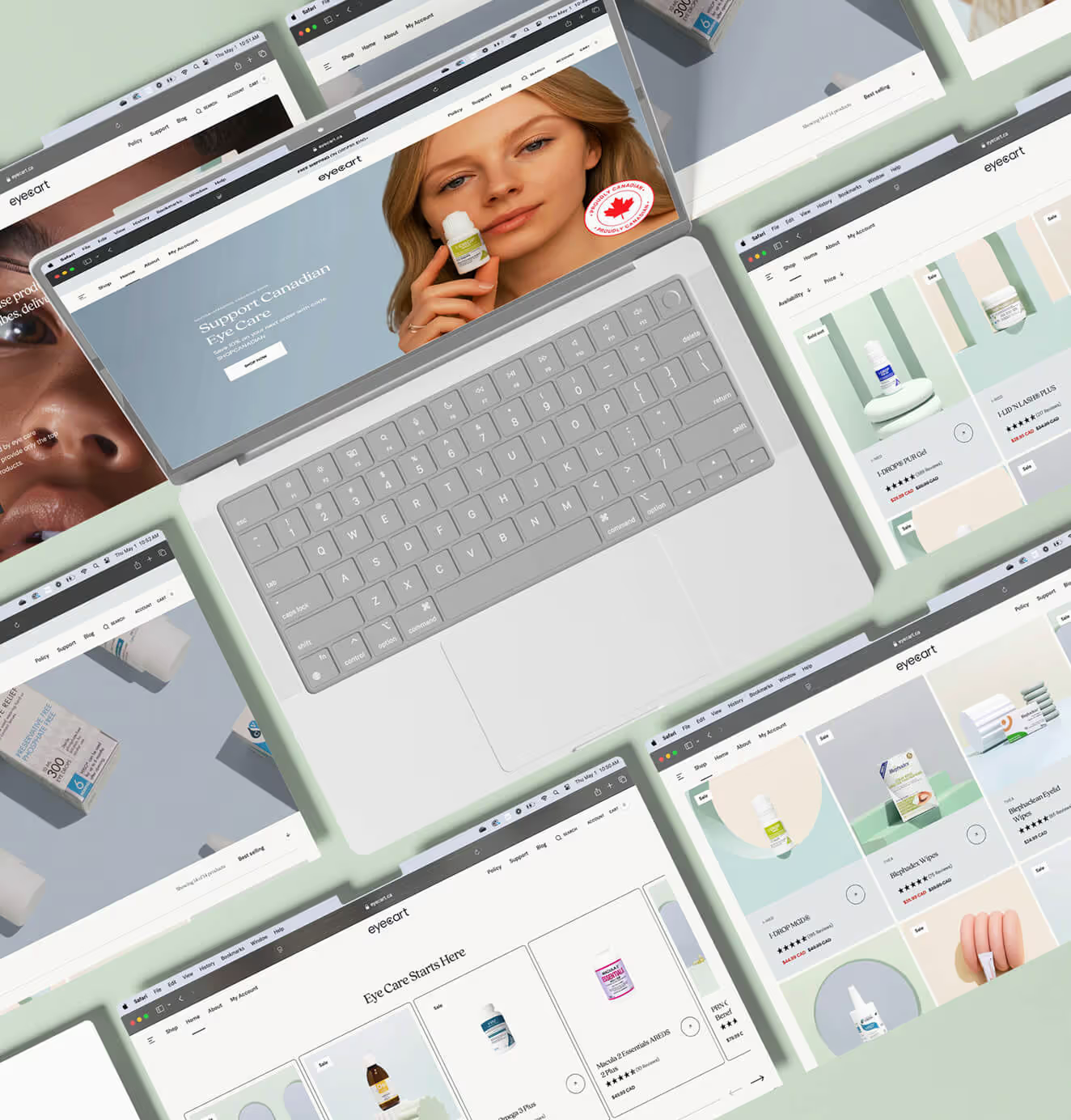
- Website revamp with brand-aligned UX
- 90-day content calendar
- Analytics stack setup for measurement from day one
Goal Setting for Your Digital Brand
Clear, numeric goals form the foundation of every effective digital branding solution. Without measurable targets, you’re decorating rather than building. A strong digital branding strategy helps businesses navigate the crowded online market, ensuring they stand out and are easily found by their target audience.
The KPIs that matter include click-through rate (CTR, averaging 2-5% for display ads), return on ad spend (ROAS targeting 4:1 or higher), net promoter score (NPS improvements from baseline 20-30 to 50+), and branded search volume growth.
Our 3-step goal-setting process:
- Diagnose – Audit current assets using analytics tools like GA4 and Hotjar heatmaps to identify gaps in website consistency, social engagement, and conversion paths.
- Define – Set short-term goals (3-6 months) like “Increase branded search clicks by 40% by Q4 2025” and long-term goals (12 months) like “Lift email-driven revenue share from 8% to 15%.”
- Prioritize – Focus on high-impact channels first. For B2B, that’s often LinkedIn where 80% of leads originate. For consumer brands, Instagram and TikTok drive discovery.
Digital branding allows for real-time tracking of audience interactions, enabling your marketing team to refine strategies based on consumer behavior.
Typical goals clients set:
- Awareness: 25% uplift in impressions
- Authority: 30% increase in backlinks
- Lead quality: 20% reduction in cost per qualified lead
- Retention: 15% rise in repeat purchase rate
- Referral: Doubling NPS-driven shares
Competitor Analysis & Market Position
A robust digital branding strategy starts with structured competitor and category audits—not guesswork. Before defining your brand’s digital presence, you need to understand exactly where you can own a distinctive position in the digital landscape.
We benchmark 5-10 direct and indirect competitors across key dimensions: website UX (Core Web Vitals scores via PageSpeed Insights, where top performers exceed 90/100), SEO visibility (domain ratings above 50 for leaders in Ahrefs or Semrush data), social media tone and engagement (2-5% rates on Instagram vs. 0.5-1% industry averages), content quality, and paid advertising presence.
Establishing a strong digital brand is essential for retailers and service providers looking to differentiate themselves from the competition in a crowded online marketplace. Digital branding helps shape how customers perceive a business online, making it a critical factor in differentiating a brand from its competitors.
The output is a positioning map visualizing gaps—opportunities like “premium but fast” delivery in e-commerce or “sustainable and data-driven” claims in tech. We analyze review sentiment from platforms like G2, Trustpilot, or Google Reviews, aiming for 4.5+ stars as the trust threshold.
Typical competitor analysis insights:
- Overused messages (e.g., generic “innovative solutions” present in 70% of SaaS homepages)
- Under-served niches ignored by enterprise-focused competitors
- Content gaps reducing dwell time (e.g., lack of video explainers)
- Neglected social media channels despite massive user bases
Audience Research & Digital Behavior Insights
Our digital branding solutions are built on real customer data, not generic personas pulled from templates. Understanding your target audience requires methods that reveal actual behavior, not assumptions.
We use specific research methods: GA4 and Search Console reviews for behavioral patterns (like 55% bounce rates signaling page-content mismatches), customer interviews conducted via Zoom or Typeform targeting 20-50 participants, on-site surveys capturing exit-intent feedback, social listening with tools like Brand24, and CRM analysis revealing which segments drive 3x higher lifetime value.
Personalization at scale can be achieved through AI-powered segmentation to tailor messaging and product descriptions to individual user preferences. These findings translate into 3-5 concrete audience profiles.
For example: “B2B Operations Leader in North America, 35-50, relies heavily on LinkedIn at 60% usage and comparison sites like G2. Motivated by efficiency gains, objects to integration complexity, triggered to buy by peer reviews and free trials.”
Each audience profile includes:
- Goals (e.g., reduce operational costs by 20%)
- Pains (e.g., tool sprawl across departments)
- Buying triggers (e.g., successful competitor case studies)
- Content preferences (e.g., case studies over ads, video over text)
These insights directly drive brand messaging, content topics, UX decisions, and ad targeting for specific customer groups.
Brand Positioning & Messaging Architecture


Brand positioning answers one question: “Why choose us over anyone else?” A strong digital brand identity is crucial for leaving a lasting impression on your target audience, reflecting your values, mission, and unique selling proposition.
We create a positioning platform with a core promise, 3-4 proof pillars, and supporting reasons-to-believe grounded in real capabilities—no vague claims allowed.
Example for a 2025 AI-enabled SaaS: “AI-enabled analytics that delivers 3x faster insights with zero setup for mid-market teams.”
Example for sustainable e-commerce: “Eco-luxury delivered carbon-neutral in 24 hours, verified by blockchain.”
Human-centered storytelling uses authentic narratives to humanize the brand and foster emotional connections with customers. Your brand story should communicate the brand’s mission statement and company culture in ways that resonate emotionally.
The messaging architecture layers multiple levels: hero taglines for brand visibility, elevator pitches for 30-second conversations, product-level messages connecting features to benefits, and channel-specific variations (punchy LinkedIn hooks vs. detailed email stories).
Every positioning document must contain:
- Core promise (one sentence)
- 3-4 proof pillars with evidence
- Reasons-to-believe (quantified where possible)
- Hero tagline
- Elevator pitch
- Channel-specific message variants
Visual Identity: Logo, Color, and Digital-Ready Design System
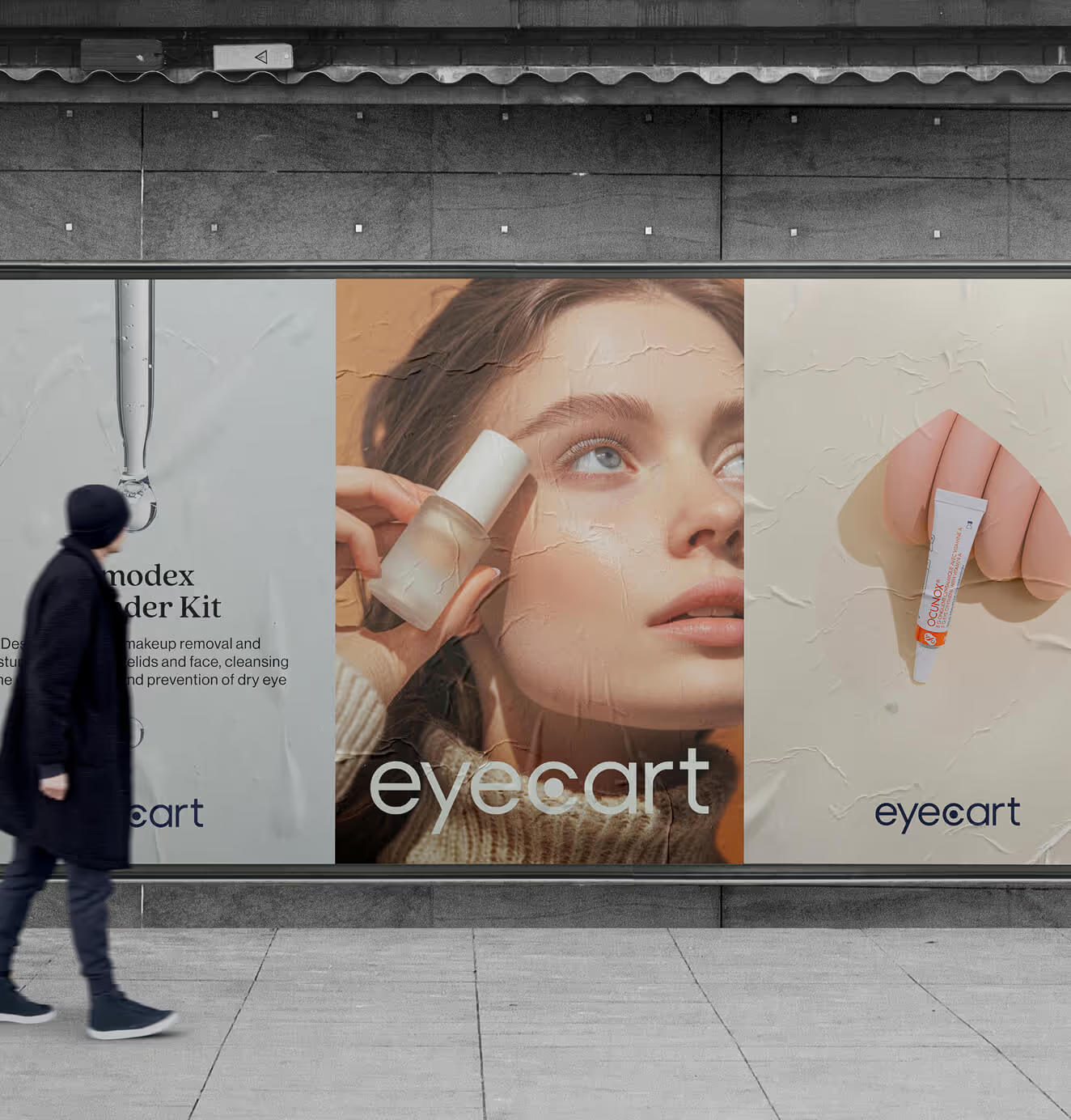
Modern digital branding solutions focus on adaptable systems, not just a logo file. Your visual identity must perform flawlessly across online platforms, from a browser favicon to a billboard.
Creating a visually appealing brand image involves developing a consistent visual aesthetic, including color schemes, fonts, and graphic elements, to capture attention and resonate with your audience. Key strategies for digital branding involve leveraging influencer partnerships, utilizing video content, maintaining consistent visual branding, and investing in online reputation management.
We cover logo design or refinement (vector scalability essential), color palette optimized for screens using HSL for dynamic theming, typography with web-safe and app-ready options (Google Fonts like Inter with 1.2M+ variants), and scalable iconography in SVG format for retina displays.
Accessibility is non-negotiable for 2025 global audiences: WCAG 2.2 AA compliance requires 4.5:1 contrast ratios, mobile legibility at 16px minimum, and localization considerations including RTL support for Arabic markets.
The logo scaling test: Your logo must render crisply at 24px (browser tab, no aliasing), 48px (app bar), and 1200px (hero section with full detail).
Visual identity package deliverables:
- Primary and secondary logo versions
- Color tokens for design systems
- Typography styles and hierarchy
- Social avatars and profile images
- Presentation templates
Want to learn more about brand platforms, Brand Strategy and Brand Identity? Keep reading!
If you need help with your companies brand strategy and identity, contact us for a free custom quote.
Digital Brand Guidelines & Execution Toolkit
Digital Brand Guidelines & Execution Toolkit
Brand guidelines serve as a practical operating manual for everyone who touches the brand—internal teams and external partners alike. Establishing clear brand guidelines ensures that your brand is presented consistently across various online channels, which strengthens brand recognition and enhances trust among your audience.
Our digital branding services always deliver a comprehensive guideline document covering logo usage with safe zones (1x height clearance), spacing grids (8px baseline), color usage specifications (primary colors at defined saturation levels), typography hierarchies (H1 48px bold, body 16px regular), imagery styles, brand’s tone of voice, and examples for email, social, and ads.
The execution toolkit makes guidelines actionable: ready-made Canva and Figma templates, email signature layouts (600px width standard), social post frameworks, and standard ad layouts for 2025’s main platforms. Common formats include 16:9 YouTube thumbnails, 1080x1080 Instagram squares, and 1200x628 LinkedIn ads.
Cohesive brand architecture includes establishing clear digital brand guidelines that define logo usage, color palettes, and typography. Maintaining uniformity in branding across platforms is crucial, as inconsistency can confuse your audience and weaken your brand identity.
How guidelines reduce friction:
- Faster approvals (40% reduction in revision cycles)
- Fewer redesigns from scratch
- Easier onboarding of new vendors
- Consistent CX reducing customer confusion by 25%
Website & Experience: Your Primary Digital Brand Hub
In 2025, the website remains the central expression of any digital branding solution—where narrative, design, and performance converge. It’s your brand’s online presence in its most complete form.
We ensure brand-aligned information architecture following the 3-click rule to key pages, copy that matches the new messaging using AIDA structure, visual refresh reflecting the updated identity, and UX tuned for conversions with clear CTAs.
Effective digital branding solutions include a professional, SEO-optimized website, consistent social media engagement, and high-quality content marketing. Implementing search engine optimization (SEO) strategies is crucial for enhancing brand visibility, as it helps websites rank higher in search results and drives organic traffic.
Generative Engine Optimization involves structuring website content with schema markup to ensure accurate citations by AI—increasingly important as AI-powered online search becomes mainstream.
Specific optimization areas include Core Web Vitals (LCP <2.5s, FID <100ms, CLS <0.1), mobile-first layout capturing the majority of traffic from mobile devices, social proof sections (testimonials, case studies, client logos), and localized content where relevant.
Integration with analytics, CRM, and marketing automation ensures branding is measurable from day one. Cohesive branding across all touchpoints reduces friction and increases customer confidence, leading to higher conversion rates.
Must-have branded pages:
- Hero homepage (promise + primary CTA)
- “About” narrative reflecting brand’s values and brand’s personality
- Solutions/Services with benefit-led copy
- Resources/Blog (gated digital assets)
- Case Studies with quantified wins
- Contact/Lead capture integrated with CRM
Content, Social Media, and Always-On Brand Presence
Content and social touchpoints are how the digital brand “speaks” every day, beyond static brand materials. This is where you leverage social media platforms to build relationships and foster loyalty with potential customers.
Our digital branding solution produces a 90-day content roadmap aligning topics, formats (articles at 2000+ words for SEO, carousels at 5-10 slides, short vertical videos at 15-60 seconds, email nurtures), and various online channels.
Short-form video content consistently outperforms static content in engagement and is crucial for discovery. For B2B, LinkedIn thought-leadership posts drive 3.5% engagement. For consumer brands, Instagram Reels and TikTok deliver 10x the views of static posts.
Engaging with your audience on social media platforms allows for meaningful interactions and builds a community around your brand. To be a successful digital brand, engaging with your audience and building relationships with them is important, which involves responding to comments and messages across social media channels.
User-generated content (UGC) is a powerful tool for brands, as it helps show customers how others are using the product or service in real life, increasing customer engagement. This authentic relevant content creates immersive experiences that foster meaningful engagement.
Tone and voice consistency matters: the same brand should sound coherent whether in a tweet (punchy, 140 characters), a product page (benefit-led), or a customer support email (empathetic).
Content KPIs we monitor:
- Engagement rate (targeting 3-5%)
- Time on page (2+ minutes)
- Scroll depth (70%+ completion)
- Saves and shares (1-2% of views)
- Assisted conversions (20% of total pipeline)
14–21 Day Digital Branding Sprint Offer
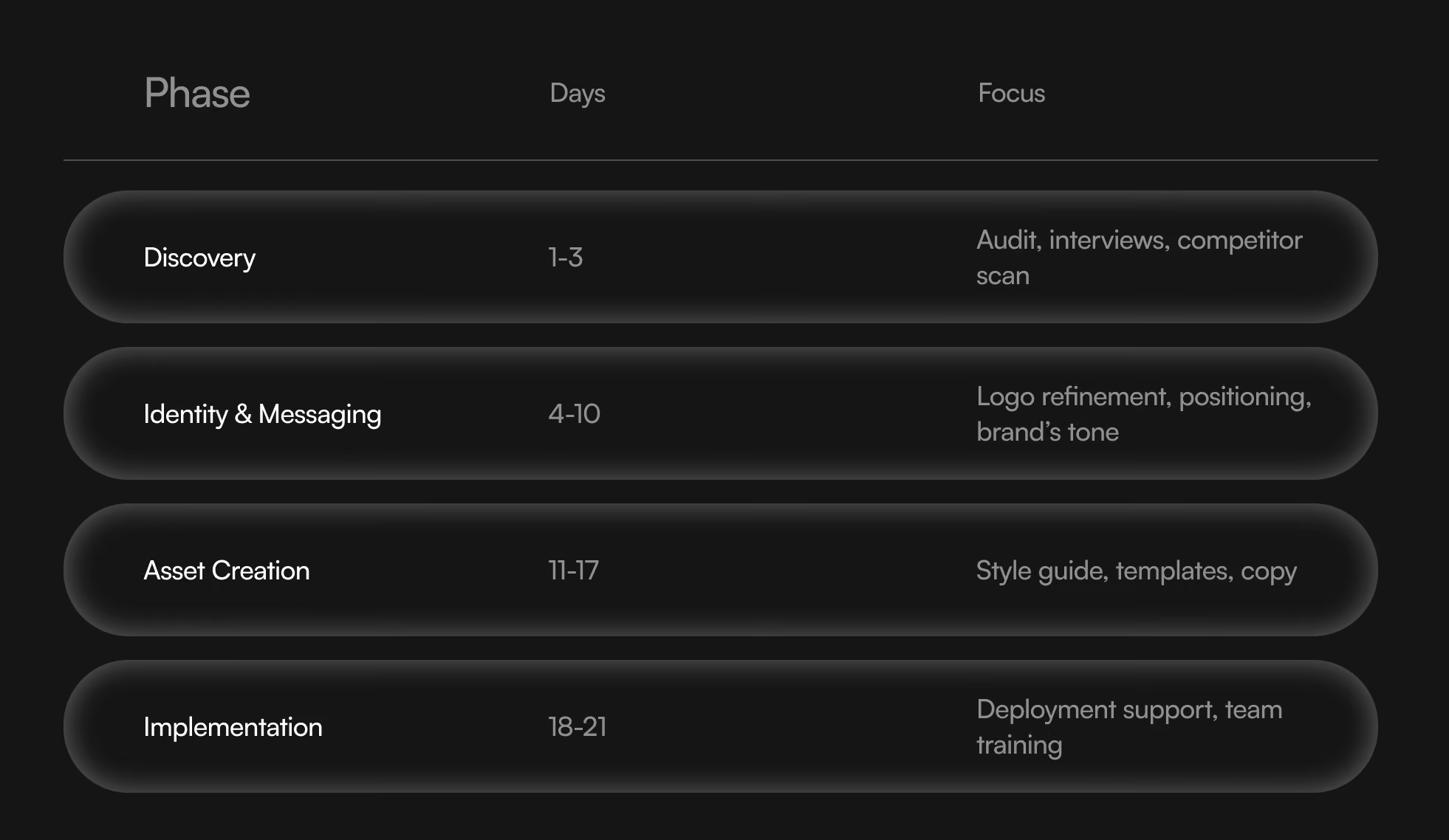
For companies needing a fast, cohesive refresh without a months-long engagement, we offer a time-bound sprint version of our digital branding solution.
Digital branding can improve visibility, build trust, and attract customers for small businesses, regardless of whether they are new or established. A unified digital branding strategy can communicate professionalism and expertise, instilling a sense of reliability and paving the way for trust to be built with the audience.
Sprint timeline (14-21 days):
Typical sprint deliverables:
- Refined logo or wordmark
- Mini style guide (15-20 pages)
- Homepage copy refresh
- 5-10 social templates
- Email signature standardized
- LinkedIn company page optimization
Results example: A B2B software company completed our 21-day sprint. Within 60 days of launch, they saw a 30% increase in branded search and 22% uplift in on-site conversion—proving that effective digital branding doesn’t require six-month timelines.
Measurement, Optimization & Digital Branding Audit Checklist
Every digital branding solution must be accountable to numbers. We use 2025 tools like GA4, Mixpanel, and platform analytics to establish baselines and track progress.
We define baseline metrics across five categories, then set quarterly targets for brand and performance KPIs: awareness (impressions +20%), engagement (+15%), conversion (+25%), retention (churn -10%), and referral (NPS +15).
Reputation management can be effectively conducted using social listening tools to monitor brand mentions and sentiment. A strong digital brand is consistent, recognizable, and aligned with the needs and expectations of its target audience, ensuring that every element reflects the core values of the business.
Audit checklist areas:
- Website consistency: Visual audit score 90%+, messaging alignment
- SEO alignment: Keyword cannibalization check, search engines visibility
- Social presence: Bio and headers match digital strategy guidelines
- Email branding: Signature compliance across organization
- Review profiles: 100% response rate, 4.5+ ratings
Recommended cadence: Monthly health checks, quarterly deep dives, and annual repositioning reviews based on market and customer expectation shifts.
Metrics indicating digital brand health:
- Branded search growth (30% YoY target)
- Direct traffic share (20%+ of total)
- Repeat visitor rate (40%+ returning)
- Average engagement per post (2%+)
- Review ratings (4.5+ with 50+ volume)
- Brand’s reach expansion quarter-over-quarter
Choosing the Right Digital Branding Partner


Not every digital branding agency offers true end-to-end solutions. Some focus only on design. Others only run paid advertising. Traditional branding agencies may lack digital marketing expertise entirely.
Digital branding agencies provide a range of services tailored to enhance a brand’s online presence, including website design, digital advertising campaigns, social media marketing, social media advertising, search engine ads, and influencer marketing.
Evaluation criteria:
- Strategic depth (end-to-end vs. siloed execution)
- Cross-channel expertise (SEO + creative + content marketing strategy + analytics)
- Real case studies from 2023 or later with quantified business growth
- Transparent process with clear milestones
Questions to ask potential partners:
- Who leads digital strategy—and what’s their background?
- How do you validate ideas with customer data before execution?
- What specific deliverables will we receive?
- How do you measure business success post-launch?
Digital branding agencies play a crucial role in helping businesses establish a consistent and recognizable online identity, which is essential for building customer trust and customer loyalty.
Look for long-term partnership potential: roadmapping beyond the initial project, training your internal marketing team, and planning for new online channels or formats that may emerge beyond 2025.
Ready to build a strong online presence that drives real results?
We offer comprehensive digital branding services—from strategy and visual identity to content, website experience, and measurement—under one roof. Our digital branding agency approach means you get cohesive brand identity execution, not fragmented tactics.
Request a custom proposal to see how we can transform your brand’s digital presence into a competitive advantage.

Quincy Samycia
As entrepreneurs, they’ve built and scaled their own ventures from zero to millions. They’ve been in the trenches, navigating the chaos of high-growth phases, making the hard calls, and learning firsthand what actually moves the needle. That’s what makes us different—we don’t just “consult,” we know what it takes because we’ve done it ourselves.
Want to learn more about brand platform?

If you need help with your companies brand strategy and identity, contact us for a free custom quote.
We do great work. And get great results.
+2.3xIncrease in revenue YoY
+126%Increase in repurchase rate YoY


+93%Revenue growth in first 90 days
+144% Increase in attributed revenue


+91%Increase in conversion rate
+46%Increase in AOV


+200%Increase in conversion rate
+688%Increase in attributed revenue