House Branding: How to Turn Your Home Into a Unique, Marketable Brand
04/28/2026
Branding
Discover how house branding transforms properties into memorable, high-value assets by combining identity, design, and experience into a marketable lifestyle brand.
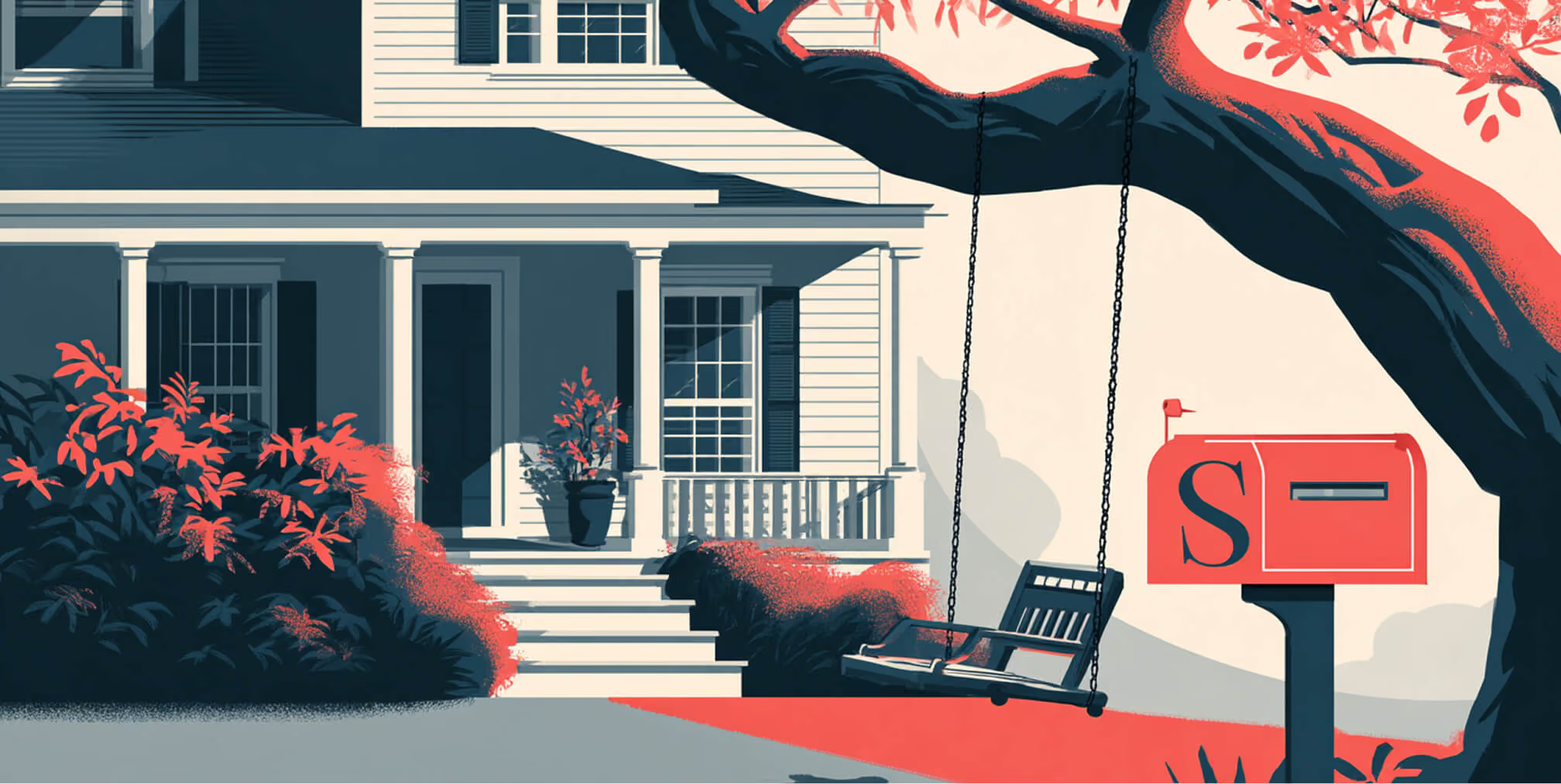
Your home has an address. But does it have an identity? In 2026, savvy owners are treating their properties less like buildings and more like boutique hotels, complete with names, logos, and curated experiences. This is house branding—and it’s changing how buyers, guests, and families connect with where they live.
.png)


What Is House Branding?

House branding means giving a residential property its own name, logo, and consistent visual identity. Think of it as the difference between staying at “a nice hotel downtown” versus “The Ritz.” One is forgettable; the other tells a story.
This concept applies to trophy estates valued at $50 million or more, but also to family vacation homes and short-term rental properties. In markets like Los Angeles, Miami, and London, high-end buyers now expect some level of branding for premium properties. It signals that the home has personality, not just square footage.
Consider these examples: The Manor in Los Angeles (a 56,500-square-foot estate known by name in every media mention), Owlwood in Bel Air (named for owl motifs in its landscaping), and La Fin in Brentwood (featuring a signature gold hexagon logo across all marketing materials). Each property operates as its own brand.
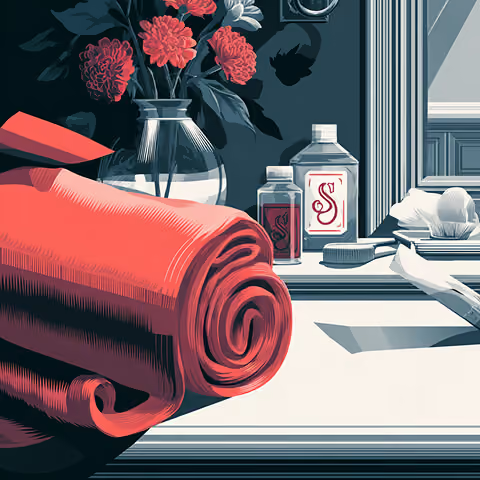
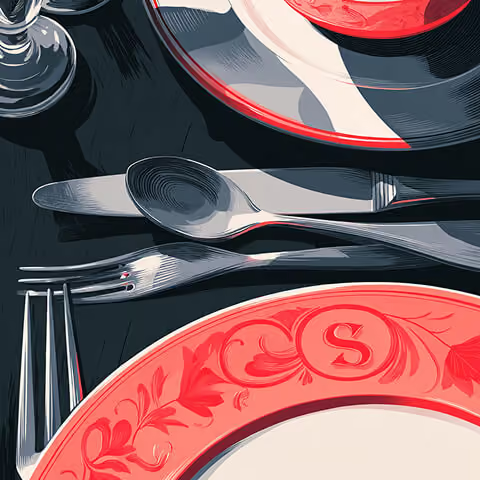
A complete house brand typically includes: a proprietary name, a scalable logo, a defined color palette, consistent typography, a signature scent, and physical collateral like monogrammed towels, doormats, and stationery.
A Brief History of Giving Homes a Name
Naming houses predates modern marketing. In 17th-century England, cottages like “Rose Cottage” were christened with floral or descriptive monikers to denote character. Estates like Chatsworth House (completed 1707) and Blenheim Palace (built 1705–1722) established distinct identities through heraldic crests long before logos existed.
In the 20th century, Hollywood amplified this tradition. Pickfair became iconic in 1919, while Grey Gardens in East Hampton gained fame through the Bouvier-Beale family. The 2000s brought branded residence programs from Four Seasons, Aman, and Bulgari, normalizing the combination of hospitality branding with private homes and inspiring individual owners to develop their own property identities.
Free Brand Health Audit
Make sure your brand is built to sell
Search has changed. Your customers aren't just Googling anymore. They're asking ChatGPT, Perplexity, Gemini and other AI platforms what to buy, who to trust and which brands they should consider.
If your brand isn't showing up clearly in those answers, you're already losing opportunities. Our free Brand Health Audit shows you where your brand stands across traditional search, AI search and brand positioning.

Sample brand audit
Live preview
Traditional search
72
AI search (GEO)
34
Brand positioning
58
Why Brand a House?
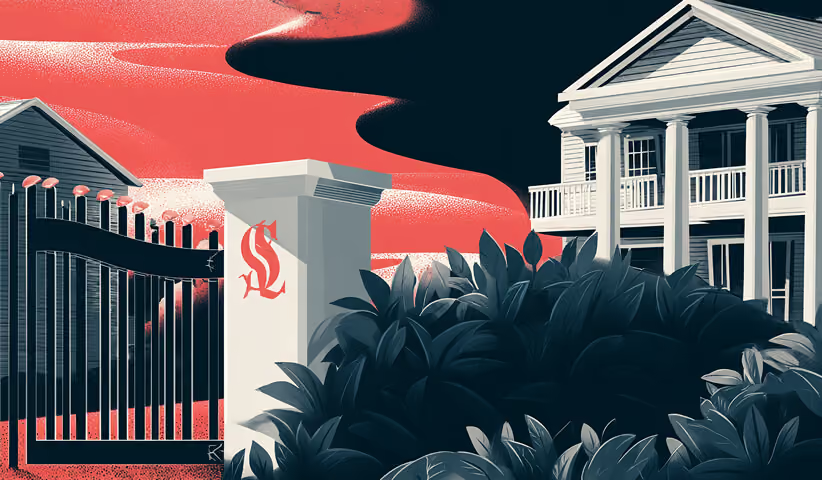

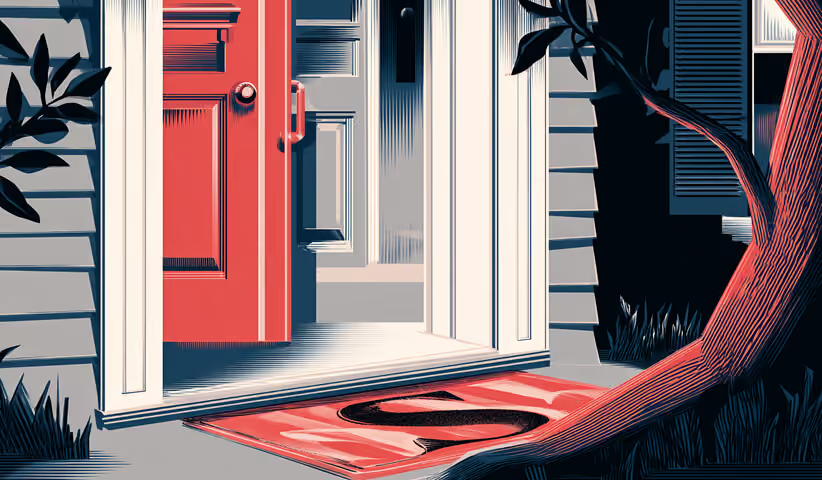
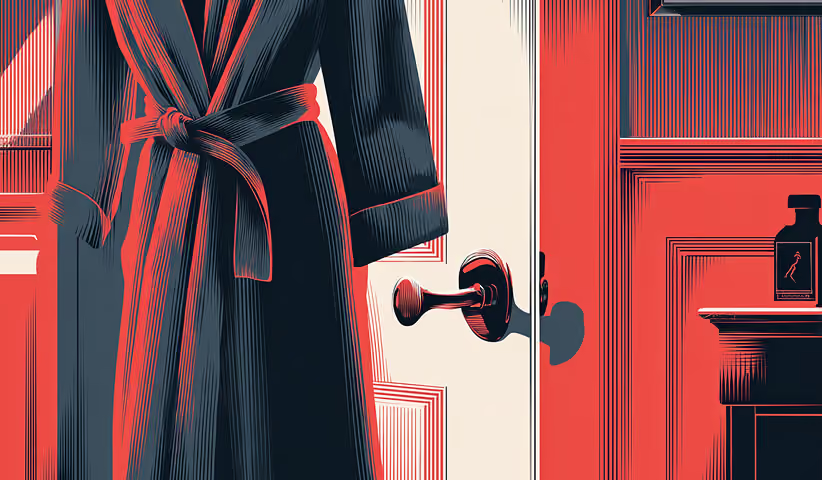
The benefits of house branding span emotional connection, market differentiation, and lifestyle signaling. Here’s what owners and sellers gain:
- Increased memorability in crowded listings where buyers scroll rapidly on mobile
- Perceived prestige that attracts ultra-high-net-worth inquiries
- A stronger story for brokers to tell in competitive markets
- Easier word-of-mouth (“dinner at Owlwood” versus “that house on Angelo Drive”)
- Privacy shielding for high-profile owners via pseudonymous branding
In markets like Beverly Hills, Bel Air, and the Hamptons, named homes command media coverage and social buzz. But branding also works for short-term rentals—Airbnb properties with distinctive names report higher booking rates and social sharing.
A brand begins with a name, then expands into visuals and experience.
Emotional and Lifestyle Advantages
A name and logo transform a house into a “place” with personality. Guests and family members form emotional attachments more easily when they can reference something beyond an address.
Picture a coastal home in Maine branded as “Sea Glass House” with soft blue-green colors and nautical typography. Guests associate relaxation with every detail—the candles, the coffee mugs, the robes. This mirrors how boutique hotels in 2026 curate sensory memory through consistent design.
Market and Resale Advantages
A recognized house name gives agents a stronger hook in property marketing. The Manor appears in press headlines by name, not address, creating value through recognition. La Fin’s gold hexagon logo recurs in The Wall Street Journal coverage, boosting buyer recall.
In 2026’s mobile-first search environment, a distinct brand identity helps a listing stand out. Serious buyers remember “The One” more than “18179 Ardmore Drive.”
Begin With a Name: Defining Your Home’s Identity
The name is the foundation of any home brand. It should reflect history, location, architecture, or family story—and be easy to say, spell, and remember.
Consider these naming approaches:
- Geographic: “Norman Ridge” for a hilltop estate
- Architectural: “The Gables” for steep rooflines
- Historic/Family: “Erymwold” built from family initials
- Experiential: “The Hideaway” for secluded retreats
Research historical records, old deeds, or local archives. A 1920s Pasadena estate might have a name on faded brass plates waiting to be revived.
Naming Principles and Practical Tips
Follow these principles when developing your house name:
- Keep it to three syllables maximum for easy recall
- Check that the .com domain and Instagram handle are available
- Test pronunciation with friends before committing
- Confirm no conflict with nearby properties or condo developments
- Avoid generic clichés like “Luxury Estates at…” unless part of a multi-unit development
- Consider local language appropriately (Hawaiian or Provençal words) while avoiding cultural appropriation
Write the name as it would appear on a brass plaque or gate sign to check visual balance.
Designing a Home Logo and Visual System
Like a company brand, a house brand typically includes a logo, color palette, typefaces, and graphic motifs. Logos can be literal (a sketch of the façade), symbolic (an owl for Owlwood), or typographic (a stylized wordmark).
Owners in 2026 often brief designers via platforms like 99designs or Fiverr, sharing photos and architectural drawings. The key is scalability—the logo should work on a gate sign, towel embroidery, and small matchbox.
Design deliverables should include: primary logo, secondary mark or monogram, black-and-white versions, favicon, and a style guide PDF.
Color, Typography, and Motifs
Choose colors inspired by your surroundings: coastal blues for seaside homes, deep greens for forest lodges, warm neutrals for desert villas. Current trends favor soft earth tones over dated glossy gold gradients.
Typeface signals personality—classic serif for heritage estates, minimalist sans serif for modern glass houses, script accents for romantic cottages. Add supporting motifs like a door icon or tree silhouette for stationery borders.
Working With Designers vs. DIY
Two paths exist: hiring professional designers or creating your own with tools like Canva.
For professionals, expect a process of moodboard development, 2–3 initial concepts, and 2–3 revision rounds over 2–4 weeks. Budget ranges from a few hundred dollars for a basic logo to several thousand for full brand systems.
For DIY, stick to simple marks and templates. Avoid overcomplicated designs that won’t embroider or engrave cleanly.
Want to learn more about brand platforms, Brand Strategy and Brand Identity? Keep reading!
If you need help with your companies brand strategy and identity, contact us for a free custom quote.
Turning Your House Into a “Private Hotel”
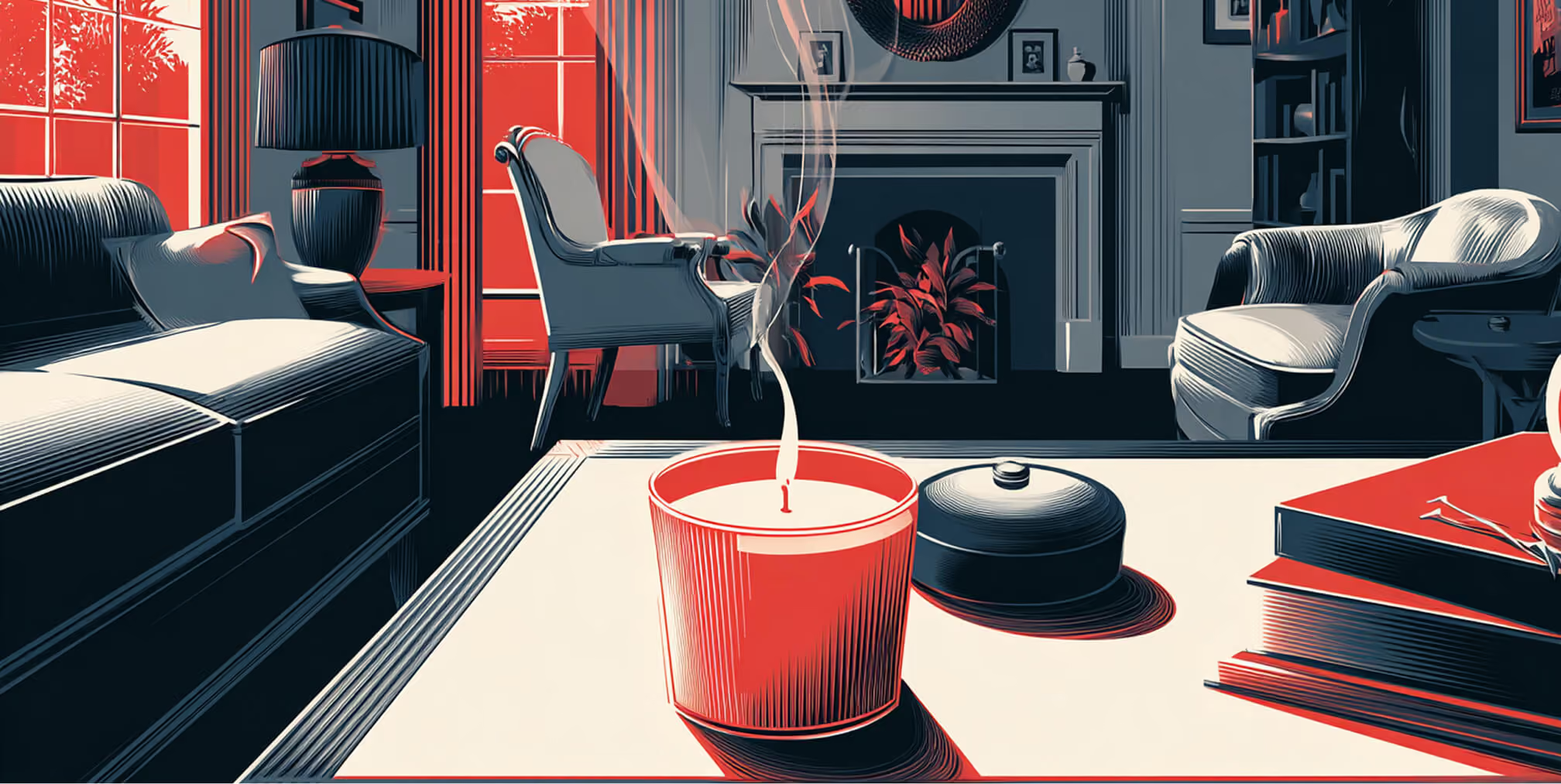
Affluent owners now adopt hotel-style branding at home: consistent signage, monogrammed linens, and scented amenities. Properties like La Fin repeat their gold hexagon motif across soaps, door hardware, and stationery.
Smart owners decide branding before final furnishing so fabrics and accessories align with logo colors. The aesthetic goal is cohesive but not gaudy—guests notice branding gradually on towels and candles, not plastered on every surface.
Physical Touchpoints: From Doormats to Robes
Apply your house logo strategically across these touchpoints:
- Welcome doormats at the entry
- Pool towels with embroidered monograms
- Linen napkins with hemstitched logos
- Custom matchbooks for fireplaces
- Spa robes for guest bathrooms
- Letterpress stationery for notes
- Etched coasters and laser-engraved trays
Group orders through high-quality vendors to maintain consistent color matches and embroidery quality.
Architecture and Interior Integration
Branding can be woven into architecture: medallions in tilework, motifs in wrought-iron railings, or a carved crest above a fireplace. A 2025 hillside villa might feature marble inlay of a crest in the entry hall.
Exercise restraint with permanent elements—they should be timeless so future owners aren’t forced into expensive removals. Use flexible elements like pillows and framed prints for bolder expressions.
Signature Scents and Sensory Branding
Hotels like Four Seasons and EDITION popularized signature scents in the 2010s. In 2026, ultra-luxury homes commission custom fragrances diffused via HVAC systems or smart diffusers.
One $68 million Los Angeles mansion features a custom Ex Nihilo scent used in diffusers, candles, and soaps. Even modest homes can adopt a “house scent” using candles that echo the brand story—cedar and smoke for a mountain lodge, for instance.
Choosing and Implementing a Home Fragrance
Follow this process: create a moodboard linking visual and scent ideas, sample 5–10 options, test in different rooms, then commit to a signature blend.
Deploy scents carefully—lower intensity in bedrooms, stronger in entry and living areas. Use smart diffusers with app controls for precision. Align scent notes with your visual palette: bright citrus for a white coastal home, warm amber for desert modern.
House Branding for Rentals, Second Homes, and Estates
House branding proves especially powerful for short-term rentals, second homes, and multigenerational estates. For rentals, a memorable name increases repeat bookings—consider a 5-bedroom Lake Tahoe property branded “Pine Whisper” that customers share on Instagram.
For second homes, branding creates continuity when different family members and guests use the property throughout the year. For legacy estates, a consistent brand identity carries through decades of stewardship.
Using Your Home Brand in Marketing and Communication
Incorporate your house name and logo in listing photos, property websites, and digital brochures. Create a simple one-page “house story” PDF with name origin, logo, and lifestyle photos.
For rentals, branded welcome books, Wi-Fi cards, and check-in instructions reinforce the brand. Create a custom hashtag (#AtCasaLimon) that guests can use when posting. Ensure consistency across your website, Instagram, booking pages, and printed materials.
House Branding vs. Branded House vs. House of Brands
Terminology matters. “House branding” refers to individual home identity. A “branded house” means one master brand dominates (like Virgin across all sub brands). A “house of brands” manages distinct identities (Marriott operating Ritz-Carlton and W Hotels separately).
For most homeowners, a single “branded house” strategy works best—one coherent identity making strong brand promises for the property.
When Multiple Property Brands Make Sense
Families owning several vacation rentals might consider whether to link them under one umbrella name. A unified collection brand offers easier marketing and cross-promotion, while distinct names let each property stand alone.
If properties share a thematic link—all ski chalets or all urban lofts—a “collection” brand works well. Be realistic about resources: multiple brands require more design work and ongoing content creation.
Practical Steps to Launch Your House Brand
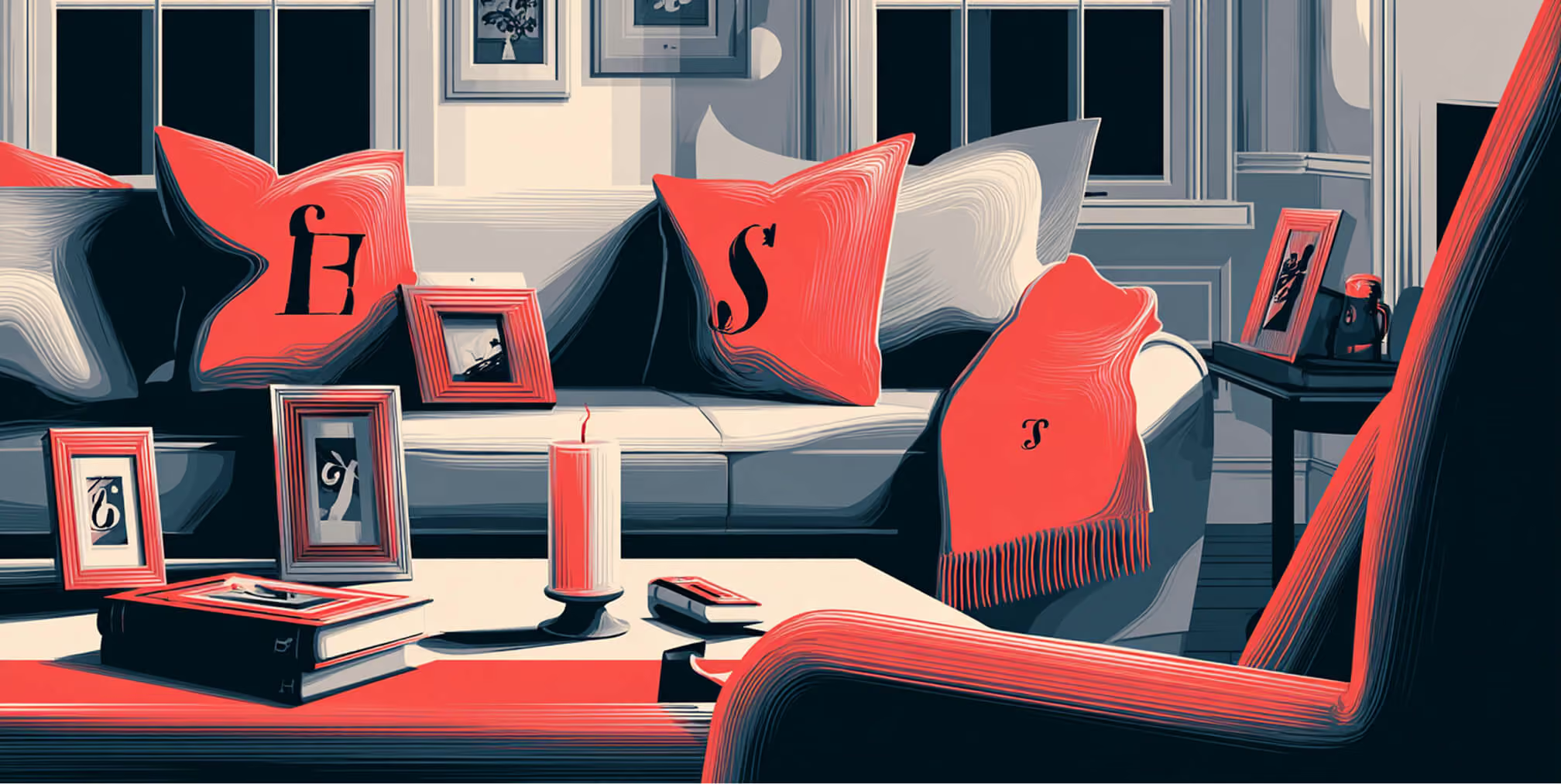
Follow this timeline to develop your brand:
- Research and find inspiration via Pinterest boards and hotel references (Week 1–2)
- Host a naming workshop with family or partners (Week 2–3)
- Hire a designer or choose a DIY approach (Week 3–4)
- Create the logo and style guide (Week 4–6)
- Order first batch of branded items (Week 6–8)
- Unveil the brand to family and guests (Week 8–12)
Create a digital folder in cloud storage holding all logo files, fonts, and brand guidelines for contractors and vendors.
Common Mistakes to Avoid
Watch for these pitfalls:
- Overbranding every visible surface
- Choosing trendy design elements that will feel dated by 2028
- Copying hotel logos too closely (trademark issues matter for high-value estates)
- Using colors that clash with existing architecture
- Making branding too personal (inside jokes or initials only) if resale is a near-term objective
- Failing to build flexibility for future owners
Review your brand every 3–5 years to refresh materials and retire elements that no longer fit your life or the property.
House branding can start small—often with just a name and one beautiful emblem. Your home is more than an address waiting to be searched. Give it the identity it deserves, and watch how it transforms the way everyone experiences your world.

Quincy Samycia
As entrepreneurs, they’ve built and scaled their own ventures from zero to millions. They’ve been in the trenches, navigating the chaos of high-growth phases, making the hard calls, and learning firsthand what actually moves the needle. That’s what makes us different—we don’t just “consult,” we know what it takes because we’ve done it ourselves.
Want to learn more about brand platform?
If you need help with your companies brand strategy and identity, contact us for a free custom quote.
We do great work. And get great results.
+2.3xIncrease in revenue YoY
+126%Increase in repurchase rate YoY



+93%Revenue growth in first 90 days
+144% Increase in attributed revenue



+91%Increase in conversion rate
+46%Increase in AOV


+200%Increase in conversion rate
+688%Increase in attributed revenue