Managed Email Marketing Campaigns: How to Hand Off Your Inbox and Still Win in 2026
08/06/2026
Marketing Strategy
.png)


Managed Email Marketing Campaigns Explained

Free Brand Health Audit
Make sure your brand is built to sell

How Managed Email Fits Into Your Overall Marketing Strategy
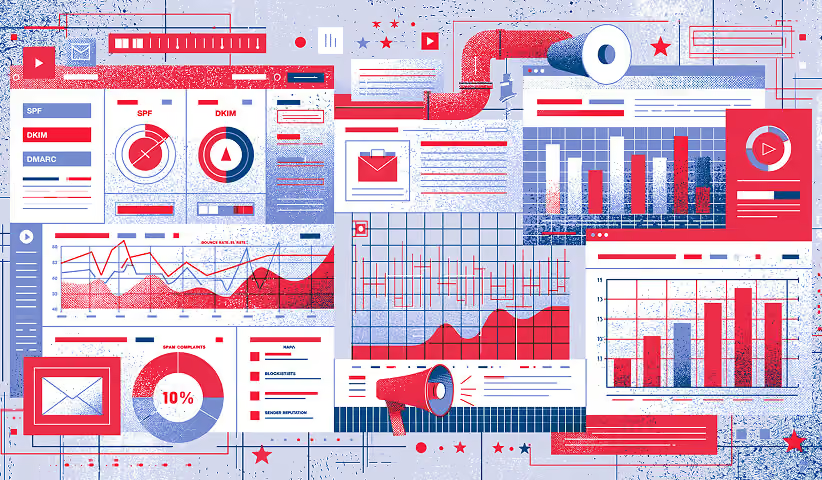


Email remains a backbone of digital marketing in 2026 because it supports paid media, SEO, social media marketing, google ads, and content marketing without relying entirely on rising ad spend.
Email marketing remains one of the most cost-effective marketing channels, delivering strong returns even for small marketing teams, and is ideal for various types of campaigns such as welcome emails and promotional sequences.
Managed email marketing campaigns support product launches, seasonal promotional campaigns, webinar funnels, onboarding, post-purchase education, customer retention, and win-back programs as part of broader brand marketing campaigns that build awareness and loyalty.
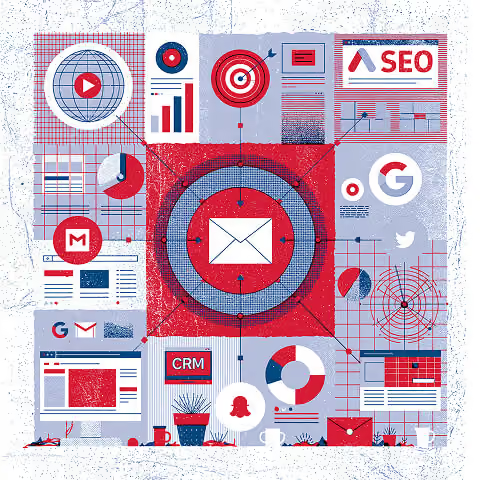
They also connect customer data from other marketing channels. For example:
- Website behavior tracked in google analytics can help with creating relevant content based on observed actions.
- CRM activity can identify potential customers who need nurturing.
- Purchase history can power personalized emails for existing customers.
- Social ads can feed leads into automated nurture sequences.
Managed teams coordinate email timing with broader marketing campaigns so your audience sees consistent messaging across marketing platforms. This moves your brand from random blasts to a structured marketing strategy with clear measurement.
Automated nurture sequences help keep recipients engaged by automatically sending out relevant emails that maintain brand awareness and guide them through the marketing funnel.
Core Components of a Successful Managed Email Marketing Campaign
Outsourcing does not remove the need for strong fundamentals. High performing campaigns still depend on goals, segmentation, messaging, automation, and measurement.
Effective email marketing campaigns utilize segmentation, timing, automation, and personalized content to deliver relevant emails, rather than sending random messages.
A managed team should connect every campaign to one business outcome, such as Q3 trial sign-ups, higher average order value, better customer satisfaction, or reduced churn, using clearly defined branding campaign objectives that align with overall marketing goals.
Defining Goals and Success Metrics
Before any emails are drafted, the provider and client should agree on goals such as “increase repeat purchases by 15% within 90 days” or “generate 200 webinar registrations by July 2026.”
Key metrics include open rate, click through rate, conversion rate, revenue per send, unsubscribe rate, bounce rate, and spam complaints.
Analytics Reporting consists of tracking open rates, clicks, conversions, and revenue. Agencies provide detailed analytics and reporting, allowing easy tracking of return on investment (ROI) and optimization of future sends.
Performance Analytics involves comprehensive A/B testing and granular reporting for continuous data-driven optimization. You should track key metrics inside the platform and cross-check revenue in google analytics or other analytics tools.
Different campaigns need different KPIs. A welcome series may focus on first purchase, a re-engagement flow may focus on active subscribers, and loyalty campaigns may focus on customer loyalty and lifetime value.
Audience Segmentation and Contact Lists
List Management includes cleaning email lists to improve deliverability and legally managing subscriber preferences.
During onboarding, a provider cleans contact lists by removing hard bounces, consolidating duplicates, labeling inactive users, and reviewing consent.
Segmentation allows you to target specific customer groups with highly relevant content, improving engagement rates and conversions by reflecting how branding affects customer behaviour and the emotional triggers that drive decisions.
Common segments include:
- New subscribers
- Repeat buyers
- High-value customers
- Dormant users inactive for 90–180 days
- Recent browsers or cart abandoners
- VIP customers based on spend and frequency
Hyper-segmenting audiences allows emails to become more personalized and relevant, leading to higher engagement and a better return on investment (ROI) on email channels.
Message Strategy and Email Templates
Managed teams turn business goals into content themes, email templates, subject line ideas, preheaders, body copy, image rules, and a clear call to action.
Content Creation involves writing copy, designing layouts, and coding responsive email templates.
Templates can include newsletters, product education, event invites, promotional emails, and lifecycle emails. They should match your colors, fonts, voice, and mobile-first standards, following your broader visual guidelines for branding.
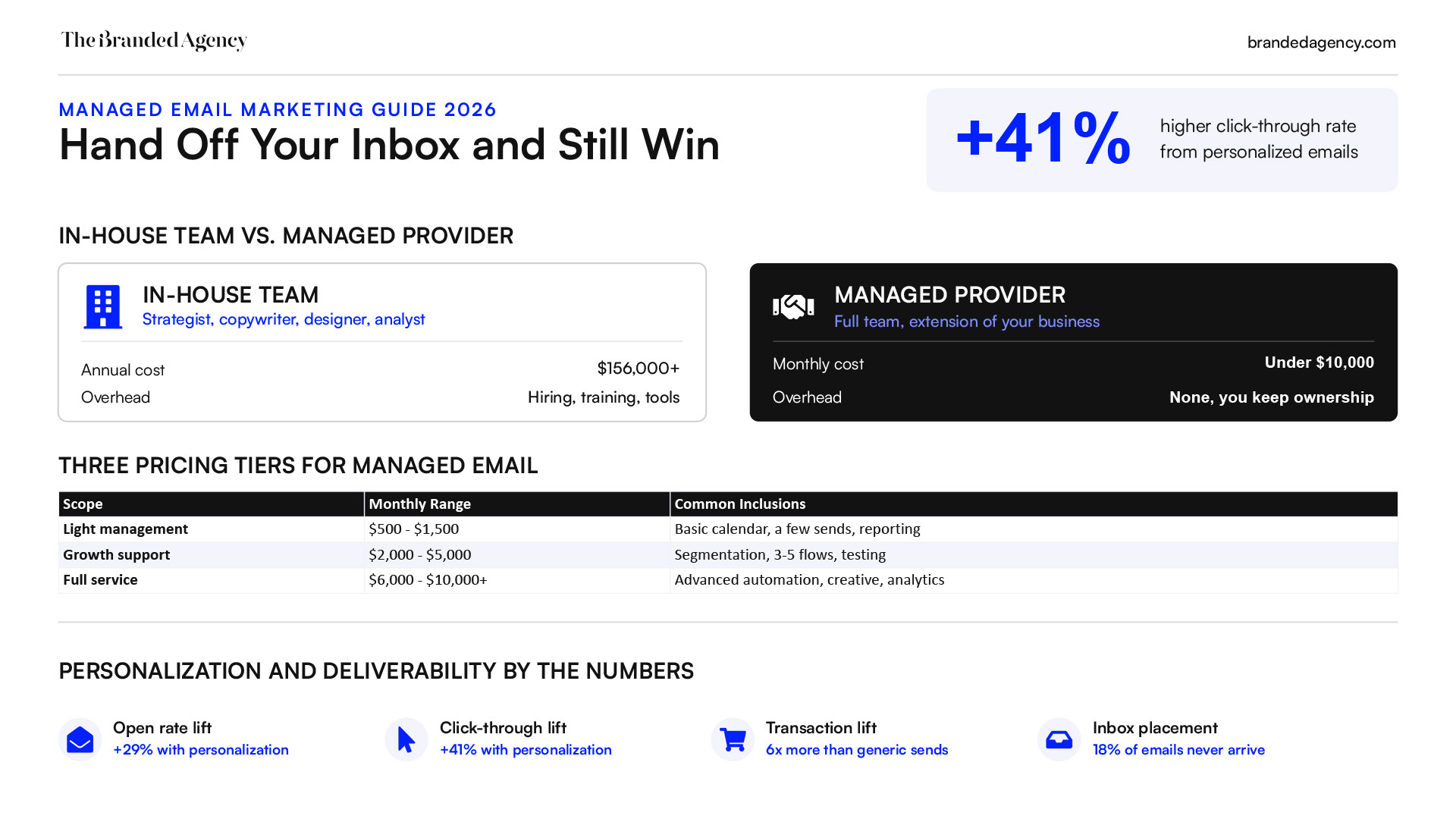
Personalization in email marketing can significantly boost open rates by 29% and click-through rates by 41%. Personalized emails can boost open rates by 29%, increase click-through rates by 41%, and drive six times more transactions compared to non-personalized emails.
Personalization tools, dynamic content, and automated emails make it easy to deliver personalized content to new, inactive, and loyal subscriber groups from a single email marketing platform.
Automation, Drip Campaigns, and Triggers
Advanced Automation involves building complex behavior-triggered sequences that generate revenue automatically.
Managed providers build drip campaigns and automated flows such as welcome series, onboarding journeys, abandoned cart emails, renewal reminders, re-engagement flows, and loyalty campaigns.
Triggers may include sign-ups, first purchases, product views, cart abandonment, subscription renewal dates, or inactivity thresholds.
These flows run continuously. The provider adjusts timing, copy, branching logic, and offers based on campaign performance.
What Managed Email Providers Actually Do Day to Day
A managed workflow usually includes planning, creation, approvals, campaign deployment, sending, reporting, and optimization.
Clients stay involved at strategy and approval points. The provider handles implementation work, usually documented in a service agreement.
Strategy and Planning
The provider starts with discovery: target audience, offers, marketing efforts, existing email marketing strategy, platform setup, and current metrics, often standardizing AI workflows with a marketing prompt structure for 2026 when content tools are involved.
They then build a 60–90 day calendar covering newsletters, product launches, content, promotions, and automated campaigns.
Consistent Scheduling ensures that audiences receive regular, high-quality touchpoints without internal delays or missed weeks.
A monthly strategy call helps adjust priorities, review results, and plan future campaigns.
Copywriting and Design
Specialists draft engaging subject lines, body copy, CTAs, and variations for testing.
Designers build responsive, lightweight layouts that work across Gmail, Outlook, Apple Mail, and mobile apps. Many email marketing tools include drag and drop builders, but expert design still matters.
They also check compliance elements such as unsubscribe links, physical address, consent language, and privacy requirements.
Technical Setup and Deliverability
Technical Setup encompasses managing subscriber lists, cleaning data, and configuring automation workflows.
Managed teams configure SPF, DKIM, DMARC, custom sending domains, UTM tracking, suppression lists, and integrations with other marketing tools.
Deliverability Monitoring includes maintaining sender reputation and managing compliance to avoid spam filters. Higher Deliverability refers to the knowledge of professionals in navigating spam filters to keep emails landing in the main inbox.
High email deliverability rates are crucial for email marketing platforms, ensuring that well-crafted emails reach recipients' inboxes effectively. Providers monitor inbox placement, bounce rates, blocklists, spam folders, and complaint signals.
According to Sinch Mailgun’s 2026 Email Impact Report, nearly 18% of emails fail to reach the inbox, which makes deliverability a direct revenue issue.
Scheduling, Sending, and Optimization
Campaign Deployment requires scheduling, testing for spam triggers, and sending emails.
Providers choose send times based on historical engagement and, when available, send-time optimization features.
Data-Driven Optimization includes running continuous A/B tests on subject lines and layouts to boost performance over time.
Results guide the next wave: refine segments, pause weak variants, adjust incentives, and improve email templates.
Want to learn more about brand platforms, Brand Strategy and Brand Identity? Keep reading!
Types of Managed Email Marketing Campaigns

Most managed programs combine evergreen automation with time-bound marketing campaigns. The provider recommends priorities based on funnel gaps and business goals.
Welcome and Onboarding Series
A welcome flow greets subscribers within minutes, introduces your brand, and sets expectations for future marketing emails.
A simple sequence might include:
- Day 0: welcome and value promise
- Day 2: brand story and social proof
- Day 5: first offer or next step
- Day 7: helpful content or FAQ
Welcome emails often become some of the best-performing assets in successful email marketing.
Promotional and Seasonal Campaigns
Providers coordinate launches, Black Friday 2026 sales, clearance events, and time-sensitive offers.
A repeatable structure usually includes teaser, launch-day, reminder, and last-chance emails. Segmentation can show one offer to new customers and another to returning buyers.
Insights from each promotion improve subject lines, incentive levels, and timing for future campaigns.
Drip Campaigns and Lead Nurturing
Drip campaigns educate leads over days or weeks and move them toward a demo, consultation, or purchase.
They can be tied to e-books, webinars, checklists, or trials. In B2B, they are especially useful when decisions take weeks or months.
The provider watches drop-off points and adjusts frequency, copy, and offers to keep customer engagement moving.
Post-Purchase, Retention, and Loyalty Campaigns
Post-purchase journeys include order confirmations, how-to content, review requests, cross-sells, and replenishment reminders.
Increased Customer Loyalty results from consistent, personalized communication that keeps brands top-of-mind and helps turn one-time buyers into repeat customers.
Loyalty campaigns reward repeat buyers with exclusive content, early access, or points-based offers tailored to purchase history.
Re-Engagement and Win-Back Campaigns
Re-engagement flows target people who have not opened or clicked in 90–180 days.
These campaigns may ask for updated preferences, show what is new, or offer a strong reason to return.
A good provider will re engage inactive subscribers, then suppress or remove those who stay inactive to protect list health and email deliverability.
Costs and ROI of Managed Email Marketing Campaigns
Pricing depends on list size, email volume, automation complexity, integrations, and creative scope.
Managed email marketing services can significantly reduce the costs associated with maintaining an in-house marketing team, as hiring multiple specialists can exceed $156,000 annually, while agencies typically charge less than $10,000 monthly.
Utilizing managed email services allows businesses to access a team of industry experts, providing knowledge in various niches such as email automation and creative design, which can enhance campaign effectiveness.
Managed email services save time for businesses by handling the entire lifecycle of email marketing campaigns, from planning and creation to execution and analysis, allowing companies to focus on their core operations.
Pricing Models and What They Include
Common models include monthly retainers, tiered packages by subscriber count, and performance-linked incentives.
Typical 2026 ranges:

Add-ons may include predictive analytics, multi-language campaigns, custom design systems, or deeper CRM integration.
Comparing to In-House Email Teams
An in-house function may need a strategist, copywriter, designer, marketing ops specialist, analyst, and marketing manager.
A managed retainer can be far lower than combined salaries, software licensing, training, and hiring risk.
Some companies eventually blend internal staff with a provider. In that model, a dedicated account manager and specialist team act as an extension of the business.
Choosing the Right Managed Email Partner
The right partner should match your industry, tech stack, pace, and desired level of experimentation.
Look for both strategy and execution: planning, segmentation, templates, deliverability, automation, and reporting.
Capabilities and Tech Stack Alignment
An email marketing platform is a software solution designed to help businesses create, send, and manage email campaigns efficiently, offering tools for targeted messaging, organization, and performance analysis.
Advanced email marketing platforms provide features such as automation, segmentation, and integration capabilities, which help businesses build meaningful customer relationships and optimize performance.
Most email marketing platforms include A/B testing capabilities, allowing marketers to experiment with different email elements to determine which versions yield the highest return on investment.
Ask whether the provider works with your CRM, ecommerce platform, analytics tools, and email marketing platforms. Whether you use constant contact, a retail ESP, or a B2B automation platform, the right email marketing platform should fit your list size, automation needs, and future flexibility.
Process, Communication, and Reporting
A strong partner will propose onboarding, discovery, a strategy workshop, and first live campaigns within about 3–6 weeks.
Ask how often you will meet, where tasks are tracked, who approves creative, and what turnaround times apply.
Sample reports should show campaign-level results, trend charts, insights, and recommended actions, not just raw numbers.
Legal, Compliance, and Data Ownership
Your partner should understand GDPR, CAN-SPAM, CASL, and privacy rules in your regions.
You should retain ownership of the email account, contact lists, customer data, email templates, and campaign assets, including foundational artifacts like your brand mission statement that guide long-term strategy.
Contracts should cover access control, data security, unsubscribe preferences, retention policies, and what happens if the engagement ends.
Best Practices When Working With a Managed Email Team


Quincy Samycia
Want to learn more about brand platform?