Graphic Design Packaging Pricing: A 2026 Guide for Brands
07/16/2026
Print & Packaging
Discover what packaging design really costs, the factors that influence pricing, and how to invest strategically in packaging that strengthens your brand and maximizes ROI.

Packaging design pricing in 2026 is shaped by far more than aesthetics alone. The cost reflects the strategic, creative, and technical work required to build packaging that attracts attention, communicates brand value, meets practical requirements, and performs across retail and e-commerce environments. Whether you are launching a new product, expanding a SKU line, or refreshing existing packaging, understanding how pricing works helps you budget more accurately, compare service options with confidence, and invest in design that supports long-term growth.
.png)
Packaging Design Pricing Explained


Key Takeaways
- Typical product packaging design ranges from $800–$25,000+ in 2026 depending on design complexity, brand identity work, and overall scope
- Hourly rates for packaging-focused graphic design services fall between $75–$200 per hour, with design agencies at the higher end and freelance designers at the lower end
- The biggest drivers of design costs are design complexity (number of SKUs, custom shapes, special finishes), branding requirements (new vs. existing brand identity), and research needs
- Choosing the right pricing structures (hourly, fixed fee, or value based pricing) with clear business goals reduces surprise costs and revision cycles
- The Branded Agency offers both fixed and hourly pricing, contact us for a custom quote.
- This comprehensive guide walks you from understanding what packaging really includes through concrete price ranges, example scenarios, and practical budgeting tips
Introduction: Why Graphic Design Packaging Pricing Matters in 2026
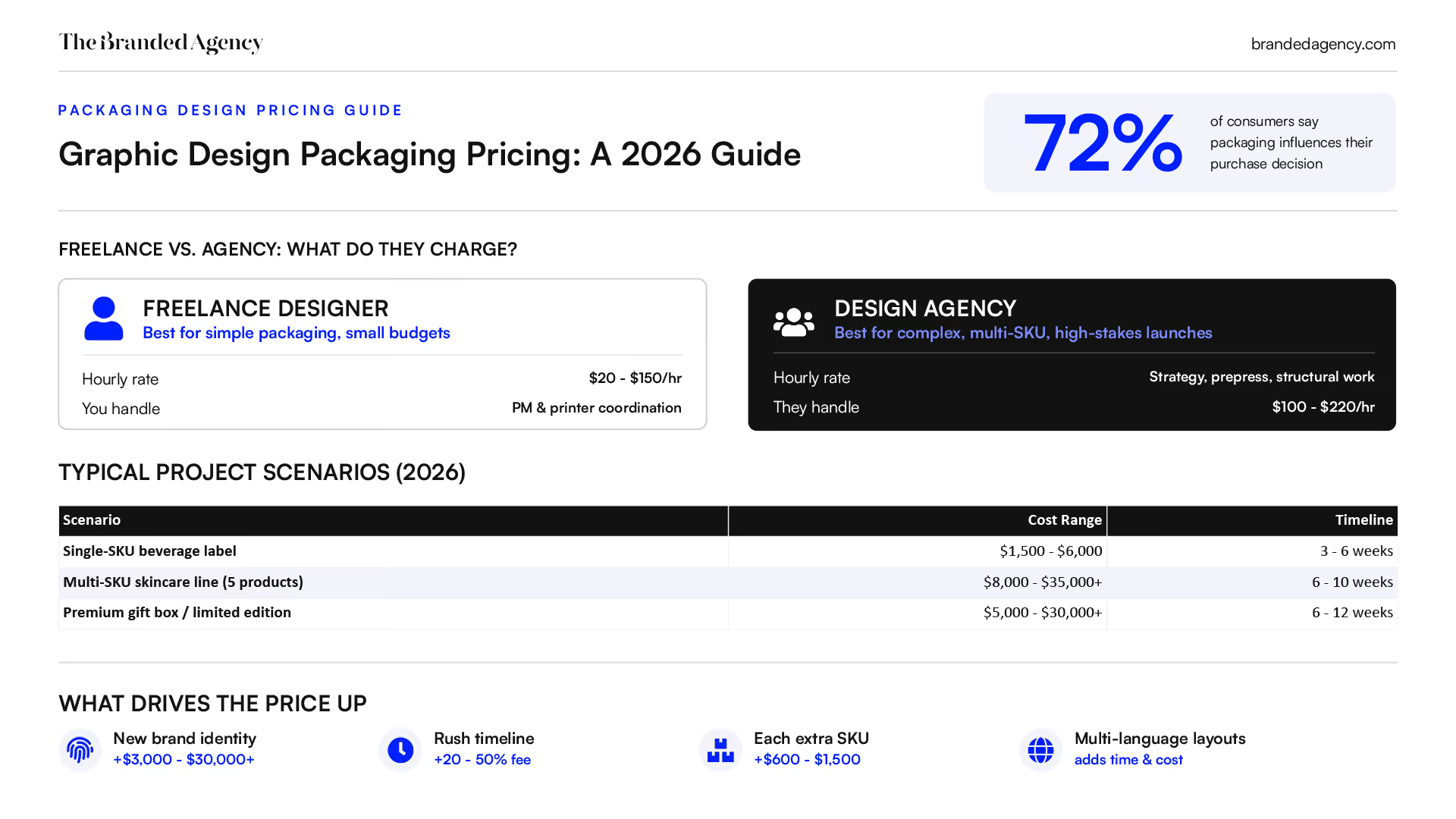
Your packaging is often the first physical touchpoint a customer has with your brand. Recent consumer research confirms what experienced marketers already know: 72% of consumers say packaging influences their purchase decisions, and 60% have bought a product based solely on its packaging. Whether on store shelves or in e-commerce thumbnails, your package does the heavy lifting before a single word is spoken.
Graphic packaging is more than slapping a label on a simple cardboard box. It combines structural design, regulatory compliance, and visual storytelling into a cohesive system. This is why packaging design pricing varies so widely—from a few hundred dollars for simple packaging to six figures for pharmaceutical products requiring specialized compliance.
This guide focuses on 2026-era pricing norms in North America and Western Europe, with notes on how geographic location impacts design service rates, as costs can vary significantly across regions due to local economic factors and market dynamics. One important clarification: we’re separating design costs (creative and strategic work) from production costs (printing costs, materials, logistics). This article concentrates on graphic design pricing only.
How much does packaging design cost? This guide will answer that question and help you compare options, estimate expenses, and determine the right packaging design budget for your business needs.
If you’re a founder launching new products, a marketing team planning a rebrand, or an SME evaluating design services, this guide will help you understand what to expect and how to budget effectively.
What Packaging Design Actually Includes (and Why It Costs More Than “Just Graphics”)
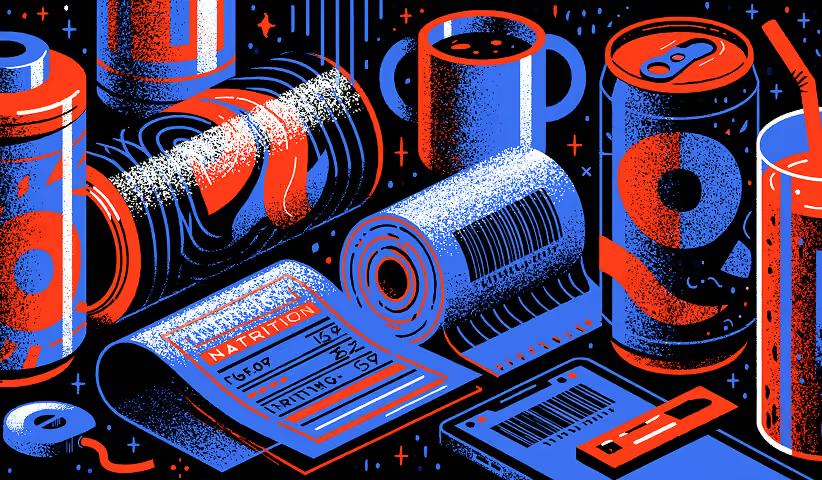


Packaging design is a multi-stage process from strategy to press-ready files—not a single task of making a “pretty box.” Understanding this helps explain why packaging graphic design costs generally range from $300 to over $100,000 per project.
The core components include:
- Discovery & Strategy: Competitive audits, target audience research, and positioning
- Brand Identity Alignment: Ensuring the design connects to your existing or new brand story and overall brand design
- Structural/Dieline Work: Engineering the physical form factors, folds, and cuts
- Graphic Design: Typography, clean typography systems, custom illustrations, iconography, and visual elements
- Compliance & Copy: Regulatory panels, nutritional facts, allergen warnings, or EU recycling icons depending on industry regulations
- Prototyping/Digital Mockups: 3D renders using tools like Adobe Illustrator or Adobe Dimension
- Production Liaison: Prepress preparation, color calibration, and proofing
Each layer adds hours and affects design costs. Regulatory needs in industries such as food and electronics can increase design complexity and costs significantly. Many low quotes skip research, testing, or detailed prepress work—leading to expensive fixes later.
Consider the difference: redesigning a 12-oz canned drink (label tweaks, barcode integration, two mockups) runs $2,500–$5,000. A 6-SKU skincare line with hierarchical layouts for varying products can balloon to $20,000–$50,000.
Key Factors That Influence Graphic Design Packaging Pricing
No two packaging projects are priced identically, but most packaging costs trace back to a handful of levers. Understanding these helps you communicate with reputable agencies using the same language—improving quotes and avoiding scope creep.
Major cost drivers include design complexity, branding requirements, materials and print constraints, number of products, research depth, and timeline pressure.
Design Complexity and Scope
Design complexity is a significant cost driver in packaging design. Simple graphics on standard packaging are relatively affordable, while custom structures and finishes can significantly increase costs.
Here are 2026 example ranges:
- Basic one-panel label refresh: $800–$2,500
- Standard retail box with custom graphics: $3,000–$10,000
- Premium multi-component unboxing systems: $15,000–$40,000+
Each added panel, insert, sleeve, or language version increases artboard count and prepress time. Adding an influencer kit sleeve mid-project might inflate a $5,000 brief by 50% through extra revision cycles.
The most effective way to control design costs? Clearly define final deliverables (number of dielines, mockups, SKUs) at project start.
Branding Requirements and Brand Identity Work
Working with an established, documented brand identity costs far less than creating one from scratch. Using a robust existing system typically adds 10–20% to total cost, while developing full brand identity and understanding typical branding costs (logo design, color palette, typography, iconography) can add $3,000–$30,000+.
Consider a startup beverage launched in Q4 2025 needing foundational identity and packaging ready for early 2026. This dual scope expands both schedule and packaging budget significantly.
Strong brand identity upfront reduces revision cycles and supports consistent future SKUs, saving money over 12–24 months. Some design agencies bundle brand identity and packaging into tiered packages, such as small business branding packages that include custom packaging, which proves more cost-effective than commissioning separately.
Materials, Printing Methods, and Technical Constraints
While materials and printing are production costs, their choices heavily shape design work. Designing for sustainable kraft substrates requires different color profiles than high-gloss cartons. Print readiness requires specialized technical knowledge for specific printing processes which influences pricing.
2026-relevant considerations include paper shortages, extended producer responsibility rules requiring specific recycling marks, and sustainable substrate mandates. Complex finishes (multi-pass printing, metallic inks, matte finish effects, holographic foils) increase prepress setup and proofing rounds.
Lock in your printer and substrate early so designers can build accurate dielines and color profiles, avoiding costly late-stage rework.
Number of Products, SKUs, and Localizations
Each extra flavor or variant involves new copy, regulatory panels, ingredients lists, and barcodes—rarely “just a color change.”
Example pricing logic:
- First SKU at full price: ~$3,500
- Additional SKUs: $600–$1,500 each depending on complexity
- 10-SKU snack range: $15,000–$30,000 total
Multi-region packaging with multiple languages significantly increases layout and proofreading time. Building a master packaging system or component library means new SKUs can be added more cheaply and quickly—sometimes under $1,000 per unit after the initial investment.
Research, Strategy, and Market Positioning
Strategic work includes competitive shelf audits, target audience research, retailer packaging requirements, and innovative creative design strategy workshops.
Cost guidance:
- Light desk research baked into projects: $500–$1,000
- Dedicated research and strategy phases: $2,000–$15,000+
For categories like beverages and skincare, investing in strategy that responds to data-backed 2026 packaging design trends correlates with 20–30% better shelf performance. Smaller brands can request “strategy-light” engagements while still getting basic market fit checks.
Timeline, Revisions, and Rush Fees
Compressed timelines (under 4–6 weeks) often trigger rush fees of 20–50%. Most agencies include 2–3 major revision rounds in fixed prices; extra rounds are billed hourly.
If a retailer cutoff for November 2026 holiday reset requires files by August but briefing doesn’t start until July, expect rush premiums.
Finalize product specs, claims, and key messaging before commissioning design. Clear, consolidated stakeholder feedback protects both timeline and packaging budget.
Want to learn more about Design, Print, and Packaging? Keep reading!
If you need help with your companies print and packaging design, contact us for a free custom quote.
Pricing Models for Graphic Packaging Design Services
Understanding pricing structures is as important as knowing hourly rates. Different business goals make some models more suitable—MVP launch vs. long-term category leadership require different approaches.
Regardless of model, insist on written scopes of work, clear final deliverables, and milestone-based payments.
Hourly Rates: When Paying by the Hour Makes Sense
Current 2026 hourly benchmarks for packaging-focused graphic design:
- Junior/mid freelancers: $50–$90/hr
- Senior designers and small studios: $90–$150/hr
- Established design agencies: $120–$220/hr
Hourly rates work best for open-ended, iterative work where scope is hard to define upfront—ongoing SKUs, minor updates, or exploratory design concepts.
The risk: inexperienced clients underestimate total hours. At $120 per hour, a project running 40 hours costs $4,800; at 70 hours, it’s $8,400. Request estimated hours per task to cap spending.
Fixed Project Fees and Packaged Pricing
Common packaged pricing structures in 2026:
- Single-SKU label: $1,500–$4,000
- Boxed retail product (up to 3 SKUs): $4,000–$12,000
- Full category system with multiple formats: $12,000–$40,000+
Fixed fees offer cost certainty and clear timelines. Agencies build in contingency time for limited scope creep. The key: detailed scope specifying how many design concepts, revisions, dielines, mockups, and file formats are included.
Fixed fees don’t mean rigid creativity—they simply formalize boundaries for well defined projects.
Value-Based and Performance-Linked Pricing
Value based pricing ties fees to projected or realized business value—increased revenue, higher price points, improved sell-through. This model appears more with established brands launching in major retailers, less with early-stage startups.
Examples include flat fee plus success bonus, royalty per unit, or percentage of incremental revenue over a set period.
Pros: aligned incentives and strategic involvement. Cons: complex contracts and measurement frameworks. Smaller brands can borrow this mindset by comparing design investment to expected Year 1 gross margin uplift.
Freelancers vs. Agencies vs. In-House: How Provider Type Affects Design Costs
The right choice depends on design complexity, risk tolerance, internal capability, and long-term product packaging roadmap. Many brands combine models—using a design agency for the original packaging system to leverage their expertise in strategy and execution, and then hiring a freelance designer for ongoing SKUs or smaller projects, balancing project budgeting and collaboration needs.
Freelance Packaging Designers
Freelancers typically charge between $20 to $45 per hour for packaging design, making a freelance designer a cost-effective option for simple designs and small runs. Senior freelancers with strong packaging portfolios charge $80–$150 per hour, with typical per-project fees from $800–$8,000.
Freelance designers are ideal for smaller budgets, clear scope, simple packaging updates, or one time purchase launches. However, clients handle more project management, printer coordination, and brand strategy.
Prioritize freelancers showing 2–3 relevant case studies in your product category—not just general graphic design work. Book several weeks ahead for Q4 2026 seasonal product launches.
Design Agencies and Studios
A design agency typically charges between $100 to $200 per hour and is best suited for complex projects that require a streamlined, professional design process. These professional firms offer comprehensive packaging and branding services, including strategy, execution, and production coordination to create market-ready packaging and cohesive brand assets. Project fees usually start around $5,000–$10,000 and extend to $50,000+ for multi-SKU or multi-country systems.
Agencies often bring integrated design services: research, brand identity, structural engineers, copywriters, and prepress specialists. They’re best-suited for launches with high commercial stakes—national grocery or pharmacy rollouts where error tolerance is low.
Hiring experienced designers typically results in higher costs due to their proven success in retail launches. Trade-offs include higher minimum budgets and potentially longer lead times.
In-House Designers and Long-Term Cost Considerations
Typical 2026 salary ranges for in-house graphic designers with packaging responsibilities: $45,000–$95,000/year in the U.S., higher in major cities.
In-house design teams provide ongoing brand support and faster turnaround times, but they may not cover every specialty, especially in regulated categories. In-house makes sense when a brand has ongoing, frequent packaging needs through 2026 and beyond.
Hidden costs include software, training, prepress support, and outsourcing specialty tasks. Think of in-house as a capacity investment evaluated over 2–3 years—not a one-off saving.
Typical Price Ranges for Common Packaging Design Scenarios
These scenarios translate theory into concrete packaging design cost ranges for 2026. Numbers assume North American/Western European agencies or senior designers; geographic location significantly influences packaging design pricing, with lower-cost regions often being 30–60% cheaper on labor due to local economic factors.
Scenario 1: Single-SKU Food or Beverage Label for 2026 Launch
A 12-oz canned sparkling water launching mid-2026, sold regionally and online.
Typical deliverables: Brand-aligned label, nutritional panel layout, barcode placement, digital mockups for e-commerce, print-ready files.
Average cost: $1,500–$6,000 depending on brand identity complexity. Timeline: 3–6 weeks.
Costs rise if the project includes logo refinement or mood boards development. Bundle multiple products early—per-SKU pricing is often lower in sets.
Scenario 2: Multi-SKU Skincare or Cosmetic Line
A 5-product skincare regimen launching Q2 2026 across e-commerce and boutique retailers.
Likely deliverables: Master packaging system, individual cartons and labels, hierarchy of information, iconography, brand-consistent color strategy.
Packaging design cost: $8,000–$35,000+ depending on existing brand identity and positioning.
Regulatory copy and multi-language layouts add significant time. Invest in a robust style guide to reduce costs for later SKUs.
Scenario 3: Premium Gift Box or Limited Edition Collaboration
A holiday 2026 limited edition gift set for Q4 retail and influencer PR.
Common deliverables: Custom structural concept, sleeves, inserts, special interactive features, premium materials finishes, polished 3D renders.
Design pricing: $5,000–$30,000+, driven by novelty packaging elements and structural complexity.
Complex, high-end packaging projects can exceed $20,000 to $100,000. Pharmaceutical and health bespoke packaging design requires specialized agencies for compliance and can exceed $100,000.
Limited editions justify higher upfront costs through premium price points and social media buzz. Account for rush fees if planning starts after mid-2026.
Budgeting Smartly: Linking Packaging Design Costs to Business Goals
Effective packaging design serves as a silent salesperson on store shelves, communicating brand messages and influencing buyers’ decisions. It’s a revenue-generating asset, not just an expense.
A practical framework: dedicate 10–20% of expected incremental Year 1 gross margin to design and prepress work.
Example calculation: If you project $300,000 incremental revenue in 2027 with 40% gross margin ($120,000), a design budget of $12,000–$24,000 is rational.
High-quality packaging design can elevate a brand, build trust with potential customers, and ultimately drive sales by making a positive first impression. Premium product packaging design can justify higher price points or reduce reliance on paid advertising, improving ROI in a competitive marketplace.
When estimating a packaging design budget, businesses should amortize their design investment across anticipated production volume to understand its impact on unit economics. Budgeting for packaging design should account for the highest possible design needs, plus some additional wiggle room to avoid delays in the design process and product launch.
Phase your investment: start with core SKUs, add line extensions and special occasions seasonal packs once initial performance validates the concept.
How to Brief a Designer or Agency to Get Accurate Packaging Design Quotes
A clear, complete brief is the fastest way to get realistic pricing and avoid surprise fees. The average cost of hiring a packaging design firm typically ranges from a few thousand dollars to tens of thousands, depending on the scope and design expertise required for the project—accuracy starts with your brief.
Essential brief components:
- Background and business goals
- Target audience description
- Existing brand identity assets
- Product specs and unique materials requirements
- Regulatory and industry regulations compliance needs
- Retail channels and crowded market positioning
- Known quantities/SKUs
- Deadlines and material selection constraints
Share early with designers: reference visuals, shelf competitors, printer preferences, and constraints. Include realistic budget ranges so partners can tailor proposals appropriately.
Request sample scopes of work and timelines in proposals—not just headline prices. Effective packaging design can drive sales and avoid costly reprints, making it a crucial investment that pays dividends.
FAQ: Graphic Design Packaging Pricing
How much should a small startup realistically budget for its first packaging project?
For small businesses, plan $1,500–$5,000 for a lean, design-only single-SKU launch. If brand identity and 2–3 SKUs are involved, budget $5,000–$15,000. Extremely low budgets (under $1,000) typically require heavy DIY work or template-based solutions, carrying higher risk of needing a full redesign within 12–18 months. The regulatory environment, shelf competition, and structural requirements of different sectors dictate the design budget.
Can I reduce packaging design costs without making my product look cheap?
Yes. Practical tactics include limiting SKUs in the first phase, using minimalist packaging approaches, choosing standard structures over custom shapes, and reusing a strong core layout across variants. Clarity of brand story and hierarchy often matters more than expensive premium materials for perceived value—especially encouraging customers through e-commerce thumbnails.
Do packaging designers usually handle printing and production too?
Many designers supply print-ready files and may recommend printers, but production and logistics are typically separate. Some agencies offer end-to-end solutions for designing packaging through production, but this should be clearly specified in proposals along with production management fees.
Who owns the source files for my packaging design?
Ownership of working files depends on the contract. Some providers include them; others charge extra or retain them. Negotiate file ownership and usage rights upfront, especially if you plan to work with multiple providers or expand SKUs later. This affects your ability to make future updates independently.
How often should I plan to update or refresh my packaging?
Most brands expect meaningful refreshes every 3–5 years, with minor updates (claims, awards, QR codes, interactive elements additions, regulatory changes) more frequently. Treat each update as an opportunity to test and measure performance in the crowded market, feeding learnings back into future investments. This protects your extensive experience gains and brand equity.

Quincy Samycia
As entrepreneurs, they’ve built and scaled their own ventures from zero to millions. They’ve been in the trenches, navigating the chaos of high-growth phases, making the hard calls, and learning firsthand what actually moves the needle. That’s what makes us different—we don’t just “consult,” we know what it takes because we’ve done it ourselves.
Want to learn more about brand platform?

If you need help with your companies brand strategy and identity, contact us for a free custom quote.
We do great work. And get great results.
+2.3xIncrease in revenue YoY
+126%Increase in repurchase rate YoY


+93%Revenue growth in first 90 days
+144% Increase in attributed revenue


+91%Increase in conversion rate
+46%Increase in AOV


+200%Increase in conversion rate
+688%Increase in attributed revenue