Paid Ads Strategy: How to Turn Ad Spend into Profit in 2026

07/06/2026

Marketing Strategy

Discover the proven paid advertising strategies top brands use to reduce wasted spend, scale profitable campaigns, and drive consistent growth in an increasingly competitive digital landscape.

Stylized illustration of an auction-style advertising marketplace where bidders compete for attention, symbolizing the real-time auctions, budget competition, and strategic decision-making behind modern paid advertising.

Running paid ads in 2026 feels different than it did even two years ago. Platforms like Google Ads, Meta, and TikTok have become more competitive, privacy regulations have tightened, and algorithms now handle much of what marketers used to control manually. If you’re still running campaigns the way you did in 2023, you’re likely leaving money on the table.

Quincy Samycia
Play IconPause Icon
0:00
0:00

Why Paid Advertising Matters More Than Ever

Team operating a large machine that converts investments into revenue, illustrating how paid advertising transforms marketing budgets into measurable business growth through coordinated strategy and optimization.
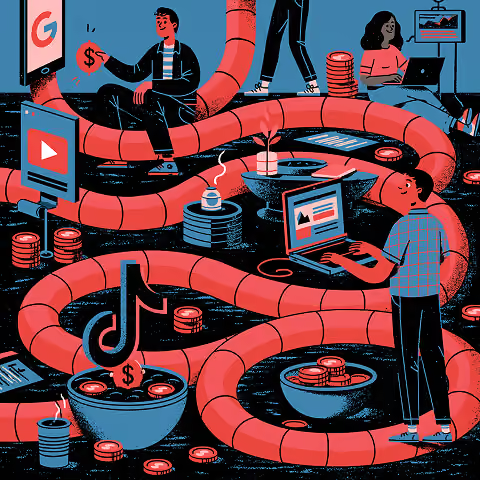
Interconnected digital platforms linked by flowing pipelines and coins, representing multi-channel paid advertising strategies that distribute budgets across search, social media, and video platforms.
Speaker addressing two contrasting audiences divided by social media and video platforms, highlighting the importance of audience segmentation and tailoring messages for different advertising channels.
No items found.

This guide breaks down how to build a paid advertising strategy that actually works in the current landscape—from setting goals and choosing platforms to crafting scroll-stopping creatives and scaling profitably.

Key Takeaways

A focused paid ads strategy is essential in 2026 because the advertising landscape has fundamentally shifted. Cookie deprecation, iOS tracking restrictions, and algorithm changes on platforms like Instagram and TikTok have made organic growth less predictable. Paid advertising has become the stabilizing force that keeps revenue consistent when other channels fluctuate. Competition has intensified, which means mediocre execution now yields worse ROI than it did five years ago—but sophisticated execution continues to deliver strong returns.

A strong strategy should deliver these concrete outcomes:

  • Lower cost per acquisition through better creative-to-audience alignment
  • Higher ROAS by matching message to buyer intent at each funnel stage
  • More qualified leads from precise targeting and dedicated landing pages
  • Consistent pipeline growth by combining demand capture with demand creation

The core of an effective paid advertising strategy is tight alignment between your target audience, your offer, your compelling ad copy and creative, and your landing page experience. When any of these elements are mismatched, performance suffers—no amount of budget can compensate for a weak offer or generic creative.

Brands should combine demand capture through search engine marketing with demand creation through video advertising and social across platforms such as Google Ads, YouTube, and TikTok ads. This multi-channel approach ensures you’re both reaching people actively searching for solutions and building awareness with those who haven’t started looking yet.

In the sections ahead, you’ll get practical, step-by-step guidance—from setting goals to optimizing campaigns and choosing the right video advertising platforms for your business.

What Is Paid Advertising in 2026?

Paid advertising, sometimes called paid marketing, is paying for placement on search engines, social networks, and video platforms to reach a defined target audience. Unlike organic content that relies on algorithms to surface your message, paid ads guarantee visibility in exchange for ad spend. You control who sees your message, when they see it, and what action you want them to take.

Most online paid ads run through real-time auctions. On advertising platforms like Google Ads, Meta Ads, and TikTok Ads, your bid, ad relevance, and quality determine whether your ad appears and in what position. Common pricing models include CPC (cost per click), CPM (cost per thousand impressions), and CPA (cost per acquisition). The model you choose depends on your advertising goals and how you want to optimize.

The key advantages of paid advertisements over organic marketing are speed and measurability. While SEO and organic social can take months to gain traction, a paid advertising campaign can drive traffic and conversions within hours of launch. You can also track exactly which campaigns, keywords, and creatives drive revenue.

In 2026, algorithm changes have made paid ads both more necessary and more data-dependent. Meta’s Andromeda algorithm now handles much of the audience selection that marketers used to control manually. Cookie depreciation has limited cross-site tracking, making first-party data more valuable than ever.

Where paid ads typically appear:

  • Search engine results pages (search ads and shopping ads)
  • Social media feeds on Facebook, Instagram, LinkedIn, TikTok
  • YouTube pre-roll, mid-roll, and in-feed placements
  • Google Display Network banner ads across websites
  • Native placements on news sites and content platforms
  • In-app placements on mobile applications

Core Benefits of a Strategic Paid Ads Program

The benefits of paid advertising go beyond “more traffic.” When executed well, paid campaigns directly drive acquisition, increase customer lifetime value, and accelerate testing cycles that inform your entire marketing strategy.

Key benefits include:

  • Rapid reach of new potential customers: Launch a campaign and start reaching your target audience within hours, not months
  • Precise audience targeting: Use demographics, intent signals, interests, and behavioral data to reach exactly who you want
  • Fast feedback loops: Test offers, messages, and creatives quickly to learn what resonates before scaling
  • Scalable and predictable ad spend: Once you find a winning formula, increase budget systematically to grow revenue
  • Attribution and analytics: Link specific campaigns and specific keywords to revenue, improving budgeting and forecasting
  • Revenue stabilization: When organic channels fluctuate after a major Google core update or social algorithm change, paid ads keep revenue consistent

A solid paid advertising strategy also provides competitive advantage. Even small brands can appear above big incumbents in Google Ads or TikTok feeds when they out-execute on creative and relevance. The playing field is more level than it appears—execution matters more than budget size.

Main Types of Paid Ads You Should Consider

Digital marketer analyzing campaign dashboards, performance metrics, and optimization tools, illustrating continuous monitoring and refinement to improve paid advertising results.
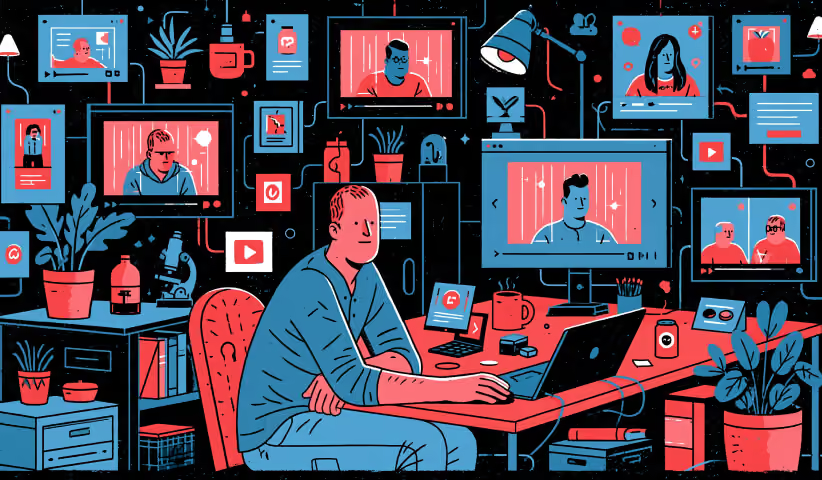
Content creator surrounded by multiple screens displaying videos and social media content, representing creative production and cross-platform advertising campaigns designed to engage targeted audiences.
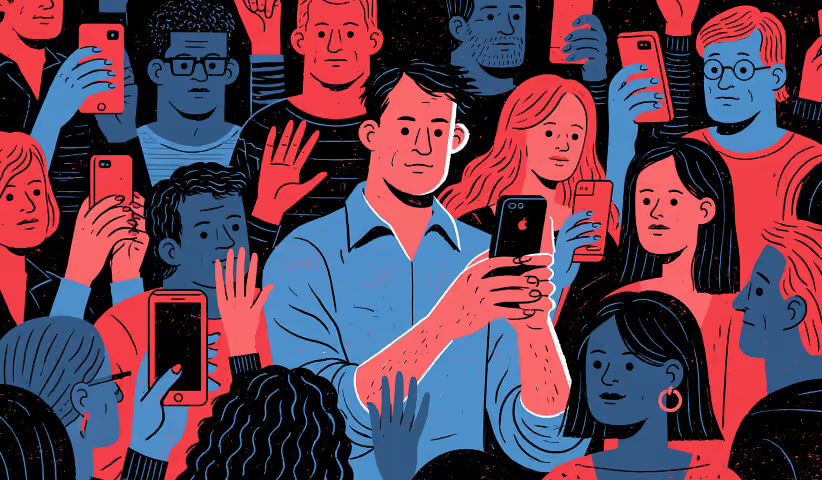
Crowd of consumers interacting with smartphones and digital content, symbolizing audience engagement, mobile-first advertising, and the importance of reaching users where they spend their time.
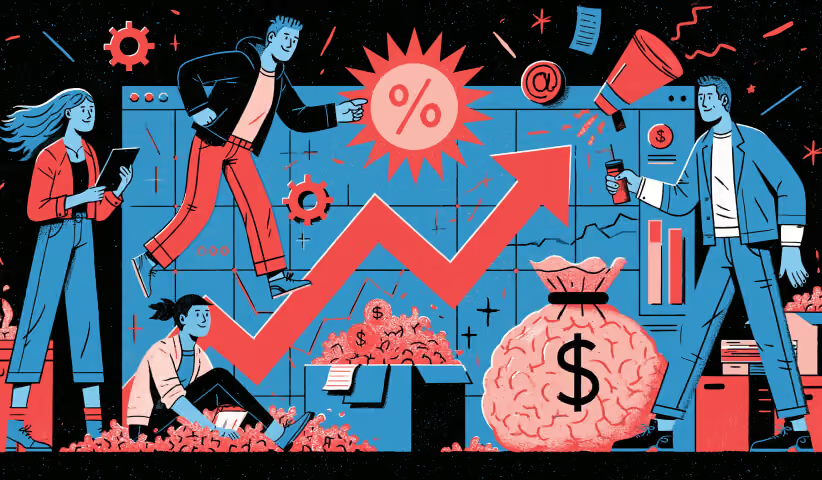
Team collaborating around upward-trending performance metrics and revenue indicators, illustrating campaign optimization, conversion growth, and maximizing return on advertising investment.

Format and channel choice must follow business goals and the buying journey, not trends. Select platforms based on user intent and demographics—using LinkedIn Ads for B2B and TikTok Ads to engage younger audiences, for example.

The main types covered below include: search engine marketing, social and feed ads, display and native, video advertising, and remarketing. Each serves different purposes in your marketing funnel.

Search Engine Marketing (Google Ads and Bing Ads)

Search engine advertising, also known as search engine marketing (SEM), involves placing ads on search engine results pages when users search for specific keywords, allowing for targeted visibility based on user intent. This is demand capture at its purest—reaching people actively looking for solutions.

Effective keyword research is crucial for determining which terms to bid on, as it dictates who sees your ads and how relevant your message is to your target audience, leading to better budget allocation and improved ROI. The role of keyword match types, Quality Score, and ad rank determine your impressions, CPC, and cost-efficiency.

Bidding on keywords is as much an art as it is a science, requiring effective strategies to stay competitive while managing costs to maintain a healthy ROI. Commercial-intent keywords like “buy running shoes online” or “best B2B payroll software 2026” map directly to bottom-of-funnel searches where conversion rates are highest.

Advantages of search ads:

  • Strong purchase intent from users actively searching
  • Measurable ROI with clear conversion tracking
  • Tight control over ad budget with daily caps
  • Bid strategies like Target CPA or Target ROAS automate optimization

Long-tail keywords and branded terms often deliver cheaper clicks and better conversion rates than broad, highly competitive phrases. Focus your initial ad dollars here before expanding to more competitive terms.

Social and Feed-Based Paid Ads

Social media advertising includes paid placements in feeds, stories, and reels on platforms like Meta (Facebook and Instagram), LinkedIn, X, and Pinterest ads. These social media ads are ideal for demand creation, storytelling, and visual discovery.

Practical audience examples include “US women, 25–34, interested in sustainable fashion” on Instagram or “HR leaders at mid-market companies” on LinkedIn. The targeting capabilities let you reach specific demographics with precision.

Paid influencer marketing utilizes the reach and credibility of social media influencers to promote products or services, allowing brands to connect authentically with target audiences. This sponsored content often outperforms traditional brand advertising.

Creative formats like carousels, short vertical videos, and lead forms should match each platform’s native style. Social media platforms reward content that feels organic rather than overtly promotional. Pinterest ads work well for home and lifestyle products, while LinkedIn ads excel for B2B thought leadership.

Display and Native Advertising

Display advertising includes banner ads, image ads, and video ads placed on websites and apps, targeting users based on demographics, interests, and online behavior. The Google Display Network reaches millions of sites across the web.

Native advertising integrates ads seamlessly into the content of a platform, making them appear as organic content rather than traditional ads, which can lead to higher engagement rates. You’ll see these as “Recommended for you” articles on news sites, typically bought through platforms like Taboola or Outbrain.

Use cases for display and native ads:

  • Top-of-funnel awareness campaigns
  • Content promotion and lead magnet distribution
  • Inexpensive remarketing when search inventory is limited

Contextual targeting—placing ads on pages about relevant topics—has emerged as a privacy-safe alternative to behavior-based targeting. A SaaS brand might promote a 2026 industry report via native ads on business publications, reaching readers already interested in their category.

Video Advertising (YouTube, TikTok Ads, Reels, and More)

Video advertising platforms like YouTube Ads, TikTok Ads, and Instagram Reels have become central to paid strategies because of higher engagement and recall. Video content is considered the most engaging type of ad, as it allows brands to tell a story and has been shown to provide the highest advertising ROI for ecommerce campaigns.

Video advertising encompasses various formats, including pre-roll, mid-roll, and in-stream ads on platforms like YouTube, leveraging the engaging nature of video content to capture audience attention. Common formats include skippable in-stream on YouTube, in-feed TikTok ads, YouTube Shorts ads, and vertical video campaigns across Meta placements.

Video ads are powerful for demonstrating products, explaining complex offers, and building trust via testimonials and founder stories. To grab attention within the first 3 seconds, use creative hooks in ad creatives—show the product or promise visually before viewers scroll or skip.

Key metrics to track for video ads:

  • View-through rate
  • 25% and 50% completion rates
  • Assisted conversions in Google Analytics 4

Remarketing and Retargeting Campaigns

Remarketing enables you to reach out to users who have visited your website, providing them with tailored ads encouraging them to return and complete a purchase. This is typically your highest-ROAS activity because you’re reaching people already familiar with your brand.

Retargeting is a technique that leverages website cookies and user interactions on social media to present targeted advertising, ensuring that ads reach users who have shown interest in your offerings. Practical remarketing pools include 30-day cart abandoners, 7-day free trial signups who didn’t upgrade, or users who watched 50%+ of a TikTok video.

Dynamic retargeting ads automatically personalize content based on users’ past interactions, increasing relevance and engagement, which can lead to higher conversion rates. If someone viewed a specific product, they see that exact product in their ad.

Privacy shifts (iOS 17+, cookie deprecation) have increased the importance of first-party data and platform-native audiences like Google Ads customer match and Meta custom audiences.

Tactical tips for remarketing:

  • Use different creatives for warm audiences than for cold prospecting
  • Shorten attribution windows to better evaluate remarketing performance
  • Exclude recent purchasers to avoid wasting ad spend

Set Clear Goals and Define Your Target Audience

Every paid ads strategy must begin with concrete business goals and a sharply defined target audience profile. A successful paid advertising strategy starts with understanding your target audience, choosing the right platforms, and crafting compelling ad copy and creative design.

Use the SMART framework to define goals—ensuring that advertising objectives are Specific, Measurable, Achievable, Relevant, and Time-bound, which aids in measuring success effectively. For example: “Acquire 300 new customers per month at a max CPA of $45 between Q3 and Q4 2026.”

Common objectives include direct online sales, lead generation, bookings, or app installs. Each goal requires different platforms, funnels, and measurement approaches. Effective audience targeting requires a deep understanding of your ideal customer, including their needs, pain points, online behaviors, and preferred platforms.

Build or refine buyer personas using Google Analytics data, CRM insights, surveys, and customer interviews. Map audience segments to funnel stages (cold, warm, hot) to inform which ad types, messages, and offers they should see.

Aligning KPIs with Business Outcomes

Defining clear objectives and KPIs like target Cost Per Acquisition (CPA) or Return on Ad Spend (ROAS) is essential for a successful paid ads strategy. Key performance indicators should be defined upfront.

Common performance metrics in paid advertising include Click-through Rate (CTR), Conversion Rate, Cost per Lead (CPL), and Return on Ad Spend (ROAS). Tracking KPIs is essential for understanding the effectiveness of paid media campaigns and demonstrating a tangible return on investment.

Concrete KPI examples:
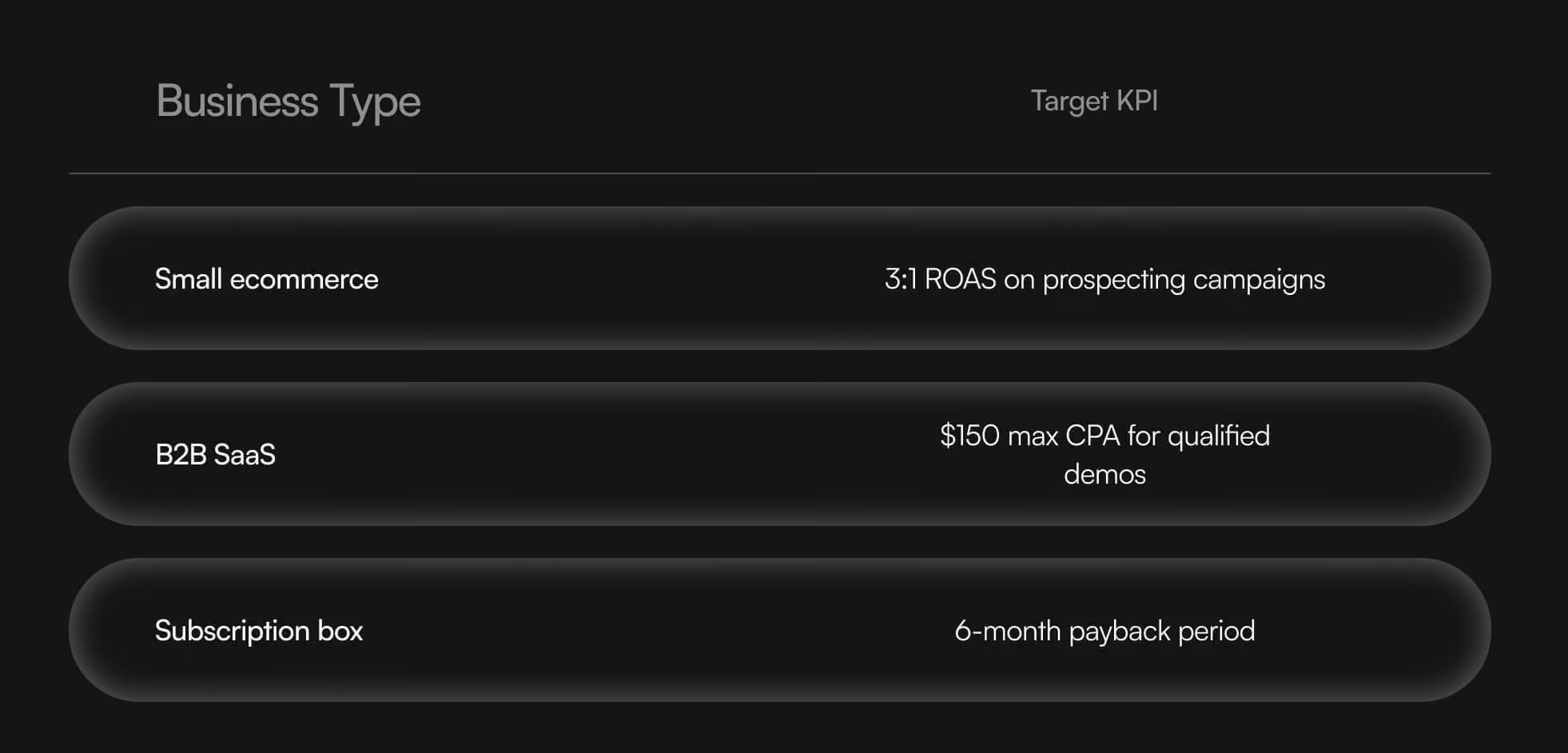
Vanity metrics like impressions and clicks are useful but must be secondary to profit-driven metrics tied to revenue and margins. Different campaign types need different KPIs—brand awareness campaigns measure reach and frequency while direct-response search campaigns focus on CPA and ROAS.

Establish a simple reporting cadence: weekly snapshots, monthly deep dives, and quarterly strategy reviews to keep goals on track.

Building Practical Audience Segments

Creating detailed buyer personas can significantly enhance the precision of your audience targeting, allowing for more effective ad placements. Go beyond basic demographics by using psychographic and behavioral data to create granular audience segments.

Example audience segments:

  • Cold lookalike audiences based on best customers
  • High-intent visitors within last 14 days
  • Past purchasers in the last 180 days
  • Lapsed customers who haven’t purchased since 2024

Use platform tools like Google Analytics 4 audiences, Meta custom and lookalike audiences, and TikTok interest targeting to operationalize these segments. Utilizing lookalike audiences can help advertisers reach new users who share similar characteristics with their existing customers, thereby improving targeting effectiveness.

Exclude current customers from acquisition campaigns when appropriate to avoid wasting ad spend. Audience targeting can be refined by analyzing data from website analytics, CRM systems, and social media insights to better understand where your target audience spends their time online.

Niche targeting often yields higher success rates than broad targeting due to its specificity. Different audience segments require different creative angles and levels of education before asking for conversion.

Want to learn more about Digital Marketing and Strategy? Keep reading!

If you need help with your company’s marketing, contact us for a free custom quote.

Designing Offers, Ad Creative, and Compelling Ad Copy
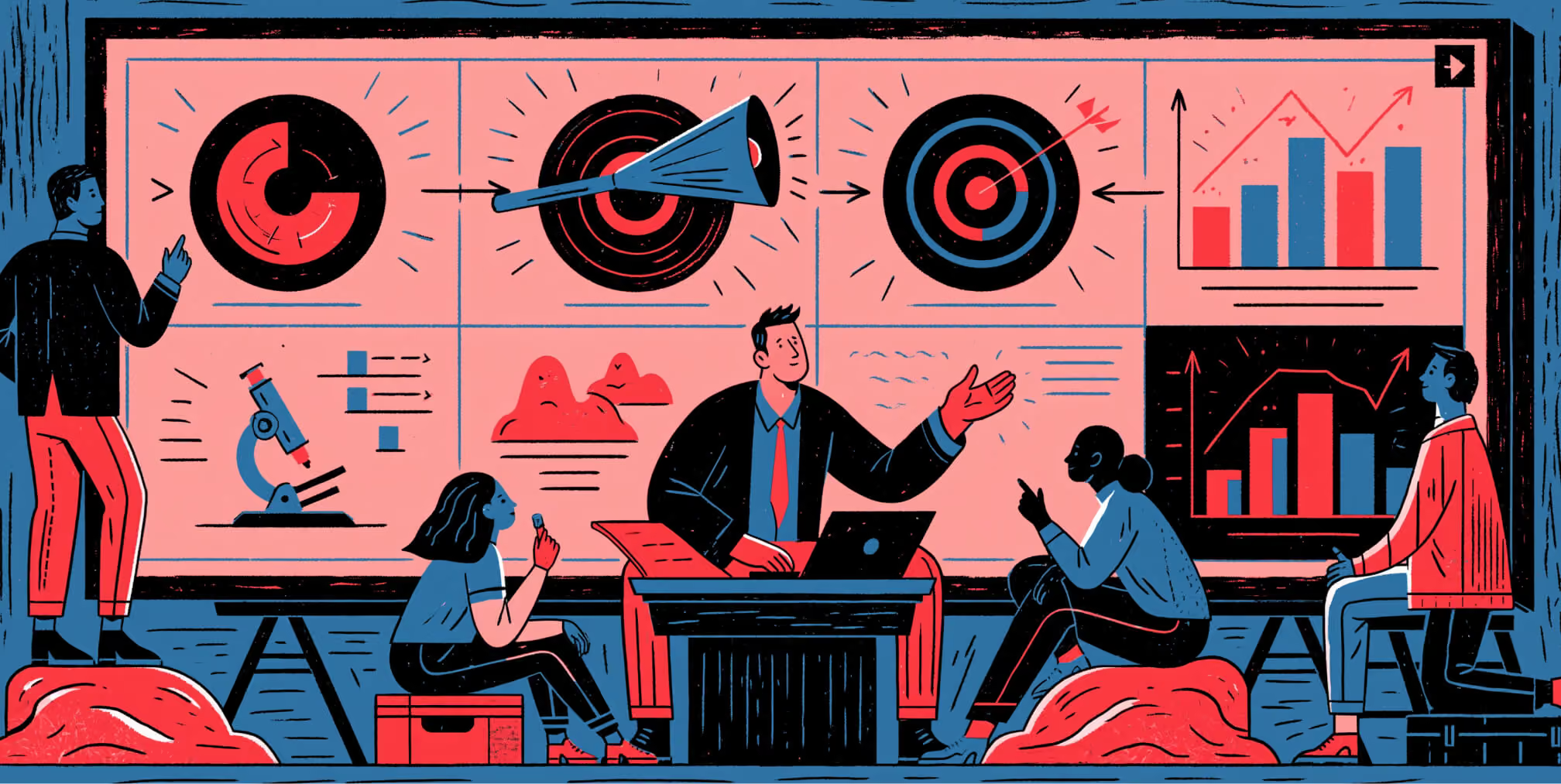
Marketing team presenting campaign dashboards, audience targeting, and performance analytics, representing data-driven strategy, experimentation, and ongoing optimization across the advertising funnel.

Even the best targeting and bidding cannot fix a weak offer or generic creative. Creating effective ads requires refining various elements, including copy, visuals, and calls to action, ensuring that messaging is consistent between ads and landing pages to reinforce key selling points.

Effective paid ads typically combine a clear, time-bound offer with compelling ad copy and visuals tailored to the platform.

Example offers by business model:

  • Ecommerce: “20% off first order in May 2026”
  • SaaS: “14-day free trial, no credit card required”
  • Services: “Book a free 30-minute strategy call”

All ad creative and copy must align tightly with the corresponding landing page to avoid drop-off and maintain high Quality Scores. Use 2–3 variations of headlines, descriptions, and visuals in each ad group to support A/B testing and creative fatigue management.

Crafting Compelling Ad Copy That Converts

Compelling ad copy should emphasize the tangible benefits of a product or service rather than simply listing features, and it should include a clear call to action that instructs users on the next step they should take.

Simple copy framework:

  1. Problem: Identify the pain point
  2. Agitate: Highlight consequences of inaction
  3. Solution: Present your offer as the answer
  4. CTA: “Get a free quote today” or “Start your 7-day trial”

Use specific numbers and proof points rather than vague claims. “Trusted by 5,000+ businesses in 2026” and “Cut shipping costs by 23% on average” outperform generic value propositions like “industry-leading” or “best-in-class.”

Tailor tone and language to audience and platform—formal for LinkedIn ads, conversational and punchy for TikTok ads and Instagram Reels. Align keywords in persuasive ad copy with search engine marketing terms to improve ad relevance and lower CPCs.

Include urgency or scarcity ethically where appropriate:

  • “Limited-time bonus: Free setup through May 31”
  • “Only 12 spots remaining for Q3 cohort”
  • “Early-bird pricing ends Friday”

Designing Scroll-Stopping Creatives and Video Ads

High-quality visuals and clear calls to action (CTA) are necessary for effective ad creatives that focus on customer benefits. Design creatives native to each platform: vertical 9:16 for TikTok and Reels, 16:9 for YouTube in-stream, square or vertical for feed ads.

In 2026, authentic storytelling and interactive elements like polls or AR filters are recommended to engage audiences effectively. Use bold, legible text overlays for mobile, product-in-use shots, and high-contrast colors that stand out in cluttered feeds.

User-generated content (UGC) style ads, testimonials, and influencer clips build trust and improve click-through and conversion rates. Show the product or core benefit in the first 2–3 seconds of a video and include on-screen captions for sound-off viewers.

Simple testing ideas:

  • Variations in hooks (question vs. statement vs. shock)
  • Different thumbnails for the same video
  • Background music vs. voiceover only
  • 6-second bumpers vs. 30-second explainers

Building and Optimizing Landing Pages for Paid Traffic

Ensure ads lead to a dedicated and relevant landing page rather than just a homepage to maintain trust and improve conversion rates. Dedicated landing pages tailored to each campaign consistently outperform sending traffic to generic homepages.

Essential elements for high-converting landing pages:

  • Clear headline that matches the ad promise
  • Concise copy focused on benefits
  • High-quality visuals or video
  • Social proof (testimonials, logos, reviews)
  • Single, prominent call-to-action

Optimizing ads and landing pages for mobile devices is essential, given that most users access platforms via mobile. Aim for load times under 2 seconds on 4G, thumb-friendly buttons, and minimal form fields.

Message match is critical—echo the same keywords, offer, and benefits from the ad in the landing page headline and subhead. Conduct simple A/B tests on landing pages (headline variants, hero images, CTA button copy) to continuously improve conversion rates.

Tracking Conversions and On-Page Behavior

Install and verify tracking pixels and tags for Google Ads, Meta, TikTok, and any other key ad platforms before launching paid campaigns. Advanced tracking tools like Google Analytics and platform-specific pixels are crucial for tracking multi-touch attribution.

Set up primary and secondary conversion events (purchase, lead form submit, add to cart, demo request) with consistent naming conventions. Use tools like Google Analytics 4 to analyze bounce rate, scroll depth, and time on page for paid traffic segments.

Server-side tracking and first-party cookies are becoming more important due to browser and OS-level tracking restrictions. Build simple dashboards that show campaign performance by landing page, device, and channel to quickly identify bottlenecks and optimization opportunities.

Budgeting, Bidding, and Structuring Campaigns

Estimate initial ad budget based on CAC targets, test duration, and expected click costs in your niche. Various budgeting methods exist for paid advertising campaigns, including setting a daily budget, a lifetime budget, or employing bid-based budgeting that dynamically adjusts based on data and goals.

Choose a bidding strategy that aligns with your goal, using Manual CPC for cost control and Smart Bidding for automated optimization. Target CPA strategies typically require 50+ conversions per month for stable optimization.
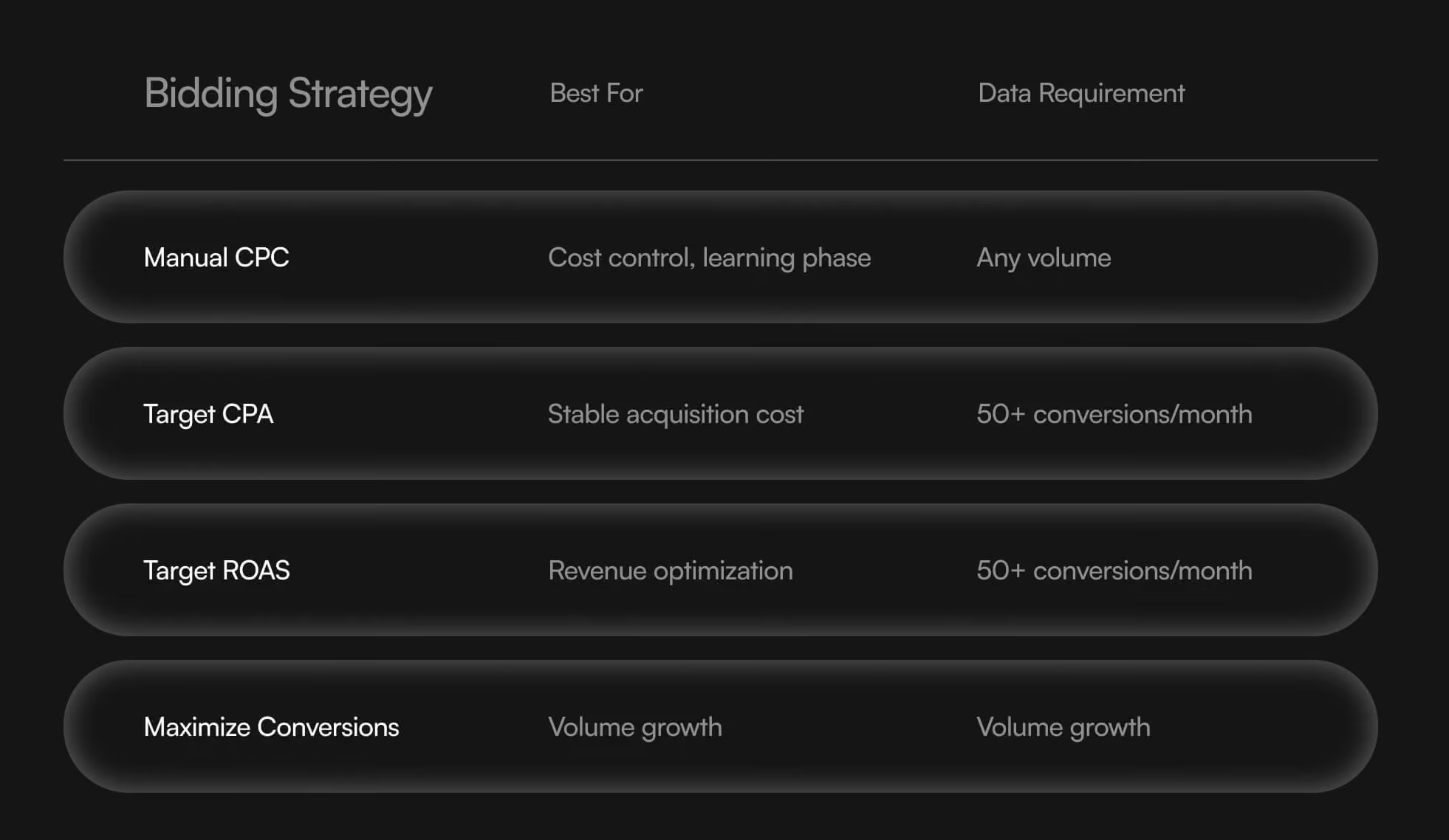
Commit at least 2–3x your target CPA per ad group before judging performance. Patience and data sufficiency are critical for modern algorithmic ad platforms to yield optimal results.

Start modestly, then gradually scale winning campaigns while monitoring marginal CPA and ROAS. Treat the first 4–6 weeks as a learning phase, not a profit-maximizing phase.

Organizing Campaigns and Ad Groups for Relevance

Apply the “tight theming” principle: group closely related keywords or audiences in the same ad group so text ads and landing pages can be highly specific. This improves ad relevance and Quality Score.

Example Google Ads structure:

  • Campaign: Running Shoes
    • Ad Group: Running shoes for men
    • Ad Group: Running shoes for women
    • Ad Group: Trail running shoes

More granular structures make optimization easier but require enough budget and data to be statistically meaningful. Performance Max and Advantage+ campaign types reduce manual control, so clear asset group organization and feed quality become critical.

Keep naming conventions consistent with dates, goals, and audience segments to simplify reporting and future scaling. Most advertising platforms reward advertisers who maintain organized, themed account structures.

Managing and Scaling Ad Spend Responsibly

Increase ad spend on successful campaigns by no more than 20–30% every few days to avoid algorithm shock. Aggressive budget increases can destabilize algorithmic optimization and spike CPAs.

Regularly shift budget from underperforming campaigns to those delivering high conversion value. The goal is continuous reallocation toward winners rather than spreading budget evenly across all campaigns.

Consider cash flow and payback period—especially for smaller businesses—when deciding how aggressively to scale. A business with strong unit economics but weak cash flow might need to grow more gradually.

Run controlled experiments around key retail dates like Black Friday 2026 to test higher budget scenarios. Scaling isn’t only about more budget; it can also involve expanding geographies, testing new right video advertising platforms, or adding offer variations.

Ongoing Optimization and Cross-Channel Strategy
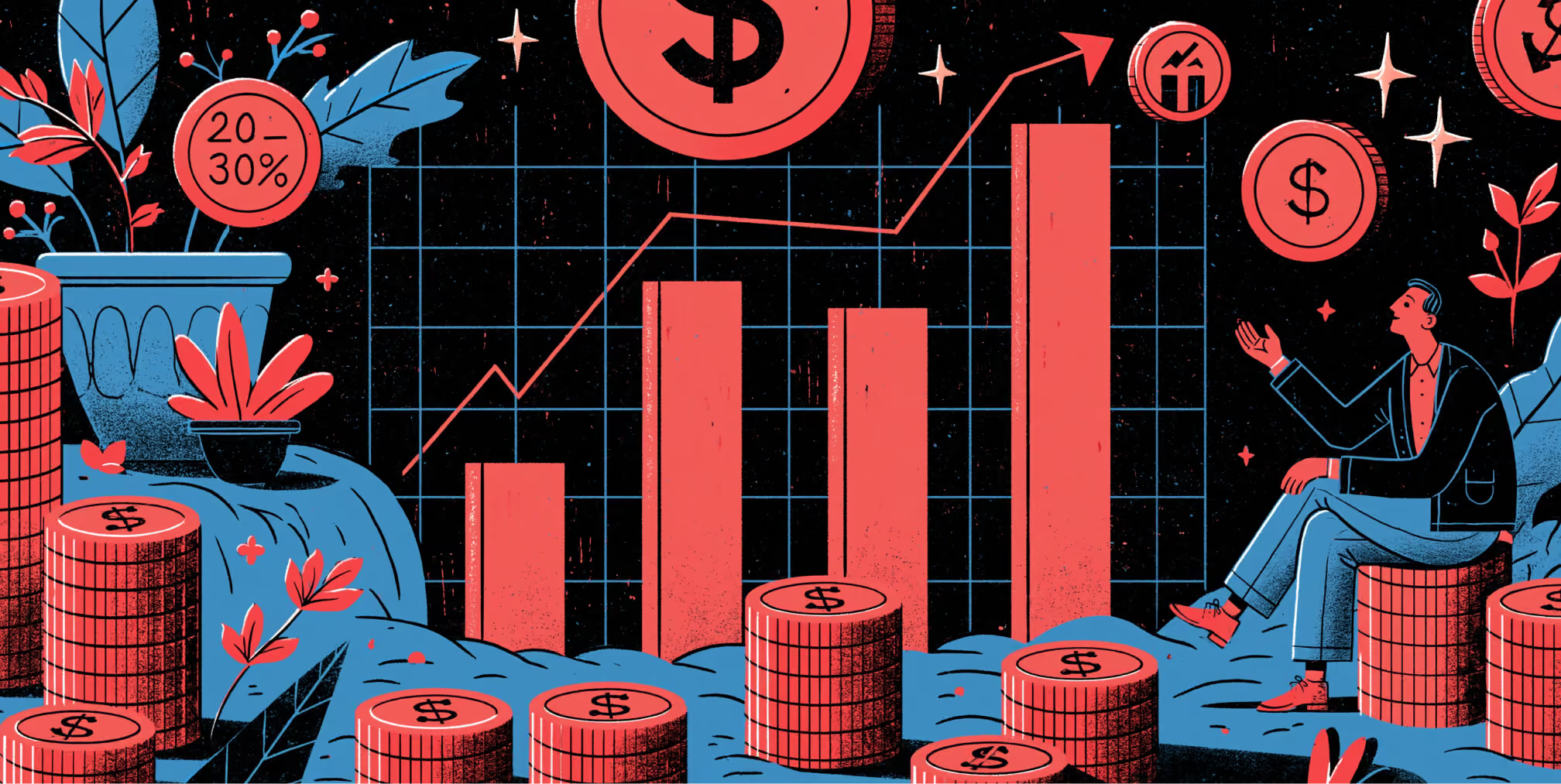
Business growth illustrated through rising performance charts, revenue metrics, and financial symbols, emphasizing the long-term value of strategic paid advertising and sustained return on ad spend.

A paid marketing campaign is never set-and-forget. Effective strategies for paid advertising focus on precision, automation, and continuous refinement. Regularly monitoring campaign performance and making data-driven adjustments is crucial for optimizing paid media campaigns and maximizing return on investment (ROI).

Key optimization levers:

  • Keyword management (adding negatives, refining match types)
  • Creative refresh every 3–6 weeks
  • Audience adjustments based on performance data
  • Landing page updates and A/B tests

Analyze performance by funnel stage and channel, looking at both direct conversions and assisted conversions in multi-touch journeys. Utilize data analytics to monitor performance and refine campaigns while removing underperforming ads.

Integrate learnings across platforms—use top-performing Google Ads keywords to inspire social ad copy and vice versa. Plan campaigns on a quarterly basis, aligning with product launches, seasonal demand shifts, and broader digital marketing initiatives.

Testing Roadmaps and Creative Refresh Cycles

Create a simple 90-day testing roadmap that outlines what will be tested (audiences, offers, creatives, landing pages) and in what order. Consistent testing and optimization of ad creatives and audience targeting is a core best practice for improving campaign performance.

Rotate new creatives into prospecting campaigns every 3–6 weeks depending on frequency metrics and performance trends. When frequency exceeds 3–4 impressions per user, performance typically deteriorates.

Prioritize high-impact tests first (offer and audience) before refining smaller elements like button color or minor copy tweaks. Document test hypotheses, expected outcomes, and actual results so future decisions are data-informed.

Sample test ideas:

  • UGC-style TikTok ads vs. polished studio videos for the same offer
  • Founder story creative archetype vs. customer testimonial approach
  • Price-focused headline vs. benefit-focused headline

Integrating Paid Ads with Organic and Email Channels

Insights from paid ads—best-performing messages and creatives—should inform search engine optimization content, blog topics, and organic social posts. If a particular angle converts well in ads, it likely resonates organically too.

Paid traffic can quickly build email lists and owned audiences, reducing dependence on rising CPCs over time. Email and SMS can nurture leads acquired via paid campaigns, improving overall LTV and making higher CPAs more sustainable.

Use consistent branding and messaging across search engine marketing, social media channels, and email campaigns to reinforce recognition. Track blended metrics (total website traffic and revenue vs. total advertising budget plus content cost) to understand combined paid plus organic performance.

Frequently Asked Questions about Paid Ads Strategy

How much should I budget for my first paid ads campaign?

Initial budgets depend on your industry’s average CPC and target CPA, but for small local businesses testing Google Ads plus basic social, $1,000–$3,000 over 30 days is a reasonable starting point.

Calculate your starting budget by multiplying target CPA by at least 20–30 conversions to give algorithms enough data for optimization. If your target CPA is $50, budget $1,000–$1,500 monthly to generate sufficient learning data.

Treat the first 4–6 weeks as a learning phase, not a profit-maximizing phase. Very small daily budgets under $10 per campaign often produce noisy, inconclusive data in competitive niches and should be avoided if possible.

Which is better for my business: Google Ads or social media ads?

Google Ads and paid search advertising are usually better for high-internet based ads demand capture when people are actively searching for your solution. Search captures existing intent.

Social media advertising on Meta, TikTok, and LinkedIn excels at building awareness, nurturing interest, and showcasing visual or aspirational products. Social creates new demand through ads based on interruption and discovery.

Start with the channel closest to your primary goal and audience behavior, then layer in the other once you have a working funnel. Examples: local service businesses often start with Google Ads then add Facebook remarketing; DTC brands typically begin with Meta and TikTok first, then expand to Google Shopping.

How long does it take for a paid ads strategy to show results?

Early data usually comes within days, but reliable performance patterns and optimized campaigns often take 4–12 weeks depending on budget and volume.

Search campaigns with clear intent and strong tracking may reach stable CPAs faster than top-of-funnel awareness campaigns on video platforms. Brand-building efforts through video advertising on YouTube and TikTok may take several months to fully reflect in lower CAC and higher direct search volume.

Set expectations with stakeholders that paid ads are an ongoing program, not a one-week test. Algorithm optimization requires consistent data flow to improve ad space allocation.

Do I need different landing pages for each paid channel?

You don’t always need completely separate landing pages, but tailoring by intent and campaign can significantly improve conversion rates.

At minimum, create different variants for search intent (more direct, comparison-focused) vs. social and video traffic (more storytelling and education). Use UTM parameters and analytics to see how different channels perform on shared landing pages before investing in fully separate builds.

For high-spend or high-intent campaigns, custom landing pages with tight message match nearly always justify the extra effort in your advertising efforts.

How do I know if my paid ads are actually profitable?

Track revenue by channel and campaign using proper conversion tracking and, where applicable, CRM attribution. Use this simple formula: Profitability equals (Average order value or LTV multiplied by number of conversions) minus total ad spend minus key variable costs.

Look beyond single-touch attribution and consider blended CAC and LTV over a 3–6 month window for subscription and B2B models. How paid advertising work for your business depends on accurate measurement across the full customer journey.

Set clear profitability thresholds—minimum 3:1 LTV:CAC is a common benchmark—and make scale or kill decisions based on those benchmarks, not just click metrics. The right ad platforms for your business are the ones that consistently deliver above your profitability threshold.

An image of the author Quincy Samyica

Quincy Samycia

As entrepreneurs, they’ve built and scaled their own ventures from zero to millions. They’ve been in the trenches, navigating the chaos of high-growth phases, making the hard calls, and learning firsthand what actually moves the needle. That’s what makes us different—we don’t just “consult,” we know what it takes because we’ve done it ourselves.

Want to learn more about brand platform?
If you need help with your companies brand strategy and identity, contact us for a free custom quote.

We do great work. And get great results.

DrTung’s
Breathed new life into a storied oral care brand with a smarter site and marketing for scalable growth.

+2.3x
Increase in revenue YoY

+126%
Increase in repurchase rate YoY

READ MORE
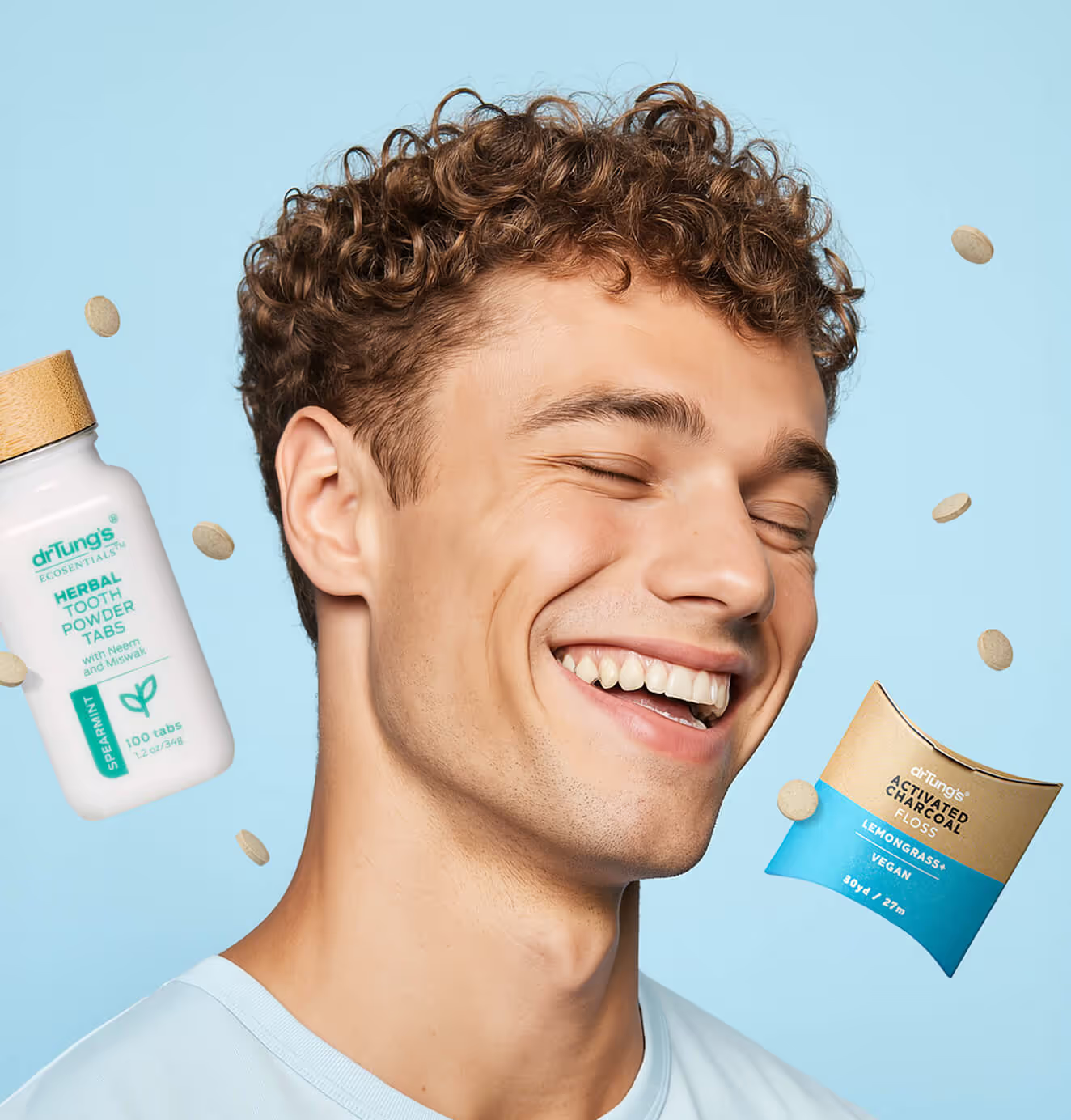
Smiling man with bright teeth on a light blue background, surrounded by floating DrTung’s herbal tooth powder tabs and packaging.
Smartphone on a textured blue surface displaying a DrTung’s ad with the text “Make the Switch” and an image of a woman holding herbal tooth powder tabs.
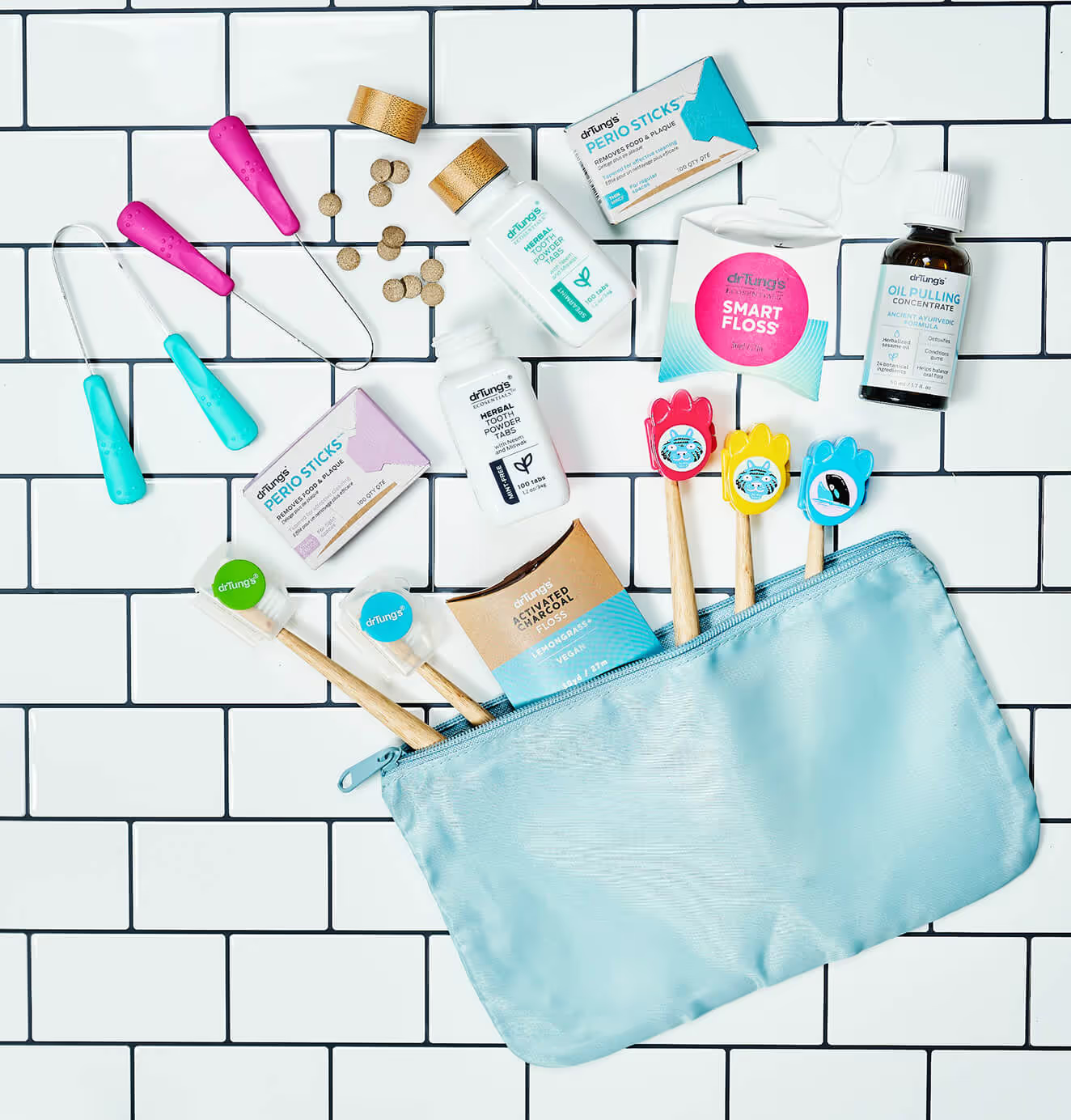
Flat lay of DrTung’s oral care products, including floss, tooth powder tabs, perio sticks, tongue cleaners, and toothbrushes, arranged with a blue pouch on white tile.
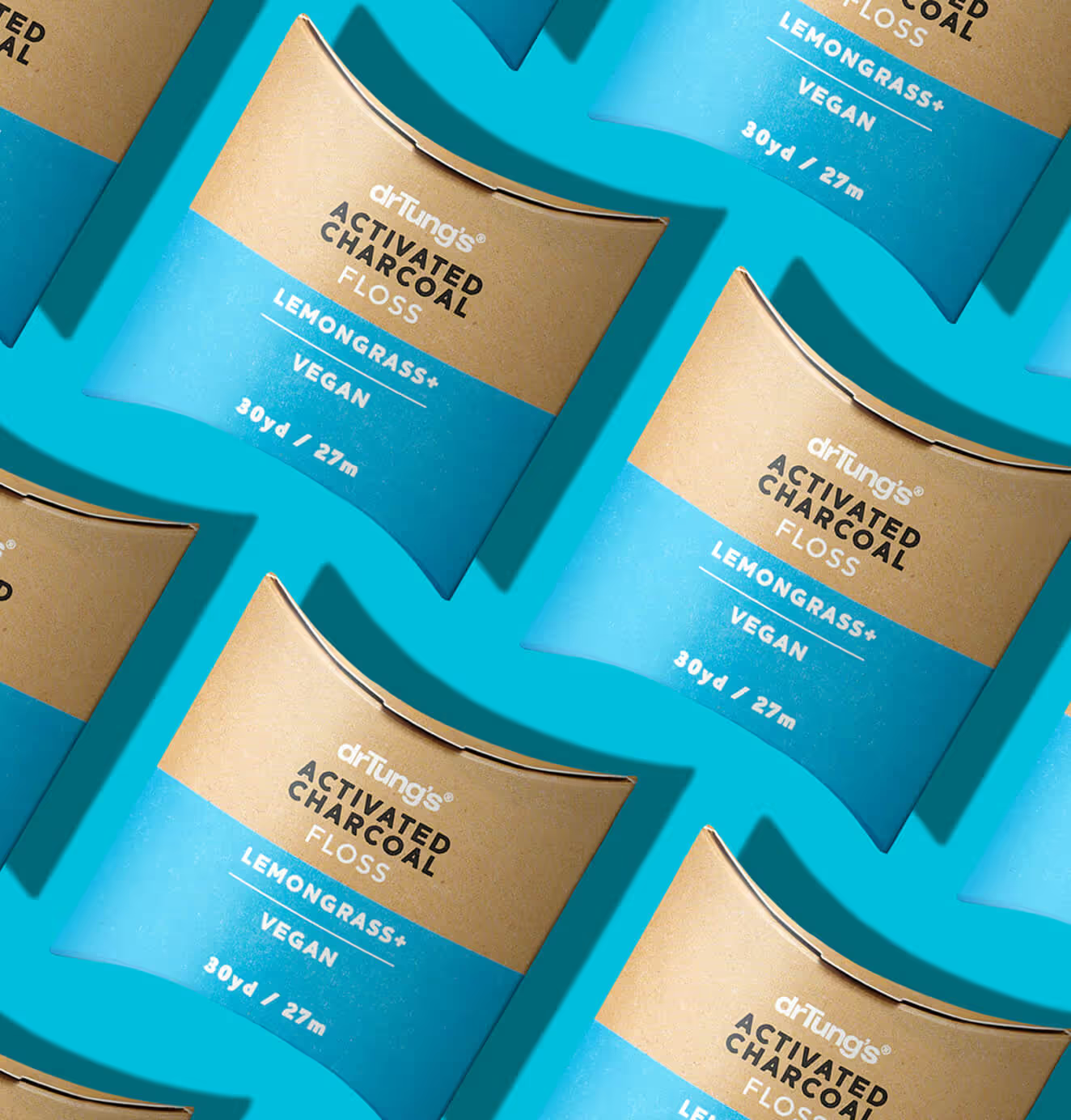
Pattern of DrTung’s Activated Charcoal Floss in brown and blue packaging, arranged diagonally on a bright blue background.
Smiling man with bright teeth on a light blue background, surrounded by floating DrTung’s herbal tooth powder tabs and packaging.
Smartphone on a textured blue surface displaying a DrTung’s ad with the text “Make the Switch” and an image of a woman holding herbal tooth powder tabs.
Flat lay of DrTung’s oral care products, including floss, tooth powder tabs, perio sticks, tongue cleaners, and toothbrushes, arranged with a blue pouch on white tile.
Pattern of DrTung’s Activated Charcoal Floss in brown and blue packaging, arranged diagonally on a bright blue background.
Mary Louise Cosmetics
Scaled a heritage-inspired clean beauty brand with modern performance marketing and farm-to-face storytelling.

+93%
Revenue growth in first 90 days

+144%
Increase in attributed revenue

READ MORE
A jar of Mary Louise Lilac & Shea Body Butter with the lid open, showing creamy texture, placed on a beige surface beside sprigs of lavender.
A Mary Louise Miracle Serum bottle with a dropper cap, lying on a bed of small yellow flowers.
Mary Louise promotional print materials featuring the body butter, with images of skincare application and product photography on a textured beige background.
A close-up overhead view of multiple Mary Louise Miracle Serum bottles with yellow dropper caps arranged tightly together.
A jar of Mary Louise Lilac & Shea Body Butter with the lid open, showing creamy texture, placed on a beige surface beside sprigs of lavender.
A Mary Louise Miracle Serum bottle with a dropper cap, lying on a bed of small yellow flowers.
Mary Louise promotional print materials featuring the body butter, with images of skincare application and product photography on a textured beige background.
A close-up overhead view of multiple Mary Louise Miracle Serum bottles with yellow dropper caps arranged tightly together.
Eyecart
Made eye care feel modern, then marketed it like a DTC darling—with the results to match.

+91%
Increase in conversion rate

+46%
Increase in AOV

READ MORE
A smiling woman holds a magnifying lens with the word "eyecart" printed on it over her eye, creating a playful optical effect against a mint green background.
A billboard ad reads “Discover the ease of keeping your eyes healthy,” featuring Eyecart branding and Blephaclean eye care wipes packaging.
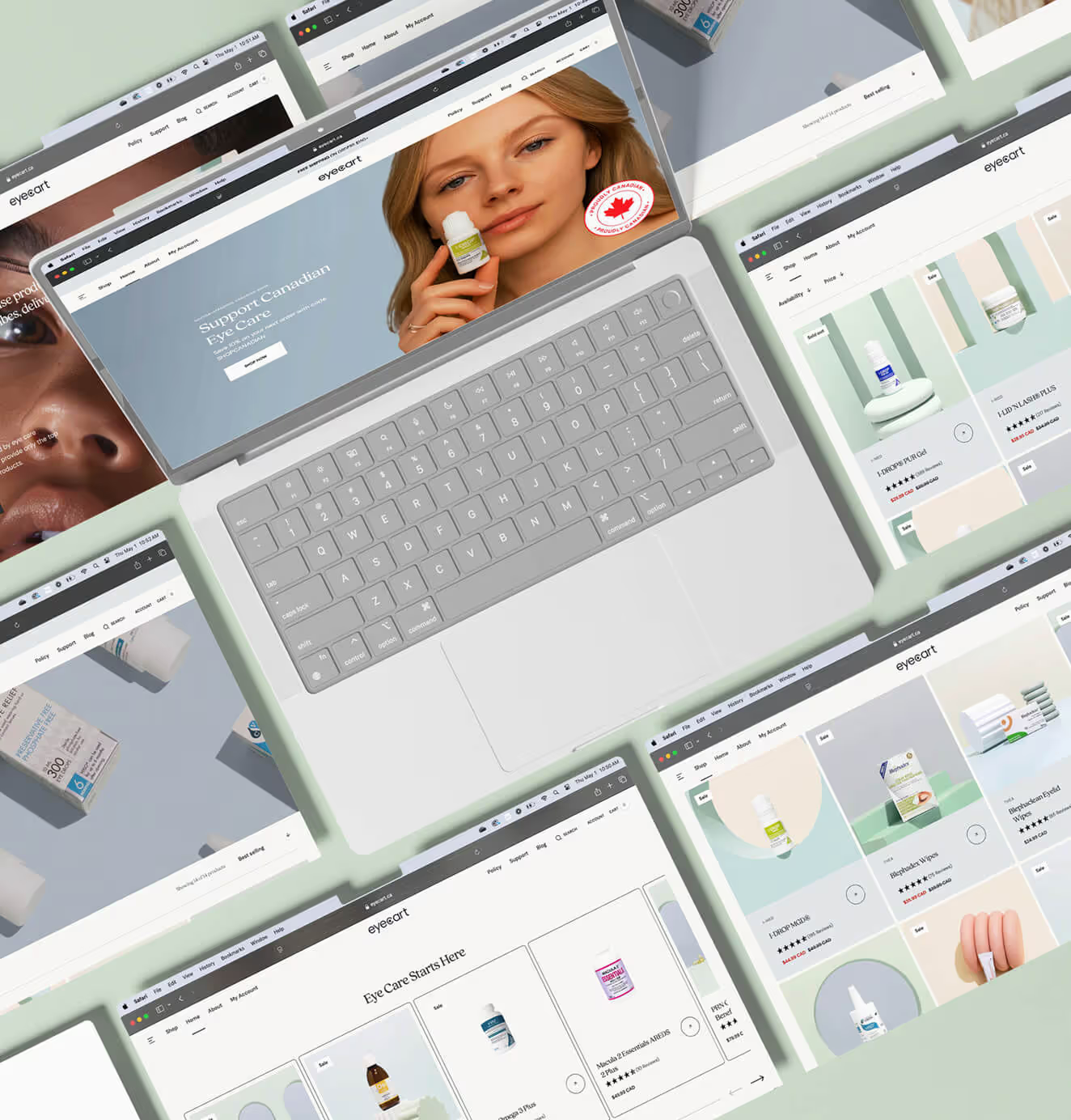
Multiple laptop screens display the Eyecart website, showcasing product pages and banners promoting eye care items.
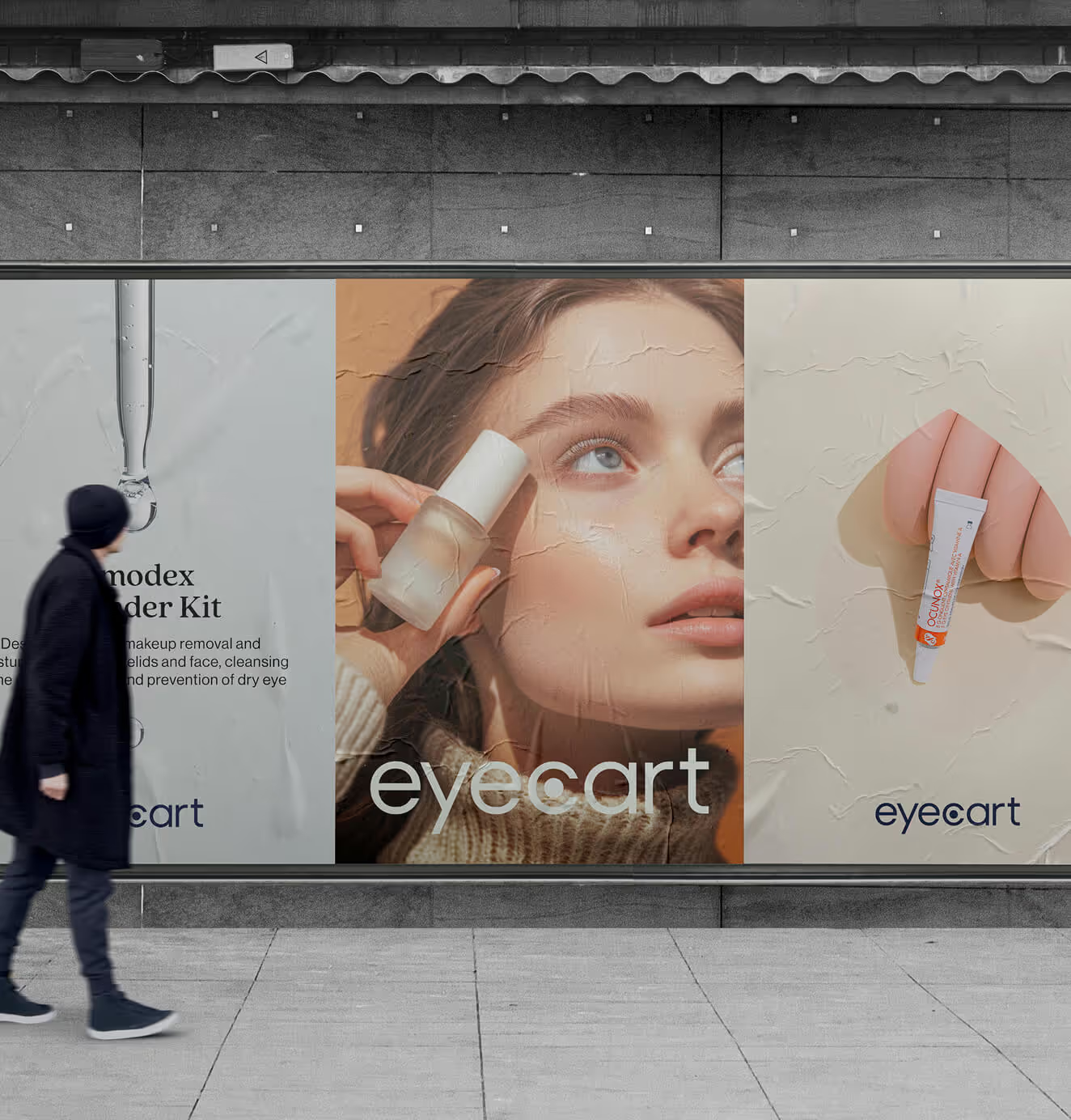
A person walks past large Eyecart posters on a city wall, featuring product photography of eye care serums and creams with clean, modern branding.
A smiling woman holds a magnifying lens with the word "eyecart" printed on it over her eye, creating a playful optical effect against a mint green background.
A billboard ad reads “Discover the ease of keeping your eyes healthy,” featuring Eyecart branding and Blephaclean eye care wipes packaging.
Multiple laptop screens display the Eyecart website, showcasing product pages and banners promoting eye care items.
A person walks past large Eyecart posters on a city wall, featuring product photography of eye care serums and creams with clean, modern branding.
Lucky Girl Rosé
We turned a zero-carb rosé into a lifestyle brand that makes every moment worth celebrating.

+200%
Increase in conversion rate

+688%
Increase in attributed revenue

READ MORE
A bottle of Lucky Girl rosé wine nestled among pink and white flowers in a rustic outdoor setting.
Lucky Girl rosé wine on a red-and-white checkered picnic blanket with cherries, strawberries, sunglasses, and a pink notebook titled The Lucky Club.
A wine glass filled with rosé on a gold tray surrounded by hands with red-painted nails, overlaid with the text “Pour yourself some luck.”
A bottle of Lucky Girl rosé wine with floral label design, dramatically lit against a soft pink background with a shadow cast.
A bottle of Lucky Girl rosé wine nestled among pink and white flowers in a rustic outdoor setting.
Lucky Girl rosé wine on a red-and-white checkered picnic blanket with cherries, strawberries, sunglasses, and a pink notebook titled The Lucky Club.
A wine glass filled with rosé on a gold tray surrounded by hands with red-painted nails, overlaid with the text “Pour yourself some luck.”
A bottle of Lucky Girl rosé wine with floral label design, dramatically lit against a soft pink background with a shadow cast.