Social Media Marketing Agency: Services, Costs & How to Choose in 2026
05/14/2026
Social Media Marketing

.png)


A Complete Guide to Social Media Marketing Agencies

Free Brand Health Audit
Make sure your brand is built to sell

Why Brands Work With a Social Media Marketing Agency



Nearly 5 billion people use social media globally in 2026, and competition for attention is intense. Attention spans hover under 8 seconds amid algorithm-driven feeds that favor high-engagement content. For most businesses, the question isn’t whether to invest in social—it’s whether internal resources can keep pace with platform complexity and creative demands. That’s why many brands turn to a social media marketing agency, where a dedicated account manager provides personalized attention and expert guidance to navigate these challenges.
Agencies bring deep platform knowledge, creative resources, and proven processes to help brands stand out. By leveraging strategic content and engagement, agencies not only boost brand awareness and customer loyalty but also help generate organic traffic—driving qualified visitors to your business without relying solely on paid advertising.
Social Media Marketing Strategy for Measurable Outcomes
A successful social media strategy goes beyond posting content—it’s built around clear objectives, structured execution, and continuous optimization. Brands that achieve measurable outcomes start with defining specific goals, such as increasing brand awareness, generating leads, driving website traffic, or boosting sales. Each goal shapes the type of content, platform selection, and performance metrics.
The next step is audience identification and segmentation. Understanding who the target audience is—their interests, behaviors, and preferred platforms—allows brands to create content that feels relevant and engaging. This ensures efforts are focused on high-value audiences rather than broad, ineffective reach.
Content planning plays a central role in driving results. A strong strategy balances value-driven content (educational, entertaining, or inspiring) with conversion-focused content (offers, product highlights, calls-to-action). Consistency in posting, messaging, and visual identity helps build recognition and trust over time.
Paid social is often integrated to amplify results. Organic reach alone is limited, so strategic ad campaigns are used to target specific audiences, retarget interested users, and accelerate growth. Budget allocation is continuously adjusted based on performance to maximize return.
Equally important is performance tracking and analytics. Metrics such as engagement rate, click-through rate, conversion rate, and return on ad spend provide insight into what’s working. Regular reporting and analysis allow marketers to refine their approach and improve outcomes over time, and ongoing conversion optimization is essential for improving sales and lead generation from social campaigns.
Ultimately, a results-driven social media strategy is iterative. By combining creativity with data, testing new ideas, and optimizing based on insights, brands can turn social media from a visibility channel into a consistent driver of business growth.
Connecting with your Target Audience
Connecting with your target audience in 2026 requires more than broad messaging—it demands relevance, authenticity, and a deep understanding of who your customers are and what they care about. Consumer brands, in particular, benefit from authentic storytelling and community engagement strategies tailored to their audiences, helping to build loyalty and lasting relationships. With so much content competing for attention, brands that succeed are those that make their audience feel seen, understood, and valued.
The first step is clearly defining your audience. This goes beyond basic demographics and dives into behaviors, interests, challenges, and motivations. By building detailed audience personas, brands can tailor their messaging to address real needs rather than making assumptions.
From there, effective connection comes through relevant and meaningful content. Whether it’s educational, entertaining, or inspirational, content should provide value to the audience. Brands that focus on solving problems or enhancing their audience’s lives naturally build stronger relationships and trust.
Authenticity also plays a critical role. Modern consumers are quick to recognize overly polished or insincere messaging. Brands that communicate in a genuine, human tone—and show transparency in their values and actions—tend to foster deeper engagement and loyalty.
Another key factor is choosing the right platforms and formats. Different audiences spend time in different digital spaces, and the way content is consumed varies widely. Short-form video, interactive stories, live streams, and community-driven content all offer unique ways to engage users where they are most active.
Engagement itself is not one-sided. Brands that actively listen and respond—through comments, messages, and community interactions—create a two-way relationship. This ongoing dialogue strengthens connections and helps brands stay in tune with evolving audience preferences.
Finally, data and feedback loops help refine the approach. By analyzing engagement metrics, audience behavior, and feedback, brands can continuously improve their messaging and content strategy. The result is a more personalized and impactful connection over time.
Access to Specialized Talent Under One Roof
Agencies provide access to specialized talent, including content strategists, graphic designers, copywriters, media buyers, and data analysts—all working together. Rather than hiring four to six full-time employees, brands get an integrated team with deep expertise across platforms and campaign types.
Typical agency teams include:
- Senior strategists who own your roadmap and connect social efforts to business goals
- Media buyers optimizing daily ad spend with CPC targets under $1
- Content creators producing 20+ platform-native assets monthly
- Community managers maintaining 95% response rates within 2 hours
This structure delivers coordinated campaigns that an in-house generalist handling basic scheduling on two platforms simply cannot match.
Time Savings for Founders and Marketing Leaders
Collaborating with a social media marketing agency can save significant internal time and costs while ensuring consistent branding. The daily grind of content creation, comment moderation, DM responses, and A/B testing across 10+ variants consumes hours that executives and lean marketing teams don’t have.
Agencies handle the 24/7 operational load, freeing leadership to focus on product, sales, and high-level marketing strategy. For companies scaling quickly, this time liberation often justifies the investment alone.
Lower Customer Acquisition Costs
Social media marketing can lower customer acquisition costs by building trust and loyalty, which in turn drives business growth. Agencies like Ignite Visibility report 20-40% efficiency gains via data-driven retargeting compared to ad-hoc posting.
The difference comes from systematic testing:
- Running 5-10 creative variants per campaign
- Shifting budgets daily to winners achieving ROAS above 3x
- Implementing proper retargeting sequences based on pixel data
- Optimizing for actual conversions rather than vanity engagement
In-house efforts without this discipline often yield sub-1% click-through rates and wasted ad spend.
The Numbers Don’t Lie
77.6% of small businesses use social media to promote their businesses, indicating its importance in reaching and converting target audiences. The question isn’t whether social matters—it’s whether you’re executing it effectively enough to compete.
When comparing what you get from an in-house generalist versus an agency team, the gap becomes clear. A generalist might handle sporadic posting on two platforms with inconsistent results. An agency deploys integrated campaigns that sync social proof with email nurturing for 15-30% higher conversion lifts, with every post, story, reel, and ad contributing to measurable revenue rather than vanity metrics.
Core Social Media Marketing Services Offered by a Social Media Marketing Agency
Most social media marketing agencies combine organic social, paid social, and analytics into a unified program. Social media marketing agencies use a combination of organic and paid strategies to build brand awareness, engage audiences, and drive measurable business outcomes, adapting their approach based on platform-specific algorithms and audience preferences. Social media services typically include social media advertising, influencer management, and ongoing conversion optimization to ensure campaigns are effective and continually improved. Here’s what that actually looks like in practice.
Strategic Services
Social media marketing agencies typically start their engagements with a deep dive into audience research and business goals, followed by channel selection, content calendars, creative production, community management, and paid campaign execution.
The strategic foundation includes:
- Audience research: Building psychographic profiles, segmenting by interest graphs (particularly for TikTok Gen Z audiences), and mapping customer journey touchpoints
- Competitor audits: Identifying untapped Reddit subreddits, underperforming LinkedIn hashtags, and gaps in competitor content strategies
- Platform selection: Determining where your target audience actually spends time rather than spreading thin across every channel
- Roadmapping: Creating 3-12 month plans with phased campaign launches, seasonal adjustments, and clear milestones
- Dedicated account manager: Assigning an account manager to oversee your strategy, ensuring alignment with your business goals and providing personalized support throughout the campaign
Effective social media strategies require understanding your business, target audience, and competition, which helps in crafting relevant content that resonates with potential customers.
Content Creation
Short-form video dominates 70% of feeds in 2026. Agencies should offer a tailored strategy that reflects the business’s brand voice and target audience behavior, avoiding one-size-fits-all solutions. Fresh Content Society, for example, is recognized for its senior-led, structured approach to content creation.
For consumer brands, platform-specific content is essential to build loyalty and engagement, ensuring authentic storytelling and community connection.
Content creation typically covers:
- Reels and TikTok videos: Achieving 3x higher engagement than static images, with 15-second hooks optimized for each platform’s algorithm
- Carousels: Instagram carousels averaging 0.12% CTR, LinkedIn carousels delivering 2x lead gen over single images
- Stories: Ephemeral content creating urgency and driving swipe-ups
- Thought leadership posts: LinkedIn and X content positioning executives and brands as industry voices
- Platform-native creative: Assets produced with tools like Adobe Suite and CapCut, formatted specifically for each platform’s dimensions and viewing context
Publishing and Management
Content calendars via tools like Later or Hootsuite maintain consistency—typically 3-5 posts weekly per platform with geo-targeted scheduling for multi-market brands.
Management responsibilities include:
- Coordinating posting times across multiple accounts and time zones
- Maintaining brand voice consistency across platforms
- Managing approval workflows with clients
- Adjusting cadence based on engagement data
- An account manager coordinates publishing schedules and approval workflows between the agency and client, ensuring seamless communication and timely content delivery
Paid Social Services
Paid media execution covers full-funnel campaign management, with social media advertising as a core component of paid social services:
- Pixel and event setup: Meta pixel events for purchase tracking, TikTok Pixel for Spark Ads conversions, LinkedIn Insight Tags for form fills
- Campaign structure: Awareness, consideration, and conversion campaigns aligned to buyer journey stages
- A/B testing: Running 5-10 creative variants per campaign with systematic winner identification
- Budget optimization: Daily shifts moving spend toward top performers achieving ROAS above 3x
- Cross-platform management: Meta, TikTok Ads Manager, LinkedIn Ads, Pinterest Ads, and emerging platforms
- Conversion optimization: Ongoing analysis and strategic adjustments to campaigns to maximize sales and leads after launch
Agencies often bundle services into retainer or project packages that can include social media management, advertising, and community engagement, tailored to meet the specific needs of their clients.
Community Engagement and Reputation Management
Community engagement extends beyond posting to active participation:
- Responding to 100+ daily comments and DMs across platforms
- Crisis protocols with rapid DM triage and escalation procedures
- Review management and amplification on Google and Reddit
- Coordinating influencer replies, influencer management, and user-generated content to ensure compliance and effective relationship building
- Building genuine relationships with engaged followers
Analytics and Reporting
Bi-weekly or monthly reports track the metrics that actually matter:
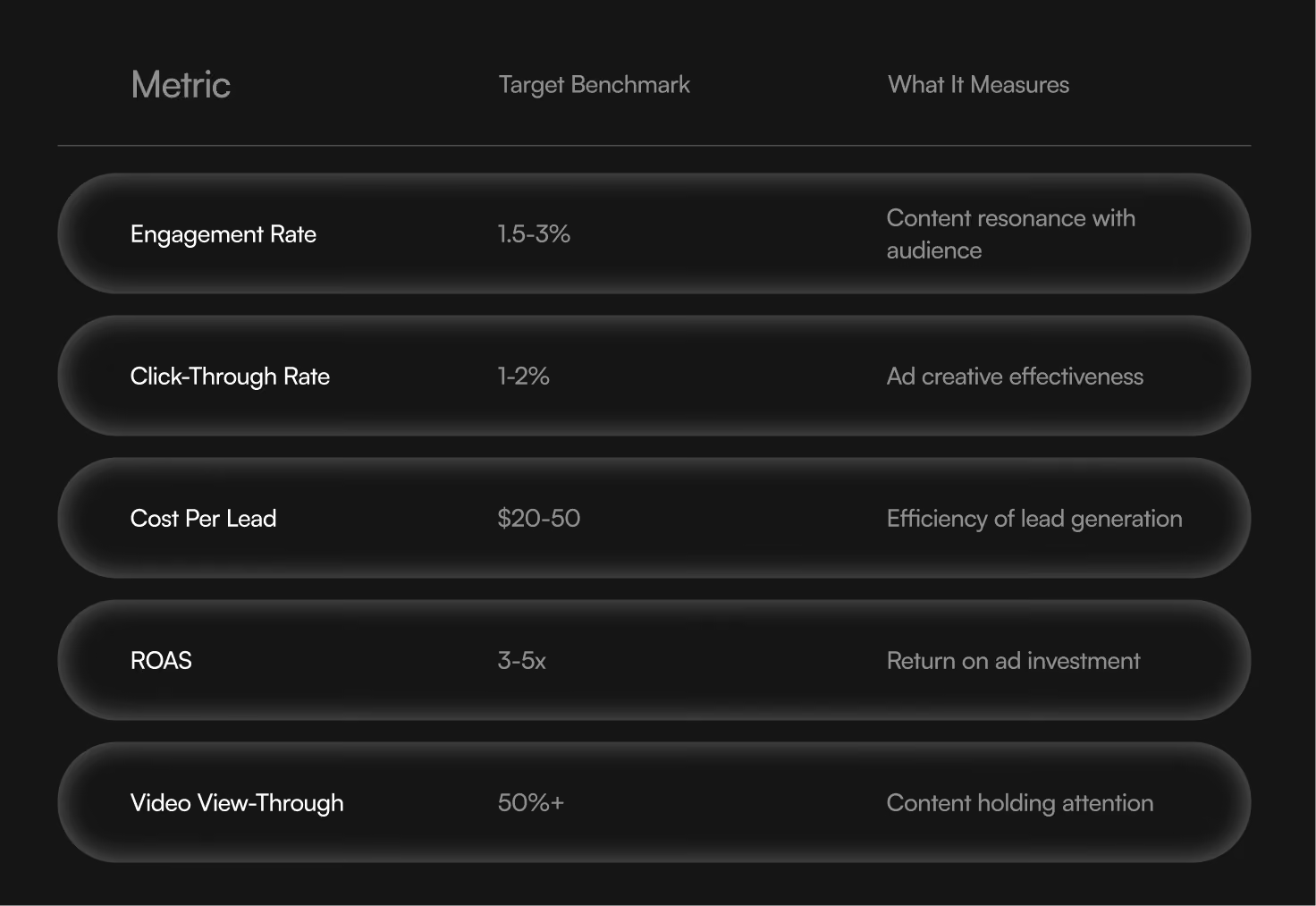
Insights from reporting loop back into creative strategy, with teams refreshing creative every 14 days to combat ad fatigue.
Want to learn more about Social Media Marketing? Keep reading!
Specialized Social Media Programs You Can Expect
Specialized Social Media Programs You Can Expect
Many agencies now offer niche programs beyond standard posting to solve specific growth challenges. For example, Lyfe Marketing is recognized for its expert team and integrated approach to social media and online marketing services, tailoring strategies to each client's unique needs. These specialized offerings address particular business models, industries, and growth objectives.
Executive Social Media Programs
For CEOs and founders, agencies like OneMagnify develop executive tracks on LinkedIn and X focused on thought leadership and investor or partner visibility. These programs typically include:
- Ghostwritten threads and polls that maintain the executive’s voice
- Strategic engagement with industry conversations
- Content positioning around company milestones and industry insights
- Measurable outcomes tied to partner inquiries, with documented 25-50% increases in inbound interest
Executive social builds brand at the leadership level, creating trust that flows down to company-wide marketing efforts.
Reddit and Community-Led Strategies
Reddit strategies leverage AI listening tools like Brandwatch to identify AMAs or subreddit conversations yielding 10x organic reach without spamming. The approach requires:
- Social listening to detect sentiment shifts before they become crises
- Authentic participation that respects community rules and norms
- Strategic AMA planning and execution
- Converting lurkers into leads ethically through value-first engagement
This community management approach works because Reddit users actively reject obvious marketing—agencies that understand this deliver results while others get banned.
Influencer and Creator Collaborations
Influencer marketing programs handled end-to-end include:
- Micro-creator sourcing: Targeting 10K-50K follower creators who deliver 5-10x ROI over macro-influencers
- Contract negotiations: Defining deliverables like swipe-up links, promo codes, and content rights
- Performance tracking: Monitoring 15-30% uplift from promo codes and unique links
- UGC repurposing: Turning creator content into paid ad creative for authenticity boosts
Agencies like The Social Shepherd specialize in influencer campaigns that drive measurable results rather than just impressions.
Ecommerce and DTC-Focused Programs
For ecommerce brands, specialized programs integrate:
- TikTok Shop live streams: Conversion rates 5-10x higher than static ads
- Instagram Shopping catalog feeds: Dynamic retargeting pulling GA4 data for abandoned cart recovery at 20% rates
- Product carousel ads: Automated creative pulling from product feeds
- Cross-platform attribution: Connecting social touchpoints to actual purchases
Sector-Specific Approaches
Industry experience matters. Specialized approaches include:
- Healthcare: HIPAA-compliant posts focusing on educational carousels rather than promotional content
- B2B SaaS: Lead nurturing sequences with 6-email drips post-lead capture, aligned to longer sales cycles
- Local restaurants and retail: Geo-fenced Stories campaigns driving 30% foot traffic lifts
- Professional services: Thought leadership positioning combined with lead generation on LinkedIn
How to Choose the Right Social Media Marketing Agency
Not all agencies are built the same, and picking the wrong one can waste 6-12 months of budget along with significant opportunity cost. The difference between a partner that accelerates growth and one that delivers excuses comes down to fit, capability, and transparency.
Define Your Goals First
When selecting a social media marketing agency, it’s crucial to identify and clarify your brand’s unique goals, such as brand awareness, lead generation, or customer support.
Before speaking to any agency, define specific targets:
- “Generate 200 qualified leads per month at $30 CPL”
- “Double ecommerce revenue from social within 9 months”
- “Achieve 3.5x ROAS on Meta campaigns within 90 days”
- “Build executive LinkedIn presence driving 50+ partner inquiries monthly”
Vague goals like “increase brand awareness” lead to vague results. Specific targets force agencies to explain exactly how they’ll deliver.
Assess Industry Fit
Top social media marketing agencies should demonstrate a clear understanding of your industry, customer base, and sales cycle to ensure effective strategies.
Look for case studies in similar verticals:
- SaaS agencies like Levy Online with CRO expertise since 2020
- DTC specialists like DYRE focused on TikTok-heavy home improvement
- Local service agencies with hospitality and restaurant experience
- B2B agencies understanding 6-month+ sales cycles
Review agency portfolios for case studies that demonstrate how they solved challenges and achieved tangible ROI. Ask about deal sizes similar to yours and whether they’ve worked with your specific customer demographics.
Evaluate Strategic Depth
Ask how they would approach your specific situation and look for clear, jargon-free answers:
- “Why would you recommend TikTok over Pinterest for our audience?”
- “What’s your typical organic/paid split for brands at our stage?”
- “How would you handle our 90-day sales cycle in campaign structure?”
- “What creative testing framework do you use?”
Agencies that default to generic playbooks or can’t articulate platform rationale probably won’t deliver tailored strategies for your business.
Ask About Structure and Ownership
Critical structural questions reveal how you’ll actually be served:
- Who runs your account? A senior strategist or a junior coordinator?
- How often do you meet? Weekly calls, bi-weekly reviews, or monthly check-ins?
- What deliverables arrive each month? Post volumes, campaign reports, strategy recommendations?
- Who owns the data? Confirm that you will maintain full ownership of your social accounts and data when working with an agency.
The last point matters more than many realize. Your audience relationships and historical data shouldn’t walk out the door if you change partners.
Demand Transparency
Transparency about social media methods and clear reporting on Key Performance Indicators (KPIs) are essential in choosing an agency.
Reputable agencies provide:
- Anonymized ROAS decks (e.g., 4.2x on Meta for fashion clients)
- 90-day timelines without guaranteed sales numbers
- Proposals that benchmark against your current baselines
- Clear expectations around communication and approvals
Agencies should demonstrate proficiency in advanced tools for analytics, A/B testing, and paid social management relevant to your audience’s platforms. Ask which tools they use and how they track attribution.
Consider a Trial Before Committing
One should consider a trial project or a short engagement to assess an agency’s skills and workflow before committing long-term. A 90-day pilot with defined deliverables and success metrics protects both parties and reveals working style compatibility.
Shortlist and Compare
Shortlist 2-3 agencies and ask each for a lightweight roadmap or proposal. Compare:
- Post volume commitments (15-30/month typical)
- Campaign launches per quarter (2-4 common)
- Reporting frequency and depth
- The strategic thinking behind their recommendations
The best proposals don’t just list deliverables—they show diagnostic thinking specific to your situation.
What Does a Social Media Marketing Agency Cost in 2026?
Costs vary widely by region, scope, and complexity. Ad spend is typically separate from agency fees, and understanding the full picture prevents budget surprises.
High-Level 2026 Ranges
Pricing for social media marketing agencies varies based on several key factors, including the scope of services, platform mix, and agency reputation.
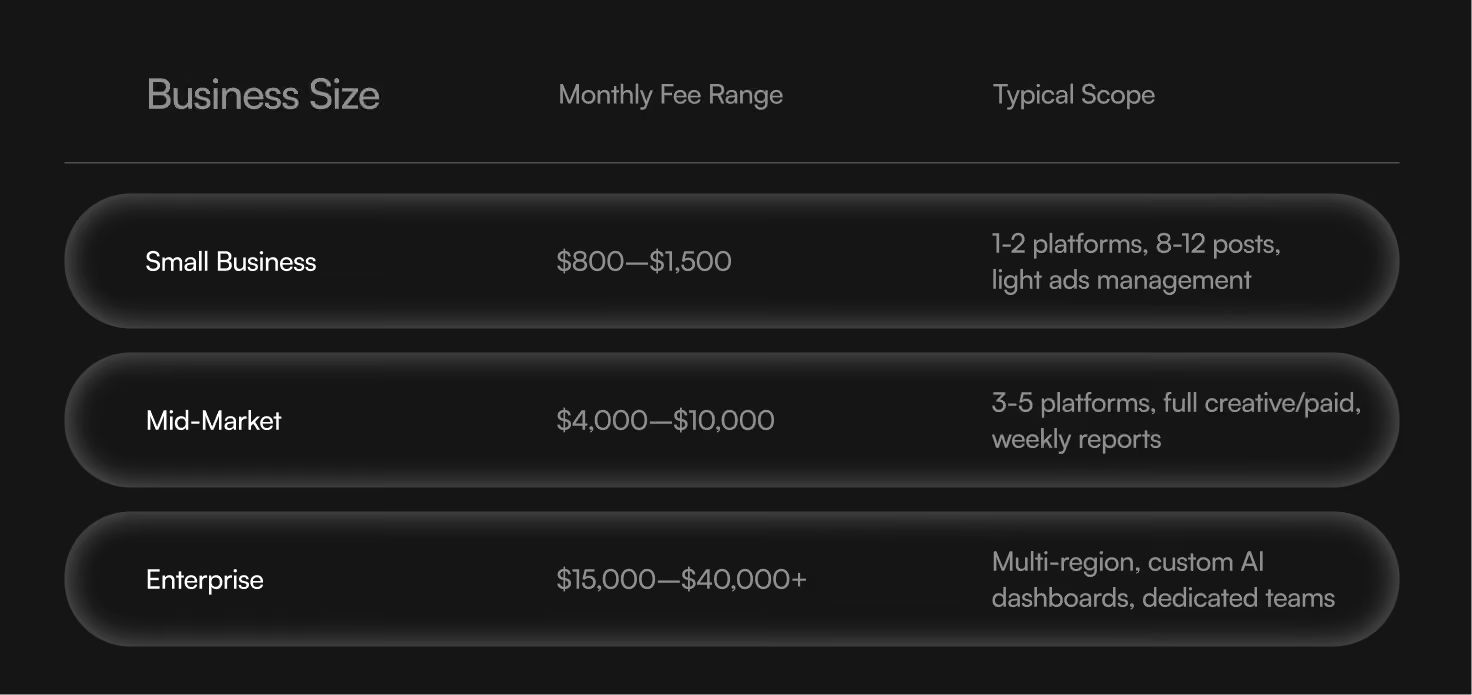
Most established social media marketing agencies operate with monthly fees ranging from $10,000 to $40,000 or more, depending on the scope of services provided. However, the majority of social media marketing projects fall under $10,000, with hourly rates typically ranging from $25 to $49 for more limited engagements.
Hourly and Project-Based Pricing
For strategy-only work, hourly consulting rates range from $125–$300 in major US markets. Project minimums typically start at $5,000 for audits, playbooks, or campaign launches.
Common Pricing Models
- Monthly retainers: Fixed fee for ongoing work, predictable for budgeting
- Project-based: Flat fee for defined deliverables (90-day campaign launches, account setup)
- Hybrid models: Base retainer plus 10-20% performance bonuses on ROAS above 4x
What’s Usually Extra
Line items typically billed separately:
- Ad spend: Usually 70-80% of total budget at $5K-$100K/month depending on scale
- Influencer fees: $2K-$10K per campaign
- Video production days: On-location shoots beyond standard content creation
- Social listening platforms: Enterprise tools like Brandwatch
- Additional markets: Multi-language or multi-region expansion
How to Evaluate Value
Demand granular deliverables tied to fees: “20 Reels, 4 campaigns, GA4-integrated ROAS tracking” gives you something to measure against. Ask how success will be measured and what benchmarks apply to businesses like yours.
Agencies that can’t provide specific deliverable counts or success metrics probably haven’t thought through what they’re actually selling you.
Agency vs In-House vs Freelancers: Which Is Right for You?
There’s no universal best option. Choice depends on budget, complexity, and internal expertise. Here’s how to think through the decision.
When an Agency Makes Sense
Agencies excel for multi-platform growth after you’ve found product-market fit. The integrated approach—senior strategy plus creative plus media buying under one roof—delivers 2-3x faster scaling than building equivalent capability internally.
An agency fits when:
- You need expertise across 3+ social channels
- Your monthly ad spend exceeds $10K
- You lack internal bandwidth for 24/7 content and engagement
- You want to scale rapidly without 6-month hiring cycles
The tradeoff: agencies typically cost 20-50% more than equivalent in-house capability, but deliver faster with less management overhead.
When In-House Works Better
A house team makes sense for steady-state brands with predictable content needs and the budget to hire properly. Expect to invest $100K+ annually for 2-3 hires plus tools ($2K/month for scheduling, listening, and analytics platforms).
In-house fits when:
- You have consistent, always-on content requirements
- Brand voice requires deep institutional knowledge
- You can attract and retain specialized talent
- Long-term cost efficiency matters more than speed
The risk: siloed expertise. An in-house social manager may lack paid media depth, or your content creator may not understand performance analytics.
When Freelancers Deliver
Freelancers shine for specific tasks—motion graphics packages, ad copy sprints, one-off audits—especially for businesses with limited budgets.
Freelancers work when:
- You need tactical execution, not strategic planning
- Your budget sits below $50K annually
- You have internal coordination capacity
- You need specialized skills for short engagements
The limitation: freelancers typically lack the integrated strategy that connects content to campaigns to attribution.
The Hybrid Model
For 70% of firms, a hybrid approach optimizes resources: a small internal team (even one person) coordinates strategy and approvals while an agency handles paid acquisition and heavy creative production.
This structure keeps brand knowledge internal while accessing agency scale for execution. The internal coordinator becomes the bridge between company context and agency capability.
How a Social Media Marketing Agency Onboarding Process Typically Works
Structured onboarding during the first 30-60 days is critical to long-term results. Agencies that rush to posting without proper discovery typically underperform. Here’s what a thorough onboarding looks like.
Discovery Phase (Weeks 1-2)
The deep dive includes:
- Business model review: Understanding revenue drivers, margins, and growth priorities
- Historical performance analysis: Auditing GA4, Meta Business Suite, LinkedIn Analytics data
- Account access: Gaining admin access to all social accounts and ad platforms
- Brand guidelines review: Voice, visual standards, approval requirements
- Competitor assessment: Identifying gaps and opportunities in your market
This phase surfaces insights that shape everything following. Agencies skipping discovery typically produce generic content that underperforms.
Research and Strategy (Weeks 2-4)
With discovery complete, strategic planning begins:
- Audience personas: Detailed profiles including platform preferences, content consumption habits, and purchase triggers
- Channel priorities: Selecting 2-4 platforms based on audience presence and business fit
- 90-day roadmap: Phased campaign plan with themes, content types, and success metrics
- Competitive positioning: Defining how your brand voice differentiates from alternatives
Setup (Weeks 3-4)
Technical infrastructure preparation:
- Tracking implementation: Pixels, events, and server-side tracking configured correctly
- Dashboard creation: Google Data Studio or similar connecting social metrics to CRM data
- Content calendars: Templates built in project management tools
- Approval workflows: Slack channels, Asana boards, or similar for efficient reviews
Launch and Optimization (Weeks 4-8)
Initial campaigns go live with close monitoring:
- Week 4: Organic content refresh based on new strategy
- Week 6: Paid campaign pilots launch
- Ongoing: Weekly or bi-weekly testing cycles optimizing creative, targeting, and budgets
Expect 10-20% weekly performance swings as the agency identifies what resonates with your specific audience.
Communication Cadence
Typical ongoing structure:
- Weekly status calls: 30-minute check-ins on active campaigns
- Shared project boards: Real-time visibility into content pipeline
- Monthly strategic reviews: Performance analysis and roadmap adjustments
- Quarterly planning sessions: Aligning social strategy with broader business priorities
Fluid communication matters. Agencies that disappear between monthly reports miss optimization opportunities.
Measuring Success with a Social Media Marketing Agency
It’s important to evaluate potential agencies based on their ability to provide measurable outcomes and clearly defined KPIs, ensuring they can report performance consistently. Define these before work begins, aligned to business objectives rather than vanity metrics.
Awareness Metrics
When brand visibility is the primary goal, track:
- Impressions: Total content views across platforms
- Reach: Unique users seeing your content
- Video view-through rates: Percentage watching beyond 3 seconds, 50%, completion
- Follower growth: Net new audience members (while understanding follower counts alone don’t drive revenue)
These metrics matter most for new brands or product launches building initial visibility.
Performance Metrics
Choose a social media marketing agency that prioritizes measurable business outcomes over vanity metrics like likes or follows. Performance tracking should include:
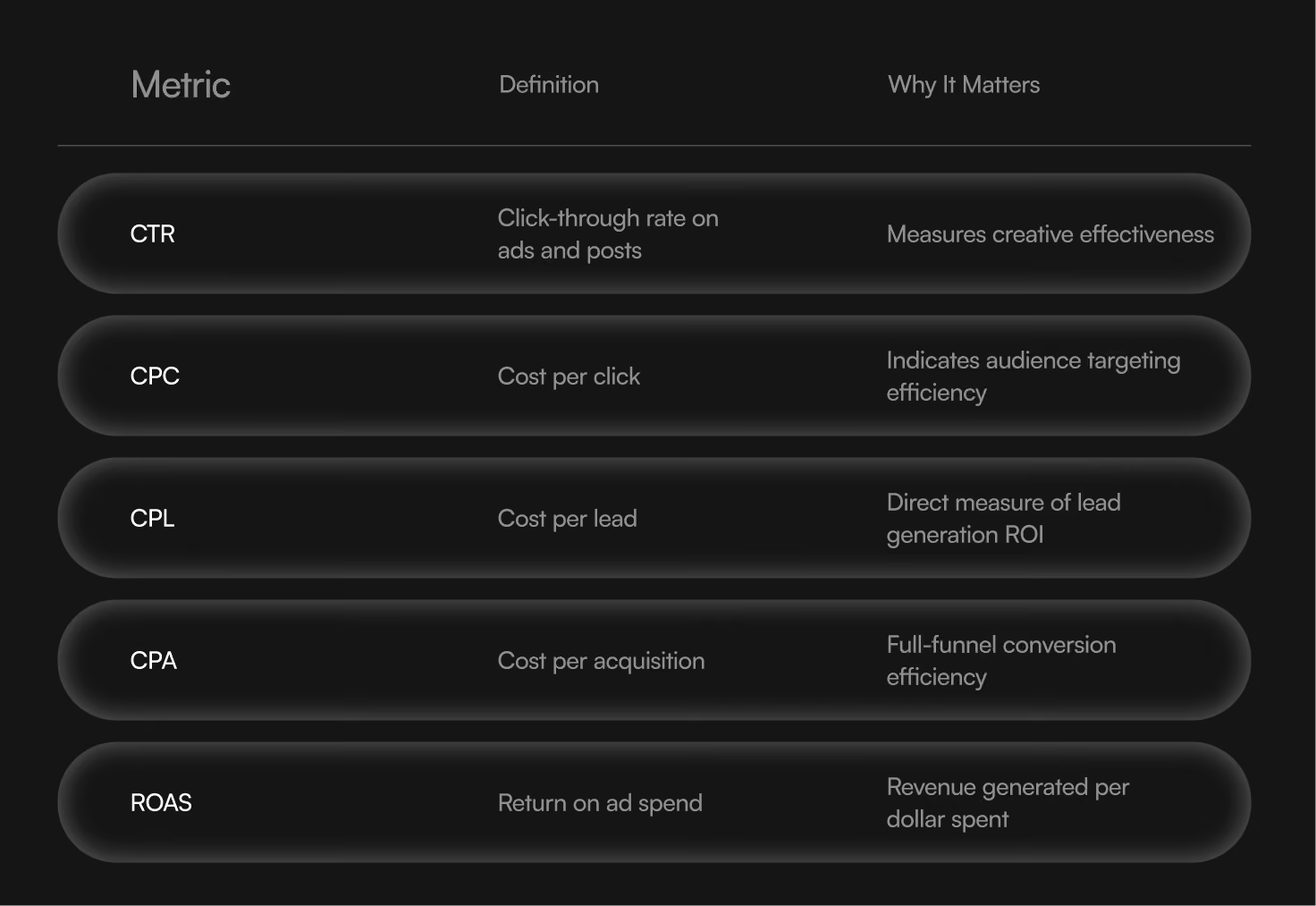
Agencies should focus on metrics that matter such as ROI, leads, and conversions, rather than just vanity metrics.
Attribution and Integration
Agencies use sophisticated analytics tools to turn complex data into actionable insights, identifying the best platforms and content types for ROI.
Proper measurement combines:
- Platform analytics from Meta, TikTok, and LinkedIn dashboards
- Google Analytics 4 with proper attribution windows (7-day click/1-day view typical)
- CRM data showing which leads convert to revenue
- Custom dashboards (often in Looker or Data Studio) connecting social touchpoints to business results
Ask for sample dashboards or reports before signing. Ensure they show both top-of-funnel audience engagement and bottom-of-funnel revenue impact.
Realistic Timelines
Brand-new accounts or complete strategy overhauls need time to generate meaningful data:
- 30 days: Initial engagement improvements visible
- 60-90 days: Clear performance baselines established, scalable winning creatives identified
- 90+ days: Revenue impact measurable for most businesses
Agencies promising guaranteed sales numbers within a few weeks without understanding your business first are likely overpromising.
Future Trends in Social Media Marketing Agencies (2026 and Beyond)
The rapid changes from 2024-2026—short-form video dominance, privacy regulation shifts, AI-assisted content creation—have fundamentally reshaped agency operations. Understanding where things are heading helps you choose partners positioned for the future.
AI Integration
AI tools now accelerate 40% of content ideation, from topic clustering to variant testing. Practical applications include:
- Social listening that detects sentiment shifts pre-crisis
- Copy variant generation for A/B testing at scale
- Performance prediction models identifying likely winners before spend
- Automated reporting that surfaces actionable insights
However, human oversight remains essential. AI generates options; experienced strategists apply brand judgment and strategic context. Agencies fully automating creative without human guardrails produce generic content that underperforms.
Evolving Platform Dynamics
Platform changes reshaping strategy include:
- Meta’s Andromeda update: Neural targeting enabling precision without third-party cookies, demanding first-party data strategies
- TikTok commerce maturity: Now representing 20% of global DTC sales, with live shopping becoming mainstream
- Instagram’s 2026 updates: Enhanced search and shopping features making discoverability more important
- X’s evolution: Shifting demographics requiring reassessment for B2B audiences
Community and Creator Economies
Brands increasingly partner with micro-creators (10K-50K followers) who deliver 11x ROI compared to brand channels alone. This shift includes:
- Niche community engagement over broad reach
- Employee advocacy programs amplifying brand messages authentically
- Reddit and forum strategies that build credibility through participation
- Creator partnerships that feel native rather than sponsored
What to Look For
Forward-thinking agencies experiment early with new formats and platforms while maintaining reliable performance tracking and brand safety. They balance innovation with discipline—testing emerging channels with small budgets while protecting core performance on proven platforms.
Be wary of agencies that either ignore new developments entirely or chase every trend without strategic rationale.
Frequently Asked Questions about Social Media Marketing Agencies
How long does it take to see results from a social media marketing agency?
Early indicators like improved engagement often appear within 30 days as optimized content starts resonating with your audience. Meaningful lead and revenue improvements typically require 60–90 days of testing, creative iteration, and audience learning.
Heavily regulated industries like healthcare or long-sales-cycle businesses like B2B SaaS may need 3–6 months to see full pipeline impact from social programs. The complexity of your sales cycle, the state of your existing social presence, and the competitiveness of your market all influence timing.
Be wary of agencies promising guaranteed sales numbers within a few weeks without first understanding your specific business context. Sustainable results require proper foundation-building.
Do I have to be on every social media platform?
No—and trying to be everywhere typically dilutes effectiveness. Most brands perform best when they focus on 2–4 core social platforms where their target audience already spends time rather than spreading thin across every social channel.
Common effective combinations:
- DTC products: Instagram + TikTok
- B2B and professional services: LinkedIn + X
- Local businesses: Facebook + Instagram
- Visual/lifestyle brands: Instagram + Pinterest + TikTok
A good agency will help you effectively reach your audience on the right platforms, not push every channel. They should recommend phasing in new platforms only after core ones are working. Strategic alignment matters more than platform count.
How much of my total marketing budget should go to social media?
Many brands in 2026 allocate 25–50% of their digital marketing budget to social media when it serves as a primary acquisition and retention channel. The percentage varies significantly based on business model and stage.
Earlier-stage DTC brands often lean higher on social (sometimes 50-70% of digital spend) because that’s where their customers discover and purchase products. Mature B2B companies typically balance social with search, events, email marketing, and partner marketing.
Rather than setting fixed percentages, revisit allocation quarterly based on performance data. If social delivers 4x ROAS while search delivers 2x, shifting budget makes sense regardless of initial allocation plans.
Will I still need to create content if I hire an agency?
Agencies typically handle strategy, copywriting, design, and editing—but they often still need raw material from you. This includes product shots, behind-the-scenes clips, executive interviews, or access to subject-matter experts for thought leadership content.
The best results come from collaboration: you provide authentic access, approvals, and brand context while the agency handles content marketing packaging and distribution. Fresh content needs fresh ideas, and those often come from inside your organization.
Agree upfront on who’s responsible for filming, asset gathering, approvals, and brand voice sign-off. Unclear responsibilities create bottlenecks that slow content velocity and frustrate both parties.
Can a social media marketing agency help if I’ve been burned by one before?
Many businesses have had poor experiences with other agencies that overpromised, provided minimal transparency, or delivered vanity metrics instead of business results. A negative history doesn’t mean agencies can’t work for you—it means you need to choose more carefully.
Reputable agencies will start with an honest audit of prior efforts, showing you where things went wrong and setting more grounded expectations. They won’t promise to fix everything in 30 days or guarantee specific revenue numbers without understanding your situation.
Before re-engaging with any new partner, demand:
- Clear scopes of work with specific deliverables
- Cancellation terms that don’t lock you in for a year
- Reporting frameworks showing how they track what matters
- References from many clients in similar situations
What’s the difference between a social media agency and a full-service digital marketing agency?
A social media agency focuses specifically on social platforms—content creation, community management, paid social advertising, and platform-specific strategy. They bring deep expertise in how Instagram, TikTok, LinkedIn, and other platforms work.
Full-service digital marketing agencies offer broader digital marketing services including SEO, PPC management services, email marketing, website development, and sometimes traditional advertising. They provide one roof for multiple marketing needs but may lack the deep understanding of social-specific dynamics.
Neither is universally better. If social is your primary growth channel, a specialized social media agency often delivers better results. If you need integrated digital presence management across channels, a full-service agency provides efficiency. Many businesses work with both—a social specialist plus a search-focused agency, for example.
How do agencies handle different time zones for global brands?
Agencies serving multi-market clients typically structure teams to cover primary time zones for community management and real-time engagement. This might mean team members in Europe, North America, and Asia-Pacific handling localized response.
For content creation and strategy, time zones matter less—work happens asynchronously with scheduled review calls. The critical question is response time for comments, DMs, and crisis situations. Ask specifically how they handle after-hours engagement and what SLAs apply for urgent issues.
Some smaller agencies rely on scheduling tools and next-business-day responses for international accounts, which may or may not fit your needs depending on audience expectations.
Conclusion
The right social media marketing agency acts as an extension of your team—bringing specialized talent, proven processes, and continuous optimization that most businesses can’t build internally. In 2026’s crowded attention economy, partnering with experts who understand your industry can mean the difference between wasted budget and measurable growth.
Start with clear business goals before you talk to anyone. Demand transparency about methods, realistic timelines, and measurable outcomes tied to actual revenue rather than follower counts. Consider a trial project before committing to long-term retainers.
The agencies worth working with will welcome that scrutiny. They know their results speak for themselves—and they’re confident enough in their approach to show their work.

Quincy Samycia
Want to learn more about brand platform?