Social Media Small Business Marketing: A Practical Guide for 2026
05/15/2026
Social Media Marketing
Discover the proven social media marketing strategies small businesses are using in 2026 to attract customers, grow faster, and compete without massive ad budgets.

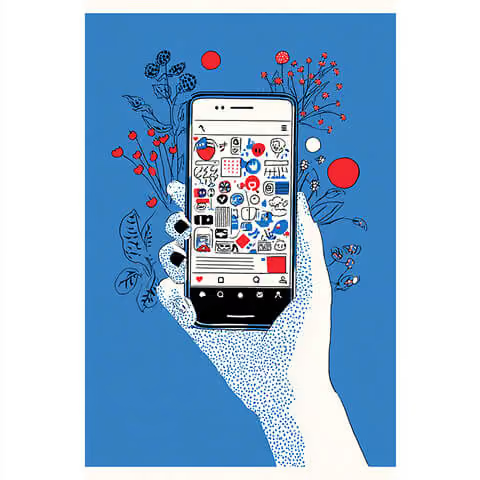
Social media has become one of the most accessible growth channels for small businesses, but success no longer comes from simply posting everywhere. In 2026, the businesses that see real results are the ones that focus their efforts, understand where their customers spend time, and create consistent content that builds trust over time. With the right strategy, even a small team or solo founder can use social media to drive awareness, leads, bookings, and sales without needing a massive budget.
.png)


A Practical Social Media Strategy for Small Business Growth


Key Takeaways
- Small businesses in 2026 can grow affordably by focusing social media efforts on 1–2 core platforms where their ideal customers already spend time, rather than spreading thin across every channel.
- A simple social media strategy with clear goals, an ideal customer profile, a 30-day content plan, and basic analytics is usually enough to generate leads and sales for local and online small businesses.
- Consistent engagement—replying to comments and DMs within 24 hours, encouraging user generated content—builds trust faster than high production value alone.
- Combining organic posts with small, tightly targeted paid campaigns ($5–$15/day on Meta or TikTok ads) can quickly test offers and drive measurable traffic or bookings.
- Tracking a handful of key metrics (reach, saves, website clicks, and conversions) each month lets owners refine what works without getting lost in data.
Introduction: Why Social Media Matters for Small Businesses in 2026
By 2026, social media platforms like Instagram, Facebook, TikTok, LinkedIn, and YouTube have become default discovery channels for local shops, service providers, and online brands. With billions of monthly active users across Facebook and Instagram, TikTok driving product discovery through short-form video, and LinkedIn remaining critical for B2B services, these platforms are now where potential customers search for businesses before they ever type a query into search engines.
Approximately 93% of marketers worldwide use social media for marketing their businesses, highlighting its importance in customer acquisition and brand visibility. Social media marketing allows small businesses to reach a vast audience cost-effectively, increasing brand awareness and driving traffic to their websites. A solo founder with a smartphone can compete for attention against bigger brands—if they’re focused and consistent.
This guide walks you through choosing platforms, developing a content strategy, building and engaging an audience, integrating social media into your broader marketing strategy, and measuring results. It’s practical and action-oriented, tailored to real small business constraints: limited time, small budgets, and small teams.
Free Brand Health Audit
Make sure your brand is built to sell
Search has changed. Your customers aren't just Googling anymore. They're asking ChatGPT, Perplexity, Gemini and other AI platforms what to buy, who to trust and which brands they should consider.
If your brand isn't showing up clearly in those answers, you're already losing opportunities. Our free Brand Health Audit shows you where your brand stands across traditional search, AI search and brand positioning.

Sample brand audit
Live preview
Traditional search
72
AI search (GEO)
34
Brand positioning
58
Choose the Right Social Platforms for Your Small Business




Most small business owners make the mistake of trying to be everywhere at once. The smarter approach? Start with 1–2 primary social platforms where your best customers are already active. Choosing 1 to 3 platforms based on where ideal customers spend time is far more important than posting thinly everywhere.
Understanding your target audience’s demographics is valuable when determining the right platforms for your business, as different platforms attract different age groups and interests. The most effective social media platforms depend on your target audience and industry.
Facebook works best for local restaurants, home services, and community-focused businesses. When choosing a social media platform for your business, consider your marketing objectives and the type of content you plan to share—Facebook is great for community building through Groups, Events, and Messenger for bookings and inquiries.
Instagram supports visual brands like boutiques, salons, fitness studios, and cafés. Instagram is ideal for visual content through Reels, Stories, and high-quality imagery that showcases products and experiences. For B2C businesses, platforms like Instagram, Facebook, and TikTok are often effective.
TikTok offers exceptional organic reach and product discovery in 2026, particularly for behind-the-scenes storytelling. Both DTC brands and local services targeting under-40 audiences find success here.
LinkedIn is typically more effective for B2B businesses—consultants, agencies, accountants, and SaaS companies. Focus on thought leadership posts, client stories, and professional networking.
YouTube serves businesses that can create tutorials, how-tos, or in-depth product demos (trades, coaching, education, software) and delivers long-term search value through search engine optimization.
How to decide:
- Check where existing customers follow competitors
- Review platform audience demographics
- Match content formats (short video, long video, text, images) to your business strengths
Commit to one primary platform for 90 days with a consistent posting schedule before expanding elsewhere.
Develop Your Social Media Content Strategy
A content strategy prevents random posting and ensures every post supports clear business goals like bookings, leads, or sales. Without a social media plan, you’re just creating noise.
A solid content strategy should include creating a consistent visual brand identity, tone of voice, and brand messaging across social media profiles to resonate with the target market. Define 3–5 content pillars and keep them consistent:
- Educational content (tips, how-tos, industry insights)
- Behind-the-scenes glimpses (your process, team, workspace)
- Social proof (customer testimonials, reviews, results)
- Offers and promotions (launches, sales, limited-time deals)
- Community and local features (events, partnerships, neighborhood)
An effective content strategy should follow the 80/20 rule, where 80% of the content offers value, such as tips or educational content, while only 20% is promotional, to keep followers engaged. Using storytelling in content creation can make a brand more relatable and engaging, which includes sharing behind-the-scenes footage, customer testimonials, and product tutorials.
Mapping content to the customer journey:
- Awareness stage: Tips, trends, entertaining content that captures your audience’s attention
- Consideration stage: Comparisons, FAQs, product demos, relevant content
- Decision stage: Testimonials, limited-time offers, clear calls to action
Example 30-Day Content Plan for a Local Bakery
Week one focuses on awareness: Monday opens with a Reel showing the morning baking routine (behind-the-scenes), Wednesday features a carousel of seasonal pastry ingredients (education), and Friday posts customer testimonials with photos of their favorite orders. Week two shifts toward consideration: a Story poll asking followers which new flavor to launch, a Reel demonstrating cake decorating techniques, and a post comparing different bread varieties.
Week three builds community: a collaborative post with the coffee shop next door, a feature on a loyal customer, and interactive posts asking about weekend plans. Week four drives decisions: announcing a weekend special, sharing a testimonial video, and posting a limited-time offer for email subscribers.
Short-form videos like Reels and TikToks are effective for organic discovery and should be prioritized in content. Short-form video is often prioritized by social algorithms, with Instagram Reels reportedly receiving 36% more reach. Content calendars help ensure a consistent brand voice and prevent last-minute posting.
Platform-specific formats:
- Instagram: Reels, Stories, carousels
- TikTok: Short vertical videos with trending audio
- LinkedIn: Carousels, text posts, professional video
- Facebook: Live Q&A sessions, Groups posts, Events
Include keywords in captions, alt text, and video descriptions for social search visibility. Maintain consistent colors, fonts, and photo style so your social media accounts look cohesive and instantly recognizable.
Want to learn more about Social Media Marketing? Keep reading!
If you need help with your company’s marketing, contact us for a free custom quote.
Build and Engage a Loyal Audience

Audience size matters less than depth of engagement, especially for small businesses aiming for local customers or niche buyers. Almost 80% of consumers are more willing to purchase from a company after having a good experience with them on social media. Social media provides an opportunity for small businesses to engage with customers directly, enhancing customer service and overall experience through real-time interactions.
Day-to-day engagement habits:
- Respond to comments and DMs within 24 hours
- Like and reply to tagged posts
- Ask questions in captions to invite responses
- Create posts that spark conversation
Engaging with your followers by responding to comments and messages shows that your business values its customers and can enhance customer loyalty. Engagement is crucial as it directly impacts platform algorithms and boosts visibility.
Encouraging user-generated content (UGC) can increase authenticity, word-of-mouth marketing, and community building. Run simple photo or review contests, create a branded hashtag, or offer small rewards for customers who share their experience. A boutique reposting customer photos showcasing their clothing on real body types builds trust faster than polished brand imagery.
Collaborating with local businesses for cross-promotions can expand reach and build community. Consider joint giveaways, co-hosted Lives, or cross-posted Reels with micro-influencers or complementary businesses. Choose partners with genuinely aligned audiences rather than just high follower counts.
Balance authenticity and professionalism:
- Show real people and work-in-progress
- Maintain clear branding and quality
- Set interaction goals (minimum meaningful conversations per week, not just likes)
Use captions on videos, alt text on images, and clear language so more social media users can engage comfortably—accessibility expands your reach.
Integrate Social Media with Your Overall Marketing
Social media performs best when connected to the rest of your marketing ecosystem: website, email, in-store experience, and advertising. A real marketing strategy requires alignment across all these digital marketing channels.
Use social channels to drive traffic to concrete destinations:
- Product pages with your website url
- Online booking tools
- Lead magnets on a landing page
- Event registrations
Include clear calls to action in captions and bios. Building simple funnels works: Instagram Reel → link in bio → landing page with lead magnet → nurture email sequence → sale or booking.
Repurpose content across channels to save time and maintain consistency. A single blog post becomes several Reels, carousel posts, LinkedIn updates, and email newsletter content. This approach prevents creating content from scratch for every social channel while keeping your messaging consistent.
Connect offline and online:
- Promote social handles in-store, on receipts, packaging, and business cards
- Mention your social media accounts during events
- Encourage customers to tag the business when encouraging customers to share their experience
Layer in paid ads strategically—retarget website visitors, re-engage video viewers—while anchoring strategy in strong organic content. Create a simple monthly marketing plan listing key promotions, launches, or events, then design social media content to support those dates.
Use Paid Social Media Ads Strategically (Without Wasting Budget)
Small daily budgets on Facebook, Instagram (Meta), TikTok, or LinkedIn can significantly amplify reach when used with clear, narrow objectives. Paid social is cost effective when you know exactly what you’re testing.
Campaign goals for small business marketing:
- Brand awareness (reaching new prospective customers)
- Traffic to a specific page (driving social media efforts to your website)
- Lead generation forms (capturing contact information)
- Direct sales with conversion tracking (measuring increase sales)
Define and target audiences:
- Local radius for brick-and-mortar (10 miles from storefront)
- Interest-based for niche products
- Lookalike audiences from customer lists
- Retargeting past website visitors (highest conversion likelihood)
Example starter campaigns:
- Promoting a new service launch to lookalike audiences
- Advertising a seasonal sale to past website visitors
- Boosting a high-performing organic post to expand reach
Emphasize creative that feels native to the platform. Short vertical videos with captions perform on TikTok and Reels; professional but human imagery works on LinkedIn. Avoid overly polished, TV-style paid ads that feel disconnected from unpaid content on the platform.
Start with $5–$15 per day per campaign. Run A/B tests on headlines, visuals, or calls to action before scaling spend.
Track essential paid metrics:
- Cost per click (CPC)
- Cost per lead (CPL)
- Return on ad spend (ROAS)
Compare these to the value of a typical customer or booking to determine if your marketing campaigns are profitable.
Measure, Analyze, and Improve Your Social Media Marketing
Measurement keeps social media efforts focused, even if you only have a few minutes per week. A data-driven approach involves establishing measurable goals aligned with bottom-line results rather than focusing on vanity metrics like follower growth alone.
Core metrics to track monthly:
- Follower growth
- Reach (total impressions)
- Engagement rate (likes, comments, shares, saves)
- Website clicks
- Actions (leads, sales, bookings)
Success in social media marketing can be measured by tracking key metrics such as audience growth, engagement rate, website traffic driven from social media, lead generation, and conversions directly attributed to social media campaigns.
Most social media platforms offer built-in analytics tools that allow businesses to analyze engagement levels, website visits, conversions, and more in real time, helping to refine their social media strategies. Use free tools:
- Instagram Insights
- Facebook Insights
- TikTok Analytics
- Twitter analytics
- LinkedIn Analytics
- Google Analytics (GA4) for website behavior
To effectively measure the impact of social media efforts, businesses should first define their goals and then analyze whether the data shows a positive impact toward those goals, using platform analytics to track performance.
Monthly review routine:
- List top 5–10 performing posts
- Note patterns in topics or formats
- Identify underperforming content to reduce
- Plan next month to emphasize what works
Track quality metrics too: How many DMs turn into bookings? How many social followers join your email list? How many customers mention social media at checkout? These connect social activity directly to customer retention and revenue.
Adjust incrementally—double down on what works, phase out formats that underperform after several tests. Set realistic timeframes: expect meaningful trends over 60–90 days of consistent posting, not after just a week.
Common Social Media Mistakes Small Businesses Should Avoid
Most small businesses struggle not from lack of posting, but from posting without alignment to goals or audience needs. Maintaining a consistent presence on social media is vital for staying top-of-mind with potential customers—but presence without purpose wastes time.
Mistake 1: Platform proliferation Trying to be active daily on every platform from day one leads to burnout and low-quality social media posts. Focus on 1–2 social channels first. A business account on one platform done well beats five scattered social accounts.
Mistake 2: Overly promotional feeds Feeds that only shout “buy now” without offering education, inspiration, or entertainment quickly turn followers away. Remember the 80/20 rule—build brand awareness and trust before asking for the sale.
Mistake 3: Ignoring comments and messages Algorithms and customers both reward timely, genuine responses. Failing to engage is a missed opportunity for customer relationships and visibility. A social media manager’s first priority should be responsiveness.
Mistake 4: Copying competitors Leaning into your unique story, local angle, or founder perspective creates differentiation. The brand’s personality matters more than mimicking what seems to work elsewhere.
Mistake 5: Inconsistent branding and sporadic posting Use reusable templates and establish a minimum baseline schedule. Even 2–3 engaging content posts per week consistently outperforms sporadic high-volume posting.
Mistake 6: Ignoring analytics or chasing vanity metrics Track analytics that connect to leads, appointments, and your customer base—not just follower counts. Effective social media marketing for small businesses involves creating a consistent content calendar focused on high-quality visuals and audience interaction, not just numbers.
Use Meta Business Suite or scheduling tools to plan ahead, batch content creation, and maintain your content plan without daily scrambling.
Conclusion: Start Simple, Then Scale What Works

Effective social media small business marketing in 2026 relies on three fundamentals: clarity (who you serve, which platforms, which offers), consistency (posting and engaging regularly), and iteration (improving based on results). You don’t need large budgets or complex tools to begin.
Start with a clear target market, a smartphone, and a basic content calendar for the next 30 days. Choose one main platform, set a simple posting target (3–4 times per week), and commit to replying to every meaningful comment and message. That’s how you establish relationships and build brand recognition over time.
Social media trends and features change often, but the fundamentals—understanding your audience and serving them well—remain stable. The businesses that win aren’t the ones with the biggest budgets; they’re the ones who show up consistently and genuinely. Start today.
FAQ
How much time should a small business spend on social media each week?
Most small businesses can make meaningful progress with 3–5 hours per week, split between planning, creating content, and engaging. Batch content creation into one session covering 2–4 weeks, then use scheduling tools to maintain consistency. Daily engagement (10–15 minutes responding to comments and messages) completes the routine without overwhelming your schedule.
Do I need professional equipment to create content in 2026?
A modern smartphone, good natural lighting, and basic audio are usually enough for visual content that performs well. Professional cameras or studios are optional upgrades once social media is already generating results. Authenticity often outperforms polish—audiences respond to real people and genuine stories over production value.
What if my small business serves a very local or niche market?
Social media can be powerful for hyperlocal visibility. Use local hashtags, tag neighborhoods or cities, partner with nearby businesses for cross-promotions, and post about community events. Visual platforms like Instagram and Facebook allow geographic targeting, and collaborating with local businesses for cross-promotions can expand reach and build community quickly.
How long does it usually take to see results from social media marketing?
While occasional quick wins happen, most small businesses should plan on 60–90 days of consistent activity before expecting clear trends in reach, inquiries, or sales. Algorithms need time to identify patterns in your posting, and audiences need repeated exposure before they trust and engage. Results compound over time with consistency.
Should I handle social media myself or hire help?
Early-stage businesses can often start by handling it themselves or delegating a few tasks to a team member. Once consistent revenue from social media justifies the investment, consider freelancers or agencies. A dedicated social media manager makes sense when the channel is proven and you need to scale—not before you’ve validated that social media works for your new customers acquisition.

Quincy Samycia
As entrepreneurs, they’ve built and scaled their own ventures from zero to millions. They’ve been in the trenches, navigating the chaos of high-growth phases, making the hard calls, and learning firsthand what actually moves the needle. That’s what makes us different—we don’t just “consult,” we know what it takes because we’ve done it ourselves.
Want to learn more about brand platform?
If you need help with your companies brand strategy and identity, contact us for a free custom quote.
We do great work. And get great results.
+2.3xIncrease in revenue YoY
+126%Increase in repurchase rate YoY



+93%Revenue growth in first 90 days
+144% Increase in attributed revenue




+91%Increase in conversion rate
+46%Increase in AOV



+200%Increase in conversion rate
+688%Increase in attributed revenue