Why Isn't My Marketing Driving Conversions? (And How To Fix It)
08/13/2026
Marketing Strategy
If your marketing is generating clicks but not revenue, uncover the conversion leaks wasting your budget and learn how to turn existing traffic into qualified leads and sales.

More traffic does not automatically create more revenue. When campaigns generate clicks but fail to produce qualified leads or sales, the problem is often deeper in the funnel: weak targeting, unclear offers, poor landing page experiences, inaccurate tracking, or disconnected sales follow-up. This section breaks down the most common conversion barriers and shows how to align audience intent, messaging, measurement, and execution so your marketing drives meaningful business results.
.png)


Why Your Marketing Gets Traffic but Not Conversions

Key Takeaways
- Most businesses don't have a traffic problem-they have a conversion and targeting problem. Sending more traffic to a broken funnel just wastes money faster.
- Misaligned audience targeting, weak offers, and unoptimised landing pages are usually a bigger issue than the marketing channels themselves.
- Fixing tracking, understanding user intent, and feeding better conversion signals into platforms like Google Ads can make all the difference in conversion rate performance.
- Sales and marketing misalignment-where teams optimize for leads instead of revenue-quietly kills campaign performance, even when website traffic looks healthy.
- This article provides practical, concrete fixes for ad creative, landing pages, measurement, and sales follow-up so your campaigns generate qualified leads and real sales.
Why Your Marketing Isn't Turning Traffic Into Customers
If you're asking "why isn't my marketing driving conversions," you're not alone. Many brands in 2025–2026 are seeing more impressions, more clicks, and more website traffic than ever-but flat or declining revenue. The real issue isn't usually visibility. It's what happens after someone clicks.
Most businesses run multiple marketing strategies at once-Google Ads, paid advertising on social platforms, content marketing, email-but haven't built a coherent conversion system that turns attention into pipeline. The campaigns generate engagement, the dashboards look busy, and yet the sales team struggles to close deals from those leads.
This article focuses on diagnosing why your marketing isn't driving conversions across ads, landing pages, analytics, and sales follow-up. We won't spend time on vanity metrics like impressions or reach. Instead, we'll dig into what actually moves revenue: intent, messaging, page experience, measurement, and process. A user searching "buy SaaS onboarding tool" behaves very differently from someone clicking a generic "digital marketing tips" ad. That difference sits at the heart of most conversion problems, and understanding which message fits your target audience is the first step to fixing them.
Free Brand Health Audit
Make sure your brand is built to sell
Search has changed. Your customers aren't just Googling anymore. They're asking ChatGPT, Perplexity, Gemini and other AI platforms what to buy, who to trust and which brands they should consider.
If your brand isn't showing up clearly in those answers, you're already losing opportunities. Our free Brand Health Audit shows you where your brand stands across traditional search, AI search and brand positioning.

Sample brand audit
Live preview
Traditional search
72
AI search (GEO)
34
Brand positioning
58
Problem #1: You're Driving the Wrong Traffic (Weak Audience Targeting)


Problem #1: You're Driving the Wrong Traffic (Weak Audience Targeting)
More traffic is not always better. Sending thousands of low-intent visitors to your site inflates your metrics while doing nothing for lead generation or revenue. The biggest problem for most teams isn't volume-it's quality.
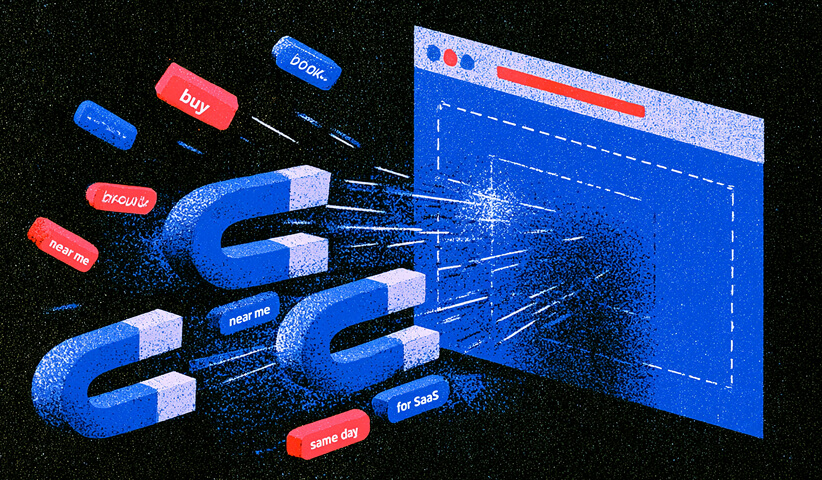
Relying on ultra-broad Google Ads keywords like "marketing strategies" or "digital marketing" attracts researchers, students, and competitors instead of buyers. Broad keywords attract irrelevant traffic that doesn't convert, and keyword targeting is the most critical element of paid search campaigns. Poor audience targeting results in messages that don't resonate, and misaligned targeting leads to attracting the wrong audience entirely.
High-intent keywords drive more qualified traffic to your site. Terms like "B2B PPC agency London," "Google Ads management for SaaS," or "emergency plumber Manchester same day" convert far better because users are already searching for a solution to a specific problem, and understanding the definition and marketing value of high-intent audiences helps you focus spend where it’s most likely to convert. Using negative keywords prevents wasted ad spend on irrelevant searches-blocking terms like "free," "course," or "jobs" can save significant budget.
On platforms like Meta and LinkedIn, errors in demographic and interest-based targeting are equally damaging. Targeting too wide an age range, wrong job seniority, no exclusion of students or competitors, and mixing B2B and B2C audiences all dilute your spend. Trying to utilize too many platforms at once can also lead to poor execution across all of them.
Practical fixes for audience targeting:
- Build separate campaigns for prospecting and retargeting
- Use first-party data lists (past buyers, trial users, high-LTV customers) to train ad platforms on what a "good lead" looks like
- Concentrate spend on targeted traffic sources rather than broad awareness
In one case, ReverseLogix built competitor-focused landing pages and isolated campaign traffic by intent, yielding a 113% conversion rate lift and 33% more MQLs within three months-without increasing ad spend. Targeting relevant keywords and refining your right audience over a 90-day window can dramatically increase conversions.
Problem #2: Your Offer and Messaging Don't Match User Intent
Even with the right audience, your campaigns will stall if the offer and messaging don't align with what users actually need. Marketing content is often tailored to company sales targets rather than buyer needs, and service websites often fail due to unclear value propositions. An unclear value proposition results in potential clients leaving without converting.
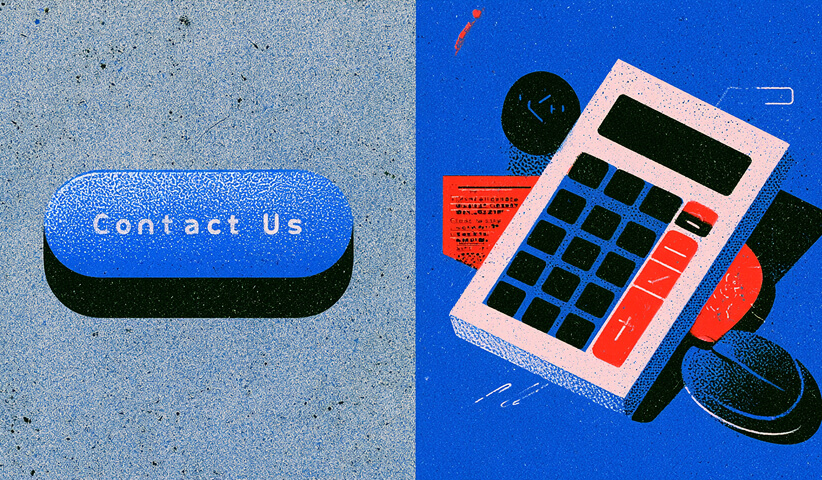
For most businesses, the offer is weak or generic. "Contact us" is not an offer-it's a chore. Compare that with "Get a 20-minute Google Ads audit with concrete changes you can make this week." Compelling ad copy drives immediate action from users, and clear CTAs significantly increase click-through rates. A mismatched offer or pricing can hinder conversion rates just as badly as the wrong audience.
Different stages of the funnel require different offers:
- Cold traffic needs low-friction value: guides, tools, calculators, webinars
- Warm retargeting traffic can be pushed towards demos, free trials, or consultations
Direct, problem-focused messaging outperforms broader benefit-driven language. Instead of "We offer comprehensive digital marketing services," try "Wasting budget on Google Ads that don't convert? Cut your cost per lead by 30% in 90 days or less." Ad copy must align with user search intent for better conversions.
Weak or inconsistent messaging can confuse potential customers. If your ad promises one thing and your landing page talks about something else, bounce rates spike even when click-through rates look strong. Ancestral Supplements improved subscription conversion by 39% simply by shifting copy from features to benefits, strengthening trust elements, and aligning the core message with what visitors actually cared about.
The distinction matters: features describe what you do; outcomes describe what the user gets. Lean heavily into outcomes, using real numbers or timeframes wherever possible. That's what makes potential clients convert.
Problem #3: Your Landing Pages Aren't Built for Conversion Rate Optimization
Sending paid advertising traffic to generic homepages or bloated service pages is one of the biggest conversion killers. Most businesses do exactly this, and it costs them dearly.
A high-converting landing page for lead generation in 2025–2026 should include many of the essential elements of high-converting landing pages:
- A clear headline with the value proposition front and centre
- Concise benefit bullets (outcomes, not features)
- Social proof like testimonials, case studies, or client logos-because social proof boosts trust and conversions
- A single, obvious clear CTA (e.g., "Book a strategy call this week")
Landing pages must align with ad copy for better conversions. Poor landing page experience affects conversion, especially if the page does not match ad promises. Simplifying navigation on landing pages reduces friction, and excessive friction in the conversion process discourages users from completing purchases. Optimizing forms by reducing fields builds trust before asking for sensitive details like budget or company size.
Websites that are not optimized for mobile can lose significant numbers of potential customers. In one SaaS case study, cutting page load time from 6.2 seconds to 1.8 seconds lifted conversion rate from 19% to 85% and dropped bounce rate from 78% to 23%. Drexel University built a dedicated PPC landing page and lifted form submissions to 17%-roughly 4.7× its previous campaign average of 3%.
Lack of trust signals decreases buyer confidence during the purchasing process. Clear CTAs can significantly improve both landing page conversions and overall conversion rates. Conversion rate optimization is iterative: A/B test different headlines, hero images, CTA button text, and form lengths. Use heatmaps or session recordings to identify friction points and user behavior patterns.
Tailor landing pages for different campaigns and audiences. Build separate pages for different geographies, for ecommerce vs B2B services, or for competitor-comparison traffic instead of relying on one generic page. Darkhorse Tech shifted from a generic contact page to a custom landing page and saw conversion rate rise from 0.88% to 7.87% over six months.
Problem #4: You're Optimising for the Wrong Metrics
Most teams celebrate clicks, impressions, and cheap leads while the sales team sees little change in qualified opportunities or closed revenue. Ignoring data can lead to investing in unproductive marketing channels, and lack of clear measurable goals causes marketing strategies to fail entirely.
The danger lies in optimising Google Ads or Meta campaigns purely for cost per lead without tracking what happens after the lead is created. A campaign with a £40 CPL that closes at 15% is far more profitable than a £15 CPL source with a 2% close rate. Strategies fail when not based on proper research or alignment with business goals.
Core metrics that matter for conversions:
Successful conversion optimization involves analyzing the entire customer journey, not just the top of the funnel. Set up proper conversion tracking: Google Analytics 4 events, Google Ads conversion actions, call tracking numbers, and CRM integration so you can identify which campaigns produce real customers. Even a basic multi-touch attribution approach-comparing first click vs last click-helps you understand which top-of-funnel channels contribute to eventual conversions.
Insufficient budget often leads to marketing strategies falling short, but more commonly the issue is that money is allocated based on vanity metrics rather than revenue signals. High performing teams track the full funnel, from click to closed deal, and optimize campaigns accordingly.
Problem #5: Your Sales Process Is Leaking High-Intent Leads
Even excellent campaigns cannot compensate for slow or weak lead handling. If marketing delivers qualified leads and the sales process drops them, campaign performance looks bad-but the fix isn't in the ads. This is especially true for ecommerce and Meta-heavy brands where sophisticated strategies, like those used by Quincy Samycia to scale and rebrand effectively, still depend on strong post-click and post-lead processes.
Delays in responding to enquiries significantly reduce close rates. Research consistently shows that leads responded to within five minutes close at markedly higher rates than those left for hours or days. This matters most on high-intent channels like search-based Google Ads, where users are actively looking for a solution.
Common breakdowns include:
- Leads routing to a generic inbox with no clear owner
- Unstructured discovery calls where reps don't ask for commitment
- No consistent nurturing for prospects who aren't ready to buy immediately
- Weak or confusing calls to action in follow-up emails, which reduce conversion rates
Practical fixes:
- Implement automated response emails so leads hear back immediately
- Set clear SLAs for response times (e.g., under 30 minutes during business hours)
- Use simple lead scoring rules to prioritise follow-up
- Build basic email or SMS nurture sequences for warm but not-yet-ready prospects
Slow adaptation to changes in trends or user preferences can render your sales approach obsolete. The entire funnel-from click to closed deal-must be optimised, and marketing and the sales team should share common revenue goals and reporting. Performing security verification on inbound leads (filtering out malicious bots and junk submissions) also ensures your team spends time on real potential clients, not spam. When security verification is working properly and verification successful signals are in place, your respond ray id and security service filters help maintain lead quality. Improving follow-up speed and call quality can increase closed-won deals without changing ad spend by a penny.
Problem #6: You're Not Testing and Learning Fast Enough
Modern ad platforms change rapidly. Static campaigns stagnate, leading to rising cost and falling conversion rates over time. Testing different ad copy variations improves conversion rates, and regular testing and optimization are essential for identifying performance improvements; using high-converting AI ad copy prompts can speed up this process while keeping messaging aligned with audience intent.
There's a big difference between random one-off tweaks and a structured testing roadmap. High performing teams prioritise experiments based on data, running tests on audiences, creative, and landing pages in order of expected impact.
Simple but systematic tests to run:
- Two Google Ads headlines per ad group with different messaging angles
- Two versions of a lead magnet (different titles, formats, or promises)
- Two landing page layouts or value propositions tailored to specific industries
- A/B testing different ads can improve conversion rates and reveal which creative resonates
A/B testing improves ad performance and conversion rates. Faster iteration leads to better ad performance over time. Testing different messaging angles can significantly boost lead generation, and continuous testing helps identify what resonates with your audience. Creative strategies must evolve through ongoing testing and iteration-high-performing ads require ongoing creative iteration to stay effective.
Platforms need clear, high-quality conversion signals to optimise effectively. Feed them actual purchases or sales-qualified leads, not just form fills. Frequent structural changes to budgets or campaign architecture can reset learning phases, so balance stability with improvement.
A practical testing cadence:
- Weekly: Review campaign performance for red flags (CPL spikes, conversion rate drops)
- Every 1–2 weeks: Make one controlled change
- Every 30–60 days: Evaluate statistically meaningful results
- Quarterly: Refresh strategy based on accumulated learnings
Testing different messaging can reveal what resonates best. The biggest long-term wins come from understanding why a certain message, audience, or landing page works-then doubling down on those insights instead of chasing every new trend.
Want to learn more about brand platforms, Brand Strategy and Brand Identity? Keep reading!
If you need help with your companies brand strategy and identity, contact us for a free custom quote.
How to Turn Underperforming Marketing Strategies into a Conversion Engine

The problems above are interconnected, but you don't need to fix everything at once. Here's a practical order of operations you can implement over the next 60–90 days to drive conversions and build trust in your marketing investment.
Recommended sequence:
- Audit tracking and metrics first - fix what you measure before changing what you do
- Refine audience targeting and keywords - cut wasted spend, focus on the right audience
- Rebuild or optimise key landing pages - improve the critical moment between click and conversion
- Align offers and messaging - match your core message to user intent at each funnel stage
- Tighten sales follow-up and nurturing - stop leaking the leads you've already paid for
Example 60-day roadmap:
| Weeks | Focus Area |
|---|---|
| 1 to 2 | Tracking audit, GA4 setup, conversion action review |
| 3 to 4 | Keyword and audience overhaul, negative keyword lists, first-party data upload |
| 5 to 6 | Landing page tests (headlines, CTAs, form length, mobile speed) |
| 7 to 8 | Sales process alignment, nurture sequences, lead scoring |
Start with one or two priority channels-for most businesses, Google Ads search campaigns driving to dedicated landing pages will give you the clearest signal, then layer in other types of advertising to transform your business once your core funnel is performing. Creating content and running campaigns across every platform simultaneously spreads resources thin.
Most conversion issues are solvable with methodical changes, not bigger budgets. Focus on intent, clarity, and data, and selectively use AI tools to boost website traffic where they can enhance targeting, content, and personalisation. When you build a system where the right audience sees the right message on the right page with proper follow-up, you create a genuine conversion engine-and the revenue follows.
FAQ
These FAQs address common practical questions that go beyond the main article content.
How long does it usually take to see better conversion rates from marketing changes?
Most businesses start to see early signals-improved click-through rates, more qualified enquiries-within 2–4 weeks of making focused changes to targeting and landing pages. More reliable, statistically meaningful conversion rate improvements typically show up over 6–12 weeks, depending on traffic volume and sales cycle length. Plan at least one full quarter to test, learn, and refine before judging whether a new strategy or campaign structure is working.
Can small budgets still generate conversions, or do I just need to spend more?
Small budgets can absolutely drive conversions if they are tightly focused on high-intent audiences and strong offers instead of broad awareness campaigns. Concentrate spend on one or two best-performing channels-for many, this is Google Ads search plus retargeting-rather than spreading a limited budget thinly across many platforms. Improving conversion rate on existing traffic through better landing pages and follow-up often has a bigger financial impact than simply increasing ad spend.
If I can only fix one thing first, what should I prioritise to improve conversions?
Start with your landing pages because they sit at the critical moment between click and conversion and usually have the most immediate impact on results. Align the page headline and offer exactly with the ad that drove the visit, simplify the page, and make the primary call-to-action impossible to miss. Once the landing experience is solid, optimising audience targeting and creative will compound those gains and drive more profitable leads.
How often should I review and adjust my marketing campaigns?
A weekly performance review helps you spot obvious issues like spikes in cost per lead or drops in conversion rate. Run a more in-depth optimisation cycle every 2–4 weeks. Avoid making major structural changes every few days, as this can prevent platforms' machine learning systems from stabilising and learning. Maintain a simple testing calendar so you always know which variable you're changing and can clearly see what actually drives improvement.
Do I need different landing pages for each marketing channel?
You don't need a unique page for every single ad, but creating separate landing pages for different high-level channels and intents-Google Ads vs social ads, cold vs retargeting-usually improves performance. Tailor copy and proof elements to match the visitor's awareness level: search traffic may respond better to direct, solution-focused pages, while social traffic often needs more context and education. Even small tweaks like changing headlines, social proof, and CTAs to match the traffic source can lead to a noticeable lift in conversion rates.

Quincy Samycia
As entrepreneurs, they’ve built and scaled their own ventures from zero to millions. They’ve been in the trenches, navigating the chaos of high-growth phases, making the hard calls, and learning firsthand what actually moves the needle. That’s what makes us different—we don’t just “consult,” we know what it takes because we’ve done it ourselves.
Want to learn more about brand platform?
If you need help with your companies brand strategy and identity, contact us for a free custom quote.
We do great work. And get great results.
+2.3xIncrease in revenue YoY
+126%Increase in repurchase rate YoY



+93%Revenue growth in first 90 days
+144% Increase in attributed revenue




+91%Increase in conversion rate
+46%Increase in AOV




+200%Increase in conversion rate
+688%Increase in attributed revenue