Common Rebranding Mistakes (And Why They Fail)
04/17/2026
Branding / Brand Strategy
Discover the most common rebranding mistakes—and how to avoid them—so you can protect brand equity, maintain customer trust, and execute a strategy that actually drives growth.

Branding / Brand Strategy
.png)


The Strategic Errors That Damage Brand Equity — and How to Avoid Them


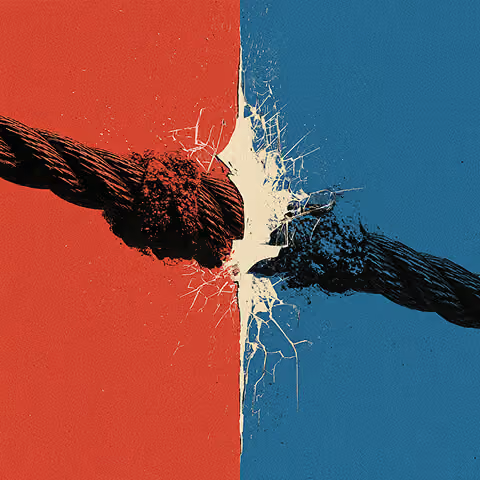
Rebranding can unlock growth.
It can also erode trust, confuse customers, and waste years of accumulated equity.
Most failed rebrands don’t collapse because of bad design.
They fail because of strategic mistakes made long before launch.
If you want to understand why rebrands fail, you need to examine the underlying errors that create unnecessary risk.
This guide breaks down the most common rebranding mistakes, analyzes real-world examples, and highlights early diagnostic warning signs so you can avoid becoming one of them.
If you're still evaluating whether rebranding is the right move, revisit the full business rebranding strategy guide before committing to change.
Why Rebrands Fail (The Big Picture)
Across industries, failed rebrands share common traits:
- No clear strategic reason
- Weak customer research
- Overcorrection
- Poor communication
- Inconsistent rollout
- Leadership misalignment
Rebranding is not risky because change is dangerous.
It’s risky because poorly structured change erodes familiarity and trust.
Let’s examine the most common failure patterns.
Free Brand Health Audit
Make sure your brand is built to sell
Search has changed. Your customers aren't just Googling anymore. They're asking ChatGPT, Perplexity, Gemini and other AI platforms what to buy, who to trust and which brands they should consider.
If your brand isn't showing up clearly in those answers, you're already losing opportunities. Our free Brand Health Audit shows you where your brand stands across traditional search, AI search and brand positioning.

Sample brand audit
Live preview
Traditional search
72
AI search (GEO)
34
Brand positioning
58
Why Rebrands Fail: 9 Critical Mistakes to Avoid




1️⃣ Rebranding for Ego Instead of Strategy
The Mistake
Leadership gets bored.
A new executive wants to “make their mark.”
The brand “feels outdated” internally.
There is no clear strategic misalignment. No positioning shift. No audience change.
Just internal dissatisfaction.
Why It Fails
Customers didn’t ask for the change.
When brands alter high-recognition assets without a compelling reason, customers experience confusion.
There’s no strategic narrative to justify the disruption.
Diagnostic Warning Signs
- The primary rationale is aesthetic preference.
- Customer research hasn’t been conducted.
- Leadership cannot articulate the business problem the rebrand solves.
If you can’t define the strategic driver in one sentence, pause.
2️⃣ Skipping Research (Assumption-Driven Rebrands)
The Mistake
Companies assume they know how customers perceive them.
They redesign before conducting:
- Brand audits
- Customer interviews
- Competitive positioning analysis
Why It Fails
Perception is not internal.
Without research, brands often:
- Remove assets customers trust
- Overcorrect positioning
- Misdiagnose the actual problem
Many “failed rebrands” were simply uninformed.
Case Pattern
Companies that rebrand based on internal dissatisfaction often discover post-launch that:
- Customers were not confused
- The problem was sales execution
- The issue was pricing, not positioning
Rebranding becomes a distraction instead of a solution.
3️⃣ Removing High-Equity Assets Without Understanding Their Value
The Mistake
Altering or removing recognizable elements without mapping brand equity first.
Examples:
- Renaming unnecessarily
- Changing signature color
- Eliminating familiar visual cues
- Dropping legacy taglines customers associate with trust
Case Breakdown: Gap (2010)
Gap replaced its iconic blue box logo with a generic redesign.
There was:
- No strategic repositioning
- No narrative
- No customer context
The backlash was immediate. The logo was reverted within days.
Why It Failed
They altered a Tier 1 recognition asset without redefining positioning.
Recognition drives familiarity.
Familiarity drives trust.
Diagnostic Warning Signs
- Multiple high-recognition elements changing at once
- No equity preservation analysis
- No staged transition
4️⃣ Confusing Rebranding With a Logo Redesign
The Mistake
Treating rebranding as a visual refresh instead of a positioning shift.
Companies update:
- Logo
- Typography
- Website design
But leave:
- Value proposition
- Differentiation
- Audience clarity
- Category positioning
Unchanged.
Why It Fails
Perception doesn’t change just because visuals do.
If positioning remains unclear, customers remain confused.
This creates:
- Disappointment internally
- No measurable performance improvement
- Perception stagnation
Design cannot fix strategic ambiguity.
5️⃣ Overcorrecting Into a New Identity
The Mistake
Swinging too far in the opposite direction.
Examples:
- Drastic tone shift
- Sudden demographic pivot
- Completely new category framing
- Eliminating all legacy recognition
Why It Fails
Sudden identity shifts create perception shock.
Customers may question:
- Has ownership changed?
- Is the company unstable?
- Is this still the same service?
Radical change requires disciplined communication and rollout.
Without it, trust wavers.
6️⃣ Poor Communication During Launch
The Mistake
- Silent logo swaps
- No announcement email
- No explanation of the “why”
- No reassurance about continuity
Why It Fails
Unexplained change creates doubt.
Customers fill communication gaps with assumptions.
Even strong rebrands can falter if announcement strategy is weak.
If you're planning your rollout, review our full guide on how to announce a rebrand without losing customers to prevent this exact mistake.
7️⃣ Inconsistent Rollout Across Channels
The Mistake
Updating some assets while leaving others outdated.
Examples:
- Website updated
- Sales deck old
- Social profiles mixed
- Email signatures inconsistent
Why It Fails
Fragmentation signals instability.
Customers expect cohesion.
Inconsistent rollout undermines credibility.
This is one of the most common and preventable rebrand risks.
8️⃣ Lack of Internal Alignment
The Mistake
Leadership agrees on visuals—but not positioning.
Sales and marketing use different language.
Customer support doesn’t understand new messaging.
Why It Fails
Internal inconsistency becomes external confusion.
Customers experience different versions of your brand depending on who they speak with.
Rebranding requires internal clarity before external launch.
9️⃣ Rebranding Without Fixing Operational Reality
The Mistake
Positioning as premium without operational alignment.
Claiming strategic expertise while delivering tactically.
Promising innovation without improving product experience.
Why It Fails
Rebranding changes perception—but operations must reinforce it.
If customer experience contradicts positioning, credibility erodes quickly.
Brand promise must match operational reality.
Want to learn more about Rebrands, Brand Strategy and Brand Identity? Keep reading!
If you need help with your companies branding, contact us for a free custom quote.
Patterns Behind Failed Rebrands
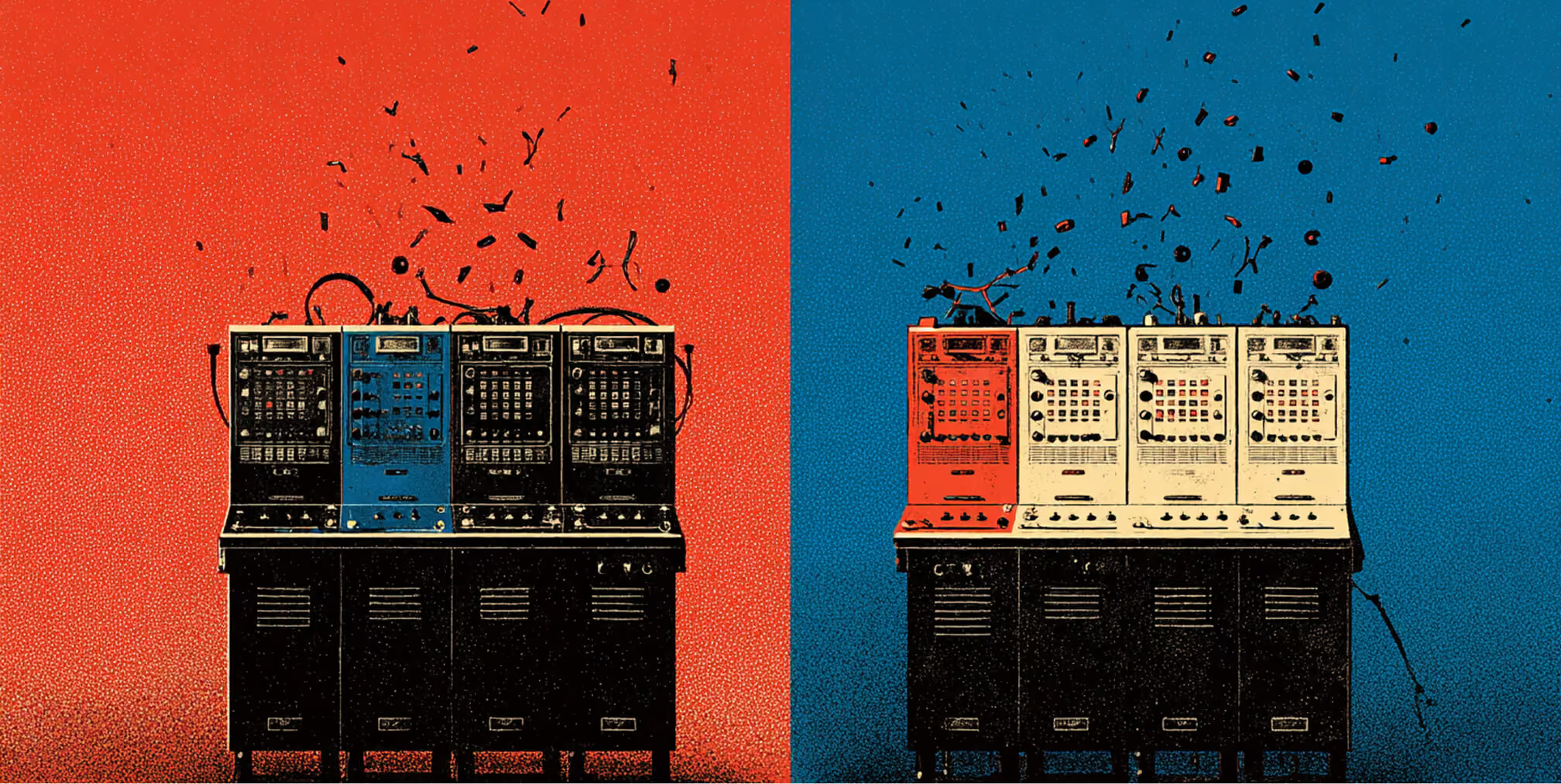
Across industries, failed rebrands tend to:
- Change identity before clarifying strategy
- Remove recognition without analysis
- Lack internal consensus
- Overlook customer perception
- Underestimate rollout complexity
They are rarely design failures.
They are strategic failures.
Real-World Failure Patterns (Beyond Logo Changes)
Tropicana Packaging Redesign
What happened:
- Removed iconic orange-with-straw visual
- Minimalist redesign
- Sales dropped significantly
Why:
- Removed a primary shelf-recognition cue
- Customers couldn’t easily find product
Lesson:
Recognition aids purchase behavior.
Yahoo’s Long-Term Brand Drift
What happened:
- Multiple redesigns
- Inconsistent positioning
- Unclear category identity
Why:
- No cohesive long-term strategic direction
- Visual updates without strategic anchor
Lesson:
Frequent, unanchored changes erode brand equity gradually.
Early Warning Signs Your Rebrand Is at Risk
Watch for these signals during planning:
- Leadership cannot clearly define positioning
- Research has not been conducted
- The primary motivation is aesthetics
- Multiple core assets are changing simultaneously
- There is no asset tracking or rollout plan
- Teams disagree on audience focus
- Messaging has not been tested
If two or more apply, risk is rising.
How to Avoid These Rebranding Mistakes
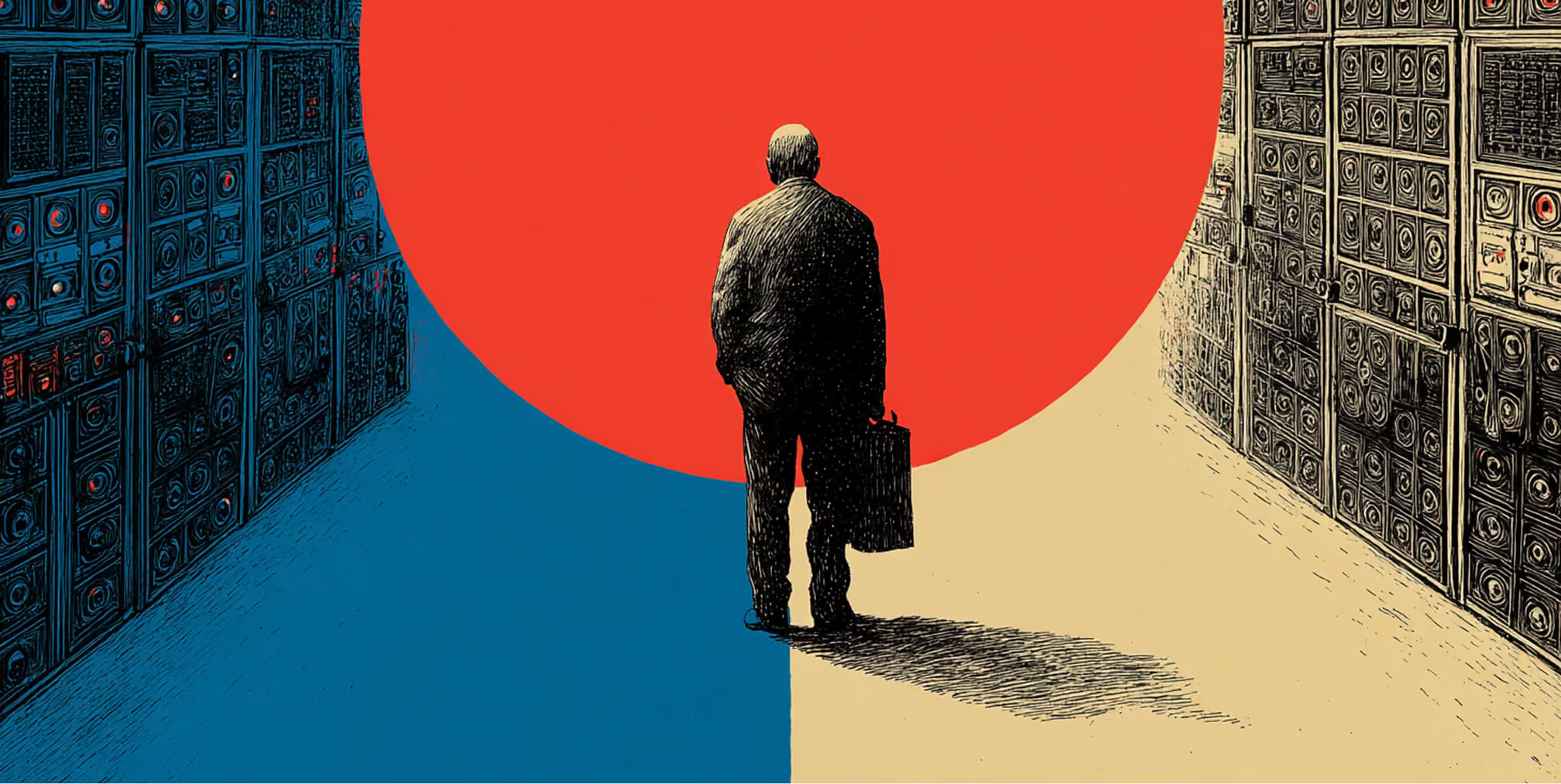
- Conduct a structured brand audit first.
- Map brand equity before changing assets.
- Choose the right rebrand type (evolutionary vs transformational).
- Align leadership early.
- Validate positioning with customers.
- Create a detailed rollout plan.
- Communicate clearly and proactively.
Each of these reduces rebrand risk significantly.
Final Perspective
Rebranding is not dangerous.
Unstructured rebranding is.
The most successful rebrands:
- Are strategy-led
- Preserve valuable equity
- Clarify positioning
- Align internally
- Roll out deliberately
If you want to reduce rebrand risk and avoid becoming a cautionary case study, revisit the full business rebranding strategy guide before making high-impact decisions.
Because the cost of fixing a failed rebrand is always higher than the cost of planning it correctly.

Quincy Samycia
As entrepreneurs, they’ve built and scaled their own ventures from zero to millions. They’ve been in the trenches, navigating the chaos of high-growth phases, making the hard calls, and learning firsthand what actually moves the needle. That’s what makes us different—we don’t just “consult,” we know what it takes because we’ve done it ourselves.
Want to learn more about brand platform?
If you need help with your companies brand strategy and identity, contact us for a free custom quote.
We do great work. And get great results.
+2.3xIncrease in revenue YoY
+126%Increase in repurchase rate YoY




+93%Revenue growth in first 90 days
+144% Increase in attributed revenue




+91%Increase in conversion rate
+46%Increase in AOV




+200%Increase in conversion rate
+688%Increase in attributed revenue