Rebrand Rollout Plan: A 30–60–90 Day Framework
04/14/2026
Branding




How to Roll Out a Rebrand With Clarity and Control



Free Brand Health Audit
Make sure your brand is built to sell

The 30–60–90 Day Rebrand Rollout Framework




This framework assumes your positioning, messaging and core identity are approved. The next task is to prepare applications, coordinate teams and introduce the change.
Use the phases as planning windows, rather than fixed deadlines. Naming changes, website migrations, packaging production and multi-location updates may require a longer schedule. Launch when critical dependencies are resolved and customer-facing experiences are ready.
Phase 1: Days 1–30 — Preparation and Readiness
Before public launch, establish ownership, prepare employees and confirm which assets must be ready.
1. Align Leadership Around the Rebrand
Leadership should agree on the reason for the change, the intended positioning and what customers need to understand.
Document:
- Why the business is rebranding.
- What is changing and what remains consistent.
- The evidence supporting the new direction.
- The launch scope and approval responsibilities.
- Any unresolved decisions that could affect implementation.
Deliverable: An approved rebrand narrative and a named person accountable for launch readiness.
2. Prepare Customer-Facing Teams
Brief employees before they are expected to explain the change externally. Tailor training to each team’s responsibilities.
Sales may need revised presentations and answers to objections. Support may need guidance on names, domains, accounts or product changes. Operations may need updated supplier instructions and production files.
Cover:
- Updated positioning and key messages.
- Approved explanations of the rebrand.
- Changes that affect customers directly.
- Where to find current assets.
- How to escalate questions or report outdated materials.
Deliverables: A training presentation, customer FAQ and accessible asset library.
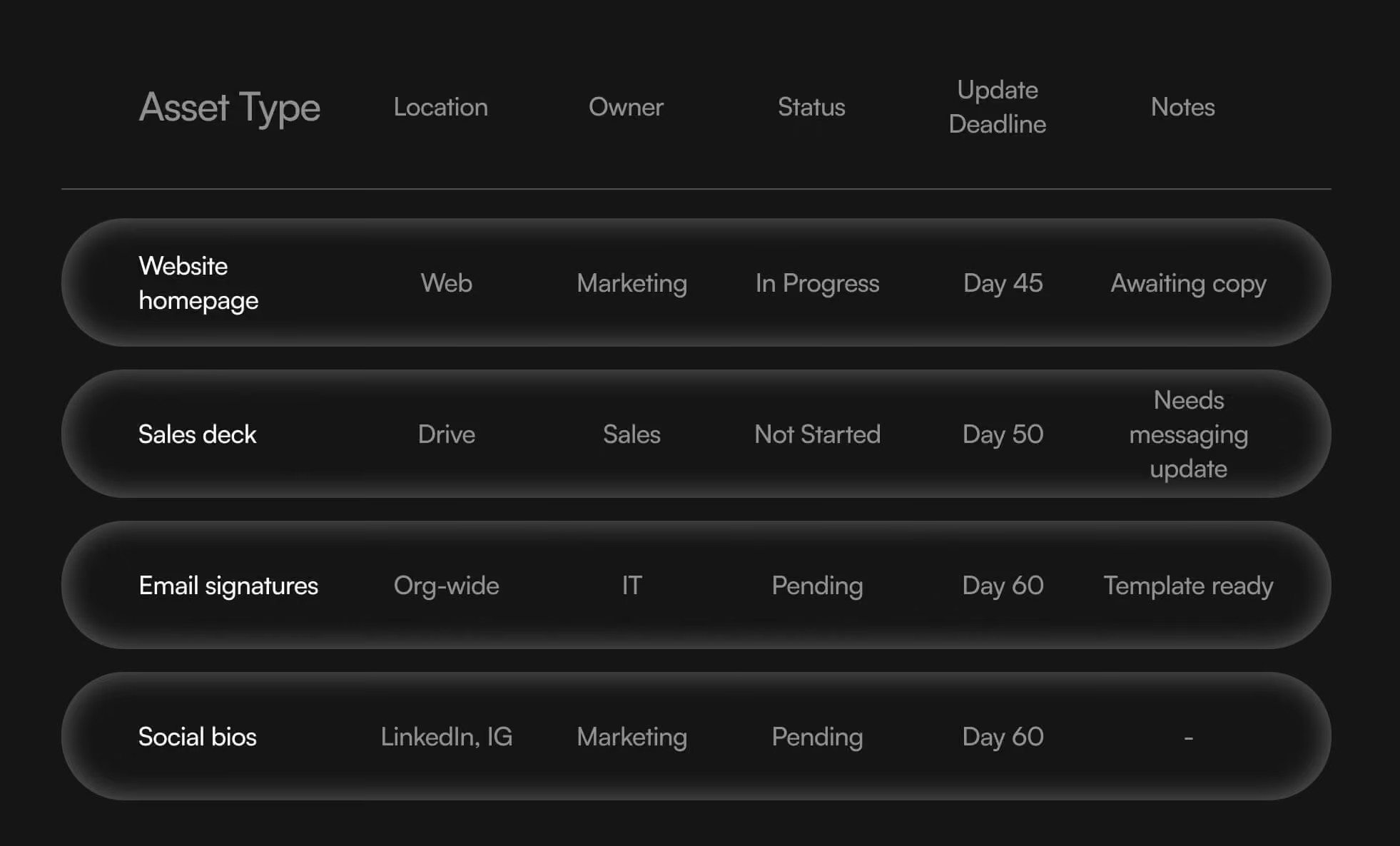
3. Build the Asset Tracking Sheet
Create one shared inventory of the materials and systems affected. Assign a named owner to each item and record what must happen before it can be approved or published.
Use the following copyable entry for each asset in a document, spreadsheet or project-management tool.
Asset name: [Name and application]
Owner: [Person responsible for completion]
Current URL or file location: [Link to the existing asset]
Replacement URL or file location: [Link to the approved replacement or working file]
Status: [Not started / In progress / In review / Approved / Scheduled / Live / Verified / Blocked]
Dependencies: [Required decisions, assets, approvals or technical work]
Approver: [Person authorized to approve the update]
Priority and due date: [Launch-critical or later phase; deadline]
Verification: [Who will check the published or produced asset, and when]
Example entry
Asset name: Customer rebrand announcement email
Owner: [Email marketing lead’s name]
Current URL or file location: [Link to the current email template]
Replacement URL or file location: [Link to the rebrand announcement draft]
Status: Blocked
Dependencies: Approved narrative, verified announcement page, confirmed send list and tested sender details
Approver: [Brand owner’s name]
Priority and due date: Launch-critical; send after the website passes launch checks
Verification: [Named reviewer confirms links, display and scheduled send settings]
Distinguish approved from verified. An approved design may still be uploaded incorrectly, linked to an outdated page or missing from an active workflow.
4. Prepare Launch-Critical Assets
Prioritize the materials customers are most likely to encounter:
- Website pages and announcement content.
- Sales presentations and active proposals.
- Email signatures and customer email templates.
- Social profiles and campaign landing pages.
- Transactional messages and automated workflows.
- Brand guidelines and shared templates.
Give every remaining asset an owner and transition date. Lower-visibility materials can follow later if their temporary use will not create confusion.
Readiness checkpoint: Critical assets are approved, teams are prepared and unresolved blockers have an owner and resolution plan.
Phase 2: Days 31–60 — Public Launch and Coordinated Transition
Choose a launch date within this phase based on readiness. Coordinate the website, announcements and active customer touchpoints around that date.
1. Website Launch: Your Central Reference Point
Your website should explain the rebrand and help visitors complete the tasks they came to perform. If the name changes, make the relationship between the old and new business clear.
Complete checks before launch, then repeat critical tests on the live site.
Content and functionality
- Confirm the approved name, messaging, identity and contact details.
- Test navigation, downloads, search and important mobile layouts.
- Submit forms and verify delivery to the correct inbox or CRM.
- Test checkout, booking, account access and integrations where applicable.
- Confirm who can authorize a fix or restore the previous version if a critical issue occurs.
Redirects and search visibility
If URLs change, map each old URL to its relevant replacement and implement permanent server-side redirects. Test for broken destinations, loops and unnecessary redirect chains. Avoid sending unrelated retired pages to the homepage.
Update internal links, canonical URLs and XML sitemaps. Remove launch-blocking staging restrictions from pages intended for indexing, while keeping private content protected. Confirm Search Console access and follow the applicable domain-move steps.
Use Google’s site-migration guidance to plan URL changes. Monitor old and new URLs after launch; redirect testing alone does not establish that a migration is complete.
Analytics and measurement
- Record baseline traffic, conversions and lead quality before launch.
- Verify that tracking loads on the intended pages.
- Test important events, including successful enquiries or purchases.
- Check for missing or duplicate events and confirm consent choices behave as configured.
- Preserve campaign parameters through redirects and check cross-domain journeys where relevant.
- Record the launch date and any measurement changes so later comparisons remain interpretable.
Accessibility
Evaluate the site against the agreed WCAG 2.2 accessibility criteria and conformance level. Include keyboard navigation, visible focus, colour contrast, image alternatives, form labels, error messages and zoom behaviour.
Combine automated checks with manual testing of important journeys. Resolve issues that prevent customers from completing essential tasks before launch.
Launch checkpoint: The live site passes critical checks before announcement traffic is directed to it.
2. Announce the Change to Customers
Your announcement should answer:
- Why the business is evolving.
- What customers will notice.
- What remains consistent.
- Whether customers need to take action.
- Where they can get help.
Our guide on how to announce a rebrand explains how to structure that communication.
Prepare an email and a website page that teams can reference. A founder video may also be useful if it adds a clear, personal explanation.
Notify affected customers early enough to act if the transition changes login details, payment instructions, service access or other practical requirements.
3. Update Channels According to Dependencies
Use the asset tracker to coordinate publication. A workable sequence may be:
- Verify the website and announcement page.
- Activate updated sales, support and email materials.
- Send customer communications.
- Update social profiles and public listings.
- Launch refreshed campaigns and scheduled content.
- Verify active automations and third-party references.
Adjust the sequence to your business. Campaigns should point to verified destinations, and employees should have approved materials before responding to customers.
If an old domain or email address still receives enquiries, maintain an appropriate transition route and monitor it.
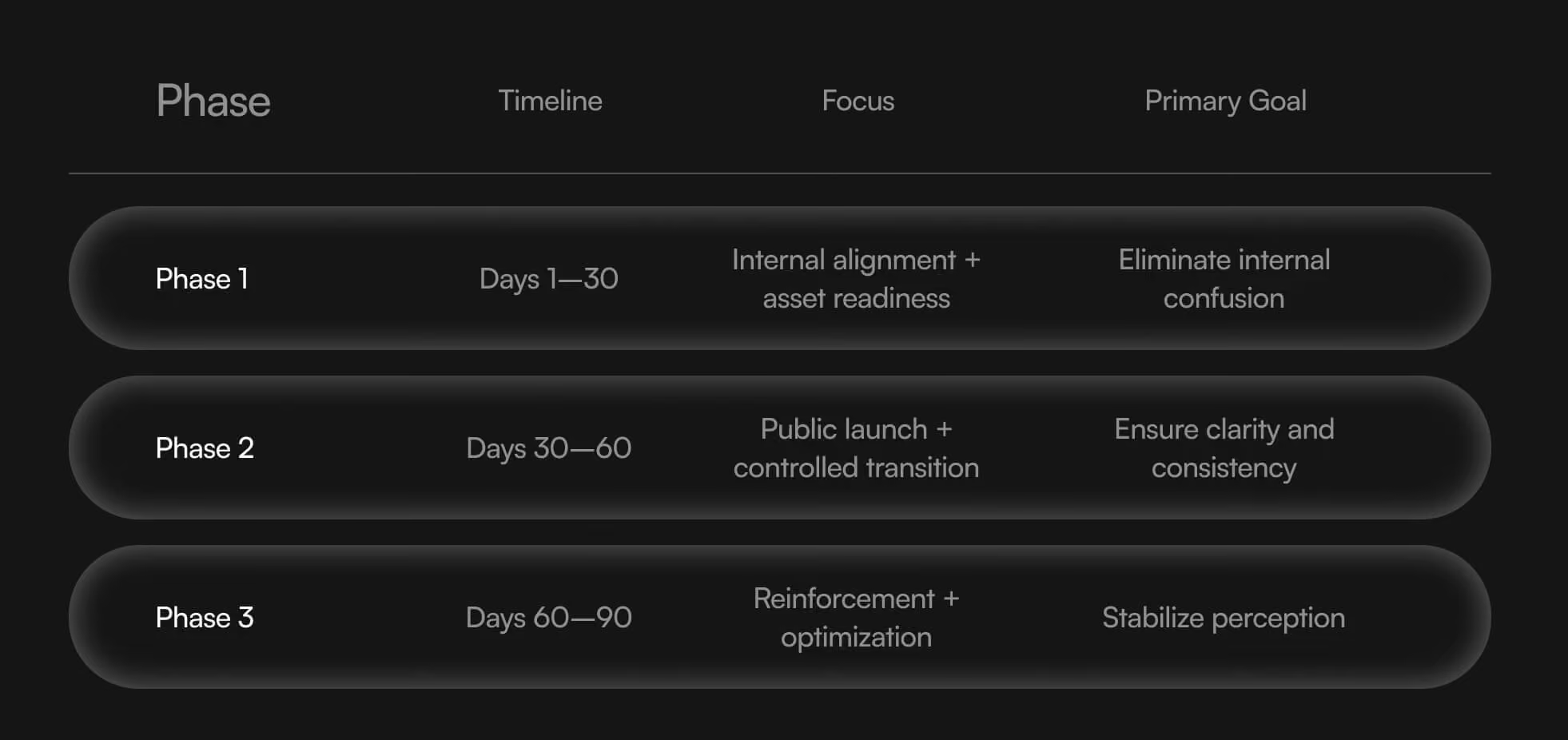
Phase 3: Days 61–90 — Follow-Through and Improvement
Use this phase to resolve remaining issues, complete planned updates and assess how customers are navigating the change.
1. Monitor Customer and Technical Signals
Review:
- Customer questions and support themes.
- Form delivery, checkout and account-access issues.
- Broken links, redirects and search indexing.
- Traffic and conversions by source.
- Enquiry quality and recurring sales objections.
- Searches for both the old and new names, where relevant.
Investigate changes rather than assuming they are normal. A drop in recorded conversions could reflect a tracking failure, a usability problem or a change in traffic quality.
2. Reinforce the Explanation Where Needed
Use customer questions to guide follow-up content. Update FAQs, sales materials and onboarding messages when the same misunderstanding appears repeatedly.
Relevant case studies, product explanations and email content can connect the new identity with the business customers already know. Communication should provide useful context and evidence; repetition alone does not establish trust.
3. Complete Remaining Asset Updates
Close outstanding items such as archived downloads, internal templates, supplier records and lower-priority printed materials.
Prioritize by customer exposure and operational importance. Active contracts, invoices, proposals or location signage may need attention before launch rather than being deferred to this phase.
Verify replacements and archive superseded working files so employees do not accidentally reuse them.
Completion checkpoint: Remaining exceptions are documented, critical experiences work as intended and ongoing ownership is established.
Governance Model: Who Owns the Rollout?
Assign responsibilities before work begins:
- Brand owner: Approves the overall direction and resolves brand decisions.
- Rollout lead: Maintains the tracker, coordinates dependencies and escalates blockers.
- Asset owners: Complete assigned updates and arrange verification.
- Reviewers: Check messaging, design or technical requirements.
- Launch decision-maker: Confirms readiness and authorizes publication.
One person may cover several roles in a smaller business. Larger organizations may need departmental representatives, but each decision should still have a clear owner.
Keep approved files in a central location and document how teams request changes, report problems and retire outdated materials.
Internal Communication Schedule
Use this sample cadence for the preparation phase, adjusting it to your launch date.
Week 1: Explain the direction
Brief leadership and department heads on the rationale, scope, responsibilities and expected timing.
Week 2: Prepare each team
Run role-specific sessions covering customer questions, new materials and workflow changes.
Week 3: Share approved resources
Distribute the FAQ, templates and asset-library access. Ask teams to identify missing materials or unresolved questions.
Week 4: Confirm readiness
Review critical assets, test customer journeys and confirm launch responsibilities and escalation contacts.
Launch day and afterward
Tell employees when the change is live, where to report issues and when fixes or updated guidance become available. Continue brief updates until the transition is stable.
Want to learn more about Rebrands, Brand Strategy and Brand Identity? Keep reading!
Choosing Your Rollout Model

How to Know If Your Rollout Is Working


Quincy Samycia
Want to learn more about brand platform?