Ecommerce Meta Ads in 2026: The Strategy Agencies Use to Scale Ecommerce Brands

04/21/2026

Marketing Strategy

Learn how top agencies turn Meta Ads into a scalable growth engine by aligning positioning, creative, CRO, and retention into one high-performing system.

Hero Image Business professional walking upward across abstract steps and a rising graph, representing scalable growth and performance-driven ecommerce advertising.

Meta Ads remain one of the most influential growth channels in ecommerce, but success in 2026 looks very different than it did just a few years ago. As competition intensifies and platform automation reshapes how campaigns are run, profitable performance now depends on far more than audience targeting or ad spend alone. The brands that scale consistently are the ones that connect clear positioning, high-converting creative, strong onsite conversion paths, and retention systems into one integrated acquisition engine.

Quincy Samycia
Play IconPause Icon
0:00
0:00

Scaling Ecommerce with Meta Ads in 2026: Strategy, Creative, and Systems That Work

Multiple individuals positioned within a grid of blue and black blocks, representing fragmented audiences and the complexity of targeting in modern advertising.
Three professionals seated in discussion around a circular graphic, representing strategy, collaboration, and data-driven decision-making in ad campaigns.
Close-up eye surrounded by product elements and data visuals, representing consumer attention, product focus, and performance analytics.
No items found.

Meta Ads are still one of the most powerful growth channels in ecommerce, but in 2026, running Facebook and Instagram ads profitably is a lot harder than it was a few years ago. Competition is higher, creative fatigue happens faster, and brands can no longer rely on basic targeting tweaks or discount-heavy campaigns to scale. At the same time, ecommerce keeps taking a bigger share of retail, and Meta continues to invest heavily in AI-driven ad products and automation.

That is why this article matters. 

If you are a founder, marketing manager, or marketing director trying to grow an ecommerce brand, this is not another surface-level overview of Meta Ads. This is a practical breakdown of the strategy agencies use to actually scale brands: how positioning affects paid performance, why creative is now the biggest lever, how CRO and retention change the economics of acquisition, and what tools support a modern Meta Ads system.

You will also see what that looks like in practice through real examples from brands like NOWATA, Eyecart, Acknowledge, and DrTung’s. The common thread is simple: the brands that win on Meta are rarely the brands with the biggest budgets. They are the brands with the clearest positioning, the strongest creative systems, the best conversion infrastructure, and the discipline to build a full-funnel engine instead of just buying traffic.

Why Meta Ads Still Matter So Much for Ecommerce

Meta remains one of the largest ad ecosystems in the world. In its latest full-year results, Meta reported $164.5 billion in 2024 revenue, driven overwhelmingly by advertising.

At the same time, ecommerce itself continues to grow. The U.S. Census Bureau reported that adjusted U.S. retail ecommerce sales reached $310.3 billion in Q3 2025 and accounted for 16.4% of total retail sales.

That matters because Meta sits at the intersection of attention and intent. Facebook and Instagram are not just awareness channels. For ecommerce brands, they are often product discovery channels, conversion channels, remarketing channels, and creative testing environments all at once. And Meta is continuing to push AI deeper into ad delivery and campaign setup through products like Advantage+ and new advertiser AI tools.

But there is a catch: Meta has become easier to launch on and harder to master.

Why Most Ecommerce Meta Ads Fail

Most brands do not fail on Meta because the platform stopped working. They fail because they treat Meta Ads like a media-buying problem when it is really a systems problem.

The most common breakdowns look like this:

Weak positioning. The product might be good, but the message is generic. The brand sounds like everyone else in the category.

Creative that does not carry the sale. The ad might look polished, but it does not stop the scroll, build belief, or create urgency.

Landing pages that leak conversions. The promise in the ad is not matched on-site. Product pages are cluttered, generic, or friction-heavy.

Poor retention. The brand pays to acquire a customer, but has no real email or lifecycle system to increase LTV.

Bad feedback loops. Teams are looking at ad metrics, but not connecting performance to creative quality, landing page behavior, profit, or repeat purchase.

In other words, the problem is rarely just campaign setup. It is the lack of an integrated growth system.

The Strategy Agencies Use to Scale Ecommerce Brands

Person ascending abstract steps surrounded by charts and mechanical elements, representing optimization, systems, and scaling ad performance.
Individual walking past interconnected shapes and data blocks, representing automation and the flow of data within ad ecosystems.
Two professionals walking upward along geometric steps, representing structured growth and progression in campaign performance.
Central figure surrounded by multiple faces and profiles, representing audience segmentation, personalization, and diverse customer targeting.

The highest-performing Meta strategies in 2026 are built on four connected layers:

  1. Brand-backed positioning
  2. Creative testing and iteration
  3. Conversion rate optimization
  4. Retention and analytics infrastructure

When these work together, paid media becomes easier to scale, because every click lands in a system designed to convert and compound.

1. Brand-Backed Positioning Comes Before Scale

A lot of brands want to jump straight into scaling ad spend. But if your positioning is vague, your ads will be expensive, your landing pages will underperform, and your campaigns will need discounts to survive.

This is where many agencies get it wrong. They optimize accounts before they clarify the story.

The better approach is to build the brand so it sells before the click.

That means defining:

  • the real differentiator
  • the clearest value proposition
  • the proof hierarchy
  • the emotional and rational reasons to believe
  • the customer language that should appear across ads, landing pages, email, and product pages

When this work is done properly, the brand stops sounding like a commodity. Creative gets sharper. The site converts better. Paid media becomes more efficient.

That pattern shows up again and again in high-growth ecommerce brands.

2. Creative Is the Biggest Performance Lever

As Meta automates more of the targeting and delivery process, creative matters even more. Meta’s own Advantage+ tools are designed to use machine learning across campaign delivery, but those systems still need strong inputs. Better creative improves what the algorithm can do.

In practice, that means creative strategy is not just about design. It is about building ads that create clarity and belief quickly.

The best-performing ecommerce creative usually does one or more of the following:

  • leads with a sharp hook
  • makes the product benefit instantly obvious
  • demonstrates a clear problem/solution dynamic
  • uses proof, authority, or transformation
  • aligns tightly with the landing page experience

This is also why creative volume matters. Brands that scale well on Meta are usually not relying on one hero ad. They are running a testing engine built around new hooks, new angles, new offers, new formats, and new audience signals.

That can include:

  • founder story ads
  • UGC-style testimonials
  • product demos
  • pain-point ads
  • competitor comparison ads
  • education-led creatives
  • offer-led retargeting assets

Tools like Forplay can help organize ad inspiration, competitor research, and creative references. AdEspresso can support structured experimentation and testing workflows. But the real advantage is not the software alone. It is the discipline to test creative as a system, not as a one-off task.

3. Your Landing Page Strategy Determines Whether Paid Media Scales

A lot of brands blame Meta when the real issue is the website.

If your ad convinces someone to click but the site does not continue the story, you pay for traffic that never had a real chance to convert. That is why smart agencies treat landing pages and product pages as part of the ad strategy.

A strong Meta-to-site journey has:

  • consistent messaging from ad to page
  • clear hierarchy of proof
  • fast understanding of the offer
  • trust signals in the right places
  • low-friction purchase flow
  • strong merchandising and bundling logic
  • email/SMS capture without killing the experience

This is where Shoplift can be useful for Shopify-focused A/B testing, and Lucky Orange can help reveal user behavior through heatmaps, recordings, and on-page interaction data. Those tools do not replace strategy, but they can help identify where friction is happening and what to test next.

4. Retention Changes the Economics of Acquisition

Most brands talk about CAC when they should be talking about CAC in relation to LTV.

A customer acquisition strategy is only as strong as the retention system behind it. If a brand acquires first-time buyers but has no post-purchase education, no replenishment logic, no cross-sell strategy, and no win-back engine, paid media has to work much harder to stay profitable.

That is why great Meta Ads strategies are not just acquisition strategies. They are lifecycle strategies.

Retention systems typically include:

  • welcome flows
  • abandoned cart and browse abandonment
  • post-purchase onboarding
  • replenishment reminders
  • educational product flows
  • cross-sell/upsell logic
  • win-back campaigns
  • segmented monthly campaigns

The brands that scale best use retention not just to recover revenue, but to reinforce positioning and deepen customer trust.

5. Analytics and AI Make Good Decisions Faster

Meta is leaning harder into AI across campaign setup, optimization, and advertiser tools. The company says its Meta Advantage suite is designed to maximize the value of each ad impression, and it has also expanded AI assistance and generative AI features for advertisers.

For brands, that means two things are true at once:

First, campaign operations are getting more automated.

Second, the importance of strategic decision-making is going up, not down.

If Meta is helping with delivery, audience expansion, and optimization, then the edge shifts toward:

  • better brand positioning
  • better creative inputs
  • faster learning loops
  • better merchandising
  • better landing pages
  • better retention systems

This is also where analytics matter. Tools like Triple Whale can help ecommerce teams connect acquisition, attribution, and profitability more clearly. AdRoll can support remarketing and cross-channel retargeting. The more clearly a brand can see what is happening across channels and lifecycle stages, the easier it becomes to make better decisions faster.

Want to learn more about Digital Marketing and Strategy? Keep reading!

If you need help with your company’s marketing, contact us for a free custom quote.

Case Studies: What This Looks Like in Practice

Man speaking through a megaphone beside a rising chart, representing creative messaging as the primary driver of ad performance.

The strategy above is not theoretical. It is how ecommerce brands scale in the real world.

NOWATA: From $2K to $85K/Month by Building the Brand Before Scaling the Ads

NOWATA had an unusually strong product story. They created the first doctor-developed, plant-based soap that physically removes 99.9% of germs without water. The product was differentiated. The problem was that the brand was not telling that story clearly enough.

Before the engagement, traffic was growing, but performance was inconsistent. Conversion rates were volatile. Messaging lacked clarity and conviction. Product differentiation was too vague. Paid media struggled to scale without leaning heavily on discounts.

So the first move was not aggressive ad scaling. It was brand foundation.

The value proposition was sharpened. The proof hierarchy across the site and ads was clarified. The visual and verbal system became more confident and more consistent. In short, the brand was rebuilt to sell before the click.

Once that foundation was in place, the next phase was performance marketing. Meta Ads, landing pages, email, and product pages were aligned around the same core message. Every touchpoint reinforced the same promise. Then the retention engine was layered in with welcome flows, abandoned cart automation, post-purchase nurturing, and win-back sequences.

That is when performance started to compound.

In six months, NOWATA went from about $2K/month to $85K/month. Sessions increased 1,800%, total sales rose 1,500%, orders grew 1,500%, and conversion rate sustained above 3%, peaking over 3.5%. Year over year, conversion rate increased 487%.

The lesson is simple: same product, different story, different system, different outcome.
View NOWATA Full Case Study

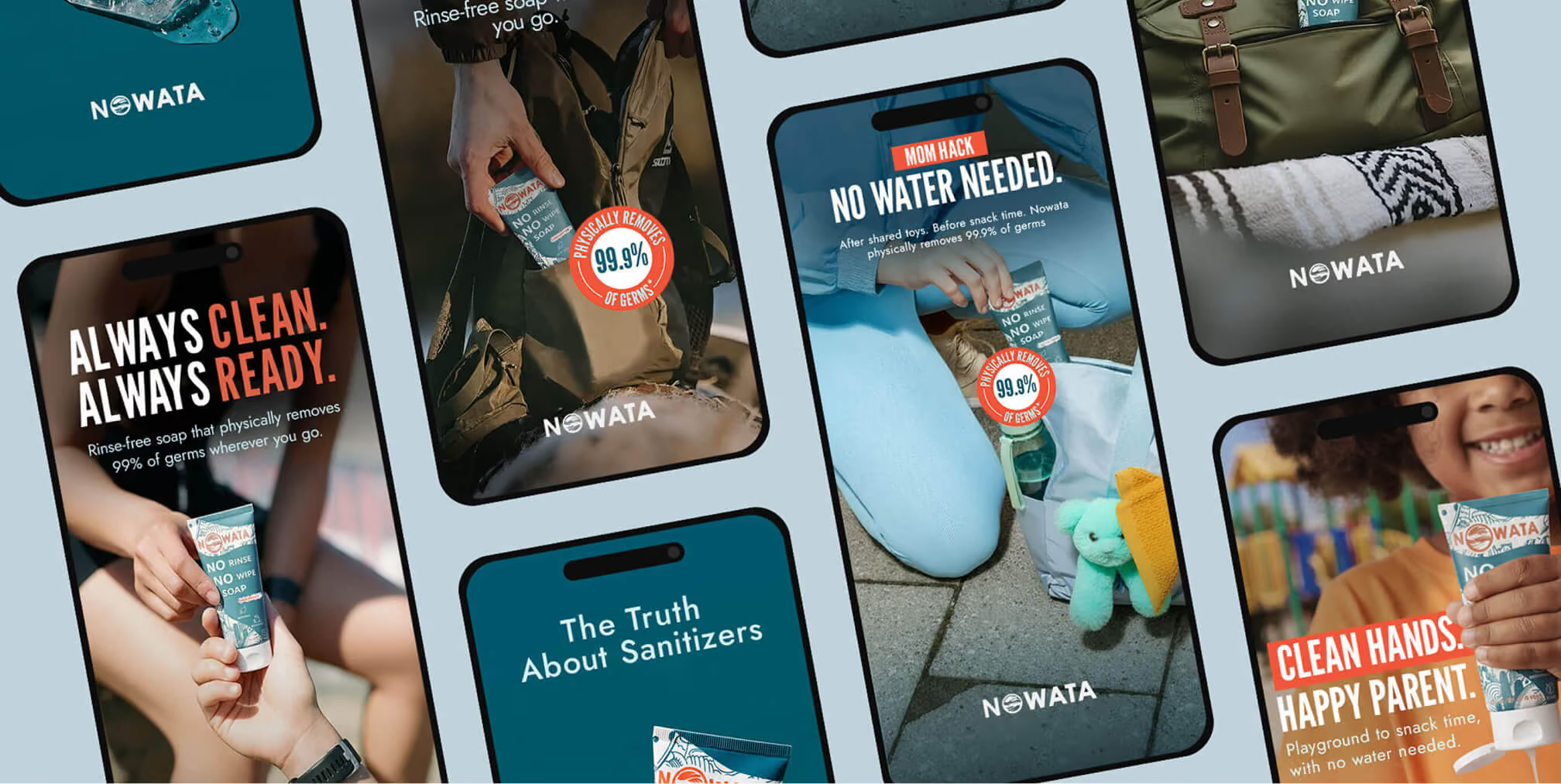
Collection of mobile ad creatives showcasing NOWATA products with bold headlines and lifestyle visuals, representing high-performing ecommerce ad creative for Meta campaigns.
A collection of NOWATA mobile ad mockups.

Eyecart: Making Clinical Eye Care Feel Like Self-Care

Eyecart was created to solve a real access problem. When clinics closed during the pandemic, many Canadians, especially those in remote areas, lost easy access to essential eye care. Dr. Shiv Sharma launched Eyecart to bring doctor-recommended, clinical-grade eye care products directly to consumers.

The brand gained traction quickly, but that success created a positioning challenge. Eyecart risked being perceived as a budget-friendly backup instead of a trusted, expert-backed brand. The experience felt transactional when it needed to feel credible, elevated, and reassuring.

The strategic insight was that eye care is health care, and clinical-grade treatment should feel accessible without ever feeling transactional.

From there, Eyecart was repositioned as a modern authority in eye health: medically rigorous, emotionally warm, and easy to trust. Messaging centered on ideas like doctor-approved eye care, made simple and clinical-grade products delivered to your doorstep.

The visual identity also shifted. Instead of leaning into old pharmaceutical cues, the brand borrowed from premium skincare and wellness aesthetics. The result made clinical eye care feel more approachable and more aligned with everyday self-care, without losing medical credibility.

On the ecommerce side, Eyecart was migrated from WooCommerce to Shopify. The experience was rebuilt to support the new positioning, improve product discovery, enable subscriptions and curated bundles, and make the purchase journey easier for both customers and the internal team.

The impact was fast:

  • 91% increase in website conversion rate
  • 46% increase in AOV
  • 20% revenue growth within 60 days

Then the retention system was built from scratch. Before that, Eyecart had no meaningful lifecycle infrastructure. No real email flows. No loyalty system. No structured nurture system.

That changed with:

  • post-purchase engagement flows
  • cart recovery
  • personalized product recommendations
  • monthly educational campaigns
  • segmentation by customer need

The results:

  • 220% increase in placed order rate
  • 298% increase in email revenue
  • 475% jump in click rates
  • retention marketing growing to 20% of total revenue

Eyecart is a strong example of what happens when a healthcare-adjacent ecommerce brand stops looking like a transaction and starts acting like a trusted category leader.

View Eyecart Full Case Study

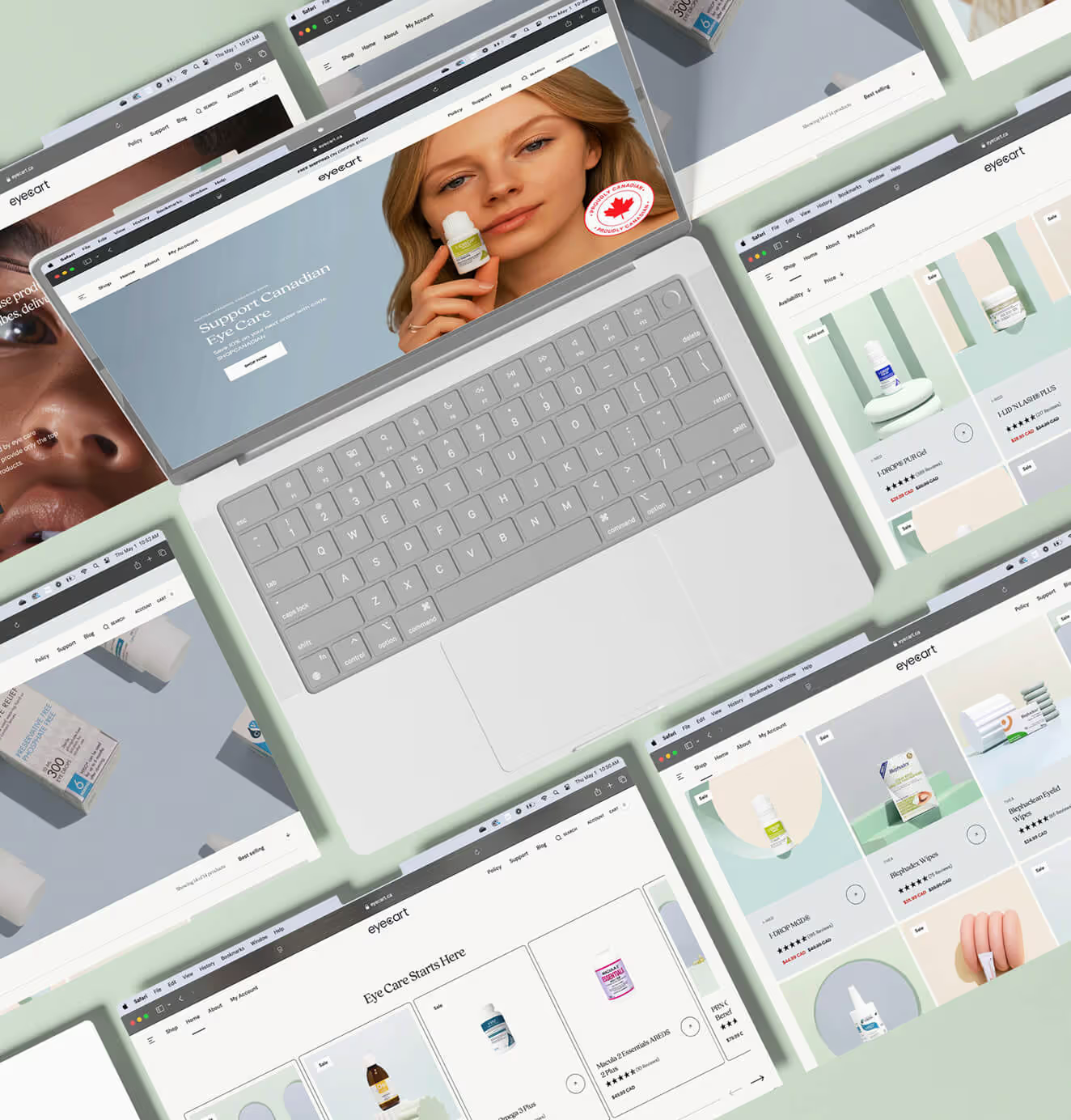
An Eyecart ecommerce website showcase featuring multiple product pages.

Acknowledge: Scaling a Category Disruptor by Telling the Story Behind the Source

Acknowledge had a truth most brands in CBD and wellness cannot claim: fully traceable hemp grown on their own certified organic, regenerative farm in Maryland.

The problem was that consumers did not see that difference. In a crowded category full of vague wellness claims and generic-looking products, Acknowledge still risked being perceived as just another CBD brand.

The strategic opportunity was not to become a better CBD brand. It was to stop competing as a CBD brand altogether.

The repositioning reframed Acknowledge as a premium regenerative wellness company built on better plants, better practices, and radical traceability. Regeneration became the hook. Farm-to-bottle became the proof. Wellness earned from the soil up became the benefit.

The brand identity was rebuilt to feel earthy, modern, and intentional. Inspiration came from categories like skincare, natural wine, and slow fashion, where design communicates origin, integrity, and quality. Packaging, photography, typography, and digital touchpoints all started working together to tell a more coherent story.

The website was also redesigned not just to sell, but to educate, inspire, and convert. Product pages became more instructive. Editorial content helped explain regenerative practices and ingredient transparency in human language. The site was designed for belief, not just browsing.

Then the marketing system was built around that clarity. Landing pages educated and converted. Email and retention supported repeat purchase. Paid media finally had a much stronger narrative to amplify.

The result:

  • 493% revenue growth
  • 15x increase in conversion rate
  • 667% increase in retention rate

Acknowledge shows what happens when brand story, ecommerce experience, and performance marketing finally say the same thing.

View Acknowledge Farms Full Case Study

A premium product render for Acknowledge Mood Support Gummies.

DrTung’s: Turning Brand Heritage Into an Ecommerce Growth Engine

DrTung’s had what many younger brands want: category history, professional credibility, and real product innovation. For more than 25 years, the company had been developing natural oral care products and had meaningful trust in both wellness and dental circles.

But history alone does not guarantee ecommerce growth.

The core issue was messaging. DrTung’s was competing on features many brands claimed, rather than on the one advantage it uniquely owned: clinically proven efficacy backed by 25 years of innovation.

That insight became the strategic pivot.

The brand was repositioned around a sharper balance of natural credibility and professional proof. “Natural oral care” became clinically proven natural. Generic oral health language became dentist-trusted solutions. The messaging was rebuilt to resonate with two core audiences: dentists and consumers.

A dual-market strategy followed. On the B2B side, dentist-facing experiences, content, and ordering systems were improved. On the consumer side, professional validation was translated into trust signals throughout the customer journey.

Then the infrastructure was rebuilt:

  • Shopify migration
  • ecommerce UX overhaul
  • product architecture improvements
  • B2B capabilities
  • stronger trust signals including reviews, clinical data, and endorsements
  • a full retention rebuild with better lifecycle flows
  • performance campaigns rooted in efficacy, trust, and conversion-focused creative
  • improved social content and influencer support to generate stronger UGC and social proof

The results were substantial:

  • 2.3x revenue year over year
  • 99% increase in orders year over year
  • 165% increase in B2B order rate
  • 122% increase in hero product sales
  • 337% growth in email-attributed revenue

DrTung’s is a reminder that even established brands need sharper positioning and better digital systems if they want to win in modern ecommerce.
View DrTung’s Full Case Study

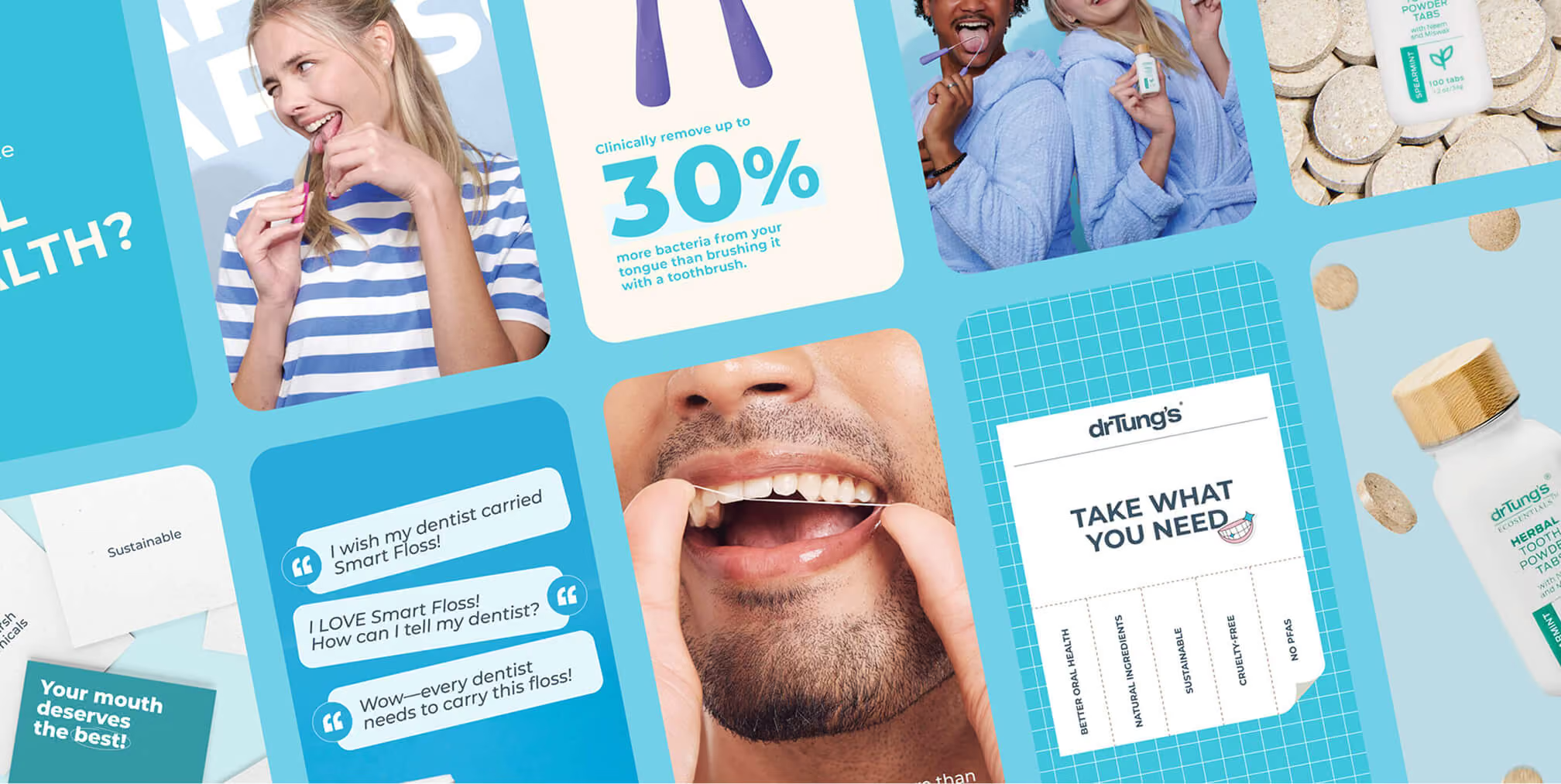
A bright drTung’s campaign collage showcasing oral care products, lifestyle imagery, customer quotes, and playful dental health messaging.

What These Case Studies Prove

Across all four brands, the pattern is the same.

The growth did not come from “running more Meta Ads.”

It came from:

  • clarifying the positioning
  • making the proof more obvious
  • aligning ad messaging with the on-site experience
  • improving CRO
  • building retention systems
  • then using Meta Ads to amplify a business that was finally set up to convert

That is the real strategy agencies use to scale ecommerce brands.

The Modern Meta Ads Tool Stack

To support this kind of system, many teams use a stack like this:

Forplay for ad research, creative reference, and inspiration management.
AdEspresso for structured ad testing and experimentation.
Triple Whale for attribution, ecommerce analytics, and profit visibility.
Shoplift for landing page and CRO experimentation on Shopify.
Lucky Orange for heatmaps, user behavior insights, and session recordings.
AdRoll for remarketing support and cross-channel retargeting.

The tools matter, but only if they are supporting the right strategy. A messy brand with weak messaging will not become scalable just because it added more software.

What Founders and Marketing Leaders Should Look for in a Meta Ads Agency

If you are evaluating an agency in 2026, do not just ask how they structure campaigns.

Ask:

  • How do you clarify positioning before scaling?
  • What is your creative testing process?
  • How do you connect ads to CRO?
  • How do you use retention to improve acquisition economics?
  • What reporting do you use to connect spend to revenue and repeat purchase?
  • How do you use AI and automation without losing strategic control?

The agencies worth hiring are not just media buyers. They are growth architects.

They understand that profitable Meta advertising depends on brand clarity, strong creative, clear analytics, better landing pages, and retention systems that increase LTV.

Final Thoughts

Professional observing data visuals and collaborating figures, representing analysis, reporting, and continuous optimization of Meta ad strategies.

Meta Ads still work. In many cases, they work extremely well.

But in 2026, the brands that win are not the ones that treat Facebook and Instagram as simple ad platforms. They are the ones that treat Meta as one part of a larger growth system.

That system starts with positioning. It is powered by creative. It is strengthened by CRO. It is made more profitable by retention. And it becomes more scalable when analytics and AI help teams learn faster and allocate budget more intelligently.

That is the strategy agencies use to scale ecommerce brands.

And if you look at NOWATA, Eyecart, Acknowledge, and DrTung’s, the pattern is hard to miss: when the story is sharper, the system is stronger, and the customer journey is aligned, Meta Ads stop feeling unpredictable and start becoming a real engine for growth.

Want to Scale Your Ecommerce Brand with Meta Ads?

If your brand is spending on Meta but struggling to scale profitably, the issue may not be your ad account. It may be the system around it.

Branded Agency helps ecommerce brands align positioning, creative, CRO, retention, and paid media into a growth engine built for profitable scale.

Book a discovery call to see where your current Meta strategy is leaking performance, and what it would take to fix it.

An image of the author Quincy Samyica

Quincy Samycia

As entrepreneurs, they’ve built and scaled their own ventures from zero to millions. They’ve been in the trenches, navigating the chaos of high-growth phases, making the hard calls, and learning firsthand what actually moves the needle. That’s what makes us different—we don’t just “consult,” we know what it takes because we’ve done it ourselves.

Want to learn more about brand platform?
If you need help with your companies brand strategy and identity, contact us for a free custom quote.

We do great work. And get great results.

DrTung’s
Breathed new life into a storied oral care brand with a smarter site and marketing for scalable growth.

+2.3x
Increase in revenue YoY

+126%
Increase in repurchase rate YoY

READ MORE
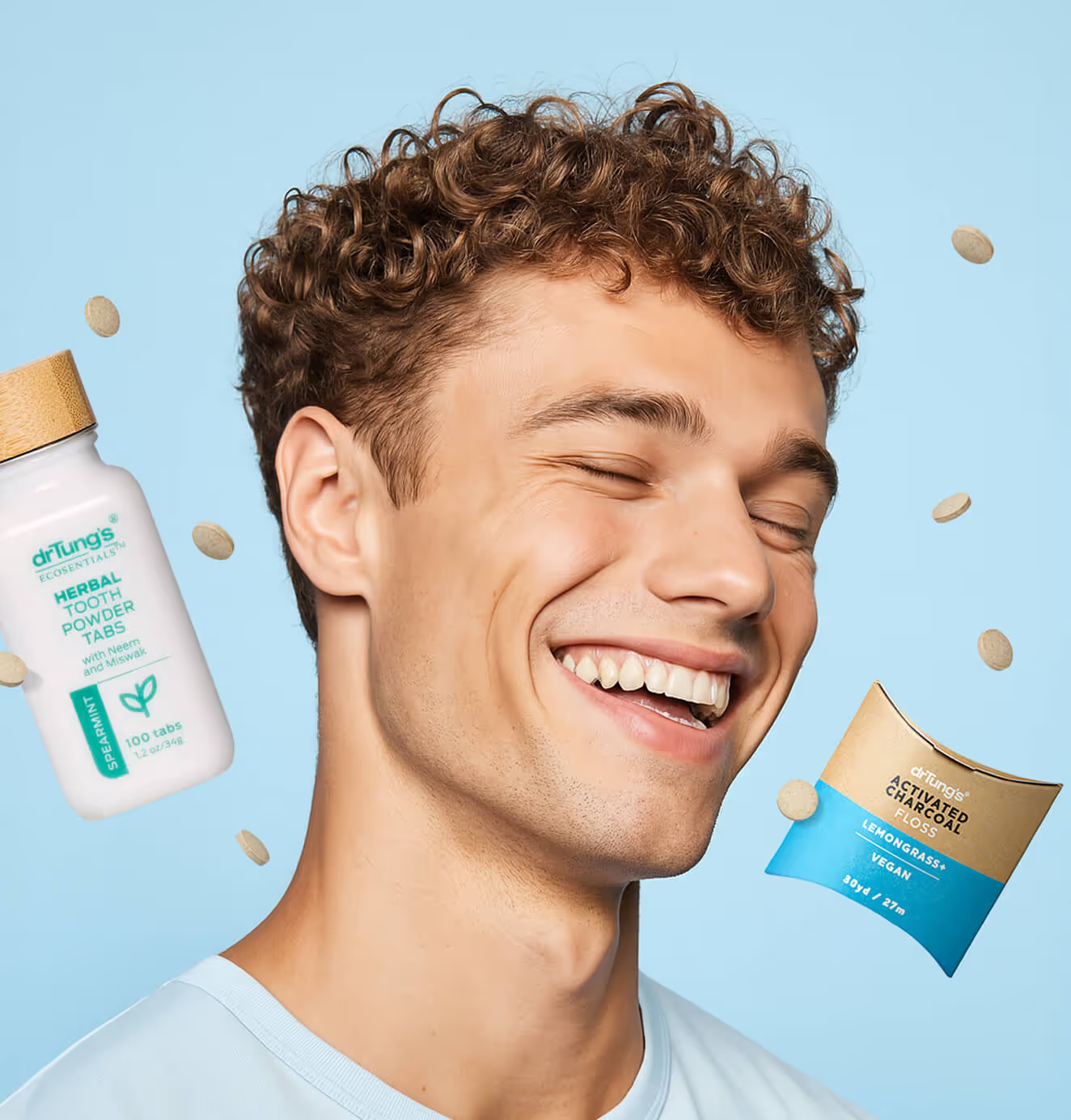
Smiling man with bright teeth on a light blue background, surrounded by floating DrTung’s herbal tooth powder tabs and packaging.
Smartphone on a textured blue surface displaying a DrTung’s ad with the text “Make the Switch” and an image of a woman holding herbal tooth powder tabs.
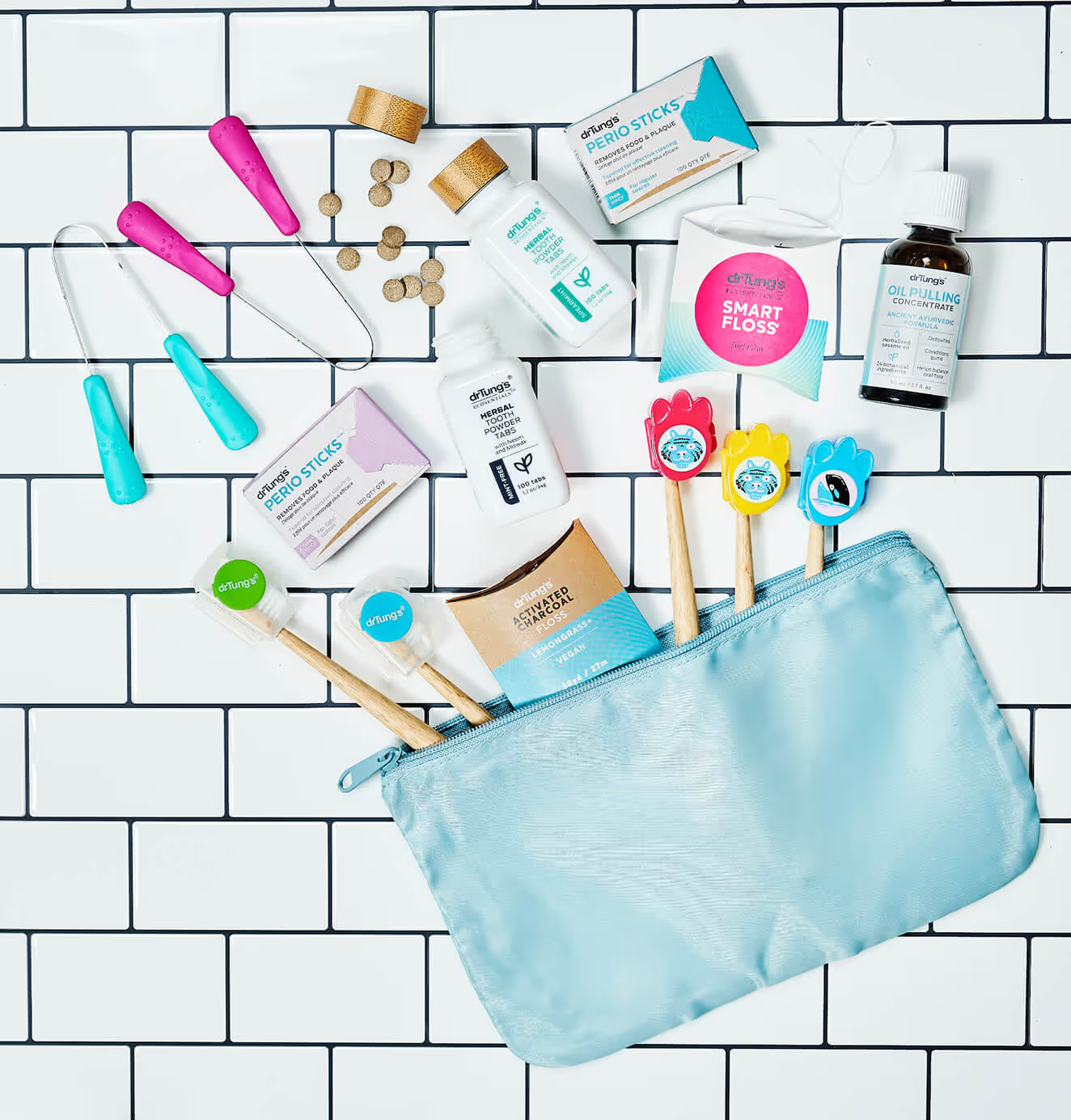
Flat lay of DrTung’s oral care products, including floss, tooth powder tabs, perio sticks, tongue cleaners, and toothbrushes, arranged with a blue pouch on white tile.
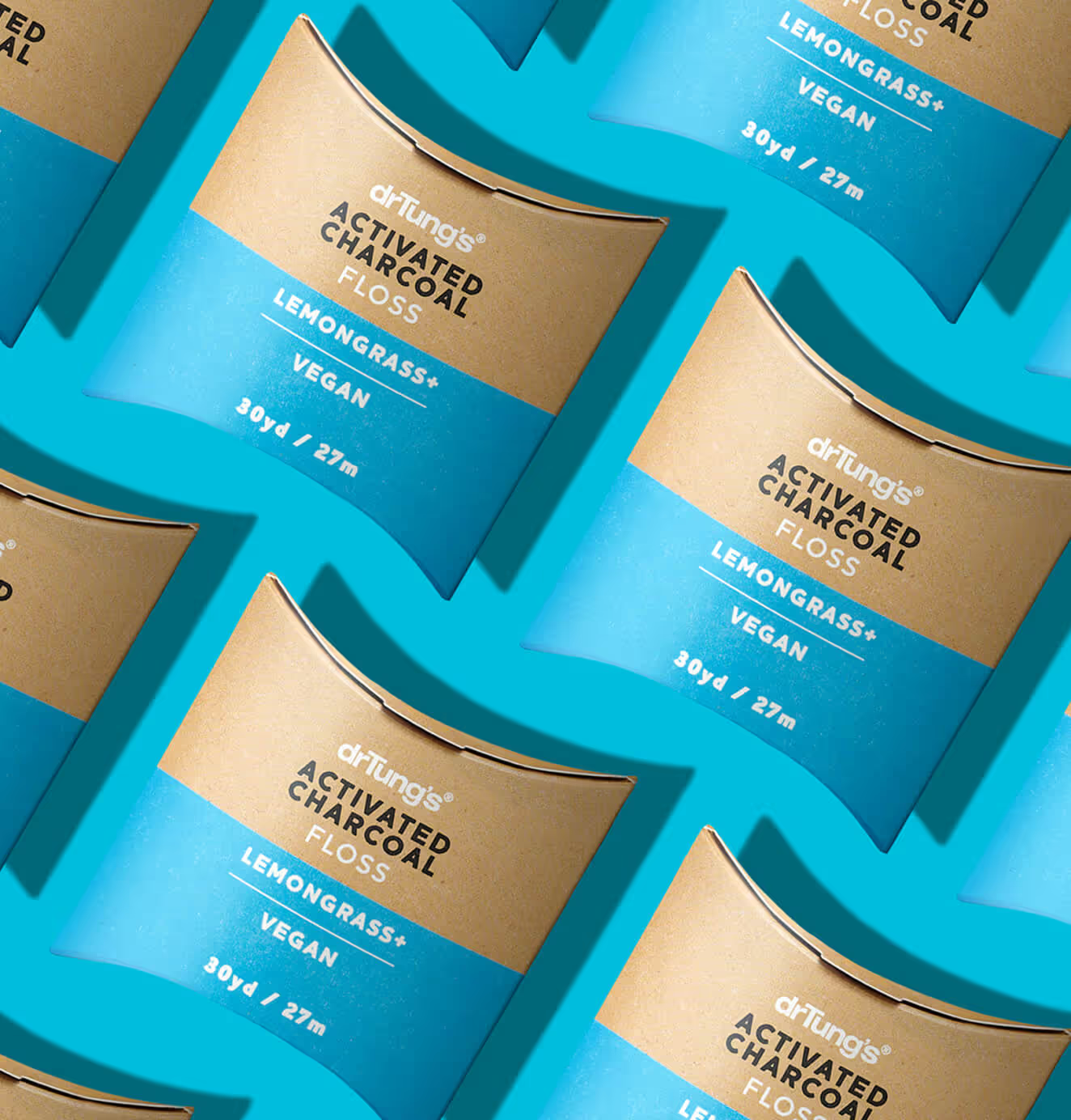
Pattern of DrTung’s Activated Charcoal Floss in brown and blue packaging, arranged diagonally on a bright blue background.
Smiling man with bright teeth on a light blue background, surrounded by floating DrTung’s herbal tooth powder tabs and packaging.
Smartphone on a textured blue surface displaying a DrTung’s ad with the text “Make the Switch” and an image of a woman holding herbal tooth powder tabs.
Flat lay of DrTung’s oral care products, including floss, tooth powder tabs, perio sticks, tongue cleaners, and toothbrushes, arranged with a blue pouch on white tile.
Pattern of DrTung’s Activated Charcoal Floss in brown and blue packaging, arranged diagonally on a bright blue background.
Mary Louise Cosmetics
Scaled a heritage-inspired clean beauty brand with modern performance marketing and farm-to-face storytelling.

+93%
Revenue growth in first 90 days

+144%
Increase in attributed revenue

READ MORE
A jar of Mary Louise Lilac & Shea Body Butter with the lid open, showing creamy texture, placed on a beige surface beside sprigs of lavender.
A Mary Louise Miracle Serum bottle with a dropper cap, lying on a bed of small yellow flowers.
Mary Louise promotional print materials featuring the body butter, with images of skincare application and product photography on a textured beige background.
A close-up overhead view of multiple Mary Louise Miracle Serum bottles with yellow dropper caps arranged tightly together.
A jar of Mary Louise Lilac & Shea Body Butter with the lid open, showing creamy texture, placed on a beige surface beside sprigs of lavender.
A Mary Louise Miracle Serum bottle with a dropper cap, lying on a bed of small yellow flowers.
Mary Louise promotional print materials featuring the body butter, with images of skincare application and product photography on a textured beige background.
A close-up overhead view of multiple Mary Louise Miracle Serum bottles with yellow dropper caps arranged tightly together.
Eyecart
Made eye care feel modern, then marketed it like a DTC darling—with the results to match.

+91%
Increase in conversion rate

+46%
Increase in AOV

READ MORE
A smiling woman holds a magnifying lens with the word "eyecart" printed on it over her eye, creating a playful optical effect against a mint green background.
A billboard ad reads “Discover the ease of keeping your eyes healthy,” featuring Eyecart branding and Blephaclean eye care wipes packaging.
Multiple laptop screens display the Eyecart website, showcasing product pages and banners promoting eye care items.
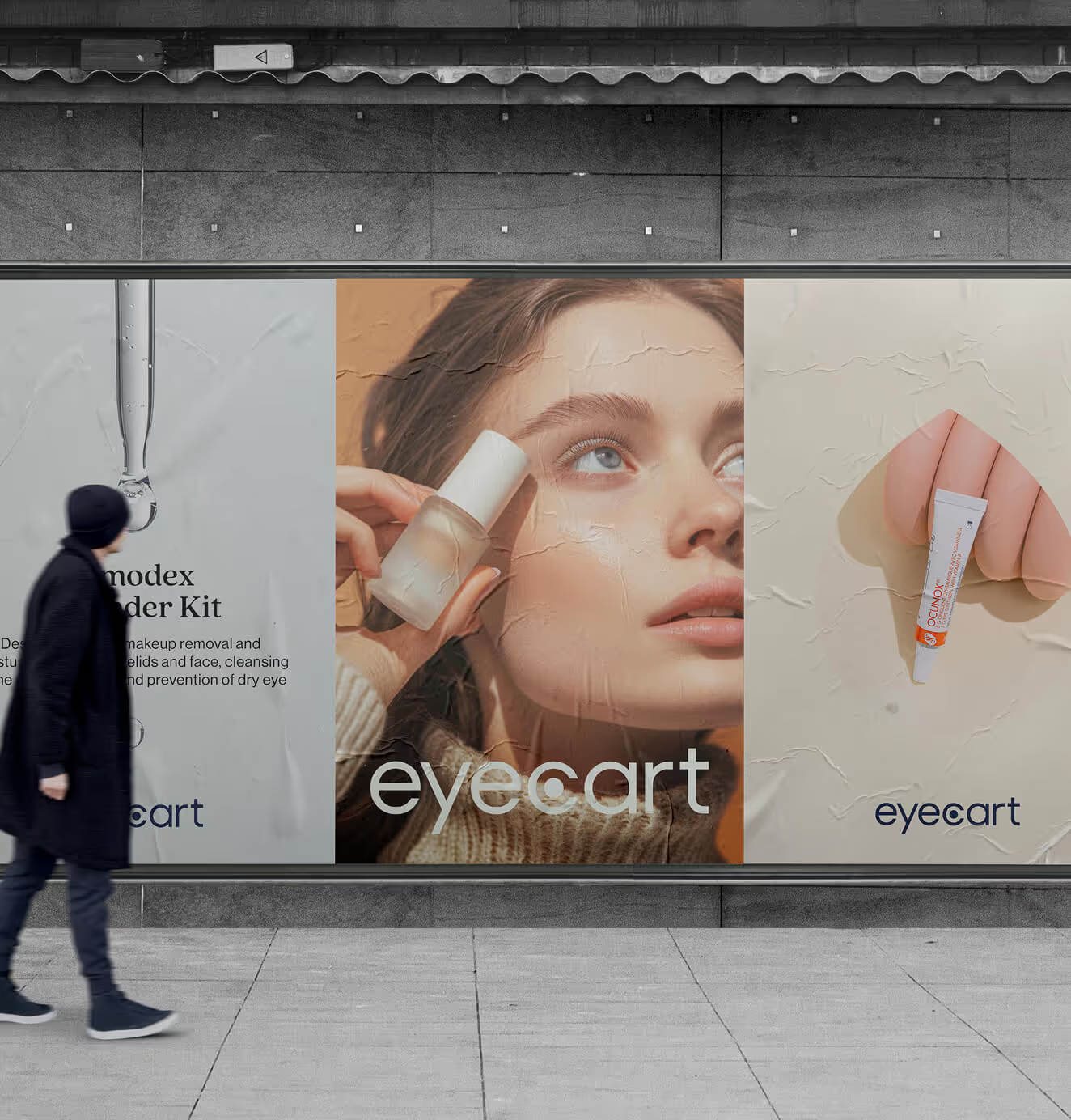
A person walks past large Eyecart posters on a city wall, featuring product photography of eye care serums and creams with clean, modern branding.
A smiling woman holds a magnifying lens with the word "eyecart" printed on it over her eye, creating a playful optical effect against a mint green background.
A billboard ad reads “Discover the ease of keeping your eyes healthy,” featuring Eyecart branding and Blephaclean eye care wipes packaging.
Multiple laptop screens display the Eyecart website, showcasing product pages and banners promoting eye care items.
A person walks past large Eyecart posters on a city wall, featuring product photography of eye care serums and creams with clean, modern branding.
Lucky Girl Rosé
We turned a zero-carb rosé into a lifestyle brand that makes every moment worth celebrating.

+200%
Increase in conversion rate

+688%
Increase in attributed revenue

READ MORE
A bottle of Lucky Girl rosé wine nestled among pink and white flowers in a rustic outdoor setting.
Lucky Girl rosé wine on a red-and-white checkered picnic blanket with cherries, strawberries, sunglasses, and a pink notebook titled The Lucky Club.
A wine glass filled with rosé on a gold tray surrounded by hands with red-painted nails, overlaid with the text “Pour yourself some luck.”
A bottle of Lucky Girl rosé wine with floral label design, dramatically lit against a soft pink background with a shadow cast.
A bottle of Lucky Girl rosé wine nestled among pink and white flowers in a rustic outdoor setting.
Lucky Girl rosé wine on a red-and-white checkered picnic blanket with cherries, strawberries, sunglasses, and a pink notebook titled The Lucky Club.
A wine glass filled with rosé on a gold tray surrounded by hands with red-painted nails, overlaid with the text “Pour yourself some luck.”
A bottle of Lucky Girl rosé wine with floral label design, dramatically lit against a soft pink background with a shadow cast.