Demand Creation: How to Build Demand Before Buyers Search
11/18/2026
Marketing Strategy
Build demand before your buyers start searching with a clear B2B strategy that grows brand preference, strengthens your pipeline, and makes future conversions easier.
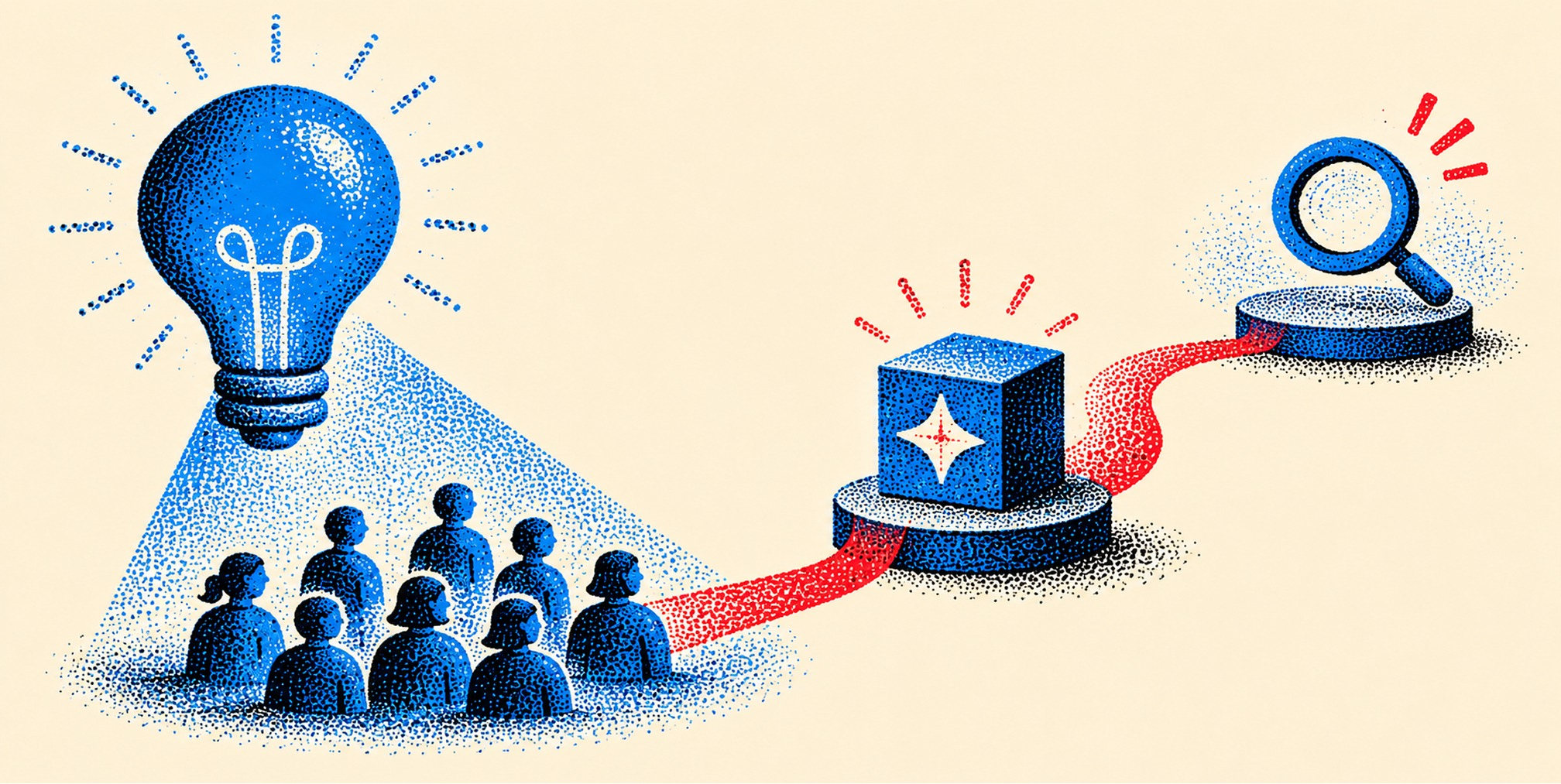
Demand creation is the marketing work that makes buyers aware of a problem, and of a better way to solve it, before they ever type a purchase-intent query into Google. Demand capture converts the buyers who are already looking. Creation fills the pool that capture draws from. For a growth-stage company, the winning move is to run both as one system, with a brand that gives people a reason to remember you and performance marketing that turns that memory into pipeline.


What demand creation actually means


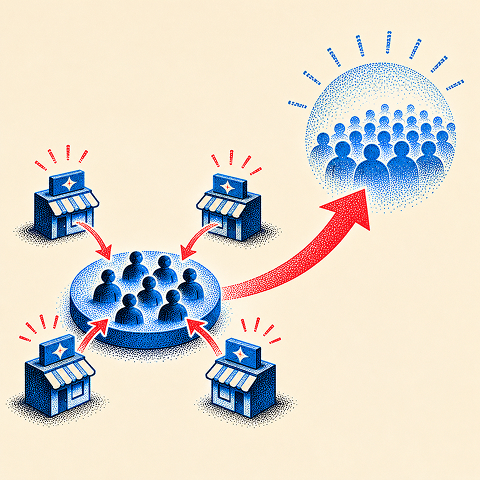
This guide is written for CEOs, CMOs and marketing directors who need to decide where the next dollar goes. It covers what demand creation is, how it differs from demand capture and lead generation, how to build a strategy, and how to prove it works to a board.
Most of your market is not buying today. Some buyers have a problem and are comparing options. Many more have the problem but have not named it, have not prioritized it, or do not know a solution category exists. Demand creation speaks to that second, much larger group.
In practice that means educating buyers on a problem, showing them what a good outcome looks like, and making your company the name they think of when the problem becomes urgent. The goal is not to fill a form. The goal is a future shortlist spot.
A useful test: if a prospect could not have found you by searching a product keyword, and your content still reached them, that was creation. If the content answered a search the prospect typed with intent to buy, that was capture.
Demand creation vs. demand generation vs. lead generation
The three terms get swapped constantly, which leads to budgets being judged by the wrong yardstick.
- Demand creation: builds problem awareness and future brand preference among people not yet shopping. Primary horizon: quarters.
- Demand capture: converts existing intent into qualified opportunities through high-intent channels. Primary horizon: weeks.
- Demand generation: coordinates demand creation, capture and nurturing into an ongoing pipeline program.
- Lead generation: obtains contact details and qualifies prospects for sales conversations. Primary horizon: weeks.
Demand generation is the umbrella. Creation and capture are its two halves. Salesforce’s own comparison describes demand generation as the top-of-funnel work that builds interest, while lead generation pulls identified prospects into a sales conversation. The practical takeaway: a gated whitepaper counted as a lead is a lead-generation asset. A useful, ungated explainer that never asks for an email is a creation asset, and it should be judged differently.
Demand creation vs. demand capture
The difference is where the buyer is in their thinking.
Demand capture targets people who know the problem and are evaluating solutions. Paid search on category keywords, intent-based targeting, review-site presence and direct-response offers are the classic tools. ZoomInfo’s guide lists paid search, intent-based targeting and direct response as capture tactics, and ungated content, thought leadership and educational campaigns as creation tactics.
Demand creation targets people who are unaware of the problem or have not prioritized it. The tools are education, point of view, community, partnerships, original research and a brand that stands for something.
Why capture alone stalls
Capture works well, and its numbers are easy to read: cost per lead, conversion rate, payback. That clarity is why budgets drift toward it. But capture can only convert demand that already exists. If you keep bidding on the same set of in-market buyers while competitors do the same, auction prices rise and your share of a fixed pool tightens.
Creation grows the pool and your place in it. It also lowers the cost of capture over time, because buyers who already know you click, search for you by name and convert at higher rates when they do enter the market.
How the two should work together
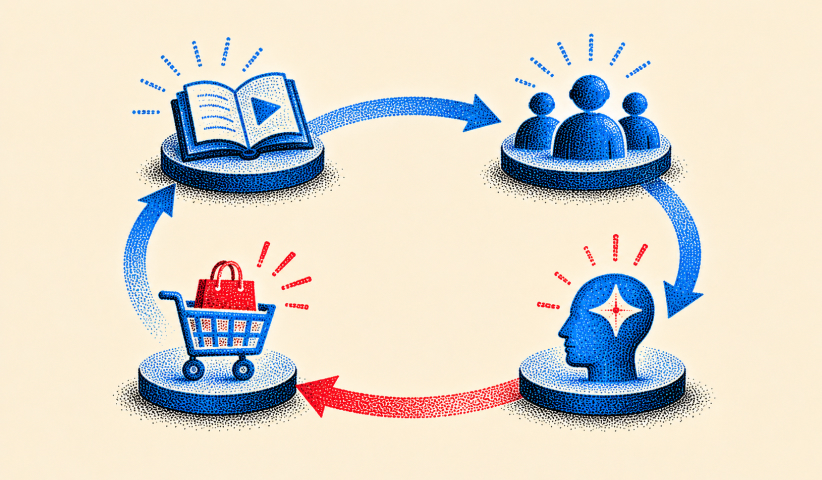
Think of one loop:
- Create: publish a memorable, useful point of view for buyers who are not actively searching.
- Recognize: repeat the message and distinctive brand assets until buyers associate you with the problem.
- Capture: when urgency arrives, meet buyers through search, referrals, review sites and focused offers.
- Convert and learn: qualify demand, close the loop in the CRM and reinvest what you learn into new creation assets.
If you have a small budget, do not spread it across five creation channels. Pick one segment, one creation activity and one capture path with a clear conversion offer for that same segment. Prove the loop, then widen it.
How to build a demand creation strategy
The following process works for B2B technology and SaaS companies, and it scales from a Series A team to an established brand.
Step 1: Define the segment and the buying decisions
Start with the accounts and roles you most want to win in the next 12 to 24 months, not just the ones converting now. For each, list the decisions that lead to a purchase: recognizing the problem, agreeing it is worth solving, choosing an approach, choosing a vendor. Most teams only market to the last decision.
Where it goes wrong: defining the audience by firmographics alone. A VP of Operations at a 500-person company has a very different problem than the CFO who signs the contract. Map both.
Step 2: Take a position
Creation fails when a company sounds like everyone else in its category. Buyers who are not looking will not stop for generic claims. You need a point of view: a belief about how the market works, what is changing and what buyers should do about it.
This is positioning work, and it comes before channels. If your positioning is blurry, more distribution only spreads the blur wider. Our guides on B2B brand positioning and B2B brand strategy walk through how to get there.
Step 3: Assign each decision an asset and a next action
For each buying decision, choose one asset that helps the buyer move forward and one clear next step. A problem-unaware buyer might get an original data point and a short explainer. A problem-aware buyer might get a comparison framework. A solution-aware buyer gets a demo or pricing conversation.
Keep the earliest assets ungated. If the first interaction requires an email address, you are filtering out exactly the buyers you are trying to reach.
Step 4: Write the plan for each activity on one line
For every creation activity, record six things:
- Target segment and buying committee: exactly who the activity should reach.
- Buying situation or problem: the trigger the audience should remember your brand for.
- Point of view and creative asset: what you will say and what the audience will see.
- Distribution channel and owner: where it will run and who is responsible.
- Next action and capture path: how interested buyers can progress without forcing a premature form fill.
- Success measure and review date: what you will check, against which baseline, and when.
This one-line discipline protects creation budgets. It shows the board you are not asking for faith, only for patience matched to a stated test.
Step 5: Connect creation to capture
Every creation activity needs a path to a conversion moment. Retarget engaged audiences with a relevant offer. Make sure search ads on your category and brand terms are live when awareness lifts. Build email and SMS flows that welcome new subscribers. Our piece on cookieless B2B retargeting covers how to do the retargeting step as third-party cookies fade, and the B2B Google Ads guide covers the search side.
Step 6: Fix your definition of a qualified lead
Creation produces fewer, better-informed leads rather than more form fills. If sales still judges marketing by raw volume of marketing qualified leads, creation will look like it is failing. The CMO Alliance’s 2024 case study describes one team tightening its criteria so a lead had to fit the ideal customer profile and show behavioral purchase intent before reaching sales. That alignment is what lets creation get credit.
- Agree on a qualified opportunity definition with sales: ICP fit, identified business problem, relevant authority or influence and evidence of intent.
- Track creation engagement separately from hand-raisers so an early-stage content reader is not prematurely labeled an MQL.
- Ask sales to record what prompted the conversation and feed that evidence into future creative and channel decisions.
Free Brand Health Audit
Make sure your brand is built to sell
Search has changed. Your customers aren't just Googling anymore. They're asking ChatGPT, Perplexity, Gemini and other AI platforms what to buy, who to trust and which brands they should consider.
If your brand isn't showing up clearly in those answers, you're already losing opportunities. Our free Brand Health Audit shows you where your brand stands across traditional search, AI search and brand positioning.

Sample brand audit
Live preview
Traditional search
72
AI search (GEO)
34
Brand positioning
58
Demand creation tactics that work in B2B
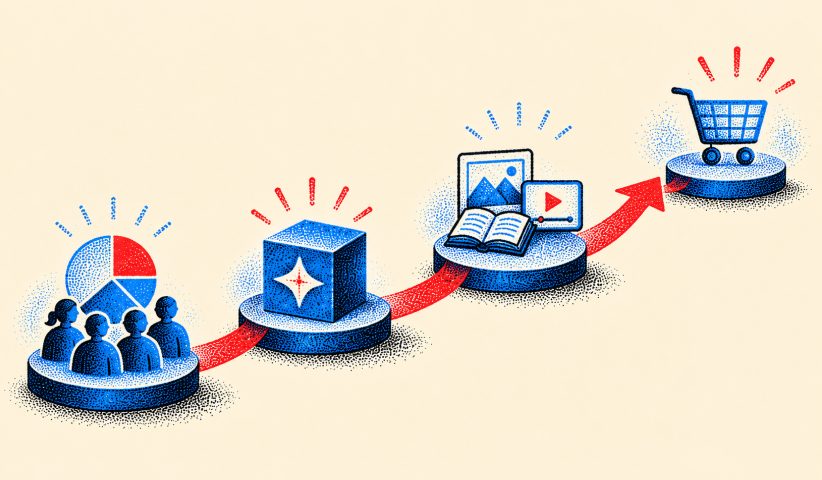
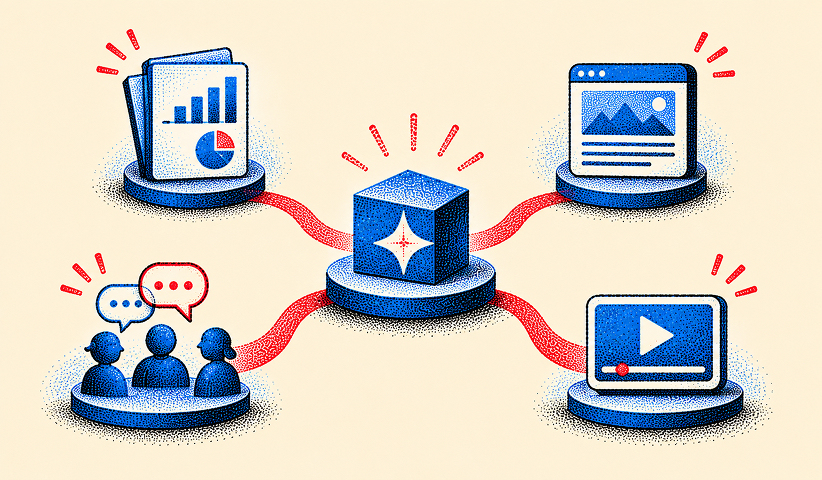

Tactics matter less than the fit between tactic, audience and buying question. These are the ones that consistently serve problem-unaware and problem-aware buyers.
Original research and data. A proprietary data point gives journalists, analysts and buyers something to cite. It is a reason to be mentioned that does not depend on a paid placement.
Ungated educational content. Guides, teardowns, frameworks and webinars that help a buyer do their job better, with no form in front of them. Our content marketing practice is built around content that serves a growth goal rather than a publishing calendar.
Thought leadership from executives. Founders and executives who publish a clear opinion on LinkedIn or in industry outlets give the brand a human face. This is earned and owned media working together. See our definitions of owned media and earned media.
Communities and events. Peer communities, roundtables and sponsored industry gatherings where your buyers already spend time. The CMO Alliance case study mentions communities alongside intent data and useful ungated content as part of its approach.
Paid media for reach, not only for clicks. Paid social, video and sponsored content put your point of view in front of a defined audience that has not searched for you. This is where paid media supports creation rather than replacing it.
A brand worth remembering. Distinctive visual identity, consistent messaging and a website that backs up the story make every other tactic work harder. Awareness that points to a forgettable brand is wasted.
How to measure demand creation
Boards ask for proof, and creation is harder to attribute than capture. That is not a reason to skip measurement. It is a reason to measure the right things on the right clock.
Use leading indicators
Within the first one to two quarters, watch:
- Branded search volume and direct visits from the target market, alongside search demand for the problem category.
- Reach and engagement among named target accounts, measured as unique accounts rather than only impressions.
- Unaided and aided brand awareness, consideration and association with key buying situations in repeat surveys.
- Returning visitors, organic mentions, newsletter subscriptions and content engagement from relevant job roles.
- Growth in relevant referral traffic, share of voice and sales conversations mentioning the content or idea.
Use commercial checks
Over two to four quarters, watch:
- Qualified opportunity creation from the target segment, compared with the pre-campaign baseline.
- Pipeline sourced and influenced by target accounts, using consistent CRM definitions rather than claiming direct causation.
- Win rate, average deal size and sales-cycle length for exposed or engaged cohorts compared with relevant baselines.
- Incremental lift in conversions or revenue when a sufficiently powered holdout or geographic experiment is possible.
- Customer acquisition cost and contribution margin over a time horizon that reflects the actual sales cycle.
Share of voice is the metric worth learning
The B2B Institute’s research found that extra share of voice, your share of category advertising minus your market share, is an important determinant of brand growth, more useful than absolute spend alone. A companion report on B2B marketing principles reports a statistically significant link between extra share of voice and market-share growth: about 0.7 percentage points of annual growth for every 10% of extra share of voice, all else equal. The data covers 1998 to 2008 in the UK, so treat it as a directional guide and not a forecast. It does show that where you stand relative to your market matters more than the size of your budget. If you want the vocabulary, our glossary entry on market share is a good start.
Close the attribution gap with first-party data
A buyer who saw a LinkedIn campaign in March and searched your brand in June will not show up as a conversion from March. Connecting your CRM to analytics lets you see which accounts engaged, when, and what became of them. Our guide to GA4 B2B tracking shows how to link CRM data to revenue. Even then, later search activity does not prove that earlier exposure caused a sale, so report creation results as a pattern across accounts and quarters, never as a single-touch claim.
Want to learn more about Digital Marketing and Strategy? Keep reading!
If you need help with your company’s marketing, contact us for a free custom quote.
A worked example

Imagine a Series B SaaS company selling workflow software to mid-market finance teams. Its paid search is efficient, but costs per lead have risen for three quarters because competitors bid on the same terms.
The team moves part of the budget to creation:
- Publish a benchmark report on approval bottlenecks in mid-market finance teams, openly accessible without registration.
- Turn the findings into short executive videos and LinkedIn posts aimed at finance operations leaders.
- Host a practical roundtable with a partner association and invite target accounts to discuss the research.
- Measure engagement from target accounts and track whether branded search and qualified demo requests improve over subsequent quarters.
- Capture stays on: branded and category search, retargeting to report readers, and an email sequence that offers a working session. This is an illustration of the method, not a client result.
Where to invest first
If you cannot do everything, sequence the work like this:
- First, select one high-value audience with a clear buying problem and documented decision-makers.
- Next, choose a distinctive point of view and one repeatable creation format, such as research, executive commentary or an ungated series.
- Build the matching capture path: a relevant landing page, branded and category search coverage, and a qualified demo or consultation offer.
- Instrument a baseline for target-account engagement, branded search and qualified opportunities before launching.
- Review early signals monthly and adjust the message before expanding to new segments or channels.
Our overview of B2B marketing strategies and B2B marketing trends shows how these priorities fit into the wider plan.
Build demand with one team behind brand and performance
Most companies split brand and performance across separate vendors, and the seams show: a brand story that the ad team never uses, a website that does not match the campaigns, and reporting that contradicts itself. We build both as one system.
Our team covers branding, website design and development, content marketing, paid media management, retention marketing through email and SMS, and growth strategy. Published pricing starts at $4,000 per month for Creative Services, $5,500 per month for Paid Media Management and Content Marketing, $6,500 per month for Retention Marketing, and $8,500 per month for Growth Strategy. Branding and web engagements are scoped to the project. See the full list on our pricing page.
If you want to turn the plan above into a program for your own market, start with a conversation at brandedagency.com.
Our perspective on demand creation
Most of the demand creation conversation gets stuck on a false choice: spend on brand and wait, or spend on performance and measure. We see them as one growth system.
Brand gives buyers a reason to choose you before they are ready to buy. Performance makes sure that when they are ready, you are there, the site loads, the message matches and the follow-up arrives. Take away either half and the other works harder for less.
That is why we build brand-backed performance™: positioning, creative, web, paid media and retention planned together, with measurement that a CFO can read. We would rather help a company find the green space nobody else occupies than fight for the same crowded keywords.
Our advice to any executive: pick the segment, take a clear position, put useful content in front of the right people, and connect it to a conversion path from day one.
- Quincy Samycia
Frequently Asked Questions

What is an example of demand creation?
A SaaS company publishes an ungated benchmark report on a problem its buyers have not yet prioritized, promotes it to target roles on LinkedIn, and has its CEO write about the findings. No one is searching for the product yet, but the audience learns the problem exists and who is talking about it.
How is demand creation different from demand capture?
Creation builds awareness among buyers who are not looking. Capture converts buyers who already are, usually through search, intent targeting and direct-response offers. Creation runs on a longer horizon, measured in quarters, while capture shows results in weeks.
How long does demand creation take to show results?
Plan on two to four quarters to judge a program on pipeline quality. Early signals such as branded search, direct traffic and target-account engagement can move sooner, so set those as checkpoints when you launch.
How much of the marketing budget should go to demand creation?
There is no universal split. Start with one segment and one creation program tied to a capture path, then expand as the loop proves itself. If your capture costs have been rising for several quarters, that is a sign the in-market pool needs refilling.
Sources
- LinkedIn B2B Institute, How B2B Brands Grow: https://business.linkedin.com/advertise/resources/b2b-institute/how-b2b-brands-grow
- LinkedIn B2B Institute, The CMO Scorecard (measurement and future buyers): https://business.linkedin.com/content/dam/lem/business/en/advertise/resources/b2b-institute/cmo-scorecard-whitepaper.pdf
- Google Ads Help, About Conversion Lift: https://support.google.com/google-ads/answer/12003020
- Google Ads Help, Set up Conversion Lift based on users: https://support.google.com/google-ads/answer/12005564
- Salesforce, Demand Generation (overview): https://www.salesforce.com/marketing/demand-generation/

Quincy Samycia
As entrepreneurs, they’ve built and scaled their own ventures from zero to millions. They’ve been in the trenches, navigating the chaos of high-growth phases, making the hard calls, and learning firsthand what actually moves the needle. That’s what makes us different—we don’t just “consult,” we know what it takes because we’ve done it ourselves.
Want to learn more about brand platform?
If you need help with your companies brand strategy and identity, contact us for a free custom quote.
We do great work. And get great results.
+2.3xIncrease in revenue YoY
+126%Increase in repurchase rate YoY



+93%Revenue growth in first 90 days
+144% Increase in attributed revenue




+91%Increase in conversion rate
+46%Increase in AOV



+200%Increase in conversion rate
+688%Increase in attributed revenue