How Long Does a Rebrand Take? Timelines by Company Size
04/16/2026
Branding / Brand Strategy
Understand how long a rebrand really takes—and how to plan timelines that balance speed, alignment, and brand equity without costly missteps.

Rebranding timelines are often underestimated—and that’s where problems begin. What looks like a design project on the surface is actually a multi-layered process involving strategy, alignment, execution, and rollout. When teams rush to meet arbitrary deadlines, they risk skipping the very steps that make a rebrand successful. Understanding how timelines really work allows you to move with intention, not urgency, and avoid costly missteps.
.png)
Realistic Rebranding Timelines (And What Actually Slows Them Down)



One of the first questions leadership asks when considering a rebrand is:
How long does a rebrand take?
The honest answer: it depends on the size of your company, the complexity of your brand architecture, and how significant the strategic shift is.
A simple visual refresh can move quickly.
A strategic repositioning across multiple departments takes longer.
This guide breaks down realistic rebranding timelines by company size, explains what impacts rebrand project duration, and helps you plan without rushing the most important phases.
If you're still evaluating whether a rebrand is necessary, start with the full business rebranding strategy guide to ensure you’re solving the right problem before committing to a timeline.
The Short Answer: Typical Rebranding Timelines
Here’s a high-level overview:
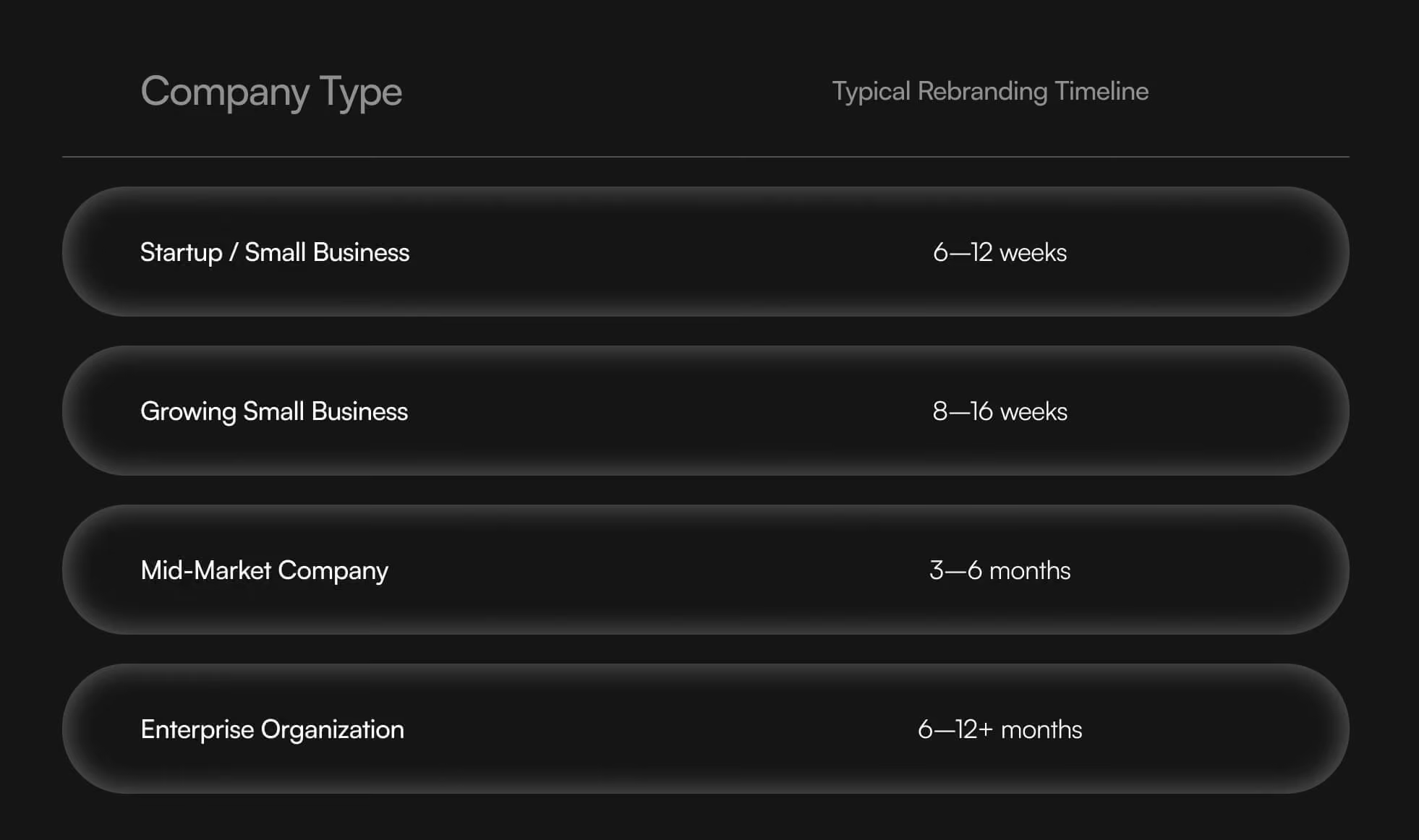
But timelines aren’t just about size. They’re about complexity and alignment.
Let’s break this down properly.
The 4 Phases That Determine Rebrand Project Duration
A rebrand typically includes four phases:
The depth of each phase determines your overall timeline.
Rushing one phase usually creates delays later.
How Rebranding Timelines Scale From Startups to Enterprise



Rebranding Timeline: Startups & Small Businesses (6–12 Weeks)
Best Case: 6–8 Weeks
More Realistic: 8–12 Weeks
This timeline assumes:
- Single core service or product
- Minimal brand architecture
- Small leadership team
- Limited asset ecosystem
Phase Breakdown
Weeks 1–2: Brand Audit & Research
- Customer interviews
- Competitor analysis
- Internal alignment
Weeks 2–4: Positioning & Messaging
- Audience clarity
- Value proposition refinement
- Messaging framework
Weeks 4–6: Identity Development
- Logo system
- Typography & color
- Visual language
Weeks 6–8+: Rollout
- Website updates
- Social updates
- Email templates
- Sales materials
What Speeds It Up
- Fast decision-making
- Clear leadership alignment
- Limited stakeholders
What Slows It Down
- Founder indecision
- Scope creep
- Adding new services mid-process
For small businesses, the biggest variable is decision velocity—not complexity.
Growing Small Businesses (8–16 Weeks)
This stage often includes:
- Expanding services
- Premium repositioning
- Larger marketing presence
- More sales assets
Timeline Overview
Weeks 1–4: Research & Audit
More structured than startup stage.
Includes surveys and possibly external research.
Weeks 4–8: Positioning & Messaging
Refined value proposition.
Clear differentiation strategy.
Weeks 8–12: Identity System Development
More comprehensive brand guidelines.
Template systems built.
Weeks 12–16: Rollout
Website rebuild.
Sales deck updates.
Automation adjustments.
At this stage, internal alignment begins to impact timeline more significantly.
Mid-Market Rebranding Timeline (3–6 Months)
Mid-market companies introduce operational complexity.
Typical characteristics:
- Multiple departments
- Sub-brands or product lines
- Dedicated sales teams
- Multi-channel marketing systems
- Established brand equity
Here, rebranding is no longer just creative—it’s organizational.
Phase Breakdown
Month 1–2: Deep Audit
- Extensive stakeholder interviews
- Broader customer research
- Competitive positioning analysis
- Brand architecture review
Month 2–3: Positioning Development
- Workshops
- Leadership alignment sessions
- Messaging validation
Month 3–4: Identity Development
- Expanded identity system
- Sub-brand alignment
- Brand governance creation
Month 4–6: Phased Rollout
- Internal training
- Website overhaul
- Channel-by-channel implementation
- Asset migration
What Extends Timeline
- Conflicting leadership priorities
- Complex approval chains
- Brand architecture restructuring
- Technical website rebuilds
At this level, alignment—not design—is the timeline driver.
Enterprise Rebranding Timeline (6–12+ Months)
Enterprise rebrands are operational projects.
Common factors:
- Global presence
- Multiple regional teams
- Legal review requirements
- Multiple divisions
- Product ecosystems
- Thousands of assets
Phase Breakdown
Months 1–3: Research & Internal Discovery
- Market studies
- Global stakeholder alignment
- Architecture strategy
Months 3–5: Strategic Positioning
- Executive workshops
- Messaging refinement
- Internal buy-in across departments
Months 5–8: Identity System Development
- Global brand systems
- Localization guidelines
- Extensive documentation
Months 8–12+: Phased Rollout
- Regional launches
- Employee training programs
- Asset replacement
- Vendor coordination
- Governance implementation
Enterprise timelines extend because risk tolerance is lower and coordination requirements are higher.
Want to learn more about Rebrands, Brand Strategy and Brand Identity? Keep reading!
If you need help with your companies branding, contact us for a free custom quote.
What Actually Determines Rebrand Project Duration?
Regardless of size, five factors affect timeline most:
1️⃣ Depth of Research
Skipping research shortens timeline—but increases risk.
2️⃣ Stakeholder Alignment
More decision-makers = longer alignment cycles.
3️⃣ Brand Architecture Complexity
Single brand vs. multi-brand ecosystem changes everything.
4️⃣ Asset Volume
Number of touchpoints matters:
- Website pages
- Sales decks
- Contracts
- Signage
- Packaging
- Email templates
- Automation systems
5️⃣ Rollout Model
- Soft launch = longer transition, lower shock
- Big bang launch = shorter transition, higher preparation load
Why Rushing a Rebrand Backfires
Speed often feels efficient.
But compressing the timeline usually means:
- Skipping research
- Avoiding difficult strategic decisions
- Overlooking asset updates
- Weak internal alignment
The result?
- Customer confusion
- Sales friction
- Brand equity risk
- Need for correction later
A rushed rebrand may launch faster—but it takes longer to fix.
A Realistic Planning Framework
If you're asking, “How long will this take?” use this simplified planning model:
Small Business Planning Window:
Plan for 3 months total from strategy to stabilized rollout.
Mid-Market Planning Window:
Plan for 4–6 months minimum.
Enterprise Planning Window:
Plan for 6–12 months depending on complexity.
Add buffer time for:
- Leadership review cycles
- Technical website delays
- Legal approvals (especially for renames)
- Content migration
Quick Self-Assessment: Are You Underestimating Timeline?
Answer yes/no:
- Do multiple departments need approval?
- Are you considering a rename?
- Do you operate in multiple markets?
- Do you have more than 50 branded assets?
- Does leadership disagree on positioning?
If you answered yes to two or more, your timeline will likely extend beyond initial expectations.
Final Perspective
So—how long does a rebrand take?
Long enough to:
- Clarify positioning
- Align leadership
- Protect brand equity
- Update assets properly
- Roll out with discipline
Not so long that momentum dies.
Rebranding is not just a design project. It’s a strategic transition.
If you're early in the process, review the full business rebranding strategy guide to understand the full scope before setting unrealistic deadlines.
Because the real question isn’t how fast you can rebrand.
It’s how confidently you can launch without compromising trust.

Quincy Samycia
As entrepreneurs, they’ve built and scaled their own ventures from zero to millions. They’ve been in the trenches, navigating the chaos of high-growth phases, making the hard calls, and learning firsthand what actually moves the needle. That’s what makes us different—we don’t just “consult,” we know what it takes because we’ve done it ourselves.
Want to learn more about brand platform?

If you need help with your companies brand strategy and identity, contact us for a free custom quote.
We do great work. And get great results.
+2.3xIncrease in revenue YoY
+126%Increase in repurchase rate YoY


+93%Revenue growth in first 90 days
+144% Increase in attributed revenue


+91%Increase in conversion rate
+46%Increase in AOV


+200%Increase in conversion rate
+688%Increase in attributed revenue