Building a Marketing Tech Stack That Actually Pays Off in 2026
11/09/2026
Marketing Strategy
Discover how to audit your marketing technology, eliminate overlapping tools and build a connected stack that earns its cost.
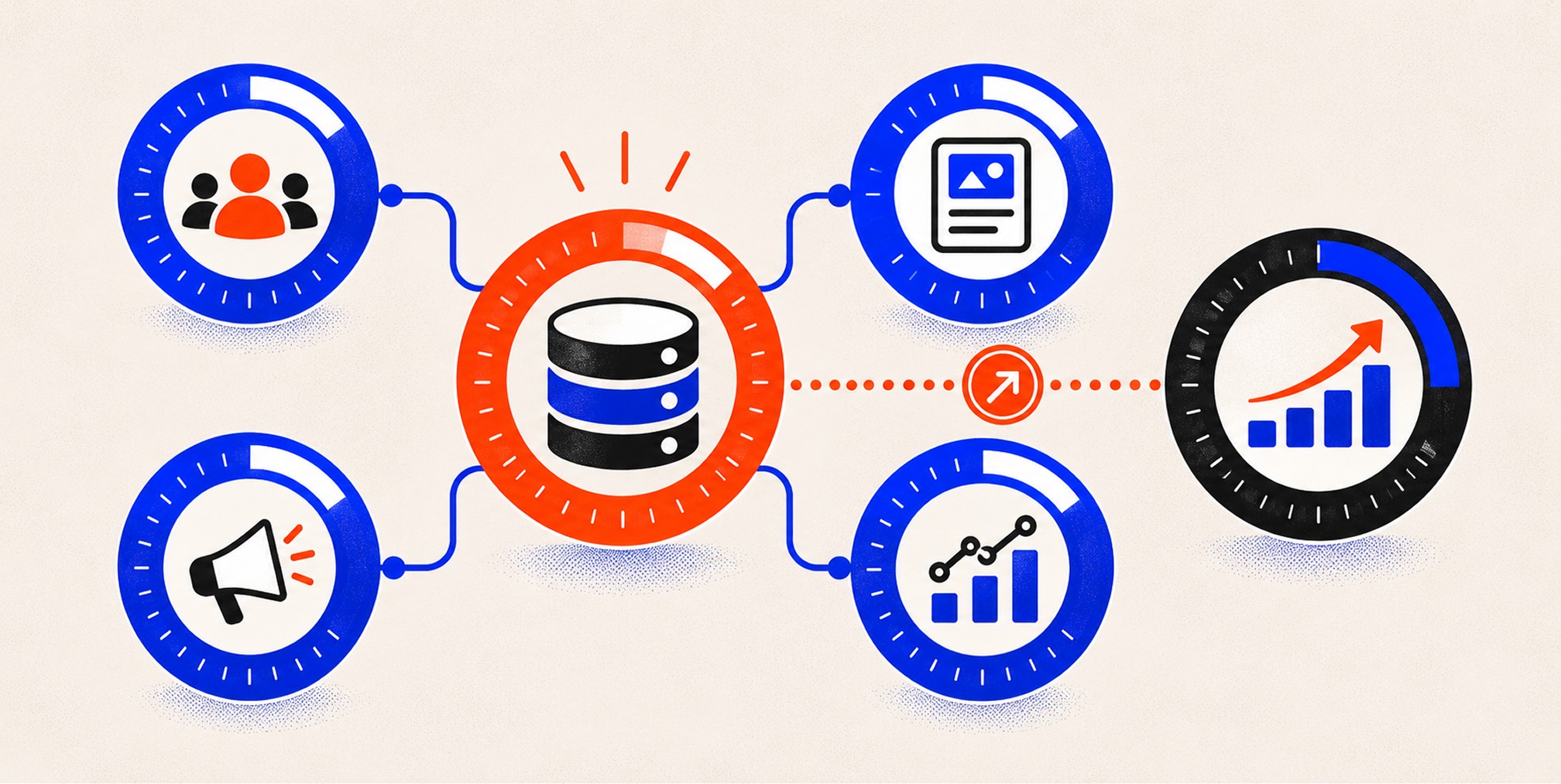
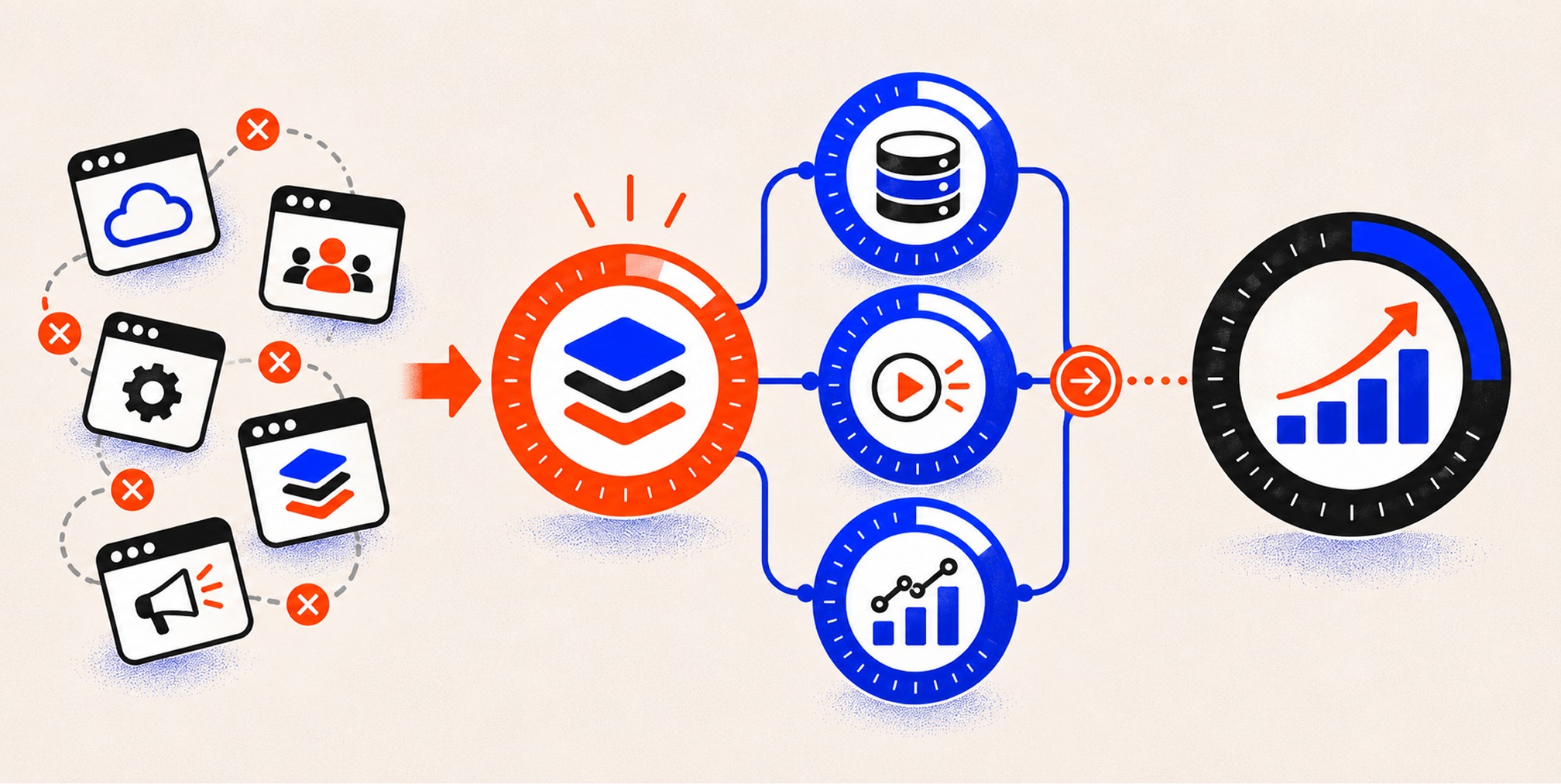
A marketing tech stack is the connected set of platforms your team uses to plan, execute, and measure every campaign, from CRM to analytics. The right posture for 2026 is data-first: build a small, integrated core around a central warehouse, govern it tightly, and only then layer in AI agents once your data foundation can support them.


What Is a Marketing Tech Stack, and Why Does Architecture Matter More Than Tool Count?

Most teams define their martech stack by counting subscriptions. That’s the wrong metric. A marketing tech stack is really an architecture decision: how data moves between systems, who owns each connection, and whether the whole thing can survive a platform swap without breaking your reporting.
Gartner’s 2025 CMO spend survey found marketing budgets have flattened at roughly 7% of company revenue, which means every new tool now has to displace something rather than simply add to the pile. Teams that keep buying point solutions without a plan end up with a dozen tools that overlap in function and disagree on data. Teams that design the architecture first get compounding value from every new addition.
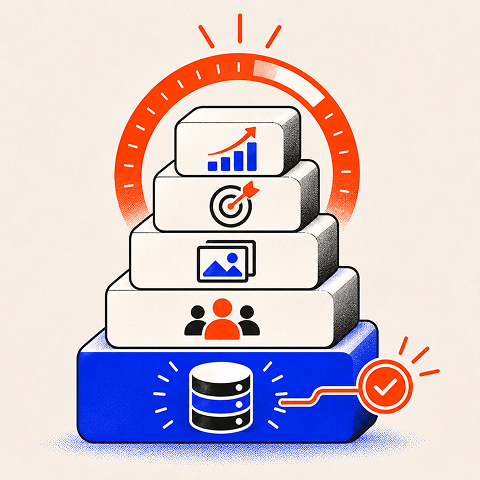
A practical way to organize the decision is a five-layer model:
- Data foundation: CRM, consent records, identity resolution and governed customer data.
- Engagement: Email, SMS, automation and lifecycle orchestration.
- Content: CMS, asset management, brand systems and creative production.
- Activation: Search, paid social and other customer-facing distribution tools.
- Analytics and governance: Reporting, attribution, access controls, monitoring and experimentation.
Map every existing tool to one of these layers before you buy anything new. Gaps and overlaps both become obvious fast.
What Are the Core Layers and Components of a Modern Stack?
Each layer carries its own set of capabilities, and confusing them is how teams end up buying redundant tools that solve the same problem from two different angles.
Data foundation. This is the layer that determines whether everything above it works. It typically includes a CRM (Salesforce, HubSpot, or similar), a customer data platform or cloud warehouse (Snowflake, BigQuery, Segment), identity resolution to stitch anonymous and known users together, and reverse ETL tools like Census or Hightouch that push warehouse data back into operational systems.
Engagement and orchestration. Marketing automation platforms (MAPs), email service providers, SMS and push notification tools, and journey engines that sequence messages across channels based on behavior. A well-run managed email marketing program sits here and often becomes the highest-ROI layer because it touches customers already in the funnel.
Content and creative. Content management systems, digital asset management platforms, AI-assisted creative tools, and brand asset engines that keep visual identity consistent across channels. This layer increasingly includes generative AI tools for copy and image production, a trend covered in more depth in our review of AI content tools.
Activation and channels. Paid social, search, programmatic display, and organic social management tools. This is where most of the visible budget goes, but it’s the layer most dependent on clean data from below.
Analytics and governance. Attribution platforms, marketing mix modeling, business intelligence dashboards, and data quality monitoring. Without this layer, you’re flying blind on which of the other four layers is actually working.
How Do You Build a Marketing Tech Stack Step by Step?
- Phase 1, inventory: Record every tool, owner, annual cost, users, data inputs and downstream dependencies.
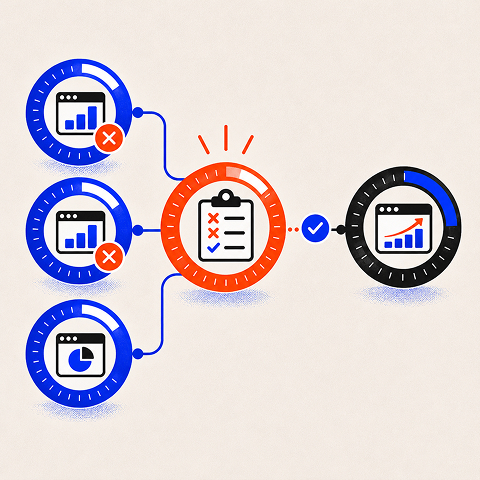
- Phase 2, diagnose: Identify duplicated features, unused seats, broken data joins and missing consent controls.
- Phase 3, architecture: Choose systems of record and map identifiers, events, integrations and permission boundaries.
- Phase 4, implement: Fix core data collection, QA one end-to-end customer journey, then add orchestration.
- Phase 5, measure: Track adoption, integration failures, cost per active user and incremental business outcomes.
- Phase 6, govern: Schedule quarterly tool and access reviews before expanding AI-driven automation.
Building a stack in the right order prevents the most expensive mistake in martech: buying activation tools before your data foundation can support them. NAV43’s six-phase framework offers a sequence that mid-market B2B teams have used successfully, and it maps closely to what we recommend for clients at every stage.
Operator playbooks from PulseRevOps recommend a specific build order within this: secure CRM hygiene first, stand up the warehouse, model the data with a tool like dbt, and only add activation tools and AI agents after that foundation holds.
Pro Tip: Run phases 1 and 2 in parallel with a two-week deadline. Teams that let the audit drag on for months lose momentum and end up re-buying tools they already had.
Free Brand Health Audit
Make sure your brand is built to sell
Search has changed. Your customers aren't just Googling anymore. They're asking ChatGPT, Perplexity, Gemini and other AI platforms what to buy, who to trust and which brands they should consider.
If your brand isn't showing up clearly in those answers, you're already losing opportunities. Our free Brand Health Audit shows you where your brand stands across traditional search, AI search and brand positioning.

Sample brand audit
Live preview
Traditional search
72
AI search (GEO)
34
Brand positioning
58
Why Do Warehouse-First Architecture and Governance Matter for AI?
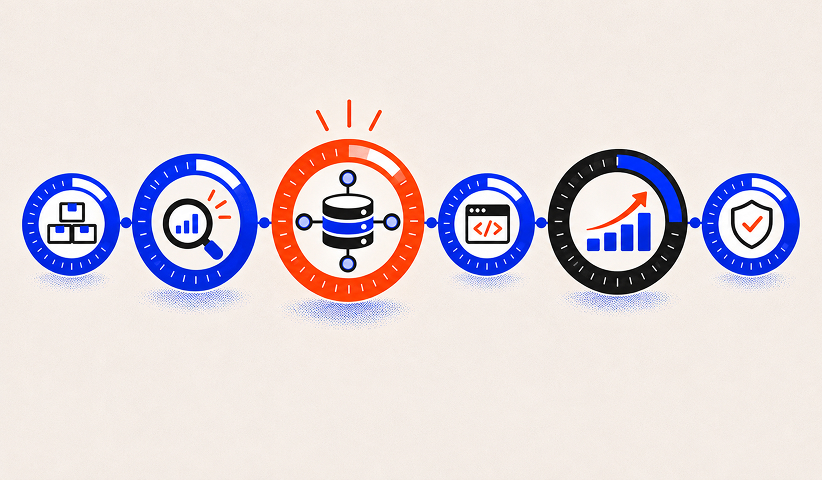
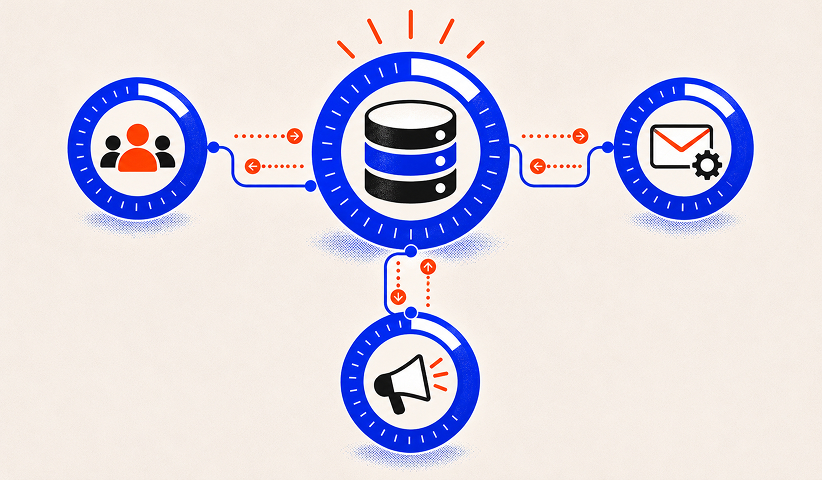
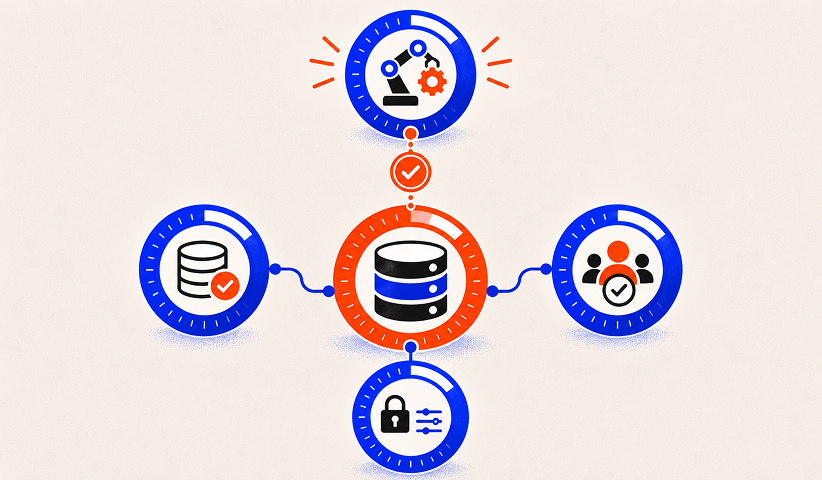
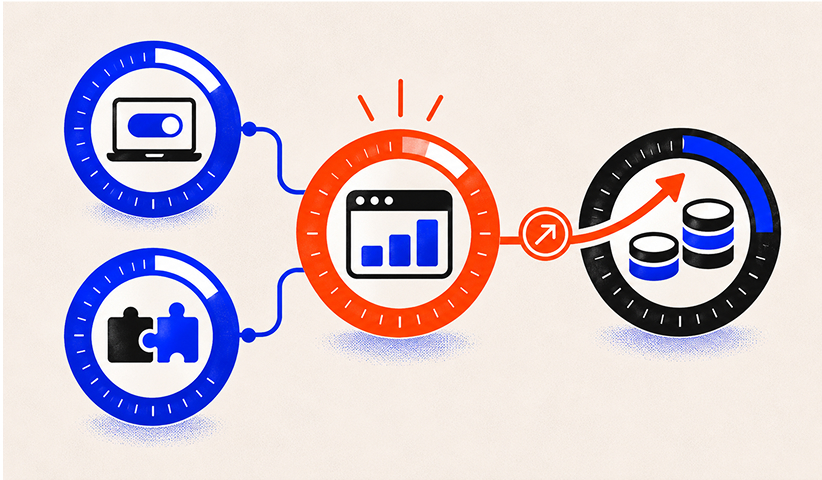
Warehouse-first architecture means your central data warehouse, not any single application, is the source of truth. Every tool reads from and writes to that warehouse rather than syncing directly with each other. Composable CDP patterns follow this logic, pulling identity resolution and audience building out of a monolithic customer data platform and into modular services that sit on top of the warehouse.
Choose a monolithic CDP when your team lacks in-house data engineering and needs a vendor to own the plumbing. Choose warehouse-first when you already have engineering resources and want full control over data ownership and model portability. Industry guidance for 2026 increasingly favors the warehouse-first pattern precisely because it lets you swap activation tools without re-platforming your data.
Reverse ETL plays the connective role here, pushing modeled warehouse data into the tools your team actually works in daily, like the CRM or ad platforms.
A useful gut check: only about one-third of purchased martech capability gets used across the average team’s stack. Fixing that starts with governance, not new purchases.
Governance for AI agents specifically means setting clear permission boundaries before an agent touches customer data. Define which fields an agent can read, which actions it can trigger without human approval, and how you’ll audit its decisions after the fact.
Which Metrics Prove Your Marketing Tech Stack Is Working?
The metrics that matter most for a stack aren’t campaign metrics. They’re operational metrics that tell you whether the infrastructure itself is earning its cost.
Statista’s tracking of U.S. martech spending shows budgets growing even as CMO spend flatlines relative to revenue, which means every dollar has to work harder. Score each tool against usage frequency, integration reliability, cost per active user, and revenue impact, then flag anything below threshold for consolidation, following the audit scoring approach HubSpot recommends.
For dashboarding, unify reporting at the executive level but keep channel-level detail available for operators. Reserve marketing mix modeling or incrementality testing for questions unified dashboards can’t answer, like whether a channel drives net-new demand or just captures it.
What Should a Startup, Mid-Market, or Enterprise Stack Look Like?
- Startup: Use one CRM, a reliable analytics setup, an email platform and a focused CMS; integrate before adding specialties.
- Mid-market: Add warehouse or CDP capabilities when identity and cross-channel reporting justify the implementation burden.
- Enterprise: Invest in consent governance, role-based access, observability, data contracts and region-specific architecture.
The right stack size depends entirely on company stage, and copying an enterprise architecture onto a five-person team is one of the fastest ways to burn budget on unused seats.
Headcount and budget should scale with integration complexity, not tool count alone.
What Are the Most Common Martech Mistakes, and How Often Should You Audit?
- Buying tools before defining workflow and data ownership creates duplication and fragile integrations.
- Measuring licenses purchased instead of active use hides shelfware.
- Connecting every tool to every other tool creates maintenance debt; document a controlled source of truth.
- Review usage and integration incidents monthly and perform a full contract and architecture audit quarterly.
Shelfware happens when teams buy tools during a growth sprint and never revisit them once priorities shift. Data debt happens when integrations get built quickly, without documentation, and nobody remembers how they work a year later.
Want to learn more about Digital Marketing and Strategy? Keep reading!
If you need help with your company’s marketing, contact us for a free custom quote.
How Does The Branded Agency Approach Martech Builds and Audits?
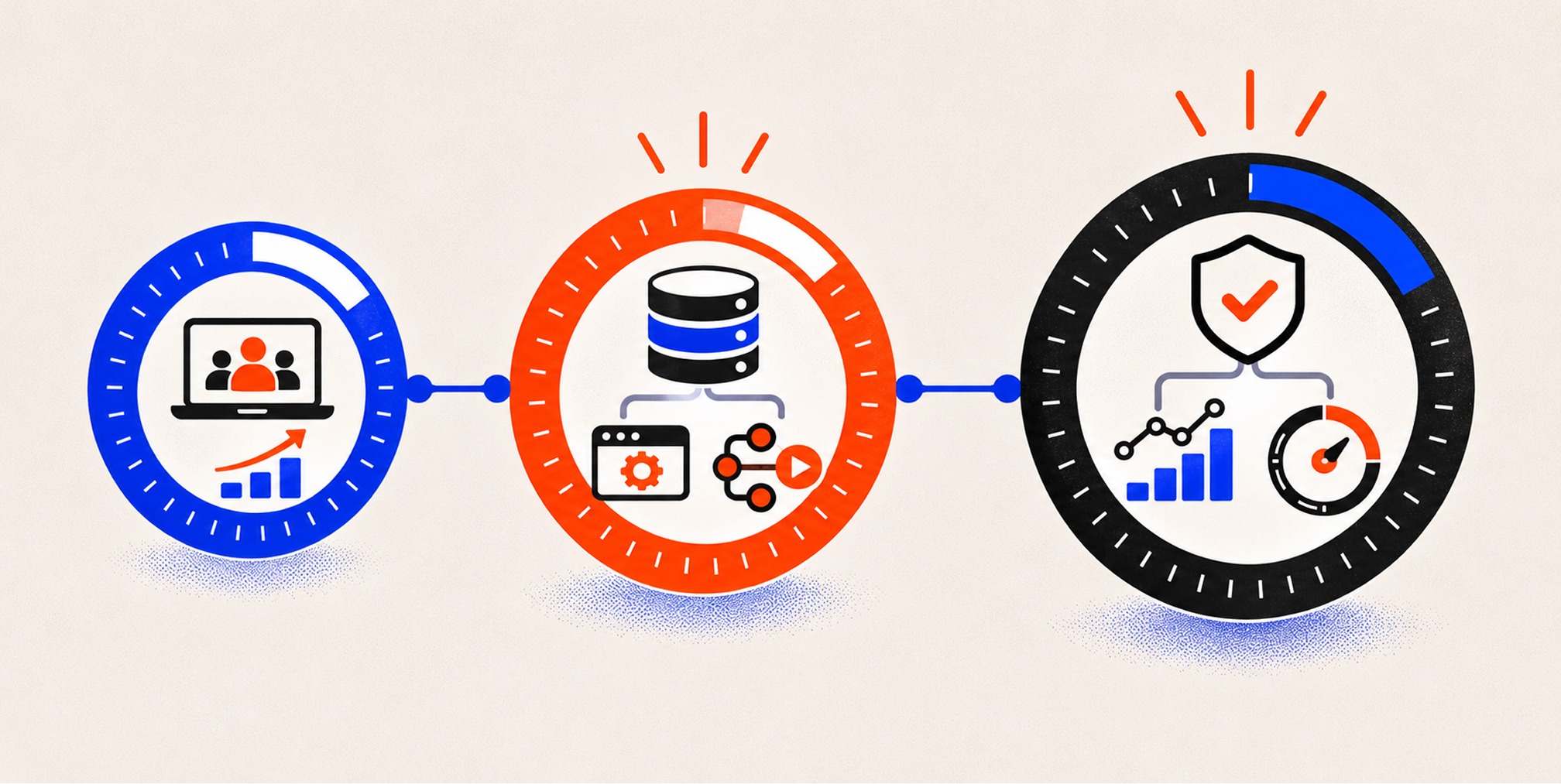
The Branded Agency runs martech builds the same way it runs brand work: strategy first, execution second. Our teams handle the audit, architecture, and integration planning as one coordinated project rather than handing pieces to disconnected vendors, which keeps timelines shorter and ownership clear at every phase.
Hiring outside help makes sense when your team lacks dedicated data engineering resources, when a build has stalled past its planned timeline, or when leadership needs an outside audit to justify a consolidation decision internally. An integrated digital marketing approach tends to outperform piecemeal vendor selection precisely because someone is accountable for how the pieces connect.
An Editorial Take on Where Martech Advice Gets It Wrong
Most martech advice treats tool selection as the hard part. It isn’t. The hard part is sequencing, and the industry’s obsession with “best of” tool lists actively encourages teams to buy in the wrong order.
The conventional playbook says: pick your CRM, pick your MAP, pick your analytics tool, then figure out integrations. That backward approach is exactly why so much martech capability goes unused. Data architecture has to come first, even when it produces nothing visible for the first month. A CMO under budget pressure wants demos and dashboards, not a warehouse schema, and that pressure is precisely what pushes teams to skip the unglamorous foundation work.
The other overrated idea is that AI agents are a quick win. They’re not, if the data feeding them is inconsistent or if consent management hasn’t been solved. An agent built on messy identity resolution just automates bad decisions faster.
What should decision-makers prioritize first? Governance and data hygiene, ahead of any new platform purchase. It’s less exciting to present at a board meeting, but it’s the only investment that compounds.
Let The Branded Agency Build or Audit Your Stack
If you’ve read this far and started mentally listing tools your team hasn’t logged into in months, that’s the audit talking. The Branded Agency is the alternative to piecing together vendors on your own: one team runs the audit, designs the architecture, and handles implementation, so you get a working stack instead of a stack of invoices.
Our approach mirrors the phase-by-phase roadmap above, starting with a real inventory of what you own and ending with governance that makes AI additions safe rather than risky. For companies weighing a full rebuild against a targeted fix, our branding and growth engagements start with exactly this kind of architecture assessment before a single new tool gets purchased. If your current stack is already in place but underperforming, our paid media management service can also plug directly into the activation layer without disrupting what already works. Reach out to start with a stack assessment and get a phased plan built around your specific data and budget constraints.
Frequently Asked Questions
What should a marketing tech stack include?
Start with CRM, analytics, an owned content platform, email automation and defined data governance; add specialty tools as needs become clear.
How do you calculate martech ROI?
Compare total ownership cost with documented time savings, conversion improvements and incremental revenue, while avoiding double counting.
Should every company build a warehouse-first stack?
No. A small team may be better served by managed CRM and automation integrations; warehouse-first pays off when scale and engineering capacity justify it.
When should marketing teams add AI agents?
After consent, permissions, event tracking, data quality and human review procedures are reliably in place.
Sources
- Google Analytics documentation: https://support.google.com/analytics/
- Google Cloud architecture center: https://cloud.google.com/architecture
- NIST AI Risk Management Framework: https://www.nist.gov/itl/ai-risk-management-framework

Quincy Samycia
As entrepreneurs, they’ve built and scaled their own ventures from zero to millions. They’ve been in the trenches, navigating the chaos of high-growth phases, making the hard calls, and learning firsthand what actually moves the needle. That’s what makes us different—we don’t just “consult,” we know what it takes because we’ve done it ourselves.
Want to learn more about brand platform?
If you need help with your companies brand strategy and identity, contact us for a free custom quote.
We do great work. And get great results.
+2.3xIncrease in revenue YoY
+126%Increase in repurchase rate YoY




+93%Revenue growth in first 90 days
+144% Increase in attributed revenue




+91%Increase in conversion rate
+46%Increase in AOV




+200%Increase in conversion rate
+688%Increase in attributed revenue