PHP2Shell Explained: What the October 2026 PHP Vulnerabilities Mean for WordPress Websites
10/22/2026
Web Development
PHP2Shell has raised urgent questions for businesses running WordPress. Learn what the October 2026 PHP vulnerabilities mean, what your hosting provider should confirm, and how to evaluate your website’s long-term security and maintenance responsibilities before choosing your next platform.

PHP2Shell is the name given to two critical vulnerabilities in PHP, the server-side software that powers WordPress and many other web applications. The PHP project released emergency fixes on October 21, 2026. For WordPress website owners, the immediate priority is to confirm that the PHP environment serving their website has been patched. A WordPress dashboard showing everything up to date does not answer that question. The incident also raises a longer-term business question: who owns the technical work that keeps your website dependable? This article explains the verified facts, the questions to ask your hosting provider, and what Webflow’s response means for companies considering a different platform. Stabilize the current website first; make a migration decision with a clear understanding of your requirements.


What is PHP2Shell, and what happened in October 2026?


PHP2Shell describes two flaws that can allow an attacker to execute code remotely without signing in, under exploitable conditions. Remote code execution means an attacker may be able to make the server run instructions they control.
The first advisory describes memory corruption associated with out-of-memory handling. The second advisory concerns stale state and a use-after-free issue, where software accesses memory after it has been released. Website owners do not need to diagnose these mechanisms themselves; their provider needs to apply the appropriate fixes.
The release date is not the beginning of all observed activity. Amazon’s threat-intelligence team reported an attempted exploit in its MadPot monitoring network on October 17, followed by further attempts on October 21 before disclosure. AWS said it was unclear whether those early attempts would have succeeded against real-world systems. After the release, AWS reported broader exploitation in the wild.
That distinction matters. A vulnerable server, an attempted attack, a confirmed compromise and a precautionary outage describe different situations. The advisories cited here do not establish a verified worldwide count of breached WordPress websites. Businesses should act on the confirmed vulnerability without treating every alarming headline as evidence that their own site has been hacked.
How are PHP, WordPress, and website hosting connected?
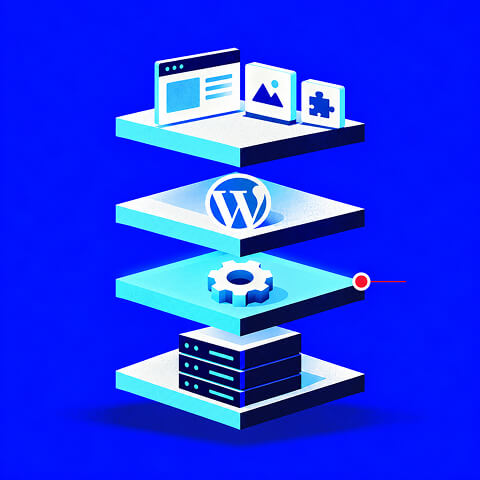
Think of a WordPress website as several connected layers. WordPress manages content and application behaviour. Themes and plugins add presentation and functionality. PHP runs server-side application code, while the hosting environment supplies the underlying infrastructure. WordPress’s official requirements identify PHP as part of that foundation.
Each layer needs an owner. Your agency may update plugins while your host manages PHP, or your internal team may control both. An update in one layer does not prove that the others are current. PHP2Shell belongs to the runtime layer, so updating WordPress core or disabling a plugin is not, by itself, a fix for these vulnerabilities.
A brief history of PHP
According to the official PHP history, Rasmus Lerdorf created its earliest predecessor in 1994 and released the source publicly in June 1995. What began as tools for a personal website developed into a language for dynamic web applications. Its age alone tells you little about the security of a particular installation.
PHP remains actively maintained. Its current support policy gives release branches two years of active support followed by two additional years of support for critical security issues. The useful questions are which branch you run, whether fixes are available, and who applies them. PHP 8.2 reaches the end of its scheduled security support on December 31, 2026, so an emergency patch should sit alongside a longer-term upgrade plan.
Free Brand Health Audit
Make sure your brand is built to sell
Search has changed. Your customers aren't just Googling anymore. They're asking ChatGPT, Perplexity, Gemini and other AI platforms what to buy, who to trust and which brands they should consider.
If your brand isn't showing up clearly in those answers, you're already losing opportunities. Our free Brand Health Audit shows you where your brand stands across traditional search, AI search and brand positioning.

Sample brand audit
Live preview
Traditional search
72
AI search (GEO)
34
Brand positioning
58
Could your WordPress website be affected?
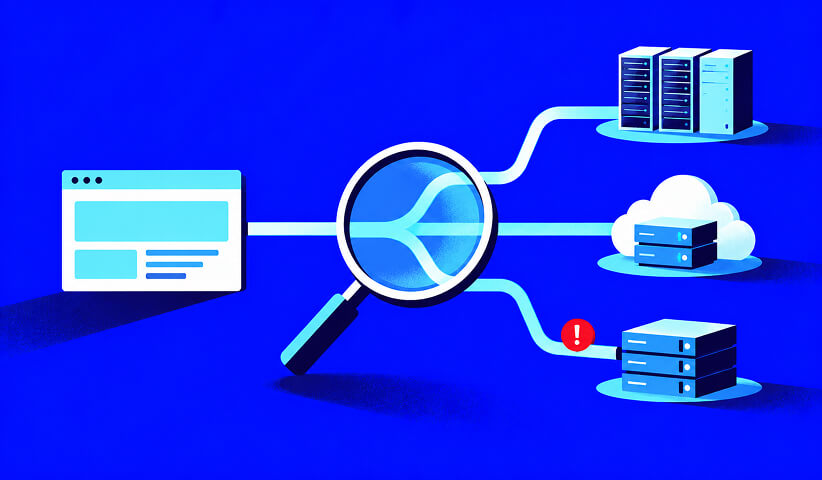


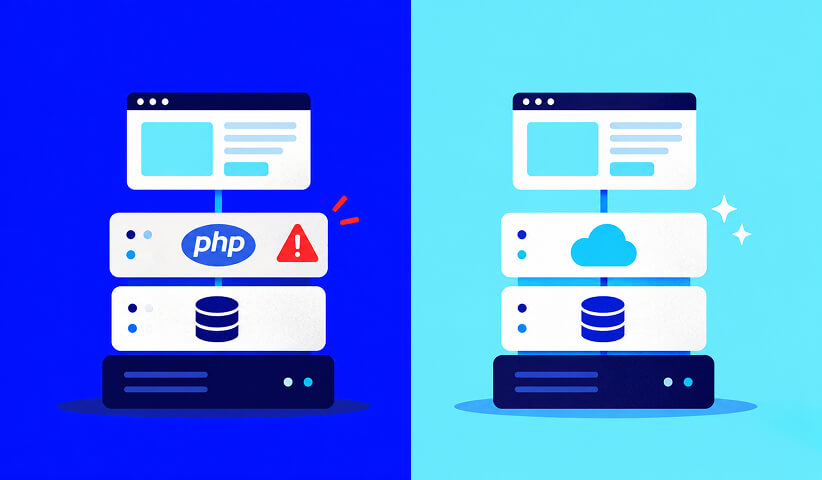
Potentially, if it runs on a vulnerable PHP installation. CERT-EU’s advisory identifies web-serving configurations including PHP-FPM, Apache mod_php, php-cgi, FrankenPHP and LiteSpeed. The most direct demonstrated risk is associated with mod_php, but businesses should assess every PHP environment that serves web requests. The exact attack path depends on the PHP version, server configuration and application.
Which PHP versions contain the fixes?
The PHP project’s October 21 release notice lists these as the first fixed releases within the supported branches:
Your provider should confirm the appropriate fixed release or vendor-patched package, including any later security updates. Some operating-system vendors backport fixes into packages whose displayed version number looks older. Ask for the package advisory and explicit confirmation that both CVEs are addressed; a version string alone may be misleading.
PHP 8.1 and earlier are outside ordinary upstream support. Emergency source backports are available for some older branches, but keeping an unsupported installation running should not become the long-term plan. Have the provider explain both its immediate remediation and its supported upgrade path.
Also check forgotten installations. The UK National Cyber Security Centre recommends identifying PHP across the estate, including third-party products that bundle it. A patched main website does not establish that a staging site, subdomain or separate application is also patched.
What should you ask your hosting provider now?
Ask for a written response tied to the actual website and environment. These six questions make a useful starting point:
- Which PHP version and vendor package are serving our live website, and what server configuration is in use?
- Have both CVE-2026-109618 and CVE-2026-109619 been remediated? Please provide the relevant release or vendor advisory.
- When was the fix deployed, and how did you verify that the running web-serving processes are using it?
- Which related environments have you checked, including staging, subdomains and other applications in our account?
- What evidence of attempted exploitation or compromise have you reviewed, and what further investigation is needed?
- If remediation is incomplete, what temporary protection is in place, who owns the next action, and when will it be completed?
If a fix cannot be applied promptly, involve the hosting provider or incident-response team. CERT-EU advises considering isolation of internet-facing applications until remediation is applied and verified. The choice depends on the environment and business impact. Temporary controls should not be treated as a complete replacement for the update.
Patching also does not establish that an earlier compromise has been removed. The NCSC’s response guidance includes investigation for signs of compromise and backdoors where prompt mitigation was not possible. If an investigation is needed, preserve relevant evidence and follow the response team’s recovery advice.
For a business owner, the useful deliverable is a named person, a documented fix and confirmation of what was checked. A general reassurance that the site is “secure” gives you much less information.
What has Webflow said about PHP2Shell?
As checked on October 22, 2026, the Webflow Trust Center states that Webflow’s core services are not built on PHP and are unaffected by PHP2Shell. It also says its security team is assessing PHP-dependent non-production systems and that customers do not need to take action in response to this incident.
This is a specific statement about Webflow’s services and this vulnerability. A company using Webflow may still operate a separate PHP application, custom backend or connected service. Those systems need their own assessment.
For websites hosted on Webflow, its managed hosting model places infrastructure maintenance with the platform provider. Website teams still need to manage account access, integrations, embedded scripts, forms and content. Webflow’s account-security guidance remains relevant regardless of which runtime a platform uses.
That division of responsibility is part of Webflow’s appeal: a marketing team can spend less effort coordinating a separate CMS hosting stack. It still needs a clear operating plan. Our guide to Webflow security, backups and maintenance explains what that ongoing work includes.
Want to learn more about Website Design, Development and E-commerce? Keep reading!
If you need help with your company’s website and development, contact us for a free custom quote.
Is this a reason to rethink your website platform?
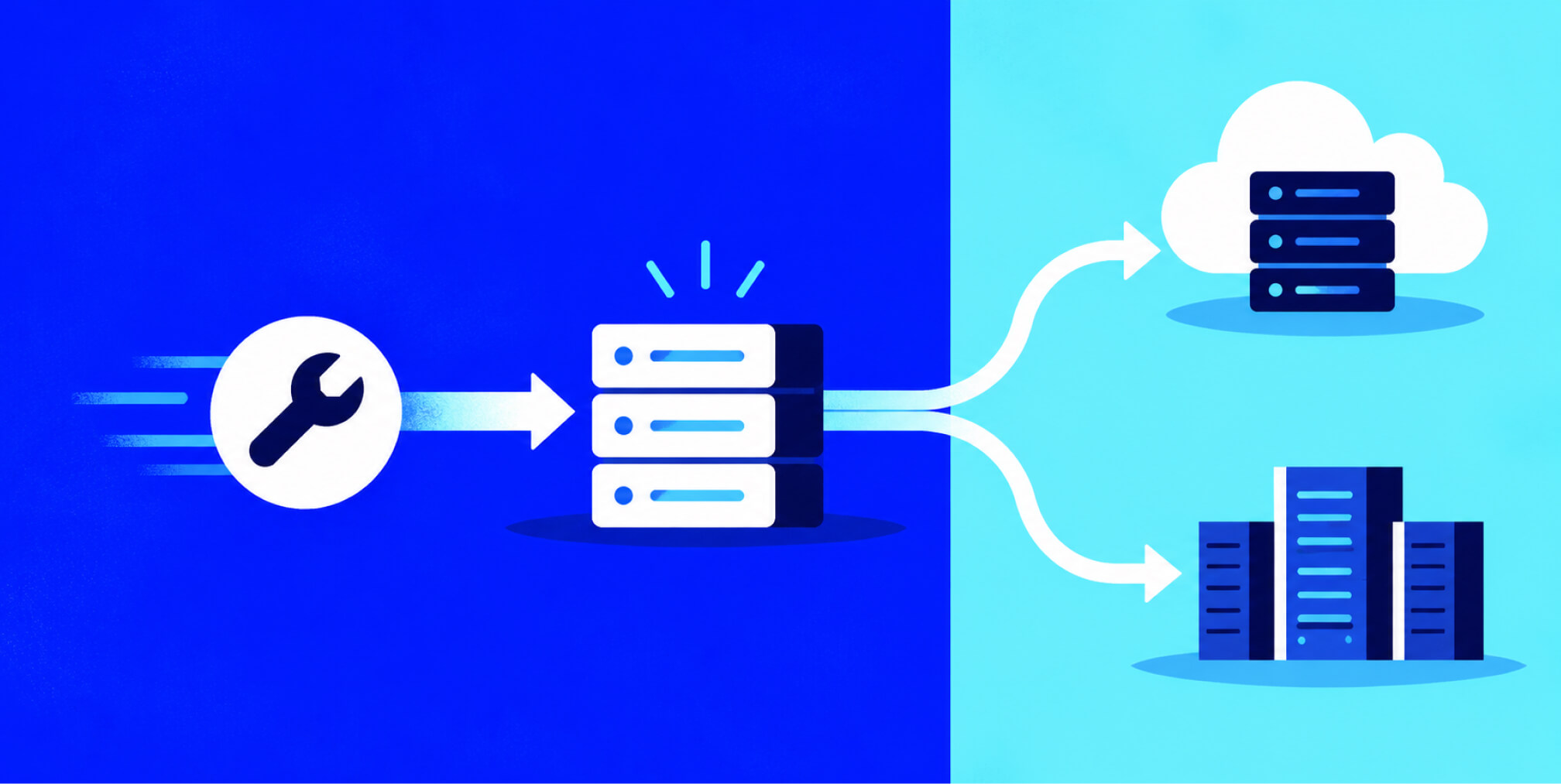
Yes, this is a useful moment to review the operating model behind your website. It is not enough, on its own, to decide which platform fits your business.
Start with responsibility and business requirements
Research offers a useful perspective. In The Unpatchables, a 2024 study from Delft University of Technology, researchers found a mismatch between systems attributed to Dutch municipalities and the systems practitioners believed they were responsible for. The study did not compare WordPress with Webflow. Our practical takeaway is that unclear ownership can leave necessary maintenance unfinished even when fixes exist.
For a marketing-led website, we would assess Webflow when the team wants more direct control over design and publishing with managed infrastructure. We would also examine integration requirements, CMS structure, portability and recurring costs. Managed WordPress providers such as WordPress VIP also take responsibility for infrastructure security; compare the actual service agreements and responsibilities.
A heavily customized WordPress application may justify keeping that architecture with stronger support. A brand website spending disproportionate time coordinating updates may benefit from a different platform. The deciding question is whether your operating model supports the website’s purpose at an acceptable cost and level of risk.
To work through that decision, evaluate the cost of maintaining a WordPress website, compare Webflow and WordPress for enterprise websites, and plan a WordPress-to-Webflow migration around your content, functionality and existing search visibility.
The Branded Agency provides Webflow development services, which informs our perspective. If you are reviewing your platform, our Webflow development team can help assess the requirements and migration scope. Resolve the current incident first, then make the platform decision against a documented brief.
Frequently asked questions

Is PHP2Shell a WordPress plugin vulnerability?
No. These two vulnerabilities affect PHP’s runtime. WordPress runs on PHP, so the environment beneath a WordPress website may need remediation even when WordPress core, themes and plugins are fully updated.
Does updating WordPress fix PHP2Shell?
No. Your host or infrastructure team must confirm that the web-serving PHP environment has received the appropriate fix. WordPress updates remain part of normal website maintenance, but they are a separate task.
Does PHP2Shell mean my WordPress website was hacked?
No. Exposure to a vulnerability does not prove compromise. Ask your hosting provider to establish the website’s patch status and assess relevant evidence. Neither a normal-looking homepage nor the absence of a visible outage proves that a site is unaffected.
Is Webflow affected by PHP2Shell?
Webflow says its core services are unaffected and customers do not need to act for this incident. Separately operated PHP systems or integrations should still be assessed by their owners.
Should I migrate to Webflow immediately?
Start by securing the existing environment. Then evaluate migration against your publishing workflows, functionality, integrations, content and SEO requirements. A future migration does not protect the current server while the project is underway.
Next in the series: Article 2 — WordPress maintenance costs.
Sources and further reading
These sources support the incident facts and wider context. Incident guidance can change; check the original advisories for updates.
- PHP project: October 21, 2026 emergency releases and technical advisories for CVE-2026-109618 and CVE-2026-109619.
- Public-sector guidance: CERT-EU advisory 2026-018 and the UK NCSC’s PHP security notice.
- Observed activity: Amazon’s PHP2Shell threat-intelligence report.
- Platform response: Webflow Trust Center, checked October 22, 2026.
- Background: PHP’s official history, supported versions and WordPress security hardening guidance.
- Academic research: The Unpatchables, USENIX Security 2024, by researchers at Delft University of Technology.

Quincy Samycia
As entrepreneurs, they’ve built and scaled their own ventures from zero to millions. They’ve been in the trenches, navigating the chaos of high-growth phases, making the hard calls, and learning firsthand what actually moves the needle. That’s what makes us different—we don’t just “consult,” we know what it takes because we’ve done it ourselves.
Want to learn more about brand platform?
If you need help with your companies brand strategy and identity, contact us for a free custom quote.
We do great work. And get great results.
+2.3xIncrease in revenue YoY
+126%Increase in repurchase rate YoY




+93%Revenue growth in first 90 days
+144% Increase in attributed revenue




+91%Increase in conversion rate
+46%Increase in AOV




+200%Increase in conversion rate
+688%Increase in attributed revenue