Rebrand: How to Decide, Plan, and Execute a High-Impact Brand Transformation in 2026
04/24/2026
Branding / Brand Strategy

.png)


What Rebranding Really Means in 2026 (And When It’s a Strategic Necessity)


Key Takeaways
- Rebranding in 2026 is most often triggered by strategic shifts—entering new markets, acquisitions, leadership changes, or reputation challenges—not simply because your website looks outdated.
- For companies generating $10M+ annually, a rebrand is a corporate strategy decision, not a marketing project. It must be tied to measurable business outcomes like improved win rates, pricing power, and talent attraction.
- Leaders must first determine whether they need a partial rebrand (visual and messaging refresh) or a complete rebrand (name change, repositioning, new target audience) based on concrete triggers and risk tolerance.
- A successful rebrand balances necessary change with recognition—you modernize and reposition while protecting the brand equity you’ve already invested in building.
- Learning from high-profile failures like Gap’s 2010 logo debacle and Comcast’s Xfinity transition can help you avoid expensive mistakes that erode customer trust.
What Is a Rebrand in 2026? A Straightforward Definition for Growth Companies
Let’s cut through the jargon. Rebranding is the deliberate process of changing how your company is perceived in the market. The rebranding process is a structured, multi-stage effort that involves careful planning, audience analysis, and execution to ensure your new brand identity aligns with business goals and customer expectations. You do this by updating your strategy, visuals (logo, colors, typography), messaging, and sometimes your name to signal a new direction to customers, employees, and partners.
The key distinction is between a partial rebrand and a total rebrand:
- Partial rebrand: You refresh your visual identity and tighten your brand messaging while keeping your company name and core market promise intact. Think of Pepsi’s 2023 visual refresh or Zoom’s 2022-2024 evolution as it expanded beyond video calls.
- Total rebrand: You’re changing your name, your positioning, and often your target audience as part of a market repositioning strategy. Facebook’s transformation to Meta in 2021 is the clearest recent example—a signal of an entirely new strategic bet on AR/VR.
For companies above $10M in revenue, rebranding is part of corporate strategy, not just marketing. It affects your pricing power, who wants to work for you, which partners take your calls, and what your company is worth at exit.
Consider three recent examples that illustrate the spectrum:
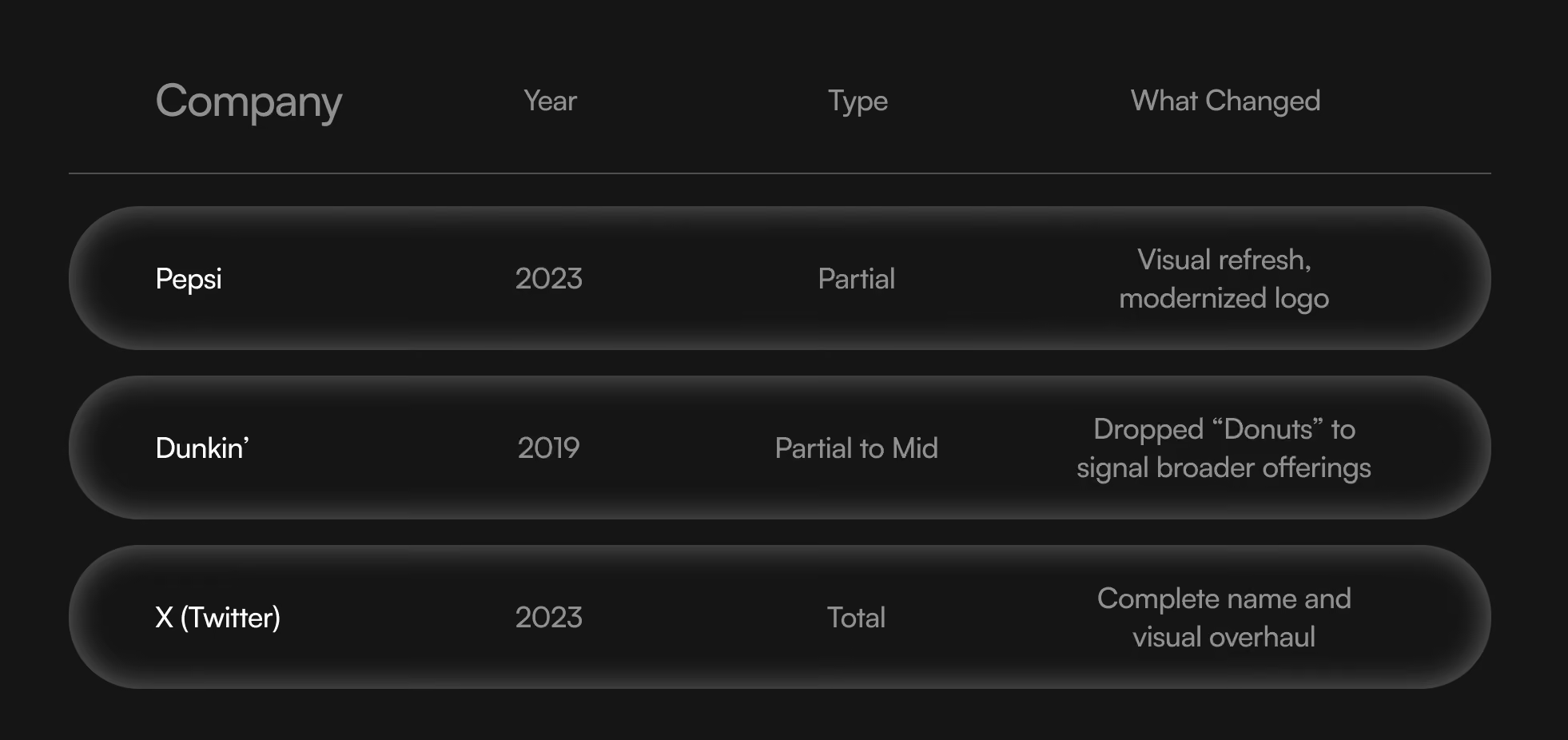
The core insight here: rebranding is less about getting a new logo and more about aligning what you say, how you look, and what you actually deliver with where your business is headed over the next 3-5 years.
Free Brand Health Audit
Make sure your brand is built to sell

When Is It Time to Rebrand? Signals CEOs and Founders Should Watch


Timing is where most leadership teams get stuck. They either wait too long (until the brand actively hurts growth) or move too fast (burning money on cosmetic changes that don’t solve real problems).
This section gives you concrete, measurable triggers—not vague “gut feel” assessments. Review these signals at least annually during strategic planning, not only when sales slip.
Before diving in, remember: not every business problem is a brand problem. Slow quarters might need better sales enablement or improved customer success, not a new brand identity.
The Business Has Outgrown Its Original Position
Many companies start with names and positioning designed for a narrow first offer. “Springfield Tax Prep” made perfect sense when you launched—but now you offer full CFO services across six states.
Here are the warning signs:
- 30-50% of your revenue comes from service offerings your brand barely mentions
- Your sales team constantly explains “we actually do much more than our name suggests”
- You’re losing deals to competitors with broader positioning
- Potential customers are confused about what you actually offer
This is where many brands move from descriptive names to broader concepts. Dunkin’ dropped “Donuts” in 2019 because coffee had become their primary revenue driver. Weight Watchers attempted a shift to “WW” in 2018 to signal wellness beyond weight loss (though the execution struggled with clarity).
Quick check: Does your current name, tagline, and website copy still accurately describe what your business does and for whom? If your brand's audience—reflecting the demographic and geographic characteristics of your ideal customers—isn’t clearly represented, it’s time to consider repositioning.
The Brand Is Losing Relevance or Looking Tired
“Looking dated” becomes a strategic risk when it affects real metrics:
- Declining click-through rates on ads compared to competitors
- Lower time-on-site versus category benchmarks
- Sales calls where prospects mention your “old-school” feel
- Difficulty attracting top talent who perceive you as behind the times
Visual patterns carry implicit meaning. Shadows and skeuomorphic logos from the 2000s, overly glossy 3D icons, and cluttered web layouts signal “small,” “risky,” or “not current” to modern buyers.
Examples of effective relevance refreshes:
- Kodak’s 2016-2018 retro-modern refresh honored heritage while feeling contemporary
- Chobani’s 2017 redesign helped them stand out in a crowded yogurt aisle with a warmer, more approachable brand aesthetic
Recommendation: Conduct a light visual audit every 12-18 months. Look at your homepage alongside three direct competitors. If yours feels like it’s from a different era, a partial rebrand may be sufficient—or you may need to examine whether the underlying story is also outdated.
Strategy, Market, or Leadership Has Shifted
New leadership teams, new investors, or pivots in your target market often require a refreshed promise and corporate identity. This is one of the most defensible times to rebrand because the business reality has genuinely changed, and it is crucial to ensure the rebrand aligns with the company's vision so that all changes reflect the organization's future direction.
Consider these scenarios:
- Moving from SMB to enterprise (or vice versa)
- Expanding from domestic to international markets
- New CEO or leadership team with different strategic vision
- Significant investor changes requiring new positioning
Real examples:
- Meta’s 2021 rebrand signaled a long-term bet on AR/VR, distancing from Facebook’s social media associations
- Eurostar’s 2023 brand update communicated inclusivity and sustainability along new routes
Diagnostic exercise: Compare your strategic narrative in board decks with what your brand communicates externally. If they tell different stories, you’re overdue for realignment.
Create a simple “old story vs. new story” comparison before commissioning design work. This clarifies whether you need visual updates or a full brand repositioning.
Brand Reputation or Customer Perception Is Holding Growth Back
Reputation-driven rebrands carry the highest risk but are sometimes essential—especially after public crises, poor service history, or cultural misalignment with today’s expectations.
Real cases to study:
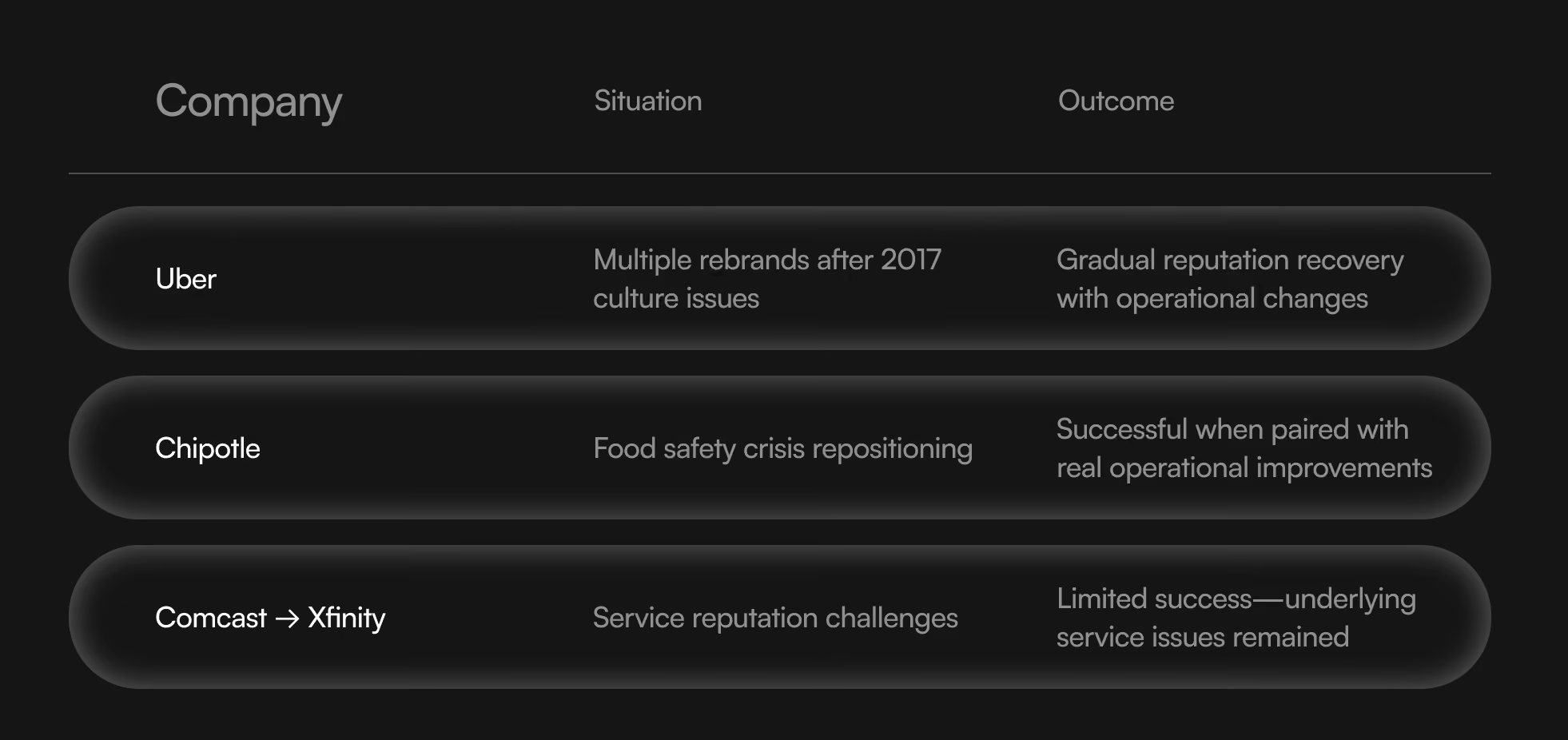
Here’s the hard truth: in 2026, audiences see through cosmetic changes instantly. Design updates without operational improvements (better support, higher product quality, clearer policies) typically backfire rather than rebuild trust.
Critical advice: Fix root-cause issues in parallel with rebrand planning. Build proof points—new policies, product updates, improved customer satisfaction scores—into your new narrative. Use sentiment tracking (reviews, NPS, social listening) before and after launch to measure whether brand sentiment actually improves.
Expansion, Mergers, or New Markets Make the Current Brand Limiting
When companies merge or launch new verticals or regions, a rebrand can unify fragmented identities under a single brand with one coherent story.
Names tightly tied to one geography, industry, or product can cap your expansion potential:
- Local city names in your business name when you now serve nationally
- “Software company” wording when you now offer services and hardware
- Industry-specific terminology when you’ve moved into a different market segment
Reference examples:
- United + Continental merger (2010) required unified visual elements and messaging
- Nickelodeon’s 2023 family-unifying rebrand broadened appeal across age groups
- WhatsApp’s 2023 refresh differentiated from Meta while emphasizing global, secure communication
Strategic exercise: Map your potential 3-5 year growth directions. Can your current brand “stretch” to cover them without confusing new customers? This is often the moment to consider house-of-brands versus branded-house architecture and whether sub-brands are needed.
Partial vs. Total Rebrand: Choosing the Right Level of Change
Picking scope is one of the most important risk decisions you’ll make. Go too light and nothing meaningful changes. Go too heavy and you destroy brand equity you paid to build.
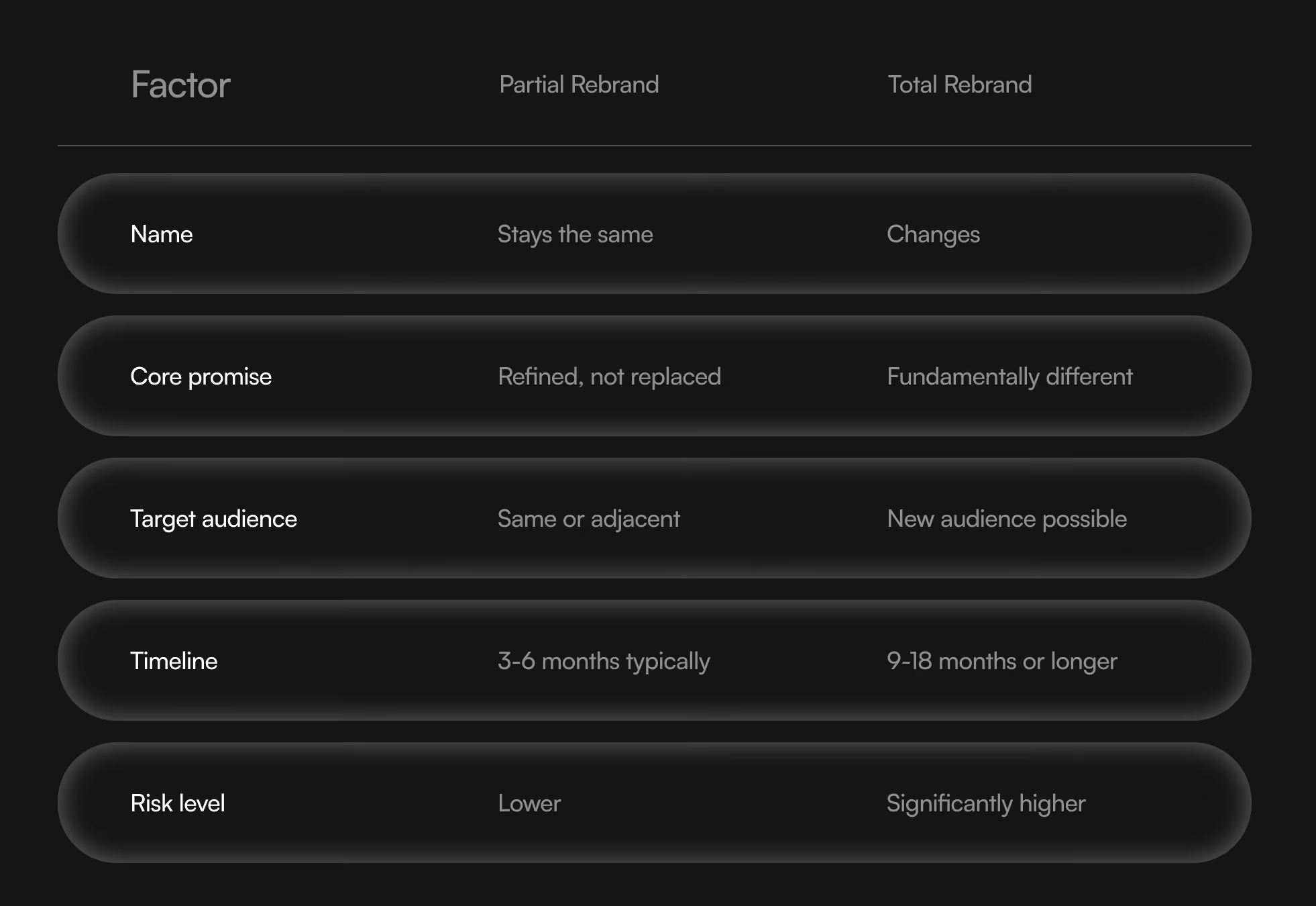
For $1M-$20M businesses, partial rebrands are far more common. Total rebrands are typically reserved for major pivots, acquisitions, or serious reputation resets.
Three guiding questions to determine your path:
- Are we changing who we serve?
- Are we changing what we sell?
- Are we changing why we exist?
The more “yes” answers, the closer you move toward total rebrand territory.
When a Partial Rebrand Is Enough
A partial rebrand works when you need to modernize without reinventing your core identity.
Scenarios where partial rebranding fits:
- Modernizing outdated brand elements while keeping brand recognition
- Tightening brand messaging to clarify your offer
- Signaling an upgrade in quality to support price increases
- Staying competitive visually without confusing existing customers
Examples of effective partial rebrands:
- Mailchimp’s subtle evolution maintained brand loyalty while feeling more professional
- Pringles’ 2021 mascot update modernized without losing the instantly recognizable character
- Pepsi’s 2023 visual refresh honored heritage while feeling contemporary
- Zoom’s 2022-2024 visual evolution supported its broader platform positioning
A partial rebrand typically takes 3-6 months for mid-sized companies. Consider phasing the rollout: website first, then marketing materials and sales collateral, then broader ad campaign work.
Track these leading indicators to measure success: demo requests, average deal size, recruiting quality, and sales cycle length.
When a Total Rebrand Is the Right Move
A total rebrand or complete rebrand makes sense when your current identity is actively limiting or harmful.
Conditions that warrant total transformation:
- New name required due to legal issues or fundamental repositioning
- Substantial shift in revenue mix requiring new market positioning
- Reputational damage making the original brand a liability
- Moving into an entirely new category where the old name creates confusion
Examples to study:
- Facebook → Meta (2021): Complete strategic repositioning toward AR/VR
- Dunkin’ (2019): Successful name simplification reflecting evolved product mix
- Twitter → X (2023): Controversial, abrupt switch that sacrificed significant brand recognition
The risks are real: loss of search equity, confusion among current customers, and the cost of changing every legal, contractual, and operational touchpoint.
For any company over $1M annual revenue, build a 12-24 month roadmap for a total rebrand. Include legal, HR, finance, and operations—not just marketing.
Critical question to answer clearly: What’s staying the same? Loyal customers need to understand continuity alongside change.
Want to learn more about Rebrands, Brand Strategy and Brand Identity? Keep reading!
Strategic Foundations: Clarifying Story, Audience, and Positioning

Before touching any visual elements, leadership must align on fundamentals: why the business exists, who it’s for, and what makes it different. This work feels abstract but directly impacts pricing power, sales cycles, and how easily potential customers “get it” when they land on your homepage.
Getting these foundations right dramatically reduces rework with designers and copywriters downstream. Involve both executive leadership and frontline teams (sales, customer success) for a reality-based foundation, not just boardroom vision.
Define or Reconfirm Mission, Vision, and Values
Start with a simple exercise. In one sentence each, write:
- What you do
- Who you do it for
- Why it matters in 2026-2030 (not just today)
Test whether your company's mission still matches your primary revenue drivers. If 40% of revenue comes from a service your company's mission doesn’t mention, it’s time to update. Similarly, ensure your company's vision accurately reflects your long-term goals and market position. If your company's vision no longer aligns with your strategic direction, redefine it to guide your rebrand.
Examples of effective mission alignment:
- LG’s 2023 emphasis on “Life’s Good” as a people-centric tech company’s vision
- Patagonia’s long-standing environmental mission guiding campaigns like Worn Wear
For values: Write them in plain English with practical behaviors instead of vague aspirational words. “We tell the truth in our metrics, even when it hurts” beats “Integrity” every time.
Turn the updated company's mission and company's vision into a short internal memo before any design brief is created.
Reestablish Your Audience, Market, and Buyer Personas
Many $1M+ companies still operate on outdated assumptions about their ideal customer from year one.
Specific market research methods to use:
- Win/loss interviews with recent prospects (won and lost)
- CRM analysis for deal size and sector patterns
- Short surveys to your best current customers
- Focus groups with prospects in your target market
Map 2-3 primary personas with:
- Demographics and company profile
- Buying triggers and pain points
- Common objections
- Preferred marketing channels
Key insight: Test early draft messaging with 5-10 real customers before rolling it out widely. Their reactions will reveal blind spots no internal team can see.
Clarify Your Positioning and Differentiation
Positioning, in simple terms, is the specific place you want to own in your customer’s mind compared to alternatives.
Answer these three questions:
- What problem do we solve better than anyone else?
- For whom?
- Why now?
Examples of clear positioning:
- WhatsApp: “Secure, intimate communication”
- 7UP: “UPliftment” theme for joyful relief
- Reddit: “The heart of the internet”
Map 3-5 direct competitors and list what each emphasizes in their new brand identity. Then consciously choose a different positioning to own.
Stress-test against pricing: Can this brand strategy justify current and planned price increases over the next 12-24 months? If not, your positioning may be too weak.
Design and Messaging: Turning Strategy into a Tangible New Brand
This is the translation layer—turning strategy into names, taglines, visuals, and brand voice that appear on your website, sales decks, and product.
At $1M+ revenue, design and messaging decisions should be tested and validated, not chosen purely on personal taste. Leaders should stay involved at key checkpoints (brief, early concepts, final selection) without micromanaging every pixel.
Name, Tagline, and Core Messaging
Changing the company name is the highest-risk move. Only do it when the old name is actively limiting growth or carrying negative brand recognition.
Criteria for evaluating names in 2026:
- Memorability and distinctiveness
- Domain and trademark availability
- Ease across languages (if targeting international markets)
- SEO implications and search equity preservation
Name change examples to learn from:
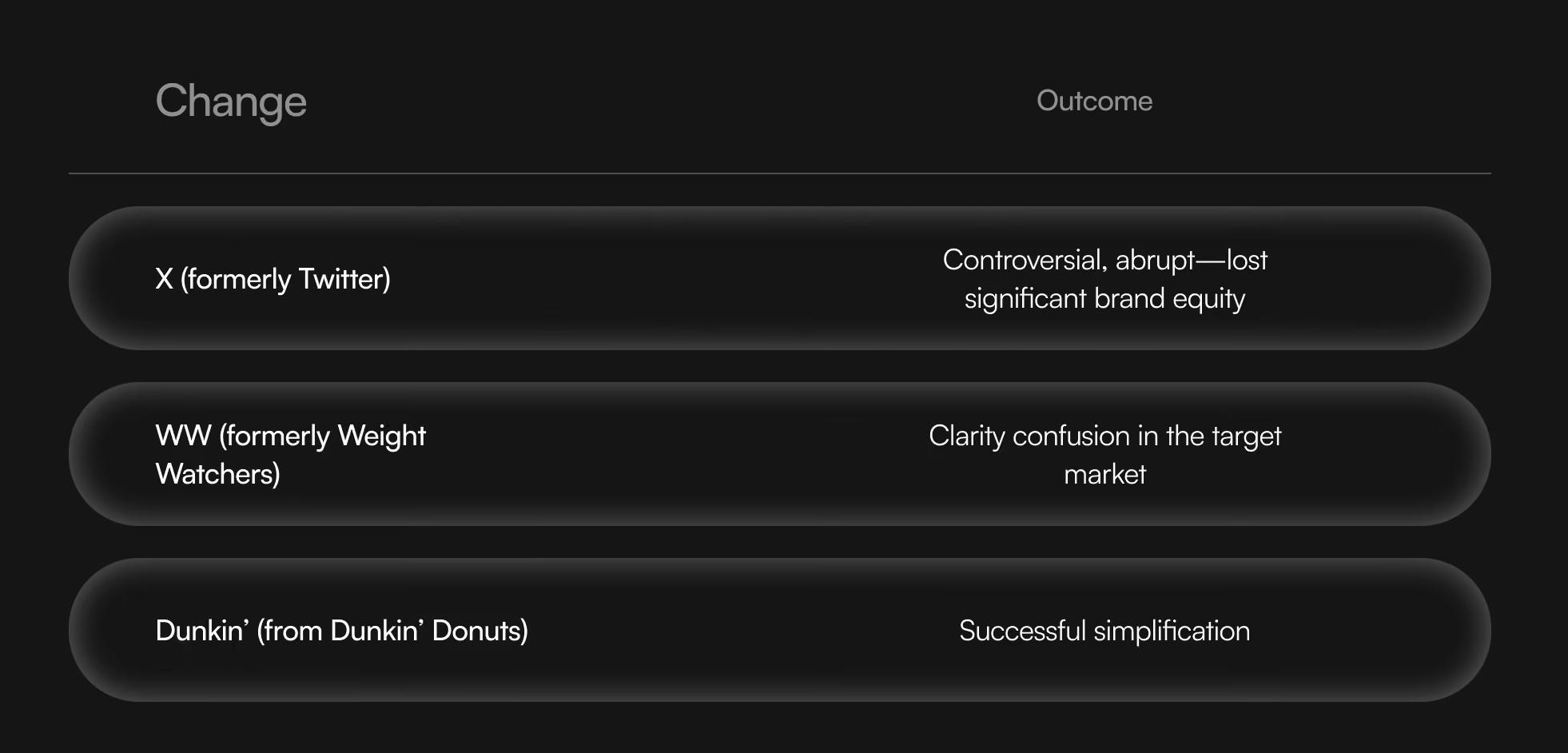
For messaging: Create a one-page hierarchy including brand promise, 3-5 key proof points, and a short elevator pitch your whole team can deliver on brand and consistently. Ensure that all taglines and messaging are aligned with the company's mission to maintain consistency and purpose throughout the rebranding process.
Pressure-test the new tagline with existing customers and sales teams before committing to your rebrand launch. Testing new branding concepts with focus groups or surveys can also validate new logos, names, or messages before a full launch.
Visual Identity: Logo, Colors, Typography, and System
Think of new visual identity as a repeatable system—not just a new logo file. This system includes your company logo, colors, typography, other visual elements, imagery rules, and brand guidelines for application.
Alignment principles:
- Colors and typefaces should match your positioning (trust vs. innovation vs. warmth)
- The system must work across digital, print, mobile, and physical applications
- Accessibility matters: sufficient color contrast, readable type, clear iconography
Examples of effective visual systems:
- Google’s simple, mobile-friendly brand logo evolution
- LG’s shift to 2D, animated expressions of their new icon
- Jell-O’s playful packaging refresh to attract younger families
Produce brand guidelines with clear do’s and don’ts, including real examples: homepage layout, LinkedIn posts, sales decks, web design standards.
Brand Voice and Content Style
Brand voice is the personality and tone of how your brand “talks” in emails, website copy, proposals, and social media content.
Voice should support your positioning:
- Expert and calm for financial services
- Bold and playful for DTC brands
- Mission-driven and authentic for purpose-led companies
Contrasting examples:
- Duolingo’s humorous, sometimes provocative voice
- Patagonia’s mission-driven, activist style
Document 3-5 voice attributes with examples:
- “Direct, not abrasive”
- “Simple, not childish”
- “Confident, not arrogant”
Include sample before/after sentences showing the transformation. Audit existing content for consistency and update key templates: proposals, outbound sequences, customer onboarding messages.
Planning and Managing the Rebrand Project
For companies above $1M revenue, the rebranding process is a cross-functional team effort that should be managed like any other strategic initiative—with clear owners, budgets, and timelines. Rushed rebrands can appear inauthentic and confuse customers; proper execution often requires months to ensure alignment with business goals and customer expectations.
High-level phases:
- Discovery (research, audits, stakeholder interviews)
- Strategy (positioning, messaging framework, creative brief)
- Creative (design concepts, refinement, final direction)
- Validation (testing with customers and teams)
- Implementation (building all visual assets and materials)
- Launch (internal rollout, customer communication, public reveal)
Who to Involve Internally and Externally
Key internal stakeholders:
- CEO/founder (final decision authority)
- CMO or marketing lead (project ownership)
- Head of sales (customer-facing reality check)
- Product lead (alignment with roadmap)
- HR/People (employer brand implications)
- Finance partner (budget management)
Include 3-5 frontline employees (sales reps, customer success, store managers) in feedback loops. They’ll ground decisions in daily customer reality.
Customer involvement: Interviews, small advisory panels, or beta previews provide honest reactions before you commit.
External options:
- Brand strategist for positioning work
- Design studio for visual identity creation
- Copywriter for messaging and content style
- Legal counsel for naming and trademarks
- PR/communications partner for rebrand launch
Critical: Establish one clear decision-making framework with defined approval stages. Endless internal debates sink rebranding efforts.
Timeline, Budget, and Scope Control
Typical timelines:
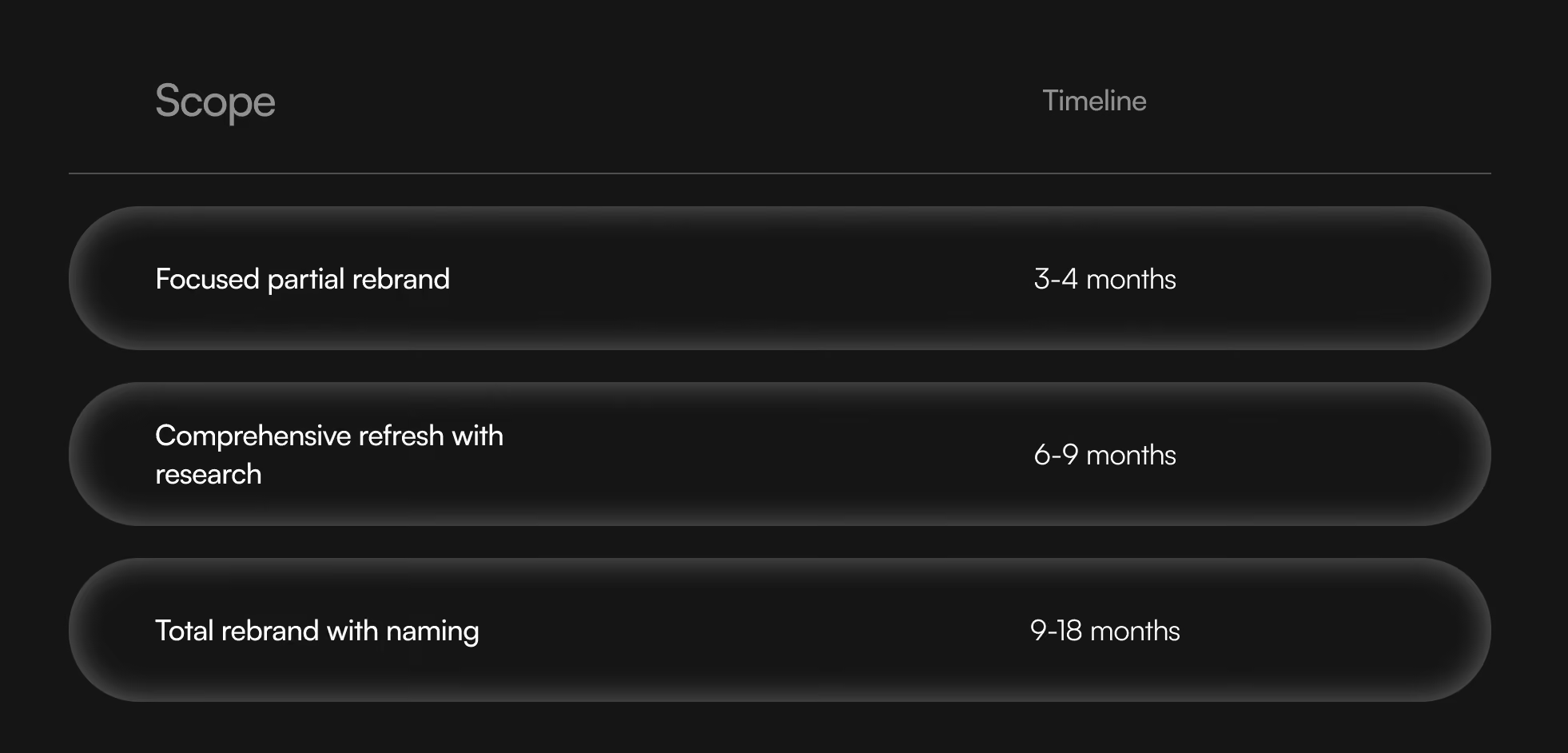
Multi-location or multi-country companies need additional time for physical signage, packaging, and localized marketing materials.
Budget considerations for $1M-$10M companies:
- Partial rebrand: Low to mid five-figures
- Full rebrand with strategy and rollout: Low six figures possible
Hidden costs to budget for: Signage updates, packaging redesign, domain changes, new ad campaign creative, HR materials, business cards, uniforms.
Scope control tactics:
- Define “must-have for launch” vs. “phase two”
- Use phased rollout: digital assets first, then physical, then secondary materials
- Schedule biweekly leadership check-ins to prevent scope creep
Legal, Operational, and Technical Considerations
Legal steps for name changes:
- Trademark search and registration
- Domain acquisition and protection
- Corporate filings and DBA updates
- Contract updates with clients and vendors
- Regulatory notifications where required
Operational touches often overlooked:
- Invoices and contracts
- HR documents and employee handbooks
- Uniforms and physical assets
- Office signage and vehicle wraps
Technical updates:
- Website 301 redirects (critical for SEO preservation)
- Email address migration
- Analytics tags and tracking updates
- App store listings
- API documentation
Maintain a detailed inventory of all branded touchpoints before starting rollout. Plan redirects and communication carefully to avoid broken experiences during transition.
Launching the New Brand: Rollout, Communication, and Adoption
Launch is the “moment of truth.” How you reveal the rebrand determines whether customers see it as meaningful progress or confusing noise.
Launch functions as both an internal culture event and an external market event. Both require conscious orchestration.
Before launch: Capture baseline metrics (awareness, NPS, key website stats, branded search volume) for comparison afterward.
Internal Launch: Turning Employees into Advocates
Announce the rebrand to employees before the public. They’ll be your first ambassadors—or your first critics.
Internal launch components:
- Clear presentation on why you’re changing, what’s different, and how it supports the new strategy
- Internal FAQ document addressing common questions
- Talking points for client-facing teams
- Updated email signatures and templates
- Internal Q&A sessions with leadership
Connect the new brand to culture and values. Demonstrate tangible changes beyond just visuals.
Consider small internal launch activities: Workshops to practice the new story, recognition for team members involved in the project, celebration events.
Employee confusion or skepticism will quickly show up in customer conversations. Clarity here is critical for successful rebrand adoption.
Customer and Partner Communication Plan
For B2B or high-value accounts, notify key customers and partners personally before broad public announcements. A call or tailored email goes a long way.
Simple communication framework:
- What’s changing
- What’s staying the same
- Why we’re doing it now
- What it means for you (the customer)
Communication channels to use:
- Email campaigns to full customer base
- In-product messages (for SaaS companies)
- Website banners and announcement pages
- Dedicated FAQ pages
- Blog post telling the full story
Offer account teams sample scripts and slide pages explaining the rebrand for their own meetings with new audience segments.
Gather early feedback from top accounts and address confusion quickly. Moving forward with clear communication prevents customer churn.
Public Reveal, Marketing Campaigns, and Ongoing Reinforcement
External reveal components:
- Coordinated website update (all pages, not just homepage)
- Social media rollout with consistent brand elements
- Press release and PR outreach
- Ad campaign where budgets allow
Examples of strong launch execution:
- Patagonia’s Worn Wear campaigns reinforcing sustainability values
- Eurostar’s multi-channel push in 2023
- Zoom’s ongoing education about its expanded platform capabilities
Key principle: Anchor the campaign around a single, clear message (“what this change means for you”) rather than a long list of updates.
Plan a 90-day reinforcement window with consistent brand messaging: new content, case studies, and customer stories featuring the new brand.
Monitor these metrics:
- Direct traffic to website
- Branded search volume
- Social media engagement
- Inbound inquiries from new customers
Avoiding Common Rebrand Mistakes

Many well-known rebrand failures weren’t bad ideas—they were poorly executed, rushed, or disconnected from customer reality. Learning from these rebranding efforts can save you significant money and brand reputation damage.
Most mistakes fall into a few categories: wrong reasons, ignored equity, generic execution, and poor communication.
Rebranding for the Wrong Reasons
Don’t use a rebrand as a quick fix for deeper problems like poor product-market fit, weak sales execution, or operational issues.
Cautionary examples:
- Comcast’s Xfinity rebrand: Service and reputation issues remained unsolved
- Weight Watchers’ WW shift: Clarity problems persisted alongside the name change
Diagnostic question: “If we changed nothing but operations and product for 12 months, would results improve?” If yes, fix those first.
Slow sales or low awareness often require better marketing strategy and positioning, not an entirely new identity.
Before proceeding: Document the specific business problems the rebrand is meant to solve and how you’ll measure a successful rebrand.
Ignoring Existing Brand Equity and Loyal Customers
Recognizable brand elements and names carry real economic value. Don’t casually discard what you’ve paid to build.
Cautionary examples:
- Tropicana’s 2009 packaging redesign: Abandoned familiar elements, faced customer backlash, reversed course
- Gap’s 2010 logo change: Threw away original logo recognition, faced massive criticism, retreated within a week
Protective approaches:
- Preserve distinctive, loved elements where possible (colors, shapes, mascots)
- Evolve around existing strong brand elements rather than replacing everything
- Involve core customers in testing major changes
- Gauge emotional attachment before committing to dramatic shifts
It’s easier to add meaning to an existing symbol than rebuild from zero—unless the old symbol is toxic.
Creating Generic or Confusing Branding
Don’t strip away all character in pursuit of “clean” or “modern,” resulting in a look that could belong to any competitor.
Warning signs:
- Your new brand identity could work for any company in your space
- Nothing distinctive ties the visuals to your specific differentiated identity
- New ideas don’t translate into clear market positioning
Examples of generic missteps:
- Google Workspace 2020 logo confusion: Similar colors made apps hard to distinguish
- Various 2010s flat icon trends that made competing products visually identical
Recommendations:
- Anchor design in a strong brand identity idea only your brand could own
- Use simple comprehension tests: Can a new visitor tell what you do and why you’re different in under 10 seconds?
- Avoid changing too many elements (name, brand logo, slogan, colors) simultaneously without a clear connecting narrative
Under-Communicating the Change
Many rebrands fail not because of the work itself but because customers are surprised, confused, or feel excluded.
Examples of communication failures:
- Weight Watchers’ WW shift left brand’s audience confused about what the company now represented
- Applebee’s millennial-focused campaign alienated their core older customer base
Better approach:
- Over-communicate early and often: why now, what it means, how it benefits customers
- Create a content plan around launch: blog posts, short videos from leadership, customer webinars, press outreach
- Leave room to adapt based on early feedback
Launch isn’t a one-day fixed event. It’s the beginning of an ongoing conversation about your new direction and what business growth looks like moving forward.
Is It Time for Your Company to Rebrand?
For companies above $1M in revenue, the core question isn’t “Do we like our logo?” It’s “Does our current brand help or hinder our strategy for the next 3-5 years?”
Run a short internal diagnostic:
- Review strategic shifts over the past few years
- Assess market changes affecting your competitive position
- Gather customer feedback on brand perception
- Analyze brand performance metrics (conversion, win rates, talent attraction)
Decide between three paths:
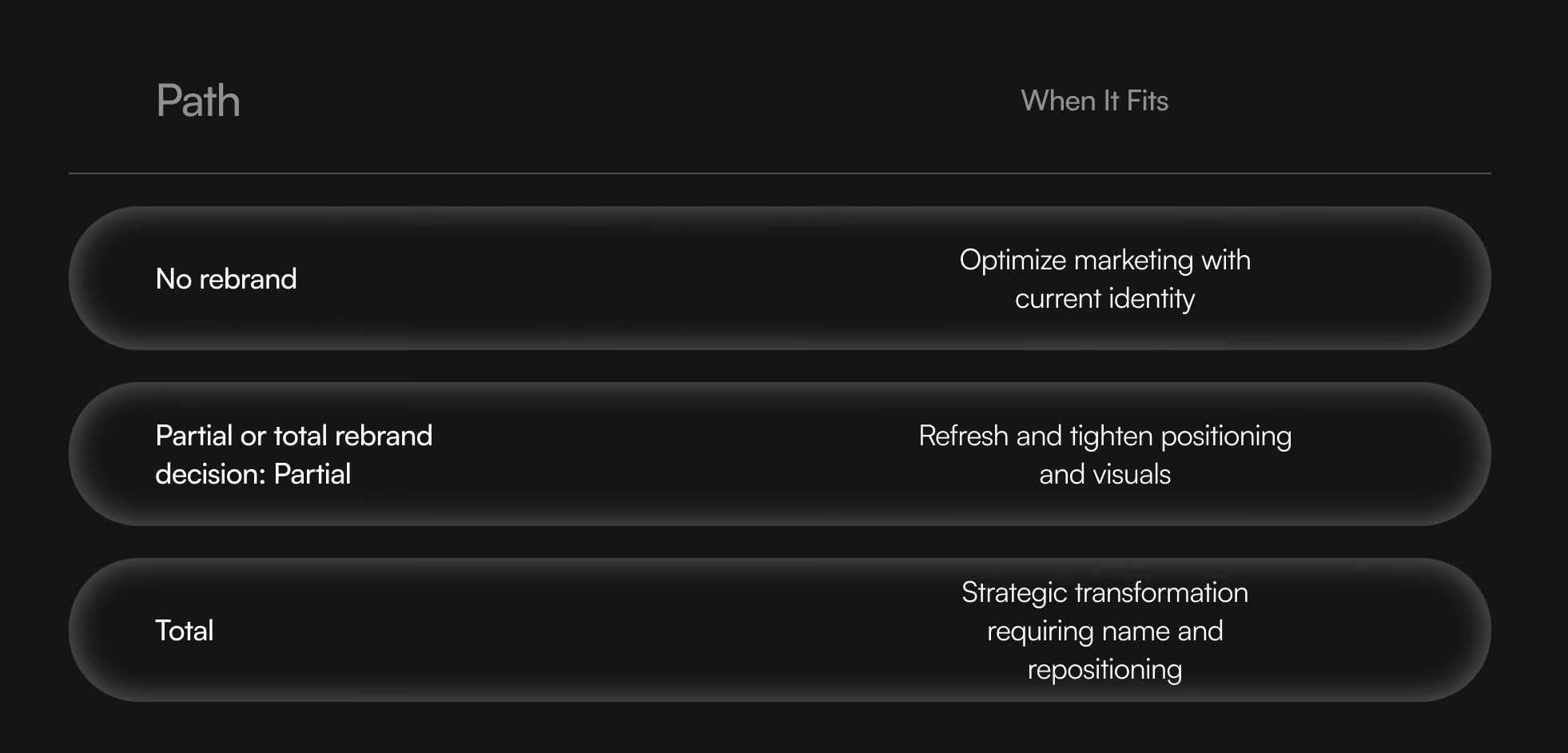
Set success metrics in advance: Improved win rates, price realization, talent attraction, or entry into a new market segment by specific dates (e.g., Q4 2026).
When executed deliberately and tied to clear business goals, a rebrand is one of the most powerful levers a leadership team can pull to unlock massive success in the next stage of growth. The companies that treat it as strategic investment—rather than a design project—are the ones that turn brand transformation into measurable business results.
FAQ
How often should a growing company consider rebranding or refreshing its brand?
For most $1M+ revenue companies, a full rebrand might be appropriate every 7-10 years, while smaller visual and messaging refreshes are healthy every 3-5 years. Conduct a light brand audit annually and a deeper audit every 2-3 years to assess relevance, differentiation, and consistency. Timing should be driven by strategic shifts and performance data, not design trends alone. Use key dates like fiscal year planning cycles or major product launches as checkpoints to evaluate whether your brand still fits your direction.
What does a realistic rebrand budget look like for a company doing $1-10M in annual revenue?
A focused partial rebrand typically runs from low five-figures to mid five-figures. A full rebrand including naming, strategy, and comprehensive rollout can reach into low six figures. Main cost drivers include level of strategic work required, complexity of the design system, number of touchpoints (websites, locations, packaging), and need for legal or PR support. Allocate an additional 25-50% of the creative budget for launch campaigns and implementation costs like signage or collateral reprints. View the spend as a capital investment in brand equity evaluated over several years, not just the launch quarter.
How long does a typical rebrand take from decision to full rollout?
Average timelines: 3-4 months for a lean partial rebrand, 6-9 months for a more comprehensive refresh with research and testing, and 9-18 months for a total rebrand including naming and legal work. Multi-location or multi-country companies need extra time to update physical signage, packaging, and localized materials. Plan backward from a target launch date (such as a major conference or fiscal year start) and build in buffer for approvals and revisions. Compressing a full rebrand into a few weeks almost always produces shallow work and higher long-term costs.
Can I handle a rebrand in-house, or do I need outside experts?
Smaller, design-light refreshes can often be led in-house if your team has strong strategic and creative capability. Bring in external partners when changing your name, repositioning into a new category, or managing reputational challenges—objectivity and specialized skills become critical in these situations. Many $1M+ companies benefit from a hybrid model: in-house leadership providing business context, with external support for research, strategy facilitation, and design execution. Evaluate partners based on demonstrated results with similar-sized small businesses and industries, not just portfolio aesthetics.
How do we know if our rebrand “worked” beyond people liking the new look?
Set specific KPIs before starting: brand awareness, qualified lead volume, win rates, average contract value, employee engagement, or hiring metrics. Compare pre- and post-rebrand performance over meaningful windows (6-12 months) while controlling for other major changes. Include qualitative checks: clarity of customer understanding on sales calls, feedback from top accounts, and sentiment in reviews and on social media. A successful rebrand should make it easier for your best customers to choose you—and for your team to tell a coherent, compelling story every day.

Quincy Samycia
Want to learn more about brand platform?