Humanization AI Text: Turn AI to Human Writing That Feels Real
08/04/2026
Technology
Discover how to transform AI-generated content into natural, engaging writing that reflects your unique voice, builds credibility, and resonates with both readers and search engines.

Humanizing AI-generated text means refining a draft so it sounds natural, credible, and consistent with a real human voice. That involves improving sentence rhythm, tone, clarity, specificity, and emotional nuance rather than simply replacing words or trying to manipulate detection tools. In 2026, this process is especially valuable for marketers, professionals, students, and content teams that want to use AI responsibly while producing writing that feels authentic, protects reader trust, and reflects genuine human judgment.
.png)


Humanize AI Text Instantly: What This Guide Will Help You Do



Turning ai to human text means transforming AI-generated drafts into writing that reads like genuine human prose by improving tone, flow, voice, and natural variation so the result feels real and relatable. In 2026, ai detection tools are more sophisticated than ever, and raw AI output often gets flagged before it reaches its intended audience. For students, professionals, content creators, marketers, job seekers, teams, and anyone who uses AI-generated text, humanization ai text is a practical way to make writing sound more authentic, protect reader trust, improve engagement, and reduce false-looking robotic patterns.
This guide shows you how to humanize ai text, when it makes sense, and how the right mix of tools and manual editing can help. You'll learn practical steps-paste, humanize, edit-alongside responsible use principles, plus how AI detectors work, how humanizers differ from paraphrasers, manual rewriting techniques, ethical limits, privacy considerations, real-world use cases, tool comparisons, and where this process is heading next. No cheating, no plagiarism, just better writing that can bypass ai detectors when paired with genuine effort and natural language processing awareness.
What Does It Mean to Humanize AI Text?
Humanizing ai text means reshaping ai generated drafts so they sound like genuine human writing without losing the original meaning, especially when ai generated writing feels polished but still unmistakably machine-made. Raw ai generated content tends to be repetitive, overly formal, and emotionally flat. AI writing often lacks emotional depth and creativity. Refined ai to human text, by contrast, has varied rhythm, a clear voice, and intentional pacing. A conversational tone enhances relatability in ai generated text, and readers engage more with writing that feels intentional and relatable. Human writing is more relatable and nuanced than ai text-it carries opinion, sensory detail, and lived experience. Humanization goes beyond paraphrasing. It targets rhythm, specificity, and voice rather than random synonym swaps.=
Free Brand Health Audit
Make sure your brand is built to sell
Search has changed. Your customers aren't just Googling anymore. They're asking ChatGPT, Perplexity, Gemini and other AI platforms what to buy, who to trust and which brands they should consider.
If your brand isn't showing up clearly in those answers, you're already losing opportunities. Our free Brand Health Audit shows you where your brand stands across traditional search, AI search and brand positioning.

Sample brand audit
Live preview
Traditional search
72
AI search (GEO)
34
Brand positioning
58
How AI Detection Works in 2026 (and Why It Matters)


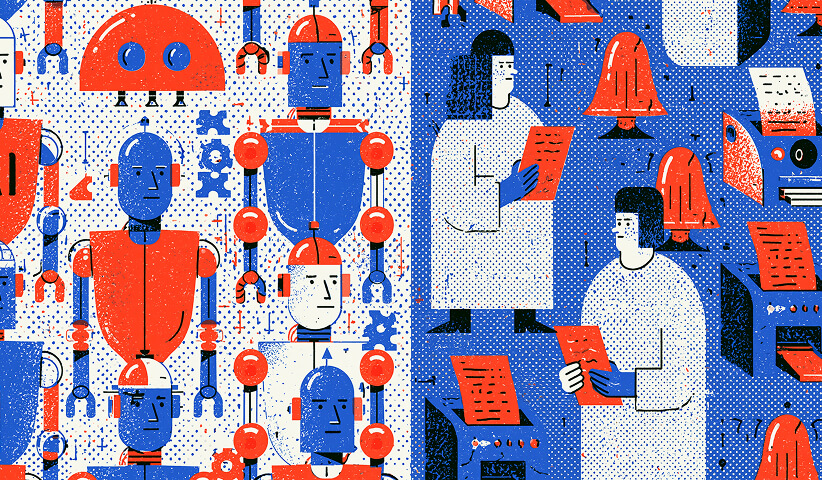
Common ai detection tools like GPTZero, Originality.ai, Turnitin, and ZeroGPT are among the leading ai detection tools, and they scan text for statistical patterns that signal machine generation. Key signals include:
- Uniform sentence length and low "burstiness"
- Over-neat grammar with no natural imperfections
- Generic, vague phrasing and predictable transitions
- Low lexical diversity (the same formal words repeated)
Ai generated content can be flagged by detection tools based on these patterns. No single detector is perfect-different tools frequently disagree on the same text-and ai content detection remains inexact because ai detection systems evolve differently and often disagree on the same passage, but institutions still rely on them heavily in 2025–2026. Advanced ai humanizers can bypass multiple ai detection tools, yet focusing only on beating detectors can create ethical and policy problems in schools and workplaces.
AI Humanizer vs Paraphraser vs Rewriter
An advanced ai humanizer differs from simple paraphrase tools by targeting the underlying patterns that make text sound machine-made. Paraphrasing restates with new words. Rewriting restructures ideas. Humanizing fixes tone, flow, and voice at a deeper level. AI humanizers can transform robotic text into natural writing, and humanized text maintains original meaning while sounding natural.
Quick example: AI original: "It is important to note that renewable energy offers significant benefits." A paraphraser might swap "significant" for "considerable." A rewriter might flip the clause order. An ai humanizer would reshape it entirely: "Renewable energy isn't just a policy buzzword-it's creating real jobs and cleaner air in communities across the country."
Core Techniques to Humanize AI Text Manually
Even without ai tools, you can convert ai to human text by editing the patterns AI struggles with:
- Vary sentence length. Varying sentence length improves the flow of ai generated content. Mix short punches with longer, more complex thoughts.
- Add specific examples. Using specific examples enriches the text with a deeper understanding. Dates, metrics, and names ground your writing.
- Inject opinion and emotion. Adding personal anecdotes makes AI content more authentic. Using emotional language adds depth to ai generated content.
- Use active voice. Active voice makes writing more direct and energetic.
- Trim filler. Simple language is often more engaging than overly formal wording. Cut phrases like "it is important to note."
These techniques also improve real human drafts, not just ai generated content. For the best results, combine manual editing with automated humanizers.
Step‑by‑Step: Turning AI to Human Text in One Workflow
Here's a concrete workflow for transforming ai generated text into polished human text:
- Step 1: Generate your AI draft using ChatGPT, Gemini, or Claude, following an AI prompting for marketing & branding guide. Prompt for a specific tone and audience.
- Step 2: Paste your ai generated text into the humanize ai text tool. Click 'Humanize Text' to convert AI content into natural writing.
- Step 3: Read aloud. Reading text aloud helps identify awkward phrasing in ai generated content.
- Step 4: Personalize-add your examples, adjust tone, insert metrics or anecdotes that reflect your experience.
- Step 5: Final polish. Check facts, grammar, and coherence.
AI humanizers save time by automating text refinement processes. For a 1,000-word draft, expect 3–5 minutes for the humanizer run plus manual tweaking. Deeper editing for reports may take 10–15 minutes, but it's still faster than writing from scratch.
Patterns That Make AI Text Sound "Robotic"
These ai writing patterns are the most common "tells" that detectors and human readers notice:
- Template openers: "In conclusion, it is important to note…" or "In today's fast-paced world…"
- Transition overload: "Furthermore," "Moreover," "In addition," stacked in predictable order.
- Vague abstractions: "Innovation," "growth," "sustainability" with no concrete support.
- Uniform structure: Every sentence starting with "It is…" or "There are…"
Replace these with direct, specific phrasing. Swap "Furthermore, it is crucial to understand…" with "Here's what actually matters." Removing these patterns improves both reader trust and chances of passing basic ai detection.
How Modern AI Humanizers Use Natural Language Processing
An advanced ai humanizer relies on ai models alongside natural language processing to detect AI-like segments, adjust rhythm, diversify vocabulary, improve flow, and re-check coherence. Modern humanizers use finely tuned ai models trained on large corpora of human text-blogs, essays, emails-from 2018–2025. Clever AI Humanizer is trained on 1 million human texts. Quillbot's AI Humanizer uses tens of thousands of human texts.
Humanizers improve readability and flow of ai generated text by rebuilding sentences from meaning rather than swapping synonyms. The MASH framework, published in early 2026, achieved ~92% success at evading multiple detectors while maintaining linguistic quality. Advanced models can achieve 99% human scores in detection tools. AI humanizers transform robotic text into natural writing through this layered, NLP-driven approach.
Ethics: Is Using an AI Humanizer Cheating?
The ai humanizer cheating concern is valid. Tools that polish wording-like spellcheck or grammar assistants-are widely accepted. But passing off AI-written ideas as entirely your own may violate institutional rules. Effective communication depends on more than grammatical correctness; it depends on honesty. Check your institution's or employer's policies from 2023–2026 that mention generative ai specifically. Encourage transparent use: acknowledging ai assistance where required is always the safer path. Never rely on humanizers to hide plagiarism. When in doubt, cite ai assistance just as you'd cite any other source.
Want to learn more about AI tools? Keep reading!
If you need help choosing or implementing AI tools, contact us for a free custom quote.
Responsible Use vs AI Detector Bypassing

There's a difference between improving quality and trying to bypass ai detectors at any cost. Focus on clarity, originality, and reader value instead of chasing a "0% AI" score. Over-optimization for detectors can lead to awkward phrasing, inconsistent tone, or meaning drift that still fails human review. Use ai detection tools as a diagnostic hint, not a final judge of honesty or quality.
Use Cases: When Humanizing AI Text Makes Sense
AI humanizers can handle various content types like essays and emails. Researchers use ai humanizers to clarify complex reports, and brands may partner with an AI content creation agency when they need scaled, on-voice output. Here are scenarios where humanizing ai text makes sense:
| Use Case | Why Humanize |
|---|---|
| Blog posts | Reader trust, SEO performance |
| Internal reports | Clarity, professional tone |
| Outreach emails | Personal connection |
| Social posts | Platform-specific voice |
| Product pages | Brand consistency |
| Teaching materials | Student engagement |
Humanizing ai generated content helps maintain brand identity. Some contexts-legal contracts, clinical guidance-require expert human review beyond what any ai text humanizer provides.
Humanizing AI Text for Job Seekers
AI humanizers assist job seekers in crafting personalized résumés and cover letters that stand out. AI-drafted applications often sound generic and obviously ai generated. Focus on concrete metrics, personal achievements, and industry-specific wording. Replace "I am passionate about driving results" with a specific story: "I reduced onboarding time by 30% at my last role by redesigning the training workflow." Many recruiters in 2025–2026 use ai detection tools, so originality matters.
Humanizing AI Text for Professionals and Teams
Professionals use AI humanizers for emails and business documents-everything from Q2 2025 performance reports to 2026 launch memos. The focus here is tone: clear, confident, concise, aligned with company style guides. Many organizations now rely on an AI content strategist role to design these workflows. Business professionals benefit from standardizing a workflow: draft with AI
humanize
internal review
publish. This keeps ai assisted drafts consistent across teams.
Humanizing AI Text for Content Creators & SEO Writers
Content creators enhance blog posts with AI humanizers for better engagement. Ai generated blog posts can feel thin or repetitive to both readers and search engines. Humanization should add depth: real examples, updated 2024–2026 data points, and unique angles. Pair this with a structured marketing prompt framework so drafts are higher quality before you humanize them. Keep your keyword strategy intact while varying phrasing and sentence structure. Seo writers search engines reward with higher rankings when content demonstrates genuine value, and combining humanized content with AI tools that boost website traffic can compound results. Google's helpful content updates favor authentic, useful articles over mass-produced ai content.
Humanizing AI Text for Students and Academic Writers
AI humanizers help students refine essays and reports for clarity and voice. Many universities updated AI policies in 2023–2026 to require disclosure of generative ai use. Students can humanize for style while still doing their own research and argumentation. AI humanizers help bypass detection by major tools like Turnitin, but that doesn't make undisclosed use ethical. Check academic writing policies and Turnitin's updated detection guidelines before relying on any ai humanizer.
Humanizing AI Text for Marketers and Social Media Managers
Marketers deal with campaigns, email sequences, landing pages, and social captions created by ai writers. Brand voice consistency, emotional resonance, and platform-specific style (TikTok vs LinkedIn) matter enormously. Combine strong humanization with high-converting AI ad copy prompts and add real customer stories, 2024–2025 campaign results, and brand-specific phrases to break AI sameness. AI humanizers enhance engagement by creating relatable content-humanized social copy can measurably lift CTR and comments compared to raw ai generated copy.
Language Coverage: Humanizing AI Text in Multiple Languages
Modern humanizers work across multiple languages-English, Spanish, German, French, Portuguese, and more. Differences between dialects (US vs UK vs Australian English) matter; a good ai to human text tool should respect these. Idioms, cultural references, and politeness norms matter even more in non-English humanization. For example, a Spanish humanizer should distinguish between formal "usted" contexts and informal "tú" registers depending on the target audience.
Instant Humanization vs Deep Editing
One-click tools let you humanize ai text instantly-great for social posts or quick replies. Deeper editing is needed for reports, whitepapers, and academic writing. A two-pass approach works best: instant humanizer run, then manual review for nuance and accuracy. Deep editing yields more distinctive, human sounding writing. It's still faster than writing from scratch but produces human like content that feels genuinely human.
How to Preserve Your Voice While Using AI
Many writers worry an ai humanizer will erase their style. Create a simple "voice profile": favorite phrases, formality level, typical sentence length. Compare an older 2022–2023 human-written sample to current ai assisted drafts to check tone alignment. Lightly tweak humanized output so it sounds like you, not a generic blogger. Your everyday writing habits are your best reference.
Concrete Before‑and‑After Humanization Examples
Example 1: AI: "It is essential to consider the implications of remote work policies on employee productivity." Humanized: "Remote work has reshaped how teams get things done-some thrive, others struggle without office structure."
Example 2: AI: "The product launch in Q1 2026 demonstrated significant market interest." Humanized: "When we launched in January 2026, pre-orders exceeded our forecast by 40%. That told us something the surveys hadn't."
Example 3: AI: "Furthermore, data analytics provides actionable insights for decision-making." Humanized: "Our analytics dashboard flagged a 15% drop in signups last Tuesday-exactly the kind of early warning that changes how you spend your next sprint."
Notice the changes in rhythm, specificity, and emotional depth rather than just word substitution.
How AI Detection Tools Interact with Humanized Text
When AI content is humanized, ai detection scores often drop-but not always to 0%. AI humanizers improve readability to 99% scores as human in many cases, though results vary by detector. Mixing human-written and AI-humanized paragraphs can further shift detection behavior. Test your ai drafts sound through several popular ai detectors to see scoring patterns. Some platforms update models quarterly, so past results don't guarantee future outcomes.
Choosing an AI to Human Text Converter
When picking a human text converter, evaluate these criteria:
- Output quality: Does the humanized text read naturally?
- Speed: Can it handle your volume?
- Language support: Does it cover your target languages?
- Privacy: Is your text stored or deleted after processing?
- Transparency: Does the tool explain its training data?
Prefer tools that focus on natural language and authenticity. The best ai humanizer prioritizes human like writing over "undetectable" marketing claims. Test on your own samples and ask: "Does this still sound like me?"
Privacy, Security, and Data Use in AI Humanizers
Privacy matters when you paste résumés, contracts, or unpublished research into any ai humanizer tool. Verify if the tool logs text, uses it for training, or offers a "no logging" mode. Redact names, client identifiers, and confidential figures before submission. From 2024 to 2026, regulators in the EU and US have increasingly scrutinized AI data handling. A free ai humanizer may have weaker privacy protections than paid alternatives-read the fine print.
Balancing Automation with Human Editorial Judgment
Even the best ai humanizer built for speed should be treated as a first draft assistant, not a final editor. Human editing improves clarity and removes unnecessary complexity. Read aloud and, where possible, have a colleague skim important humanized content. Human editors catch subtle issues like unintended tone or outdated references from 2020–2022.
How to Recognize Over‑Humanized or Over‑Optimized Text
Too much humanization can introduce odd slang, inconsistent tone, or off-topic flourishes. Watch for:
- Style shifts mid-article
- Meaning drift from the original meaning
- Factual distortions or invented details
Perform quick sense checks: does every paragraph support the main claim? Are dates and names still correct? Dial humanization intensity down for technical or compliance-sensitive documents.
Using Humanizers with Other Writing Tools
Humanizers sit alongside other ai tools in a practical stack, especially in AI creative services workflows that depend on top AI content tools to move from concept to finished asset:
- AI generator → humanizer → grammar tool → plagiarism check → final export
Each tool solves a different problem: correctness, originality, tone, or format. Don't chain too many tools without review-meaning can drift after multiple transformations. An ai humanizer work best when paired with your own judgment, not stacked blindly.
Future of Humanizing AI Text (2026 and Beyond)

Detectors will likely incorporate metadata, keystroke dynamics, and cross-document stylistic analysis by 2027. High-quality ai humanization will lean toward genuine collaboration-combining your ideas and voice with AI's speed-rather than stealth. Humanizing ai will become less about hiding and more about enhancing. Build your own writing skills so you rely on AI as a helper in the writing process, not a crutch.
Quick Checklist: Does Your Text Feel Human?
Before publishing any humanized text, run through these questions:
- [ ] Do my sentences vary in length and structure?
- [ ] Have I included specific details, dates, or metrics?
- [ ] Does the text take a clear stance or express a perspective?
- [ ] Are there any "In conclusion, it is important to note" template phrases left?
- [ ] Does it sound natural when I read it aloud?
- [ ] Have I used active voice more than passive?
- [ ] Is the tone consistent from start to finish?
- [ ] Does every paragraph support the main point?
- [ ] If asked, could I honestly explain how this was created?
- [ ] Would a reader trust this as human written content?
Bookmark this for your 2025–2026 content creation workflows.
FAQ About Humanizing AI Text
What is an ai humanizer?
An ai text humanizer rewrites ai generated text to match the rhythm, tone, and nuance of real human writing. It uses natural language processing rather than simple word-swapping.
Can an ai humanizer bypass ai detectors?
Many can reduce detection scores significantly. An ai humanizer helps pass the strictest ai detectors in many cases, but no tool guarantees 100% bypass.
Is using a humanize ai tool plagiarism?
Not inherently. It's similar to using a grammar tool. But presenting AI-written ideas without disclosure where required can violate academic or workplace rules.
Is there an ai humanizer free option?
Yes-several tools offer completely free tiers with word limits. Quality varies, so test before committing.
Does humanization change the original meaning?
Good tools preserve core meaning. Always review output to confirm nothing drifted.
What content types work best?
AI humanizers work across essays, emails, blog posts, social captions, and business documents.
How do I refine ai text without losing my voice?
Create a voice profile and manually adjust the humanized output. Compare against your own older writing.
Should I rely entirely on an ai humanizer?
No. Treat it as part of your writing process alongside your own judgment. The goal is to transform ai text into something that sounds like you, not to replace your thinking.
Conclusion: Write Naturally, Use AI Intelligently
AI is a powerful drafting partner. Transforming ai generated content into human like writing is where trust, engagement, and authenticity live. Humanizing ai generated drafts isn't about deception-it's about making your input box output sound like you actually wrote it. Adopt a workflow that mixes AI support with human judgment. Readers connect with writing that carries real voice and genuine insight. Stay informed on AI and natural language trends through 2026 and beyond, and keep sharpening your own skills so that every piece of content you publish feels genuinely human.

Quincy Samycia
As entrepreneurs, they’ve built and scaled their own ventures from zero to millions. They’ve been in the trenches, navigating the chaos of high-growth phases, making the hard calls, and learning firsthand what actually moves the needle. That’s what makes us different—we don’t just “consult,” we know what it takes because we’ve done it ourselves.
Want to learn more about brand platform?
If you need help with your companies brand strategy and identity, contact us for a free custom quote.
We do great work. And get great results.
+2.3xIncrease in revenue YoY
+126%Increase in repurchase rate YoY



+93%Revenue growth in first 90 days
+144% Increase in attributed revenue




+91%Increase in conversion rate
+46%Increase in AOV




+200%Increase in conversion rate
+688%Increase in attributed revenue