Prompt Chaining in 2026: How Marketers Build Better Outputs Step by Step

03/12/2026

Technology / Marketing Strategy

Discover how prompt chaining in 2026 enables marketing teams to generate stronger AI-driven strategies, content, and campaigns by structuring prompts into clear, step-by-step workflows.

Row of dominoes falling in sequence across a blue surface, symbolizing the step-by-step progression of prompt chaining and connected AI workflows.

As generative AI becomes embedded in marketing workflows, the difference between average and exceptional output rarely comes down to a single well-written prompt. Instead, it comes from how prompts are sequenced. High-performing teams treat AI interactions as structured workflows—breaking complex problems into stages where each prompt performs a specific job and feeds the next step. This approach, known as prompt chaining, transforms AI from a reactive tool into a disciplined thinking process.

Prompt Chaining in 2026: How Marketers Build Better Outputs Step by Step

Quincy Samycia
Play IconPause Icon
0:00
0:00
https://cdn.prod.website-files.com/673ec61d219571e72b3eba03/69a9cc587235f34bb323f622_360_Prompt%20Chaining%20in%202026.mp3

From Single Prompts to Structured AI Workflows

Business professionals standing on separated geometric platforms above water, representing fragmented workflows and disconnected processes.
People working in separate window-like rooms within a structure, symbolizing compartmentalized tasks and isolated stages in a workflow.
Large institutional building sitting atop stacked blocks with a lone person below, representing complex systems built on layered processes.
No items found.

Why the best AI results don’t come from better prompts—but from better sequences

By 2026, most marketers understand how to write a decent prompt.

What separates high-performing teams isn’t prompt quality—it’s prompt flow.

The strongest AI-assisted marketing work rarely comes from a single instruction. It comes from prompt chains: intentional sequences where each prompt has a narrow job and builds on the last.

This post explains how prompt chaining works in real marketing workflows—and why it has become a default practice for teams that care about quality, consistency, and speed.

What prompt chaining actually means (and what it doesn’t)

Prompt chaining is often misunderstood as:

  • “asking follow-up questions”
  • “having a longer conversation”
  • “refining outputs until they’re good enough”

In practice, prompt chaining is none of those.

Prompt chaining is the deliberate separation of thinking stages, where each prompt:

  • has a single purpose
  • produces a specific type of output
  • feeds cleanly into the next step

It mirrors how marketing work already happens—just faster and more explicit.

Why single-prompt workflows break down

Towering stack of documents rising into the sky beside a single person, representing growing information and layered task outputs.
Arrangement of wrenches and mechanical tools on a blue surface, symbolizing structured tools and components used to build systems.
Two hands passing a baton between them, symbolizing sequential handoffs between steps in a chained process.
Long industrial pipeline stretching through the sky and clouds, representing the continuous flow of information through a system.

Single prompts fail because they:

  • overload the model with competing goals
  • mix strategy and execution
  • hide assumptions
  • make review difficult

When everything is asked at once, outputs become:

  • shallow
  • inconsistent
  • hard to diagnose
  • harder to improve

Prompt chaining fixes this by introducing decision checkpoints.

The core principle: one prompt, one job

In 2026, effective chains follow a simple rule:

If a prompt tries to do more than one type of thinking, it should be split.

Different types of thinking include:

  • exploration
  • prioritization
  • synthesis
  • execution
  • evaluation

Separating these improves quality and control.

Want to learn more about AI and Marketing? Keep reading!

If you need help with your company’s branding and marketing, contact us for a free custom quote.

A common marketing prompt chain (example)

Multiple camera lenses arranged on a surface, symbolizing different perspectives and stages used to analyze or refine outputs.

Below is a simplified but realistic chain many teams use.

Step 1: Exploration

Goal: generate strategic options.

“Act as a senior marketing strategist. Propose 5 distinct campaign angles for launching a new productivity tool.”

Output: multiple directions, no copy.

Step 2: Selection

Goal: evaluate and choose.

“Compare these angles. Identify strengths, risks, and which is best suited for mid-market buyers.”

Output: reasoning and prioritization.

Step 3: Refinement

Goal: sharpen the chosen direction.

“Refine angle #3 into a clear campaign narrative. Focus on core tension and resolution.”

Output: narrative logic, still no assets.

Step 4: Execution

Goal: create assets.

“Using the refined narrative, draft homepage headlines and subhead copy. Follow brand constraints.”

Output: usable copy.

Step 5: Stress-test

Goal: identify weaknesses.

“Act as a skeptical buyer. What objections or confusion might this messaging create?”

Output: risks and gaps.

Each step has a different role, mindset, and success criteria.

Why prompt chaining works better in 2026

Prompt chaining aligns with how AI systems actually behave:

  • models respond better to narrow objectives
  • constraints compound more effectively across steps
  • outputs become easier to evaluate

It also aligns with team workflows:

  • strategists review early steps
  • writers work later in the chain
  • reviewers assess risks at the end

This makes AI easier to integrate—not harder.

Prompt chaining across teams and tools

Several open doorways casting long shadows with people walking toward them, representing branching paths and decision points in a workflow.

In 2026, chains often span:

  • different people
  • different AI models
  • different moments in time

For example:

  • research in one tool
  • synthesis in another
  • copy generation elsewhere

Chaining makes this possible because outputs are explicitly staged, not buried in chat history.

Where most teams go wrong with chaining

Even advanced teams struggle when they:

  • chain without locking decisions
  • reuse exploratory outputs as final copy
  • let later prompts contradict earlier ones
  • skip evaluation steps to save time

Prompt chaining only works when decisions are made between steps—not deferred.

How to document a prompt chain

High-performing teams treat chains like workflows.

They document:

  • the purpose of each step
  • the expected output
  • who reviews it
  • what gets passed forward

This turns prompt chains into reusable systems—not tribal knowledge.

When not to use prompt chaining

Not every task needs a chain.

Single prompts still work for:

  • small rewrites
  • formatting tasks
  • summarization
  • minor variations

Prompt chaining is most valuable when:

  • stakes are high
  • strategy matters
  • consistency is critical


How this fits in the series

Builds on

Leads into

This post explains how outputs are built.
The next explains how they’re improved.

The takeaway

In 2026, better AI results don’t come from smarter prompts.

They come from smarter sequencing.

When each prompt has:

  • a clear role
  • a single objective
  • an explicit output

AI becomes predictable, reviewable, and scalable—exactly what marketing teams need.

An image of the author Quincy Samyica

Quincy Samycia

As entrepreneurs, they’ve built and scaled their own ventures from zero to millions. They’ve been in the trenches, navigating the chaos of high-growth phases, making the hard calls, and learning firsthand what actually moves the needle. That’s what makes us different—we don’t just “consult,” we know what it takes because we’ve done it ourselves.

Want to learn more about brand platform?

If you need help with your companies brand strategy and identity, contact us for a free custom quote.

We do great work. And get great results.

DrTung’s
Breathed new life into a storied oral care brand with a smarter site and marketing for scalable growth.

+2.3x
Increase in revenue YoY

+126%
Increase in repurchase rate YoY

READ MORE
Smiling man with bright teeth on a light blue background, surrounded by floating DrTung’s herbal tooth powder tabs and packaging.
Smartphone on a textured blue surface displaying a DrTung’s ad with the text “Make the Switch” and an image of a woman holding herbal tooth powder tabs.
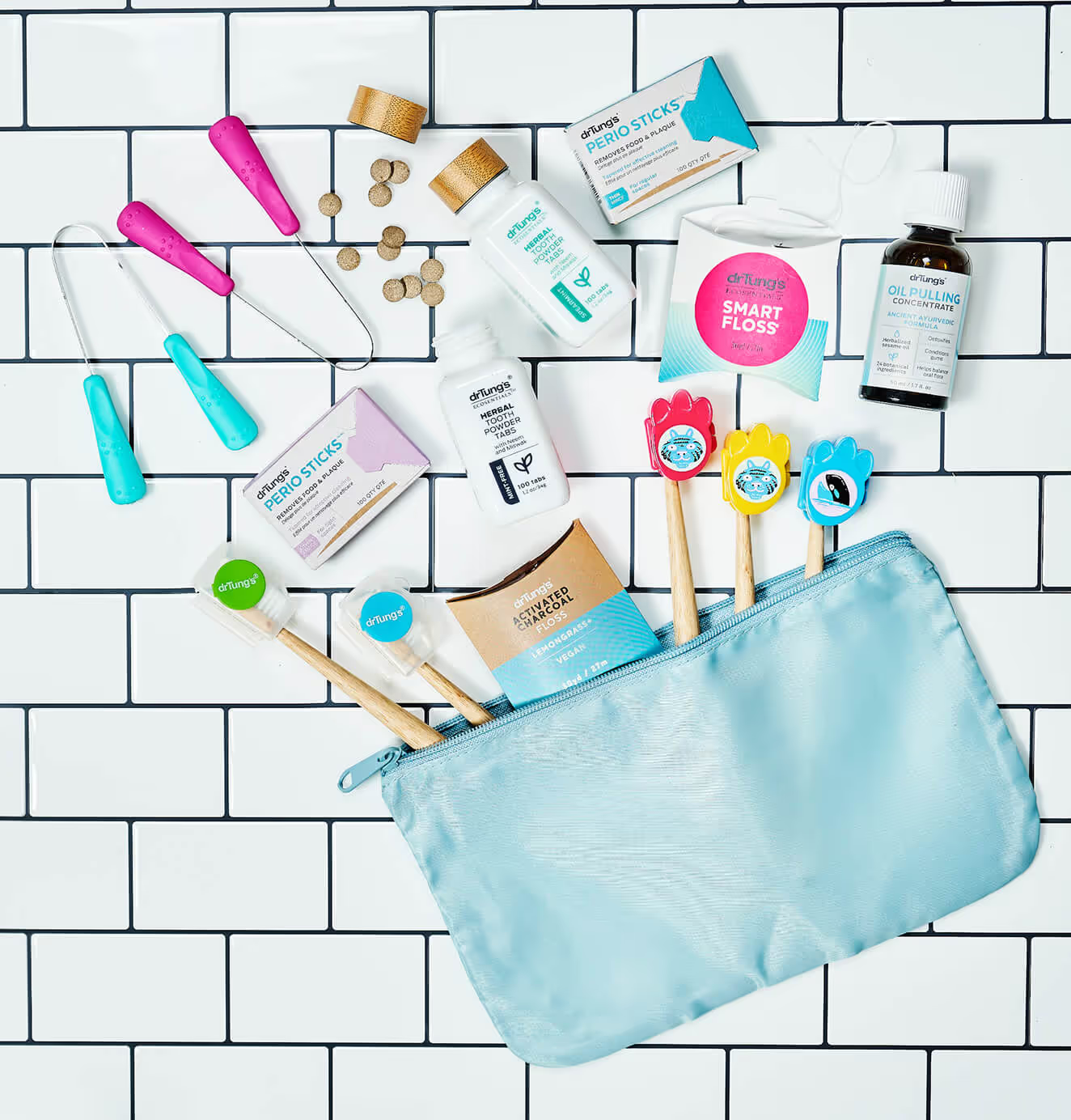
Flat lay of DrTung’s oral care products, including floss, tooth powder tabs, perio sticks, tongue cleaners, and toothbrushes, arranged with a blue pouch on white tile.
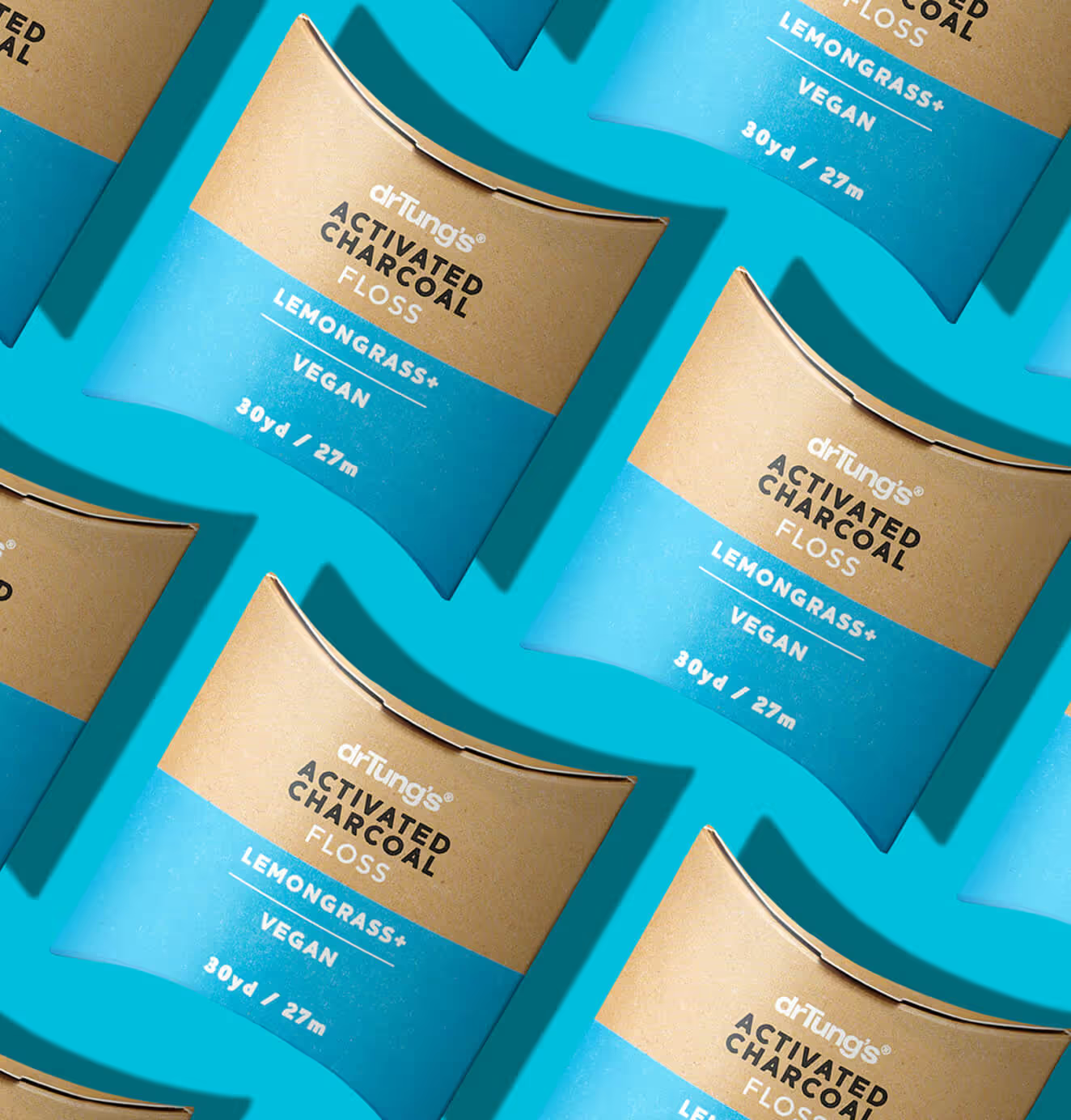
Pattern of DrTung’s Activated Charcoal Floss in brown and blue packaging, arranged diagonally on a bright blue background.
Smiling man with bright teeth on a light blue background, surrounded by floating DrTung’s herbal tooth powder tabs and packaging.
Smartphone on a textured blue surface displaying a DrTung’s ad with the text “Make the Switch” and an image of a woman holding herbal tooth powder tabs.
Flat lay of DrTung’s oral care products, including floss, tooth powder tabs, perio sticks, tongue cleaners, and toothbrushes, arranged with a blue pouch on white tile.
Pattern of DrTung’s Activated Charcoal Floss in brown and blue packaging, arranged diagonally on a bright blue background.
Mary Louise Cosmetics
Scaled a heritage-inspired clean beauty brand with modern performance marketing and farm-to-face storytelling.

+93%
Revenue growth in first 90 days

+144%
Increase in attributed revenue

READ MORE
A jar of Mary Louise Lilac & Shea Body Butter with the lid open, showing creamy texture, placed on a beige surface beside sprigs of lavender.
A Mary Louise Miracle Serum bottle with a dropper cap, lying on a bed of small yellow flowers.
Mary Louise promotional print materials featuring the body butter, with images of skincare application and product photography on a textured beige background.
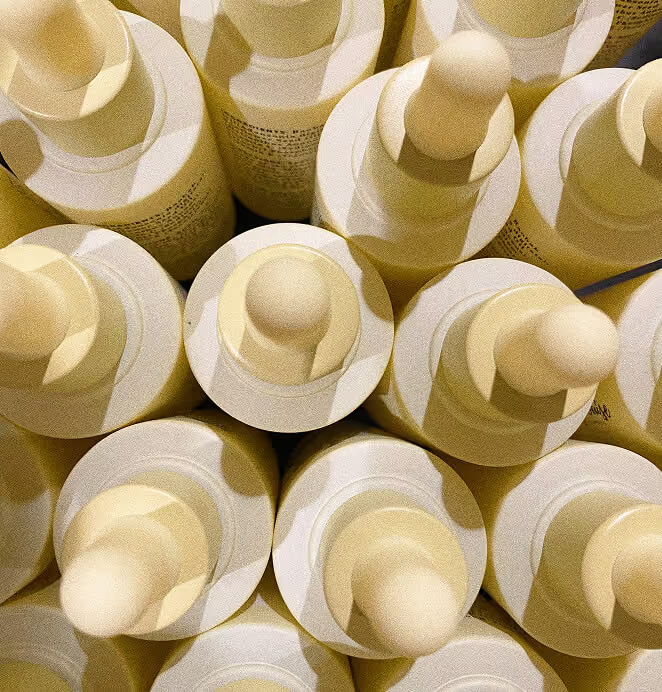
A close-up overhead view of multiple Mary Louise Miracle Serum bottles with yellow dropper caps arranged tightly together.
A jar of Mary Louise Lilac & Shea Body Butter with the lid open, showing creamy texture, placed on a beige surface beside sprigs of lavender.
A Mary Louise Miracle Serum bottle with a dropper cap, lying on a bed of small yellow flowers.
Mary Louise promotional print materials featuring the body butter, with images of skincare application and product photography on a textured beige background.
A close-up overhead view of multiple Mary Louise Miracle Serum bottles with yellow dropper caps arranged tightly together.
Eyecart
Made eye care feel modern, then marketed it like a DTC darling—with the results to match.

+91%
Increase in conversion rate

+46%
Increase in AOV

READ MORE
A smiling woman holds a magnifying lens with the word "eyecart" printed on it over her eye, creating a playful optical effect against a mint green background.
A billboard ad reads “Discover the ease of keeping your eyes healthy,” featuring Eyecart branding and Blephaclean eye care wipes packaging.
Multiple laptop screens display the Eyecart website, showcasing product pages and banners promoting eye care items.
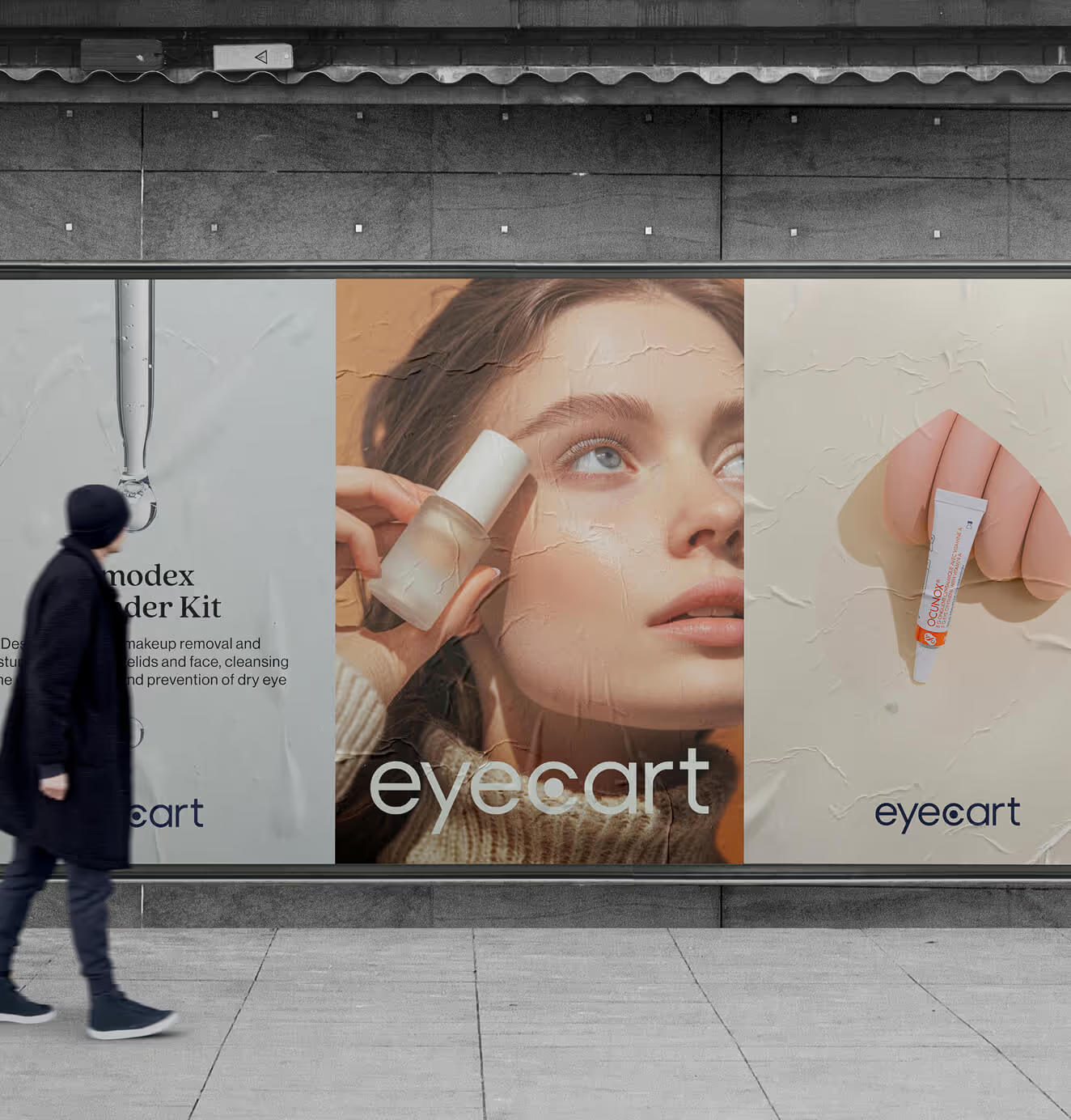
A person walks past large Eyecart posters on a city wall, featuring product photography of eye care serums and creams with clean, modern branding.
A smiling woman holds a magnifying lens with the word "eyecart" printed on it over her eye, creating a playful optical effect against a mint green background.
A billboard ad reads “Discover the ease of keeping your eyes healthy,” featuring Eyecart branding and Blephaclean eye care wipes packaging.
Multiple laptop screens display the Eyecart website, showcasing product pages and banners promoting eye care items.
A person walks past large Eyecart posters on a city wall, featuring product photography of eye care serums and creams with clean, modern branding.
Lucky Girl Rosé
We turned a zero-carb rosé into a lifestyle brand that makes every moment worth celebrating.

+200%
Increase in conversion rate

+688%
Increase in attributed revenue

READ MORE
A bottle of Lucky Girl rosé wine nestled among pink and white flowers in a rustic outdoor setting.
Lucky Girl rosé wine on a red-and-white checkered picnic blanket with cherries, strawberries, sunglasses, and a pink notebook titled The Lucky Club.
A wine glass filled with rosé on a gold tray surrounded by hands with red-painted nails, overlaid with the text “Pour yourself some luck.”
A bottle of Lucky Girl rosé wine with floral label design, dramatically lit against a soft pink background with a shadow cast.
A bottle of Lucky Girl rosé wine nestled among pink and white flowers in a rustic outdoor setting.
Lucky Girl rosé wine on a red-and-white checkered picnic blanket with cherries, strawberries, sunglasses, and a pink notebook titled The Lucky Club.
A wine glass filled with rosé on a gold tray surrounded by hands with red-painted nails, overlaid with the text “Pour yourself some luck.”
A bottle of Lucky Girl rosé wine with floral label design, dramatically lit against a soft pink background with a shadow cast.